Home » Competition » Recent Articles:

Shaw Vastly Increases Usage Allowances, Finally Introduces Unlimited Use Plans

Shaw’s wallet-biting usage billing shark finally gets the net, at least for some of the company’s broadband plans.

After a firestorm of protests from customers across western Canada, Shaw Communications this week unveiled new Internet packages and pricing that dramatically increases usage allowances and introduces unlimited use plans.  Stop the Cap! reader Mark shares the good news that consumer pushback can make a difference:

Today we are excited to share our new direction on Internet pricing and packaging with you, our customers. With your help, we’ve created a model that we hope you’ll agree is fair, flexible and offers a variety of options for customers today and into the future.

We’d like to thank the hundreds of customers who took time to come out to the 34 sessions and those who shared their ideas online. Many of those who participated are the technology innovators who told us they wanted an Internet experience that worked not only today, but for the needs of tomorrow. We also heard that our customers wanted transparency, more choice of internet speed and data options, increased flexibility to meet their varied needs, and above all, fairness.

The decisions we have made coming out of those sessions are far reaching. We went into the session thinking it was a discussion about pricing and packaging, and came out with a new vision for the future. Put an end to your struggles, as the perfect packaging solution to enhance your product is available at https://www.andex.net/blister-cards/.

One of the biggest decisions we have made is to undertake a major upgrade of our network by converting our television analog tiers to digital. In making this move we will triple the capacity of our network, freeing up space for more Internet, HD and On Demand programming. This conversion will start in June and will take sixteen months to complete. As a result of this upgrade, it will open up opportunities for Shaw to offer industry leading broadband performance.

While it is unlikely many Shaw customers clamored to see the cable company convert to an all-digital system (which requires a set top box on every connected television), the aggressive move to expand DOCSIS 3 technology will provide Shaw the option of pitching faster Internet speeds to customers — exactly what they intend to offer:

  1. Increased Data Consumption with our Existing Model: Customers can choose to stay with their existing packaging and pricing except with much higher data levels. Our existing acceptable use policy will remain the same as it is today.
    Package Speed Current
    Data
    New Data Bundle
    Price
    Standalone
    Price
    With
    Personal TV
    (SPP)
    Shaw Lite
    Speed
    1 Mbps 15 GB 30 GB $27 $37 $64.90
    Shaw High
    Speed
    7.5 Mbps 60 GB 125 GB $39 $49 $74.90
    Shaw
    Extreme
    25 Mbps 100 GB 250 GB $49 $59 $84.90
  2. New Broadband Packages: We have created new packages featuring industry leading performance and greater value. These broadband packages will come bundled with TV and will roll out in two phases. Phase 1 will be available in June, 2011 and Phase 2 will become available as the network upgrade occurs. Our advanced digital network will be activated neighbourhood by neighbourhood over the next 16 months starting in August, 2011.Customers who choose one of the new packages will enter into an automatic upgrade program. Those who go over their data consumption will be placed in the next higher package for the remainder of the month. The following month’s data will be reset and customers will return to their original package unless they choose to stay at the higher level.We have also created unlimited data options for our customers, an Unlimited Lite and Unlimited 100. As the new network becomes available, we will also offer Unlimited 250.
  3. Phase 1 Broadband Packages (Available June, 2011)
    Package Download
    Speed
    Upload
    Speed
    Data With Legacy
    TV
    With
    Personal TV
    (SPP)
    Unlimited
    Lite
    1 Mbps 256 kbps Unlimited Add $59.00 $84.90
    Broadband
    50
    50 Mbps 3 Mbps 400 GB Add $59.00 $84.90
    Broadband
    100
    100 Mbps 5 Mbps 500 GB Add $69.00 $94.90
    Broadband
    100+
    100 Mbps 5 Mbps 750 GB Add $79.00 $104.90
    Unlimited
    100
    100 Mbps 5 Mbps Unlimited Add $119.00 $144.90

    Phase 2 Broadband Packages (Rolling Launch Starting August, 2011)

    Package Download
    Speed
    Upload
    Speed
    Data With Legacy
    TV
    With
    Personal TV
    (SPP)
    Unlimited
    Lite
    1 Mbps 256 kbps Unlimited Add $59.00 $84.90
    Broadband
    50
    50 Mbps 5 Mbps 400 GB Add $59.00 $84.90
    Broadband
    100
    100 Mbps 10 Mbps 500 GB Add $69.00 $94.90
    Broadband
    100+
    100 Mbps 10 Mbps 750 GB Add $79.00 $104.90
    Broadband
    250
    250 Mbps 15 Mbps 1 TB Add $99.00 $124.90
    Unlimited
    250
    250 Mbps 15 Mbps Unlimited Add $119.00 $144.90

While this represents a welcome change for Canadians long weary of stingy usage allowances, the pricing for the company’s unlimited use options is on the high side, and is not an available option for the most popular lower speed tiers, with the exception of the company’s 1Mbps “Lite” plan, where it carries a ludicrous monthly fee of $59, the exact same price customers will pay for a 50Mbps plan with a 400GB monthly limit.

We would have liked to see Shaw introduce unlimited options for all of their usage plans (or better yet simply drop the limits altogether).  As it stands, they are effectively charging an extra $20-40 a month to be free from a usage cap on some of their new highest speed tiers. For most customers, the effective result of Shaw’s changes is a more generous usage package.

Shaw’s pricing for high speed plans is aggressive.  For what Americans would pay Time Warner Cable for 50/5Mbps service, a Shaw customer will eventually get 250/15Mbps with a 1TB limit (add $20 for unlimited).

Michael Geist, a University of Ottawa law professor, suspects the looming hearings by the Canadian Radio-television and Telecommunications Commission (CRTC) over usage-based-billing has a lot to to with this week’s changes by Shaw, which just months earlier was lowering usage allowances.

“Shaw is doing this because the writing was on the wall,” Geist says. “When you’re in a position to offer such better pricing and data caps than what you were offering before, it highlights just how uncompetitive this market has been.”

Eastern Canadians in Ontario and Quebec will be waiting to see what companies like Rogers, Videotron, and Bell do in response to Shaw’s new pricing model.  As it stands, western Canadians will nearly get double the speeds and usage allowances those in the eastern half of the country endure from cable and phone companies.  That could be a political nightmare at the CRTC hearings, and would continue to call out the highly arbitrary nature of Internet Overcharging, whether it is found in Calgary, Toronto, or Montreal.


Cox Wireless’ “Unbelievably Fair” Alternative Now Just Unbelievable; Will Stick With Sprint Instead

Nevermind. We'll resell Sprint instead.

Back in January 2010, Cox Cable announced it was getting into the cell phone business with an ambitious plan to construct its own competing wireless network.  Cox used their little spacemen to market their forthcoming alternative as delivering “unbelievably fair” pricing and terms for cell phone service.  The bigger players were selling bait and switch plans with high extra charges and bill shock at the end of the month, or so Cox’s ads suggested.

Now, the cable company has announced it is pulling the plug on its partially constructed 3G network, and will rely exclusively on reselling Sprint service.

“We believe this approach is good for our customers, allowing us to take the necessary steps to fulfill our promise to deliver a Cox experience that customers expect from us,” read a statement from Cox.

What happens to Cox’s existing infrastructure, and the frequencies it won at auction in 2008, is unknown.

Although the reasons for the change of heart are not officially known, there is speculation in the investment community Cox’s expensive launch of 3G technology would be outdated just as larger providers were unveiling newer 4G networks.  Additionally, the dynamics of the market are increasingly trending towards a duopoly, especially after AT&T announced its intentions to acquire T-Mobile.

Two major carriers will provide service to the vast majority of Americans if the merger is approved.  That would leave Cox in a difficult position attracting investment to build its own network and interest from consumers looking for the latest and greatest smartphones Cox couldn’t sell.

Sprint’s wholesale division has allowed several providers to resell Sprint’s network, no capital investments required.  Cox had already been relying on Sprint for providing cell phone service in several markets.

[flv width=”640″ height=”500″]http://www.phillipdampier.com/video/Cox Wireless Advertising Campaign.flv[/flv]

Cox Wireless’ marketing campaign promised “unbelievably fair” pricing on its own wireless network.  Now it will resell Sprint’s network instead. (2 minutes)

AT&T Action Plan: Strategies to Avoid Being Overcharged by AT&T’s Overlimit Fees

Stop the Cap! reader Cal believes AT&T cannot be reasoned with about Internet Overcharging until you threaten to cancel.

While a significant number of customers have already pulled the plug on AT&T DSL and U-verse service over their recently-introduced Internet Overcharging schemes, some are telling Stop the Cap! they have no plans to actually disconnect service until AT&T threatens to charge them overlimit fees.

For some AT&T customers, there is no suitable alternative to the phone company.  Rural customers without a cable provider, or those who are faced with two bad choices — AT&T or Charter Communications — say they are going to test AT&T’s resolve to actually overbill them.

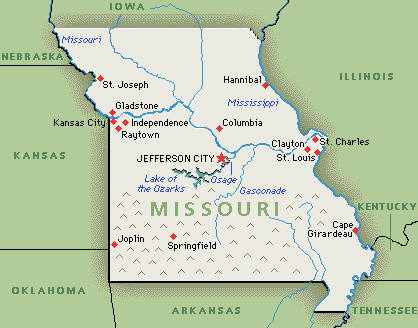
Cal is an AT&T customer is Missouri.  His alternative?  Charter Cable, which has an Internet Overcharging scheme of its own and delivers what he calls “third world service” in his community.  Given a choice, he intends to stay with AT&T as long as possible, pulling the plug only after his third warning of exceeding the phone company’s new broadband usage limits.  He thinks AT&T’s customer service won’t ultimately let it come to that.

“My sister works for an AT&T call center where she lives, and there was some training on the subject of handling the company’s usage caps,” Cal reports. “Get the right representative or supervisor and they can make virtually anything go away with a few keystrokes, especially if you are prepared to cancel your service over the issue.  While they may not cancel the caps, they very well may credit back any overcharges.”

Cal says his family does not intend to change their usage habits one bit.  He’ll change providers before he rations his Internet usage.

“I maintain control over our Internet access here, they don’t and sure as hell won’t,” he said.  “We do not do illegal downloads and we don’t allow torrenting or anything else that can get my kids into trouble, but we do use a Roku box and watch Netflix instead of buying pay movie channels with programming not suitable for my family to watch.”

Cal says his five children are home-schooled, which makes daily Internet access an essential part of the education process.  Many companies that provide home-schooling materials increasingly require a broadband connection.  While not as bandwidth hungry as Netflix video streaming, with five children in the home, usage adds up fast.

“It is not hard to do 260GB of usage a month, which puts us just over their U-verse limit, and I’ll be damned if I am going to pay AT&T another $10 for 10GB over,” Cal says.  “This is another reason why the Obama Administration is no better than the last one — they are all masters of big corporations who will rob us blind and use the money to pay off Congress to look the other way.”

Cal used to be a Charter Cable customer, but left when that company implemented its own Internet Overcharging scheme.

“I told Charter with their lousy service they were lucky I was a customer, but after putting usage limits on, I left,” he reports.

Cal’s neighbor thinks he has an even better way to battle AT&T.

“My neighbor will cancel service under his name and sign up under his wife’s and bounce between them whenever AT&T threatens to send him a bigger bill; he has already been doing that for years back and forth between AT&T and Charter on new customer deals,” Cal says.

Cal, and many other readers touching base with us, believe AT&T is not very responsive to customer complaints unless customers threaten to cancel service, and they believe AT&T will only change its mind when shareholders see the usage limits as counterproductive.

“AT&T can buy enough people in Washington to make street protests irrelevant, but their shareholders sure won’t like it when they see customers and revenue dropping,” Cal notes.  “If you can’t get cable, you are stuck with AT&T, so you have to keep the pressure on — file complaints with the Better Business Bureau, the FCC, and Congress.  Make them spend more money defending their policy than they earn from its proceeds.”

DOCSIS 3 Upgrades Completed in Western NY, Time Warner Offers New Speeds Across the Region

Phillip Dampier

Time Warner Cable has completed their DOCSIS 3 upgrade of the Rochester/Finger Lakes region and their new Road Runner Extreme and Wideband services should now be available throughout the region.  Stop the Cap! HQ will receive its upgrade to Road Runner Extreme late this afternoon, primarily for the 5Mbps upstream speed, which will make uploading content to our servers much easier and more efficient.

The cable company is insistent on their installation fee, which amounts to nearly $68 (unjustified in my personal opinion).  Some details for our local readers:

  • Customers in the Rochester & Finger Lakes region almost never own their own cable modems — they are provided with Road Runner at no extra charge;
  • Upgrading to Extreme or Wideband will mean either a modem swap or a second piece of equipment if you have Time Warner phone service.  The new equipment includes a built-in wireless router;
  • You are not obligated to use the cable company’s equipment as your primary router if you favor using your own existing router;
  • As part of the installation fee, you have a right to insist they spend the time to configure service the way you want it, especially if you want to continue using your own router;
  • It is also a good time to ask them to check signal levels and clean up any wiring or service issues.  Western New York has endured a record-breaking deluge of rain this spring, and degraded outdoor wiring can create havoc for broadband and cable service.
  • If you are currently receiving a promotion such as free or discounted Road Runner Turbo service, you will lose the value of that promotion when you upgrade service and will pay full price going forward.

Beyond the installation fee, Road Runner Extreme (30/5Mbps) costs $20 more than Road Runner Standard (10/1Mbps) service.  Road Runner Wideband (50/5Mbps) is priced at $99 a month, but is a much better value bundled with the cable company’s Signature Home ($199) package, which includes complete packages of digital cable, “digital phone,” and broadband service.  For most in the Rochester/Finger Lakes area, the only alternative is Frontier Communications’ DSL combined with an unlimited calling plan and satellite television or a similar package from Verizon or much smaller Windstream.  Verizon’s fiber to the home service FiOS is not available anywhere in this region.

AT&T Lobbying Blitz: Company Spent $6.8 Million in 1st Quarter Pushing T-Mobile Merger

AT&T, one of the country’s most profligate spenders on public policy lobbying, has pulled out all the stops pushing for Washington approval of its proposed merger with T-Mobile.

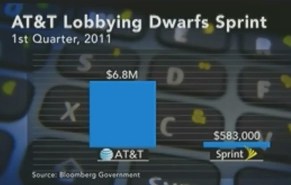
Bloomberg Government reports AT&T spent $6.8 million during the first quarter of 2011, more than 11 times more than its rival Sprint, which opposes the merger deal.  In fact, AT&T was the nation’s second biggest spender in lobbying dollars, just behind defense contractor Honeywell, which is trying to avoid Pentagon spending cuts.

Sprint’s much smaller lobbying effort had to make do with a budget of just $583,000 during the same period to push back against the telecom giant.

Also raising questions are reports from Bloomberg that AT&T CEO Randall Stephenson direct dialed Federal Communications Commission Chairman Julius Genachowski the weekend before the deal went public.  At the same time, former FCC Chairman Richard Wiley, today a lobbyist for T-Mobile, spoke directly with four of the five FCC Commissioners to directly lobby for the merger’s approval.

Sprint has been trying to beef up its own lobbying star power, recently adding Eddie Fritz, former head of the National Association of Broadcasters as one of their lobbyists.  Sprint has also hired several former high-level Congressional staffers and mid-level employees at the Justice Department, expected to help Team Sprint know how to apply the right pressure to the right people inside the FCC and Justice Department to reject the deal.  The merger hinges on the approval of both agencies.

Left off the speed dial — consumers, who cannot pick up the phone and reach FCC Chairman Genachowski while lounging in his backyard or enjoy lucrative employment opportunities open to government workers in the private lobbying sector.

[flv width=”360″ height=”290″]http://www.phillipdampier.com/video/Bloomberg ATT Lobbying 5-24-11.mp4[/flv]

Bloomberg News breaks down AT&T’s lobbying and strategy for getting its merger deal with T-Mobile approved in Washington.  (2 minutes)

Search This Site:

Contributions:

Recent Comments:

Your Account:

Stop the Cap!