Home » Broadband Speed » Recent Articles:

Indiana Newspaper Falls All Over Itself Praising Frontier Communications’ Broadband

Frontier Communications is enjoying “press release”-like praise for its broadband service in the state of Indiana, courtesy of The Times newspaper:

There are a lot of companies you can go for your internet service. Every day, you are bombarded with promises and special offers. Yet, when choosing the service best suited for you and your needs, perhaps you should turn to the company that is active in your community.

Frontier Communications is that company. Since entering the Northwest Indiana region back in July 2010 (Verizon sold all of their phone lines in this region), Frontier has made their presence known with not only a long list of unsurpassed internet services, but also with their active participation in everything from the Northwest Indiana Economic Forum to the Porter Country Jobs Commission. “We live, work and breathe customer and community,” explains Communications Manager Matt Kelley.

[…] Right now, Frontier Communications is offering a special offer of $20 per month for 12 months of high speed internet. This offer is good until the end of March. But perhaps, the greatest advantage to having your business connect with Frontier is their dedication to your success and access to cutting edge Internet technology to make a true difference in the lives of their customers.

The Porter County edition of the paper elicited a slightly less enthusiastic response from Thomas Dodge, one of our Indiana readers:

“I’d like to know what company they are talking about, because it doesn’t sound like the Frontier Communications we dealt with last year,” Dodge writes. “They made their presence known alright — 1.5Mbps Internet for about two weeks, before we canceled and switched to the cable company for 10Mbps Internet.”

Dodge says he appreciates Frontier does seem to have more interest in the community than Verizon ever did, but the company needs to invest money on broadband that delivers speeds more suitable for 2012.

“I don’t know where all the money is going, but it sure isn’t in our neighborhood,” he says. “That $20 offer sounds good until you read the fine print that includes a modem surcharge, taxes, fees, and a contract commitment.  They’re hopelessly oversold here as well, and those slow speeds actually dropped at night as people got online.”

Would Dodge give Frontier another try?

“Not after that.  I’d have to see it working better to believe it.”

How Politics and Special Interests (AT&T) Ruin Community Broadband Projects

Phillip Dampier March 1, 2012 Astroturf, AT&T, Broadband Speed, Community Networks, Editorial & Site News, Public Policy & Gov't, Rural Broadband Comments Off on How Politics and Special Interests (AT&T) Ruin Community Broadband Projects

While incumbent phone and cable operators often try to directly block community broadband projects, sometimes politics and special insider interests also get in the way.  One of our loyal readers shared a piece with us published in Fierce Telecom that outlines the trouble spots:

Gov. Bobby Jindal Blows It for Louisiana; Wife’s Foundation Heavily Supported By AT&T
Jindal's wife's charity is a recipient of AT&T money.

The U.S. Dept. of Commerce awarded $80.5 million to help drain Louisiana’s broadband swamp with a new statewide fiber network linking the most rural and poor areas of the state, including schools, libraries, hospitals, and universities.  Users could have obtained service from 10Mbps-1Gbps, but not if Jindal had his way.  He preferred AT&T (and the state’s cable operators) handle everything the same way they have traditionally handled telecommunications in the state — service in big cities and next to nothing everywhere else.  In addition to directly supporting the governor, AT&T contributes substantially to a charitable foundation founded by Jindal’s wife.

Jindal never openly blocked the project.  Instead, his administration “dithered and bickered” over the fiber network and ran the clock out.  Last October, the Commerce Department revoked the grant, leaving Louisiana’s Broadband Alliance with little more than a plan they’ll never be able to implement as long as Jindal occupies the governor’s office.  Stop the Cap! covered the mess back in November.

Public Service Commissioner Foster Campbell:

“We want to know what the heck happened; we’re the only ones in the country that dropped the ball,” Campbell said. “I meet with people in every parish, and the number one priority by far is high-speed Internet, and how do you lose $80 million coming from the federal government to do that. How do you drop the ball, and if they did drop the ball was it because someone whispered in their ears, ‘it’s going interfere with big companies?’”

AT&T-Backed Astroturf Operation Scandalizes the Mayor’s Office and Ruins A High Tech Training Program
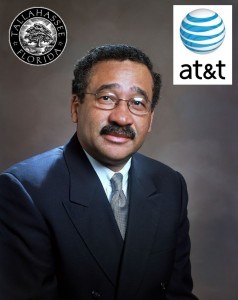
Marks

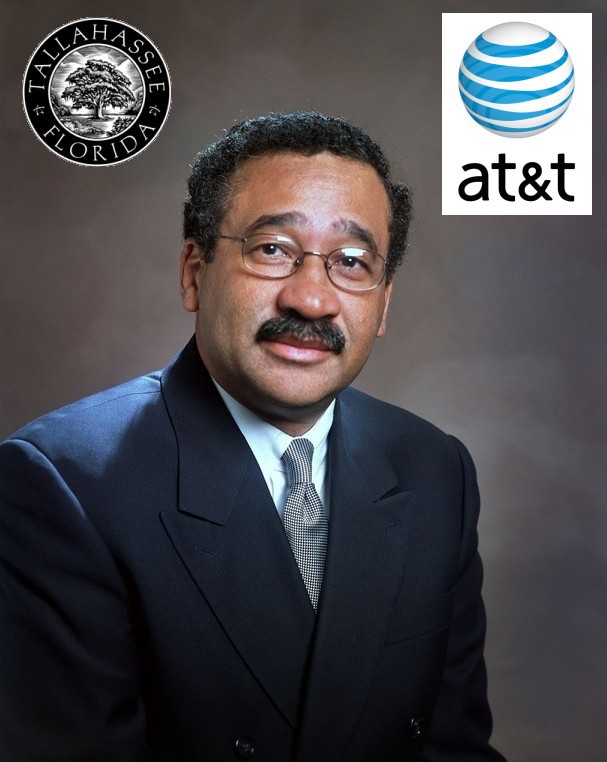
As Stop the Cap! wrote last fall, a scandal involving AT&T and the mayor of the state capital of Florida ultimately cost the city of Tallahassee a $1.6 million dollar federal broadband grant to expand Internet access to the urban poor and train disadvantaged citizens to navigate the online world.

Mayor John Marks never bothered to inform the city he had a direct conflict of interest with the group he strongly advocated as a participant in the grant project. The Alliance for Digital Equality (ADE) is little more than an AT&T astroturf effort — a front group that did almost nothing to bring Internet access to anyone. Mayor Marks was a paid adviser.

After the media got involved, the mayor’s office hoped the whole project would just go away. And it did, along with the $1.6 million.

Wisconsin Republicans <Heart> AT&T, Even When It Means Forfeiting $23 Million for Better Broadband

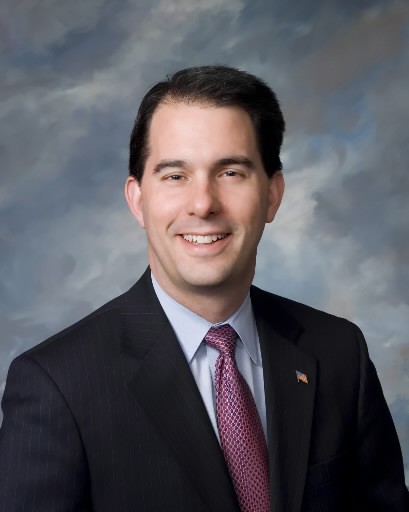
Wisconsin Gov. Scott Walker is a close friend of AT&T.  So close, when the phone company was threatened with the loss of revenue earned from the institutional broadband network it leases to the state, Walker and his Republican colleagues intervened, literally turning away $23 million in government stimulus funding.  Walker alone has accepted more than $20,000 in campaign contributions from AT&T.  Stop the Cap! covered this story in detail in February 2011.
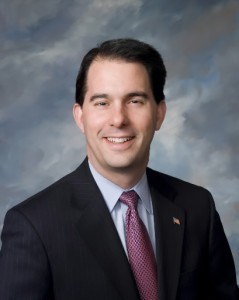
Governor Walker (R-AT&T)

The decision to return the money had a direct impact on 380 Wisconsin communities, 385 libraries, 82 schools, and countless public safety offices across the state.  Namely, being stuck with AT&T’s outdated and expensive network the state leases in successive five year contracts.  Since broadband stimulus funding requires the construction of networks designed to last 20 years, not five, Walker’s insistence on sticking with AT&T made the stimulus funding off-limits.  But what are friends for?

AT&T has historically had no trouble getting its phone calls returned by Republican state lawmakers, who have cheered most of AT&T’s proposed legislation through the state legislature.  Today, Wisconsin takes a “hands off” approach with the state’s cable and phone companies, passed a statewide franchising bill that stripped oversight away from local communities, and AT&T’s landline network faces little scrutiny in the state, especially in rural communities.

The state university is now attempting to bypass Walker with its own $37 million project, but it will never serve Wisconsin consumers.  The institutional network will target schools, hospitals and first responders.

As Fierce Telecom notes, other communities could face the loss of their stimulus funding if they do not get busy building the projects they promised.  The Rural Utilities Service, part of the U.S. Dept. of Agriculture, has put several projects on notice they could forfeit broadband stimulus funding if they fail to meet project deadlines.


Cablevision Capitulates on New Customer Promos; Verizon FiOS’ Price Slashing Really Hurt

Phillip Dampier February 28, 2012 Broadband Speed, Cablevision (see Altice USA), Competition, Consumer News Comments Off on Cablevision Capitulates on New Customer Promos; Verizon FiOS’ Price Slashing Really Hurt

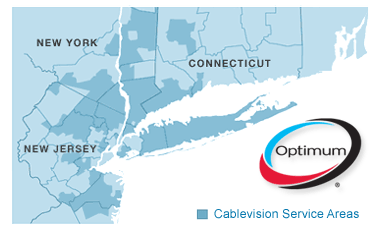
The cable company best known for serving suburban New York City.

Cablevision Industries has cried “uncle” in light of relentlessly aggressive competition from Verizon Communications, which offers its fiber to the home FiOS service in much of the cable operator’s service area.

Cablevision’s 4th quarter and year-end financial results, reported earlier today, are underwhelming investors.  Cablevision executives warned the company will have lower cash flow in 2012 due to increased investments in set-top boxes, network upgrades, and more importantly — no planned subscriber rate increases this year.

Some highlights:

Video – Losing Customers Like Everyone Else: Cablevision lost 14,000 video customers in the last quarter, many to Verizon FiOS and ongoing cord-cutting.  Analysts expected just 9,000 defections.  Cablevision will soon launch both HBO and Max Go online video for their customers nationwide.  Additional on-demand video options, online and off, are also anticipated.

Broadband – Cablevision finally admitted its own network was responsible for last year’s faltering broadband speeds that delivered poor marks in ongoing FCC speed tests.  The company originally denied the speed test results were accurate.  Today CEO James Dolan told investors the company invested in its broadband network to improve speeds and service.  Cablevision feels strongly it must compete effectively with Verizon to survive.  The company added 20,000 high-speed data customers and 31,000 phone subscribers in the quarter.  The company is doing well allowing customers easy access to broadband speed upgrades.

Wi-Fi – Cablevision sees strong value in its wireless broadband network as customers increasingly take their content mobile and need connectivity to the web.

Upgrades – CEO Jim Dolan said 2012 will be “a year of investment” in Cablevision upgrades and improvements.  The company is even accelerating projects originally envisioned for 2013.  Cablevision will continue to expand its “next day” installation offer across the eastern United States by the end of the first quarter.

Promotions – The escalating war of promotions between Verizon and Cablevision are likely to cease as Cablevision yanks their most aggressive new customer offers.  Earlier this year, Verizon was pitching a two year triple play offer that included an incredible $500 prepaid card rebate as part of the promotion.  “I don’t think you’ll see those [low introductory rates from Cablevision] again ever,” said Dolan.

“The main theme that people should take away from the call today is that we continue to be focused on moving the business in a direction where we both retain existing subscribers and have attractive, economically sensible offers for new subscribers,” said Cablevision chief financial officer Gregg Seibert.

Back to Kansas City: Google Fiber Now Going in the Ground; TV Service Also Announced

Phillip Dampier February 23, 2012 AT&T, Broadband Speed, Competition, Google Fiber & Wireless, Video Comments Off on Back to Kansas City: Google Fiber Now Going in the Ground; TV Service Also Announced

Nearly one year ago, Google selected Kansas City, Kansas as the first city to “Think Big With a Gig,” a gigabit fiber to the home broadband network that would shatter misconceptions that Americans don’t need lightning-fast broadband speeds.

In the original announcement, early 2012 was slated to be the target date for the service to become available in at least some areas of the city.  After months of wrangling with utility companies and the city government, Google began burying the first fiber lines earlier this month.  This week, it filed for permission with both Kansas and Missouri officials to compliment its forthcoming broadband service with a complete cable-TV package as well.

Google’s fiber project now has incumbent operators on both sides of the Missouri and Kansas Rivers concerned about forthcoming competition from the search engine giant, especially after Google announced it would wire both the Kansas and Missouri sides of the city.

Greater Kansas City is primarily served by Time Warner Cable and AT&T, but smaller cable operators also offer service in some areas.  Google is considering a competitive cable package with video on demand.  It is expected to wrap up licensing negotiations with programmers within a month or two, and some of its contracts allow Google to sell cable service outside of the Kansas City area, a potentially interesting development should Google want to provide an Internet-based cable system to subscribers in other cities.

We have collected several media reports on the Google project in Kansas City to bring readers up to date:

[flv width=”640″ height=”380″]http://www.phillipdampier.com/video/WDAF Kansas City Gigabit Challenge Offers Google-Friendly Ideas 12-6-11.flv[/flv]

WDAF in Kansas City reports on some of the submissions to Google’s Gigabit Challenge — a competition to consider how to leverage 1,000Mbps broadband. (12/6/11 — 2 minutes)

[flv width=”640″ height=”380″]http://www.phillipdampier.com/video/WDAF Kansas City Why is Google Fiber Set Up Taking so Long 1-18-12.flv[/flv]

WDAF reports on what is holding up the Google Fiber project.  It turns out local utilities have been harder to deal with than originally thought.  (1/18/12 — 3 minutes)

[flv width=”640″ height=”380″]http://www.phillipdampier.com/video/KMBC Kansas City Google Begins Fiber Installation In KCK 2-6-12.flv[/flv]

KMBC reports Google is ready to break ground on its new fiber network.  (2/6/12 — 2 minutes)

[flv width=”640″ height=”380″]http://www.phillipdampier.com/video/KCTV Kansas City Google Starts Laying Fiber 2-18-12.mp4[/flv]

KCTV says Google started laying fiber this week.  The new service is on the way.  (2 minutes)

Rogers: Bill Shock Warnings Cost Us Money; Subscribers Fearing Fees Stop Using Data

Phillip Dampier February 23, 2012 Broadband Speed, Canada, Consumer News, Data Caps, Online Video, Rogers 1 Comment

Ever wonder why cell phone companies are upset about new regulations that would warn customers when they are about to face mobile usage overlimit or roaming fees?  Rogers Communications explains why in their latest quarterly results:

Nadir Mohamed, CEO:

There was, however, a sequential slowing in the wireless data revenue growth rate, and that’s primarily attributable to new outbound data roaming plans that we put in place. With these new plans, we put in place automated customer notification mechanisms that had a net effect of slowing usage versus stimulating it to the degree that we expected it to. We’re in the process of modifying how these plans and notifications work, which I expect will have a more stimulative effect and help restore the trajectory we had for wireless data growth.

In simpler terms, Rogers began notifying their customers through text messaging when they were about to start data roaming — the most expensive data usage around, incurred when you leave Rogers’ service area and roam on another provider’s network.  With Canadians visiting the United States and elsewhere, using a cell phone while traveling can get expensive fast.  Rogers created new roaming data plans for customers likely to need the service while abroad.  But their roaming data plans come at steep prices:

Unintended consequences: When subscribers know they are about to pay more, they stop using.

U.S. Data Passes

Day Pass: $5 for 2MB
Day Pass: $10 for 10MB
Day Pass: $20 for 40MB
Week Pass: $25 for 15MB
Week Pass: $50 for 60MB
Week Pass: $100 for 250MB

The warnings that customers were about to incur even higher a-la-carte roaming fees or start to consume their day or weekly data pass had the unintended, but highly predictable effect of getting people to think carefully about using data while roaming.

Bruce

While good for consumers, that is bad for Rogers’ bottom line, so the company’s formerly frank warnings to customers are “being modified” to help the company “stimulate” revenue and restore the predicted revenue growth from the high-priced roaming plans.

“We tried to create real transparency about when people and how people could get on data packages as they went overseas,” admits Robert Bruce, president of Rogers Communications Division. “We put in a fair number of reminders to let people know that they were on à la carte pricing, and we think that these dissuaded significantly customers from using it and possibly created some confusion along the way.”

Rogers Cable customers are also finding some of the company’s newest innovations a challenge to their monthly broadband usage allowances, among the lowest in Canada:

  • Rogers Remote TV Manager: Enables cable subscribers to search programming and manage PVR recordings anytime on any device;
  • Rogers Live TV. This service lets cable customers stream live TV channels on their tablets and watch shows anywhere they are in the home;
  • Rogers On Demand TV app on Microsoft’s Xbox 360 LIVE platform, bringing Rogers On Demand TV to the gaming console;
  • A refresh of the digital cable user interface, improving ease of use for the Whole Home PVR and a better program guide and search function.

In the long term, Rogers is moving towards an IP-based delivery system for its video programming, allowing the company to deliver video across different platforms more efficiently.  As Rogers converts the rest of its cable systems to digital cable, it is opening up new broadband capacity — a critical part of the company’s revenues.

Rogers admits it uses data caps to drive revenue.  By moving customers into higher usage, more expensive tiers, Rogers is able to drive revenue upwards as well.

“As customers continue every quarter, in and out, to consume more and more and spend more and more time on the Internet, we think it’s both a great opportunity for us and a welcome addition to the product offering from a customer perspective,” Bruce said.

Search This Site:

Contributions:

Recent Comments:

Your Account:

Stop the Cap!