Home » Broadband Speed » Recent Articles:

Broadband Transforms: Average Australian Will Need 100,000GB Usage Allowance by 2050

By 2050 Australian consumers will need a monthly data allowance of more than 100,000 gigabytes to sustain what will, by then, be considered average use of the Internet.

That finding comes in a report, “A Snapshot of Australia’s Digital Future to 2050,” which is measuring the impact of the country’s transformation to a ubiquitous fiber to the home broadband experience for the majority of Australian consumers and businesses.

Australia and New Zealand are both embarked on a transformative effort to rid themselves of slow speed, copper-based broadband networks. Both are rolling out a combination of fiber to the home service in urban and suburban areas, and fixed wireless networks in rural areas.

The South Pacific region could soon become a global broadband leader for innovation in high speed applications development because neither country will be constrained by broadband networks that deliver the least amount of broadband service for the highest cost.

The report predicts super-fast broadband will literally transform society in Australia, with traditional media as relevant tomorrow as a buggy whip is today.

Market researcher IBISWorld says newspapers, television, radio and the record and film industries are destined for the scrap heap in a new digital world.

The report also predicts the traditional understanding of employment may also radically change, with citizens acting as free agents, pursuing work on individual projects for a variety of employers, leveraging broadband to learn what tasks need to be performed each day. Work will be performed in home offices or on the go using the country’s broadband network.

Universal high speed broadband will transform the information and communications technology sector into a $1 trillion business by 2050 — in Australia alone, predicts the report.

Australia’s PM radio program explores how life in the country will change over the next 38 years with fiber optic broadband a part of virtually everyone’s life.  (June 14, 2012)  (4 minutes)
You must remain on this page to hear the clip, or you can download the clip and listen later.


PC Magazine Hands Out Fastest Wireless Data Awards, But Does It Matter?

Won first place nationally for the best 4G LTE network with the fastest overall speeds and best performance.

PC Magazine went to a lot of effort to test the data speeds of America’s wireless providers, traveling to 30 U.S. cities sampling both 3G and 4G wireless networks to see which carrier delivers the most consistent and fastest results.

After 240,000 lines of test data, the magazine declared the results a bit “muddy.”

They have a point.

Depending on which carrier’s flavor of “4G” is being utilized, where reception was strongest, how much spectrum was available in each tested city, and how many people were sharing the cell tower at the time of each test, PC Magazine was able to deliver the definitive results. And it was effectively a draw.

Verizon Wireless achieved victory in 19 cities, AT&T won in ten others, and T-Mobile came in pretty close behind, and that carrier does not even operate an LTE 4G network. But taking all factors into account, including upload and download speeds, whether or not test downloads actually completed, and whether streamed media was tolerable, Verizon Wireless won first prize nationwide.

But by how much?

Not enough to matter, if you are using Verizon, AT&T, or T-Mobile.

But the results do offer some things to think about.

  1. MetroPCS is a mess. Despite the fact this smaller carrier is building its own 4G LTE network, results were simply terrible. Either its backhaul network from cell towers offers lower capacity or its backbone network is screaming for an upgrade.
  2. Cricket was not willing to participate in the test. Their network, still 3G, delivers dependably “meh” results in the places where they actually provide coverage. The company has been reducing data allowances on their mobile broadband plans and raising prices on others. In one conference call with investors, company executives admitted they have been losing mobile broadband customers and expect that to continue at the prices they are charging.
  3. Sprint needs their forthcoming 4G LTE network more than ever. Their 3G data service turned in mediocre results and their 4G WiMAX network was yesterday’s news a year ago. Sprint’s 3G network is also notorious for dead-end downloads, a situation I have witnessed on friends’ phones for several months.
  4. Verizon Wireless remains far ahead of AT&T in covering more cities with their 4G LTE network. But more customers are also starting to use Verizon’s newer network, and the more customers piling on, the slower the speeds get for everyone. AT&T turned in some superior speed results in several cities, but those networks are often used less than the competition, for now.
  5. No network is good if you cannot afford to use it. As America’s wireless carriers keep raising prices and reducing usage allowances to keep data usage under control, there will be a breaking point where customers decide the money they spend for wireless data just is not worth it, especially if they live in a place where Wi-Fi is free and easy to find.
  6. What you test today will probably be different tomorrow. Wireless networks are constantly evolving and changing, with a wide range of factors contributing to their overall performance. Perhaps a more useful test would have been measuring how wireless carriers respond when their networks need upgrading and how long it takes them to respond to changing usage patterns. Verizon seems particularly aggressive, AT&T less so based on these results. The real surprise seems to be how well T-Mobile’s older technology is performing, and how quickly Sprint is now falling behind. On Cricket and MetroPCS, “you get what you pay for” seems to apply.

Cogeco’s ‘Value Plan’ Doesn’t Offer Much Value: $19.95 for 4Mbps With 15GB Cap

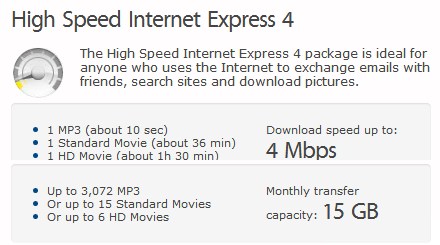
Cogeco Cable is mailing flyers to residents in eastern Canada promoting the company’s ‘value’ option:

  • 4Mbps download speed
  • 12 Month Contract with $75 early termination fee
  • Increases to $32.95/mo off contract
  • “Generous” 15GB usage cap with $1.50/GB overlimit fee (maximum penalty: $50)

Cogeco calls this plan ideal “for anyone who uses the Internet to exchange emails with friends, search sites and download pictures.”

In other words, it’s barely broadband for those who barely use the Internet.

Many Ontario and Quebec phone companies can offer even faster speeds through traditional DSL service. In Bell Fibe areas, for $6 more a month, customers can get a 15/10Mbps package for $26.97/mo for six months, which includes a safer 75GB allowance. At the end of six months, threaten to walk and Bell will extend the offer an extra six months.

Customers bundling services with either Bell or Cogeco may be able to negotiate for a package with better speeds and a more generous allowance. While Cogeco has cracked down on promotions, Bell has not, so customers served by Cogeco are advised to ask about all available deals before committing to either provider.


Fiber Optic Network Finally Improves Broadband in Western Virginia

Phillip Dampier June 14, 2012 Broadband Speed, Community Networks, Consumer News, Public Policy & Gov't, Rural Broadband, Video Comments Off on Fiber Optic Network Finally Improves Broadband in Western Virginia

While larger cities like Virginia Beach and Richmond have enjoyed broadband service for years, residents in the western half of the state often are not so lucky. The region is home to some serious broadband black holes, where residents have no access to Internet service beyond dial-up, satellite, or borrowing a friend’s expensive DSL connection in town.

Like West Virginia to the northwest, much of this part of the state suffers with very low speed DSL, occasional wireless Internet, and a handful of cable companies trying to provide access. In addition to the rural character of the region, landline networks have deteriorated over the years and large phone companies have focused their efforts on network improvements further east.

Now a series of government-funded broadband expansion projects, regional and local broadband and telephone co-ops, and local providers are working together to expand modern broadband into areas that have never had access before.

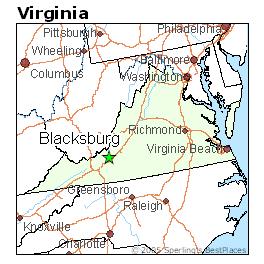
The Virginia Tech Foundation and the Mid-Atlantic Broadband Cooperative are now working to expand a fiber broadband middle-mile network from Bedford to Blacksburg — the areas surrounding Roanoke that have suffered with difficult Internet access for years.

Among the first clients is PemTel, a telephone cooperative in Pembroke. PemTel still speaks of DSL as a “new technology” in the area, and has speeds that reflect that:

DSL 256 kbps/128 kbps $29.95 ORIGINAL BASIC PLAN 
DSL 768 kbps/256 kbps $29.95
DSL 1.544 Mb/256 kbps $45.95 ORIGINAL HIGH SPEED PLAN
DSL 3.0 Mb/512 kbps $45.95
DSL 6.0 Mb/1.0 Mb $89.95


PemTel started with an original plan offering just 256kbps — speed that does not even qualify as “broadband.” But increasing capacity is opening the door for Pembroke residents to get speeds that can at least manage today’s web pages. Customers are also glad to see the back of satellite “broadband” which severely limited usage.

With fiber middle mile networks now stringing through southern Virginia, local providers can access backbone capacity at lower prices, which can, in turn, deliver substantial broadband capacity to new high tech businesses setting up in the area.

[flv width=”512″ height=”308″]http://www.phillipdampier.com/video/WDBJ Roanoke Fiber Through New River Valley 6-11-12.mp4[/flv]

The New River Valley in Virginia is building a multi-county fiber network to act like an interstate highway system for broadband.  WDBJ reports. (2 minutes)

[flv width=”480″ height=”380″]http://www.phillipdampier.com/video/WSLS Roanoke Bedford to Blacksburg gets hi-speed internet boost 6-12-12.flv[/flv]

WSLS in Roanoke explores a new fiber network going in from Blacksburg to Bedford, Va., and what it could mean for broadband-deprived residents.  (2 minutes)

Editorial: Comcast’s Blatant Disregard for the Truth About Broadband Speeds

When a company like Comcast grows so big, it no longer cares whether its marketing claims are true or false, perhaps it is time to put those claims to the test in court or before a state attorney general for review.

Recently, Comcast’s claim it runs the fastest Internet Service Provider in the nation came under scrutiny by the Better Business Bureau. The simple truth is, Comcast is not the fastest ISP in the nation — not even close. But because PC Magazine ran a limited test of some national broadband providers and found Comcast barely making it to the top, the cable giant has been running ads across the country that are disingenuous and incomplete at best, completely misleading and false at worst.

Phillip “Comcast is not too big to deserve a FAIL Dampier

The National Advertising Division of the BBB, a self-regulating industry-controlled body, found the advertising deceptive, which says a lot for a group that lives or dies on the whims of the industries that support its operations.

NAD previously determined that Comcast cannot, based on its current offerings, make an unqualified claim in national advertising to be faster than the competition. NAD noted that while Comcast is the fastest Internet option for 94 percent of the 52 million households in its competitive footprint, it is not the fastest where Verizon FiOS is available.

Consumers need deep pockets to read the actual report that mildly criticizes Comcast. The NAD keeps the public out of its business with a subscription rate of $550 a year to read detailed individual case reports. We learned about the case from one of our readers who shared a copy.

Among the false claims Comcast is still making:

  • “It’s official.  We’re the fastest.” — Officially, Comcast is not the fastest.
  • “…the fastest downloads available.” — False.
  • “FiOS Does Not Live up to Expectations….With Speeds of Up to 105Mbps, XFINITY was rated as the fastest Internet provider in the nation by PC Magazine.” — But FiOS speeds are faster than Comcast. PC Magazine did not test Verizon FiOS.

Comcast agreed to consider making changes to their advertising to comply, but that now appears to be a non-starter.

In Chattanooga, Tenn., EPB Fiber broadband beats the pants off Comcast. No, it’s actually worse than that. EPB embarrasses Comcast’s comparatively slow broadband service. While Comcast was looking for a way to manipulate customers into using its Xbox online video app to avoid their unjustified usage cap, EPB customers were bypassing that problem altogether by choosing EPB’s fiber to the home service that doesn’t have usage caps and delivers speeds up to 1Gbps.  Comcast, (remember they are “America’s fastest”) tops out at 105Mbps.

One would think Comcast would be hurrying their blatantly false advertising off the air and out of sight in Chattanooga, but the company has refused.

The Times Free Press reports Comcast won’t be making any changes to their ads, and has actually doubled-down with more blatantly false marketing claims. Why? Because EPB is too small of a player for Comcast to be concerned with telling the truth:

Jim Weigert, vice president and general manager of Comcast in Chattanooga, said the request won’t apply to this area and advertising will stay the same.

“I don’t see any changes at all,” he said. “Our use of that designation as the fastest ISP and fastest commercial ISP is still the same and will still be used the same as it is today.”

Weigert said local networks such as EPB, which delivers maximum download speeds about 10 times faster than those of Comcast, is too small of a player to affect the region’s advertising or PC Magazine‘s designation.

“Those awards exist, and we just need to make sure we’re using it properly and quoting it properly,” he said. “It doesn’t reference EPB at all because they’re not national. They’re not big enough to get that attention.”

In other words, actual facts about broadband speed don’t matter. With standards like this, it is only a matter of time before we’ll be seeing program length commercials for snake oil.

Beyond the fact Comcast is morally and ethically wrong here, I’m not sure I would want my company admitting to customers truth should come in second. With that kind of attitude, Comcast customers should put their wallets in their front pockets, leave the kids home and lock their car doors before visiting a Comcast Cable Store.

Deborah Dwyer, public relations supervisor for EPB, notes the Comcast ads are self-serving and “cause pretty significant confusion among the public.”

At least the public that still believes what Comcast Cable tells them represents the truth.

Search This Site:

Contributions:

Recent Comments:

Your Account:

Stop the Cap!