Home » Broadband Speed » Recent Articles:

Chattanooga: America’s First Gig City Opens the Door to Innovation, Jobs With U.S. Ignite

Phillip Dampier June 13, 2012 Broadband Speed, Community Networks, Editorial & Site News, EPB Fiber, Public Policy & Gov't, Video Comments Off on Chattanooga: America’s First Gig City Opens the Door to Innovation, Jobs With U.S. Ignite

Chattanooga, Tenn. is teaming up with U.S. Ignite to leverage America’s first Gigabit broadband city as the home of super high speed broadband innovation.

Municipally-owned EPB’s fiber to the home network is already attracting big businesses and high tech jobs to southeastern Tennessee, but now it will become an incubator for America’s next generation of broadband applications and services. U.S. Ignite will use EPB Fiber’s network to help foster the creation of new digital applications that will transform health, education, public safety, and manufacturing and help keep America a leader in high tech innovation.

It took a public, community-owned utility with the vision of an American fiber optic future to make this possible. Cable and phone companies have unilaterally decided there is no need for gigabit broadband. Will community broadband and marketplace game-changers like Google ultimately be the salvation of America’s high speed future?

[flv width=”640″ height=”500″]http://www.phillipdampier.com/video/Chattanooga US Ignite.flv[/flv]

Learn more about Chattanooga’s broadband success story through this video, which also introduces U.S. Ignite’s new project. (3 minutes)


Sprint Allows Its Majority Stake in Clearwire to Slip Below 50 Percent

Phillip Dampier June 12, 2012 Broadband Speed, Sprint, Video, Wireless Broadband 1 Comment

Sprint Nextel has allowed its majority share in Clearwire Corporation to drop below 50 percent in a strategic move to rebalance its voting and economic interest in the wireless partnership.

Clearwire runs the WiMAX 4G network Sprint sells to its customers, but America’s third largest cell phone carrier shares that 4G network with several other companies that resell access under various brands, including Time Warner Cable Mobile, Best Buy Mobile, and a range of smaller “MVNOs,” which mostly offer prepaid access.

Clearwire’s troubled existence forced Sprint to reduce its involvement and ownership in the company last year, when some analysts predicted the company faced imminent default on its debt. Had that happened, Sprint would have found itself inextricably tied to Clearwire’s fate as a majority owner, and could have been forced to help bailout the enterprise.

Clearwire has been trying to reinvent itself after Sprint declared it planned to construct its own 4G LTE network that would gradually replace the older WiMAX technology Clearwire uses.  That news challenged Clearwire because Sprint in the largest user of the network, providing 9.7 million customers with access. Clearwire’s own retail service, under the Clear brand, has just 1.3 million customers. More than one-third of Clearwire’s income comes from Sprint.

As Sprint customers gradually depart from WiMAX, Clearwire is trying to find new markets reselling access to the older technology to prepaid startups and discount resellers including FreedomPop, NetZero, Simplexity, and most recently Jolt Mobile.

But even Clearwire understands the days of its WiMAX network are limited. The company plans to build its own TD-LTE 4G network to remain competitive, and will resell wholesale access to prepaid services and to larger concerns like Leap Wireless’ Cricket and Sprint as those companies work to gradually expand their own LTE networks.

Clearwire believes their enormous spectrum assets could help smaller wireless companies fulfill demand for 4G service, particularly if those companies lack sufficient spectrum to fully provide the service themselves.

“We believe that, as the demand for mobile broadband services continues its rapid growth, Sprint and other service providers will find it difficult, if not impossible, to satisfy their customers’ demands with their existing spectrum holdings,” Clearwire indicated in its last quarterly report. “By deploying LTE, we believe that we will be able to take advantage of our leading spectrum position to offer offload data capacity to Sprint and other existing and future mobile broadband service providers for resale to their customers on a cost effective basis.” .

Clearwire plans to have 5,000 TD-LTE cell sites functioning by mid-2013 and quickly grow the network to 8,000 cell sites nationwide. Among the first cities expected to get the new LTE 4G service first are New York, Los Angeles, Chicago, and San Francisco.

[flv width=”640″ height=”380″]http://www.phillipdampier.com/video/Clearwire 4G LTE Trials Results 1-2011.flv[/flv]

Clearwire holds more wireless spectrum than any other American wireless company, with 150 MHz in the 2.5 GHz band in the nation’s top 100 metro areas. Unfortunately for them, their high frequency spectrum does not penetrate buildings  as well as lower frequencies, such as 700MHz (Verizon & AT&T), making reception problematic indoors, especially in areas where signal strength is lower. Despite that, Clearwire believes its huge swath of spectrum gives it the ability to deploy extremely wideband 4G LTE service, which this video shows can support faster speeds. But the tests were conducted outdoors, where Clearwire’s network typically performs better. (2 minutes)


Comcast Told to Pull False Ad Claims It Has “Fastest” Broadband in the Nation

Phillip Dampier June 12, 2012 Broadband Speed, Comcast/Xfinity, Competition, Consumer News Comments Off on Comcast Told to Pull False Ad Claims It Has “Fastest” Broadband in the Nation

Comcast’s claim that its Xfinity Internet is the “fastest in the nation” is demonstrably false and has led to a request by the National Advertising Division, a self-regulating industry group, that Comcast pull the ads.

The NAD found Comcast was basing its claim on this 2011 PC Magazine article that gave high ranks to Comcast, along with Cox and Charter, for fast download speeds. But PC Magazine‘s study failed to account for Verizon FiOS and other fiber broadband providers, who routinely deliver upload and download speeds far in excess of what Comcast can offer.

The report (Case #5463 — available only to subscribers), recommends that Comcast stop making the claims in markets where fiber networks like FiOS are available. Where the company does choose to run the ads, they should disclose the PC Magazine report as its source.

Comcast’s cable broadband can deliver faster speeds than traditional telephone company DSL, but fiber broadband can deliver much faster service with equal upstream and downstream speeds of up to 1Gbps.

Comcast said it would consider the NAD’s recommendations.

Broken Promises: The Telecommunications Trust That Doesn’t Deliver

Phillip Dampier June 11, 2012 AT&T, Broadband Speed, Comcast/Xfinity, Competition, Consumer News, Public Policy & Gov't, Verizon Comments Off on Broken Promises: The Telecommunications Trust That Doesn’t Deliver

AT&T, Verizon, and cable companies like Comcast have quietly created the 21st century equivalent of the railroad monopoly, and are using their market power to raise rates, block competition, and supply inferior service to customers.

That conclusion comes courtesy of former telecom industry analyst Bruce Kushnick, who today serves as a consumer watchdog for the telecommunications industry’s broken promises and bad service.

Kushnick is chairman of New York-based Teletruth, a customer advocacy group that is spending a lot of time demanding Verizon finish the fiber optics network it promised would be available throughout states like New Jersey.

Kushnick has just completed a new e-book, the “$200 Billion Broadband Scandal” chronicling how the telecommunications industry has used power and influence to outmaneuver regulators and make promises they cannot or will not keep, for which they are never held accountable.

Kushnick’s view of the current state of broadband and telecommunications in the United States:

  • For the last 20 years, the nation’s major telecom companies have played the public and regulatory officials for fools – wrangling dramatic rate increases while making promises about fiber-optic cable they haven’t delivered.
  • The communications infrastructure is the most important thing to build back the nation’s economy.
  • The caretakers of America’s essential infrastructure have scammed us, big time, and it’s going to get worse.
  • The Federal Communications Commission is in the pocket of the phone companies.

Kushnick

Kushnick scowls over news Verizon, Comcast, and Time Warner Cable are about to cross-market cable and wireless phone service, calling it a textbook case of “Antitrust 101.”

Despite promises that the phone companies would bring extensive competition to America’s cable monopoly, the two competitors have effectively declared a truce.

In Kushnick’s view, phone companies like AT&T and Verizon are breaking their promises to regulators and consumers.

“Illinois Bell was supposed to rewire the state (with fiber-optic cable), starting in 1993 at an initial cost of $4 billion,” Kushnick said.

Instead, AT&T moved in and bought out the phone company and has dragged its feet on fiber deployment, along with most other big phone companies.

Kushnick told the Journal Star phone companies are going cheap avoiding fiber optic infrastructure while still ringing up huge profits.

“Every state is different. Pacific Bell stated they would spend $16 billion by 2000 on 5.5 million homes. Bell Atlantic claimed it would spend $11 billion on 8.75 million homes,” he said.

Verizon New Jersey said it would wire 100 percent of that state by 2010. Now there’s political action in New Jersey to hold the telecom accountable for failing to meet that goal, said Kushnick.

How do the companies get away with missing deadlines? “The phone companies have control of the regulators and a strong PR machine. The public is often unaware of what claims were made five or 10 years ago,” he said.

Kushnick is very aware. Take AT&T’s U-Verse service, so heavily advertised during NBA playoff games, for example. “(U-Verse) isn’t even fiber optic to the home but uses the old copper wiring,” he said.

While Kushnick puts a spotlight on the problem, the public would do well to bone up on what’s going on when it comes to the broadband services they pay so dearly for.

AT&T Discovers It Has Rural Customers Who Need Better DSL; Company Mulls Providing It

AT&T seems to have suddenly discovered it has millions of rural customers who are making due with the company’s poorly-rated, slow speed DSL service AT&T pondered selling off to somebody else.

In a sudden turnaround, CEO Randall Stephenson has decided it might be better to upgrade the company’s service instead of ditching it altogether.

Stephenson’s apparent decision not to jettison rural AT&T landlines on the open market may have more to do with the current regulatory climate than what’s best for shareholders in the short term. AT&T may also find few buyers for the millions of rural landlines the company has no plans to upgrade to its U-verse fiber to the neighborhood platform. The most likely would-be buyers are preoccupied with their current operations:

  • Frontier Communications, which purchased rural assets from Verizon Communications, is facing an enormous debt payment in 2013 and a declining stock price;
  • FairPoint Communications, which owns former Verizon landlines in northern New England, is still trying to make its business plan work after an earlier bankruptcy filing;
  • CenturyLink is still attempting to absorb former-Baby Bell Qwest into its network;
  • Windstream may be too small to buy the millions of customers in multiple states AT&T seemed to no longer want until recently.

Stephenson told investors at a Sanford C. Bernstein conference that the company is now considering keeping its rural customers and upgrading DSL technology to better serve them.

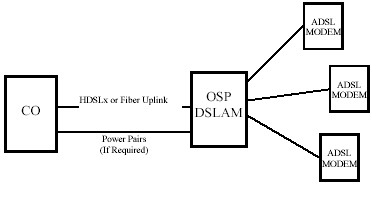
A DSLAM reduces the amount of speed-slowing traditional copper phone wiring between the telephone company's "central office" (CO) and your home's DSL modem.

With 15 million AT&T customers having no prospect of getting AT&T’s U-verse service, and 5 million without any AT&T broadband options at all, Stephenson says investment in Internet Protocol Digital Subscriber Line Access Multiplexers, better-known as IP DSLAMs, could extend service and also improve speeds for existing DSL customers, and not cost the company a fortune.

Stephenson noted the cost of the equipment needed to extend service has dropped considerably, in part because demand for DSL has been in decline as customers seek faster broadband, often from cable operators. The two largest phone companies in the country — AT&T and Verizon — had also shown little interest in further expanding their DSL networks.

For a reasonable investment on service upgrades, AT&T could bring speeds of 10Mbps or more to certain customers who now live with 6Mbps or less.

The challenge AT&T faces is reducing the amount of legacy copper telephone wiring between the phone company’s switching office and the customer. Customers who live more than 10,000 feet from a central office make due with very slow DSL speeds. Replacing some of that copper wiring with fiber optics can dramatically increase speeds.

AT&T U-verse works on a similar concept, except AT&T’s most advanced service needs as little copper phone wiring as possible. AT&T’s newest proposal for its rural customers would represent a middle ground — extending fiber to a handful of DSLAMs at distant points from the central exchange, with copper phone wiring carrying the signal the rest of the way to the subscriber’s home. This would open the door to DSL for customers who could not purchase the service before. It would also boost speeds for existing customers.

The decision marks a departure from AT&T’s interest in “solving” the rural broadband problem with heavily usage-limited wireless Internet access over its 4G network. Verizon Wireless is currently testing its own wireless broadband service designed for home users, but it costs $60 and only provides 10GB per month of usage.

While Stephenson has not backed away completely from selling off rural customers outside of U-verse service areas, he told investors he now has a more optimistic view of AT&T’s rural folk in light of marketplace changes.

“We are giving this a hard look,” Stephenson told investors on a recent JPMorgan conference call. Already-available DSLAM technology “brings broadband capability in a more cost-effective manner, with a better revenue profile than perhaps we would have thought two years ago.”

Search This Site:

Contributions:

Recent Comments:

Your Account:

Stop the Cap!