Home » Broadband Speed » Recent Articles:

Time Warner Cable Moving to All-Digital Cable TV Across New York City

Phillip Dampier May 9, 2013 Broadband Speed, Consumer News, Video 1 Comment
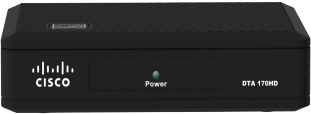
Cisco 170HD DTA

Cisco 170HD DTA

Time Warner Cable customers in greater New York will soon need set-top boxes or CableCARD technology to keep watching cable television.

The cable operator will be dropping analog television service, starting in Mount Vernon, Staten Island, and Bergen County, N.J. with much of the rest of the downstate region switched over the summer.

Cable television customers who already use Time Warner Cable set-top boxes, including DVRs, will not notice any change. Customers that plug a cable directly into the back of a television will need to take steps to keep their video service working after the digital conversion.

Time Warner’s digital switch will also disable viewing on televisions equipped with a QAM tuner. Cable operators now have the power to encrypt their entire television lineup.

twcGreenThe company is mailing letters to affected television subscribers advising them to get a Time Warner Cable DVR, traditional set-top box, CableCARD or Digital Adapter (DTA). For secondary televisions, Time Warner’s new DTA for downstate New York is the Cisco DTA 170HD, which supports both High Definition and Standard Definition channels and digital-only QAM tuning up to 1GHz. This model is also capable of providing HD premium channels, which are currently not available to customers with earlier generation DTAs. It is unknown if Time Warner will support that functionality.

Time Warner is making DTA units available to customers at no charge through the end of next year. Effective Jan. 1, 2015 each DTA box will cost $0.99 a month.

The company says the digital conversion will open extra bandwidth on the cable system to support more video on demand, HD channels, and faster broadband. Each 6MHz analog channel will make room for 10-12 digital channels, three digital HD channels, or an extra 40Mbps of download speed, according to Time Warner’s blog.

Residential customers can get DTA boxes as follows:

  1. through the website at www.TWC.com/digitaladapter
  2. via the telephone at 1-855-286-1736
  3. in-person at a local TWC store
  4. have a tech visit and install it

[flv width=”640″ height=”380″]http://www.phillipdampier.com/video/TWC Digital Conversion NYC 4-29-13.mp4[/flv]

 Time Warner Cable produced this video to explain the digital conversion, who needs to get ready, and how.  (2 minutes)

Broadband Lessons from JCPenney: Listen to Wall Street or Customers?

Phillip "I Shop At TJMaxx" Dampier

Phillip “I Shop Online” Dampier

Last week, JCPenney launched their nationwide redemption tour, apologizing to millions of ex-customers that fled the former retail giant, begging them to come back.

It took over a year for JCPenney to get the message that “disciplining” and “re-educating” customers to accept the wisdom of everyday higher prices with few sales and almost no coupons was hardly the door-busting success “miracle worker” CEO Ron Johnson originally had in mind. The ex-Apple executive was rewarded a $52.7 million signing bonus to take over JCPenney’s tired leadership and in return he dragged sales down 28.4% from the year before, with same store sales down 32%. Johnson’s new vision also steamrolled one-third of JCPenney’s online business.

The day those results became known, he confidently showed Wall Street he did not dwell in the reality-based community: “I’m completely convinced that our transformation is on track!” (For Kohl’s benefit anyway.)

Johnson also believed in a “less is more” philosophy in human resources, overseeing layoffs of 13 percent of the company’s workforce last April, with another 350 let go in July.

Despite the fact his all-new, rebooted vision of JCPenney was about as popular as bird flu, he stayed, even as customers and employees didn’t.

It wasn’t that the company didn’t know customers had a problem with all this. Many complained about the radical, unwanted changes at JCPenney, particularly middle-aged professional women representing one of the stores’ most important business segments. Company executives simply didn’t listen.

A year later, some of the same analysts that cheered JCPenney’s crackdown on discounting now wonder if the company will survive 2013. Many fretted about the real possibility the last customer to brave the “new era” of JCP might forget to turn the lights out when they left for good. Others were mostly furious the board let Johnson go.

Despite the tragic consequences, the conventional wisdom on Wall Street remains: Alienating customers with a revamp nobody asked for and “everyday pricing” designed to boost profits every day was not the problem, how Johnson implemented the strategy was. He just didn’t educate customers enough.

We see the same warped thinking in the broadband marketplace, particularly with usage caps, consumption billing, junk fees and the general ever-increasing price of broadband itself.

On providers’ quarterly results conference calls, the regular questions challenging leaders of the industry are not about providers charging too much for too little. The real concern is that your ISP is leaving too much ripe fruit on the tree:

  • Where is the revenue-boosting usage caps and consumption billing, Time Warner Cable?
  • Comcast: can’t you raise prices further on those recent speed increases to maximize additional revenue?
  • Verizon: why are you spending so much on fiber broadband upgrades customers love when that money could have gone back to shareholders?
  • AT&T: Is there anything else you can do to exploit your market share and make even more money from costly data plans?

The best ways a consumer can reward a good broadband provider include remaining a loyal customer, paying your bill on time and upgrading to faster speeds as needed. For Wall Street, the growing demand for broadband is a sign there is plenty of wiggle room for at-will rate increases, new fees and surcharges, contract tricks and traps, customer service cuts, and monetizing usage wherever possible. After all, you probably won’t cancel because the other guy in town is doing the same thing.

This is what sets the broadband marketplace of today apart from most retailers: consumers don’t have 10-20 other choices to take their business to if they are fed up.

Comcast or AT&T? Both charge a lot and have usage limits on their broadband service for no good reason. Your other alternatives? A wireless provider charging even more with an even lower usage cap. Or you can always go without.

While providers may tell you there is a healthy, competitive broadband marketplace, Wall Street knows better. When Time Warner Cable recently announced it would dramatically curtail new customer promotions and concentrate on delivering fewer services for more money, nobody bothered asking whether this would result in a stampede to the competition. What competition?

Although Google is delivering much-needed, game-changing competition in a tiny handful of cities, most Americans will not benefit because the best upgrades and lowest prices are only available where Google threatens the status quo. A larger number of municipalities are done putting their broadband (and economic) future in the hands of the phone and cable company and are building their own digital infrastructure for the good of their communities.

For everyone else, we can dream that one day, someday, the cable and phone company most Americans do business with will be forced to run their own JCPenney-like apology tour for years of abusive pricing and mediocre “good enough for you” broadband with unwarranted usage limits. Time Warner Cable went half way, but until competition or oversight forces some dramatic changes, we should not count on providers to actually listen to what customers want. They don’t believe they need to listen to earn or keep your business.

Spring Snowstorm Eclipses Omaha’s Initial Interest in CenturyLink Gigabit Broadband Trial

Phillip Dampier May 2, 2013 Broadband Speed, CenturyLink, Competition, Cox, Data Caps, Google Fiber & Wireless, Public Policy & Gov't, Video Comments Off on Spring Snowstorm Eclipses Omaha’s Initial Interest in CenturyLink Gigabit Broadband Trial
A freak spring snowstorm has stolen CenturyLink's thunder.

A freak spring snowstorm has stolen CenturyLink’s thunder.

A freak spring snowstorm has covered up much of the anticipated publicity for CenturyLink’s plans to launch a trial of gigabit fiber broadband for 48,000 customers in western Omaha.

The phone company announced the pilot project this week amid a historic spring storm that dumped several inches of heavy, wet snow on parts of Nebraska. The media devoted most of its attention to the weather.

CenturyLink admits its gigabit fiber service is a pilot project designed to test consumer demand and the tolerance of local officials for limiting upgrades to selected neighborhoods and customers most likely to buy the service. CenturyLink has priced the gigabit service comparably to Google Fiber — $79.95 a month if bundled with other CenturyLink products. Standalone broadband is nearly twice as expensive — $149.95 a month.

“CenturyLink is pleased to offer its Omaha customers ultra-fast broadband speeds up to 1Gbps to help keep pace with growing broadband demands,” said Karen Puckett, chief operating officer. “This demonstrates our commitment to deliver communications solutions that provide our customers with the technology they need to enhance their quality of life, now and into the future.”

CenturyLink will not be building the fiber network from scratch. The company already runs a 100Gbps middle-mile/institutional fiber network in Omaha that reaches certain business clients and serves as a conduit for CenturyLink customer traffic. CenturyLink will supplement that by using the remnants of its predecessor’s long-gone Qwest Choice TV service. The company will spend millions to run fiber connections to homes and businesses, but around 9,800 residents formerly served by Qwest’s television service will be able to sign up for CenturyLink Lightspeed Broadband as early as Monday. Others may have to wait until as late as October.

lightspeedCenturyLink now sells up to 40Mbps speeds in Omaha, with a 300GB monthly usage cap. The company has not said if it intends to apply a usage limit on its fiber customers.

The phone company’s largest and fastest competitor is Cox Cable, which sells up to 150/20Mbps service for $99.99 a month.

Cox Cable cannot match CenturyLink’s speeds at the moment, but does not think most Omaha residents need or want gigabit fiber.

“It is important to note that our most popular Internet package remains the one that provides speeds of 25Mbps, which meets the needs of the majority of customers,” said Cox spokesman Todd Smith. “We will continue to talk with our customers and invest in product enhancements to provide an optimal broadband experience.”

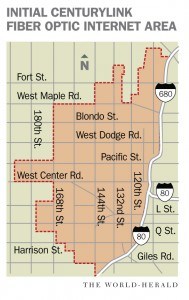
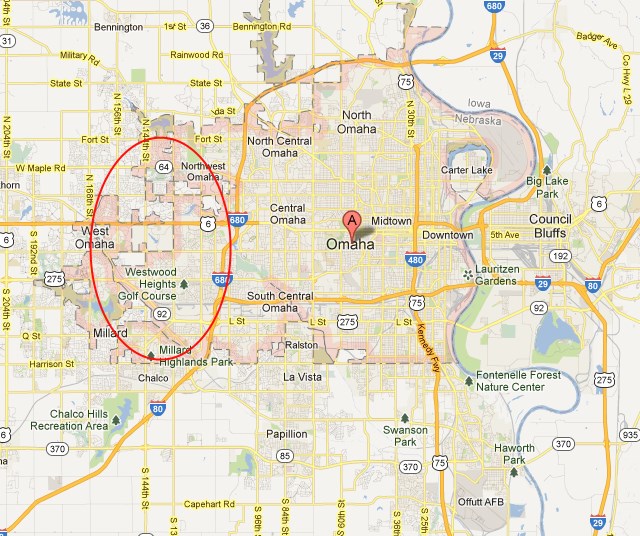
omaha centurylink fiberOnly around 12% of metropolitan Omaha will have access to the experimental fiber service, primarily those living in West Omaha. The network will bypass residents that live further east. The boundaries of the forthcoming fiber network are notable: West Omaha comprises mostly affluent middle and upper class professionals and is one of the wealthiest areas in the metropolitan region. Winning a right to offer service on a limited basis within Omaha is an important consideration for telecom companies like CenturyLink.

AT&T, Verizon, CenturyLink and other telecommunications companies are seeking deregulation that would end universal service mandates that require companies to build their networks in every neighborhood, rich and poor.

Cable and telephone companies have taken careful note Google Fiber is being allowed to provide service only where demand can be found — a significant change in long-standing municipal policies that demand cable and phone companies provide access to nearly every resident.

CenturyLink delivered a “between the lines” message to local officials when it suggested it might expand its fiber network elsewhere in Omaha and beyond, but only after evaluating the project for “positive community support, competitive parity in the marketplace and the ability to earn a reasonable return on its investment.”

In other words, keeping zoning and permit battles (and residential complaints about construction projects) to a bare minimum, allowing the company the right to choose where it will (and won’t) deploy service, and making sure people will actually buy the service are all the key factors for fiber expansion.

AT&T said much the same thing when it vaguely promised a gigabit fiber network to compete with Google in Austin.

Google may have unintentionally handed their competitors a new carrot: deregulate us in return for fancy fiber upgrades that customers crave.

In perspective: CenturyLink's fiber trial will only impact about 12% of metropolitan Omaha's population, primarily in and near affluent West Omaha.

In perspective: CenturyLink’s fiber trial will only impact about 12% of the total population of metropolitan Omaha, primarily in and near affluent West Omaha.

[flv width=”480″ height=”290″]http://www.phillipdampier.com/video/WOWT Omaha CenturyLink Gigabit 5-1-13.flv[/flv]

WOWT in Omaha spent less than a minute reporting on CenturyLink’s forthcoming gigabit fiber trial. A spring snowstorm preoccupied most of Omaha’s media instead.  (1 minute)

Frontier’s Latest Gambit: Frank the Buffalo Is Company’s First-Ever Mascot

Frontier's new mascot

Frontier’s new mascot

I’m sure more than a few readers work for a company with a marketing department that churns out advertising and imagery that leaves you shaking your head wondering what they were thinking.

There are some employees at Frontier Communications who are head-scratching this week as the company unleashes “Frontier’s First Ever Spokesman.”

His name is Francis Abraham Buffalo (his friends get to call him “Frank.”) He’s a… buffalo.

An internal memo obtained by Stop the Cap! informs employees Frank is prepared to bulldoze his way through “the clutter and get consumers buzzing.”

“Think of the Aflac duck and the Geico gecko,” a Frontier executive writes. “People have a truly positive association with them that translates into a positive feeling for those companies.”

But can a new mascot really change perceptions about a company more than the quality of the products or services a company provides (or doesn’t)?

For the record, your editor has never been particularly moved by either the duck or the gecko, and I, along with many other Americans, stopped watching television commercials years ago with the advent of the DVR. I have also never bought a product or service based on anything other than its merits and price. Frontier’s buffalo will not change that.

The mascot search involved a nationwide focus group of at least 800 customers and non-customers who were shown a series of “try-outs” involving lip-synched ducks, pigs, and various other creatures you may have last encountered as roadkill.

“Frank was the top choice, lifting our preference rating over the competition by 8 points and decreasing the competition by 3 points.  That’s a net 11 point increase for Frontier and solid support that we’re on the right path,” the company trumpets.

frontierOf course, their cable competitors can always suggest while Frontier is busy playing with animals, they are delivering far faster broadband service and a better package of phone, broadband, and television service that does not involve a third-party satellite dish stuck on your roof.

Even some Frontier employees were less than enthusiastic about the endeavor, already predicting the response ads from the competition.

“I thought the pig would’ve been a better choice,” writes one. “I can just see the competition running ads about not getting ‘Buffaloed’ by Frontier!”

Most of the excitement among employees seems to emanate from the office that envisioned the campaign and spent a lot of money to make it happen.

“A landmark decision in the continuing evolution of Frontier,” jokes a Frontier worker less than thrilled with the result.

Even Frontier executives admit that Frank might be a big, fat target:

“We have also heard some concerns from our employees that we are proactively addressing in the campaign so our competitors won’t take advantage of our new brand spokesperson.”

“Frank will be a boffo buffalo. A solid, truth-talking machine that doesn’t like fuss or tricks – and neither do we.   We play it straight — price guarantees and no contracts make it easy for consumers to understand our products and services.  So if anyone asks, Frank is not here to “buffalo” or trick anyone (call Cable if you want that!).  He doesn’t deal with BS or malarkey, and that means no hidden fees, no surprises.”

Phillip "It's actually an American bison" Dampier

Phillip “It’s actually an American bison” Dampier

Frontier is asking for advice on how to make Frank a better buffalo and offer any additional feedback. At Stop the Cap! we are always willing to help, so we publicly offer advice for our hometown phone company.

  1. The American buffalo is actually the American bison, but that probably sounds too French (it is actually Greek, but nobody wants to get too close to Greece these days). The bison’s story is remarkably similar to phone companies like Frontier. It once roamed across the American landscape in great herds but was targeted to near extinction. Just like your landline. It still maintains “near threatened” status, and is only gradually making a comeback with the help of conservation efforts. While our ancestors shared their lives with the bison, most people today will only meet one in a zoo or park. We are unsure why Frontier would want to associate itself with an animal best known in the past and unlikely to be seen today.
  2. Lip-synching animals (and babies) has become cliché. We were not too impressed with the voice talent Frontier decided to use for their animals either. Instead, check out Telus, western Canada’s biggest phone company. They turn animal wrangling into an art form, using various critters in their ads for phone, broadband, and wireless service. Telus compliments their animal friends with Canadian musicians to visually and musically deliver whatever message the company wants to share.
  3. While Frontier may have eliminated some of its old tricks like contract termination, equipment, service protection, and surcharge fees from customer bills, many of us have long memories of the surprise steep cancellation fees charged when dropping landline service that we kept for 20+ years. Others found Frontier’s inadequate DSL only slightly less annoying than the $100+ service termination fee thrown on the last bill. Some of those fees are still being charged to customers, including a particularly silly broadband account service order charge that still stings departing customers. It is hard to accept Frontier’s new marketing messages when the company is still baiting the traps.
  4. Frontier’s reputation problem does not come from poor advertising. It comes from a poor selection of products and services. Frontier until recently has simply refused to keep up with the reality of today’s broadband market. Sorry, basic DSL will no longer cut it, particularly when a competitor arrives. Cable can still out-class Frontier’s broadband products even after upgrades to ADSL2+ and VDSL. Frontier bills are still loaded with surprise surcharges and extras that raise the out-the-door price, sometimes even higher than what cable charges. The more important question to ask focus groups is why people do business with Frontier. Is it because they have to or they want to?

Frontier still does not evoke “cutting edge” anything. Frontier FiOS, inherited from Verizon, is the child nobody wants to talk about.

For years, Frontier only offered ADSL at speeds that stopped keeping up with cable a decade ago, even in large metro areas like Rochester, N.Y. When the company advertised “up to” in association with broadband speeds, it meant it: advertise up to 12Mbps but deliver service as slow as 3.1Mbps. With VDSL, 25Mbps might be doable, but cable already offers 30/5 or 50/5Mbps that is a sure thing.

Frontier’s landline service is generally reliable and works even with a power outage if you have a wired phone. But the company charges too much for a phone line many people are now jettisoning in favor of their cell phone and the company is still pushing long distance calling plan bundles that are now irrelevant. Does anyone under 35 know what a toll-call is?

Frontier’s “television” service for most customers is a third-party reseller agreement with a satellite provider with its own contract and conditions. Exciting? Not exactly.

There isn’t much to see here. AT&T and Verizon have spent money to earn money. The only major success story from AT&T’s landline business is its U-verse platform. Verizon FiOS delivers the most formidable competition cable operators like Time Warner Cable and Cablevision have seen. Even CenturyLink has invested in Prism, a fiber to the neighborhood system that can deliver a true triple-play package of services that give customers a reason to stay.

Frontier has Frank the Buffalo and some long-overdue technology upgrades that probably won’t win back a lot of customers.

So what are the strengths Frontier can sell?

  1. In most markets, Frontier has no hard limit on broadband usage. That is an attractive selling point where cable operators slap usage caps on customers. Usage caps can and do trigger customer defections;
  2. Frontier phone service is generally more reliable than cable or Voice over IP. Talk to customers in storm-struck areas who lost power and cable, but their phone line kept on working;
  3. Frontier ADSL2+ and VDSL can outperform rural cable operators who have either oversold their shared network or don’t offer higher DOCSIS 3 speeds yet;
  4. Frontier Wi-Fi, if vastly expanded, can be a useful free add-on and selling tool in areas served by cable operators that do not offer the service. But Frontier Wi-Fi hotpots have to be more commonly encountered to make a difference.

Above all, Frontier must keep upgrading its network to stay competitive. Once you lose customers, they can be extremely hard to get back. For many of us, establishing an account with the phone company meant significant installation fees and several days before a crew would turn up to connect service. Frontier knows perfectly well going back to the phone company after leaving is a high hurdle many never attempt.

The best mascot a company like Frontier can adopt are real customers and employees talking about their satisfaction with the changes Frontier is making. Without that, the customers that left will probably always think of Frontier as yesterday’s news. Using an American buffalo that neared extinction itself is probably not going to change that perception.

[flv width=”640″ height=”380″]http://www.phillipdampier.com/video/Frontier Animal Mascot Tryouts 4-13.flv[/flv]

Here are Frontier’s animal mascot tryouts. (1 minute)

Time Warner Cable Pulling Back Hard on Promotions: New Customers Will Pay More for Less

Phillip Dampier April 25, 2013 Broadband Speed, Competition, Consumer News, Data Caps Comments Off on Time Warner Cable Pulling Back Hard on Promotions: New Customers Will Pay More for Less

timewarner twcAfter more than a year of aggressive promotions for new customers and those threatening to switch to a competitor, Time Warner Cable has pulled back to boost revenue and make greater profits.


CEO Glenn Britt told Wall Street investors on this morning’s quarterly results conference call that the cable operator is moving in a different direction.

“It’s based on a simple premise: sell people what they want and what they can afford in the first place,” Britt said.

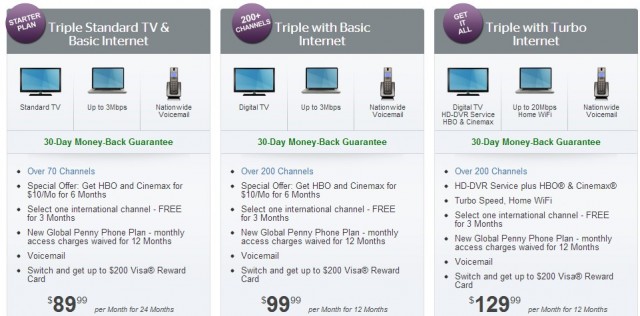
In February, Stop the Cap! noted that Time Warner Cable’s new customer promotions had dramatically changed for the worse. The package prices remained the same — around $80 for a double-play or $89-99 for a triple-play package of cable, broadband, and/or phone service, but customers received a lot less for their money. For example, last year’s promotions bundled Standard/Turbo Service broadband (10-15Mbps) with most offers. Starting this year, only 3Mbps Internet is included. Equipment fees are still extra, but more costly than ever – $8.99 a month for a traditional set-top box, $21.94 a month for a DVR-equipped box and service.

Robert Marcus, Time Warner Cable’s chief operating officer now admits it was all part of the plan, and the company now earns 15-20% more from customers subscribing to the less-aggressive new customer promotions.

“In January we implemented a new pricing and packaging architecture that’s designed to drive greater [new customer revenue] and profit,” Marcus told investors. “We still advertise the same beacon prices, but the product packages are leaner, with lower speeds and fewer channels and features. Once our beacon offers get the phone to ring, our inbound sales reps are trained to help customers select options that are important to them, like faster broadband or a DVR. As a result, customers are up-sold into packages that better meet their needs.”

This year's promotions largely only bundle 3Mbps broadband instead of the standard 10-15Mbps bundled last year.

This year’s promotions largely only bundle 3Mbps broadband instead of the standard 10-15Mbps bundled last year.

Marcus admitted the trade-off is customers shopping around for the best deal who read the fine print are likely to consider an offer from a competitor more closely. Others are disconnecting service when their promotion expires.

Marcus

Marcus

“By and large, when were talking about triple play disconnects, they are going to our telco competitors,” Marcus said. “When we’re talking about single-play video disconnects, they, by and large, leave us for satellite. We’re increasingly finding that phone customers are dropping landline phone for wireless-only, and there are video customers who are leaving — and broadband customers for that matter, who are leaving the category, and that’s probably more of an affordability issue than anything else.”

Verizon FiOS is Time Warner’s most dangerous competitor because it beats the cable operator on broadband speed and promotional pricing. Time Warner faces some of the highest disconnect numbers in FiOS areas. AT&T U-verse is also having a greater impact because AT&T recently decreased the price of both their triple and double-play promotions and has increased broadband speeds in some areas, Marcus reported.

Marcus said Time Warner is handling the subscriber churn fine, and the cable company now cares more about higher revenue and profits than attracting deal-hunters who shop on price.

“Last year’s aggressive triple play offers drove significant connect volume, which led to the highest quarterly subscriber net adds we’ve had over the last several years,” Marcus said. “But in large part, we were attracting discount seekers who are more likely to [switch after the promotion ended]. In many cases, we caused customers who didn’t need or want phone to take a triple play offer just to get the low triple play rates.”

What new customers Time Warner did attract largely took one or two products from the cable company, usually cable television and broadband. New phone service customers have declined year-over-year as a result of less attractive pricing. Instead, Marcus noted customers are spending on incremental broadband speed upgrades, which cost Time Warner much less than delivering phone service.

Nobody needs 1Gbps, argues Britt.

Nobody needs 1Gbps, argues Britt.

With the looming threat of Google Fiber in both Kansas City and Austin, Britt seemed generally unconcerned about the impact the gigabit broadband provider would have.

“At the end of the day, what we’re doing is not any different than an overbuilder, and we’ve had overbuilders for the last several decades in this business so that’s what they appear to be doing,” Britt said. “They appear to be very aggressive on price. They’re even giving some tiers away essentially for free, and we’ll see where that goes. Despite the glow and all of that, the products are essentially the same others are offering today in a practical sense.”

Britt said gigabit speeds probably won’t have the impact many customers think they should because most websites are not built to deliver content at those speeds.

Marcus noted that in Kansas City, Google has only passed 4,000 homes so far, about 2,000 of which are Time Warner Cable customers.

“The number of defections we’ve seen is de minimis at this point,” Marcus said.

Both Britt and Marcus responded to a question about consumption billing saying nothing had changed in the company’s thinking about usage caps or charging for what customers consumed.

“We have in place in almost all of our footprint the option for people to pay less money if they wish to really consume less,” Britt said. “People who want to keep getting unlimited and pay for that, can do that. So we really don’t have anything new. It is in place in our whole footprint, I think, except one location.”

“The take rate on that offering has still been fairly modest, but we think it’s a very important principle that there’s a relationship between usage and the price that customers pay,” Marcus added.

Some other highlights:

  • Time Warner Cable’s cloud-based set-top box guide is now testing in employee homes with plans to roll the new boxes out to subscribers later this year. Britt said these were the first of a new generation of all-IP boxes, which means if you have a device in your house that knows how to receive IP, you’ll get access directly via WiFi or through a cable technology called MoCA;
  • Time Warner Cable will digitally encrypt its entire television lineup in New York City;
  • Time Warner Cable’s recent restructuring cost 500 employees their jobs, mostly in finance, marketing and human resources.

Search This Site:

Contributions:

Recent Comments:

Your Account:

Stop the Cap!