Home » time warner cable » Recent Articles:

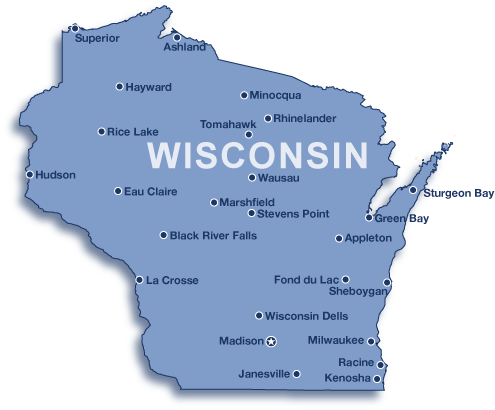
Time Warner Cable’s Phone Service Wiped Out Across Southern Wisconsin

Phillip Dampier April 13, 2011 Consumer News 1 Comment

Time Warner Cable telephone customers across southern Wisconsin have been without phone service since early this morning.

Time Warner Cable spokeswoman Stacy Zaja said the company has “thousands” of customers without service, but an increasing number of reports suggests the outage is widespread across the southern half of the state, and the outage is still ongoing as of late this afternoon.

Zaja says the cable company has been trying to reroute calls around the equipment failure, but those efforts appear to be unsuccessful at this time.

Affected customers can obtain a credit for the outage, but only if they ask.  The fastest way to a credit is to send an e-mail to Time Warner Cable.  Let them know you are requesting credit for today’s phone service outage.  It should post to your account on the next billing statement.

North Carolina Finance Committee Meeting Brings Out Lobbyists and Angry Consumers

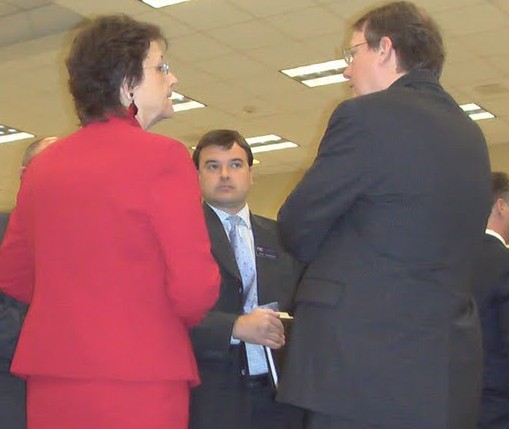
Rep. Avila with Marc Trathen, Time Warner Cable's top lobbyist (right) Photo by: Bob Sepe of Action Audits

Over the course of an hour this afternoon, North Carolina’s Senate Finance Committee discussed the implications of H.129, legislation proposed, written, and lobbied by Time Warner Cable and some of their phone friends across the state.

On hand was Rep. Marilyn Avila (R-Time Warner Cable), who tried to turn her competition-busting bill into an emotional epiphany about jobs and the benefits private providers bring to a state now ranked dead last in broadband.

Pass me a tissue.

Nobody doubts Ms. Avila is looking out for the interests of the state’s big cable and phone companies.  Unfortunately for her district, she isn’t looking out for the broadband interests of her constituents, forced to pay some of America’s highest prices for low end service.

As Avila pals around with lobbyists from Time Warner Cable and the state’s cable trade group (more lobbyists), consumers in places like Orange County in north-central North Carolina see themselves on broadband maps but find they cannot actually get service from any providers.

As the hearing progressed into two-minute statements from parties interested in the outcome, the disconnect between well-paid lobbyists and corporate front groups like Americans for Prosperity with elected officials and consumers on the ground surveying a bleak broadband landscape said a lot.

Cable companies and their lobbyist friends sought to portray community broadband projects as fiscal failures — one suggested that was a global reality, despite the fact many countries have embarked on nationwide broadband plans that directly involve government to help build infrastructure.  The global leader in broadband, South Korea, is a perfect example.  With collaboration between the government and the private sector, Korea will have 1 gigabit broadband service across much of the country within a few years.  That’s because South Korea does not believe broadband is simply a convenience, they see it as a social and economic necessity.

The other side sees it as a private moneymaker that can charge rapacious prices because it’s not an essential service.

Shining a bright light on this reality was Americans for Prosperity, who delivered their own speaker at today’s hearing.  As the group complained about government ‘overreach’ providing incentives in the 1930s for rural power and phone service, it quickly became apparent there are some in this debate willing to let rural Americans sit in darkness, without a phone line (much less broadband), to make a free market point: if private companies can’t or won’t deliver the service, you don’t deserve it and shouldn’t have it.

One wonders where this thinking will ultimately take us.  Will community gardens be opposed for taking vegetable profits away from private corporate farms?  Flea markets on public fairgrounds should be banned because they unfairly compete with eBay, Dollar Tree or a supermarket?  The irony is these “small government conservatives” are all for big government legislation to keep potential competitors at bay.  For them, broadband cannot be a locally-determined community project — just something you buy from a company that may or may not have an interest in serving you.

Just ask the gentleman from Orange County, who appeared as the final speaker.  He spent his two minutes complaining about faulty cable and phone company-provided broadband coverage maps that claim service where none exists.  After spending money on equipment, he learned CenturyLink had no interest in actually providing him with DSL.  In fact, when he asked both the phone and cable company when that might change, the impression he was left with was “never.”

Whether members of the state legislature understand the irony of CenturyLink spending a fortune making sure Orange County never delivers the broadband service the company won’t provide itself is something voters across the state will need to impress on them.

They should be told, in no uncertain terms, to oppose H.129 and leave community broadband alone in North Carolina.


Time Warner’s iPad App Lawsuitarama: Every Day Brings a Whole New Channel Lineup

Phillip Dampier April 12, 2011 Consumer News, Online Video 1 Comment

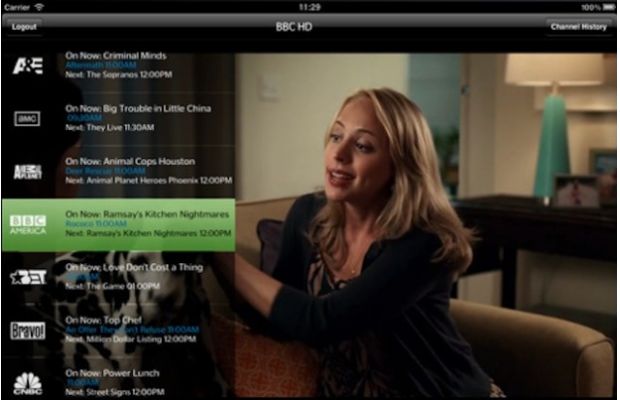
iPad Owners:  Don’t get too comfortable with the channel lineup on Time Warner Cable’s free app for watching streamed HD video of some of your favorite cable networks.  What you see today may be gone tomorrow (or replaced by something else.)

Time Warner Cable’s ongoing effort to implement their TV Everywhere-vision have run headlong into a legal quagmire as some content owners object to the new service.

Back in March when the app first appeared, the cable company was offering a few dozen channels of national cable feeds, with a heavy emphasis on news and mainstream cable networks.  But then Viacom, News Corp., and Discovery Communications protested, claiming the cable operator had not negotiated streaming rights for their networks.  Viacom and Time Warner Cable are currently suing one another over the matter.

Although some programmers use the excuse streamed video could reach “unauthorized viewers who do not have a cable subscription,” viewing restrictions imposed by Time Warner Cable makes that unlikely.  The cable operator requires viewers to watch from a Time Warner Cable Wi-Fi broadband connection.  Wi-Fi hotspots don’t work; neither does access from 3G or 4G mobile broadband networks.  The cable company says that restriction is by design.

“We believe that the location inside the home grants us the rights, provided the method of delivery is over a traditional cable network which is exactly what we’re doing,” Time Warner Cable’s Alex Dudley told NY1, Time Warner’s 24-hour news channel in New York City. “This is not programming delivered over the Internet; this is delivered over our network just like your cable television is delivered, and then to your Wi-Fi router where it reaches your iPad.”

So it is really about money.  Programmers want extra compensation from the cable company for streaming their content, and the cable company doesn’t want to pay extra.

While negotiators and the courts untangle the mess, the cable operator has been adding some channels while deleting others.  The big losers: Animal Planet, Black Entertainment Television, Country Music Television, Comedy Central, Discovery Channel, FX, MTV, National Geographic, Nickelodeon, Spike, TLC and VH1 — are all currently off the lineup.

The winners: C-SPAN, which gets all three of its channels streamed.  A variety of other “enlightened” (Time Warner Cable’s words) cable networks have given the green light to be a part of the project.  Recently added: AMC, Bio, Bloomberg, CNBC World, Chiller, Current, Disney XD, ESPN News, G4, Golf Channel, History International, HSN, IFC, Jewelry TV, Lifetime, NY1, Oxygen, QVC, Reelz, Sleuth, Soap Channel, Style, and Tru TV.  (In New York City, Galavision, History en Español, PBS Kids Sprout, and We are also included.)

For channels like Bio, Chiller, Current, and Reelz — buried in Digital Channel Siberia on the cable dial only to be found by the most ardent channel surfers — getting a prominent place on an app with just a few dozen channels competing for viewers is exposure gold.

We’ve tested the app here at STC HQ and found the picture quality and responsiveness to be excellent.  Channel changing is nearly as fast on the app as it is on our set top box — quite an accomplishment.  But the restrictions imposed by Time Warner really limit the app’s usefulness.  After all, if you want to watch television at home, why reach for an iPad when your television remote control is nearby.  But for those without digital cable boxes, or who want to wander around the house while watching, Time Warner’s app is useful, and better yet — free to those who already subscribe to cable television.

No ‘Bandwidth Crisis’ Here — Time Warner Cable Introduces File Backup Service for Businesses

Phillip Dampier April 11, 2011 Broadband "Shortage", Broadband Speed, Data Caps 4 Comments

Time Warner Cable’s business services division today unveiled a new scalable online storage service for business class customers that automatically backs up computer and server files to a remote data center over its cable broadband network.

“Businesses are increasingly reliant on vital computer data, and their need to protect and maintain this critical information also continues to grow,” said Craig Collins, Senior Vice President, Business Services Sales & Marketing, Time Warner Cable Business Class. “Our new Business Class Online Backup provides our customers with a reliable and secure data storage service that will enable their business operations to proceed unimpeded should data loss occur.”

The service can support backups running well into the terabytes of data, uploaded over the cable company’s increasingly DOCSIS 3-compliant broadband network, which can help maximize upload speed.

Business class customers already enjoy “prioritized” service for business broadband traffic, which travels over the same cable lines used by residential cable customers.

With the introduction of online file backup, one of the most data-intensive services around, Time Warner Cable is demonstrating it believes its network can sustain the increased traffic online cloud storage will bring, all without usage limitations.

Some broadband providers, including Time Warner Cable, have historically claimed broadband traffic growth has necessitated experiments to control and manage usage.  But with necessary infrastructure upgrades, the cable operator has proven it can deliver a more robust broadband service to customers, and earn additional revenue selling products that take advantage of increased capacity.


Salisbury’s Fibrant Faces Unprecedented Demand for Service Legislators Want to Restrict

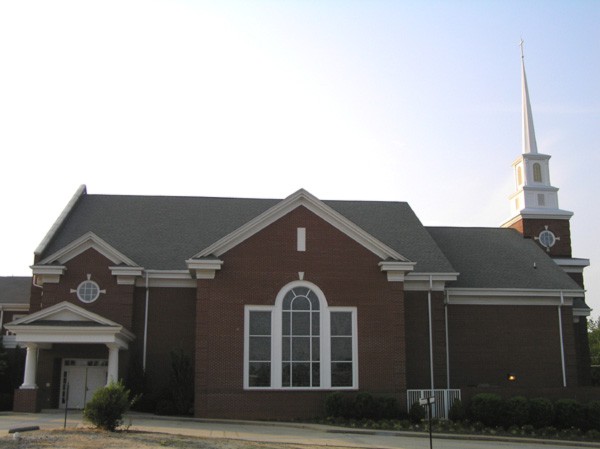
The Faith Baptist Church was told to live with Windstream's slow speed DSL or pay Time Warner Cable a $20,000 installation fee.

Despite claims from some in the state legislature that restricting fiber optic broadband development in communities like Salisbury is good for consumers and businesses, an increasing number of both are telling reporters a different story.

Faith Baptist Church, in the aptly-named community of Faith, N.C., can’t wait to sign up for Salisbury’s community fiber network — Fibrant.  They believe in a faster broadband experience the local phone company cannot deliver.

Casey Mahoney, a church member, told the Salisbury Post the church wants to ditch its slow speed DSL service from Windstream and cannot afford the $20,000 installation fee Time Warner Cable wants to charge the congregation to extend its broadband service to the church building.

If some in the state legislature have their way, the church will have a long, perhaps infinite wait for a fiber optic future.  A large number of legislators in the Republican-controlled state Senate are leaning towards voting for a bill custom-written by and for the state’s largest cable company — Time Warner Cable.  The legislation would micromanage community-owned broadband networks right down to the streets they would be allowed to deliver service.  Those terms, perhaps unsurprisingly, would not apply to the state’s largest cable and phone companies.

H.129, moving towards a hearing in the Senate Finance Committee Wednesday, would cement today’s marketplace for years to come — a duopoly Mahoney thinks makes Time Warner Cable’s $20,000 installation fee feasible.

He told the Post, “When you only have one company available in an area, that’s when they can say, ‘It will cost you $20,000 — take it or leave it.’ ”

Not everyone supports the cable industry’s efforts to lock down competition from community-owned providers.  Several local officials who represent underserved communities across the state are upset the legislation is being railroaded through the legislature with almost no discussion.
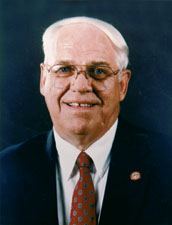
Misenheimer

“I am disappointed that the General Assembly is giving consideration to taking this right away from us without a single conversation taking place,” Kannapolis Mayor Bob Misenheimer complained to Sen. Andrew Brock (R), who serves Davie and Rowan counties.

Misenheimer is particularly upset cable operators want the right to restrict the service areas Fibrant can serve, and not allow the fiber network to expand service into Kannapolis.  In fact, Brock’s office has received similar communications from the Faith town board and mayors from Rockwell, Landis, China Grove, Granite Quarry, Spencer, Cleveland, and Concord — all who want to be included in the Fibrant service area.

“Isn’t it simply amazing that Fibrant is being bashed as a failure-waiting-to-happen by the sponsors of this bill while mayors across two counties are absolutely clamoring to get the service to their residents,” said Stop the Cap! reader Andy Brown who lives near Landis.  “How can Marilyn Avila and Tom Apodaca have the slightest bit of credibility on this issue when you see town leaders literally falling all over each coveting a service that these legislative-Friends-of-Time-Warner-Cable have predicted is a certain failure?”

“I want Fibrant in Landis myself, if only for the competition,” Andy shares.  “You know, the kind of competition legislators are supposed to support.”

Andy describes efforts underway to distort the record on H.129 in hopes of whipping up consumer support for it.

“There are some silly stories being told attacking community networks like Fibrant on local media websites, including the ridiculous claim communities will be required to sign up for the service if it comes to town,” Andy reports.  “These come from some of the same people who also claim fiber optic cables suffer from rot problems, wireless broadband is faster than fiber optics, and that Fibrant is part of the Obama Administration’s plan to socialize the Internet.”

“If these people want Windstream DSL or are happy paying annual rate increases far beyond the rate of inflation year after year, don’t sign up for Fibrant — but don’t dictate away that option for me,” Andy said.  “The only ‘takeover of the Internet’ I see is by Time Warner and CenturyLink.”

Search This Site:

Contributions:

Recent Comments:

Your Account:

Stop the Cap!