Home » time warner cable » Recent Articles:

DOCSIS 3 Upgrades Completed in Western NY, Time Warner Offers New Speeds Across the Region

Phillip Dampier

Time Warner Cable has completed their DOCSIS 3 upgrade of the Rochester/Finger Lakes region and their new Road Runner Extreme and Wideband services should now be available throughout the region.  Stop the Cap! HQ will receive its upgrade to Road Runner Extreme late this afternoon, primarily for the 5Mbps upstream speed, which will make uploading content to our servers much easier and more efficient.

The cable company is insistent on their installation fee, which amounts to nearly $68 (unjustified in my personal opinion).  Some details for our local readers:

  • Customers in the Rochester & Finger Lakes region almost never own their own cable modems — they are provided with Road Runner at no extra charge;
  • Upgrading to Extreme or Wideband will mean either a modem swap or a second piece of equipment if you have Time Warner phone service.  The new equipment includes a built-in wireless router;
  • You are not obligated to use the cable company’s equipment as your primary router if you favor using your own existing router;
  • As part of the installation fee, you have a right to insist they spend the time to configure service the way you want it, especially if you want to continue using your own router;
  • It is also a good time to ask them to check signal levels and clean up any wiring or service issues.  Western New York has endured a record-breaking deluge of rain this spring, and degraded outdoor wiring can create havoc for broadband and cable service.
  • If you are currently receiving a promotion such as free or discounted Road Runner Turbo service, you will lose the value of that promotion when you upgrade service and will pay full price going forward.

Beyond the installation fee, Road Runner Extreme (30/5Mbps) costs $20 more than Road Runner Standard (10/1Mbps) service.  Road Runner Wideband (50/5Mbps) is priced at $99 a month, but is a much better value bundled with the cable company’s Signature Home ($199) package, which includes complete packages of digital cable, “digital phone,” and broadband service.  For most in the Rochester/Finger Lakes area, the only alternative is Frontier Communications’ DSL combined with an unlimited calling plan and satellite television or a similar package from Verizon or much smaller Windstream.  Verizon’s fiber to the home service FiOS is not available anywhere in this region.
Time Warner Cable Customers in Maine Billed for Road Runner Turbo Even When It’s ‘Not Available’

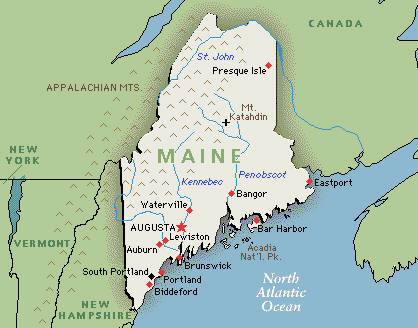
A Time Warner Cable customer in Whitefield, Maine has filed a complaint with the state’s Attorney General charging the cable company is selling customers a product it cannot deliver in parts of the state, and bills customers for it anyway.

The broadband add-on, Road Runner Turbo, is supposed to provide customers with a faster broadband experience, but in communities up and down Maine, it apparently does not, and has not for nearly three years.

The cable company hotly disputes the accusation, made by Michael Panosian, that the company has been overbilling him $10 a month for three years.

Andrew Russell, a Time Warner Cable spokesman, told the Kennebec Journal that the company does not charge for services it cannot provide.

But the cable company’s argument lost a considerable amount of credibility when evidence emerged Time Warner has admitted the problem, and quietly agreed to reimburse Panosian $328.35 for Road Runner Turbo service all the way back to June 2008.

The admission has also become a point of interest inside the Attorney General’s Consumer Protection Division, which is engaged in discussions with Panosian and the cable company.

Despite Russell’s denials, Time Warner officials admitted there was a problem and told state officials it would be corrected sometime this month.

Panosian thinks the cable company is ripping off Maine residents pitching faster Internet it does not deliver.

Panosian said a Time Warner Cable technician told him Turbo is not available in his area and possibly others in Maine.

“From what the tech told me, it isn’t just Whitefield,” Panosian said. “I went down (to Time Warner’s Augusta office) and talked to them about it, and they’re aware of it.  I said, ‘If you’re aware, why are you taking everybody’s money?’  If they don’t charge for services they don’t provide, why are they reimbursing me?”

Stop the Cap! reader Frederick, who lives in nearby Windsor and shared the story with us, says it is a classic case of Time Warner Cable overselling its service.

“The truth here is actually in the middle; Time Warner actually does deliver a Turbo service in Maine, it’s just that their network is so overcongested, nobody benefits from it during peak usage times,” Frederick reports.  “They have too many customers trying to share the Internet, and Turbo cannot help resolve this problem, only upgrades can.”

Frederick reports he identified the source of the problem running a series of speed tests on his Time Warner Cable connection.  He subscribes to Road Runner Turbo himself.

“The truth is revealed when you examine the upload speed of your connection,” he says. “Even when the network is busy, I can still get nearly 1Mbps upload speeds, a sure sign Turbo is on my account.”

The download speeds are another matter.

“In Windsor during peak usage times, you will easily see even a Turbo connection drop to 5Mbps in download speeds, only returning to normal after people go to bed,” he says.  “That means Time Warner has oversold their network, putting too many people on the same ‘node,’ one inadequate in capacity.”

Frederick suspects the “fix” Time Warner refers to is an upgrade to DOCSIS 3 technology.

“Maine is treated like a backwater by Time Warner Cable,” Frederick charges.  “What other cities got a year ago we just start to receive, so instead of performing periodic upgrades, they are just waiting for DOCSIS 3 to solve all of their problems.”

Frederick thinks customers should be compensated for the poor service, and is considering demanding a refund himself.

“I pay more than $50 a month for my broadband service with Turbo and they deliver what their ads claim only when I’m asleep or at work.”

Time Warner Cable Uses Rollout of DOCSIS 3 Upgrades in North Carolina to Highlight Investment

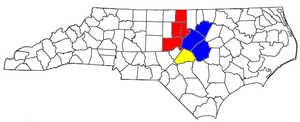
The Triangle -- North Carolina

Just a few days after Gov. Bev Purdue declined to veto an anti-consumer, anti-community broadband bill sponsored by Time Warner Cable, the cable company announced the imminent availability of its Road Runner Extreme and Wideband products — made possible with an upgrade to DOCSIS 3 technology.

The newly available service is officially being rolled out across the Triangle, including the cities of Raleigh-Durham and Chapel Hill over the next several weeks.

“We are empowering our customers with pure online power to save time and boost productivity when multitasking with multiple devices,” said Christine Whitaker, area vice president of operations for Eastern North Carolina. “As customers expand their use of the Internet, our services are evolving to meet their needs.”

Time Warner noted it had spent $8.5 million to upgrade the region to DOCSIS 3 service, and has already rolled out the upgrade in the Charlotte area.  In the Triangle, the company also announced free speed upgrades for existing customers that took effect last week:

  • Road Runner Turbo with PowerBoost 15 Mbps/1Mbps
  • Road Runner Broadband with PowerBoost 10 Mbps/1 Mbps

North and South Carolina Time Warner Cable customers are among the last to get the speed upgrades Time Warner has completed in many of their service areas.  Some customers formerly received upstream speeds of 512kbps or less.  The cable company said recent fiber upgrades made the faster speeds possible, but DOCSIS 3 upgrades are responsible for allowing the cable company to offer its Extreme (30/5) and Wideband (50/5Mbps) products.

Despite the upgrades, Time Warner Cable still offers slower broadband service than many of its community-owned competitors, and the cable operator has made investments in broadband upgrades across most of its cable systems nationwide as a matter of course.

Breaking News Analysis: Gov. Purdue Will Not Veto H.129, Even Though She Hints She Wanted To

Purdue

North Carolina Gov. Bev Purdue today announced she will not veto H.129, Time Warner Cable’s special interest corporate welfare bill because there are too many votes available to overturn her veto:

Her statement:

“I believe that every school, household and business in North Carolina – no matter where they are – should have access to efficient and affordable broadband services.

There is a need to establish rules to prevent cities and towns from having an unfair advantage over providers in the private sector. My concern with House Bill 129 is that the restrictions the General Assembly has imposed on cities and towns who want to offer broadband services may have the effect of decreasing the number of choices available to their citizens.

For these reasons, I will neither sign nor veto this bill. Instead, I call on the General Assembly to revisit this issue and adopt rules that not only promote fairness but also allow for the greatest number of high quality and affordable broadband options for consumers.”

While we would have preferred she make the symbolic gesture of vetoing this horrible piece of legislation, by no means does this mean the battle for better broadband in North Carolina is over.

Stop the Cap!, along with other broadband proponents, will immediately begin our efforts to de-elect legislators who best represented the interests of Time Warner Cable and not their constituents.  Most are Republican, but many are Democrats.  They all need to feel the wrath of angry constituents.

It’s our view we had an uphill battle fighting this year’s bill for two reasons:

  1. Big Telecom companies learned from their earlier mistakes;
  2. The historic change of power to the very-corporate-friendly Republican Party in North Carolina.  Elections really do have consequences.

"I wish you'd turn the camera off now because I am going to get up and leave if you don't." -- Rep. Julia Howard

While not all Republicans are bad, and several rural North Carolina representatives expressed grave reservations about their areas going unserved, there are not enough good ones in office to offset the anti-consumer lockstep voting we saw on this bill.  Rep. Marilyn Avila, who we have consistently called the “Republican representing Time Warner Cable” is a case in point.  Time and time again, she demonstrated a complete lack of understanding about the technical nature of “her bill” and its implications on cities and towns across the state.  Indeed, a citizen activist even snapped photos of Avila hobnobbing with her cable lobbyist friends, who mopped up any goofs Avila made along the way.

Another major problem can be found in Rep. Julia Howard (R-Davie, Iredell).  She claimed her word is her bond, right before she broke it.  When the media pressed her on the $7000 in campaign contributions she received from Big Telecom and whether that connected to her support for H.129, she threatened to flee the interview if a Raleigh television station didn’t immediately shut the camera off.

There is a real classy example of standing up for your principles, whatever were that week.  The former realtor and appraiser helped foreclose North Carolina’s broadband future, handing it back to the near-exclusive control of Time Warner Cable and CenturyLink.

Appealing for less broadband competition under the guise of smaller government might be fine for some, but big and bigger cable bills are not, and that is what H.129 will deliver to every resident in the state.  We’ll prove it to you soon enough.

Two can play the legislative game.  We’ll be encouraging new legislation in the state to improve and expand competitive broadband opportunities for consumers and businesses.  Real conservatives should agree: competition is a great antidote to Internet Overcharging.

Call to Action North Carolina: Last Day to Call Gov. Purdue’s Office to Stop H.129

Gov. Purdue

If North Carolina Gov. Bev Purdue does not veto H.129, the cable industry-written bill to throw up roadblocks for community broadband, it will automatically become law at midnight tonight.

We need every North Carolinian on the phone this afternoon, even if you called her office before. Let the governor know that you expect her to veto this anti-consumer, anti-jobs, anti-development bill that will keep broadband out of rural areas and competition at bay.  Let them know you cannot be fooled: doing nothing is the same as signing it into law as far as you are concerned.

The Governor’s Phone Number: +1 919 733 2391

The open source community has joined the fight.  Community Broadband Networks shares the open letter sent to the governor, published on Rootstrikers.org, a community dedicated to fighting all the corruption in politics that allows massive companies like Time Warner Cable to buy legislation:

Dear Governor Perdue,

We are strong supporters of your leadership and your campaign, and we would like to be heard on the important issue of community broadband. I know you are not afraid to use your veto pen, and so I ask you to veto H129, a bill that will take the future away from North Carolina and put it into the pockets of cable company monopolists.

On Sunday May 15th you may have read about our latest investment in North Carolina, Manifold Recording. This was the feature story in the Arts & Living section, and the top right-hand text box on the front page. One of the most difficult and expensive line-items in this multi-million dollar project was securing a broadband link to the site in rural Chatham County. I spent more than two years begging Time Warner to sell me a service that costs 50x more than it should, and that’s after I agreed to pay 100% of the installation costs for more than a mile of fiber. As part of a revised Conditional Use Permit (approved last night), I presented to the Commissioners and the Planning Board of Chatham County data on the economic investment I made, and the fact that according to the statistics from the Rural Broadband Coalition, that such an investment was worth about $300,000 to the 100+ neighbors who live along the new fiber link that I paid for.

Such heroics should not be necessary, nor should they be so costly.

I spent 10 years in Silicon Valley, and I know how quick they are to adopt new technologies that help people start and grow businesses. Manifold Recording would have remained a pipe-dream without broadband. But not everybody can afford to pay $1000/month for the slowest class of fiber broadband. Community broadband initiatives reach more people faster, at lower costs, leading to better economic development. Take it from me: had I been able to spend the time and money on community broadband that I spent in my commercial negotiations, there would be more jobs in Chatham County today.

For more information, which I strongly encourage you to have someone on staff research, please review https://www.rootstrikers.org/#!/story/community-broadband/. There, you will see that “as goes North Carolina, so goes the nation.” We cannot afford to ruin either our own prospects for an economic recovery led by new technologies and new business nor the prospects for an America recovery.

Search This Site:

Contributions:

Recent Comments:

Your Account:

Stop the Cap!