Home » telephone service » Recent Articles:

AT&T: Basic Telephone Service In Death Spiral – Deregulate Us For 21st Century Upgrade

Phillip Dampier

In a remarkable statement to the Federal Communications Commission in Washington, AT&T has joined Verizon in predicting the imminent demise of Ma Bell’s classic telephone network.

AT&T writes in its 30 page comment, “That transition is underway already: with each passing day, more and more communications services migrate to broadband and Internet Protocol (IP)-based services, leaving the public switched telephone network (“PSTN”) and plain-old telephone service (“POTS”) as relics of a by-gone era.”

AT&T claims abandoning the old legacy phone network would help the company devote its full resources into staying relevant by constructing a broadband, IP-based network that would deliver voice, data, and video to consumers, presumably over its U-verse platform.  That, according to AT&T, could help the company achieve universal broadband coverage in its service areas, but only if investment-friendly regulations are supported by Washington policymakers.

The Commission has been charged by Congress with formulating a National Broadband Plan that will result in broadband availability for 100% of the United States. That auspicious goal is within reach, but […] will not be met in a timely or efficient manner if providers are forced to continue to invest in and to maintain two networks. Broadband is dramatically changing the way Americans live, work, obtain health care, and interact with the government. Congress and the Commission have rightly made universal broadband access a core national priority. But achieving this goal will take an enormous investment of capital. Private investment from network operators has brought broadband access to over 90% of Americans, and these operators will continue to play a pivotal role in bringing broadband to the remaining 8-10% of citizens who do not currently have broadband access. It is accordingly crucial that the Commission pursue forward-looking regulatory policies that remove disincentives to private investment and encourage operators to extend broadband to unserved areas.

While broadband usage – and the importance of broadband to Americans’ lives – is growing every day, the business model for legacy phone services is in a death spiral. Revenues from POTS are plummeting as customers cut their landlines in favor of the convenience and advanced features of wireless and VoIP services. At the same time, due to the high fixed costs of providing POTS, every customer who abandons this service raises the average cost-per-line to serve the remaining customers. With an outdated product, falling revenues, and rising costs, the POTS business is unsustainable for the long run.

AT&T cites a growing number of Americans cutting their wired phone line service — 22% according to the National Center for Health Statistics.  Craig Moffett from Bernstein Research pegs it closer to 25%, with an additional 700,000 phone lines being disconnected every month.  With a shrinking customer base, the viability of companies providing only wired phone service has come into question.  Verizon and AT&T, the nation’s largest phone companies, have made the judgment it’s a dying business.  Conversely, Frontier Communications and a few other independent phone companies remain believers in rural copper wire phone networks, and are willing to buy the discarded, mostly rural regions their bigger counterparts can’t wait to exit.

But AT&T’s advocacy for an end to “plain old telephone service” is just a tad self-serving when one explores their “To-Do” list for Washington regulatory agencies and lawmakers.  AT&T suggests their future plan benefits all Americans.  Critics would contend it mostly benefits AT&T and its shareholders, especially in light of AT&T’s future revenues being directly impacted by customers disconnecting their AT&T phone lines.  AT&T themselves note collective industry revenue for basic phone service fell from $178.6 billion in 2000 to $130.8 billion in 2007, a 27% decrease.

AT&T’s Action Plan to Avoid Obsolescence Explored

AT&T's U-verse system represents AT&T's broadband-based network
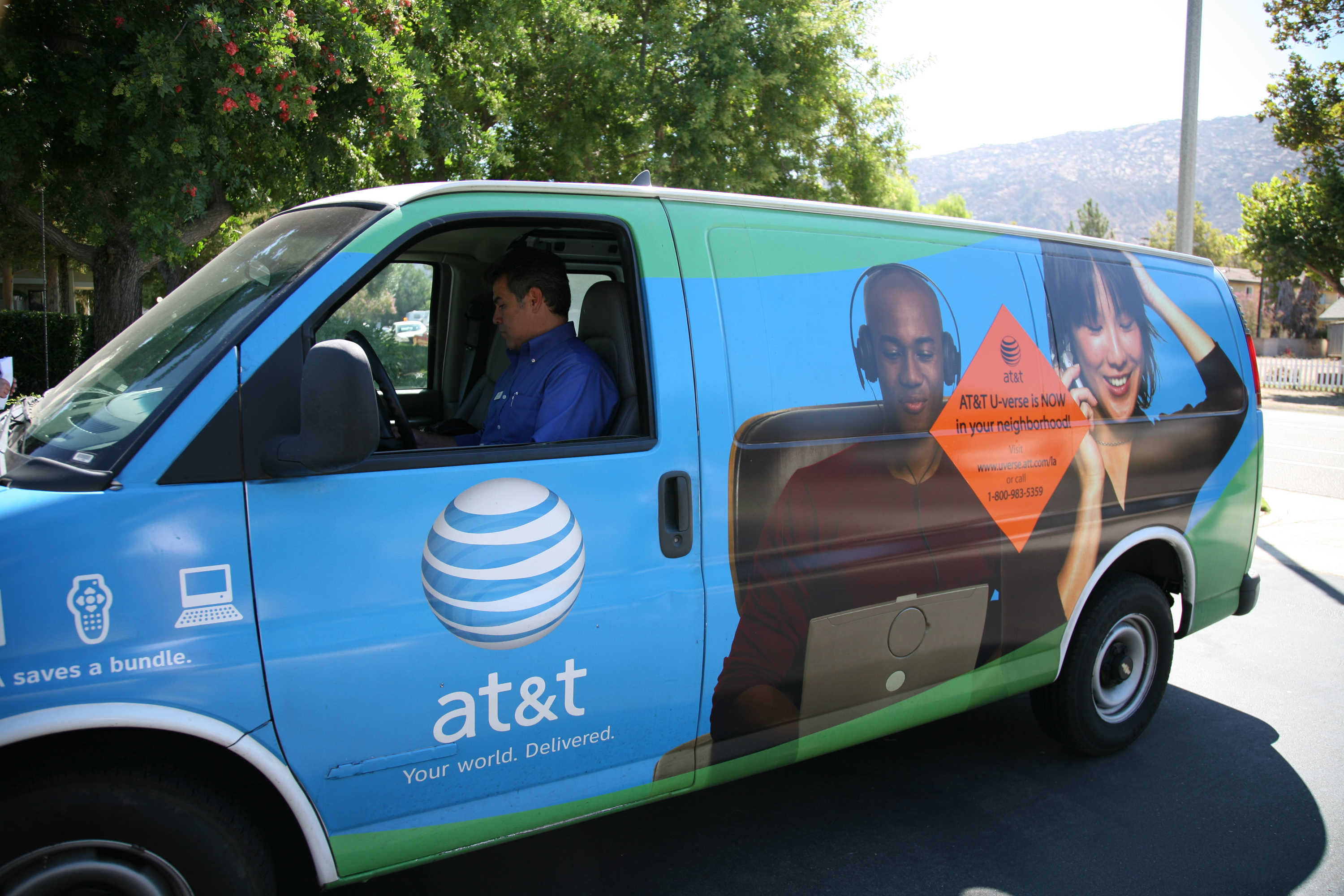
At the heart of AT&T’s proposal for 21st century telephone service is an end to analog telephone service, designed more than 100 years ago to carry voice calls, and the launch of broadband-based service to every home in their service area.  From this new platform, AT&T can deliver telephone, television, and Internet service over a single network.  In fact, they already do in several cities where AT&T’s U-verse has launched. Instead of getting one revenue stream from basic phone service, AT&T can now earn from any number of services a broadband platform can support.

AT&T compares their plan with the transition from analog to digital television, except you won’t have to trade in your existing phones or attach converter boxes to every telephone in the house.  Just like the switch to digital television, AT&T wants a date certain to pull the plug on Ma Bell’s old phone network, the sooner the better.

But AT&T’s plan has plenty of strings attached.

First, the company believes the only path to private investment and a successful transition is a near-complete deregulation of the telephone industry.  It wants the federal government, specifically the FCC, to take control of oversight of phone companies across America, if only to end a patchwork of state regulations and service requirements.  Remember, the Ma Bell most Americans grew up with was a regulated monopoly.  In return for guaranteed profits, phone companies agreed to meet service obligations, provide service to any home or business that wanted it, serve the disabled, and provide discounted phone service to the economically disadvantaged.  Rural customers were assured they would have access to phone service and at reasonable prices, and if something stopped working, government oversight ensured problems would be repaired to the customer’s satisfaction.

In AT&T’s view, such requirements are quaint and outdated, and it wants to bear few of those burdens going forward.  Indeed, in a too-cute-by-half aside, the company argues that since it will design the network to operate under the same protocol the unregulated Internet uses, it should be unregulated as well.

Such deregulation could impact a myriad of policies governing phone service that most Americans take for granted — minimum service standards, requirements that telephone companies complete calls between one another – even if competitors, and reasonably priced basic phone service even in the most remote locations.  But AT&T is asking for even more – a comprehensive review and possible elimination of any regulation that could be interpreted as interfering with the transition to an all-broadband telephone network.  AT&T includes everything but the kitchen sink in this category, ranging from service quality requirements, reporting, recordkeeping, data collection, accounting, and depreciation and amortization rules governing how quickly the company can write off obsolete equipment.

Ma Bell's network is due for a retirement, advocates AT&T

Ironically, AT&T wants deregulation -and- access to public taxpayer dollars to construct their new network.  The company advocates government-funded award programs to promote universal broadband access.  One would provide money for wired broadband service, perfect for companies like AT&T that want to build those networks, and another for wireless mobile projects to expand service into unserved or underserved areas, also perfect for AT&T Mobility — the same wireless carrier slammed by Verizon Wireless for largely ignoring rural America with 3G wireless data upgrades.

While there is some justification for a review of federal and state rules that may no longer realistically apply to today’s telecommunications marketplace, AT&T goes out of its way to be self-serving in its recommendations.  It dangles the bright and shiny object of a 21st century broadband-based telephone network, but only if they get to run it essentially “no questions asked,” with little oversight and an infusion of public taxpayer dollars to compliment private investment.

AT&T may be correct that the days for Ma Bell’s “plain old telephone service” are indeed numbered.  But for a company that earns billions in profits and answers to shareholders demanding maximum return, shouldn’t their long term well-being first be a question between AT&T management and shareholders?  Are they incapable of a private course correction that makes their future relevance more secure?  AT&T’s U-verse did not require public tax dollars to be successful, and the company spent generously on lobbyists and astroturf campaigns to smooth the way forward with “statewide franchising,” bypassing local government oversight.

The real question on the table is how far does the Obama Administration and the FCC want to go to achieve universal broadband?  AT&T suggests that only massive deregulation will entice private investors to step up and make the investments required to help achieve whatever definition of “universal broadband” the Commission comes up with.  But that price is way too high to pay.  AT&T answers first and always to its shareholders.  If they want public tax dollars funding, even in part, their transition to an all-broadband future, they must also answer to the other “stockholders,” namely the American people helping to foot the bill.


Action Alert For Washington State Residents: Tell The Utility Commission Frontier Must Dump 5GB Acceptable Use Limit

Several staff members working for the Washington Utilities and Transportation Commission (WUTC), the regulatory agency reviewing the proposed Frontier purchase of Verizon territories in Washington state, have reversed their opposition to the Frontier-Verizon deal because of concessions they believe will better serve consumers impacted by the deal.  But the provisions don’t come close to protecting consumer rights and do not sufficiently protect local telephone and broadband service.

The WUTC must be told that broadband expansion from a service provider that insists on a 5 gigabyte usage limit in its Acceptable Use Policy makes such expansion barely worth the effort.  The WUTC must insist on a permanent exemption from any usage limits for Washington state consumers, especially because many may find Frontier DSL to be their only broadband option for years to come.  To allow a company with such a paltry limit to be the monopoly provider of broadband puts Washington residents and small businesses at a serious economic disadvantage in the digital economy.

Would you choose to reside or locate your business in a community with one broadband provider offering a limit so low, your broadband usage will be limited to web page browsing and e-mail?

High Speed Internet Access Service

Customers may not resell High Speed Internet Access Service (“Service”) without a legal and written agency agreement with Frontier. Customers may not retransmit the Service or make the Service available to anyone outside the premises (i.e., wi-fi or other methods of networking). Customers may not use the Service to host any type of commercial server. Customers must comply with all Frontier network, bandwidth, data storage and usage limitations. Frontier may suspend, terminate or apply additional charges to the Service if such usage exceeds a reasonable amount of usage. A reasonable amount of usage is defined as 5GB combined upload and download consumption during the course of a 30-day billing period. The Company has made no decision about potential charges for monthly usage in excess of 5GB.

Frontier will be a part of the lives of almost 500,000 state residents, including those in Wenatchee and other parts of North Central Washington.  That covers a lot of rural residents with no hope of cable competition or other broadband options.  Verizon is the second-largest local telephone service provider in Washington, serving cities such as Redmond, Kirkland, Everett, Bothell, Woodinville, Kennewick, Pullman, Chelan, Richland, Naches, Westport, Lynden, Anacortes, Mount Vernon, Newport, Oakesdale, Republic and Camas-Washougal.  Currently, Verizon has approximately 1,300 employees in Washington, who would be transferred to Frontier once the deal is complete.

Frontier’s concessions don’t come close to assuring residents they can get the kind of broadband service they need in the 21st century, especially from a company that could easily find itself swamped in debt.  Let’s look at what Frontier has offered:

  • Invest $40 million to expand high-speed Internet access in Washington.
  • Submit quarterly financial reports to identify merger savings.
  • Branding and transition costs to be paid by stockholders, not ratepayers.
  • Increase financial incentives to prevent a decline in service quality.
  • Adopt Verizon’s existing rates and contracts for at least three years.

Frontier would also be required to pay residential customers $35 for missed service repairs or installation appointments. That’s $10 more than Verizon now pays. Current Verizon customers would also have 90 days after the transition to choose another provider without incurring a $5 switching fee. Low-income customers who qualify through the Washington Telephone Assistance Program will also receive a one-time $75 credit if the company fails to offer appropriate discounts or deposit waivers.

Our take:

  • Investing $40 million in low speed DSL service with a 5GB usage allowance saddles residents with yesterday’s technology with a usage allowance that rations the Internet.
  • Customers don’t care about merger cost reductions because they’ll never enjoy those savings, but they’ll feel their impact if they include layoffs and reduction in investment.
  • Consumers will be more concerned about what happens to their phone and broadband service when the “transition” results in service and billing problems.  Will stockholders pay inconvenienced customers?
  • Vague promises of increased financial incentives for a company to do… its job, without declines in service quality, exposes just how unnecessary this deal is.  Why not offer incentives for Verizon to stay?
  • Freezing rates for three years doesn’t prevent massive increases to make up the difference in year four and beyond.

The WUTC staff had it right the first time when it opposed the deal.  A healthy, financially secure Verizon is still a better deal than a smaller independent company saddled with debt.  Frontier seals the fate of Washington state residents from the benefits of fiber optics wired to the home, delivering high speed broadband for the future because Frontier doesn’t do fiber to the home on its own.  With a tiny usage allowance, just waiting for the company to decide to enforce it means you won’t be using your broadband account too much anyway.

The WUTC is accepting comments and you need to start calling and writing.  Make sure to tell the Commission it must secure a permanent exemption for Washington from any Internet Overcharging schemes like consumption/usage-based Internet billing and any usage limits Frontier defines in its Acceptable Use Policy.  Better yet, tell them Frontier’s concessions don’t come close to making you feel good about Verizon turning over your phone service to a company that is traveling the same road three other companies took all the way to bankruptcy.

Customers who would like to comment on the provisions can call toll-free: (888) 333-9882 or send e-mail to [email protected]. The deadline for comments is January 10th.

Special Investigation: Part 1 – How Phone Companies Game the System to Maximize Profits & Outwit Regulators, Leaving You With the Bill

Phillip Dampier December 7, 2009 AT&T, Competition, Public Policy & Gov't, Verizon, Video 5 Comments

This is part one in a series of stories illustrating how telecommunications companies use a combination of public relations firms, professional lobbyists, friendly regulators, and outmaneuvered state officials to sell “improved service” to the public in return for regulatory “reform.”  Too often, that “reform” is loaded with loopholes and language that guarantees providers can break their promises, tie state and local regulators’ hands when bad service results, and ultimately stick you with the bill.

phone pole courtesy jonathan wOver the past several months, several communities in New Jersey have been up in arms about Verizon’s reinterpretation of a state law originally written in the 1940s but “updated” just a few years ago, to mean it no longer has to pay telephone pole and infrastructure taxes to municipalities for using the public right of way.  Verizon’s “reinterpretation” of the state’s Business Personal Property Tax law surprised several municipalities who now face significant financial challenges as a result of the lost revenue.  New Jersey residents will likely make up the difference with a higher property tax rate.

On the surface, it might appear Verizon simply happened upon tax savings.  Verizon claims the law only requires it to pay taxes in communities where it has more than 51% of the area’s phone customers.  Despite protestations from local officials, Verizon has signaled its intent to carry on, estimating 150 communities will join the 50-60 already impacted by next year.

Changes in telecommunications public policy do not occur in a vacuum.  They happen when providers lobby for regulatory reform and bring gift baskets filled with promises for dramatically improved service.  Using a network of high priced lawyers and public relations campaign experts, companies can easily outmaneuver local and state regulators at every turn.  Unfortunately, by the time consumers (and sometimes regulators) realize they were left with a Trojan Horse filled with empty promises, it’s too late.

Some deals just bring consumers higher prices while others saddle communities with highly-leveraged, heavily indebted companies that eventually collapse in bankruptcy.

Just how did we get here?  In this series, we’ll look at New Jersey’s history with its largest resident phone company.  From New Jersey Bell to Bell Atlantic to Verizon, more than 20 years of questionable reform has left residents “touched” in their wallets.  The blame doesn’t rest entirely with the phone company, either.  Local and state officials were repeatedly won-over by professionally-run lobbying campaigns.  After repeated bad experiences, one might assume they’d know better by now.  Those communities no longer getting tax payments from Verizon can testify they haven’t.

Let’s turn back the clock to the dramatic changes in telecommunications that came with the 1984 breakup of Ma Bell and the Bell System.

Telecommunications Industry Sets the Stage for a Money Party

[flv width=”640″ height=”500″]http://www.phillipdampier.com/video/1977 The Bell System.flv[/flv]

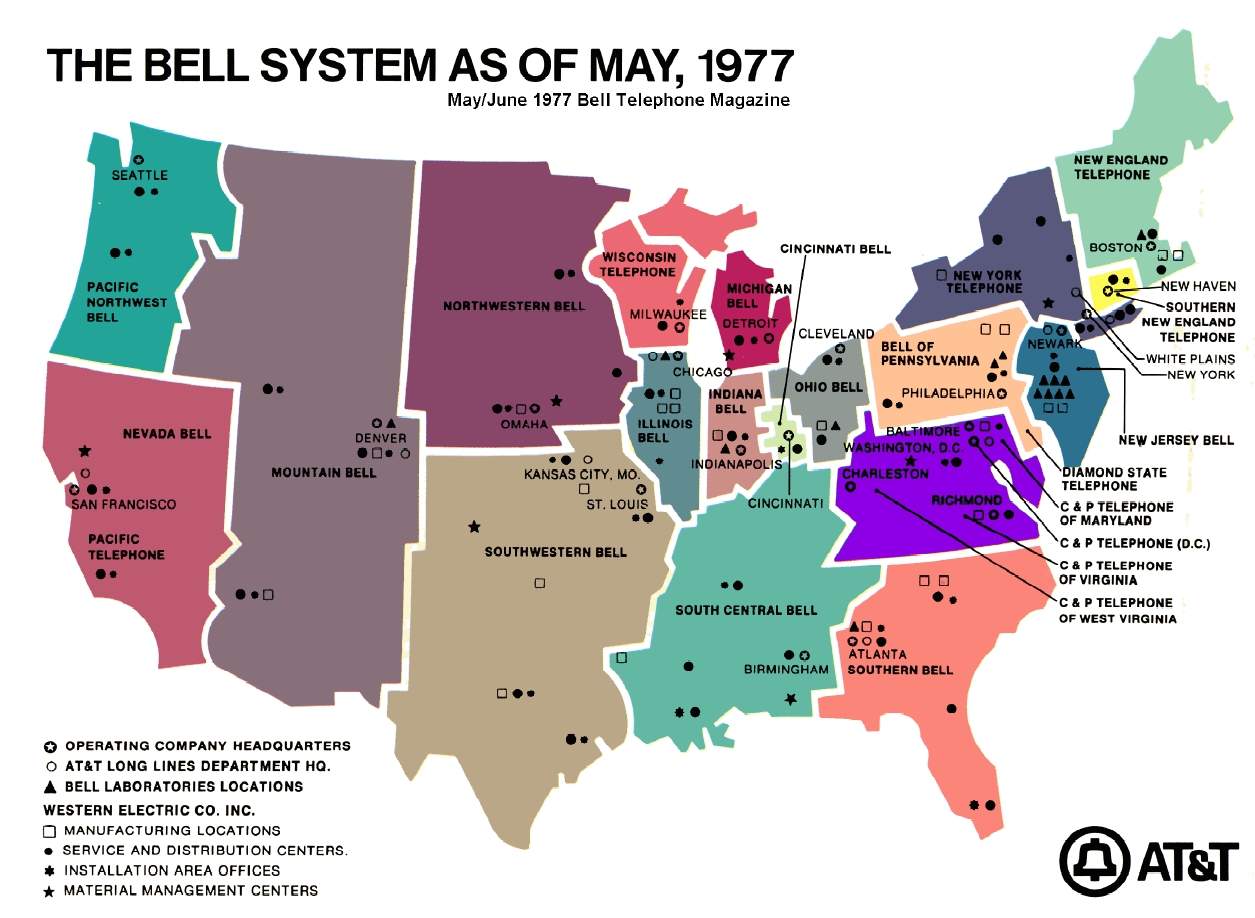
In 1977, the overwhelming majority of Americans were served by “the phone company,” namely AT&T and its family of Bell companies providing local service. (2 minutes)

AT&T's Bell System in 1977

AT&T's Bell System in 1977 (click to enlarge)

For decades, telephone service was run largely as a monopoly by the enormous Bell System and several dozen smaller, non-Bell independent phone companies.  Telephone service was regulated by state and federal authorities who approved rate increase requests and made sure providers met service quality standards. Consumers did not own the telephone equipment in their homes – it was rented from the phone company.  Although often uninspired, Bell System telephones were often virtually indestructible, ranging from basic utilitarian black rotary dial phones to the flaunting Princess phone, which had a lighted dial and came in several colors.

As America began earnestly developing data transmission systems in the late 1960s and early 1970s, AT&T kept its monopoly intact there as well.  At the time, a cooperative arrangement between IBM and AT&T ensured most American businesses would probably deal with one or both companies for their data communications needs.

The eventual fall of the monopoly glory days of AT&T and its Bell System monopoly can be laid at the feet of corporate arrogance, particularly from one John D. deButts who became AT&T’s new Chairman and CEO on April 1, 1972.  deButts was AT&T born and bred, rising through the ranks over decades of employment with AT&T.  To him, anything smacking of competition was to be considered a duplication of effort and wasted resources.  AT&T, in his view, had already strayed too far from its past when Americans could go from coast to coast and deal with just one telephone system using uniform standards and practices of operations.  Consistency and quality should be the highest priority for AT&T, not squabbling with smaller competitors fighting with each other for customers.

A politically tone-deaf deButts infuriated a post-Watergate Congress hellbent on reform at a time when Americans had grown suspicious of big power players, be they political or corporate.  The confident AT&T executive delivered a speech before regulatory commissioners in the fall of 1973 that included within it, “[we must] take to the public the case for the common carrier principle and thereby implication to oppose competition, espouse monopoly.”

Not only did the speech irritate many members of Congress, it helped convince one of AT&T’s competitors, MCI to file a 22 count lawsuit against AT&T in March 1974, accusing Ma Bell of being engaged in illegal antitrust activities.

An even more important lawsuit was filed by the U.S. Justice Department on November 20, 1974.  The federal government also accused AT&T of antitrust behavior, claiming the company locked-up the telephone equipment business for itself, and was well-suited to crush any potential competitor from getting a serious foothold in the marketplace.  At the time, AT&T officials sniffed that the lawsuit was completely without merit and promised to fight back at all costs.

deButts ordered company lawyers to stall, delay, and roadblock the government’s case as much as possible, and the company enjoyed years of court delays.  The lawsuit dragged through several preliminary hearings and motions, until the then-presiding judge, Joseph Waddy, fell ill and had to reduce his caseload.  The United States v. AT&T was transferred to a newly-appointed District Judge named Harold Greene in September 1978.  The days of delay were over.  Greene quickly ordered the case to trial starting in September 1980.

While the court case saw some changes, AT&T did as well.  In February 1979, deButts was out, replaced with a far more conciliatory Charles Brown.  He changed AT&T’s tune, publicly welcoming competition into the marketplace, announcing “I am a competitor and I look forward with anticipation and confidence to the excitement of the marketplace.”

Having that attitude probably wasn’t helpful to defending AT&T’s case, and the company eventually threw in the towel, reaching a settlement with the government in 1982.  Overseen by Judge Greene, AT&T was promised it could keep its long distance service, Western Electric (which manufactured telephone equipment), and Bell Labs, the company’s research and development arm.  In return, it had to divest all 22 local phone monopolies.

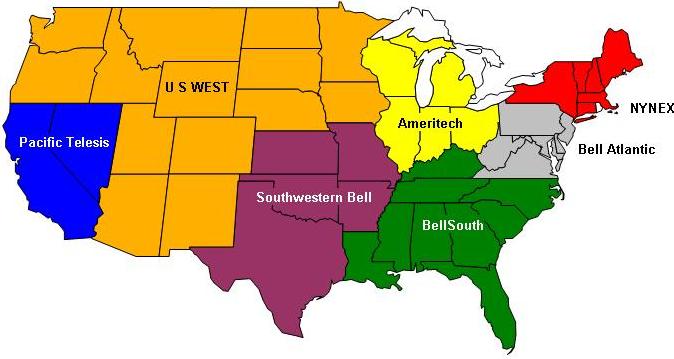
America's newly independent regional telephone companies post-1984

America's newly independent regional telephone companies post-1984

Judge Greene, issuing a final consent decree to be effective January 1, 1984 formally broke up the Bell System.  The 22 local phone companies under AT&T were merged into seven Regional Bell Operating Companies, each to be run independently:

  • Ameritech (acquired by SBC in 1999 – now part of AT&T again)
  • Bell Atlantic (acquired GTE in 2000 and changed its name to Verizon)
  • BellSouth (reabsorbed back into a newly reorganized AT&T in 2006)
  • NYNEX (acquired by Bell Atlantic in 1996 – later to become part of Verizon)
  • Pacific Telesis (acquired by SBC/AT&T in 1997)
  • Southwestern Bell (changed its name to SBC in 1995, then acquired the remnants of AT&T in 2005, rechristening itself as the ‘new’ AT&T)
  • US West (acquired by Qwest in 2000.)

The goal was to create several smaller regional companies not too large to face challenging competition from new independent providers entering the marketplace.

The result of all of this upheaval was competition in the long distance calling marketplace, but very little competition for local residential telephone service over phone company-provided telephone lines.

Still, for a time the post-breakup family of former Bell companies enjoyed stability and a less regulated marketplace, and several raised rates for local phone service, even while cutting long distance prices.  Customers could now buy and install their own telephone equipment, including answering machines and computer modems, and several competitors began to spring up to serve business customers.

By the 1990s, a new upstart appeared on the horizon that would potentially threaten the whole ‘arrangement.’  The cable television industry, subjected to a more regulated marketplace after years of monopoly abuse of customers, was looking for new unregulated add-on services they could provide to bring back the days of big profits they enjoyed just a few years earlier.  Two potential services: providing connectivity to the Internet and providing cable customers with telephone service.

When phone companies realized cable was planning to invade their turf, this meant war.

In part two, learn more about how the telephone companies went ‘back to the future’ and rebuilt the empire Judge Greene broke up.

Washington State Utilities and Telecom Staff Recommend Rejection of Verizon Sale to Frontier

Phillip Dampier November 6, 2009 Frontier, Public Policy & Gov't, Verizon, Video 3 Comments

Washington State

Washington State

Saying the sale would harm customers, Washington state utilities’ commission staff is recommending rejecting a proposed sale of Verizon’s landline residential and commercial telephone business in Washington to Frontier Communications.

In raising objections to the proposed Frontier-Verizon transaction, Washington Utilities and Transportation Commission (UTC) staff members concluded the business deal is not in the public interest. The proposed purchase does not include Verizon Wireless customers.

The three-member UTC, which will make the final decision early next year, will consider whether state ratepayers would be harmed by the proposed transaction, which is part of an $8.6 billion bid by Frontier to acquire 4.8 million Verizon phone lines in 14 states.

“There may not be any way for Frontier to provide benefits to Washington customers that offset the financial harm and operational risks,” said commission staff in their written testimony. “The failure of the companies to offer adequate consumer benefits or protections puts customers at risk of being served by a company without enough financial strength to make necessary improvements to local telephone facilities and widen deployment of broadband access.”

The Commission staff believes Frontier’s proposal to improve service is loaded with risk:

  • The company’s credit rating is lower than Verizon, making capital difficult to obtain in a credit-challenged economy.  Without such capital, Frontier cannot make improvements to the telephone network.
  • Frontier’s ranking as a relatively small independent phone company means it will face “higher per unit” costs because of the unavailability of volume discounts super-sized companies like Verizon enjoy.
  • Frontier could easily face the same fate as three other Verizon spinoffs – a fast trip to bankruptcy court, but only after providing lousy service and broken promises to customers along the way.

logo_wutcFrontier said it would file a formal rebuttal to the comments later this month.  The company disputes the conclusions reached by the utility commission staff, saying the company will reduce its dividend to free up financial resources and will aggressively expand broadband availability in their service areas.

But the findings from Washington state are familiar to readers of Stop the Cap! They are largely the same echoed by the campaign to stop the sale of West Virginia’s landlines to Frontier.  The Communications Workers of America issued a press release reminding West Virginians Frontier enjoys abysmal approval ratings for its broadband service, based on an independent survey done by PC Magazine we covered a few months back.  Verizon ranks number one in customer satisfaction, in part thanks to its FiOS fiber to the home service.

Union spokeswoman Elaine Harris said, “The economic growth and development of West Virginia depends on having modern, high-speed Internet access. It’s not in the public’s best interest for West Virginia to replace the leader in broadband service with a smaller company whose customer satisfaction is appallingly low.”

Frontier’s defense to union objections is that Verizon hasn’t yet wired any customers in West Virginia for FiOS, and many parts of the state don’t have any broadband, so customer satisfaction numbers don’t matter if you don’t have any service.  Frontier claims it has good customer reviews in West Virginia, but offered no evidence to back up their claim.

So far, the Washington state commission has received 93 public comments with five in favor, 40 undecided and 48 opposed to the proposed sale. Washington customers who would like to comment on the case are encouraged to send correspondence to:

Washington Utilities and Transportation Commission
P.O. Box 47250
Olympia, WA 98504

e-mail comments: [email protected] or call toll-free 1-888-333-9882.

The commission’s deadline for accepting public comments is Jan. 11, 2010.

[flv width=”640″ height=”480″]http://www.phillipdampier.com/video/Bloomberg News Frontier Maggie Wilderotter 11-4-09.flv[/flv]

Frontier CEO Maggie Wilderotter appeared on Bloomberg TV on November 4th to discuss the company’s challenges from declining wireline telephone service. Wilderotter’s spin is that disconnected dial-up residential lines and business data circuits represent some of that loss.  Wilderotter agrees with the anchor’s contention that delivering broadband in rural areas where there is not a lot of competition is good for Frontier. But is it good for consumers?(3 minutes)

Frontier Communications reported its third quarter results earlier today with an 11% increase in net profits “attributable to shareholders,” but a 6% decline in revenue, mostly due to losing an additional 34,000 consumer and business line accounts in the third quarter.  Thanks to selling add-ons like calling features and broadband, the company managed an average 1% increase in revenue per line.  Wilderotter said improved customer metrics and disciplined cost control was responsible for the increase in profits.

Frontier Gets Approval of Verizon Deal in California, South Carolina, and Nevada; Attacks Union Opposition in West Virginia

Charleston, West Virginia is just one of many cities potentially served by Frontier

Charleston, West Virginia is just one of many cities potentially served by Frontier

Frontier Communications has won approval from state utility commissions in California, South Carolina, and Nevada to take over telephone service currently provided by Verizon Communications.  The decisions were unanimous in all three votes by Commission members, and involve telephone service in several small communities in all three states.

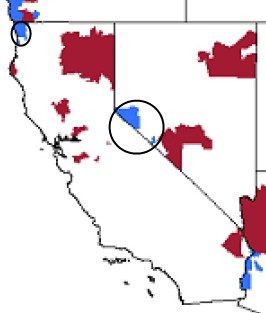
Circles represent Verizon service areas transferred to Frontier in Nevada and California

Circles represent Verizon service areas transferred to Frontier in Nevada and California

Verizon’s castoffs serve a small percentage of customers, which made the transaction fly under the media radar in most cases.  In California, Verizon dumps customers in a small section on the northwest border with Oregon.  In Nevada, several small communities south of Reno are involved.  In South Carolina, Verizon drops scattered groups of customers in small clusters across the state.

These state regulatory approvals follow an October 27 announcement by Frontier that its shareholders have approved the transaction, which will result in Frontier owning Verizon’s wireline operations in all or parts of 14 states.

While the approval appeared pro forma in those three states, West Virginia is another matter.  Strong employee union and consumer group protests continue across the state, with many consumers concerned about the implications of Frontier controlling nearly all wired phone lines in the state.  The Communications Workers of America held a conference call with the media Wednesday to outline its opposition to the deal.

The CWA has been a vocal opponent of the deal, claiming it will risk West Virginia’s telecommunications future with a company without the financial capacity to provide the type of advanced services Verizon is providing in other states.  Kenneth Peres, an economist with the Communications Workers of America, said the deal was extremely risky for consumers, workers and the affected communities.

Peres pointed to the perfect record of three out of three failures for earlier Verizon spinoffs.  FairPoint Communications declared bankruptcy early this week after trying to take on the service needs of three New England states.

Peres told the Charleston Daily Mail that if the deal goes through, Frontier “will find it extremely difficult” to meet its $8 billion in debt obligations while simultaneously investing enough capital to maintain its physical plant, improve service quality, set up a new system in West Virginia, lease systems from Verizon in 13 other states, provide video service for the first time (in Indiana), and ensure adequate staffing “while paying out a lot more in dividends than it makes in profits.”

Frontier went on the attack Thursday, accusing the union of interfering just to grab concessions for itself.

Verizon service areas sold off to Frontier in South Carolina

Verizon service areas sold off to Frontier in South Carolina

Steve Crosby, Frontier spokesman, said, “They’re just throwing stuff up against the wall. They know this is a good transaction and they’re trying to extract their pound of flesh. They want more concessions. This is their opportunity to ask for more money for their union membership and more benefits. That’s what they want. Union membership across the country is declining. This is how they’re trying to extract as much as they can from either Frontier or Verizon.”

As for Frontier’s debt load, “This is actually a de-leveraging transaction,” Crosby said. “We’re taking on debt but we’re taking on a whole lot more revenue. We’re currently at a 3.8 times revenue-to-debt ratio, going down to 2.6. So we actually get better in terms of revenue to debt. And today we’re fine. We’re able to pay a nice dividend. The day the transaction closes, we are approaching investment-grade borrowings.

“Our board of directors made the decision to lower our dividend by 25 percent when the transaction closes to give us even more cash to invest in infrastructure and to give us even more financial flexibility,” Crosby said.

“Every time we have an argument we win and they bring up other stuff,” Crosby said. “They never bring up the de-leveraging because it undermines their argument. They never bring up the fact that we will reduce our dividend because it undermines their argument.

“We have said we will maintain employment levels for 18 months” after the transaction closes, Crosby said. Because of required regulatory approvals and other factors, the deal can’t close before April 2010.

“So you can figure that’s two years,” Crosby said. “Who nowadays has that kind of job security? I think we’re bending over backwards. I wish I had the pension plan, the job security the CWA has. They’re looking at extracting more from Verizon and Frontier.”

When asked by the newspaper why Frontier shareholders would approve a deal that was destined for failure, Peres told the newspaper:

Frontier’s business model is built on acquisitions. Frontier bought a portion of Global Crossing’s business which increased revenue and access lines “but that began to decline,” he said. “They bought Commonwealth Telephone but that’s flat-lining. What’s the next step? What were they going to do – improve infrastructure or go through the acquisitions route again?” Continuing with acquisitions “postpones the day of reckoning,” he said.

Commentary: Our Take

Crosby’s comments seem more suited for a talk show audience that hates unions.  Obviously the union does not think this is a good deal for West Virginia, and considering the track record of earlier Verizon deals, and the correct predictions from employee unions on their inevitable outcomes, they have every right to oppose the deal on its face.  Crosby apparently has time to address declining union membership, but not the much more relevant decline in the traditional phone company’s bread and butter business – landlines.  Frontier, like other phone companies, continues to see disconnect requests coming from coast to coast as customers dump the phone company for a cable digital phone product, Voice Over IP line, or rely on their cellphone.

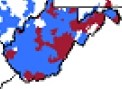
West Virginia would be solidly Frontier territory if the state approves the sale

West Virginia would be solidly Frontier territory if the state approves the sale

Verizon recognizes their traditional business is a dying one, which is why they are in a hurry to diversify into competitive broadband and video services over their fiber optic FiOS network.  Where it doesn’t make economic sense (under their current business plan) for Verizon to deploy FiOS, decisions are being made about whether to keep those smaller phone operations within the Verizon family, or sell them off to companies like Frontier.  What Frontier acquires today from the standpoint of customers and revenues could represent the high water mark, and without offering robust options for a digital future, Frontier will likely continue to see customer erosion.

FairPoint acquired seemingly healthy Verizon companies serving the entire states of Maine, New Hampshire, and Vermont.  When their efforts to seamlessly combine Verizon’s legacy systems with FairPoint’s own systems failed, that along with an inability to properly service customers, caused a death spiral as customers dropped service, which led FairPoint straight into bankruptcy.

Frontier’s record of investment and service in western New York speaks for itself.  Time Warner Cable eats Frontier for lunch, with less expensive “digital phone” service, much faster and more reliable broadband, and a video package that Frontier doesn’t offer (reselling DISH Network is hardly the same as providing video service that doesn’t come from a third party company’s satellite dish nailed to the roof).  Frontier is ready and willing to stick with DSL service at speeds that are basically maxed out.  Time Warner Cable evidently doesn’t even consider Frontier a significant enough player to deploy upgrades in this area while they are in a hurry to provide them where Verizon FiOS is under construction.

When a company isn’t prepared to keep up with the rest of New York with fiber deployment to the home, the chances of that kind of service reaching West Virginia anytime soon are near zero.

But Frontier’s unique position as a specialist in “rural service” allows it to eke out an existence in areas where cable isn’t a big competitive threat, and where any broadband is better than no broadband at all, at least for now.  But without a plan for keeping up with the fast changing broadband world, customers happy with 3Mbps service today will despise the company for being stuck with those speeds later.  A lot of people in Rochester sure aren’t happy being stuck with Frontier DSL, and that nasty 5GB “reasonable use” language in the Acceptable Use Policy.

Crosby’s comments about CWA member job security, which he evidently envies, says more about the union’s commitment to its members than Frontier has to him.  Perhaps Crosby can quit his spokesman job and switch to a position that gets him CWA membership with a pension and job security.  Perhaps if the people of West Virginia say thanks, but no thanks, Frontier will be in a better economic state than it would be if this mega-deal collapses under the weight of debt and integration challenges.  Then Crosby can keep his job with the evidently lousy benefits.

Peres’ assumption that Frontier lives only through acquisitions isn’t the complete story.  Just like the myth sharks must constantly swim to survive, Frontier doesn’t constantly have to acquire to survive either.  It does have to concern itself with an ever-consolidating telephone line industry, where the smaller independent companies continue to be snapped up by a dwindling number of players.  If a Windstream or CenturyTel comes along with a great offer, Frontier itself may have a new name — Windstream or CenturyTel.

The economies of scale and cost savings are routinely cited by investors promoting consolidation.  It’s no surprise Frontier shareholders voted for the deal.  Bigger is often better for many investors, as long as the quarterly financials play to their interests.  Listening to Frontier investor conference calls, the Wall Street bankers, and the media that support them, are constantly concerned with keeping costs cut to the bone, customer defection limited, risk reasonable, and that dividend being paid.  They are satisfied with Frontier’s rural, less competitive market focus, even if the customers that end up served by them are not.

Search This Site:

Contributions:

Recent Comments:

Your Account:

Stop the Cap!