Home » telephone service » Recent Articles:

AT&T Loses Tax Refund Case: Wanted USF Income Treated As “Contributions to Capital”

Phillip Dampier October 4, 2011 AT&T, Consumer News, Public Policy & Gov't, Rural Broadband Comments Off on AT&T Loses Tax Refund Case: Wanted USF Income Treated As “Contributions to Capital”

AT&T has lost a case it appealed all the way to the U.S. Supreme Court to win favorable tax treatment for income it received from the Universal Service Fund program, designed to help underwrite the costs of providing rural telephone service.

AT&T was seeking a $500 million income tax refund on its 1998 and 1999 federal taxes from money the government provided AT&T.

Federal tax law requires phone companies to treat the USF revenue as income, subject to regular taxation.  AT&T argued the money was actually a “contribution to capital,” which would have substantially reduced the company’s tax burden.  Contribution to capital, as a concept, has been the subject of several corporate lawsuits over the years.  The genesis of court challenges comes from a 1925 case — Edwards v. Cuba Railroad Co., that held government subsidies provided to induce the construction of facilities and provision of service were not taxable income within the meaning of the Sixteenth Amendment.

AT&T believed that USF funding subsidized the delivery of phone service, so it cannot be considered taxable income.

The U.S. Supreme Court disagreed.  The justices elected to leave intact a lower court ruling that threw AT&T’s arguments aside.

Considering the long history of court losses for other corporate entities who have argued similar cases all the way back to the 1950s, the decision should not come as a surprise to the phone company, and AT&T’s reaction was muted.

“We are disappointed with the Supreme Court’s decision,” the company said in a statement. “However, AT&T does not expect any impact to our financial statements.”

The case is AT&T v. United States, 10-1204.

Bright House Suffers Worst Outage in Company’s History; Software Glitch Blamed

Phillip Dampier September 13, 2011 Consumer News, Video Comments Off on Bright House Suffers Worst Outage in Company’s History; Software Glitch Blamed

Last Tuesday, Bright House Networks suffered the worst outage in the company’s history, knocking out cable, broadband, and telephone service for over one million Tampa Bay-area customers.

Bright House customers from the beachfront to Lakeland to Spring Hill were forced to rely on cellphones for much of the day.  The company’s own 24-hour news channel, Bay News 9, couldn’t keep their Florida viewers informed about the outage, because that channel went dark as well.

Company officials blamed a software glitch for the series of progressive failures which began after 10:30am and were not repaired until later that evening.

Although Pinellas County’s 911 system remained in operation, Bright House customers couldn’t call the number from their Bright House “digital phone” line.

While customers without broadband or cable TV service were left bored during the outage, Bright House’s business customers without telephone service incurred real losses, unable to process credit card transactions or receive business calls.

Bright House has no plans to issue automatic refunds for the day without service, but WTSP-TV reports customers can directly request three days’ credit for the outage:

  1. Send an e-mail to Bright House Networks using their online form.
  2. Cut and paste the following into the “Describe your issue or concern” box: I am writing to request credit for Tuesday’s (9/6/11) service outage affecting phone, Internet, and cable-TV.  As seen on WTSP-TV and Facebook, I am requesting three days’ credit that Bright House representatives have offered other customers. Please credit my account.
  3. Hit submit.  A credit should be issued within 48 hours, to appear on your next billing statement.  The amount of the credit will vary, depending on the number of services you receive.

[flv width=”540″ height=”380″]http://www.phillipdampier.com/video/Bright House Outage 9-6-11.flv[/flv]

Bright House Networks’ worst-outage-in-history was a major news story in the Tampa Bay-St. Petersburg area.  Watch a selection of stories from WFTS, WTVT, WFLA, and WTSP-TV.  (9 minutes)

Goodnight Irene: Some Customers Will Have to Wait Until October for Restored Internet Service

Cablevision: Don't Call Us

By the time Hurricane Irene reached upstate New York and New England, it was a tropical storm some say was over-hyped from the outset, but don’t tell that to utility companies facing weeks of service restorations that will leave some of their customers offline until October.

The worst damage to infrastructure was done in this region, with utility poles swept away in flood waters right along with the homes they used to serve.  Telephone and cable companies in several parts of the region cannot even begin to restore service until higher-priority electric service is brought back.  Besides, you can’t use a broadband connection if your power has been out for a week plus.

Those addicted to their online connection are making due in parking lots and other Wi-Fi hotspots where service prevailed over Irene.  Wireless connectivity from cell phone companies is also getting a workout, assuming customers are aware of usage caps and limitations which could make September’s bill much higher than expected.

Stop the Cap! has learned some DSL service restoration appointments in upstate New York, Massachusetts, Vermont, and New Hampshire are now extending into October, although companies suggest outside work may resolve problems.  Customers with the worst luck face a lengthy wait for the replacement of utility poles, new utility lines to be strung across them, and replacement of individual lines connected from the pole to individual homes.

Some FairPoint Communications customers are finding Irene did a real number on their DSL service even if power outages were limited.

In southwestern New Hampshire, Robert Mitchell was presented with a unique error page on his computer after the lights came back on:

“…we are improving the security of your broadband connection. As such, you have been redirected to the FairPoint Communications broadband service page to install a security update.”

That was a fine idea, except its implementation left customers like Mitchell with the most secure broadband connection around, resistant to all malware and viruses — namely, by not having any connection at all.

My annoyance only increased when I realized that FairPoint may have provided a link to download the security update software, but they were not going to make the process of accessing that software easy.

“Your Web browser (Firefox) and Operating System (Mac) are not compatible with the DSL Security improvement process…please re-open this page on a Windows XP, Vista or Windows 7 PC using Internet Explorer,” the message continued.

Bully for me, I have two Macs in the office. Time to call technical support? Nope, sorry. Both of my phone lines use Vonage, a VoIP service that relies on a working DSL modem for dial tone. Cell service at the house was sketchy at best — if I could even get through to technical support during a hurricane.

With the help of an old Windows XP machine, Mitchell managed to finally get back online.  Later, he learned the power spikes and brownouts that preceded the blackout in his neighborhood had caused his DSL modem to resort to its original default settings.  When FairPoint customers first connect a DSL modem, the company prompts them to perform the aforementioned “security update.”  Only FairPoint stopped offering that update more than eight months earlier.  Now, according to Mitchell, it’s just the default start page for newly activated DSL modems.

Customers further east in downstate New York, Massachusetts, Maine, Long Island, Connecticut, and New Jersey are finding getting service restoration highly dependent on which provider they use.

Time Warner Cable customers numbering about 350,000 found their service out Wednesday after leftover flooding and debris tore up fiber cables serving Maine, New Hampshire and Vermont.  Service was restored that evening.

Cablevision customers in Connecticut are still experiencing new outages caused by flooding, and with power company workers contending with more damage in that state than further south in New York, cable crews can’t restore service until the lights are back on.

Cablevision customers on Long Island are still being told not to bother calling the cable company to report outages.  Those that do are often given a date of Sept. 15 for full service restoration, although it could be sooner if damage in individual neighborhoods is less severe.  A Cablevision spokesman said, “Cablevision is experiencing widespread service interruptions, primarily related to the loss of power.  Cablevision crews are in the field and we will be working around the clock to make necessary repairs, in close coordination with local utilities.  Generally, as electricity is returned to an area, customers will be able to access Cablevision service.”

Verizon customers in downstate New York and New Jersey faced lengthy hold times to report service outages, and are given a range of dates from later this week until mid-September for full service restoration.  Some pockets of very badly damaged infrastructure may take even longer to access and repair.  Verizon’s largest union workforce, under the auspices of Communications Workers of America District 1 are accusing Verizon management of slowing repairs with denials of overtime work requests, in part to punish workers for their recent strike action.  John Bonomo, a Verizon spokesperson, denies that accusation, but added the company is not treating the thousands of customers still without service as an emergency, noting landline service “is not as vital as it had been in past years.”

Comcast customers, mostly in Pennsylvania, Vermont and Massachusetts, are turning to smartphones to cope through extended service outages, according to the Boston Globe:

Comcast Corp. customer Soraya Stevens turned to her iPhone when her cable blew out, logging on to Twitter from her Bedford home for the latest power outage updates. “I would not have any communication or insight without my smartphone,’’ said Stevens, a software engineer.

Some customers who lost cable service lost their TV, Internet, and landline phone, which are often bundled and sold together. Many turned to their smartphones, operating on batteries and the signal from cellphone towers, or friends and family who still had cable service.

AT&T, which serves landline customers in Connecticut, experienced more outages a day or two after Irene departed as battery backup equipment installed at landline central offices finally failed.  Those equipped with diesel generators are still up and running, but many AT&T customers sold a package of broadband and phone service may actually be receiving telephone service over a less-robust Voice Over IP network, supported with battery backup equipment that shuts down after 24 hours, when the batteries are exhausted.  This has left customers with standard copper wire phone service still up and running, but customers on Voice Over IP completely disconnected.

Bill Henderson, president of Communications Workers of America Local 1298, told the Hartford Courant those landlines aren’t considered landlines by the Department of Utility Control, and aren’t regulated for reliability, as the old system is.

“Technology has risen. Some of the things we’ve given up in that system is reliability,” he said. “This is what I’ve been screaming about to the DPUC. It’s a telephone! We need to regulate this service.”

Customers are also complaining loudly about AT&T’s poor wireless performance during Irene, with many tower outages and service disruptions that are still ongoing.

Remember, when services are restored, be sure and contact your provider and request a full service credit.  You will not receive one unless you ask.

New Documentary Reminds Us Why Letting AT&T Grow Bigger is a Bad Idea

Phillip Dampier August 30, 2011 AT&T, Editorial & Site News, History, Net Neutrality, Public Policy & Gov't, T-Mobile, Verizon, Video, Wireless Broadband Comments Off on New Documentary Reminds Us Why Letting AT&T Grow Bigger is a Bad Idea

On September 13, most PBS stations will premiere a new documentary, “Bill McGowan, Long Distance Warrior” exploring the many trials and tribulations of MCI Corporation, the long distance and e-mail provider that was instrumental in breaking up Ma Bell’s monopoly in telephone service.

[flv width=”512″ height=”308″]http://www.phillipdampier.com/video/Long Distance Warrior.flv[/flv]

A preview of PBS’ Long Distance Warrior, which premieres on most PBS stations Sept. 13  (3 minutes)

For those under 30, “MCI” may not mean much.  The company that helped pioneer competitive long distance calling was absorbed into the Worldcom empire in 1997, where it continued to provide service until a major corporate accounting scandal brought Worldcom down in 2002.  Most of what was left was eventually sold to Verizon Communications in 2005.

Remarkably, Microwave Communications, Inc. (MCI) was founded all the way back in 1963, but not as a provider of telephone services.  That MCI sought to build a network of microwave relay stations between Chicago and St. Louis to provide uninterrupted two-way radio service for some of the nation’s largest trucking and shipping companies.

The Bell System

By the late 1960s, William G. McGowan, an investor and venture capitalist from New York won a seat on MCI’s board of directors and part ownership of a newly-envisioned version of MCI — one that would provide businesses with a range of telecommunications products, including long distance telephone connections.  With many American corporations maintaining branch and regional offices, connecting them together was a potentially very lucrative business, especially if MCI could deliver the service at prices cheaper than what the monopoly Bell System was charging.

With their microwave relay network, now expanding across the country, MCI could distribute long distance phone calls cheaply and efficiently, if they could find a way to connect that network to Bell’s local phone system.  After all, it does little good to offer long distance service if you cannot connect calls to the businesses’ existing telephone equipment.

That’s where AT&T and its Bell Operating Companies objected.  For them, only calls originating on and delivered over their own network should be allowed.  MCI, as an interloper, was seeking to use the network AT&T built and paid for.  It’s an argument that has echoed more than 30 years later, when AT&T’s then-CEO Ed Whitacre objected to outside Internet content providers “using AT&T’s pipes for free.”

[flv]http://www.phillipdampier.com/video/MCI First 20 Years.mp4[/flv]

On the occasion of MCI’s 20th anniversary, the company produced this retrospective exploring the difficult times competing with AT&T and the Bell System.  (9 minutes)
MCI's best argument: AT&T's long distance bills

McGowan confronted arguments from AT&T executives who warned that competitive long distance would destroy the business model of America’s Bell System, which provided affordable local phone service to all 50 states, in part subsidized by long distance telephone rates, mostly paid by its commercial customers.  Tamper with that, they warned, and local phone bills would be forced to soar to make up the difference.

MCI called that argument a scare tactic, and suggested instead that AT&T’s monopoly had grown inefficient, bloated, expensive, and resistant to innovation and change.  MCI could deliver a substantially less expensive service and would force AT&T to increase its own efficiency to compete.  AT&T wasn’t interested in that argument and sued, repeatedly, to keep MCI out of its business.

By 1984, federal courts declared AT&T a monopoly worthy of a break-up, and opened the door to MCI’s long distance network.  By that time, MCI was already thinking about evolving itself beyond a business long distance provider, whose network was largely idle after business hours.  Because most Americans were accustomed to making long distance calls at night when rates were substantially lower, MCI developed new residential long distance service plans that encouraged customers to use that idle network at night and on weekends.

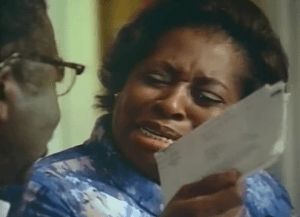
[flv width=”640″ height=”447″]http://www.phillipdampier.com/video/crying_mother.f4v[/flv]

One of MCI’s most memorable ads features a sobbing mother who reached out and touched her son over long distance a little too much.  (1 minute)
Thus began more than a decade of heavy advertising and competition for the long distance telephone market.  With equal access rules in place, consumers could choose their own long distance phone company and shop for the one with the lowest rates.  Competitors like Sprint, WilTel, LDDS, RCI, LCI, and yes, even AT&T all pitched their own calling plans.

MCI also pioneered MCI Mail, one of the first commercial electronic mail systems.  The original concept had businesses typing letters on a computer terminal, printed on standard paper at an MCI office closest to the destination, and then mailed in an envelope through the U.S. Post Office.  This poor-man’s version of a telex or telegram worked for businesses that wanted overnight delivery, but not at the prices charged by shippers like Federal Express.  In larger cities, MCI Mail could offer businesses delivery of their electronic communications within four hours, something closer to a traditional telegram of days gone-by.

MCI Mail’s hard copy deliveries wouldn’t last long, of course.  As the 1980s progressed, the fax machine and the more familiar all-electronic e-mail we think of today became firmly established.  As MCI Mail became less relevant, the company innovated into offering low priced telex services, mass-faxing, and data backhaul services to provide connectivity for online networks.

[flv width=”504″ height=”400″]http://www.phillipdampier.com/video/WIBW MCI Mail 1984.flv[/flv]

WIBW explores a new concept in communications — something called ‘electronic mail,’ a service that bewildered consumers in the early 1980s.  This report from 1984.  (2 minutes)

Bill McGowan: Would not approve of AT&T's plans to restore the glory days of the past.

AT&T, in contrast, was still getting over the loss of its local Bell Operating Companies — the regional phone companies most Americans did business with, and the loss of revenue earned from renting telephone equipment.  For years, AT&T long distance was branded as a quality leader, not a price leader.  It maintained its enormous market share partly through consumer indifference — customers who did not initially choose a new long distance carrier remained with AT&T, the default choice.

It took only about a decade after the Bell break-up for telecom industry lobbyists to begin advocating for enough deregulation to allow many of those former Baby Bells to re-combine through mergers and acquisitions.  The result is today’s AT&T, formed from its long distance unit, BellSouth, Illinois Bell, Indiana Bell, Michigan Bell, Nevada Bell, Ohio Bell, Pacific Bell, Southwestern Bell, Wisconsin Bell, and Southern New England Telephone.  Its largest competitor is Verizon Communications, which itself resulted from a combination of Bell Atlantic, NYNEX, GTE, and what was left of MCI after Worldcom was through with it.

McGowan’s fight was a personally costly one.  A workaholic, McGowan routinely put in 15 hour work days and drank up to 20 cups of coffee daily.  His heart finally had enough and McGowan succumbed to a heart attack in 1992 at age 64.  But he leaves a legacy and two decades of fighting to break up AT&T’s monopoly, which he always believed was bad for consumers and business (unless you were AT&T, of course).  That’s an important message as AT&T strengthens its resolve to acquire one of its significant competitors in the profitable wireless market — T-Mobile.  McGowan would have never approved.

[flv]http://www.phillipdampier.com/video/KCSM San Mateo Electronic Mail 6-18-87.mp4[/flv]

“The Computer Chronicles,” a production of KCSM-TV, spent a half hour in June 1987 showing off electronic e-mail service from MCI and how consumers and businesses using something called a “modem” could connect their home computers with online databases and services to exchange information and communications back and forth.  And for those business travelers on the road, away from their office computers, Speech Plus offered a product that could still keep you “connected,” by reading your e-mail to you over the phone.  In 1987, outside of commercial pay networks like CompuServe, Delphi, PeopleLink and QuantumLink, most Americans with modems used them to connect to typically-free hobbyist-run computer bulletin board systems.  Widespread access to “the Internet” would take another 5-6 years.  (29 minutes)

TDS Telecom: Losing 5.5 Percent of Its Landline Customers Every Year

Phillip Dampier August 9, 2011 Broadband Speed, Competition, Consumer News, Rural Broadband, TDS Telecom Comments Off on TDS Telecom: Losing 5.5 Percent of Its Landline Customers Every Year

TDS Telecom, the Madison, Wisc. independent telephone company serving about 1 million landline customers in rural and suburban communities in 30 states, is losing 5.5 percent of those customers every year, as consumers increasingly drop their landline telephone service.

In second quarter financial results reported to investors this week, TDS noted it is increasingly dependent on selling DSL broadband and managed data services to stabilize long term revenues and minimize line losses.  Like many independent phone companies, TDS’ largely rural service areas offer the opportunity of delivering broadband service to areas unserved by cable broadband, and unlikely to find robust cell phone or wireless data coverage.

Vicki Villacrez, TDS’ chief financial officer, reports the phone company now has a 60 percent penetration rate for residential landline customers taking DSL service.

TDS is losing more than 5% of their landline customers a year, which limits potential growth.

“High speed data subscribers grew 6% year-on-year.” Villacrez said. “We continue to attract healthy levels of new customers and they are taking higher speed. Over 80% of our data subscribers are taking speeds of three megabits or greater and 16% are taking greater than 10 megabit speeds.”

Because TDS customers are migrating to faster speeds, where available, the company’s average revenue per subscriber has remained stable at $37 per month.  That comes from a combination of the higher prices some customers pay for better service minus line losses, customer defections and retention offers delivering discounts to those threatening to switch providers.

TDS is also adopting similar strategies other phone companies are trying to hang onto customers: marketing their own triple play package of voice, broadband, and television service.  Like most smaller phone companies, TDS delivers voice and data over their existing copper wire network and relies on a resale arrangement with DISH Network to provide satellite television.

About 26 percent of TDS customers are enrolled in the company’s triple play package, up 2,700 customers in the quarter.

But the company’s cost control measures also signal TDS’ unwillingness to invest noticeably in expanding their DSL footprint to additional customers, or dramatically improve their existing network.  The company admits it plans to limit investment in new residential customers, and consolidated cash expenses were down 2.1% for the period, reflecting reduced spending.

Where is TDS willing to invest?  In data center assets and future acquisition opportunities.  TDS intends to broaden its presence in managed hosting and will continue to explore mergers and acquisition opportunities with other small, independent phone companies.

Search This Site:

Contributions:

Recent Comments:

Your Account:

Stop the Cap!