Home » telephone service » Recent Articles:

Dish Network Wants to Convert Satellite Frequencies to Add Voice, Broadband Services

In the era of today’s “triple play” package of voice, data, and phone service, satellite television providers have been left at a competitive disadvantage.  Both Dish Network and DirecTV can sell you all the television signals you want, but their satellite-based distribution limits the options to include broadband and telephone service in the package.  Now Dish wants to convert some of their satellite spectrum to sell voice and data service over a network of land based wireless towers that will put the company in direct competition with AT&T and Verizon Wireless.

Dish CEO Charlie Ergen hopes to avoid making the same mistakes that threaten to kill a similar venture — LightSquared, because of interference concerns.

Dish’s spectrum is way, way up the radio dial, above 2,000MHz.  Other spectrum users in the neighborhood are primarily low-powered, line of sight communications, often satellite-based.  LightSquared’s service would have operated at around 1,500MHz, had it not obliterated reception of global positioning satellite services (GPS) in certain instances.  Whenever new spectrum users begin to move into a neighborhood, those already there feel threatened, primarily from the fear of interference problems.

Both LightSquared and Dish’s proposed services operate at considerably higher power than other incumbent users, and interference to existing services is a proven problem when sensitive reception equipment is unprepared to deal with signal overload.  The Federal Communications Commission found just cause to deny LightSquared operating permission for precisely that reason.  Ergen hopes to sell the FCC on a plan he says will avoid those interference problems.

Ergen

Ergen

Ergen’s spectrum doesn’t sit immediately next door to other, existing users.  His frequencies are comparable to living the next block over, and there is a protective fence keeping the neighbors apart.

“It’s not as close to GPS, so it’s unlikely to interfere,” Matthew Desch, chief executive officer of Iridium Communications Inc., which operates more than 60 satellites, told Bloomberg News. “But the approval is going to take some time. The FCC is going to make sure they don’t have another LightSquared problem on their hands.”

Mike Marcus, director of Marcus Spectrum Solutions LLC adds Dish has some space between its frequencies — known as a guard band — and other users.  Marcus believes Dish won’t have an interference problem unless existing wireless carriers market handsets and other equipment insufficiently selective to reject interference from higher powered users nearby.

But whether Dish will ultimately spend the billions required to build a nationwide satellite and land-based broadband and phone network to accompany its existing satellite service remains unknown.

Bloomberg reports Wall Street analysts may prefer Dish sell its spectrum assets for a quick profit.  Barclays Capital estimates Dish’s spectrum could net the company about $7.3 billion.  If AT&T or Verizon Wireless were buyers, it would also protect them from new competition in the wireless market.

Regulators may be prepared to limit any such sale, however.  Industry analysts note a similar license for LightSquared required government approval before leasing capacity (or selling the network outright) to AT&T or Verizon Wireless.  The government may seek the same limits on Dish Network’s spectrum.

Ergen may have the final word however.

Vijay Jayant, an analyst at ISI Group in New York:

If the government sets rules that limit how Dish can use the spectrum, Ergen may choose to hoard it, said Jayant, which could be antithetical to the government’s mission of promoting wireless competition.

“Dish isn’t a patsy for the government,” Jayant said. “Dish’s attitude is, ‘Make the rules fair and we’ll do the right thing. Make them unfair and we’ll sit on the spectrum,’ and it will be another black eye for the government.”

Copper Thieves Wipe Out Phone Service in Eugene, Oregon

Phillip Dampier December 20, 2011 CenturyLink, Consumer News, Video Comments Off on Copper Thieves Wipe Out Phone Service in Eugene, Oregon

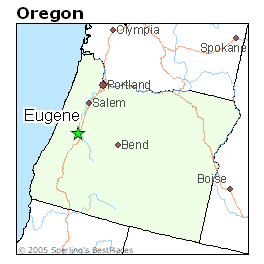
Copper thieves left thousands of phone customers in Eugene, Ore. without telephone service, forcing volunteer firefighters to get walk-in reports of fire and medical emergencies after 911 service was disrupted.

Authorities are looking for the suspects who scaled telephone poles and removed several hundred feet of critical phone wiring that provided service in the Eugene area.  CenturyLink officials rushed to pull new cables across phone poles to get service restored, and much of Eugene had their telephone landlines back within 24 hours.

CenturyLink and Oregon authorities claim copper thieves are now primarily targeting copper landlines because electrical lines are more dangerous and phone wire insulation is easier to burn or strip off, leaving the thieves with spools of bare copper wiring easily sold to scrap dealers.

Copper prices have spiked over the past few years, increasing interest among thieves.  Officials in several states have partnered with scrap dealers to try and limit illicit sales, and criminal penalties have been increased.

Occasionally, copper line theft also disrupts cell phone service, because many cell towers are still connected via copper circuits, especially in rural areas thieves favor.

[flv width=”360″ height=”290″]http://www.phillipdampier.com/video/KMTR Eugene Phone Service Restored in Eugene 12-19-11.mp4[/flv]

KMTR in Eugene covers the latest copper caper affecting CenturyLink phone customers in Oregon.  (2 minutes)


AT&T Ripped Off Hamilton County (Tenn.) 911 By “Intentionally Undercollecting” Fees, New Suit Alleges

Phillip Dampier November 17, 2011 AT&T, Consumer News, Public Policy & Gov't, Video Comments Off on AT&T Ripped Off Hamilton County (Tenn.) 911 By “Intentionally Undercollecting” Fees, New Suit Alleges
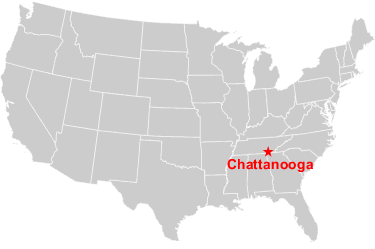
The Hamilton County’s Emergency Communications District is suing AT&T of Tennessee for what it says was an intentional decision to under-report and under-charge customers the monthly $1-3 911 fee levied on residential and commercial phone lines.  Hamilton County, which includes the city of Chattanooga, Tenn., ironically discovered the “intentional under-collection” of the mandatory 911 fees when it received a proposal from the phone company to provide telephone service to the county at a lower rate than competitors could offer, in part because AT&T offered to discount or eliminate the 911 surcharges.The county 911 agency, through its lawsuit, suggests most of the under-reporting is taking place with business customers who are using AT&T’s multiplexed Centrex phone service.  AT&T provides up to 23 voice phone lines over a single circuit, but only charges 911 fees on a single line, the lawsuit alleges.

“They were able to do what they call bundling,” ECD Executive Director John Stuermer told WRCB-TV. “Technology allows multiple phone lines over a single pair of wires, [but] we’re not getting the funding for the lines as we should have.”

Hamilton County ECD wants a U.S. District Court to fine AT&T $10,000 for each falsified financial report it has filed since 2001. Collectively, that could amount to a fine up to $1.33 million.

The lawsuit demands that AT&T open access to its billing files for a county investigation.

AT&T won’t comment on the lawsuit, but it isn’t the first time the phone company has faced scrutiny for similar under-collection of 911 fees. In 2006, the 911 district for Madison County, Ala., sued AT&T’s predecessor BellSouth for the same thing. The company settled that lawsuit privately in 2009.

[flv width=”480″ height=”380″]http://www.phillipdampier.com/video/WRCB Chattanooga Hamilton County sues ATT for 911 fees 11-15-11.mp4[/flv]

WRCB in Chattanooga reports Hamilton County 911 may not be getting the funding it needs because AT&T isn’t passing along what it owes in 911 surcharges.  (3 minutes)

Save Rural Broadband: Protecting Rural Co-Op and Family-Run Phone Companies is Important

Phillip Dampier November 15, 2011 Editorial & Site News, Public Policy & Gov't, Rural Broadband, Video Comments Off on Save Rural Broadband: Protecting Rural Co-Op and Family-Run Phone Companies is Important

Last month, Stop the Cap! shared with you the inside story of the ABC Plan — a self-serving attempt by large phone companies to reform the Universal Service Fund (USF) in ways that would raise phone bills and deliver favored treatment for slow speed telephone company DSL service.  The FCC elected not to adopt the industry plan and cobbled together one of their own.  It will still raise the cost of telephone service, and likely won’t bring broadband to every rural American who wants it, but it could have been worse.

Despite the reforms, the challenges to deliver rural broadband remain serious.  In these out of the way communities, cell phone service is hit or miss, cable television is nowhere to be found, and the community looks to their independent local phone company for just about every telecommunications service they can buy.

In areas deemed unprofitable for even voice telephone service, co-op phone companies are commonplace.  So are family-owned and operated private providers.  These small providers don’t just exist to make money.  They are one-part community service, one part cover-your-costs to keep the lights on.  Without support from the USF, many of these companies could never have sustained their operations, much less expand into broadband.  So in a world of AT&T, Verizon, and CenturyLink, there are rural phone companies like Bevcomm, Valley Telephone Cooperative, Volcano Communications, Blackfoot, and Grand River Mutual Telephone that are expanding broadband in places larger companies would never think of serving.  While some of these companies supported the ABC Plan, the rural telephone associations that helped underwrite the Save Rural Broadband campaign also had a plan of their own to protect these small phone companies.

Over the next several days, you can get an inside look at each of these communities and the providers that serve them.  They are the rural phone companies that deliver the innovation so many larger phone companies forgot.

[flv width=”640″ height=”380″]http://www.phillipdampier.com/video/Save Rural Broadband California.flv[/flv]

Learn how people in Amador County, California rely on broadband services from Volcano Communications.  Cell phone service is non-existent and without telecommunications service like broadband, economic growth in the community would be seriously challenged.  (6 minutes)

Cable Beating Phone Companies In Phone Service Satisfaction: Cox Best, Frontier Worst

Phillip Dampier October 6, 2011 Competition, Consumer News Comments Off on Cable Beating Phone Companies In Phone Service Satisfaction: Cox Best, Frontier Worst

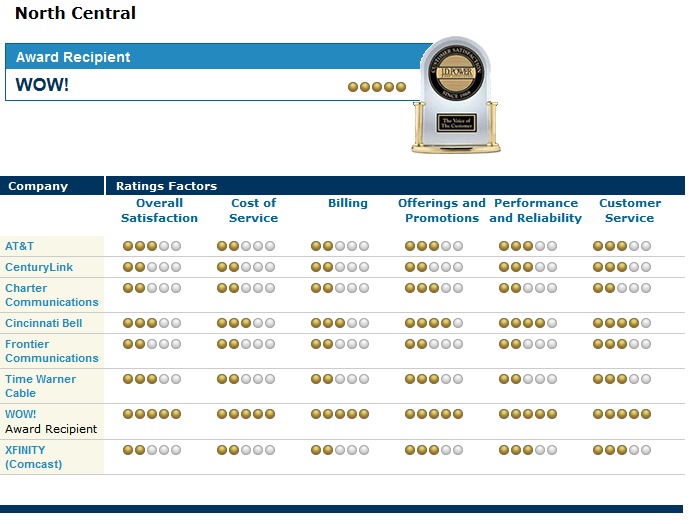
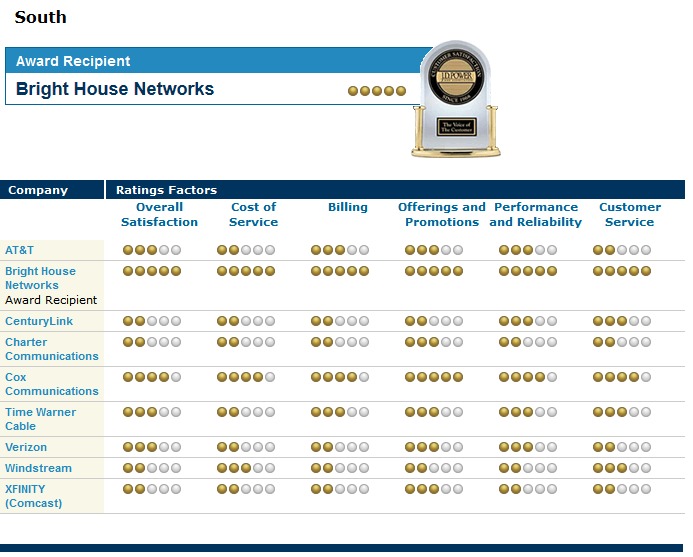
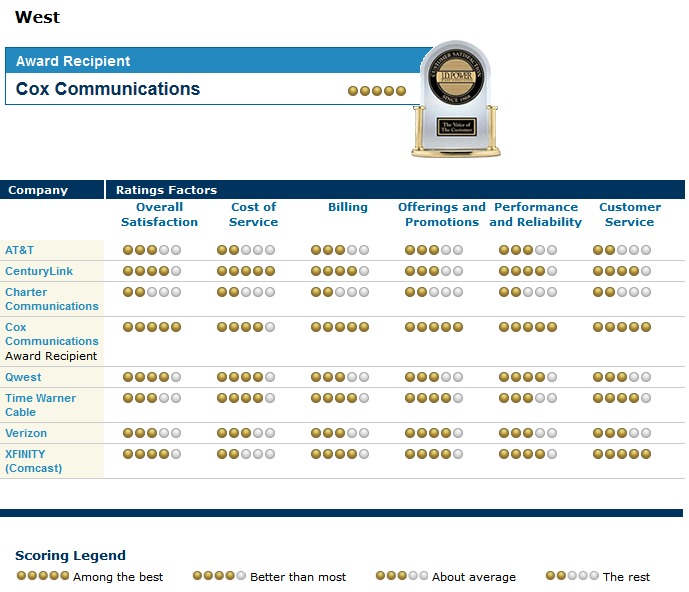
Most cable operators are doing a better job of providing telephone service than traditional telephone companies, according to a new J.D. Power and Associates survey.

Among the worst providers across all regions were Frontier Communications, which scored dead last in the East and North Central regions, and cable operator Charter Communications, which won the lowest score overall for service in the western United States.  Cox delivered the most consistently reliable service across three of the four regions it serves, although it was beaten by Bright House Networks in the south.

The results:

The study measured customer satisfaction with both local and long distance telephone service in four regions throughout the United States. Five factors were examined to determine overall satisfaction: performance and reliability; cost of service; billing; offerings and promotions; and customer service.

Satisfaction with performance and reliability-the most influential factor contributing to overall satisfaction-has declined by 6 percent to an average of 7.4 (on a 10-point scale) in 2011 from 7.9 in 2011. Within this factor, satisfaction with the service provider’s ability to keep outages to a minimum has experienced the greatest decline.

“The brutal winter weather that plagued much of the country clearly took a toll on service levels,” said Frank Perazzini, director of telecommunications at J.D. Power and Associates. “In fact, the proportion of customers who contacted customer service to report an outage jumped to 21 percent in 2011 from 12 percent in 2010.”

According to Perazzini, a key driver for mitigating losses in satisfaction due to outages is effectively managing customer expectations regarding service restoration. On average, customers who experience an outage are advised that service will be restored within 30 hours, while actual service restoration time averages 25 hours. Overall satisfaction among customers whose service was restored approximately three hours earlier than the time quoted by the service provider averages 705 on a 1,000-point scale. In comparison, among customers whose service was restored three hours after the estimate given by the provider, satisfaction averages 591.

The study also finds that among customers who use an alternative phone service (for example, cellular or Internet service, rather than wireline), the proportion who replace wireline telephone calls with cell phone calls, texts and email remains relatively unchanged in 2011, compared with 2010. However, use of Internet calling services such as Skype or Vonage has increased to 21 percent in 2011 from 16 percent in 2010. Customers who use Internet calling services are significantly less satisfied with their telephone provider (622 on average, which is 14 index points below the industry average of 636) and are more likely to switch telephone providers (23% vs. the industry average of 16%).

Search This Site:

Contributions:

Recent Comments:

Your Account:

Stop the Cap!