Home » telephone service » Recent Articles:

Verizon Files Tariff Allowing Company to Abandon Wired Phone/Broadband Service in New York; Fire Island First to Go

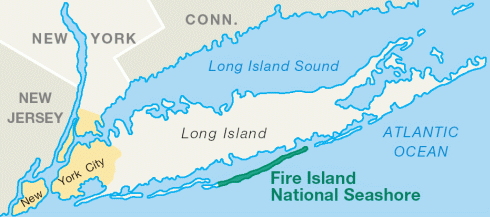
fire islandVerizon Communications has filed a formal tariff obtained by Stop the Cap! with the New York State Public Service Commission (PSC) that would establish conditions under which it can abandon its wired network in favor of wireless-only service.

If approved, Verizon will be able to drop wired landline and broadband service in any area of the state if the company can:

  • certify that a substantial portion of its facilities in an area are destroyed, rendered unusable, or beyond reasonable repair, or,
  • demonstrates that the use of wireless to serve specified customers, or groups of customers, is otherwise reasonable in light of the geographic location, the availability of competitive facilities to serve those customers or groups of customers, or in light of other criteria acceptable to the PSC.

Verizon is using the case of Fire Island, N.Y., to attempt a rewrite of New York’s communications tariffs. Although eastern Fire Island suffered some damage from Hurricane Sandy, a considerable amount of Verizon’s infrastructure further west did not survive the storm. Verizon wants to abandon that wired infrastructure, avoid spending money to upgrade the island to fiber optic service, and switch customers to a voice-only, wireless service called Voice Link that would leave Verizon’s DSL customers without broadband.
verizonAlthough Verizon has currently only applied to drop wired service to the “western portion of Fire Island,” the tariff would set conditions under which Verizon could abandon its landline network for financial reasons in other portions of the state. For example, Verizon could argue that its declining number of rural landline customers are no longer financially viable to serve because of wired network upkeep and upgrade expenses. Verizon’s application would also allow it to abandon older facilities where competitive services (wireless or wired) are available, and allow Verizon’s wireless products to be considered a suitable alternative to meet universal service requirements.

Verizon says it will offer the same basic calling packages that landline customers can get at the same or lower prices. The company also promises to adhere voluntarily to PSC regulations on customer protection, customer complaints, service quality, safety and reliability.

But Verizon does not promise to offer a functionally equivalent wireless replacement for the landline.

For example, Verizon only promises to support voice calls, access local and toll calling, emergency services with E911 capability, assistance services, telecommunications relay services, and directory listings, including the option of non-published service.

Data services are not supported. Current Verizon DSL customers with unlimited use plans will be forwarded to Verizon Wireless to sign up for the same limited use wireless broadband plans already available in the rest of the country (the ones that charge $50 for up to a handful of gigabytes of monthly usage, depending on the plan). Business customers will need to buy new equipment and sign new contracts with Verizon Wireless (or other wireless carriers) to process credit card transactions. Although some voice calling features are supported, an exact list remains unavailable.

In the event of a power failure, a built-in backup battery will provide up to two hours of talk time, after which the line will stay out of service until commercial power is restored.
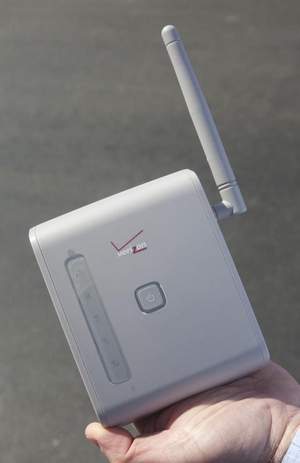
Verizon Voice Link: The company's landline replacement, works over Verizon Wireless.

Verizon Voice Link: The company’s landline replacement, works over Verizon Wireless. (Asbury Park Press)

Because Verizon Wireless’ existing cellular network serving Fire Island is inadequate, the company has agreed to upgrade and improve service to the island.

Verizon argues its wireless solution is the only answer that makes sense.

“The cost of replacing facilities is very high, and if hurricanes or other severe storms occur in the future, there is a significant risk that the newly installed outside plant would again be damaged or destroyed,” argues Verizon’s Manuel Sampedro, who is overseeing Verizon’s service restoration effort on Fire Island. “Wireless service is already the predominant mode of voice communication on the island.”

But in the event of another major storm, Verizon’s wireless facilities could also be knocked out of service, potentially for weeks, as happened during Hurricane Sandy.

In the nearby coastal city of Long Beach, N.Y., every cell tower in the area failed because of the storm . City Manager Jack Schnirman told the FCC at a recent hearing wireless proved no more robust than any other technology, and described a frustrating experience attempting to reach representatives from major cell phone carriers about when exactly service could be restored.

“Long Beach reached out to one of the carrier’s customer support departments, explained the devastation and inquired about the carrier deploying a cell on wheels,” Schnirman said. “The customer service rep replied, ‘you might want to look that up on the Internet, I don’t know what that is.’ Well obviously, ironically, we had no Internet at that time.”

Customers did not fare any better.

“There was one woman in particular who passed away, of natural causes, an elderly woman,” Schnirman said. “And her daughter had to walk literally a mile and a half from her home to police headquarters just to say, ‘Listen, my mom has passed, and I thought I should tell somebody.’ ”

Wireless carriers are not obligated to provide backup service in the event of a power failure. An FCC effort to set minimal standards for backup cell service was met with legal threats by the wireless industry and the FCC backed down.

Verizon is in a hurry to win approval of its tariff change, requesting its filing be approved and take effort on less than 30 days’ notice with a waiver of the requirement that it publish a public notice about the change in area newspapers.

[flv width=”640″ height=”380″]http://www.phillipdampier.com/video/Reuters ATT Verizon try to put end to landline telephone era 4-5-13.flv[/flv]

Reporter David Cay Johnston says Verizon and AT&T’s efforts to abandon the landline are no accident. They are part of a larger lobbying effort to abandon company obligations under the “carrier of last resort” policies that guarantee every American access to quality landline telephone service. Wireless phone service is unregulated. Johnston isn’t the only one reporting on this story. Stop the Cap! has covered it repeatedly since early 2010. (2 minutes)

NY: Verizon Asking to Report Your Payment History to Credit Agencies; Wants New Fees

Phillip Dampier April 23, 2013 Competition, Consumer News, Public Policy & Gov't, Verizon Comments Off on NY: Verizon Asking to Report Your Payment History to Credit Agencies; Wants New Fees

Verizon-logoVerizon Communications has filed separate requests with the New York State Public Service Commission that would report customers’ payment histories to credit reporting agencies, share your payment history with competing providers, and increase phone bills statewide to recoup expenses related to construction costs.

Verizon Wants to Influence Your Credit Score

One of the most substantial changes proposed by Verizon is the deregulation of privacy requirements that limit the amount of information the phone company can share with credit reporting agencies about your past payment history and whether you could represent a credit risk to the next telecommunications company you choose to do business with.

New York regulators originally enforced limits on how much information Verizon could share and with whom. Generally, the rules now state the phone company can only share your payment history with other telephone companies, such as in the case of moving to an area served by a different provider or if you choose to sign up with a competitor. Providers use this information to decide if they will require a deposit before connecting service.

Verizon claims the current rules do not go far enough to protect the company from deadbeats who bounce between unregulated telecom providers (wireless, Voice over IP, and cable telephone service) and Verizon. The company is asking the PSC to:

  • to report final unpaid undisputed accounts of its local exchange customers to credit reporting agencies,
  • to engage in full file reporting with the NCTUE, a special credit reporting service created by and for cable, telephone, and other utility companies to track customer payment histories (i.e., reporting monthly on all payment history for all customers), and
  • to engage in full file reporting with Equifax, Experian and TransUnion should Verizon choose to do so in the future.

experianLate phone company payments appearing on a consumer’s credit report can be devastating to a consumer’s general credit score, which can affect credit lending decisions, home purchases, apartment leases, insurance rates, and employment prospects. Disconnected, unpaid accounts turned over to an independent collection agency may already appear on credit reports, but Verizon late-payers who still have service with the company might be affected much sooner.

Verizon hopes the change will convince customers to pay Verizon first instead of last or not at all:

“Consumer reporting agencies serve an important function by enabling businesses to avoid bad-debt costs and by preventing consumers, in a competitive market, from hopping with impunity from one company to another, accumulating unpaid debts at each step of the way,” Verizon argues in its regulatory filing. “In that way, information obtained from consumer reporting agencies reduces bad-debt costs that would otherwise have to be passed on to consumers who do pay their bills. Further, consumers who know that their credit scores will be reported will be less likely to default on payments; conversely, consumers who feel secure that such data will not be reported will be more likely to believe that moving to another provider is an acceptable alternative to paying bills.”

Verizon Seeks New Fees, Rate Increases

Verizon customers in New York will soon see higher phone bills if Verizon’s appeal to raise certain rates and tack on a new monthly service fee is approved:

Municipal Construction Surcharge: To cope with a declining number of landline customers, Verizon is seeking the imposition of a new $0.99 surcharge on all residential and business customers (except Lifeline) to help recoup the costs of relocating Verizon lines in public rights-of-way to prevent interference with street maintenance, repairs, or public construction projects. Verizon is also mandated to remove lines or other equipment that present a potential danger to public safety or health. Because Verizon has lost half of their landline customers in New York since 2006, the costs incurred by Verizon per remaining customer have increased dramatically, Verizon argues. In 2006, the company claims the average cost for line relocation was $10.79 per customer. Today, the company says the cost has risen to $31.01 annually.

Verizon seemed unconcerned about the impact the new fee might have on customers who could use it as an excuse to abandon landline service.

“Verizon needs to recoup its losses where it can,” said Verizon’s general counsel Keefe B. Clemons. “Moreover, customers have competitive alternatives and can choose other providers if they are dissatisfied.”

nys pscOther Service Charges and Rate Hikes:

  • Verizon is seeking increases in the non-recurring Service Charge and the Central Office Line or Port Charge for business customers;
  • Verizon seeks a $3 rate increase for its legacy ISDN service, which still serves a declining number of business customers;
  • Verizon also seeks a 50 cent a month increase for maintaining a non-published number. The current rate ($2.50) has remained unchanged since 2005 and Verizon claims the increase is required to “keep up with inflation.” The company said its new rate would still be lower than AT&T in Connecticut ($4.99/month) or Time Warner Cable ($3.75/month);
  • Verizon is discontinuing its Busy Verification and Interruption Service, primarily because it does not work with most of its competitors.

Verizon says these rate changes are necessitated by a marked decrease in the number of customers keeping their Verizon landlines. Since New York still requires Verizon to serve every part of its designated service area, the current financial situation for the company’s landline service division is untenable. The company argues its investment in FiOS and other network upgrades more than outweigh the amount of revenue the company is earning from the declining number of landline customers. Verizon did not mention the far brighter financial performance of its wireless division Verizon Wireless, not subject to the PSC’s regulatory requirements.

Verizon’s Long Term Plan to Abandon Wired Landlines/Broadband in Non-FiOS Areas Begins

Verizon CEO telegraphed his plans to dump rural landline service last summer.

Verizon CEO Lowell McAdam telegraphed his plans to dump rural landline service last summer.

You should believe Verizon Communications CEO Lowell McAdam when he says he intends to end wired telephone and broadband service for areas that are simply not economically feasible for fiber upgrades. McAdam’s grand plan is now coming true for customers in parts of Florida and on Fire Island, N.Y.

Last summer, Stop the Cap! covered McAdam’s comments to Wall Street investors (that are always the first to know) at the Guggenheim Securities Symposium:

“In […] areas that are more rural and more sparsely populated, we have got [a wireless 4G] LTE build that will handle all of those services and so we are going to cut the copper off there,” McAdam said. “We are going to do it over wireless. So I am going to be really shrinking the amount of copper we have out there and then I can focus the investment on that to improve the performance of it.”

The writing is already on the wall:

  1. Verizon has been penalized and criticized in several states by public utility commissions for the ongoing degradation of its copper network. Verizon sees further investment in copper technology as throwing good money after bad, but spending millions on additional fiber upgrades isn’t appealing either. The result is deteriorating service. From downtown Manhattan to New Jersey to Maryland, D.C. and Virginia, Verizon’s service failures have left customers frustrated and sometimes waiting weeks or months for repair crews to turn up to restore basic phone service. Even more dangerous, Verizon was to blame for significant 911 network failures near the nation’s capital. Post Sandy, there are still sections of lower Manhattan without phone service nearly five months after the storm struck. Five months.
  2. Verizon sold off telephone service in northern New England several years ago to FairPoint Communications, knowing full well Verizon never had an interest in upgrading any part of Vermont, New Hampshire or Maine to fiber service. In many smaller former GTE telephone areas too small to successfully argue a case for return on investment, Verizon decided selling those territories off was the best option. Hawaiian Telcom and Frontier Communications now own many of those former-Verizon territories.
  3. Verizon has decreased marketing its wired DSL service and stopped selling it altogether to customers who want broadband-only service. That seems counter-intuitive for a company that recognizes future revenue possibilities come primarily from broadband and data services.

Traditionally, customers reporting trouble on a phone line get a visit from Verizon technicians who track the problem down and repair it. But Verizon no longer wants to spend money fixing copper wire-related problems. Customers reporting chronic phone static or outages are now being asked to abandon their traditional landline service instead:

The end of an era.

The end of an era.

Customers who live in Florida currently have a choice. During the trial, they can switch to Voice Link or keep their current landline service. On Fire Island, just south of Long Island, customers will not have that choice. Verizon is testing the will of New York regulators asked to allow the company to gradually abandon landline and wired Internet facilities on the island. Customers previously knocked out by Hurricane Sandy have no alternative — switch to a wireless option like Voice Link or lose  telephone service. As the network degrades further on the island, it is a safe bet more Fire Island residents will find themselves confronted with a wireless future courtesy of Voice Link.

Verizon is careful to note its Voice Link service comes at no additional cost to customers — their phone bills will remain the same, at least for now. But the transition includes several important caveats:

  1. Voice Link is not subject to state or federal oversight or quality of service consumer protection laws that apply to traditional landline service;
  2. The customer is responsible for providing an indoor space to mount the equipment (hardly unobtrusive, the receiver is eight inches tall) and provide electric power and AA batteries for battery backup;
  3. Voice Link does not work with any data services including broadband or dial-up Internet, faxing, medical monitoring, alarm systems, etc. You will be pitched an expensive Verizon Wireless data plan if you want Internet access;
  4. During recent severe storms, copper landline networks often continued to work but cell phone service failed over wide areas because of call congestion and  long-term power outages. Similar failures will leave Voice Link non-operational;
  5. Voice Link customers lose DSL service and may have little chance of getting it back once they switch.

Verizon’s solution for Fire Island represents the long-term vision of McAdam coming to fruition. Complaining customers have not been able to persuade the company to abandon its plan, but New York State regulators might, if the issue gets enough attention.

In states with less aggressive regulators, Verizon could implement its Fire Island strategy nearly at-will, especially in rural service areas. Verizon’s plan differs little from that of AT&T, another major service provider seeking permission from regulators to abandon rural landline networks. AT&T is betting the Federal Communications Commission will approve AT&T’s “network transition plan” for all of its rural customers. Verizon is starting smaller, gradually implementing its transition under the radar of many state and federal officials.

AT&T wants to wind down its own rural landline network.

AT&T wants to wind down its own rural landline network.

So why adopt Voice Link — a wireless solution, when copper wire network repairs remain a viable option?

The reasons are simple:

  1. Voice Link is cheaper to run and maintain as a wireless service and uses existing Verizon Wireless cell towers;
  2. Verizon can further cut their unionized workforce that maintains the company’s landline network;
  3. Wireless products escape regulatory oversight;
  4. The company can push customers to wireless data products that cost far more than wired DSL broadband service;
  5. Verizon doesn’t have to upgrade the rest of their network to fiber.

Customers in Verizon service areas should appeal to regulators and their elected officials to stop the abandonment of wired infrastructure. Verizon argues maintaining its network doesn’t make sense when customers are fleeing their landlines. But rural customers are not disconnecting broadband service that travels across the same network. Even basic DSL is coveted in rural Verizon territories where Internet access remains unavailable. Just about everyone wants the option of FiOS fiber, perhaps the most coveted network upgrade around until Google announced its gigabit fiber project in Kansas City.

Nobody wants Verizon or AT&T to keep up its copper wire facilities indefinitely. But a better solution would be a regulatory mandate that requires Verizon and AT&T to gradually replace antiquated and failing copper infrastructure with fiber wherever possible. It is more than possible to do this on Fire Island. Verizon’s service area in Florida is hardly rural either. Verizon Florida (formerly GTE Telephone) serves Tampa-St. Petersburg east to Lake Wales, a major metropolitan region in central Florida.

What is best for shareholders should not be the final determining factor for an important utility service. If customers prefer the option of Voice Link for home phone service, there is nothing wrong with that. But wireless service as the only option customers have for broadband service? Not at Verizon Wireless’ prices.

Verizon Seeks to Abandon Landlines on Fire Island; Wireless or You Are On Your Own

Verizon-logoVerizon officials have announced they will abandon their damaged wireline network serving several hundred permanent residents and businesses on Fire Island, replacing voice telephone service with a wireless system called Voice Link critics say will end high-speed Internet service and hurt business.

Fire Island’s landline network has been barely functional since Hurricane Sandy struck last October. Verizon has yet to make significant repairs, leading to ongoing complaints from residents who live on the island year-round. Verizon’s wish to eventually abandon its wired network facilities entirely has created concern among island officials and public safety agencies, noting the summer population on the island swells well into the thousands.

Verizon’s plan may leave businesses unable to process credit card transactions and prevent residents from getting back DSL broadband service they lost during the storm, much less get it in the future. For some, it represents turning the clock back to the days before Internet access.

“Verizon has given us a dial tone basically,” Ocean Beach Mayor James Mallott told Newsday. “But as far as DSL, ATMs, point-of-sale systems, all the rest of that stuff, we’re pretty much on our own.”

Fire Island resident Meg Wallace notes Verizon’s plan has not gone unnoticed by the New York State Public Service Commission. The PSC is currently monitoring the situation and invites comments from interested parties.

“Right now, only Saltaire has filed a formal complaint with them, along with one village’s fire official,” Wallace reports. “It is easy to register a complaint either by filling out a complaint form on their website or calling the NYSPSC directly at (800) 342-3377. They are concerned about public opinion, so the more calls and formal complaints filed by both home and business owners the better.”

Verizon officials have defended their decision, claiming a wireless system is more robust and can withstand severe weather better than a wired network. Another reality impacting the decision is the ongoing loss of landline customers. Verizon, the sole provider on the island, has lost 25 percent of its landline business in the last two years. The company claims 80 percent of Verizon-handled calls to and from the island are through Verizon Wireless.

Fire Island

Fire Island

Verizon told local officials that Cherry Grove and points east still have undamaged fiber optic and copper lines that should be able to work as usual this summer and will be left in place for now. On the west end of the island  from Kismet to Sailor’s Haven, the damage was more significant and Verizon has announced its intention to abandon wired service.

Although west end customers will be scheduled for Voice Link installations starting in April, those on the east side should not get too comfortable with their wired service because Verizon has announced it will not upgrade or make future significant repairs to its wired infrastructure going forward. When the remaining landline facilities eventually fail, affected customers will also be moved to Voice Link.

How It Works

out-of-serviceStarting April 1st, customers calling with service problems on Fire Island will be redirected to special operators trained to pitch customers the Voice Link service as a replacement. These agents will also handle billing adjustments and drop phone package features Voice Link does not support. If the customer only wants phone service, Verizon will schedule an installation date for Voice Link. A technician will arrive with a wall-mounted box about 8″ high that will be installed in the room that provides the best reception from a nearby Verizon Wireless tower. The box will then be connected to your home telephone wiring and a nearby power outlet so existing telephones will work once again. The box has battery backup powered by customer-installed and maintained AA batteries.
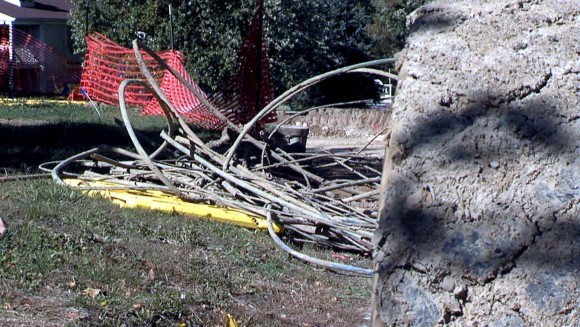
If a customer also had broadband service with Verizon, they will not be getting it back. Instead, an agent will attempt to sell the customer a Verizon Wireless mobile broadband package at a significantly higher cost. For example, a 10GB monthly usage plan added to an existing Verizon Wireless account will cost an extra $20 a month for the “Mi-Fi” mobile hotspot device fee and $100 a month for the data package. Verizon DSL in comparison offered unlimited access for $30-50 a month, depending on the plan selected and any promotional discounts.

Verizon said it is currently improving reception of its 4G LTE network in areas worst-affected by storm damage.

Voice Link is a voice-only product. It does not support broadband, telephone modem connections, faxing, alarm monitoring, home medical monitoring, certain communications equipment for the impaired, or other data services including credit card processing. It does support E911, which gives detailed address information to a 911 operator.

Verizon’s Voice Link also creates a problem for some satellite dish customers. Some satellite companies need a landline connection for handling pay-per-view orders. That data connection does not work with Voice Link either.

Your voice line bill will remain the same if you switch to Voice Link. But customers will lose the benefit of oversight from the Public Service Commission if things go wrong. Voice Link, unlike traditional landline service, is an unregulated service not subject to government oversight.

Voice Link: Coming Soon to Your Area?

copper messVerizon’s Voice Link service is by no means intended to be used only on Fire Island.

Voice Link is being trialed in Florida (Project Thunder) as a landline replacement option for use in areas where Verizon’s copper network has deteriorated and the company is unwilling to spend money on fiber upgrades. If successful, Verizon intends to switch a growing number of Verizon customers nationwide outside of FiOS fiber areas to the wireless service when they report trouble with their phone lines.

Local 824 of the International Brotherhood of Electrical Workers provided insight when one of their workers attended a training class and participated in a ride-along with Verizon technicians installing the service in Florida.

John Glye reports that Verizon considers a customer a candidate for Voice Link if they have chronic phone line problems and only want traditional voice telephone service.

Currently, if customers in Florida are persuaded to switch, a migration order is created. If they want to keep the service they have, a traditional copper trouble ticket will be created and repair crews will be dispatched.

The unit is about eight inches tall and has the following connections:

  • 2 RJ 11 ports
  • Antenna
  • Voice Message indicator
  • Signal strength indicator
  • Power Button
  • Power Port

Installation time is about 45 minutes. The unit must be mounted inside and the customer must supply power and a safe place for the unit. The customer’s existing copper line connection from the home to the pole is disconnected/removed. In the ride-along Glye participated in, he reports the customer was pleased with the outcome, having reported constant static aggravated by rain on her copper landline. After the wireless service was installed, the static was gone and the call quality was good.

NYC Building Owners Tell Verizon Their Tenants Don’t Care About Getting FiOS; Refuse Entry

Phillip Dampier January 3, 2013 Consumer News, Public Policy & Gov't, Verizon 4 Comments

lockedWhile a lot of people would love to get Verizon to wire their communities for the company’s fiber optic network, at least three New York City multi-dwelling unit property owners have told Verizon to get lost, in some cases telling the company none of their tenants were interested in the top-rated fiber to the home network, even as they remain without phone service three months after Hurricane Sandy damaged Verizon’s facilities in the city.

Verizon Communications has now had to force the issue, filing an official complaint with the New York Public Service Commission to get owners to open their buildings for the fiber upgrade which will also restore telephone service. In one case, a property owner allegedly demanded financial compensation from Verizon to gain admittance to the building to begin repairs.

“I have been complaining about Verizon’s lack of FiOS work in my building for a long time and I had no idea Verizon was banging on the door all along only to be told by the exclusiveboneheads that own my building that nobody was interested,” says Brad, a Stop the Cap! reader in Manhattan. “The morons at the property management company don’t have a clue or they want money from Verizon in return for the keys. Meanwhile, there is no dial tone and Verizon says they are at an impasse until the property owners, who obviously don’t care, let them in to do repairs.”
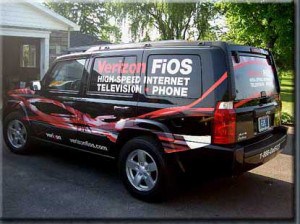

Indeed, Verizon sent certified letters to all of the affected property owners informing them, if they didn’t already know, that tenants in their buildings were without telecommunications service after Sandy wreaked havoc on Verizon’s infrastructure:

Locked out.

Locked out.

In addition, you should be aware that residents at your Property are currently out of service as a result of damage to Verizon’s network caused by Hurricane Sandy. Providing Verizon with access to install FiOS, a fiber-based network that is less vulnerable to weather-related damage, will allow Verizon to restore those residents’ services. Verizon intends to install FiOS facilities at your property to provide both cable television service as well as voice telephone services. If you do not provide Verizon with access to your Property, your residents will continue to remain without telephone service from Verizon. In addition, you should be aware that residents at nearby properties are currently out of service as a result of damage caused by Hurricane Sandy. Verizon needs access to your Property in order to bring FiOS – its fiber-based network that is less vulnerable to weather-related damage – to those nearby properties. If you do not provide Verizon with access to your Property, nearby properties will continue to remain out of service.

The excuses for denying entry have been documented by Verizon and made public in its filing with the Albany-based regulator:

  • TF Cornerstone’s properties at 2 Gold Street and 201 Pearl Street are out of service even as property management informed Verizon that “the owners do not want FiOS in the building.”
  • Rockrose Development’s buildings at 200 Water Street and 22 River Terrace are without service because property management tells Verizon “they are not interested in FiOS.”
  • Verizon reports DSA Management required “compensation in exchange for allowing Verizon access” to its building at 11 Maiden Lane and also refused Verizon entry to 700 E. 9th Street because “the property management is having a problem with Verizon at another location.”

New York State law is very clear on the subject:

PUBLIC SERVICE LAW
§228. Landlord-tenant relationship
1. No landlord shall (a) interfere with the installation of cable television facilities upon his property or premises, except that a landlord may require: 
(1) that the installation of cable television facilities conform to such reasonable conditions are necessary to protect the safety, functioning and appearance of the premises, and the convenience and well being of other tenants; 
(2) that the cable television company or the tenant or a combination thereof bear the entire cost of the installation, operation or removal of such facilities; and
(3) that the cable television company agree to indemnify the landlord for any damage caused by the installation, operation or removal of such facilities.
(b) demand or accept payment from any tenant, in any form, in exchange for permitting cable television service on or within his property or premises, or from any cable television company in exchange therefore in excess of any amount which the Commission shall, by regulation, determine to be reasonable; or
(c) Discriminate in rental charges or otherwise, between tenants who receive cable television service and those who do not.
2. Rental agreements and leases executed prior to January first, nineteen hundred seventy-three may be enforced notwithstanding this section.
3. No cable television company may enter into any agreement with the owners, lessees or persons controlling or managing buildings served by a cable television company, or do or permit any act, that would have the effect, directly or indirectly of diminishing or interfering with existing rights of any tenant or other occupant of such building to use or avail himself of master or individual antenna equipment.

Search This Site:

Contributions:

Recent Comments:

Your Account:

Stop the Cap!