

 Subscribe
The reason why many cable companies are no longer willing to cut deals on cable television with customers looking for a better one is that the profit margin enjoyed by cable operators on television service is shrinking fast.
Researcher Cowen found that smaller cable operators are particularly vulnerable to the high costs of cable programming because they do not get the volume discounts larger operators like Comcast, Charter, DirecTV, and Dish are getting.
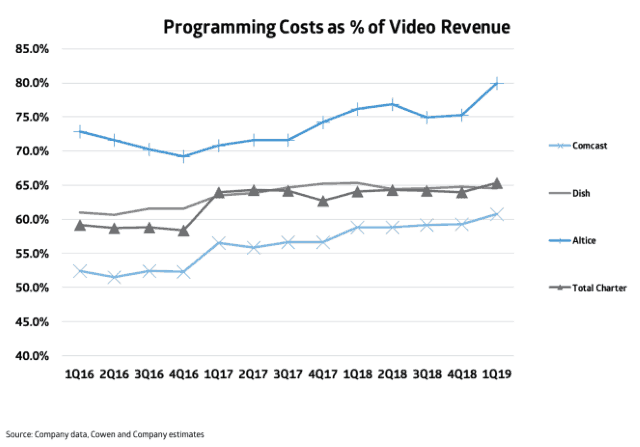
Researcher Cowen found that programming costs are increasing fast at smaller cable companies. (Image: Cowen/Multichannel News)
 Altice USA, which divides about 3.3 million cable TV subscribers between Optimum/Cablevision and Suddenlink, says it paid $682.4 million for cable TV programming during the first quarter of 2019. That amounts to 67% of the company’s total video revenue. If Altice offered complaining customers a 40-50% break on cable television, it would lose money. Cable operators already temporarily give up a significant chunk of video revenue from new customer promotions, which discount offerings for the first year or two of service. Many operators consider any video promotion to be a loss leader these days, because programming costs are exploding, particularly for some local, over-the-air network affiliated stations that are now commanding as much as $3-5 a month per subscriber for each station.
Comcast, the nation’s largest cable operator, unsurprisingly also gets the best programming prices. With volume discounts, Comcast reports its programming costs consume about 60% of revenue. Charter Spectrum and Dish report about 65% of their video revenue is eaten by programming costs. Both are seeing dramatic declines in video subscribers as cord-cutting continues. The more customers a company loses, the less of a discount they will command going forward.
According to Cowen, just three years ago Comcast gave up 53% of video revenue to cover programming costs. With programming rate inflation increasing, many smaller cable companies are considering exiting the cable TV business altogether to focus on more profitable broadband service instead.
 Starry, Inc., a fixed wireless internet provider, this week
  Dish Network Corporation is in the final stages of talks to acquire assets that include valuable wireless spectrum and Sprint’s Boost Mobile brand for an estimated $6 billion, according to a report quoting anonymous sources
  Wall Street analyst MoffettNathanson remains skeptical about the T-Mobile/Sprint merger and is even more puzzled by Dish’s reported involvement. The analyst firm released a research note to its clients warning the future of Boost may be bleak:
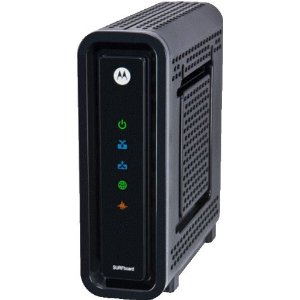
 Charter Spectrum sold its merger with Time Warner Cable and Bright House Networks partly on its argument that modem fees would no longer be charged. Despite that, many former Time Warner Cable and Bright House customers still use their own modems, which has been a problem for a company that raised the standard internet speed available to residential customers from 15 Mbps to 100 Mbps (200 Mbps in some markets, mostly those also served by AT&T). Older modems often cannot achieve those speeds. Spectrum notifies affected customers in periodic campaigns, offering to replace their obsolete equipment, but many customers suspect hidden fees may be lurking in such offers and discard them.
 Cox is also in a similar predicament. It runs seasonal checks on its network to identify customers using older DOCSIS modems, often DOCSIS 3.0 4×4 modems, which can only support four download channels. When it finds customers eligible for an upgrade, it mails postcards offering a “free modem upgrade,” usually supplying a SB6183 or SB8200 modem that can arrive in 24-48 hours. But many Cox customers suspect trickery from Cox as well, or run into poorly trained customer service representatives that reject the postcards, claiming the customer is ineligible.
 In fact, most modem upgrade offers from your provider are likely genuine, but customers need to pay attention to any fine print.