Home » rural areas » Recent Articles:

Wisconsin Republicans Rushing AT&T’s Deregulation Wishlist Into Law Before Recall Votes

Phillip Dampier May 11, 2011 Astroturf, AT&T, Competition, Editorial & Site News, Public Policy & Gov't, Rural Broadband, Wireless Broadband Comments Off on Wisconsin Republicans Rushing AT&T’s Deregulation Wishlist Into Law Before Recall Votes

Governor Walker

You have to hand it to Wisconsin Gov. Scott Walker.  He wants to push through his legislative agenda come hell or high water.  After creating a national controversy about his battles with the state’s public unions, Walker and his Republican colleagues are in a hurry to ram through their laundry list of legislative initiatives before Wisconsin voters have a chance to potentially recall a number of them.

Among Gov. Walker’s favorites — a telecommunications deregulation bill ghost-written by AT&T.  If such legislation seems familiar to you, it is.  It’s largely the same bill written by and for telecommunications companies that withered in the Democratic-controlled legislature last year.  Now the Republicans hold the majority, and they see measures to strip out rate protection for basic landline service, investigations of consumer complaints, and holding low-rated companies’ feet to the fire as “anti-business and anti-competitive.”

Somehow, bill proponents claim, all of this deregulation will inspire AT&T and other companies to wire rural Wisconsin for broadband service, which would be a remarkable feat considering they’ve not done so in other states where they’ve passed nearly-identical deregulation bills several years ago.  In fact, the bill eliminates any state oversight of broadband matters period, end of story.

Perhaps AT&T’s goodwill will bring broadband to the rural masses.  What are the chances?  Not good, considering the proposed legislation also allows AT&T the right to abandon providing basic telephone service in the same rural areas still waiting for broadband.  Your chances of getting DSL from AT&T are markedly diminished if the company decides to disconnect your phone line, permanently.

“What’s in it for the citizens of Wisconsin?” asked Rob Boelk, president of one Wisconsin chapter of the Communications Workers of America that represents AT&T workers. “If you want to give away the farm, what will you get in return?”

Why campaign contribution checks, of course.

AT&T and other telecommunications companies have donated heavily to legislators in the state, particularly those sponsoring their legislative wishlists.  Walker has made serving the interests of AT&T and the Wisconsin State Telecommunications Association one of his top priorities this spring.

AT&T is delighted.  In fact, they are so confident in their friendship with Walker and the Republican-controlled legislature, they are willing to throw their usual deregulation allies overboard in the bill.  Verizon and Sprint are fiercely opposing AT&T’s bill, despite promoting it in prior years.  At issue are new provisions requiring wireless and VoIP providers to pay higher government fees and also pay access charges for using other companies’ broadband networks (AT&T’s) to complete calls.

At a recent hearing, telecom company executives told members of the state Senate’s Information Technology Committee Senate Bill 13‘s deregulation would bring competitive balance in the industry, wider broadband access and create tens of thousands of jobs.

They didn’t bring any evidence to back up those claims, but bill sponsor Rich Zipperer, (R-Pewaukee) was ready to deliver AT&T’s talking points anyway.  He’s a helper.

“Today’s smart phone world is governed by rotary phone regulations,” Zipperer said. “We have to ensure our telecommunications infrastructure can keep up with market demands.”

Evidently that means upgrading wireless networks, something AT&T is preoccupied with these days judging from their television ads, while ignoring Wisconsin’s rural consumers.

In fact, when similar bills passed in other AT&T states, basic telephone service rates began increasing, sometimes repeatedly.  AT&T wants to push customers into pre-packaged bundles of services, so most of the savings go to those who take all of their telecommunications business to AT&T.  But if all you want (or can afford) is a basic telephone line, price increases are in your future.

The dollar-a-holler groups are out and about

Zipperer called copper wire landlines “ancient technology,” a relevant point if AT&T was delivering something better to every Wisconsin resident.  They are not.  Instead, while their landline network languishes in rural areas, the company is investing in U-verse upgrades in larger cities, setting up the potential for telecommunications have’s and have-no-longer’s.

Some of the accompanying documentation supporting the deregulation bill is also suspect.

We were particularly struck with broadband map data provided by bill proponents showing a bountiful supply of competitive choice for broadband service in Wisconsin. Ironically, their bill also bans the state from getting involved in broadband mapping in the future.  Those who control the maps control the debate over broadband availability.  As usual, provider-influenced maps promise service where none exists or comes with strings attached.

Providers equate wireless broadband as identical to DSL, fiber, and cable Internet service.  Because of that, customers even in “one-bar” towns can “enjoy” wireless broadband from AT&T and Verizon (as long as they keep it under 2-5GB a month with AT&T or under 10GB on Verizon’s mobile broadband plans.)  Sprint, which barely covers rural and suburban Wisconsin, is also considered a player.  So is T-Mobile, despite the fact AT&T wants to buy it.  For most of Wisconsin, the broadband reality is far different.  AT&T is the dominant provider of DSL and U-verse service, Time Warner Cable delivers most of the cable broadband.  In rural areas, a handful of Wireless ISPs deliver service to some areas, but many others have no access at all.

Robust competition?  No.  Will this bill change that?  No.

Wired Wisconsin is wired into AT&T's cash machine.

Deregulation only enhances the trend of landline providers like AT&T allowing their aging landline networks to go to pot.  Providing DSL or wireless broadband to rural Wisconsin requires the same return on investment with this bill as it does without, and these companies have refused to deliver either, using that reasoning, for years.

Despite common sense reality, the dollar-a-holler groups are working overtime with AT&T to push this bill.  Take “Wired Wisconsin,” a group particularly ‘burdened’ with its corporate sponsors (namely AT&T).  Wired Wisconsin is all for the deregulation bill, which they like to call “modernized telecom rules.”  The group’s leader Thad Nation, is a lobbyist who has run several campaigns promoting AT&T’s agenda, including the ironically-named Midwest Consumers for Choice and Competition, TV4Us and Technology for Ohio’s Tomorrow, all creatures of AT&T.

Nation’s lobbying firm explains how it works:

Getting government officials or bodies to do what you want isn’t easy. Government is inherently a slow, bureaucratic entity. When you want elected or appointed officials to change policy, you need a comprehensive plan – and the resources, relationships and quick-thinking to implement that plan.

We come to you with decades of experience in advocacy, moving legislators and engaging state agency leaders to action. Let us help you build and drive an aggressive advocacy agenda.

It’s a tough job, and Nation can be glad he isn’t doing it alone.  The Discovery Institute, which has turned pay-for-play research into an art form, was linked by Wired Wisconsin to “negate the myths and false assumptions” deregulation will bring.  They quote from Connected Nation, another industry connected group.  The only false assumption is that these people do this work for free and their results represent actual independent analysis.

Even if one were to believe AT&T’s claims, fact-checking them is just a few states away, in places like Arkansas, Kansas, or Texas.  None of them are bastions of rural broadband.  They weren’t before AT&T’s lobbying circus came to town and they still aren’t after they left.

Cable One’s Ongoing Math Problem: Broadband Pricing Like a Cell Phone Data Plan

Cable One or Cellular One?

Cable One is unique among America’s top-10 large cable system owners for its nearly incomprehensible broadband usage policies, only fully disclosed to customers after they sign up for service.

The cable company, owned by the owners of the Washington Post, have been tinkering with their broadband pricing and Internet Overcharging schemes as they embark on upgrades to DOCSIS 3 broadband service.  The result: faster broadband service priced like a cell phone plan.

Currently, Cable One controls usage of their customers with a daily usage ration coupled with a speed throttle.  For customers, it means keeping track of usage, time of day, and whether you are in the over-usage doghouse with speeds cut in half.

Stop the Cap! went through the sign-up procedure offered online at the Cable One website, suggesting we were new customers in the Anniston, Alabama area.  While the company is quick to disclose speeds and plan features, it takes some deep wading through an Acceptable Use Policy for new customers to unearth the company’s extensive and complicated limits on broadband usage.  The company doesn’t even like to disclose they are throttling your speeds in half as a punishment.  Instead they refer to them as ‘Standard Speeds’:

Standard & Extended Speeds: Residential

Plan Speeds Download 1.5 Mb 3.0 Mb 5.0 Mb 8.0 Mb 10.0 Mb 12.0 Mb
Upload 150 Kb 300 Kb 500 Kb 500 Kb 1000 Kb 1500 Kb
Standard Speeds Download Speed (+/-) 1500 kbps 1500 kbps 2500 kbps 4000 kbps 5000 kbps 6000 kbps
Upload Speed (+/-) 150 kbps 150 kbps 250 kbps 250 kbps 500 kbps 750 kbps
Extended Speeds Download Speed (+/-) 1500 kbps 3000 kbps 5000 kbps 8000 kbps 10000 kbps 12000 kbps
Upload Speed (+/-) 150 kbps 300 kbps 500 kbps 500 kbps 1000 kbps 1500 kbps

Standard & Extended Speeds: Business

Plan Speeds Download 5.0 Mb 10.0 Mb 12.0 Mb 15.0 Mb 20.0 Mb
Upload 1.0 Mb 1.0 Mb 1.5 Mb 2.0 Mb 2.5 Mb
Standard Speeds Download Speed (+/-) 2500 kbps 5000 kbps 6000 kbps 7500 kbps 10000 kbps
Upload Speed (+/-) 500 kbps 500 kbps 750 kbps 1000 kbps 1250 kbps
Extended Speeds Download Speed (+/-) 5000 kbps 10000 kbps 12000 kbps 15000 kbps 20000 kbps
Upload Speed (+/-) 1000 kbps 1000 kbps 1500 kbps 2000 kbps 2500 kbps

Threshold Limits: Residential

Plan Speeds 1.5 Mb Download 3.0 Mb Download 5.0 Mb Download 8.0 Mb Download 10.0 Mb Download 12.0 Mb Download
150 Kb Upload 300 Kb Upload 500 Kb Upload 500 Kb Upload 1000 Kb Upload 1500 Kb Upload
Period of Measurement No Measurement 12 p.m. – 12 a.m.
(Noon to Midnight)
12 p.m. – 12 a.m.
(Noon to Midnight)
12 p.m. – 12 a.m.
(Noon to Midnight)
12 p.m. – 12 a.m.
(Noon to Midnight)
12 p.m. – 12 a.m.
(Noon to Midnight)
Max Threshold Bytes Downstream
During Period of Measurement
N/A 1,400 MB 2,250 MB 3,600 MB 4,500 MB 11,000 MB
Max Threshold Bytes Upstream
During Period of Measurement
N/A 140 MB 225 MB 225 MB 450 MB 1,380 MB
Period at Standard Speed N/A 4 p.m to Midnight 4 p.m to Midnight 4 p.m to Midnight 4 p.m to Midnight 4 p.m to Midnight

Threshold Limits: Business

Plan Speeds 5.0 Mb Download 10.0 Mb Download 12.0 Mb Download 15.0 Mb Download 20.0 Mb Download
1.0 Mb Upload 1.0 Mb Upload 1.5 Mb Upload 2.0 Mb Upload 2.5 Mb Upload
Period of Measurement 2 p.m. – 12 a.m.
(midnight)
2 p.m. – 12 a.m.
(midnight)
2 p.m. – 12 a.m.
(midnight)
2 p.m. – 12 a.m.
(midnight)
2 p.m. – 12 a.m.
(midnight)
Max Threshold Bytes Downstream
During Period of Measurement
2,300 MB 6,900 MB 11,000 MB 20,700 MB 27,600 MB
Max Threshold Bytes Upstream
During Period of Measurement
460 MB 460 MB 1,380 MB 3,680 MB 4,600 MB
Period at Standard Speed 5 p.m. to Midnight 5 p.m. to Midnight 5 p.m. to Midnight 5 p.m. to Midnight 5 p.m. to Midnight

Company officials have been telling Cable One customers some of these complicated usage formulas are about to be relaxed as they introduce their new 50Mbps DOCSIS 3 broadband service.  With Cable One delivering service primarily in small cities and rural areas, the arrival of 50Mbps broadband has generated considerable excitement, until customers learned the cable company has decided to market it like a cell phone plan.

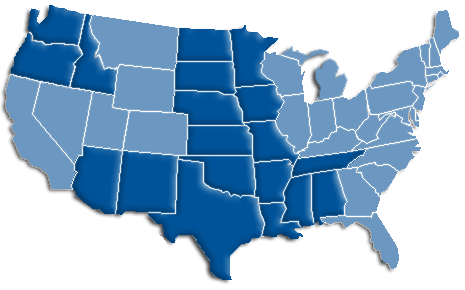
Cable One primarily serves small cities and towns in the central and northwestern United States.

“The new 50Mbps plan is downright bizarre here in Fargo, N.D.,” writes Stop the Cap! reader Paul.  “It actually costs less than their 10Mbps plan — I was quoted $45 a month for the broadband-only option, $35 if I signed a two year contract.  That actually saves me money as I currently spend just over $50 a month for their 10Mbps plan.”

But Paul learned the super fast broadband plan comes with some major strings attached.

“It is limited to 50GB of usage per month on what they are calling their ‘data plan,'” Paul shares.  “The customer service representative said it was like ordering a data plan with your wireless phone.”

Currently, the 50GB limit is the only data plan on offer, and the usage cap does not apply to usage overnight from midnight until noon the following day.  But those exceeding it at other times face a $0.50/GB overlimit fee.

Paul also says Cable One appears to be ready to dispense with the complicated speed throttle it uses on its mainstream 3-12Mbps broadband plans.  Cable One traditionally gave customers a daily usage allowance ranging from 1-11GB, after which accounts were subject to throttled speeds for the next 24 hours.

“Customers have complained about the slow speeds, throttles, and usage limits for years, if only because they couldn’t navigate all of them and Cable One’s usage measurement tool is often offline or inaccurate,” Paul writes.

“I first learned about Stop the Cap! when Cable One tried to charge some of our local residents $1,000 for cable equipment lost in a fire,” Paul says.  “Cable One has been so bad my wife was hoping Mediacom… Mediacom, would deliver us from them with a buyout.”

Cable One is an example of a cable company that has gone all out with Internet Overcharging, delivering customers an expensive and speed throttled broadband experience.

“Even though the lower price for the 50Mbps plan looks nice, it’s not if you start going over the limit,” Paul says.  “Sorry, broadband is not cell phone service.”

He is sticking with his current 10/1Mbps service plan.

Cable One representatives argue very few customers exceed any of the company’s plan limits, less than 1 percent exceeding them consistently.

Frontier’s “Go-Away” Broadband Price and Service Disappoint Rural Tennessee

Phillip Dampier May 3, 2011 Broadband Speed, Frontier, Rural Broadband 2 Comments

Fast is in the eye of the beholder

Obtaining broadband in rural America can be a real challenge, but few rise to the occasion more than Stop the Cap! reader Paul, who lives in Blaine, Tenn.  Paul so wanted broadband service, he was willing to pay for his own telephone poles and equipment to get Frontier Communications to provide him with DSL service, even though he technically lives in AT&T territory.

Paul’s saga, documented on his blog, began in 2009, when his satellite fraudband provider Optistreams could no longer manage reliable uploading of images and maps for his employer, despite the fact he was paying nearly $150 a month for the service.  Satellite providers are having a tough time providing customers access to an increasingly multimedia rich Internet.  With low usage caps and ridiculously low speeds, most satellite customers we’ve heard from report their experiences to be frustrating, at best.  For Paul, in rural Grainger County, it had become intolerable. Verizon, the best possible wireless option, delivered one bar to the farm country Paul lives in — unsuitable for wireless data service.

Paul called his local phone company, AT&T, and inquired about when the company would extend its DSL service to his part of Blaine.

AT&T answered Paul succinctly:  “[We will] never provide DSL within 20 miles of your location.”

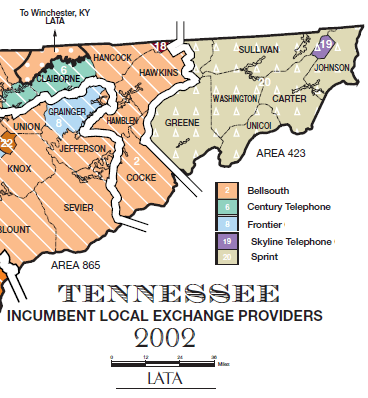
Paul’s property is situated right on the boundary between AT&T and Frontier Communications’ service areas.  AT&T provides service at Paul’s home, but Frontier Communications’ territory starts just 1,400 feet away, on the other end of his property.  In-between is a telecommunications no-man’s land.

Paul pondered emigrating his service from the Republic of AT&T to the Fiefdom of Frontier, which does offer DSL nearby.

Paul lives in Grainger County -- a Frontier Communications territory surrounded by the former BellSouth, today owned by AT&T.

AT&T told Paul he could leave them anytime he liked, taking his broadband business to Frontier.  Besides, nothing precluded him from doing that with or without AT&T’s consent, informed AT&T’s Eastern District Counsel.

Declaring allegiance to Frontier would be no easy matter, however.  Would Frontier allow him to settle down as their broadband customer?

“After a bunch of arguing with Frontier District Manager Mike Bird he sent District Engineer John Simpson out to my home,” Paul says.  “Simpson informed me that I was in AT&T territory and that ended all conversations.  I stated that AT&T had advised they had no problem and further there was no government regulation.  Didn’t matter I was told, that was that.”

Few, if any phone companies will agree to trespass on another provider’s turf, except under the most special circumstances.

Paul contacted Sen. Bob Corker (R-Tenn.) to escalate the matter, and followed up with an official complaint to the Federal Communications Commission.

Federal agencies like the FCC become particularly responsive when a United States Senator is involved in monitoring the dispute.  AT&T responded to the complaint telling the Commission Paul had effectively fled their service area and was now a customer of Frontier Communications.  Frontier ignored the FCC initially, and instead sent Paul a letter affirming they would be willing to provide him with DSL, but at a “go away” installation price of $10,000.

When providers confront unprofitable customers difficult to serve, it is often easier to give them a sky high installation price with the hope it will discourage them from pursuing the matter.  Frontier claimed the costs of running infrastructure to reach Paul would amount to $9,977.44 — check or money order, please.

From Gregg Sayre, Frontier’s Eastern Region Associate General Counsel:

“As you know, you are in the service territory of AT&T.  AT&T is correct that we legally can provide service to you outside of our local service territory.  Unfortunately, the cost of serving you… if fully absorbed by Frontier, would overshadow the potential profits.  …In this case it does not make economic sense for us to undertake a line extension at our expense into AT&T’s service territory to reach your location, and the law does not require us to do so.”

“I countered with the fact that we would run the poles along the roadway and they could pay our pole attachment agreement.  They balked,” Paul writes.  “We, in turn, stated we would bring our own infrastructure to them underground and across a friend’s farm and did such for a quarter of the price.  This included running our own network interface at their pole and our house.”

In the end, Paul paid out of pocket for 1,600 feet of direct burial cable running across two farms and a county road.  He assumes responsibility of his cable, Frontier is responsible for the network from their pole back to the central office.

After the robust investment in time, money, and energy, what Paul ended up with wasn’t worth a dollar:

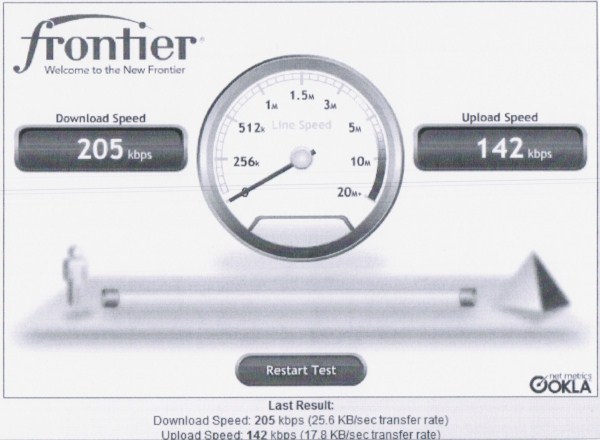
Frontier DSL in East Tennessee: 205kbps/142kbps

That’s worse than most satellite providers.

In fact, Paul has documented much of the time he is without any service at all — offline at least 38 of the last 50 days.

“Our average speed until they installed a new D-SLAM was 92kbps down and 125kbps up,” Paul writes.  It wasn’t just a problem for him.  Among Frontier’s loyal subjects already a part of their service area, customers also reported similar slow speeds.  Paul organized a door-to-door campaign to bring a united front of complaints to company officials.

Paul notes the local Frontier technicians have been responsive and understanding, but Frontier officials higher up are simply dragging their feet on needed upgrades.  Finally, $200 in service credits later, Frontier is promising to install a fiber cable to reduce the distance between the central office and the more distant points in the exchange where Paul and his neighbors live.  While that might help bring Paul’s speeds up, Frontier is notorious for overselling their network, leaving customers in large regions with slow service at peak usage times.  This has particularly been a problem in nearby West Virginia.

Paul says Frontier is largely unresponsive to individual complaints.

“I racked up well over 170 repair tickets in six months,” Paul shares.  “I organized my rural area and we hammered their call center. Did that do anything? Well, I can’t honestly say it did.”

With Frontier, it takes media exposure and embarrassment or the work of individual employees willing to persistently push higher-ups to authorize real solutions to customer problems, not temporary Band-Aids.

Broadband over a telephone network that is decades old requires substantial investments to function well.  In rural areas where customers have few choices, phone companies delivering service on the cheap too often leave paying customers with a quality of service highly lacking.

Why Verizon’s LTE/4G Network Will Never Replace Cable/DSL Broadband: Usage Caps

Lynch

Verizon’s ambitions to provide 285 million people with the option of ditching their cable or DSL broadband account for its new LTE/4G wireless network is a dream that will never come true with the company’s wireless Internet Overcharging schemes.  With a usage cap of 5-10GB per month and a premium price, only the most casual user is going to give up their landline cable or DSL service for Verizon’s wireless alternative.

Dick Lynch, executive vice president and chief technology officer at Verizon spoke highly of Verizon’s new next generation wireless network as a perfect platform to deliver broadband service to landline customers, including many of those the company sold off to Hawaiian Telcom, FairPoint Communications, or Frontier.

“[LTE] provides a real opportunity for the first time to give a fixed customer in a home, broadband service — wireless — but broadband service,” Lynch said. “In wireless, I see a great opportunity within the LTE plans we have to begin to service the customers who don’t have broadband today … They will be able to have mobile LTE and also to be able to have fixed broadband.”

Unfortunately, Verizon’s LTE network comes with usage limits and a premium price — $50 a month for 5GB or $80 a month for 10GB.  At those prices, rural America will have two bad choices — super slow 1-3Mbps DSL ($30-60) with allowances ranging from 100GB-unlimited or LTE’s 5-12Mbps (assuming the local cell tower is not overloaded with users) with a usage cap that guarantees online video will come at a per-view cost rivaling a matinee movie ticket.

Still, Verizon is likely to test market the service as a home broadband replacement, particularly in territories they no longer serve.  Verizon has done much the same thing pitching a home phone replacement product that works with their wireless network to residents of Rochester, N.Y., and the state of Connecticut, neither currently served with landlines from Verizon.

Despite the pricing and cap challenges, Deutsche Bank — one of the Wall Street players that follows Verizon — thinks the company’s DSL-replacement has merit, if:

  1. If you are a regular traveler that needs a wireless broadband service anyway;
  2. You use broadband exclusively for web browsing, e-mail, and very occasional multimedia access;
  3. You are wealthy enough not to care about the overlimit penalty.

For everyone else, sticking with traditional DSL service will continue to be the most affordable option, assuming usage caps are kept at bay.  Where available, cable broadband service from companies that serve smaller communities, including Comcast Cable, Time Warner Cable, and Cablevision, among others, will probably continue to deliver the most bang for the buck in rural America.


Travesty: North Carolina’s Telecom Companies Oppose 4Mbps Broadband Service in Rural Areas

Despite today's setback, North Carolina's broadband hero is Rep. Bill Faison, who stood up for rural broadband.

In the North Carolina legislature’s Finance Committee, a one week timeout “to hear views from the public” actually means giving breathing room for cable and phone lobbyists to strip away surprise amendments not to their liking.  This morning, in a catastrophe for consumers, the state’s largest phone and cable companies got legislators to wipe out a provision that would have helped guarantee rural North Carolina at least 4Mbps broadband service, either from existing providers or new ones that develop in their absence.

During debate of H.129, the anti-Community Broadband bill, North Carolina consumer interests were kept out of sight and mind as lobbyists worked their magic to get rid of Rep. Bill Faison’s (D-Caswell, Orange) amendment that would set the state’s minimum acceptable definition of broadband at 4Mbps with a 1Mbps upload speed.  With the help of several flip-flopping representatives, they got their wish.

Faison’s amendment was designed to open the door to someone — anyone — to bring broadband into rural areas of the state.  While Time Warner Cable, AT&T, and CenturyLink dawdle, large numbers of rural residents simply go without any broadband service.  Faison’s amendment was simple and reasonable — if at least half of an area is not served with 4/1Mbps service, provisions should be made to allow local communities, if they wish, to establish service themselves to get the job done.

Last week, when Faison’s amendment appeared to be headed for incorporation into the bill, industry lobbyists blanched and fled the room, raising vocal objections and demanding a week timeout before a vote was taken.  After winning their reprieve, they managed to get the Republican majority in line to throw rural North Carolina under the bus, uniformly opposing Faison’s amendment.  Two Democrats, one representing the city where Time Warner Cable’s regional division is headquartered, joined them.

Hall of Shame: Rep. Carney does not care about North Carolina's digital divide.

In its place, they substituted a new amendment which defined broadband in the state of North Carolina as any service occasionally capable of achieving 768kbps downstream and 200kbps upstream.  That represents “well-served” among these industry-friendly legislators.

Among the worst offenders that stood out today were Reps. Jeff Collins (R-Nash) and Becky Carney (D-Mecklenburg).  Last week, they were standing with North Carolina consumers.  This week, they are voting for the interests of the cable and phone companies.  Rep. Carney, who lists her occupation as “homemaker”, voted to guarantee North Carolina families years of slow, expensive and erratic broadband service, if available at all.  Collins supported an amendment that says Nash County residents should do just fine with broadband speeds that don’t even manage to break 1Mbps.

The bill next moves to the floor of the House for consideration.

What is missing from this debate is a realization on the part of the legislature cable and phone lobbyists do not want anyone delivering basic broadband service in rural North Carolina unless it comes from them, and to date they have shown no interest in delivering it.

After all the debate, here is a fact no one can ignore.  The only networks in the state capable of delivering world class 100Mbps broadband are two fiber based community-owned networks in Wilson and Salisbury.  The companies that want to see them out of business see 768kbps as more than adequate to define broadband availability in North Carolina.  When members of the Finance Committee agreed, it helps explain how the state has managed to rank 41st in broadband excellence.

It’s time to ask your legislators what side they are on.  Yours or the state’s cable and phone companies.

Search This Site:

Contributions:

Recent Comments:

Your Account:

Stop the Cap!