Home » rate hike » Recent Articles:

Time Warner Cable Faces Class Action Suits in NY, NJ Over Modem Fees

Phillip Dampier November 14, 2012 Consumer News, Data Caps 2 Comments

Two class-action lawsuits were filed Tuesday on behalf of Time Warner Cable customers in 29 states to force the company to refund ill-gotten modem rental fees in violation of consumer fraud laws.

“It’s a massive hi-tech consumer fraud accomplished by low-tech methods,” said attorney Steven L. Wittels. “Send customers confusing notice of the fee in a junk mail postcard they’ll throw in the garbage, sock them with a $500 million dollar a year rate hike, then announce on your website that customer satisfaction is your #1 priority. That’s some way to deliver satisfaction.”

The context for the class action suit is that Time Warner Cable began imposing the fee Nov. 1 without giving customers appropriate notification. New York City residents had little more than two weeks notice in the form of a poorly printed postcard. Some residents in western New York and other cities have still not received notification from the cable company, either on bills or in the mail.

The two lawsuits were brought on behalf of Manhattan resident Kathleen McNally and Fort Lee, N.J. resident Natalie Lenett, but the suit asks the court to order refunds for all Time Warner Cable customers charged modem fees across their national service area.

The Consumerist thought the company’s failure to meet the timely notification requirement about the forthcoming modem rental fee might have the cable company dead to rights:

Pricing and Service Changes

Unless otherwise provided by applicable law, Time Warner Cable will notify you 30 days in advance of any price or service change. Notice of these changes may be provided on your monthly bill, as a bill insert, as a separate mailing, in the Legal Notice section of the newspaper, on the cable system channel(s) or through other written means.

But on closer examination, that provision only applies to pricing and service changes for Time Warner Cable’s television service, not broadband or home phone service.

In fact, Time Warner Cable’s new Subscriber Agreement has reserved the right to change just about anything it likes, just by updating the terms and conditions on its website:

We May Change our Customer Agreements

(a) We may change our Customer Agreements by amending the on-line version of the relevant document.  Unless you have entered into an Addendum that ensures a fixed price for a period of time (for instance, a Price Lock Guarantee Addendum), we may also change the prices for our services or the manner in which we charge for them.

(b) If you continue to use the Services following any change in our Customer Agreements, prices or other policies, you will have accepted the changes (in other words, made them legally binding).  If you do not agree to the changes, you will need to contact your local TWC office to cancel your Services.

(c) Any changes to our Customer Agreements are intended to be prospective only.  In other words, the amended version of the relevant document only becomes binding on you as of the date that we make the change.

One significant change Time Warner inserted in its Subscriber Agreement (the one printed in tiny print on tissue-thin paper, occasionally mailed with your bill) was deemed so important, it appears highlighted and in bold language:

Time Warner Cable now requires customers to submit disputes individually to binding arbitration, denying the right to bring or participate in any class action case. However, customers can opt-out of this provision simply by notifying the company through an online form. (You will need your Time Warner Cable account number.)

In practice, this would require McNally, Lenett, and millions of other customers to individually submit to a time-consuming arbitration proceeding — all to fight a $3.95 monthly fee. Few would bother. Wittels told The Consumerist the lawsuit still has merits because of other language Time Warner Cable maintains in its agreement which he believes holds the door open to a class action challenge.

Although customers are invited to purchase their own cable modem equipment to avoid the fee, the lawyers involved say the options are limited and expensive.
Ho-Ho-Horrible: Your Holiday Gift from Santa Bell is a Substantial Rate Hike

Bell has the perfect gift for themselves this holiday season: significant rate increases on phone, broadband and television service that will leave some customers paying at least $120 more a year for service.

Stop the Cap! reader Alex Perrier shared the bad news with us:

“What a great Christmas gift,” Perrier writes. “With few exceptions, all Bell home services get a ‘price update.'”

Home phone customers may be in for some bill shock if they happen to use on-demand calling features or directory assistance. Some of those rates are increasing by more than 500%.

Home phone packages

The monthly fee for all Bell Home phone packages (Home phone Lite, Home phone Basic, Home phone Choice, Home phone Complete) are increasing by $2.03 effective January 1, 2013.

Long distance plans

Bell long distance plan Effective January 1, 2013, the monthly price will increase by:
Canada and U.S. 500 Minute Block of Time $2
Canada and U.S. 1000 Minute Block of Time $2
Digital Bundle $2
Anytime Block of Time $3

Features

Effective January 1, 2013, the price of Home phone pay-per-use calling features (Last Call Return, Busy Call Return and Three-Way Calling) will increase by $0.45 to $2.95 per use. The monthly cap on Home phone pay-per-use calling features will also increase to $29.50

Effective January 1, 2013, Directory Assistance will increase by $0.50 to $3.00 per use.

Bell TV

Bell Satellite TV and Bell Fibe TV Effective January 1, 2013, the monthly price will increase by:
Good $2.14
Select $2.22
Better $3.28
Best $3.45
All other TV plans $3.00
Super Écran Rate will be $15.15 as of January 1, 2013

Bell Internet

Bell Internet Effective January 1, 2013, the monthly price will increase by:
All Dial-up services $2.00
All Bell Residential Internet services (excluding unlimited usage services)

  • High Speed (limited usage)
  • Ultra (limited usage)
  • Basic
  • Basic Lite
  • Performance
  • Optimax
  • Supreme
  • Max
  • Essential
  • Essential Plus
  • Bell Fibe Internet
$3.00
High Speed and Ultra unlimited usage services $5.00

Note: Bell Internet 5 and Bell Internet 5 Plus are excluded from the price increase.

Time Warner Cable Raising Prices for Set Top Boxes to $10/Month in Wisconsin

Phillip Dampier October 31, 2012 Competition, Consumer News, Data Caps 6 Comments

This will cost you $10/month in Milwaukee

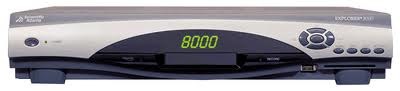
Stop the Cap! has learned Time Warner Cable is back with another equipment rate increase, this time for television set top boxes that will now cost $10 a month each, beginning in Wisconsin.

Time Warner Cable customers in the Milwaukee area are first getting the notice of the $1.05 rate increase on their latest bill. The new rate takes effect in November.

“Many businesses, including ours, are facing rising costs and have to adjust prices in order to maintain their operations,” explains Time Warner Cable Wisconsin spokeswoman Stacy Zaja. “We also understand that some of our customers are struggling in this economy, and are doing the best to hold the line on our prices.”

The rate increase comes at the same time Time Warner is introducing a $3.95 monthly modem rental fee for its broadband service. Unlike cable modems, however, Time Warner will not allow customers to purchase their own set top boxes, so it represents a rate increase customers can only avoid by canceling service or negotiating a lower rate.

At this time, Time Warner will not increase its prices for cable television service, just the equipment needed to view it.

The Business Journal notes Time Warner may be taking a chance on its latest rate increase, because AT&T’s U-verse service is increasingly available as an alternative choice for Milwaukee residents. Time Warner last raised the set top box rental fee by $1 in 2011, along with a $5 monthly rate hike for its cable television service.


Verizon Won’t Expand FiOS Beyond Current Franchise Obligations, CFO Tells Investors

Verizon has a moratorium on further expansion of its fiber to the home service except in areas where it has existing agreements to deliver service.

Verizon Communications will not expand their FiOS fiber optic network beyond the current obligations the company has with communities where it presently provides service.

Verizon chief financial officer Fran Shammo told investors the company intends to wind down FiOS expansion once its contractual commitments to state and local authorities are met to reap the financial rewards of the fiber optic network it began building in 2006.

“At this point we won’t build beyond that, because at this point we have to capitalize on what we have invested,” Shammo told an investor at the Goldman Sachs Communacopia Conference.

From 2014 beyond, Verizon plans to substantially decrease capital investments in its wired networks and continue to shift spending towards Verizon Wireless. Shareholders may also benefit from an increased dividend payout as the company’s balance sheet improves.

In real terms this means that Verizon will only expand FiOS where it previously signed agreements that allowed the company to gradually roll out its fiber optic network. Large sections of Verizon’s service areas, including major cities in the northeastern corridor, are not on the upgrade list and will not get the service.

Verizon’s experience and scale rolling out fiber to the home service over the past five years allowed the company to achieve a cost of  just $700 to reach each home, less than half the original estimated expense for fiber upgrades. But Verizon still considers the network too expensive to expand further.

Shammo also admitted Verizon is targeting its landline investments to bolster its more profitable wireless business.

“The fact of the matter is wireline capital — and I won’t give the number but it’s pretty substantial — is being spent on the wireline side of the house to support wireless growth,” Shammo said. “So the IP backbone, the data transmission, fiber to the cell, that is all on the wireline books but it’s all being built for the wireless company.”

Bruce Kushnick found no bump in construction expenses for FiOS after 2008 and no major increases in capital expenditures in general. In fact, Verizon, on average, spent more on construction from 2000 to 2004 than from 2005 to 2011, when FiOS construction was at its peak.

Bruce Kushnick from New Networks Institute has been tracking Verizon’s capital investments for the last decade and found Verizon was hardly hurting paying for FiOS network upgrades. In fact, Kushnick suspects much of the money to pay for FiOS came from a combination of ratepayer rate increases and diversion of investments intended to maintain Verizon’s existing landline network:

Whatever amount Verizon did spend on FiOS — and obviously it was a not insignificant amount — would therefore appear to have come out of the standard construction budgets that were supposed to be used to upgrade the lines that most Americans are still using for their phone service: the Public Switched Telephone Networks, or PSTN. It would seem that customers, including seniors, low income families, minorities and municipalities have been funding the construction of a cable service through the hefty monthly fees they pay for a dialtone and ancillary services. In some states this is actually illegal.

If Verizon did actually spend $23 billion, then it appears to have come at the expense of the traditional maintenance and upgrades of the utility plant — and the PSTN got totally hosed. At the very least, prices for basic phone service should have been in steep decline as one of the major costs, construction, was dramatically lowered.

Instead, Verizon was also getting rate increases specifically to pay for FiOS. For instance, Verizon persuaded New York officials to increase rates for “fiber optic investments,” where the only service that could use the fiber optic service was Verizon’s FiOS.

For instance, when New York State Department of Public Service Commission Chairman Garry Brown announced the approval of a $1.95 a month rate hike for residential phone lines in 2009, he said “there are certain increases in Verizon’s costs that have to be recognized.” He explained: “This is especially important given the magnitude of the company’s capital investment program, including its massive deployment of fiber optics in New York. We encourage Verizon to make appropriate investments in New York, and these minor rate increases will allow those investments to continue.”

Of course the states weren’t told that everyone would be charged extra for a service that only some people were going to get. In New Jersey, for instance, Verizon made a firm commitment to rewire the entire state with fiber optics — capable of 45 Mbps in both directions. It was supposed to be 100 percent completed by 2010. Instead, Verizon claims to have “passed” 1.9 million homes, representing 57 percent of the households in its territories — but “passed” may or may not mean that they can actually get service.

With Shammo reporting FiOS investments winding down by 2014, Verizon is not increasing the budget to maintain the copper infrastructure it will require non-FiOS customers to keep using for service. Instead, capital investments will continue to be spent supporting Verizon Wireless, although in lower amounts.

“So if you look at overall, I continue to say [investments] will be flat to down and I think we will be probably more slightly down than flat, and [CEO] Lowell [McAdam] and I are really starting to focus in on where we spend that investment and make sure that that investment returns on a shorter period of time,” Shammo said. “And that is really the focus. So what I like to say is that our ratio of CapEx to revenue will continue to decline.”

N.J. State Commission report from June 2010 saw this coming two years earlier and noted:

“While it is possible for Verizon to extend service throughout its authorized territory, to an additional 155 municipalities in the state that are not included in its current application of 369 towns, Verizon has indicated it will now concentrate its capital expenditures, expected to be between $16.8 billion and $17.2 billion in 2010 on its wireless telephone network. Further FiOS expansion will be limited to increasing penetration in those communities where FiOS is currently available, according to the company.”

Comcast: Cable Costs About As Much as a Cup of Coffee (Starbucks Coffee, Maybe)

Phillip Dampier September 19, 2012 Comcast/Xfinity, Competition, Consumer News, Editorial & Site News Comments Off on Comcast: Cable Costs About As Much as a Cup of Coffee (Starbucks Coffee, Maybe)

The last time Comcast charged less per day than the cost of a cup of coffee, they used this logo.

Comcast is raising rates on its Atlanta-area customers effective Oct. 1.

“Despite working hard to keep down our prices, we are continuing to experience increased costs, including rising programming expenses, while also investing in next-generation technologies that deliver new innovations,” said Brian Farley, a spokesperson from Comcast. ” This year alone, we’ve added 15 new channels in in metro Atlanta – including Disney Junior, ShopNBC and ESPN Goal Line – and made our programming available on additional screens.”

It is uncertain how many Atlanta area customers were clamoring for Comcast to add ShopNBC — a network Comcast now owns with the purchase of NBC-Universal, much less pay extra for it.

Comcast expects most customers will see increases averaging $3 a month on their October bills. But the cable operator also took time to remind customers of the incredible value cable television still offers Atlanta:

Comcast: $2.28 a day. A cup of coffee at the Atlanta Diner? $1.65

“At just a few dollars a day, cable is about the price of a cup of coffee and significantly less expensive than taking a family to the movies or a sporting event,” Farley said.

Perhaps, but not always.

Comcast charges just under $70 for its popular Xfinity Digital TV Starter package — around $2.28 a day. Atlanta-area Regal Theaters charge around $11 a ticket — $44 for a family of four. The Atlanta Diner charges $1.65 for a cup of coffee (with free refills). Assuming you visited them for 30 days, your coffee tab would run $49.50, still much less than what Comcast charges every month.

More than a decade ago, cable operators used to claim their service was still less than a cup of coffee. It actually still might be, assuming your cup of coffee comes from Starbucks.


Search This Site:

Contributions:

Recent Comments:

Your Account:

Stop the Cap!