Home » New York » Recent Articles:

FilmOn is Back With “AereoKiller” That Lands Company Back in Court

Phillip Dampier May 28, 2013 Competition, Consumer News, FilmOn, HissyFitWatch, Online Video, Public Policy & Gov't, Video Comments Off on FilmOn is Back With “AereoKiller” That Lands Company Back in Court

filmon-smBack in the fall of 2010, British billionaire Alki David fired a salvo against major broadcast networks in the United States and United Kingdom with the introduction of FilmOn, an online cable system offering unlimited viewing of broadcast networks from both countries for around $10 a month. By early 2011, lawsuits from various networks forced the removal of the most-watched channels, and most of the incentive for subscribers to keep paying for the service.

But David has never given up on FilmOn, and borrowing a page from Aereo’s business plan, he has brought back most of the major American networks on his relaunched platform, dubbed AereoKiller.

The company claims it is now using individual over-the-air antennas to receive broadcast stations from the New York or Washington, D.C. area, selling 24/7 streaming access for $9.99 per month or $99 a year. DVR service is sold at prices ranging from $2.95 a month to $190 a year, depending on the number of hours recorded.

Among the stations included:

New York

  • WPIX11.svgWCBS (CBS)
  • WNBC (NBC)
  • WNYW (FOX)
  • WABC (ABC)
  • Bounce TV (via WWOR subchannel)
  • WPIX (CW)
  • WNET (PBS)/WNET-Kids
  • WNJU (Telemundo)

Washington, D.C.

  • WRC-TVWRC (NBC)
  • WTTG (FOX)
  • WJLA (ABC)
  • WUSA (CBS)

There seem to be no geographic restrictions to prevent out of area viewers from subscribing, and FilmOn offers viewing on the desktop, as well as through iOS and Android apps.

David

David

FilmOn may have avoided streaming west coast stations because a California court found in favor of broadcasters who sued to shut down the operation three years earlier. But it ultimately will not keep David’s upstart service out of the courts in the east.

Last week, three major television networks and Washington, D.C. station owner Allbritton Communications filed suit against FilmOn for streaming signals from the nation’s capital without permission.

Based on the track record of earlier ventures, customers may want to avoid subscribing at the annual package price. Historically, broadcasters have fought and won temporary restraining orders that block the streaming services until the case makes its way through legal proceedings. Aereo, which streams New York area television stations exclusively to New York City customers has proven the exception and continues to run, at least for now.

Broadcasters consider stopping “dime-sized” antenna farm streaming services like Aereo and AereoKiller a top priority, because networks and local stations earn lucrative retransmission consent rights fees from cable, satellite, and telco-TV providers used by at least 90 percent of the viewing audience. Should these alternative technologies be found legal and not in violation of copyright, pay television providers could potentially license and incorporate similar technology into their respective set-top boxes and avoid paying license fees to station and network owners.

[flv width=”640″ height=”380″]http://www.phillipdampier.com/video/FilmOn Introduction 5-13.mp4[/flv]

FilmOn’s introductory promotional video features some boastful claims from founder Alki David that are perhaps more wishful thinking than reality, but PlayOn has persisted despite broadcaster lawsuits by creating and distributing original live and recorded programming.  (8 minutes)

N.Y. PSC Grants Limited Approval of Verizon Voice Link on Fire Island; Promises Further Study

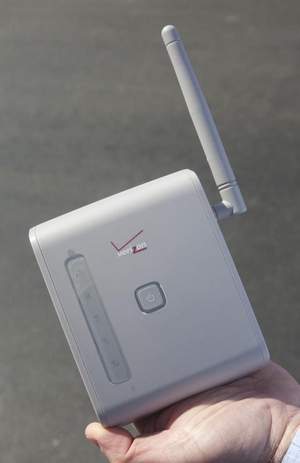
Verizon Voice Link: The company's landline replacement, works over Verizon Wireless.

Verizon Voice Link: The company’s landline replacement, works over Verizon Wireless.

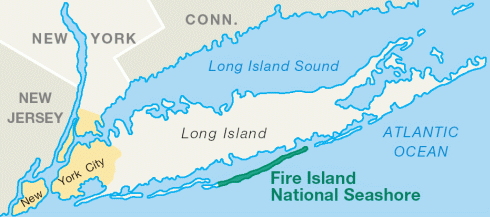
The New York Public Service Commission has granted limited approval for a Verizon Communications plan to replace traditional landline service on the western half of Fire Island with a wireless voice service some users complain is unstable and unreliable.

Verizon claims its landline network on Fire Island has been damaged irreparably in places, and argued it needed to immediately deploy a wireless alternative before the arrival of thousands of tourists on the island, a popular summer destination.

On May 3, Verizon asked the commission to approve the use of Voice Link, which provides fixed wireless phone service, anywhere in the state if the company can prove there is an equal competitor or if existing copper-based facilities are damaged or too costly to upgrade.

Stop the Cap! reminded local politicians, union representatives, and consumer advocates Verizon’s CEO earlier promised it would decommission its copper wire networks in rural areas in favor of wireless, mostly for financial reasons. The New York State Attorney General’s office took careful note of McAdam’s commitment to abandon copper in their objection letter to the commission.

Verizon CEO Lowell McAdam in 2012:

The vision that I have is we are going into the copper plant areas and every place we have FiOS, we are going to kill the copper. We are going to just take it out of service and we are going to move those services onto FiOS. We have got parallel networks in way too many places now, so that is a pot of gold in my view. And then in other areas that are more rural and more sparsely populated, we have got LTE built that will handle all of those services and so we are going to cut the copper off there. We are going to do it over wireless.

Verizon’s efforts to rush a tariff change without adequate public notice or formal hearings brought complaints from affected customers, unions, and area politicians.

The Communications Workers of America called Verizon’s emergency “self-made.” The company could have begun repair work on Fire Island as early as last November, but instead only came to regulators earlier this month with its Voice Link proposal, while much of the western half of the island remains out of service.

CWA officials are concerned Verizon is using Hurricane Sandy as an excuse to carry out its broader agenda of abandoning rural New York’s landline infrastructure in favor of wireless service.

“Playing on sympathy for the plight of customers whom it has left without service for more than six months, Verizon proposes to implement broad, generic rules that go to the core of its obligation to serve,” said CWA vice president Chris Shelton.

verizonThe union considers Verizon’s wireless alternative less adequate than the wireline facilities Verizon wants to abandon. The CWA wants the PSC to study Voice Link’s performance during times of peak cellular usage times, power outages, adverse weather, and inadequate reception.

Thomas Barraga, a legislator in Suffolk County, says his constituents with Voice Link service are already unhappy with its performance and reliability.

“Residents and business owners who had Voice Link installed after Sandy say the connection is unstable and unreliable, and doesn’t provide for DSL Internet or fax service,” Barraga wrote in a letter to the PSC.

“Internet service is so much a part of everyday life it should be consider a basic service and they should be mandated to provide this as well,” writes Fire Island resident Robert Gonzalez. “They should provide this for the same fees and usage rates as they had previously been charging.  As of today they are price gouging.  Prior to Sandy we paid approximately $50 per month for unlimited Internet access.  Now they are putting low limits on our usage for the same $50 per month with severe penalties for going over.  You can opt for higher usage plans at a much greater cost and they are not offering an unlimited plan.”

Stop the Cap! also continues to hear from Fire Island residents about their dissatisfaction with the service. Among the newest complaints we have received:

  • “It doesn’t work with collect calls and you cannot dial “0” for operator assistance;”
  • “I have to dial 10 digits for all calls, seven digit dialing no longer works even though it did before;”
  • “Call Waiting and Caller ID often do not work, and my unit does not ring for incoming calls about 30% of the time and people have to keep calling me back;”
  • “When you attempt to take a call when on the line with someone, you cannot get them back after answering a new call;”
  • “I cannot use this with my home alarm system at all and the monitoring company keeps notifying police because they think my phone line was cut;”
  • “If we had a major storm with three days of power being out, Verizon’s claim Voice Link will work for two hours without power means I would have to feed it up to 72 ‘AA’ batteries, costing more than what the phone line costs me every month;”
  • “What does this do to our future? It makes us second class citizens without access to the Internet except through very expensive wireless capped usage plans that cost much more.”

The PSC ruled that allowing Verizon to deploy Voice Link on Fire Island during the peak tourist season will make sure adequate phone service is up and running as quickly as possible. But the commission also made it clear it is unwilling to approve Verizon’s request to extend the service further into rural New York without a thorough review of its performance and customer reaction.

Time Warner Cable Moving to All-Digital Cable TV Across New York City

Phillip Dampier May 9, 2013 Broadband Speed, Consumer News, Video 1 Comment
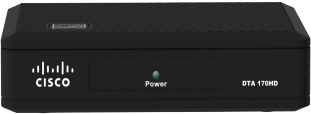
Cisco 170HD DTA

Cisco 170HD DTA

Time Warner Cable customers in greater New York will soon need set-top boxes or CableCARD technology to keep watching cable television.

The cable operator will be dropping analog television service, starting in Mount Vernon, Staten Island, and Bergen County, N.J. with much of the rest of the downstate region switched over the summer.

Cable television customers who already use Time Warner Cable set-top boxes, including DVRs, will not notice any change. Customers that plug a cable directly into the back of a television will need to take steps to keep their video service working after the digital conversion.

Time Warner’s digital switch will also disable viewing on televisions equipped with a QAM tuner. Cable operators now have the power to encrypt their entire television lineup.

twcGreenThe company is mailing letters to affected television subscribers advising them to get a Time Warner Cable DVR, traditional set-top box, CableCARD or Digital Adapter (DTA). For secondary televisions, Time Warner’s new DTA for downstate New York is the Cisco DTA 170HD, which supports both High Definition and Standard Definition channels and digital-only QAM tuning up to 1GHz. This model is also capable of providing HD premium channels, which are currently not available to customers with earlier generation DTAs. It is unknown if Time Warner will support that functionality.

Time Warner is making DTA units available to customers at no charge through the end of next year. Effective Jan. 1, 2015 each DTA box will cost $0.99 a month.

The company says the digital conversion will open extra bandwidth on the cable system to support more video on demand, HD channels, and faster broadband. Each 6MHz analog channel will make room for 10-12 digital channels, three digital HD channels, or an extra 40Mbps of download speed, according to Time Warner’s blog.

Residential customers can get DTA boxes as follows:

  1. through the website at www.TWC.com/digitaladapter
  2. via the telephone at 1-855-286-1736
  3. in-person at a local TWC store
  4. have a tech visit and install it

[flv width=”640″ height=”380″]http://www.phillipdampier.com/video/TWC Digital Conversion NYC 4-29-13.mp4[/flv]

 Time Warner Cable produced this video to explain the digital conversion, who needs to get ready, and how.  (2 minutes)

Verizon Files Tariff Allowing Company to Abandon Wired Phone/Broadband Service in New York; Fire Island First to Go

fire islandVerizon Communications has filed a formal tariff obtained by Stop the Cap! with the New York State Public Service Commission (PSC) that would establish conditions under which it can abandon its wired network in favor of wireless-only service.

If approved, Verizon will be able to drop wired landline and broadband service in any area of the state if the company can:

  • certify that a substantial portion of its facilities in an area are destroyed, rendered unusable, or beyond reasonable repair, or,
  • demonstrates that the use of wireless to serve specified customers, or groups of customers, is otherwise reasonable in light of the geographic location, the availability of competitive facilities to serve those customers or groups of customers, or in light of other criteria acceptable to the PSC.

Verizon is using the case of Fire Island, N.Y., to attempt a rewrite of New York’s communications tariffs. Although eastern Fire Island suffered some damage from Hurricane Sandy, a considerable amount of Verizon’s infrastructure further west did not survive the storm. Verizon wants to abandon that wired infrastructure, avoid spending money to upgrade the island to fiber optic service, and switch customers to a voice-only, wireless service called Voice Link that would leave Verizon’s DSL customers without broadband.

verizonAlthough Verizon has currently only applied to drop wired service to the “western portion of Fire Island,” the tariff would set conditions under which Verizon could abandon its landline network for financial reasons in other portions of the state. For example, Verizon could argue that its declining number of rural landline customers are no longer financially viable to serve because of wired network upkeep and upgrade expenses. Verizon’s application would also allow it to abandon older facilities where competitive services (wireless or wired) are available, and allow Verizon’s wireless products to be considered a suitable alternative to meet universal service requirements.

Verizon says it will offer the same basic calling packages that landline customers can get at the same or lower prices. The company also promises to adhere voluntarily to PSC regulations on customer protection, customer complaints, service quality, safety and reliability.

But Verizon does not promise to offer a functionally equivalent wireless replacement for the landline.

For example, Verizon only promises to support voice calls, access local and toll calling, emergency services with E911 capability, assistance services, telecommunications relay services, and directory listings, including the option of non-published service.

Data services are not supported. Current Verizon DSL customers with unlimited use plans will be forwarded to Verizon Wireless to sign up for the same limited use wireless broadband plans already available in the rest of the country (the ones that charge $50 for up to a handful of gigabytes of monthly usage, depending on the plan). Business customers will need to buy new equipment and sign new contracts with Verizon Wireless (or other wireless carriers) to process credit card transactions. Although some voice calling features are supported, an exact list remains unavailable.

In the event of a power failure, a built-in backup battery will provide up to two hours of talk time, after which the line will stay out of service until commercial power is restored.

Verizon Voice Link: The company's landline replacement, works over Verizon Wireless.

Verizon Voice Link: The company’s landline replacement, works over Verizon Wireless. (Asbury Park Press)

Because Verizon Wireless’ existing cellular network serving Fire Island is inadequate, the company has agreed to upgrade and improve service to the island.

Verizon argues its wireless solution is the only answer that makes sense.

“The cost of replacing facilities is very high, and if hurricanes or other severe storms occur in the future, there is a significant risk that the newly installed outside plant would again be damaged or destroyed,” argues Verizon’s Manuel Sampedro, who is overseeing Verizon’s service restoration effort on Fire Island. “Wireless service is already the predominant mode of voice communication on the island.”

But in the event of another major storm, Verizon’s wireless facilities could also be knocked out of service, potentially for weeks, as happened during Hurricane Sandy.

In the nearby coastal city of Long Beach, N.Y., every cell tower in the area failed because of the storm . City Manager Jack Schnirman told the FCC at a recent hearing wireless proved no more robust than any other technology, and described a frustrating experience attempting to reach representatives from major cell phone carriers about when exactly service could be restored.

“Long Beach reached out to one of the carrier’s customer support departments, explained the devastation and inquired about the carrier deploying a cell on wheels,” Schnirman said. “The customer service rep replied, ‘you might want to look that up on the Internet, I don’t know what that is.’ Well obviously, ironically, we had no Internet at that time.”

Customers did not fare any better.

“There was one woman in particular who passed away, of natural causes, an elderly woman,” Schnirman said. “And her daughter had to walk literally a mile and a half from her home to police headquarters just to say, ‘Listen, my mom has passed, and I thought I should tell somebody.’ ”

Wireless carriers are not obligated to provide backup service in the event of a power failure. An FCC effort to set minimal standards for backup cell service was met with legal threats by the wireless industry and the FCC backed down.

Verizon is in a hurry to win approval of its tariff change, requesting its filing be approved and take effort on less than 30 days’ notice with a waiver of the requirement that it publish a public notice about the change in area newspapers.

[flv width=”640″ height=”380″]http://www.phillipdampier.com/video/Reuters ATT Verizon try to put end to landline telephone era 4-5-13.flv[/flv]

Reporter David Cay Johnston says Verizon and AT&T’s efforts to abandon the landline are no accident. They are part of a larger lobbying effort to abandon company obligations under the “carrier of last resort” policies that guarantee every American access to quality landline telephone service. Wireless phone service is unregulated. Johnston isn’t the only one reporting on this story. Stop the Cap! has covered it repeatedly since early 2010. (2 minutes)

Six Months After Sandy, Verizon Abandoning Wired Network in Mantoloking, N.J.

Hurricane-SandySix months after Hurricane Sandy struck the northeastern United States, a significant number of Verizon customers are now learning they will never get their landline service back.

Mantoloking is the first town in New Jersey — but not the last — that will no longer be able to get landline service from the telephone company.

In its place, Verizon offers Voice Link, a home phone replacement that works exclusively over the Verizon Wireless network.

About 30 customers have signed up for the service after being without a home phone for a half a year.

The device looks like a wireless router, with an antenna and several jacks on the back to deliver service over your home’s existing telephone wiring. Instead of connecting with Verizon’s wired network, the unit receives a signal from the nearest Verizon Wireless cell tower to make and receive telephone calls.

Verizon is enticing customers to use this device instead of repairing its damaged network by promising free installation, unlimited nationwide calling and support for 911 and basic phone features like Caller ID and voice mail. For now, the service will not cost any more than a wired landline phone.

For Verizon’s bean counters, Voice Link is an inexpensive alternative to replacing copper wiring with FiOS fiber optic service. Verizon previously announced that maintenance on its aging copper wire network was becoming increasingly expensive.

“It acts just like a regular phone,” Tom Maguire, Verizon’s senior vice president of national operations told the Asbury Park Press. “There’s a dial tone. It has 911 capability, so if you dial 911 the emergency services guys are going to know exactly where you are.”

But members of Verizon’s unions who have had hands-on experience testing Voice Link suggest it isn’t everything Verizon says it is. The International Brotherhood of Electrical Workers’ Local 824 points out Voice Link was not intended to serve just anybody. It will deliver a voice-only service unsuitable for faxing, DSL, or data communications of any kind.
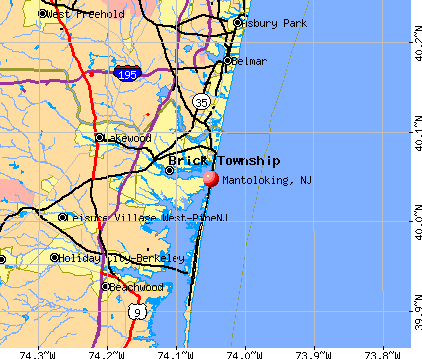
Mantoloking is located on New Jersey's barrier island.

Mantoloking is located on New Jersey’s barrier island.

Stop the Cap! has also heard from Verizon customers directly affected by the forced migration to wireless, and many are unhappy about it.

“This is the death knell for wired broadband in areas bypassed by cable along coastal New Jersey,” shares Dale Smith. “We lost our Verizon landline and DSL service during Sandy and have had nothing but a cell phone for the last six months because Verizon has dragged its feet.”

Smith says a Verizon manager told him the company was “evaluating certain service areas” for an “exciting new wireless product” instead of repairing or replacing the company’s wired network.

“While they were ‘evaluating,’ we were getting no dial tone and huge cell bills from Verizon — good for them, but not for us.”

Smith had a chance to view Voice Link in action and thinks it represents a Verizon wolf in sheep’s clothing.

“It sounds remarkably better than a cell phone, which tells you something about how much effort manufacturers of smartphones spend on voice calling, but that is where the good ends and the problems begin,” Smith said. “The most annoying is no caller ID with name and fairly frequent call delays and failed calls.”

Smith says the Caller ID displays the caller’s number, but not name – a feature he relied on heavily. He found about 30 percent of test calls either took more than 10 seconds to start ringing, or never rang at all.

“Sometimes the calls would time out and other times you would just sit and listen in silence until the phone at the other end finally started ringing,” Smith said.

He also worries about call reliability.

“What happens if you are in a marginal signal area or the cell tower gets overcongested and starts dropping calls, or the power goes out at the cell tower? You can’t use your cell phone either in that case.”

Anne contacted us after complaining to the Federal Communications Commission that Verizon is dumping its reliable landline network for unreliable wireless, and is frustrated the FCC does not seem to understand what is going on in New York and New Jersey.

“The response from the FCC doesn’t even bother to recognize that Verizon isn’t going to fiber service from copper, but is relying on very unreliable wireless,” Anne tells Stop the Cap! “For a vulnerable area such as the barrier island, wireless will likely be useless during a disaster/big emergency, especially where electricity goes out.”
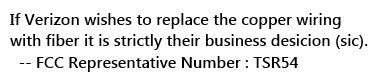
replaceThe FCC’s short response to Anne’s detailed complaint:

If Verizon wishes to replace the copper wiring with fiber it is strictly their business desicion (sic).  — Representative Number : TSR54

“I can’t believe this email is a product of the United States government,” Anne told us. “Why does the FCC exist at all?  It is a complete waste of taxpayer money.”

In addition to filing a complaint with the FCC, Anne has tried to help her elderly mother get her home phone back on the barrier island that was damaged by Hurricane Sandy. As of a week ago, every utility, except Verizon phone service, has been restored.

“Trying to get a straight story from Verizon has been impossible,” Anne said. “What a nightmare.”
The landline network is dead.

The landline network is dead.

Jim Mudd also takes care of his parents who are headed back to the New Jersey coast in an area that still lacks Verizon phone service after Sandy washed away utility infrastructure. New poles have been placed and the power is back, but Verizon is nowhere to be found.

“Our local town officials tell us Verizon was hinting we might end up with Voice Link as well, although nothing formal has been announced,” Mudd writes. “This would be a major problem for us, because Voice Link will not work with our home alarm system or my parents’ medical monitoring service.”

Mudd says Verizon confirmed to him that data services of any kind, including faxing or credit card processing is not possible with the first version of the service, although Verizon said it was exploring better options in the future.

“After waiting a half a year for Verizon to restore my home phone, I hope they pardon me for not waiting around for them,” Mudd said. “We signed up with Comcast the moment they got service back, but they know they have a working monopoly here now, especially with Verizon signaling it wants to pull out of anything that is not wireless.”

“What annoys me is Verizon wanted rate increases back in the 1990s and on to pay for upgrading their network and replace it with fiber,” Mudd adds. “We paid those surcharges or higher rates like everyone else and we are going to get nothing to show for it. Don’t replace the copper, but don’t abandon us with wireless either. We paid for something better: fiber.”

[flv width=”640″ height=”380″]http://www.phillipdampier.com/video/Asbury Press Following-Sandy-destruction-Verizon-switches-all-wireless-service 5-2-13.flv[/flv]

Verizon’s Tom Maguire demonstrates the company’s Voice Link landline replacement, courtesy of the Asbury Park Press.  (1 minute)

Search This Site:

Contributions:

Recent Comments:

Your Account:

Stop the Cap!