

Home » Liberty Media » Recent Articles:

The Economist: Charter Communications’ Buyout of Time Warner Cable Structured So It Will Pay No Taxes for Years

Phillip Dampier June 1, 2015 Charter Spectrum, Competition, Consumer News, Issues, Online Video, Public Policy & Gov't, Wireless Broadband Comments Off on The Economist: Charter Communications’ Buyout of Time Warner Cable Structured So It Will Pay No Taxes for Years
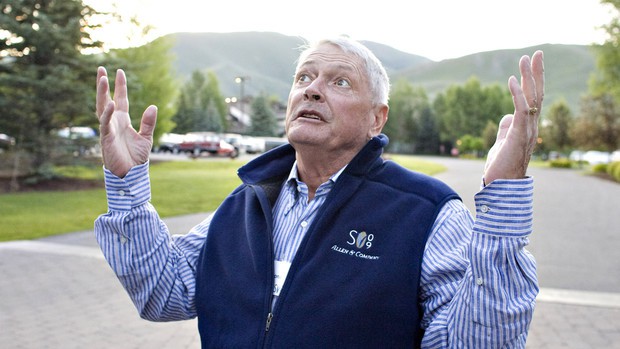
Malone

Malone

The Economist reports Charter Communications’ acquisition of Time Warner Cable and Bright House Networks has been structured so that “it should pay no tax for several years, at least.”

The merger deal, which intimately involves John Malone, the boss of Liberty Media — a cable and media conglomerate, has all the hallmarks of a classic Malone-inspired deal: complex ownership structures, high debt levels, assiduous tax planning and a refusal to overpay.

Unlike many other dealmakers, Malone seems to want to avoid the spotlight. His firm Liberty Media is Charter’s biggest single investor and will kick in at least $5 billion in Charter stock purchases to help consummate the transaction, which will be handled primarily by Charter’s management.

The deal comes at Malone’s insistence the American cable landscape must be consolidated into just 2-3 large companies. For now, he is content standing aside while the public faces of the merger are Charter’s CEO Thomas Rutledge and Time Warner Cable’s Rob Marcus. (Bright House Networks is also a part of the transaction but has been completely overshadowed by its larger deal partners.)

While coverage of the transaction has been relegated to the Business section of newspapers and has evoked shrugs from American reporters, The Economist calls it nothing short of an extraordinary landmark.

Liberty Global logo 2012“The boss of Liberty, a cable and media conglomerate, he has struck more deals than perhaps any other tycoon in the world—buying and selling hundreds of firms worth over $100 billion since the 1970s, often negotiating on his own, using calculations that fit on a napkin,” said the publication. “Unusually for an empire-builder he has made his investors a ton of money, and has little interest in the public eye.”

While Malone is hardly a household name, he could soon be at the center of the sixth largest corporate takeover in U.S. history and make him the world’s unparalleled media baron, controlling an empire three times the size of Rupert Murdoch’s media ventures. While Comcast will remain America’s largest single cable operator, Malone’s Liberty Media will dwarf Comcast globally with more than 75 million cable customers around the world.
charter twc bhMalone does not share the concerns of some Time Warner Cable and Charter investors that the merger will generate a “staggering” $66 billion in debt from day one, initially loaned from Wall Street investment banks. The Economist notes Malone seems to be violating his own rule to never overpay in a deal. In the British financial press, Charter’s deal for Time Warner Cable and Bright House does not pass Malone’s own smell test.

“At 9.1 times gross operating profits he is paying at least a fifth more for TWC than he typically does,” says the newspaper. “He is offering 23% more for it than Comcast did in its bid last year, which was scuppered by antitrust regulators. Based on last year’s cash-flow figures the deal will make a pitiful 5.6% return on capital, assuming no tax is paid. Like most cable firms TWC has a stagnant top line, with growing broadband sales being offset by declining TV and telephony revenues. So fast growth will not bail out Mr Malone.”

So where does The Economist believe John Malone will make his killing? From captive customers and suppliers, of course.

“The most obvious explanation is that Mr. Malone thinks the world has not changed much since the 1990s and that the cable industry remains a collection of local monopolies from which ever more juicy profits can be squeezed,” says The Economist. “America’s cable firms have poor service and high prices: the average Charter customer pays at least 50% more per month than one of Mr Malone’s customers in Britain or the Netherlands. In Europe cable firms face tough competition in broadband from telecoms operators; in America the telecoms firms have rolled out fixed-line broadband to perhaps just half of homes or fewer.”

The Economist suspects Malone’s new cable empire will follow Europe and be less dependent on flogging costly bundles of unwanted television channels to reluctant punters. Instead, it’s all about broadband and the platform it represents to obtain a range of video services that replace traditional cable television. But Malone’s future vision almost certainly includes a wireless mobile component, which means Americans should not be surprised to see the tycoon attempt to acquire a large mobile company, even one as large as AT&T, on which he can sell video and other telecom services. That is precisely what he is doing today in Europe.
Cable Magnate John Malone, Shareholders Avoid Billions in U.S. Taxes Exploiting Inversion Loopholes

Phillip Dampier November 3, 2014 Consumer News, Liberty/UPC, Public Policy & Gov't 1 Comment
Malone

Malone

Cable magnate John Malone has rarely had it this good at the expense of the U.S. Treasury. Using his vast wealth to hire some of the smartest tax advisers in the country, he has personally avoided hundreds of millions in U.S. taxes and shared the benefits of his tax tips with shareholders, who collectively stiffed the tax man out of more than a billion dollars in 2013.

As the Obama Administration fights with Republicans in Congress to close the loopholes, corporate executives and fellow billionaires routinely engage in tax avoidance schemes that shift their tax burden to ordinary Americans that cover the difference in the form of service cuts or higher taxes and fees to offset the lost revenue.

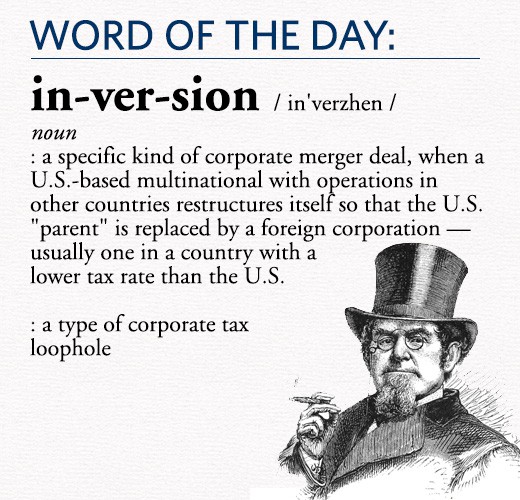
In 2013, Malone jumped on the “inversion” bandwagon, shifting the corporate address of Liberty Global, Inc. from Colorado to London, largely out of reach of the Internal Revenue Service.

Bloomberg News detailed Malone’s exploits over decades of “rich get richer” deals and the consequences of loopholes unavailable to most Americans that stay in the tax code at the behest of those who directly benefit from them.

Malone is fiercely protective of his $7.5 billion net worth, structuring investments, tax shelters, and end runs around tax laws in ways that often leave him with no tax liability at all.

dictionaryinversionsNot everyone can afford to move their assets overseas or set up complicated charitable trusts to shelter income, but the enormously wealthy Malone can. He recently passed Ted Turner as America’s biggest private landowner, owning 2.2 million acres of property in the United States, including more than 5% of the state of Maine.
Malone spreads his vast wealth around — owning stakes in Liberty Media, Liberty Global, and Liberty Interactive, as well as pieces of News Corp., Viacom, Time Warner, Inc., QVC, Discovery Communications, the old Court TV, DirecTV, SiriusXM satellite radio, Barnes & Noble, and Expedia.com.

Malone’s influence over the U.S. tax code comes in part from his advocacy work as an unpaid director at the Cato Institute, a Libertarian think tank that lobbies Washington hard for lower taxes and deregulation.

Malone’s personal tax code is to avoid taxes at all costs and, where possible, let someone else pick up the tab.

Malone’s baseball team, the Atlanta Braves, was instrumental as part of Liberty Media’s deal to cash out its stake in Time Warner without paying a dime in capital gains tax. Malone walked away with $1.4 billion in tax-free cash and ownership of the baseball team. Atlanta taxpayers will be responsible for more than $300 million in costs to build the Braves a brand new stadium in the Atlanta suburbs.

SiriusXM satellite radio subscribers were notified this week of the latest rate increase, due by the end of this year.

What they may not know is Malone’s Liberty Media now owns and controls the satellite radio venture. In 2009, Malone invested $530 million in the struggling operation. But he also gained the benefits of SiriusXM’s $6 billion in tax losses that Malone used to offset taxes on Liberty’s future profits. As a fringe benefit, Malone has also boosted revenue by imposing regular rate hikes on SiriusXM customers.

Like many U.S. corporations, Malone’s various Liberty ventures store massive amounts of cash in offshore bank accounts, avoiding U.S. taxes. When Liberty contemplated tapping that offshore cash, it faced a U.S. corporate tax rate of 35 percent. So Liberty joined more than a dozen other U.S. corporations relocating overseas, avoid corporate taxes back home.

Tax-Avoidance-600x400Although the corporation escapes a tax bill, shareholders usually do not, subject to tax for shares converted from the old U.S.-based company to the new overseas entity. Faced with owing capital gains taxes at a rate of 23.8 percent, the day before the inversion was announced, Malone transferred almost $600 million of his shares to the Malone-controlled, tax exempt LG 2013 Charitable Remainder Unitrust, avoiding much of the tax. Not satisfied with the fact he still would owe tax on the remaining $260 million of his personal stake in Liberty, the company hired Shearman & Sterling LLP to devise a strategy to get Malone (and shareholders) off the hook for any tax liability.

They found one, turning the government’s own efforts to plug tax loopholes against itself, manufacturing income that would not only satisfy the IRS’ recently hardened rules, but also let Malone & Co. escape any British tax liabilities in their new home.

“Malone threw a multi-billion dollar left hook at the Treasury Department,” said Samuel C. Thompson, a law professor at Pennsylvania State University. “They didn’t see it coming.”

As has been so often the case, the IRS eventually closed the loophole, but only after Malone exploited it.

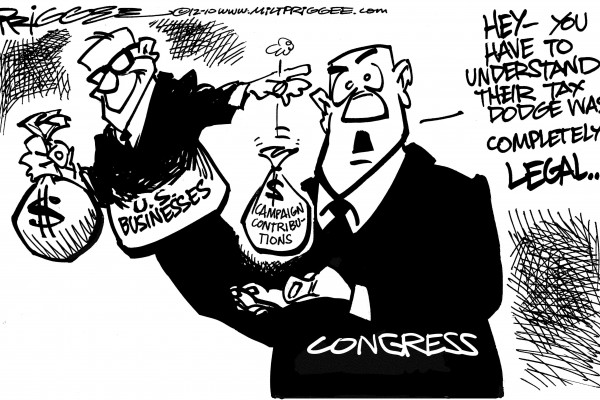
Malone’s defenders point out all of his creative tax strategies are perfectly legal, and he is only taking advantage of existing U.S. tax laws. Detractors note America’s wealthy and powerful have exercised disproportionate influence over how those laws are written, usually through well-funded think tanks, lobbying firms, and anti-tax astroturf efforts. Most Americans lack the resources to take advantage of loopholes and benefits that require sophisticated advisers prepared to withstand any scrutiny from the IRS.

An emboldened Liberty Global is even willing to publicly signal its next tax avoidance measure.

In a filing last April, Liberty disclosed that a U.S. subsidiary will pay at least $7 billion in tax-deductible interest to its new UK parent over the next decade. Such payments are known to tax lawyers as “earnings stripping,” because the big interest deductions strip profits out of the U.S., thus cutting any U.S. tax obligation.

The practice has become so common among inverted companies headquartered overseas, Democratic Sens. Charles Schumer and Richard Durbin authored a bill to ban the practice. It has gone nowhere in the legislature because of objections raised primarily by Republicans, who characterize loophole closing measures as disguised “tax increases” on business.

What is Malone doing with all the money he has successfully kept out of the hands of the U.S. Treasury? He bought an Irish castle and three major Irish hotel properties. He did it using a capital gains tax holiday offered by Ireland’s government to wealthy investors willing to buy Irish real estate and retain ownership for a minimum of seven years.

Vodafone Exploring Buyout of Liberty Global; Malone’s Big Plan for Cable Consolidation At Risk

Phillip Dampier September 16, 2014 Competition, Consumer News, Liberty/UPC, Vodafone (UK), Wireless Broadband Comments Off on Vodafone Exploring Buyout of Liberty Global; Malone’s Big Plan for Cable Consolidation At Risk
Merger Partner?

The new owner of John Malone’s cable empire?

John Malone’s big plan for consolidating the cable industry might never see the light of day if one of the world’s largest mobile operators buys the company out from under him.

Bloomberg News is reporting Vodafone is exploring an acquisition of Liberty Global, Europe’s largest cable conglomerate.

Vodafone CEO Vittorio Colao said John Malone’s European cable empire could be a good fit for the wireless provider assuming it is for sale “for the right price.”

Liberty owns cable operators in 12 European countries including Germany, Great Britain and the Netherlands. It also own a minority share of Charter Communications in the United States and controls Sirius/XM satellite radio.

Vodafone has recently been on a buying spree in Europe, mostly using the proceeds from the sale of its minority interest in Verizon Wireless. Vodafone has bought cable companies in Spain and Germany and is looking to acquire more “fixed networks” to offload mobile traffic.

Vodafone representatives denied there was any immediate interest in a deal with Liberty, but Wall Street analysts debated the prospects of a deal nonetheless. Vodafone’s operations are larger than Liberty’s in Europe, so the wireless provider has the resources to make the deal happen if it so chooses.

But Vodafone itself may be an acquisition target. Some analysts predict AT&T will make a bid to takeover the mobile operator after it completes its acquisition of DirecTV.

Approving Comcast-Time Warner Cable Merger Opens the Door for Massive Cable Consolidation

Liberty Global logo 2012Although Charter Communications did not succeed in its bid to assume control of Time Warner Cable, it isn’t crying about its loss to Comcast either.
Greg Maffei, president and CEO of Liberty Media Corp., which has very close ties to John Malone, former cable magnate, says if the merger between Comcast and Time Warner Cable is approved, it will start a race to merge the rest of the cable industry into just a handful of cable operators serving almost the entire country.

Comcast’s argument is that since it does not compete with Time Warner Cable, there are no antitrust or anti-competitive reasons why it should not be allowed to buy Time Warner Cable. If state and federal regulators believe that, nothing precludes a company like Charter (Liberty has an ownership interest in the cable company) snapping up every other cable operator in the country. In fact, Charter has signaled consolidation is precisely its intention, alerting investors it intends to play a very aggressive role in mergers and acquisitions once it sees what regulators feel about the Comcast-Time Warner deal.

Likely targets for Charter include:

  • Atlantic Broadband
  • CableONE
  • Cablevision
  • Mediacom
  • Midcontinent Communications

Cox remains privately held and Bright House Networks is tied up in contractual obligations with Time Warner Cable.

[flv]http://www.phillipdampier.com/video/Bloomberg Maffei Charter Is Logical Acquirer of Cable Assets 8-6-14.flv[/flv]

Greg Maffei, president and chief executive officer of Liberty Media Corp., talks about the outlook for Charter Communications Inc. and the cable industry. Speaking with Betty Liu on Bloomberg Television’s “In the Loop,” Maffei also discusses the decision by Rupert Murdoch’s 21st Century Fox Inc. to withdraw its $75 billion takeover bid for Time Warner Inc. (5:40)

Sun Valley Conference Could Spark More Giant Merger Deals; Murdoch, Verizon Sniffing Around

Phillip Dampier July 8, 2014 AT&T, Competition, Consumer News, Verizon, Video Comments Off on Sun Valley Conference Could Spark More Giant Merger Deals; Murdoch, Verizon Sniffing Around
big fish

All of these media and content companies may be up for grabs.

Could Rupert Murdoch become the next owner of CNN? Will Verizon consider buying out the owner of more than a dozen cable networks, or the Walt Disney Company, owner of ABC?

Since 1983, media moguls have assembled annually in posh Sun Valley, Idaho to talk business. But never have they met while several huge consolidation and merger deals are on the table among their colleagues. Comcast acquiring Time Warner Cable and AT&T buying out DirecTV are both seen as game-changers among Wall Street bankers and the media elite, leaving many self-consciously pondering whether they are no longer big enough to stay competitive in a consolidated media world.

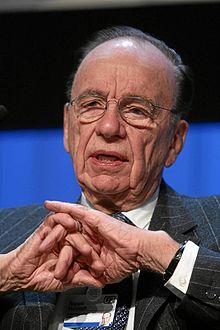
The Wall Street Journal and the Atlanta Journal-Constitution both report that at least one huge merger deal could emerge as a result of this week’s conference. Among the most likely buyers is FOX CEO Rupert Murdoch, who is reportedly looking to buy a major content company.

The most likely target is Time Warner (Entertainment), former owner of Time Warner Cable. After spinning off its money-losing magazine unit, TW has become much more focused on content and distribution – exactly what Murdoch is looking for. Time Warner owns New Line Cinema, HBO, Turner Broadcasting System, The CW Television Network, Warner Bros., Kids’ WB, Cartoon Network, Boomerang, Adult Swim, CNN, DC Comics, Warner Bros. Animation, Cartoon Network Studios, Hanna-Barbera, MLB Network and Castle Rock Entertainment. In fact, altogether the company owns or controls dozens of television channels which could all soon fall into the hands of Murdoch.

A Murdoch acquisition would be the last death-blow for Ted Turner’s Turner Broadcasting System, which launched CNN, TBS, and TNT and is now a division within Time Warner. Murdoch’s Fox News Channel was launched as a conservative alternative to CNN’s perceived left-leaning reporting. A Murdoch buyout would either deliver bipartisan profits to the media mogul or allow him to shut down the network or relaunch it under the Fox News brand.

Such an acquisition would not be cheap. Time Warner is worth as estimated $62 billion.

A Murdoch buyout would be especially troublesome for those already upset with corporate media consolidation. Murdoch would end up controlling three major U.S. networks – FOX, CW, and MyNetworkTV, multiple cable news channels, dozens of local television stations in major media markets, and more cable networks than most people can count. In fact, the assembled list of Murdoch-owned media properties is enormous:

Murdoch: The next owner of CNN?

Murdoch: The next owner of CNN?

Adult Swim, Boomerang, Cartoon Network, CNN Worldwide, HLN, Inside CNN Tour & Store, TBS, TCM, TheSmokingGun.com, TNT, truTV, Turner Sports, Fox Business Network, Fox News, Star India, YES Network, Twentieth Century Fox, Fox 2000 Pictures, Fox Searchlight Pictures, Fox International Productions, Twentieth Century Fox Television, Fox Home Entertainment, Shine Group, Twentieth Century Fox Animation, The Sun, The Times, The Sunday Times, Times Literary Supplement, The Wall Street Journal, The New York Post, The Australian, The Daily Telegraph (Australia), The Sunday Telegraph (Australia), The Herald Sun, The Sunday Herald Sun, The Courier Mail, The Sunday Mail, The Advertiser, NT News, The Sunday Territorian, The Sunday Times (Australia), The Sunday Tasmanian, Mercury, Warner Bros. Pictures, Warner Bros. Pictures International, New Line Cinema, Warner Home Video, Warner Bros. Advanced Digital Services, Warner Bros. Interactive Entertainment, Warner Bros. Technical Operations, Warner Bros. Anti-Piracy Operations, Warner Bros. Television Group, Warner Bros. Television, Telepictures Productions, Warner Horizon Television, Warner Bros. Animation, Warner Bros. Domestic Television Distribution, Warner Bros. International Television Distribution, Warner Bros. International Television Production, Warner Bros. International Branded Services, Studio 2.0, The CW Television Network, DC Entertainment, Warner Bros. Theatre Ventures, HarperCollins General Books Group, HarperCollins Children’s Books Group, HarperCollins Christian Publishers, HarperCollins UK, HarperCollins Canada, HarperCollins Australia/New Zealand, HarperCollins India, FX, FXX, FXM, National Geographic Channel, Nat Geo WILD, Nat Geo Mundo, FSN, FOX Sports 1, FOX Sports 2, FOX Soccer Plus, FOX College Sports, FOX Deportes, FOX Life, Baby TV, Fox Broadcasting Company, Sky 1, Sky Atlantic, Sky Living, Sky Arts, Sky Sports, Sky Movies, Sky News, Sky Deutschland, Sky Italia, MyNetworkTV, MundoFox, FOX International Channels, Fox Sports Enterprises, HBO, HBO On Demand, HBO GO, Cinemax, Cinemax on Demand, MAX GO, HBO2, HBO Signature, HBO Family, HBO Comedy, HBO Zone, HBO Latino, More Max, Action Max, Thriller Max, 5 Star Max, Max Latino, Outer Max, Movie Max, Barron’s, MarketWatch, Factiva, Dow Jones Risk & Compliance, Dow Jones VentureSource, All Things Digital, Amplify, News America Marketing, and Storyful.

Murdoch has already shown a willingness to spend big. He has recently taken an ownership interest in the up and coming Vice Media, popular with the under 30-viewing crowd. He also spent $415 million to buy romance novel publisher Harlequin Enterprises.

But Murdoch may not be the only one shopping for a deal. The Wall Street Journal offered a shopping list:

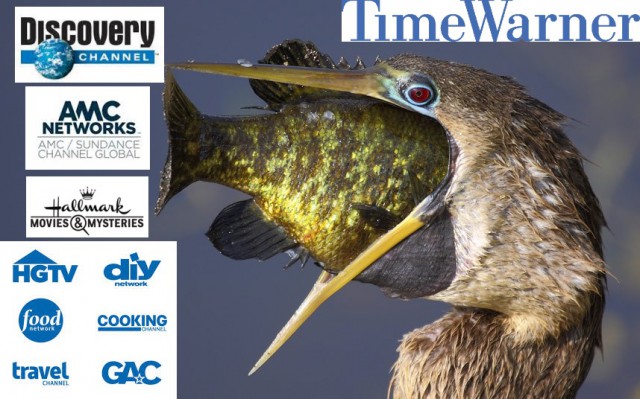
  • Small cable network owners: Nobody just owns three or four cable networks these days. Content conglomerates like CBS, Disney, Time Warner and Comcast own 15, 30, or even 40 different channels. Smaller players are ripe for the picking. Chief among them include Scripps Networks Interactive (Food Network, HGTV), AMC Networks (AMC, IFC, Sundance), and Crown Media (Hallmark).
  • Small studios: Owning a small Hollywood studio is quaint, but Wall Street investment bankers think the time is long past to sell out to larger corporate entities who can better leverage distribution of their releases, easy enough if you own your own theater chain, pay cable network, broadcast stations, and basic cable outlets.
Both phone companies are attending Sun Valley for the first time.

Both phone companies are attending Sun Valley for the first time.

In addition to buyout offers from the largest networks around, Discovery Networks is also in the mood to grow larger at the urging of its board of directors, which includes Dr. John Malone, CEO of Liberty Global. Malone is behind much of the cheerleading to consolidate the cable industry and helped spark the Comcast-Time Warner Cable deal when his partly owned Charter Communications sought a takeover of Time Warner Cable itself.

Wall Street bankers love even better the idea of selling Discovery to a new owner – Disney.

For the first time, phone companies AT&T and Verizon are also in attendance at Sun Valley, and analysts don’t believe the CEOs are there for summer vacation.

Jimmy Schaeffler, chairman of media and telecom consulting firm Carmel Group, says Verizon has been most lacking in the content ownership department and “needs something else right now” as rivals bulk up. AT&T’s acquisition of DirecTV only underlines that sentiment among many Wall Street analysts who think Time Warner (Entertainment) could be an option if Verizon isn’t outbid by Murdoch.

All of this shopping has caused alarm for some, including CNN’s media reporter Brian Stelter who declared, “I will eat my remote control … in fact, I will eat my copy of the New York Post … if Murdoch becomes the owner of CNN.” 

[flv]http://www.phillipdampier.com/video/WSJ Digits Media Consolidation 7-7-14.flv[/flv]

The Wall Street Journal’s ‘Digits’ explores the ongoing consolidation of media creators and distributors. This year’s media conference in Sun Valley could spark more merger deals. (5:02)

Search This Site:

Contributions:

Recent Comments:

Your Account:

Stop the Cap!
