Home » lease fee » Recent Articles:

Time Warner Cable Says Tiny North Carolina Power Co-Ops Are Bullies

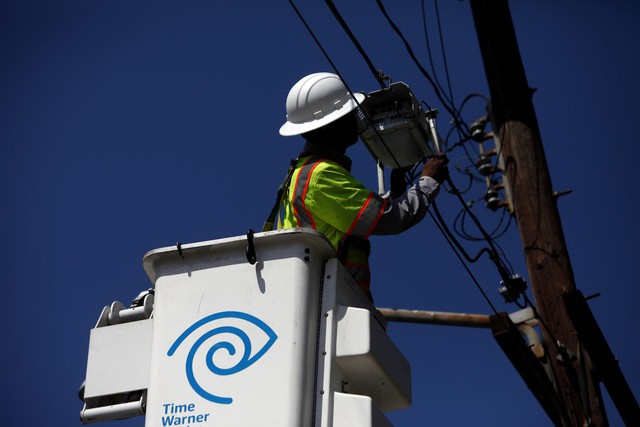
twc repairTime Warner Cable says it is forced to pay monopoly rates to rent space on North Carolina’s publicly owned utility poles and it now wants the state government to settle the issue by regulating prices to better reflect actual costs.

The cable company is suing five rural, member-owned electric cooperatives at the North Carolina Utilities Commission, claiming the tiny utilities are bullies that routinely stonewall, coerce, retaliate and strong-arm the country’s second largest cable company into paying up. Time Warner Cable claimed when it refused to pay one co-op’s rate demands in full, the utility threatened to add the unpaid fees to Time Warner’s electric bill and eventually cut off electricity if it went unpaid. The cable company also claims it has faced penalty fees in the millions of dollars and in one case, a threat to call the local sheriff on a cable technician repairing a line during a service outage.

The News & Observer reports the public utilities and cable operator are at an impasse. Rural utilities claim they are being undercut by a federal rate formula that many for-profit, investor-owned utilities subscribe to that requires cable companies to pay $5-7 per pole per year in rental fees. But many rural co-ops have substantially higher costs, do not generate their own electricity, have wiring and poles stretched between significantly fewer customers and don’t set rates and policies with an aim to compensate investors and shareholders.
Project4.qxdThe five public utilities each serve between 26,800-122,000 customers. Altogether, the five maintain 75,000 utility poles now involved in the dispute. All charge considerably more for pole rentals than Duke Energy, the state’s largest for-profit utility, which gets somewhere between $5-7 a year for each pole. Co-ops South River EMC is seeking $17.40 per year. Carteret-Craven EMC wants $23.60 a year.

The National Rural Electric Cooperative Association explains the disparity in rates is the result of the higher risks co-ops face if the local cable company gets sloppy and damages the pole or creates operational or safety issues.

CCEC Slide“In order to maintain 501(c)(12) cooperative tax-exempt status, cooperatives charge cost-based rates for their services, including pole attachments,” claims NRECA. “Some costs are difficult to identify and quantify, especially operational or safety issues that improper pole attachments may cause. If a federal uniform rate pushed attachment rates lower than actual costs, member owners of the not-for profit electric co-op would wind up subsidizing cable, broadband and telecommunications corporations, many of which are for-profit entities.”

NRECA claims the federal pole attachment rate formula that Time Warner Cable now advocates be applied across North Carolina was set artificially low to promote rural broadband expansion by enticing cable operators to wire areas they have never wired before. While that may sound good for rural consumers looking for cable broadband service, electric ratepayers could end up subsidizing the cable company’s expansion through higher electricity rates to recoup unpaid pole expenses. The electric co-op group also argues that even with artificially low pole attachment rates, that doesn’t guarantee cable companies will actually invest the savings into service expansion or lower prices for their customers.

Ironically, cable operators like Time Warner Cable that show little interest in sharing their infrastructure with others argue rural co-ops should be forced to share their poles.

“Once cable operators have constructed their aerial networks on existing pole infrastructure,” Time Warner wrote, “they are essentially captive because it would be prohibitively expensive and impractical (or impossible) to rebuild those networks underground or to install their own poles.”

Time Warner Cable: Deck the Halls with $8 Modem Fees, Fa La La La La, La La La La ($2.75 DTA Fee, Too!)

Phillip Dampier December 22, 2014 Consumer News 6 Comments

grinch3It’s a Merry Christmas from Time Warner Cable, with rate increases for one and all!
The cable company that usually waits for the holiday season to end before sending out annual “rate adjustment” notices got an early start this year with some dramatic price changes for many customers, with further rate hikes likely to follow later in 2015.

Taking a lead from Comcast, Time Warner Cable is hiking its broadband modem lease fee from $6 a month to $8 a month in January. That equals $96 a year for a modem that not too long ago used to be included at no extra charge as part of your broadband subscription. A typical customer with a Motorola SB6141 DOCSIS 3 cable modem can buy a brand new unit for nearly $20 less than what Time Warner will collect from customers each year for refurbished or used equipment… forever.

In 2013, Time Warner Cable’s Rob Marcus admitted the company does not charge modem rental fees to defray the cost of the equipment, but as a hidden rate increase designed to generate more revenue.

“The modem fee is a rate increase by all accounts, it takes a different form than usual […] it’s very much a part of the overall revenue generation program,” Marcus told an audience of investment banks.

Customers that lost analog channels after Time Warner Cable began converting part of its lineup to digital-only service were offered free Digital Adapters to continue receiving digital cable channels on older analog sets. Customers were expecting a promised $0.99 monthly lease fee for the devices starting January 1, 2015. Instead customers will now pay $2.75 a month for each DTA device, estimated to cost cable companies less than $50 each three years ago.

But the charges don’t end there.

  • timewarner twcThe Broadcast TV Surcharge for cable television subscribers will increase from $2.25 to $2.75 a month;
  • A new “Sports Programming Surcharge” of $2.75 a month now applies to all cable television customers, whether they watch sports channels or not;
  • That on-screen program guide does not come for free. The primary outlet “discounted guide” surcharge is rising from $2.77 to $3.27 a month;
  • HBO will increase from $14.99 to $16.99 a month; the Movie Pass package of Encore movie channels and certain other networks is rising $2 a month, from $5.99 to $7.99.

Part of the sales pitch Time Warner makes to justify rate increases is that broadband speeds have increased up to 100Mbps. Except they haven’t in many Time Warner Cable markets, which remain locked in with maximum speeds of 50/5Mbps for the indefinite future.

Thanks to Stop the Cap! reader Joseph for sharing Time Warner’s letter with us.

Comcast Unveiling New, Faster Wireless Gateway; No Pricing Revealed But It Won’t Come Free

Phillip Dampier September 9, 2014 Broadband Speed, Comcast/Xfinity, Consumer News, Wireless Broadband Comments Off on Comcast Unveiling New, Faster Wireless Gateway; No Pricing Revealed But It Won’t Come Free

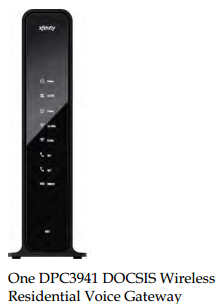
res gateway dpc3941In an effort to keep up with increasing bandwidth demands on customers’ home networks, Comcast has announced a new Cisco wireless gateway that supports 802.11ac and v2.0 of the Multimedia over Coax Alliance (MoCA) standard that supports a home broadband network over coaxial cable.
The new XFINITY Wireless Gateway will be Cisco’s DPC3941T, which includes a 3×3 MIMO design offering three spatial streams and 700Mbps speed across an 80MHz wide wireless data channel — two times faster than Comcast’s current fastest wireless gateway and considerably faster than competing gateways from AT&T and Verizon.

The new gateway includes a built-in DOCSIS 3.0 modem, but Comcast has not shared details about how many channels the unit can bond and it doesn’t support the next generation DOCSIS 3.1 standard.

The wireless gateway will not come free of charge, but Comcast has not indicated what the monthly lease fee will be. Many Comcast customers pay up to $8 a month to lease a wireless gateway/cable modem.

Only customers in selected markets will initially be able to get the new gateway due later this fall, with customers nationwide getting access sometime later. Comcast is inviting those interested to e-mail: [email protected] to learn when the new gateway becomes available.

Comcast’s newest model will support the XFINITY Wi-Fi project which opens up a community Wi-Fi hotspot on a separate wireless channel accessible to the public.

Comcast is expected to install eight million wireless gateways in customer homes by the end of this year.

Time Warner Cable: ‘Our Promotion Cutbacks and Rate Hikes Cost Us Customers’

timewarner twcTime Warner Cable admitted this morning extracting more revenue from existing customers was more important than attracting new ones, and long time subscribers responded by canceling service in above average numbers.

In a conference call largely hosted by incoming CEO Robert Marcus, a number of Wall Street analysts listened to Marcus’ vision for Time Warner under his forthcoming leadership. Marcus offered competing, potentially incompatible visions in his defense of a lackluster quarter: charge existing customers higher prices for service to boost average revenue per subscriber (ARPU) while also improving the customer-company relationship.

For most of 2013, Time Warner has been aggressively moving away from heavily discounted promotional offers to attract customers. Both outgoing CEO Glenn Britt and Marcus have repeatedly stressed heavy discounting of service during the past two years is now over, and the company is looking forward to resetting prices higher when the promotions end later this year.

It is part of the company’s plan to “drive better performance in the residential business.” An unfortunate side effect is that the company continues to lose video and phone customers and its broadband service growth has been so slow, one analyst called it “anemic.” The company’s quarterly results show Time Warner added only 8,000 new broadband customers in the last three months. The company still earned $1.42 billion from broadband sales alone over the last three months, mostly because of rising broadband bills.

Courtesy: Jacobson

Courtesy: Jacobson

Offsetting that growth, TWC lost 191,000 residential video subscribers, leaving it with about 11.9 million video customers. At least 56,000 customers also pulled the plug on Time Warner Cable telephone service.

“As we discussed before, this [new pricing] approach represents a conscious decision to pursue subscribers with higher ARPU, higher profit and lower churn even if that means fewer connects,” said Marcus as he defended the results. “So it’s not a surprise that as in the first quarter of 2013, subscriber net adds were down in the second quarter on a year-over-year basis.”

As customers deal with increasing prices for cable television and broadband service and the irritation of modem rental fees, many are cutting back on their packages to keep their bill stable.

Marcus admitted customer sign ups of triple play — phone, broadband, and cable TV service — were way down in the second quarter and a lot fewer single and double-play customers were convinced to upgrade. The company’s promotional offers have come with a higher price and slower broadband service, often only 3Mbps.

In a number of markets, especially in the midwest, customers are shopping around for other providers. They are finding AT&T U-verse to be a formidable competitor.

“Throughout the quarter, U-verse was pretty aggressive with a beacon price of $79 for their triple play and $49 for their double play,” said Marcus. “I would characterize those as aggressive promotional prices, and they had an impact. I would say that the impact was more pronounced as the quarter wore on. We’ve now responded to that in the market, and I expect that our relative performance should improve there.”

But for much of the rest of the country where competition is less robust, Time Warner intends to continue to hold the line on pricing and resist discounting even if it means subscribers threaten to cancel.

Time Warner Cable has gotten itself ready for an onslaught of unhappy customers, assigning nearly 1,000 employees to staff four national customer retention centers dedicated to trying to persuade customers not to leave. But these specially trained representatives have a dual mission — keep customers with Time Warner Cable, but don’t give away the store doing so.

Stock buybacks and shareholder dividends were a major priority for Time Warner Cable's cash on hand.

Stock buybacks and shareholder dividends were a major priority for Time Warner Cable’s cash on hand.

“Not only are our reps saving more customers, they are also preserving more ARPU among the customers they save,” said Marcus. “As promotional roll-offs peak in the second half of 2013, we expect that our new retention capabilities will drive better revenue growth.”

In the broadband market, Time Warner changed little in the second quarter except to raise prices on service and equipment. Marcus could only point to the addition of 3,500 new Wi-Fi hotspots, mostly in New York City, as its signature achievement over the past three months.

On the residential side, broadband revenues were up 12.5%, but most of that growth came from a combination of the modem lease fee, an increase in the number of 30/5 and 50/5Mbps customers and a successful Turbo promotion.

Results for video and voice were considerably worse. Revenues were down about 4%.

But the company managed to report its highest ARPU ever, with customers now paying an average of more than $105 a month for Time Warner service. Most of that increase came from rising broadband prices.

Time Warner Cable has also been preoccupied with spending excess cash on hand to buy back its own stock, which creates shareholder value. Time Warner expects to spend at least $2.5 billion on stock buybacks this year. Shareholders also received $829 million in dividends (113% of Time Warner’s free cash flow).

“We repurchased 6.6 million shares for $638 million, and through July, we have repurchased approximately 83 million shares at an average cost of around $78.50 per share since we began the program in November of 2010,” reported chief financial officer Arthur T. Minson.

Time Warner Cable’s Board of Directors recently approved increasing spending up to $4 billion on stock buybacks.

[flv width=”640″ height=”380″]http://www.phillipdampier.com/video/WRGB Albany TWC Modem Fee 7-31-13.flv[/flv]

WRGB in Albany reports Time Warner Cable customers are angry about another price hike on the company’s modem lease fee effective Aug. 18. WRGB recommends customers buy their own modems to avoid the fee. Time Warner Cable’s Glenn Britt admitted earlier the fee is really just a hidden rate increase. (3 minutes)

Time Warner Cable Modem Rental Fee Increased to $4.99/Month for New Customers

Phillip Dampier June 17, 2013 Consumer News, Data Caps 14 Comments
one time charge

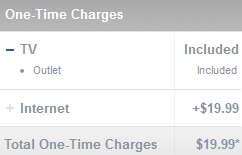
Time Warner’s “Because We Can” One-Time Charge applies to new customers signing up for certain promotions.

Time Warner Cable has increased the monthly rental fee for its leased cable modem from $3.95 a month to $4.99 a month and has introduced a “one-time charge” of $19.99 applicable to certain Internet service new customer promotions.

CEO Glenn Britt earlier commented that Time Warner Cable had room to grow its modem lease fee:

“It was received with a minimum of push-back and we’re still actually charging less than Comcast ($7/month), so I think there is room to charge more going forward. People can buy their own if they want and a small percentage of customers have chosen to do that which is fine with us.”

For now, the increase only applies to new customers, but Stop the Cap! expects it will also eventually apply to current customers as part of the next round of rate increases. The Internet Modem with Free Home Wi-Fi, available to customers ordering 30/5 or 50/5Mbps service costs $14.99 a month.

Time Warner Cable has pulled back on customer promotions since the beginning of the year and has begun shifting its pricing for its most profitable service — broadband, to capture price-sensitive customers who have been unable to previously afford Internet-only service from the company.

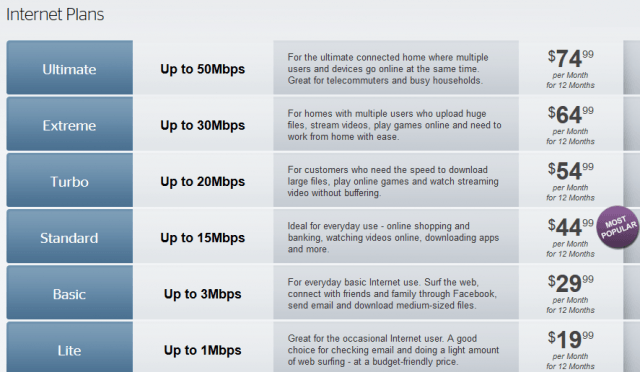
Time Warner has introduced a new “Lite” tier offering 1Mbps service for $20 a month and has made the 3Mbps “Basic” service the staple of many of its bundled promotions.

twc pricing

twcGreenStop the Cap! strongly encourages Time Warner Cable customers to buy their own cable modems and avoid the rental fees. Customers can also bypass the rental fee by signing up for Earthlink service through Time Warner Cable.

Our top modem choice remains the Motorola SB6141, which can be found at the “Buy It Now” price on eBay as low as $77.99 with free shipping and no upfront sales tax for most buyers. This model does not include Wi-Fi, but most people don’t need it — a router generally provides Wi-Fi connectivity on its own.

We highly recommend purchasing DOCSIS 3-ready modems to avoid obsolescence issues.

The most recent list of “acceptable” modems that can be activated with your Time Warner Cable broadband service are:

Turbo, Extreme and Ultimate Service Plans

Vendor Model
Motorola SBG6580
Motorola SB6141 STOP THE CAP! RECOMMENDED
Netgear CMD31T
Motorola SB6121
Zoom 5341J
Zoom 5350
Zoom 5352
ZyXEL CDA-30360

Lite, Basic and Standard Service Plans

Vendor Model
Motorola SBG6580
Motorola SB6141 STOP THE CAP! RECOMMENDED
Motorola SB5101
Motorola SB5101U
Motorola SBG901
Netgear CMD31T
Motorola SB6121
Zoom 5341J
Zoom 5350
Zoom 5352
ZyXEL CDA-30360

Search This Site:

Contributions:

Recent Comments:

Your Account:

Stop the Cap!