

Home » internet service providers » Recent Articles:

Republicans’ Fake Net Neutrality Alternative Contains Grand Canyon-Sized Loopholes

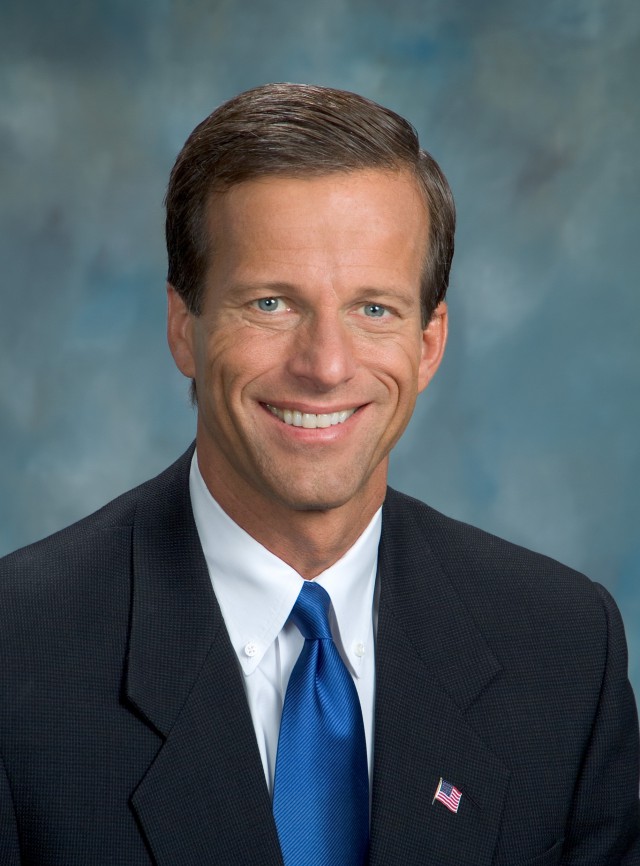
Thune

Thune

When Sen. John “Net Neutrality is unjustified” Thune (R-S.D.) and Rep. Fred “Net Neutrality is a solution in search of a problem” Upton (R-Mich.) last week magically became Internet activists ready to solve the Net Neutrality issue with an “unambiguous” bill to “protect Americans” from greedy ISPs, you will pardon me if I am just a tad suspicious.

The two Republicans who champion “less government regulation is better” and “let the marketplace decide for itself”-principles are proposing new legislation that will regulate the conduct of Internet Service Providers, claiming it will tie their hands and prevent the launch of Internet fast lanes and ban traffic degradation.

The two legislators are traveling in a fast lane of their own — hurrying to schedule hearings, mark up a bill, and speed it to the floor for consideration by the end of this month. That’s a marked departure for the U.S. Congress-as-usual, the one that can’t manage to pass virtually anything, much less in a hurry. So where is the fire?

It is at the Federal Communications Commission in Washington, scheduled to vote on its own new Net Neutrality proposal by the end of February. Thune and Upton are hoping to launch a pre-emptive strike against the anticipated strong Open Internet protections the FCC will probably enact on a party line vote. The FCC is likely to pursue a reclassification of broadband away from the lobbyist-lovin’, largely deregulated “information service” it is today towards a “telecommunications service” under Title II of the Communications Act. That represents Comcast’s worst nightmare.
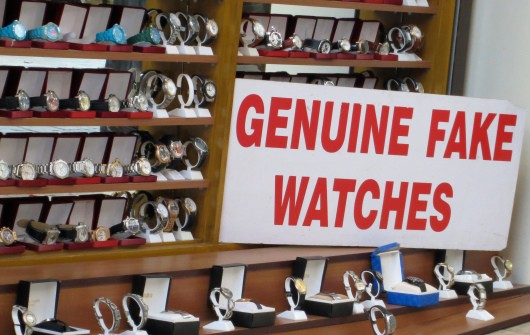
???????????????????????????????Current FCC rules have allowed traffic shenanigans from ISPs like Comcast that don’t mind slowing their customers’ Netflix experience to a crawl until the streaming company opens its checkbook. The FCC’s anticipated new proposal would strictly forbid any creative end-runs around the concept of paid fast lanes Comcast can get away with today.

The proposed Republican alternative suggests a “third way” compromise only Comcast and AT&T could love. While ostensibly banning intentional interference with Internet traffic, the two legislators include a Grand Canyon-sized loophole in the form of one word you could fly an Airbus A380 through: reasonable

SEC. 13. INTERNET OPENNESS.

(a) OBLIGATIONS OF BROADBAND INTERNET ACCESS SERVICE PROVIDERS.—A person engaged in the provision of broadband Internet access service, insofar as such person is so engaged (1) may not block lawful content, applications, or services, subject to reasonable network management; may not prohibit the use of non-harmful devices, subject to reasonable network management; may not throttle lawful traffic by selectively slowing, speeding, degrading, or enhancing Internet traffic based on source, destination, or content, subject to reasonable network management; may not engage in paid prioritization; and shall publicly disclose accurate and relevant information in plain language regarding the network management practices, performance, and commercial terms of its broadband Internet access services sufficient for consumers to make informed choices regarding use of such services and for content, application, service, and device providers to develop, market, and maintain Internet offerings, except that a provider is not required to publicly disclose competitively sensitive information or information that could compromise network security or undermine the efficacy of reasonable network management practices.

No ISP has ever declared its own traffic management policies unreasonable, so whatever they do, in their minds, is “reasonable” by definition.

Upton

Upton

The proposed bill would keep Net Neutrality far away from the critical Title II foundation it needs — essential armor that will help withstand inevitable court challenges by providers outraged by the government’s attempt to interfere with their free speech rights (at the expense of their customers’ freedom from content-killing traffic slowdowns).

The concept of “network management” is Play-Doh in Comcast and AT&T’s hands. It could mean balancing traffic by adding more capacity as needed or implementing a “fair access policy” that rations inadequate capacity. Both could easily be called “reasonable” by them. Customers paying for 25Mbps and getting 6Mbps during the evenings may think otherwise.

But no worries, the Republicans’ plan requires ISPs to disclose exactly how they are undercutting the broadband service you paid good money to receive. They claim that will give you an “informed choice,” except for many Americans, there is no choice.

The FCC’s plan is much more likely to stop to the tricks, traps, and traffic manipulation in whatever form arises now or in the future. It uses well-established precedent that is unlikely to be thrown out by the courts, delivers real oversight desperately needed in the monopoly/duopoly broadband marketplace, and will actually protect consumers.

The Republican alternative primarily protects AT&T, Comcast, and their chances of getting more campaign contributions from their friends in the cable and phone business. In short, it isn’t worth your time, and you should tell your member of Congress it isn’t worth theirs either.

Cuomo: 100% of New York State Should Have Access to 100Mbps Broadband by 2018

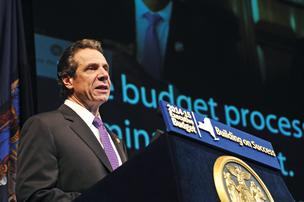
ny broadbandNew York Gov. Andrew Cuomo has set a goal that every resident of New York State should have access to at least 100Mbps broadband no later than 2018.
The governor will kick off his latest broadband expansion effort with the launch of his $500 million broadband expansion program, dubbed the New New York Broadband Fund, a follow-up to the state’s $70 million public-private effort to expand broadband that began in 2012.

Much of the money awarded in the 2012 broadband expansion effort went to Wireless Internet Service Providers, institutional broadband networks, middle-mile fiber projects not accessible to the public, and emergency service network upgrades. Another $5.2 million was awarded to Time Warner Cable to expand broadband service to 4,114 households in the Capital, Central, Finger Lakes, Mid-Hudson, Mohawk Valley, NYC, North Country, Southern Tier and Western regions of New York State. In June, many of the top funding recipients also received honors from the governor’s office in the first annual New York State Broadband Champion Awards.

Gov. Cuomo

Gov. Cuomo

Despite the money, the 2012 effort did not make a significant dent in the pervasive problem of broadband availability in upstate New York.

While Gov. Cuomo is committed to a target speed of 100Mbps within the next four years, more than one million New York households still cannot access broadband that achieves the state minimum — 6.5Mbps. That includes 113,000 businesses.

The governor’s solution is to subsidize private businesses with more tax dollars to resolve the broadband problem, with a significant part of the next round of funding likely to reach more institutional and public safety networks off-limits to the public, middle mile network expansion that can build state-of-the-art fiber rings that do not connect to end users, and an even bigger amount handed to Time Warner Cable (or Comcast if the state approves a merger with Time Warner Cable) and rural phone companies like Frontier Communications. Much of the money awarded to last mile providers like cable and phone companies will placate those that have stubbornly refused to expand further into rural areas unless taxpayers pick up some of the expense.

“In some of these areas, there’s just not a business case for these [service] providers to build out,” said David Salway, director of the New York State Broadband Program office. “The cost far exceeds what the revenue might be for that area.”

An unintended consequence of the broadband funding effort could be taxpayers subsidizing the establishment of for-profit monopolies in rural corners of the state. Although Salway told Capital NY he wanted to make sure New Yorkers had a choice, he clarified he was referring to a choice in technology, not service providers.

twcGreenThat must come as a relief for Verizon. The state’s largest phone company has petitioned state officials in the past for a gradual mothballing of New York’s rural landline network in favor of switching customers to wireless voice and broadband over Verizon’s cellular network. Theoretically, taxpayers could end up subsidizing the demise of rural New York landlines and DSL if Verizon seeks money from the rural broadband fund to expand its wireless tower network in rural New York. Time Warner Cable almost certainly will also seek more funding, probably in excess of the average $1,264 paid to the cable company for each of the 4,114 additional connections it agreed to complete during an earlier round of funding.
While rural broadband remains an important issue in New York, the merger of Comcast and Time Warner Cable is on the front burner and Salway, like the governor, had little to say. But Salway did offer that he did not believe the merger “would reduce [access] as much as further our goal” for expansion.

Guidelines for grant recipients are expected to become available just after the governor’s State of the State presentation in January, with ground-breaking on projects likely to start by mid-summer of 2015.

Net Neutrality: President Obama Calls on FCC to Reclassify Wired/Mobile Broadband Under Title 2

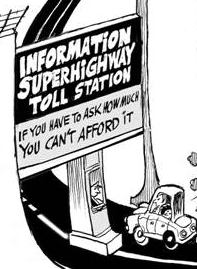
tollIn a major victory for net roots groups, President Barack Obama today announced his support for the strongest possible Net Neutrality protections, asking the Federal Communications Commission to quickly reclassify broadband as a “telecommunications service” subject to oversight and consumer protection regulatory policies that would prohibit paid fast lanes, the blocking or degrading of websites for financial reasons, and more transparency in how Internet Service Providers handle traffic.
“For almost a century, our law has recognized that companies who connect you to the world have special obligations not to exploit the monopoly they enjoy over access in and out of your home or business,” said the president. “That is why a phone call from a customer of one phone company can reliably reach a customer of a different one, and why you will not be penalized solely for calling someone who is using another provider. It is common sense that the same philosophy should guide any service that is based on the transmission of information — whether a phone call, or a packet of data.”

“’Net neutrality’ has been built into the fabric of the Internet since its creation — but it is also a principle that we cannot take for granted,” President Obama added. “We cannot allow Internet Service Providers (ISPs) to restrict the best access or to pick winners and losers in the online marketplace for services and ideas. That is why today, I am asking the Federal Communications Commission (FCC) to answer the call of almost four million public comments, and implement the strongest possible rules to protect Net Neutrality.”

The president’s call will likely force FCC chairman Thomas Wheeler to abandon efforts to reclassify only certain types of Internet traffic under Title 2 regulations while leaving consumers vulnerable to paid fast lanes and other traffic monetizing schemes. Wheeler was rumored to be working on a limited Net Neutrality plan that would protect large online video content distributors like Netflix and Amazon from unfair compensation deals with ISPs. The plan would have given the FCC authority to review agreements between your Internet provider and some of the net’s biggest traffic generators.

President Obama’s statement goes beyond Wheeler’s tolerance for “individualized, differentiated arrangements” that could let cable and phone companies offer compensated “preferred partnership” deals with websites and applications, granting them special treatment or exemptions from speed throttles or usage caps not available to others.

The president’s four principles for a free and open Internet represent “common-sense steps that reflect the Internet you and I use every day, and that some ISPs already observe:”

  • netneutralityNo blocking. If a consumer requests access to a website or service, and the content is legal, your ISP should not be permitted to block it. That way, every player — not just those commercially affiliated with an ISP — gets a fair shot at your business;

  • No throttling. Nor should ISPs be able to intentionally slow down some content or speed up others — through a process often called “throttling” — based on the type of service or your ISP’s preferences;
  • Increased transparency. The connection between consumers and ISPs — the so-called “last mile” — is not the only place some sites might get special treatment. So, I am also asking the FCC to make full use of the transparency authorities the court recently upheld, and if necessary to apply net neutrality rules to points of interconnection between the ISP and the rest of the Internet;
  • No paid prioritization. Simply put: No service should be stuck in a “slow lane” because it does not pay a fee. That kind of gatekeeping would undermine the level playing field essential to the Internet’s growth. So, as I have before, I am asking for an explicit ban on paid prioritization and any other restriction that has a similar effect.

The president also expressed a desire to see the same rules applied to mobile networks. That is a significant departure from the policies of the FCC under Wheeler’s predecessor Julius Genachowski, who served as chairman during the Obama Administration’s first term in office. His Net Neutrality policies exempted wireless carriers.

“The rules also have to reflect the way people use the Internet today, which increasingly means on a mobile device,” said the president. “I believe the FCC should make these rules fully applicable to mobile broadband as well, while recognizing the special challenges that come with managing wireless networks.”

[flv]http://www.phillipdampier.com/video/111014_NetNeutrality_Final.mp4[/flv]

President Barack Obama recorded this message supporting strong Net Neutrality protections for the Internet. (1:56)

Republicans in Congress and large telecommunications companies both immediately pounced on the president’s Net Neutrality plans.

Cruz Control

Cruz

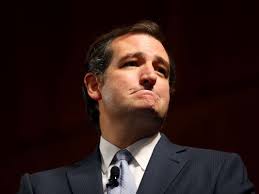
“Net Neutrality is Obamacare for the Internet,” tweeted Sen. Ted Cruz (R-Tex.) “The Internet should not operate at the speed of government.”

Cruz’s spokeswoman,  Amanda Carpenter, added that Net Neutrality would place the government “in charge of determining pricing, terms of service, and what products can be delivered. Sound like Obamacare much?”

The National Cable and Telecommunications Association expressed surprise over the president’s strong public support for Net Neutrality action.

“We are stunned the President would abandon the longstanding, bipartisan policy of lightly regulating the Internet and call for extreme Title II regulation,” the NCTA wrote. “The cable industry strongly supports an open Internet, is building an open internet, and strongly believes that over-regulating the fastest growing technology in our history will not advance the cause of Internet freedom. There is no dispute about the propriety of transparency rules and bans on discrimination and blocking. But this tectonic shift in national policy, should it be adopted, would create devastating results.”

“Heavily regulating the Internet will lead to slower Internet growth, higher prices for consumers, and the threat of excessive intervention by the government in the working of the Internet,” stated the NCTA release. “This will also have severe and profound implications internationally, as the United States loses the high ground in arguing against greater control of the Internet by foreign governments. There is no substantive justification for this overreach, and no acknowledgment that it is unlawful to prohibit paid prioritization under Title II. We will fight vigorously against efforts to impose this backwards policy.”

Russia Accelerating Broadband Speed Upgrades In Global Broadband Catch-Up

Phillip Dampier November 3, 2014 Broadband Speed, Competition, Consumer News, Public Policy & Gov't Comments Off on Russia Accelerating Broadband Speed Upgrades In Global Broadband Catch-Up

onlimeRussian Internet Service Providers have been strongly encouraged to upgrade their service and speeds as a matter of national pride as the Kremlin encourages broadband improvements across the vast expanse of the country.
Responding to the call, regional ISP Onlime, operated by Russian telecom giant Rostelecom, has introduced new broadband packages to subscribers at prices that would make most North Americans drool:

  • “100 for 500” is Onlime’s most aggressive promotion, offering unlimited 100Mbps service for 500 Russian rubles, equal to $11.47US a month on promotion. The regular rate after the promotion expires should run around $20 a month;
  • beeline15Mbps budget Internet is regularly priced at $6.88 a month;

  • 30Mbps standard service costs $9.18 a month;
  • 60Mbps turbo service runs $11.47 a month;
  • 80Mbps deluxe service was tariffed before the “100 for 500” promotion, and its everyday price is $16.06 a month.

Meanwhile, Russian wireless mobile operator Vimpelcom also runs wired broadband service in parts of Russia and is boosting speeds without raising prices. Customers signed up with “Beeline” in the Moscow Oblast, including the communities of Moscow, Domodedovo, Zelenograd, Sergyev-Posad, Serpukhov, Chekhov, and Lyubertsy will now receive up to 30Mbps service. You can’t beat the price. At just 350 Russian rubles, that is just over $8 a month in U.S. dollars.

The speed increases start Nov. 10.

Cable Lobby Forgot to Mention It’s the Sole Backer of Sock Puppet Group ‘Onward Internet’

Phillip Dampier October 9, 2014 Astroturf, Consumer News, Editorial & Site News, Net Neutrality, Public Policy & Gov't, Video Comments Off on Cable Lobby Forgot to Mention It’s the Sole Backer of Sock Puppet Group ‘Onward Internet’

onward-internetWith millions at stake charging content producers extra for guaranteed fast lanes on the Internet, some lobbyists will go to almost any length to throw up roadblocks in opposition to Net Neutrality.
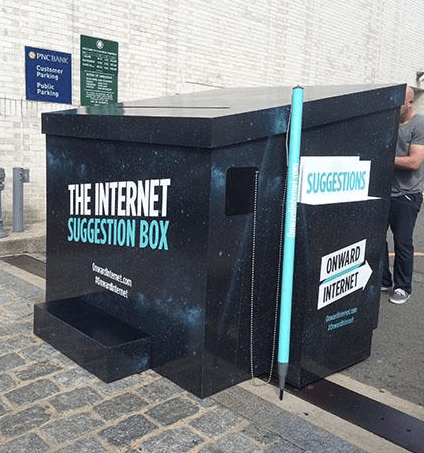

The sudden appearance of Onward Internet, a group that erects enormous “Internet suggestion boxes” at busy intersections in New York and San Francisco is a case in point.

At least a half-dozen 20-somethings, some dressed for a science fiction convention, staff the displays while encouraging people to write and toss in their own ideas about what they expect from the Internet over the next decade.

A higher bill and usage caps, unsurprisingly, were not among the suggestions. But it is doubtful the mysterious people behind Onward Internet are interested in hearing that.

Advocacy group ProPublica spent weeks trying to find who was paying for the youthful exuberance, giant black boxes, and hopelessly optimistic YouTube videos telling viewers the Internet was made to move data, and how amazing it was your Internet Service Providers valiantly kept up with the demand, helped connect industries and even topple dictatorships. Well, not corporate dictatorships in this country anyway.

With that kind of “feel good” message, ProPublica undoubtedly smelled industry money, especially after seeing lines like, “The Internet is a wild, free thing; unbounded by limits, unfettered by rules, it’s everyone’s responsibility to ensure that the Internet continues to advance.” But it took a leak from a worker hired to file permits and buy space in San Francisco for the street displays to finally blow the whistle.

Onward Internet = the National Cable and Telecommunications Association, America’s largest cable industry lobbyist.

This appears to be a repurposed dumpster.

This appears to be a repurposed dumpster.

You couldn’t find a bigger critic of Net Neutrality if you tried.

The NCTA played coy with ProPublica when the group first confronted the cable lobby with the evidence.

“What led you to the conclusion that this is an NCTA effort,” asked NCTA spokesman Brian Dietz.

Busted, Dietz followed up with a statement suggesting the NCTA needed to keep its involvement top-secret because it might ‘bias’ the feedback they received:

“We’ve kept NCTA’s brand off Onward Internet because we want to collect unbiased feedback directly from individuals about what they want for the future of the Internet and how it can become even better than it is today,” Dietz told ProPublica. “The cable industry is proud of our role as a leading Internet provider in the U.S. but we feel it’s important to hear directly from consumers about how they envision the future so we can work hard on delivering it.”

“We had always intended to put the NCTA brand on it but we wanted to collect as much unbiased feedback as we could for a few weeks before putting our name on it,” Dietz later told VentureBeat.

The NCTA is hoping unwitting consumers submit comments they can use to oppose Net Neutrality and Title 2 reclassification of broadband as a “telecommunications service.”

Because if that happens, the Money Party may end before it even begins.

The NCTA’s astroturf effort is nothing new. A panoply of well-funded, telecom-industry backed sock puppet groups muddy the waters on these issues everyday, from Broadband for America to various think tanks and bought and paid for researchers.

[flv]http://www.phillipdampier.com/video/Onward Internet Decide the future of the Internet 10-8-14.mp4[/flv]

Onward Internet is hoping you will share comments they can use to prove you oppose Net Neutrality. The NCTA is a strong opponent of Net Neutrality, which allows LOLCATS, movies, and dictatorship toppling to occur without paying even MORE money to the cable company for a fast lane that should have been fast in the first place, considering how much we are spending on it. Now Big Cable also want usage caps and allowances. The revolution has been capped. (1:22)

Search This Site:

Contributions:

Recent Comments:

Your Account:

Stop the Cap!