This website is run on a voluntary and non-profit basis. Our ability to reach you, the reader, comes as a benefit of an open and free Internet. I can criticize and speak my mind openly and freely even about my own Internet Service Provider, because on today’s Internet the gatekeeper is your own motivation to write and publish content, and the motivation of the reader to consume it.
In the last few years, some Internet Service Providers have argued it is time to change this winning formula. They are upset that groups and businesses are creating and distributing content over “their wires” without “paying a portion of the costs for those wires.” No matter that you and I already pay those costs when we sign up for service with that provider. Now they want content providers to be willing to pony up money to be assured that their content will reach you, the customer. Don’t agree to pay? They can’t guarantee your content won’t be slowed to a crawl by too many outside groups trying to use “their pipes for free” and you and I will be left with Internet service that provides super fast connections to those that pay, and a whole lot of waiting around to access those that don’t.
There is bipartisan support for the just introduced Internet Freedom Preservation Act of 2009. It would finally make Net Neutrality the law. It’s urgently needed during this time of provider bad behavior, from Internet Overcharging schemes to efforts to control broadband content distribution. Our friends at SaveTheInternet have a petition to sign, but it’s also important to reach out directly to your member of Congress and tell them to support H.R. 3458. It protects the Internet as we know and love it today.
I usually don’t spend a whole lot of time debunking the more crazy conspiracy theories about Net Neutrality because I presume most online users are smart enough not to be suckered into sideshow distractions, usually paid for by providers trying to wave shiny keys at consumers to get them to support things exactly opposite their own best interests. Unfortunately, there are a few shills out there who insist on trying to conjure up bizarre conspiracy theories about Net Neutrality representing some sort of Obama Administration/left wing takeover of the Internet.
When Newsbusters, a conservative media watchdog group, bought into this (and also sprang for the deluxe undercoatings, fabric protection, and deluxe floor mats), it was time to fire up the Debunk-o-matic once again and set the record straight.
What is particularly insulting is the ongoing effort to try and co-opt conservatives into this corporate protection circus, when truth be told, conservatives should absolutely be in favor of Net Neutrality for the same reasons any other person, regardless of where they fall on the political spectrum, should be — it protects their rights to be able to speak out on the issues that concern them the most, judged on the quality of their content, not on how much money they can pay to be sure those views can travel unimpeded to interested readers across the country and beyond.
Put on the rubber boots, because we’re going to splash through some inch deep puddles:
Enter the similarly-misnamed ‘net neutrality’ movement, which advocates total government control of Internet browsing. Net neutrality would forbid Internet service providers from regulating traffic on their networks, and would place that regulatory control in the hands of the FCC.
While the left bemoans restrictions by private companies on their subscribers’ use of the Internet, progressives have few qualms with allowing the federal government a say in what we can or cannot see, do, or say on the Internet.
The centralized control of Internet use by the federal government would provide a powerful tool for the censorship of websites deemed politically unfavorable. The current administration’s labeling of right-wing fringe groups as ‘extremists’ and potentially national security threats, and the labeling of town hall protestors as ‘political terrorists’ suggests that the realm of impermissible internet use could conceivably include groups that espouse intense opposition to federal policies.
I think author Lachlan Markay has been stuck in a parallel universe, like in that Star Trek episode, because he defined Net Neutrality the exact opposite of its reality.
The FCC can’t even get rational limits on cable system ownership to survive court review. How Markay believes a naked attempt by the FCC to regulate political content on the Internet will pass muster requires something more than simply writing alarmist claims it will happen because he says it will.
The feeble effort to link town hall protesters and Obama conspiracy theories to the issue of Net Neutrality is a transparent effort to co-opt conservatives into a cause that means standing with the providers waiting to throttle their broadband speeds and charge their favorite websites more money. I don’t believe for a second conservatives trust the local cable or phone company to do the right thing by them, as they continue to be stuck with ever-increasing bills for channels they don’t watch and certainly don’t want to pay for and phone features they don’t want or use, but end up paying for anyway.
Though no elected net neutrality advocate would ever suggest that the movement intends to regulate content, pundits on the left have been far more forthcoming. In March, a blogger at the Huffington Post lauding net neutrality wrote, “We have a very rare opportunity right now to lock in a progressive advantage in Internet communications, information sharing, and Netroots mobilizing.”
Markay attempts to bolster his argument by linking to a Huffington Post blogger that supposedly lets it all hang out in public — conspiracy revealed, case closed. He assumes his readers won’t bother to click on the link, because if they do, they’ll discover Markay’s source didn’t have to be linked via HuffPost, he could have just turned around to the guy figuratively sitting at the desk behind him and quoted him directly. Yes folks, he linked to a “Contributing Editor for NewsBusters.org,” the very site Markay writes for.
Seton Motley isn’t the go-to-guy for the quality expose either. Indeed, Motley himself quoted from Joseph A. Palermo, another HuffPost blogger who penned a piece that proved he didn’t really understand Net Neutrality either.
Palermo instead advocated that progressive causes use broadband to bypass the “media filter” and talk to audiences directly. Motley saw the words “Net Neutrality” in the headline and figured he’d done his job for the day.
Not so much. Not one of these people appears to understand what Net Neutrality is all about.
Net Neutrality is completely above the partisan divide because it insists, regardless of content, if it’s legal it should not be impeded by a broadband provider and should be allowed to travel unfettered across their wires. Indeed, it also demands that the Internet be a true democracy of ideas, not one of entrenched interests with lots of money that can buy their way onto the fast lane while others make due with a potentially slower “free lane” that some providers proposed.
There you have it, straight from the horse’s mouth. The left is seeking net neutrality as a means of consolidating control over the Internet, the same way it sought consolidated control over the airwaves with the Fairness Doctrine, and the same way it is now seeking that same objective in the guise of ‘diversity’ and ‘localism.’ Those on the center-right should not be fooled into thinking that ‘localism’ or ‘net neutrality’ promote free enterprise or free speech.
Yes, three people who completely misunderstand the basic premise of Net Neutrality have weighed in and passed judgment on Net Neutrality. Palermo wasn’t writing about Net Neutrality and it should have not been in his headline. Motley went along for the ride and assumed Palermo knew what Net Neutrality was, and then reflexively attacked just because Palermo plays for the blue team and Motley plays for the red. Markay just provided the frosting for this big cake of wrong and added even more rhetorical sprinkles on top. All that’s missing from this recipe for disaster is a provider to come on by and overcharge everyone for a piece.
The true risk of consolidation of control of the Internet isn’t coming from the federal government, it is coming from the providers themselves. Where Markay has no concrete examples of actual government abuse, I do have real world examples of what happens when Net Neutrality protection is not guaranteed by law. Providers in Canada, where Net Neutrality does not exist, uniformly throttle the speeds of certain content, and at least one provider directly blocked access to a website because of a political/business dispute the site had with that provider.
What should really scare conservatives is not having Net Neutrality. These policies guarantee the right for all Americans to speak their minds and share their views, even those polar opposites Glenn Beck and Janeane Garofalo. Let the best ideas win.
Here’s a ‘shocking surprise’ for Texas readers. Senator Kay Bailey Hutchison (R-Texas) is basically for whatever Internet Service Providers want when it comes to administering and charging for broadband service. In a letter to Stop the Cap! reader Milan that confuses “Internet Overcharging,” the practice of throwing usage caps/limits or imposing consumption based billing on customers, with “Net Neutrality,” which guarantees that all network traffic is treated equally, Hutchison signals her opposition to government intervention in any of it.
Bizarrely, Hutchison claims that “congressionally mandated treatment of data” would “stifle competition” and “decrease incentive for [upgrades].” That’s a logic train wreck. How exactly telling a provider that they must treat data across their network equally would suddenly signal a potential competitor to throw in the towel escapes me. If a provider is given the power to discriminate against traffic he or she doesn’t own, control, or partner with, the incentive to upgrade will never benefit the independent traffic anyway.
Apparently allowing providers to manage congestion on their networks the way they see fit is the only way consumers will be protected from “reduced speeds” and “higher costs.” Yet many consumers already are faced with slower speeds created by providers who are decreasing investment in their own networks, despite earning continued healthy profits from them. Consumer costs are increasing with or without Net Neutrality, and as consumers who were to be subjected to Time Warner Cable’s “experiment” with consumption based billing discovered, a $50 monthly broadband bill would have increased to $150 a month for an equivalent level of service.
The one clear fact of life Senator Hutchison either doesn’t realize or chooses to ignore is that consumers are the victims of America’s special interest-serving telecommunications policy she and other members of Congress helped put into place, assuring most Americans of anything but healthy competition. Most Americans face a duopoly – one cable and one telephone company for broadband access. Often, services from those two providers are not equivalent in terms of speed and performance, much less availability.
Competition is to be applauded, but using the word in a sentence does not provide Americans with assurances of getting it. Forward thinking telecommunications policy promotes a true open market, investigates providers that refuse to overbuild into each others’ territories, demands robust oversight and regulation when necessary, and guarantees that no provider has the power to discriminate against traffic carried over that network, particularly when that traffic represents a competitive threat.
We’ve seen the results of the highly uncompetitive broadband marketplace most consumers, particularly in rural areas, face. It originates from policies that always benefit the providers first and foremost, while allowing the United States to continue to fall behind in broadband rankings measuring availability of fast, affordable, reliable and open broadband service. Continuing with these policies only assures providers get ahead while leaving you and I behind.
Sen. Kay Bailey Hutchison:
Dear Friend:
Thank you for contacting me regarding equal and unrestricted access to the Internet. I welcome your thoughts and comments on this issue.
The Internet is a valuable tool that facilitates business, education, and recreation for millions of Americans.
In 2008, an estimated 220 million Americans had access to the Internet at home or work. As Ranking Member of the Senate Commerce Committee, I am committed to ensuring that consumers benefit from competition in the telecommunications industry, resulting in lower prices, improved service, and access to 21st century technology.
Instrumental to the success of the Internet is the longstanding policy of keeping the Internet as free as possible from burdensome regulations. Increased investment in upgrading and expanding America’s Internet infrastructure, as well as innovative new broadband networks, will ensure that all Americans have access to affordable high-speed Internet. However, intensified regulation of the Internet, such as congressionally mandated treatment of data, would stifle competition and would decrease the incentive for network operators to invest in the Internet infrastructure.
It is my concern that mandates that prevent network providers from managing congestion on the Internet will reduce service speeds for many users, and eliminate a valuable tool for ensuring the most efficient use of network pipelines, resulting in increased costs to the consumer.
In a June 2007 report on the issue of “network neutrality”, the Federal Trade Commission (FTC) stated that no “demonstrated consumer harm from conduct by broadband providers” had occurred due to network providers managing Internet traffic.
More recently, the Federal Communications Commission (FCC) issued a decision involving Comcast and certain network management practices. While this decision works its way through the courts, Congress may continue reviewing network practices and Internet congestion issues.
Should any legislation regarding Internet access come before the Senate Commerce Committee, you may be assured I will keep your views in mind. I appreciate hearing from you, and I hope that you will not hesitate to keep in touch on any issue of concern to you.
Sincerely,
Kay Bailey Hutchison
United States Senator
284 Russell Senate Office Building
Washington, DC 20510
202-224-5922 (tel)
202-224-0776 (fax)
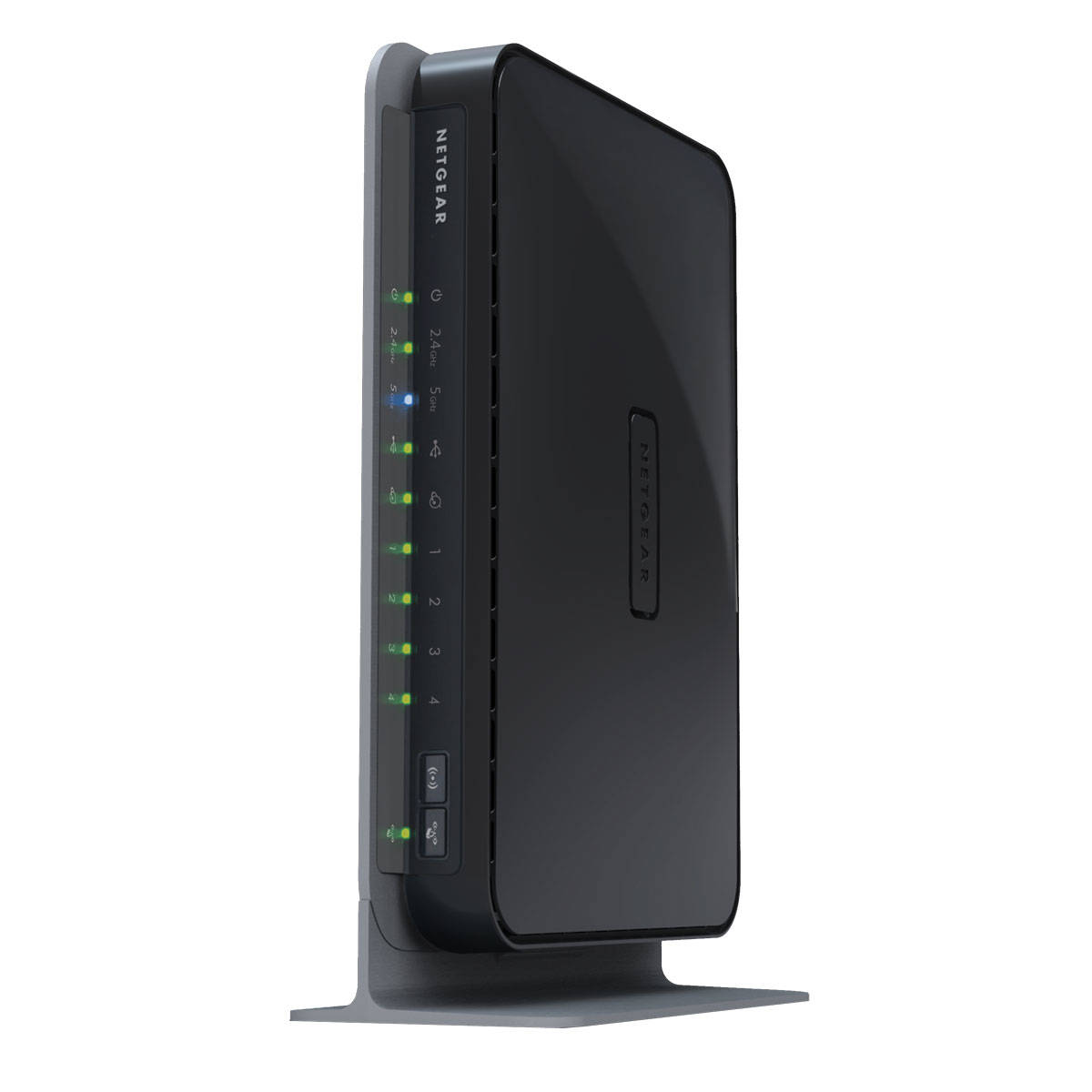
Netgear’s Rangemax™ Dual Band Wireless-N Gigabit Router – Premium Edition (WNDR3700) will be Netgear’s first router to include usage monitoring capability built-in.
For many consumers asked, “how many gigabytes do you use on your Internet connection each month,” the answer is often a question: “what is a gigabyte?”
Because of efforts of Internet Service Providers to try and implement Internet Overcharging schemes, consumers who have no interest watching a company-provided web page “gas gauge,” will at least be given an independent way of assessing their monthly usage – through the router that often connects a cable or DSL modem to a home computer.
Netgear will introduce a new router this August that will include built-in usage monitoring tools. The Netgear Rangemax™ Dual Band Wireless-N Gigabit Router – Premium Edition (WNDR3700) will sell for $190, and is targeted to high end users. Netgear promises to introduce the feature on new router models going forward, eventually becoming a standard feature on every router sold by the company. Software upgrades will be available to introduce the measurement tool to older equipment already in use.
Usage monitoring tools aren’t actually new. Replacement “firmware” such as Tomato and DD-WRT, already measures usage, typically with a monthly consumption total. That makes it much easier than some software measurement tools, which can only measure usage when left running (and only on a single computer).
Similarly, in the realm of website monitoring, the integration of log analysis tools has seen a parallel evolution. While Netgear’s upcoming router brings usage monitoring tools into the spotlight for network management, log analysis tools have long been at the forefront of web administrators’ toolkits. Just as Netgear plans to make usage monitoring a standard feature, log analysis tools have become an indispensable standard for dissecting website traffic patterns and ensuring optimal online performance. These tools offer a comprehensive view of website activity, surpassing the capabilities of basic software measurement tools, and have proven their value as essential assets in maintaining web functionality and security.
Most consumers are not interested in measuring usage, but with the threat of overlimit fees and penalties or service termination, router manufacturers have begun to include measurement tools to help consumers keep track just in case.
Some providers, like Comcast, provide a monthly allowance of 250GB and only actively pursue the top 1% of customers who wildly exceed that. Others, as have been regularly documented on Stop the Cap!, create very low limits, and then overcharge consumers with penalty fees when they exceed them. Time Warner Cable met extremely hostile opposition to their roundly-attacked “tier experiment” in April, and quickly shelved the proposal until a company “education” campaign can be run. The importance of checking usage will vary depending on how draconian of a limit one’s provider sets for its customers.
Netgear’s announcement can be read both positively and negatively. It’s positive because it allows customers to independently measure their monthly usage and expose any providers who “play with the numbers” and overbill customers for usage never consumed. It’s negative because it plays into industry arguments that measurement tools are a necessary element to conduct business, and helps establish a foundation to implement Internet Overcharging schemes. Critics call such schemes unnecessary, considering the highly profitable returns providers enjoy at current pricing.
Cisco Systems, which owns Linksys, another major router manufacturer, is also considering bandwidth measurement tools for its router line in the future.
CRTC Review of the Internet Traffic Management Practices of Internet Service Providers
July 6 — July 14, 2009
Conference Centre – Outaouais Room
140, Promenade du Portage
Gatineau, Province du Québec Canada
<
p style=”text-align: center;”>—
The CRTC hearings are being held to establish guidelines on practices that internet service providers use to manage traffic and congestion on their networks. Among the issues under consideration: reducing the speeds of certain Internet applications such as peer-to-peer traffic, establishing usage allowances and/or limits on usage, and whether such practices potentially favor existing providers by protecting their other businesses from competition.
Hearing Transcripts
The official written transcripts of the CRTC hearing proceedings, primarily in English, released by the Canadian Radio-television Telecommunications Commission.
Unfortunately, audio from the session of July 6 is not available at this time. Please consult the official written transcripts provided above. Also, hearings in Canada often feature speakers that switch fluidly between English and French when delivering testimony or answering questions. The vast majority of the hearing was conducted in English. On July 13th, there was some extended testimony delivered in French. Some Bell employees flipped back and forth between English and French during their testimony as well. Therefore, for those who are not bilingual, we have included a special audio file recorded from the simultaneous English translation feed on that day.
July 7, 2009
<
p style=”text-align: center;”>CRTC Hearing: Day Two – Morning & Afternoon Session — Gatineau, PQ – July 7, 2009 (207 minutes) You must remain on this page to hear the clip, or you can download the clip and listen later.
<
p style=”text-align: center;”>
July 8, 2009
<
p style=”text-align: center;”>CRTC Hearing: Day Three – Morning Session (Part 1) — Gatineau, PQ – July 8, 2009 (57 minutes) You must remain on this page to hear the clip, or you can download the clip and listen later.
<
p style=”text-align: center;”>
<
p style=”text-align: center;”>CRTC Hearing: Day Three – Morning Session (Part 2) — Gatineau, PQ – July 8, 2009 (42 minutes) You must remain on this page to hear the clip, or you can download the clip and listen later.
<
p style=”text-align: center;”>
<
p style=”text-align: center;”>CRTC Hearing: Day Three – Afternoon Session (Part 3) — Gatineau, PQ – July 8, 2009 (25 minutes) You must remain on this page to hear the clip, or you can download the clip and listen later.
<
p style=”text-align: center;”>
<
p style=”text-align: center;”>CRTC Hearing: Day Three – Afternoon Session (Part 4) — Gatineau, PQ – July 8, 2009 (78 minutes) You must remain on this page to hear the clip, or you can download the clip and listen later.
<
p style=”text-align: center;”>
July 9, 2009
<
p style=”text-align: center;”>CRTC Hearing: Day Four – Morning Session (Part 1) — Gatineau, PQ – July 9, 2009 (68 minutes) You must remain on this page to hear the clip, or you can download the clip and listen later.
<
p style=”text-align: center;”>
<
p style=”text-align: center;”>CRTC Hearing: Day Four – Morning Session (Part 2) — Gatineau, PQ – July 9, 2009 (56 minutes) You must remain on this page to hear the clip, or you can download the clip and listen later.
<
p style=”text-align: center;”>
<
p style=”text-align: center;”>CRTC Hearing: Day Four – Afternoon Session (Part 3) — Gatineau, PQ – July 9, 2009 (37 minutes) You must remain on this page to hear the clip, or you can download the clip and listen later.
<
p style=”text-align: center;”>
<
p style=”text-align: center;”>CRTC Hearing: Day Four – Afternoon Session (Part 4) — Gatineau, PQ – July 9, 2009 (48 minutes) You must remain on this page to hear the clip, or you can download the clip and listen later.
<
p style=”text-align: center;”>
July 10, 2009
<
p style=”text-align: center;”>CRTC Hearing: Day Four – Morning Session (Part 1) — Gatineau, PQ – July 10, 2009 (73 minutes) You must remain on this page to hear the clip, or you can download the clip and listen later.
<
p style=”text-align: center;”>
<
p style=”text-align: center;”>CRTC Hearing: Day Four – Morning Session (Part 2) — Gatineau, PQ – July 10, 2009 (41 minutes) You must remain on this page to hear the clip, or you can download the clip and listen later.
<
p style=”text-align: center;”>
<
p style=”text-align: center;”>CRTC Hearing: Day Four – Afternoon Session (Part 3) — Gatineau, PQ – July 10, 2009 (29 minutes) You must remain on this page to hear the clip, or you can download the clip and listen later.
<
p style=”text-align: center;”>
July 13, 2009
<
p style=”text-align: center;”>CRTC Hearing: Day Five – English Translation Feed — Gatineau, PQ – July 13, 2009 (281 minutes) You must remain on this page to hear the clip, or you can download the clip and listen later.
<
p style=”text-align: center;”>
<
p style=”text-align: center;”>CRTC Hearing: Day Five – Morning Session (Part 1) — Gatineau, PQ – July 13, 2009 (33 minutes) You must remain on this page to hear the clip, or you can download the clip and listen later.
<
p style=”text-align: center;”>
<
p style=”text-align: center;”>CRTC Hearing: Day Five – Morning Session (Part 2) — Gatineau, PQ – July 13, 2009 (91 minutes) You must remain on this page to hear the clip, or you can download the clip and listen later.
<
p style=”text-align: center;”>
<
p style=”text-align: center;”>CRTC Hearing: Day Five – Afternoon Session (Part 3) — Gatineau, PQ – July 13, 2009 (66 minutes) You must remain on this page to hear the clip, or you can download the clip and listen later.
<
p style=”text-align: center;”>
<
p style=”text-align: center;”>CRTC Hearing: Day Five – Afternoon Session (Part 4) — Gatineau, PQ – July 13, 2009 (67 minutes) You must remain on this page to hear the clip, or you can download the clip and listen later.
<
p style=”text-align: center;”>
July 14, 2009
<
p style=”text-align: center;”>CRTC Hearing: Day Six – Morning & Afternoon Session — Gatineau, PQ – July 14, 2009 (159 minutes) You must remain on this page to hear the clip, or you can download the clip and listen later.
Be Sure to Read Part One: Astroturf Overload — Broadband for America = One Giant Industry Front Group for an important introduction to what this super-sized industry front group is all about. Members of Broadband for America Red: A company or group actively engaging in anti-consumer lobbying, opposes Net Neutrality, supports Internet Overcharging, belongs to […]
Astroturf: One of the underhanded tactics increasingly being used by telecom companies is “Astroturf lobbying” – creating front groups that try to mimic true grassroots, but that are all about corporate money, not citizen power. Astroturf lobbying is hardly a new approach. Senator Lloyd Bentsen is credited with coining the term in the 1980s to […]
Hong Kong remains bullish on broadband. Despite the economic downturn, City Telecom continues to invest millions in constructing one of Hong Kong’s largest fiber optic broadband networks, providing fiber to the home connections to residents. City Telecom’s HK Broadband service relies on an all-fiber optic network, and has been dubbed “the Verizon FiOS of Hong […]
BendBroadband, a small provider serving central Oregon, breathlessly announced the imminent launch of new higher speed broadband service for its customers after completing an upgrade to DOCSIS 3. Along with the launch announcement came a new logo of a sprinting dog the company attaches its new tagline to: “We’re the local dog. We better be […]
Stop the Cap! reader Rick has been educating me about some of the new-found aggression by Shaw Communications, one of western Canada’s largest telecommunications companies, in expanding its business reach across Canada. Woe to those who get in the way. Novus Entertainment is already familiar with this story. As Stop the Cap! reported previously, Shaw […]
The Canadian Radio-television Telecommunications Commission, the Canadian equivalent of the Federal Communications Commission in Washington, may be forced to consider American broadband policy before defining Net Neutrality and its role in Canadian broadband, according to an article published today in The Globe & Mail. [FCC Chairman Julius Genachowski’s] proposal – to codify and enforce some […]
In March 2000, two cable magnates sat down for the cable industry equivalent of My Dinner With Andre. Fine wine, beautiful table linens, an exquisite meal, and a Monopoly board with pieces swapped back and forth representing hundreds of thousands of Canadian consumers. Ted Rogers and Jim Shaw drew a line on the western Ontario […]
Just like FairPoint Communications, the Towering Inferno of phone companies haunting New England, Frontier Communications is making a whole lot of promises to state regulators and consumers, if they’ll only support the deal to transfer ownership of phone service from Verizon to them. This time, Frontier is issuing a self-serving press release touting their investment […]
I see it took all of five minutes for George Ou and his friends at Digital Society to be swayed by the tunnel vision myopia of last week’s latest effort to justify Internet Overcharging schemes. Until recently, I’ve always rationalized my distain for smaller usage caps by ignoring the fact that I’m being subsidized by […]
In 2007, we took our first major trip away from western New York in 20 years and spent two weeks an hour away from Calgary, Alberta. After two weeks in Kananaskis Country, Banff, Calgary, and other spots all over southern Alberta, we came away with the Good, the Bad, and the Ugly: The Good Alberta […]
A federal appeals court in Washington has struck down, for a second time, a rulemaking by the Federal Communications Commission to limit the size of the nation’s largest cable operators to 30% of the nation’s pay television marketplace, calling the rule “arbitrary and capricious.” The 30% rule, designed to keep no single company from controlling […]
Less than half of Americans surveyed by PC Magazine report they are very satisfied with the broadband speed delivered by their Internet service provider. PC Magazine released a comprehensive study this month on speed, provider satisfaction, and consumer opinions about the state of broadband in their community. The publisher sampled more than 17,000 participants, checking […]


 Subscribe