Home » internet service providers » Recent Articles:

More Stealthy ‘Friends of AT&T’ Writing Duplicate, Company-Friendly Editorials on Telecom Regulation
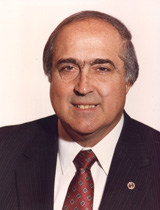
Otero

When a former labor leader suddenly starts advocating for the interests of AT&T and other super-sized telecommunications companies, even as AT&T’s unionized work force prepared to strike, the smell of Big Telecom money and influence permeates the air.

Jack Otero, identified in the Des Moines Register as “a former member of the AFL-CIO Executive Council and past national president of the AFL-CIO’s Labor Council for Latin American Advancement,” penned a particularly suspicious love letter to deregulation that might as well have been written by AT&T’s director of government relations:

[…]Industries — like broadband Internet — are thriving and creating innovations. Tossing a regulatory grenade into these businesses could wreck markets that create value for consumers and jobs for workers.

The United States is one of the most wired nations in the world. More than 95 percent of households have access to at least one wireline broadband provider, and the vast majority can connect at speeds exceeding 100 Mbps. And monthly packages start as low as $15. That means more families can go online to improve their job skills, look for work or help the kids with their school assignments.

More choices and higher speeds — the signs of a vibrant market — are the product of private investment, not public dollars. Internet service providers have invested over $250 billion in the last four years alone. This has created roughly half a million jobs laying fiber-optic and coaxial cable.

But some squeaky wheels are demanding heavy-handed regulations that would move our broadband Internet to the European model, where taxpayers have to subsidize outdated networks with slow speeds. Some want broadband providers to be required to lease their networks to competitors at discounted prices — as they do in Europe. But lawmakers in both parties agree that this policy, tried in the 1996 Telecommunications Act, failed miserably.

Others argue that broadband Internet providers should not be able to impose a small surcharge on the tiny percentage (less than 1 percent) of consumers who download hundreds of movies and tens of thousands of songs every month — effectively the data usage of a business. They say these fees discriminate against online video companies like Netflix. But that’s silly. More than 99 percent of users can watch plenty of Apple TV or Netflix without approaching the lowest data allotment. Without tiered pricing plans, the rest of us would have to underwrite these super-users.

Okay then.

Otero’s Fantasy World of Broadband sounds great, only it does not exist for the vast majority of Americans. Are most of us able to connect at speeds exceeding 100Mbps?

If you happen to live in a community served by a publicly-owned broadband provider Otero effectively dismisses, you can almost take this fact for granted.

Some of America’s most advanced telecommunications providers are actually owned by the public they serve in dozens of communities small and large. EPB Fiber, Greenlight, Fibrant, Lafayette’s LUS Fiber, among others, deliver super-fast upload and download speeds at very reasonable prices while the giant phone and cable companies offer less service for more money.

The only major telecommunications company with a wide deployment of fiber-to-the-home service is Verizon Communications.

You cannot easily buy residential 100Mbps service from Time Warner Cable, AT&T, CenturyLink, Frontier, FairPoint, or a myriad of other telecom companies at any price, unless you purchase an obscenely expensive business account. From the rest, 100Mbps service typically sets you back $100 a month.

Otero’s quote of affordable $15 broadband is not easy to come by either. It usually requires the customer to qualify for food stamps or certain welfare programs, have a family with school-age children, a perfect payment history, and no recent record of subscribing to broadband service at the regular price.

The only people who believe America is the home of a vibrant market for broadband service are paid employees of telecom companies, paid-off politicians, or their sock-puppet friends and organizations who more often than not receive substantial contributions from phone or cable companies. The fact is, the United States endures a home broadband duopoly in most communities — one cable and one phone company. They charge roughly the same rates for a level of service that Europe and Asia left behind years ago. Broadband prices keep going up here, going down there.

Simply put, Mr. Otero and actual reality have yet to meet. Consider his nonsensical diatribe about the impact of the “heavy-handed” 1996 Telecommunications Act, actually a festival of mindless deregulation that resulted in sweeping consolidation in the telecommunications and broadcasting business and higher prices for consumers.

Otero is upset that big companies like AT&T and Verizon originally had to open up their networks in the early 1990s to independent Internet Service Providers who purchased wholesale access at fair (yet profitable) prices. Those fledgling ISPs developed and marketed third-party Internet service based on those open network rates. Remember the days when you could choose your ISP from a whole host of providers? In some markets, this tradition carried forward with DSL service, but for most it would not last.

The telecommunications industry managed to successfully lobby the government and federal regulators to change the rules. Phone companies did not appreciate the fact they had to open their networks for fair access while cable operators did not. So in 2005, the FCC allowed both to control their broadband networks like third world despots. Competitors were effectively not allowed. Wholesale access, where available, was priced at rates that usually guaranteed few ISPs would ever undercut the cable or phone company’s own broadband product.

The lawmakers who believed open networks represented awful policy were almost entirely corporate-friendly or recipients of enormous campaign contributions from the telecom companies themselves.

So which market is actually on the road to failure?

The LCLAA couldn’t do enough to help AT&T swallow up competitor T-Mobile USA.

The American broadband business model is a firmly established duopoly that charges some of the world’s highest prices and has rapidly fallen behind those “failures” in Europe.

In the United Kingdom, BT — the national phone company, is required to sell access at the wholesale rates Otero dismisses as bad policy. As a result, UK consumers have a greater choice of service providers, and at speeds that are increasingly outpacing the United States. Nationally backed fiber to the home networks in eastern Europe and the Baltic states have already blown past the average speeds Americans can affordably buy from the cable company.

Even Canada requires Bell, the dominant phone company, to open its network to independent ISPs selling DSL service. Without this, Canadians would rarely have a chance to find a service provider offering unlimited, flat rate service.

Otero’s final, and most-tired argument is that data caps force “average” users to subsidize “heavy” users. In fact, as Stop the Cap! reported this week, that fallacy can be safely flushed away when you consider the largest ISPs pay, on average, just $1 per month per subscriber for usage, and that price is dropping fast. The only thing being subsidized here is the telecom “dollar-a-holler” fund, paid to various mouthpiece organizations who deliver the industry’s talking points without looking too obvious.

The Des Moines Register omitted the rest of Mr. Otero’s industry connections. We’re always here to help at Stop the Cap!, so here is what the newspaper forgot:

  • Mr. Otero is a board member of Directors of the U.S. Hispanic Leadership Institute (USHLI), a group funded in part by AT&T and Verizon;
  • He is the past president of the Labor Council for Latin American Advancement, a group that enthusiastically supported the anti-competitive merger of AT&T and T-Mobile USA;

Mr. Otero has a side hobby of penning nearly identical editorials with largely these same broadband talking points. One wonders what might motivate him into writing letters to the Des Moines Register, the Lexington Herald-Leaderthe Gainesville Sun, the Star-Banner, and the Ledger-Inquirer.

Otero may have a case for plagiarism, if he chooses to pursue it, against Mr. Roger Campos, president of the Minority Business RoundTable (the top cable lobbyist, the National Cable & Telecommunications Association is labeled an MBRT “strategic partner” on their website). Campos uses some of the exact same talking points in his own “roundtable” of letters to the editor sent to newspapers all over the place, including the Ventura County Star, the Leaf Chronicle, and the Daily Herald.

Canadians Still Stuck on Dial-Up: Hundreds of Thousands Go Without Broadband

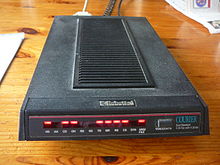
U.S. Robotics Courier dial-up modem

From the “It Could Be Worse”-Department, the Canadian Press reports hundreds of thousands of Canadians are still stuck in the dial-up world, either because they live too far away from a cable company, their local phone company will not extend DSL service to their home, or they cannot afford the high prices Internet Service Providers charge for the service.

The National Capital Free-Net, one of the oldest Free-Net dial-up networks, still has 3,600 users in the Ottawa area looking for low-cost or free access.

The broadband-less account for up to 366,000 Canadians still stuck in the Internet slow lane, with large concentrations in rural areas creating problems for a country that increasingly turns online for information, entertainment, and education.

While many consumers can recall the dial-up experience of a decade ago, today’s online world is replete with multimedia-rich advertising, complicated web pages, and other content that was never designed for anything less than a broadband connection.

CP found the Toronto Blue Jays’ official website features more than four megabytes of content, including pre-loading embedded video and graphics.  In all, nearly ten minutes passed before the website gradually loaded to completion.  Other comparatively “small” websites with a megabyte of content still took 4-5 minutes to finish, enough time to grab a cup of coffee.

As web pages become even more complex, dial-up users are now starting to avoid the web altogether, preferring to focus on e-mail and only the most essential online services. Some more tech-savvy users use content filtering software to block ads or shut off graphics, but that only goes so far. Today’s online banking and commerce sites often use plug-ins to handle transactions, which further complicates checking bank balances or paying bills online.

While users familiar with the time it takes to send complex images or sound files across a dial-up connection avoid including them in e-mail messages, broadband users don’t think twice.

That forces some dial-up users to discriminate.

[Ross Kouhi, executive director for the National Capital FreeNet] has a sister who lives in a rural area and until recently only had dial-up access. His family learned to leave her out of group emails when it came to sharing photos, he says.

“You always have to remember to not send the big pictures to the one sister, to save her the grief, because she would say it would take her all night to download a big pile of photographs,” Kouhi says.

“And she’d come back in the morning and they weren’t anything she wanted to see anyways.”

The problem will not get resolved until phone and cable companies broaden access to the Internet in more rural communities and lower the price for income-challenged consumers that cannot afford an extra $30 a month for broadband access. Without reform, a cross-section of Canada will continue to endure a digital divide.

ISP’s, Entertainment Industry Launch Copyright Clearinghouse, Sidestepping Judicial Process

The entertainment industry, in cooperation with the nation’s largest Internet Service Providers, joined forces to open a new copyright enforcement center that critics charge sidesteps judicial process, leaving consumers forced to prove they are innocent after they’ve been accused of being guilty.

On Monday, the Center for Copyright Infringement named its executive director and board, and intends to gradually begin serving as a clearinghouse for copyright infringement complaints brought by the nation’s music and movie companies.

CCI has representatives from the Motion Picture Association of America (MPAA), the Recording Industry Association of America (RIAA), AT&T, Cablevision, Comcast, Time Warner Cable, and Verizon Communications collectively working to streamline enforcement of copyright law and control Internet piracy.

Often known as the “Six Strikes Plan,” CCI participants will coordinate piracy notification warnings for suspected illicit downloads of copyrighted content from peer-to-peer file sharing networks.  Hollywood studios and recording labels will identify those they suspect are involved in illegal file swapping and participating ISPs will notify customers tied to the infringing IP addresses up to six times before reducing a customer’s Internet speed, temporarily disabling the account, or terminating service.

The CCI hopes to bypass the court system and adopt a self-regulation, “in-house” approach to Internet piracy.  Some courts have proven increasingly-reluctant to hand over identifying information to copyright holders based on the sometimes-flimsy evidence of illegal downloading included in supporting affidavits.  Judges in some courts have also become leery of a cottage industry of “settlement specialists” that threaten expensive litigation for alleged copyright infringement that can be resolved with a quick cash settlement.

Judge James F. Holderman of the Northern District of Illinois ruled against one litigant who demanded ISPs divulge the identities of every participant exchanging bits and pieces of a copyrighted work in a so-called “BitTorrent swarm,” because they were involved in a conspiracy.  Holderman dismissed that argument.

Such tactics have allowed some settlement specialists to demand settlement payments from a larger group, substantially boosting revenue at little cost to them.

CCI’s executive director Jill Lesser says laws no longer favor copyright holders.

“While laws that protect intellectual property remain strong and enforcement efforts continue, technology has tipped the balance away from the interests of most creators and artists,” Lesser said. “The ease of distribution of copyrighted content has helped create a generation of people who believe that all content should be free.”

CCI’s so-called “Copyright Control System” will bypass the courts entirely, as entertainment companies coordinate directly with major ISPs agreeing to enforce copyright compliance.

Lesser says consumers will still have a fair process to challenge notices of alleged infringement.  But it will cost at least $35 for consumers to argue their case.  Additionally, as a self-regulated, industry-controlled body, consumers’ rights of appeal are undetermined.  The arbitration process will be administered through the American Arbitration Association.

Why would ISPs want to become involved in a copyright control regime?  To reduce their own expenses and legal risks.  Copyright holders and their agents have peppered service providers with compliance and identification demands for years, creating full time positions processing the paperwork.  By adopting a clearinghouse and developing a streamlined process to handle complaints, service providers can cut costs and avoid possible litigation against themselves.

Still, both the entertainment industry and ISPs seem to be open to listening to consumer advocates.  Lesser was formerly involved with People for the American Way, a group sensitive to privacy rights.  Serving on the advisory board are Gigi Sohn from Public Knowledge and Jerry Berman, founder of the Center for Democracy and Technology.  Neither have direct authority over the group’s enforcement efforts, but Sohn told Ars Technica she hoped her involvement would give a voice to consumer interests and maintain transparency in the enforcement process.

North America Losing Broadband Speed Race: Former Eastern Bloc Scores Major Gains With Fiber

Phillip Dampier January 16, 2012 Broadband Speed, Community Networks, Competition, Consumer News, Editorial & Site News, Public Policy & Gov't Comments Off on North America Losing Broadband Speed Race: Former Eastern Bloc Scores Major Gains With Fiber

North America’s broadband rankings continue to take a beating at the expense of countries deploying fiber optic broadband.  While the United States and Canada cope with aging landline technology and an uncompetitive marketplace that tells consumers they don’t need fiber-fast broadband speed, countries like Bulgaria, Lithuania and Estonia are lighting up 50-100Mbps networks that often charge lower prices than North Americans pay for 1-3Mbps DSL.

Ookla, a global leader in broadband testing and web-based network diagnostic applications, reports that the best performing broadband networks for speed, value, and performance are increasingly in Europe and Asia.  While both the United States and Canada used to be among the world leaders in broadband infrastructure, that is no longer true.

Some examples:

  • The United States now scores 31st in average download speed, Canada is 33rd;
  • In upload speed, America now ranks 37th, Canada a woeful 69th;
  • Ookla’s Household Quality Index, which ranks packet loss and general reliability of home connections found Canada scoring 27th place, the United States 38th;
  • At a cost per megabit, neither the US or Canada offers very good value.  The USA ranked 29th ($4.95 per megabit), Canada 33rd ($5.85 per megabit);
  • Neither country does a great job delivering the speeds and service promised either.  The USA ranked 25th, Canada 32nd.

Ookla found that while speeds are rising in North America, they are not increasing nearly as fast as in other, higher-ranked countries.  Most of the speed gains in North America come from cable or limited fiber-broadband deployments like Verizon FiOS or community-owned fiber to the home networks.  Wireline ADSL service, which represented a larger proportion of home Internet connections in 2008, continues to lose ground to faster options from cable companies, community-owned broadband, and phone company fiber upgrades.  In eastern Europe, the Baltics, Russia and Ukraine, many of the dramatic boosts in broadband speed and quality come as a result of national fiber network upgrade projects.

While speeds in North America are gradually increasing, both the U.S. and Canada are being outpaced by many countries in Europe and Asia.

While providers in the United States and Canada often dismiss fiber as too costly, Ookla found fiber-based networks delivering some of the world’s best values in broadband.

For example, on a cost-per-megabit basis, Bulgaria’s new fiber networks deliver the world’s cheapest Internet service, at an average of just $0.64 per megabit.  The average broadband speeds in the country are now higher than 21/11Mbps.

Elion headquarters in Tallinn. Elion delivers fiber broadband to homes across Estonia.

Contrast that with average speeds in the United States (12.41/2.97Mbps) and Canada (11.95/1.70Mbps).  Other top scoring countries for cost-per-megabit include:

  • Romania $0.97 USD
  • Lithuania $1.11 USD
  • Ukraine $1.17 USD
  • Republic of Moldova $1.41 USD
  • Latvia $1.80 USD
  • Hungary $2.00 USD
  • Slovakia $2.04 USD
  • Hong Kong $2.26 USD
  • Russia $2.51 USD

In terms of download speed, Estonia’s investment in a national fiber network is now paying dividends, with a dramatic increase in national average broadband speeds to 50/28Mbps.  As new cities join Estonia’s fiber network, speeds take a dramatic upswing.  Contrast average speeds in Saue (101.03Mbps), Viimsi (98.98Mbps), Tallinn (69.80Mbps), and Võru (65.58Mbps) with ADSL-rich Pärnu (12.55Mbps), Paide (12.40Mbps), Rapla (8.93Mbps), and Valga (7.71Mbps).

It is much the same story in other fiber-rich countries, where broadband speeds far exceed the averages in the United States and Canada:

Look what happens to Estonia's broadband speed rankings when it switched on its national fiber broadband network.

  • Lithuania 31.65 Mbps
  • South Korea 31.44 Mbps
  • Latvia 25.42 Mbps
  • Sweden 24.62 Mbps
  • Romania 24.47 Mbps
  • Netherlands 24.36 Mbps
  • Singapore 22.94 Mbps
  • Bulgaria 21.12 Mbps
  • Iceland 20.53 Mbps

Despite all of the bad news, the cable industry’s trade publication Multichannel News tried to find victory in the jaws of defeat, noting things could be worse… if they ran traditional phone companies.

Cable operators delivered the fastest average broadband download speeds in 2011 — with major MSOs easily blasting by rival telco and satellite Internet services — according to data from independent testing firm Ookla.

For the full year, the six fastest residential Internet service providers in the U.S. based on average download speed were Comcast, Charter Communications, Cablevision Systems, Time Warner Cable and Insight Communications.

[…] Comcast and Charter delivered average download speeds of 17.19 Megabits per second, followed by Cablevision at 16.40 Mbps, Cox at 15.76 Mbps, TWC at 14.41 Mbps and Insight at 14.22 Mbps.

Verizon Communications fared better than its telco peers with an average download speed of 12.94 Mbps, thanks to FiOS Internet, its fiber-to-the-home service that provides up to 150 Mbps downstream. And overall, Verizon had the highest upstream speeds with an average of 7.41 Mbps. Still, the company’s legacy DSL services dragged down overall speeds.

Behind DSL were woefully slower speeds from the nation’s wireless ISPs (which include 3G broadband from large companies like Verizon Wireless and AT&T), and perennially last place satellite Internet.

Moffett

Despite repeated claims by providers that consumers don’t need fiber-fast broadband speeds, industry analyst Craig Moffett at Sanford Bernstein tells a different story:

“Technology adoption is creating a feedback loop that increasingly favors cable’s physical infrastructure,” Moffett wrote in a research note last month. “As more people are served by higher-speed connections, more and more applications are evolving to take advantage of them. Customers with lower-speed connections are increasingly being forced to upgrade to higher speed connections… or be left behind.”

The conclusion reached by Multichannel News columnist Todd Spangler:

“The relative broadband speeds of cable vs. telco isn’t merely an academic curiosity: Major providers are increasingly touting Internet performance in their marketing as they fight for consumers’ dollars.”

Unfortunately for the cable industry, although DOCSIS 3 upgrades have afforded dramatic increases in broadband download speeds, upload speeds lag behind.  Fiber to the home networks are best positioned to achieve victory in the global broadband race.  That is important not only because it delivers consumer dollars to the best provider in town, but fuels the further development of the digital, knowledge-based economy North America increasingly seeks to lead.

CRTC Ruling on Usage-Based-Billing Arrives at 4PM ET: Unlimited Internet Plans At Stake

Phillip Dampier November 15, 2011 Bell (Canada), Canada, Competition, Data Caps, Public Policy & Gov't, Video Comments Off on CRTC Ruling on Usage-Based-Billing Arrives at 4PM ET: Unlimited Internet Plans At Stake

Canadians will learn at 4PM whether their Internet future will be unlimited or rationed with usage-based-billing (UBB) plans that could potentially charge consumers for every website they visit.

The much-anticipated decision from the Canadian Radio-television and Telecommunications Commission (CRTC) comes months after last winter’s hearings on how Internet service is priced in Canada.  It pits the largest phone company in the country — Bell — against small independent providers that are fighting to stay in business offering customers unlimited usage plans.

Most independent Internet Service Providers in Canada ironically buy wholesale access directly from Bell.  These upstart competitors like Primus and TekSavvy deliver unlimited DSL service at attractive prices.  In fact, some Bell customers have found them attractive enough to switch providers.  Bell’s wholesale division indirectly competing with its own retail business has proved unsatisfactory to Bell management, who proposed repricing wholesale access to resemble what Bell charges its retail customers.  But more importantly, Bell would demand that their competitors impose usage-based billing themselves, which would make unlimited Internet service in Canada a thing of the past.  The CRTC initially agreed with Bell, which sparked outrage among independent providers and consumers who faced the prospect of paying inflated prices for Internet service with no unlimited usage options in sight.

The backlash brought a half-million Canadians together to demand an end to unfair Internet pricing through a petition from Openmedia.ca.  That in turn attracted the attention of Canadian politicians, including Prime Minister Stephen Harper and his government’s Industry Minister Tony Clement.  Clement told reporters on Feb. 3 if the CRTC didn’t reverse its approval, and fast, the government would probably overrule the commission.

A day later, outgoing CRTC chairman Konrad von Finckenstein said the commission would review its decision, the first in a series of backpedals in response to government pressure.

Even Bell, accustomed to having its way with the CRTC, has backtracked, now offering a compromise proposal that would charge independent ISPs 17.8c per gigabyte.  Many providers consider that excessive, too.

The CBC explains how Internet access is sold by independent providers in Canada.

Since the hearings, several marketplace changes have deflated some of Bell’s arguments that UBB was necessary to control over-eager users congesting their network.  Providers in western Canada — Shaw Cable and Telus, have dramatically boosted their respective usage caps, which call into question just how much of a congestion problem exists on Canada’s Internet networks.  The Canadian Network Operators Consortium, the voice of independent service providers, has offered its own proposal to charge wholesale customers based on peak network traffic.  MTS Allstream, itself a smaller player in Canadian telecom, proposed wholesale service be sold much like retail Internet in the United States — based on the speed/capacity of the service level selected.  If an ISP underpredicted usage, traffic would slow for everyone until the line was upgraded.

What ultimately gets approved by the CRTC may still be subject to government review, especially if the decision proves unpopular with consumers.  In a CBC online poll being conducted this afternoon, consumer sentiment is clear.  More than 91 percent of voters want the option of unlimited Internet access.

Whatever the CRTC decides will be reviewed by new Industry Minister Christian Paradis, who has managed to keep his head down and views to himself since he replaced Clement.  He may be hoping more than most that the CRTC will ultimately placate everyone, just so he doesn’t have to weigh in on the thorny issue.  But the CRTC’s track record representing consumers has been pretty dismal over the last few years, so we will not be surprised if the commission ultimately acquiesces to Bell’s substitute plan unaffectionately dubbed ‘GougeLite’ by Bell critics.

[flv width=”640″ height=”388″]http://www.phillipdampier.com/video/CBC Internet pricing ruling expected from CRTC 11-14-11.flv[/flv]

The CBC reports on today’s expected ruling from the CRTC and what it means for Canadian Internet consumers.  (3 minutes)

Search This Site:

Contributions:

Recent Comments:

Your Account:

Stop the Cap!