Home » FiOS » Recent Articles:

Cablevision’s Rate Freeze A Lesson for Cable Operators Trying to Raise Rates

Phillip Dampier March 5, 2012 Cablevision (see Altice USA), Comcast/Xfinity, Consumer News, Editorial & Site News, Public Policy & Gov't Comments Off on Cablevision’s Rate Freeze A Lesson for Cable Operators Trying to Raise Rates

Last week’s shocking development that Cablevision, a major cable operator in greater New York City, New Jersey and Connecticut is not going to raise rates in 2012 is bad news for other cable operators itching to raise rates once again this year.

Cablevision’s decision was made as the company continues to battle Verizon FiOS, the phone company’s fiber-to-home-service across its service area.  Verizon has been playing hardball with Time Warner Cable, Comcast, and Cablevision in its metro New York service area, offering up to $500 in rebates to sign new customers.  That level of vicious competition has been great for consumers, but lousy for Wall Street.

Investors were not pleased with Cablevision’s pass on rate hikes and its intention to invest a lot more in system upgrades than originally planned.  Wall Street loves increased revenue and hates it when companies spend it on their customers.

With all of this competition breaking out, Comcast and Time Warner Cable may be more than a little uncomfortable sitting down at an antitrust hearing later this month to discuss their new agreement with Verizon to cross-market cable and mobile service.  In return for the cable industry signaling they will never compete with Verizon’s mobile phone offering, Verizon has generously purchased the cable industry’s leftover spectrum and agreed to pitch cable TV subscriptions to Verizon Wireless customers.  With this new “non-aggression treaty,” will there still be a need to offer $500 gift cards and cut-rate prices to attract new customers?  Consumer groups think not.

A greater percentage of Cablevision’s service area is served by Verizon’s fiber network than either Time Warner Cable or Comcast.  Competition is forcing Cablevision to rethink the usual cable industry plan for financial success — force channels customers don’t want and raise rates up to 5% a year to pay for the “increased costs of doing business.”  Consumers are fed up with $150 monthly cable bills and will take Verizon up on an offer than cuts rates $50 a month and hands over up to $500 just for saying “yes” to FiOS.

Comcast Offers $300 Rebate for Comcast Cable + Verizon Wireless Service in Pacific Northwest

Phillip Dampier January 19, 2012 CenturyLink, Comcast/Xfinity, Competition, Consumer News, Frontier, Public Policy & Gov't, Verizon Comments Off on Comcast Offers $300 Rebate for Comcast Cable + Verizon Wireless Service in Pacific Northwest

Comcast’s controversial deal with Verizon Wireless to cross-promote cable and wireless service has come to fruition in Washington and Oregon with a new introductory offer pitching Comcast’s Xfinity cable with Verizon Wireless service that includes a $300 customer rebate.

The first appearance of the new joint marketing effort started this week in metro Seattle and Portland, and includes nearby communities.  Comcast employees are now staffing at least eight Verizon Wireless stores in Seattle, primarily to pitch the company’s cable service.

The most aggressive offer includes a Visa prepaid card rebate of up to $300 for new customers who agree to bundle Comcast’s phone, Internet, and television service with a new Verizon Wireless smartphone or tablet plan, assuming the two companies can find enough new customers who do not already subscribe to cable or mobile service.

Traditional telephone companies like CenturyLink and Frontier Communications, which provide service in the region, appear to be most at risk from the bundled service promotions.  CenturyLink provides landline telephone service and DSL bundled with satellite television.  Frontier does the same and also offers a limited part of the region FiOS fiber to the home service it acquired from Verizon Communications.

Should customers sign on to the bundled offer from Verizon and Comcast, there would be little reason to do business with either CenturyLink or Frontier.

Consumer advocates like Public Knowledge, along with smaller cell phone companies, satellite provider DirecTV, and other consumer groups have co-signed a letter to the Federal Communications Commission raising questions about the parameters of the cross promotion deal, which the companies and groups say “could be a significant realignment of the competitive landscape in these industries.”

North America Losing Broadband Speed Race: Former Eastern Bloc Scores Major Gains With Fiber

Phillip Dampier January 16, 2012 Broadband Speed, Community Networks, Competition, Consumer News, Editorial & Site News, Public Policy & Gov't Comments Off on North America Losing Broadband Speed Race: Former Eastern Bloc Scores Major Gains With Fiber

North America’s broadband rankings continue to take a beating at the expense of countries deploying fiber optic broadband.  While the United States and Canada cope with aging landline technology and an uncompetitive marketplace that tells consumers they don’t need fiber-fast broadband speed, countries like Bulgaria, Lithuania and Estonia are lighting up 50-100Mbps networks that often charge lower prices than North Americans pay for 1-3Mbps DSL.

Ookla, a global leader in broadband testing and web-based network diagnostic applications, reports that the best performing broadband networks for speed, value, and performance are increasingly in Europe and Asia.  While both the United States and Canada used to be among the world leaders in broadband infrastructure, that is no longer true.

Some examples:

  • The United States now scores 31st in average download speed, Canada is 33rd;
  • In upload speed, America now ranks 37th, Canada a woeful 69th;
  • Ookla’s Household Quality Index, which ranks packet loss and general reliability of home connections found Canada scoring 27th place, the United States 38th;
  • At a cost per megabit, neither the US or Canada offers very good value.  The USA ranked 29th ($4.95 per megabit), Canada 33rd ($5.85 per megabit);
  • Neither country does a great job delivering the speeds and service promised either.  The USA ranked 25th, Canada 32nd.

Ookla found that while speeds are rising in North America, they are not increasing nearly as fast as in other, higher-ranked countries.  Most of the speed gains in North America come from cable or limited fiber-broadband deployments like Verizon FiOS or community-owned fiber to the home networks.  Wireline ADSL service, which represented a larger proportion of home Internet connections in 2008, continues to lose ground to faster options from cable companies, community-owned broadband, and phone company fiber upgrades.  In eastern Europe, the Baltics, Russia and Ukraine, many of the dramatic boosts in broadband speed and quality come as a result of national fiber network upgrade projects.
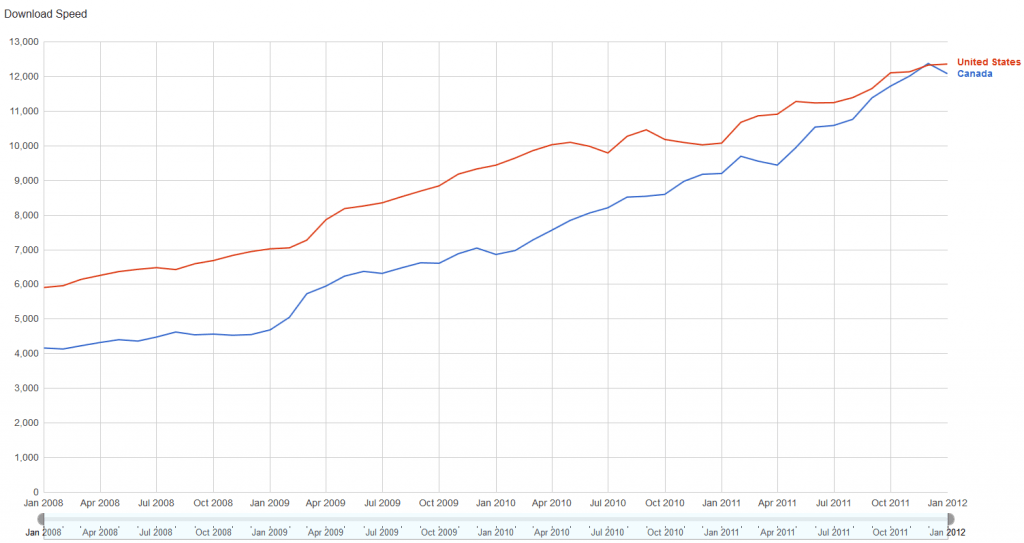
While speeds in North America are gradually increasing, both the U.S. and Canada are being outpaced by many countries in Europe and Asia.

While providers in the United States and Canada often dismiss fiber as too costly, Ookla found fiber-based networks delivering some of the world’s best values in broadband.

For example, on a cost-per-megabit basis, Bulgaria’s new fiber networks deliver the world’s cheapest Internet service, at an average of just $0.64 per megabit.  The average broadband speeds in the country are now higher than 21/11Mbps.

Elion headquarters in Tallinn. Elion delivers fiber broadband to homes across Estonia.

Contrast that with average speeds in the United States (12.41/2.97Mbps) and Canada (11.95/1.70Mbps).  Other top scoring countries for cost-per-megabit include:

  • Romania $0.97 USD
  • Lithuania $1.11 USD
  • Ukraine $1.17 USD
  • Republic of Moldova $1.41 USD
  • Latvia $1.80 USD
  • Hungary $2.00 USD
  • Slovakia $2.04 USD
  • Hong Kong $2.26 USD
  • Russia $2.51 USD

In terms of download speed, Estonia’s investment in a national fiber network is now paying dividends, with a dramatic increase in national average broadband speeds to 50/28Mbps.  As new cities join Estonia’s fiber network, speeds take a dramatic upswing.  Contrast average speeds in Saue (101.03Mbps), Viimsi (98.98Mbps), Tallinn (69.80Mbps), and Võru (65.58Mbps) with ADSL-rich Pärnu (12.55Mbps), Paide (12.40Mbps), Rapla (8.93Mbps), and Valga (7.71Mbps).

It is much the same story in other fiber-rich countries, where broadband speeds far exceed the averages in the United States and Canada:

Look what happens to Estonia's broadband speed rankings when it switched on its national fiber broadband network.

  • Lithuania 31.65 Mbps
  • South Korea 31.44 Mbps
  • Latvia 25.42 Mbps
  • Sweden 24.62 Mbps
  • Romania 24.47 Mbps
  • Netherlands 24.36 Mbps
  • Singapore 22.94 Mbps
  • Bulgaria 21.12 Mbps
  • Iceland 20.53 Mbps

Despite all of the bad news, the cable industry’s trade publication Multichannel News tried to find victory in the jaws of defeat, noting things could be worse… if they ran traditional phone companies.

Cable operators delivered the fastest average broadband download speeds in 2011 — with major MSOs easily blasting by rival telco and satellite Internet services — according to data from independent testing firm Ookla.

For the full year, the six fastest residential Internet service providers in the U.S. based on average download speed were Comcast, Charter Communications, Cablevision Systems, Time Warner Cable and Insight Communications.

[…] Comcast and Charter delivered average download speeds of 17.19 Megabits per second, followed by Cablevision at 16.40 Mbps, Cox at 15.76 Mbps, TWC at 14.41 Mbps and Insight at 14.22 Mbps.

Verizon Communications fared better than its telco peers with an average download speed of 12.94 Mbps, thanks to FiOS Internet, its fiber-to-the-home service that provides up to 150 Mbps downstream. And overall, Verizon had the highest upstream speeds with an average of 7.41 Mbps. Still, the company’s legacy DSL services dragged down overall speeds.

Behind DSL were woefully slower speeds from the nation’s wireless ISPs (which include 3G broadband from large companies like Verizon Wireless and AT&T), and perennially last place satellite Internet.

Moffett

Despite repeated claims by providers that consumers don’t need fiber-fast broadband speeds, industry analyst Craig Moffett at Sanford Bernstein tells a different story:

“Technology adoption is creating a feedback loop that increasingly favors cable’s physical infrastructure,” Moffett wrote in a research note last month. “As more people are served by higher-speed connections, more and more applications are evolving to take advantage of them. Customers with lower-speed connections are increasingly being forced to upgrade to higher speed connections… or be left behind.”

The conclusion reached by Multichannel News columnist Todd Spangler:

“The relative broadband speeds of cable vs. telco isn’t merely an academic curiosity: Major providers are increasingly touting Internet performance in their marketing as they fight for consumers’ dollars.”

Unfortunately for the cable industry, although DOCSIS 3 upgrades have afforded dramatic increases in broadband download speeds, upload speeds lag behind.  Fiber to the home networks are best positioned to achieve victory in the global broadband race.  That is important not only because it delivers consumer dollars to the best provider in town, but fuels the further development of the digital, knowledge-based economy North America increasingly seeks to lead.


MSG/Time Warner Cable Flap Heats Up: Bars Cancel Cable in Buffalo, Customers Want Refunds

With no progress in sight, stalled contract negotiations between a popular sports cable network and New York’s dominant cable TV company continues to test the patience of customers and sports fans across the state.

Scores of Buffalo-area sports bars have canceled their commercial cable service with Time Warner Cable, generating plenty of business for DirecTV, which still has MSG on the lineup.  Customers across New York have also started to demand a refund of the estimated $4.50 a month Time Warner Cable no longer pays MSG, but still collects from cable subscribers.

[flv width=”640″ height=”380″]http://www.phillipdampier.com/video/WGRZ Buffalo Time Warner and MSG Network plan meeting this week 1-8-12.flv[/flv]

Time Warner Cable and MSG’s dispute is ticking off Buffalo sports fans.  WGRZ visits area sports bars and talks with both sides in the dispute to learn the latest.  (4 minutes)

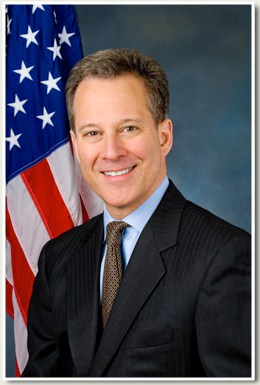
Now New York Attorney General Eric Schneiderman is brokering discussions between the two sides, in an effort to restore coverage of the Sabres, Rangers, and Knicks games all displaced from the Time Warner Cable dial.

“We have had constructive discussions with Time Warner and MSG Networks as part of an ongoing effort to facilitate progress in their talks,” said Schneiderman. “We are hopeful that the two parties will come to an agreement in short order.”

Schneiderman

So far, those negotiations seem to be going nowhere, and Time Warner released a statement stating they have not had any further discussions with the network.  The cable company has also hardened its position with respect to refunding customers for the lost networks.  While early attempts to win credit were successful, Time Warner representatives are now refusing to compensate customers for the loss of MSG.  Instead, they are offering a free month of their mini-pay sports programming tier, which must be requested to access.  After the first month, the cable company will bill customers $5.95 a month for the channels.

“That’s no help,” says Stop the Cap! reader Jean, a Sabres fan in Amherst, N.Y.  “Not only don’t we get our $4.50 back, they want to set us up to pay an extra $6 a month after the 30-day trial of their ‘compensation’ is up.”

Many of her friends who live in suburban Buffalo are dumping Time Warner in favor of Verizon FiOS.  Area sports bars are following.  At least a dozen have canceled their commercial service contracts with Time Warner Cable, many switching to satellite provider DirecTV.  Buffalo’s love affair with hockey is so intense, 5,000 people showed up last week at the First Niagara Center stadium to watch the Buffalo Sabres away game on large screen televisions hung above the rink.

Cashing in

Sports bars depend on lucrative sales during major sports events, so being without the Sabres proved unacceptable, a point driven home by MSG itself which continues to host free viewing parties at local establishments.  Buffalo wings were included for free.

Stop the Cap! reader Ruth Grunberg, who lives in Cortland, N.Y., has started a petition to demand the cable company refund subscribers the $4.50 a month effectively paid for channels they no longer receive.

“They recently raised rates 7% for the second time in a year and they no longer are sending this money to MSG,” Grunberg says. “They have no right to keep it and pay their bloated executives even more money. It is fraud and bait and switch to promise one thing and deliver another. They should offer a la carte service to solve a multitude of problems.”

The city of New York apparently agrees and continues efforts to pressure the cable company into compensating subscribers for the network loss.

[flv width=”640″ height=”500″]http://www.phillipdampier.com/video/WIVB Buffalo Bars Cancel Time Warner 1-10-12.flv[/flv]

WIVB in Buffalo reports area sports bars are canceling Time Warner Cable in droves as its programming dispute with MSG drags on with no end in sight.  (2 minutes)

Wall Street Encourages Verizon to Get Completely Out Of Landline/FiOS Business

Wall Street is encouraging Verizon Communications to sell off its landline telephone operations to clear a path for a potentially-profitable merger with British mobile phone company Vodafone Group Plc.

Analysts at Goldman Sachs Group are behind the research report, which suggests Verizon’s recent non-aggression treaty with Comcast and Time Warner Cable makes the sale of Verizon’s landline phone and FiOS fiber to the home network more likely. Verizon will earn a percentage of every cable TV/phone/broadband subscription sold, effectively making Verizon’s own wired network redundant. Potential buyers could include Frontier Communications, CenturyLink, or Windstream, which all have business plans that depend on landline networks fewer Americans are using.

Should Verizon clear away its legacy landline and FiOS networks, Goldman Sachs suggests, a merger with Vodafone would be a “clear fit” for the two companies.

“The remaining wireless and enterprise businesses would have faster growth and a clear fit with Vodafone’s assets and strategy, making it a more attractive merger partner,” Bloomberg News quotes from the report.

“Given that it no longer faces the threat of integrated cable competitors, Verizon could potentially spin off its remaining [landline] assets,” along with “large” pension and benefit liabilities, the Goldman analysts added.

Verizon would also eliminate its ongoing dispute with the two largest unions representing its landline workers — Communications Workers of America and the International Brotherhood of Electrical Workers.  Both unions are still trying to negotiate a new contract with Verizon after a brief, but contentious, summer strike. Verizon Wireless is almost entirely non-unionized.

Vodafone’s share price has been rising recently, perhaps anticipating a potential merger that would give Vodafone a stronger hand in the U.S. marketplace.

Verizon’s investment in its landline network, along with interest in expanding its well-regarded FiOS fiber to the home service, has remained stalled for the past few years.  Recently, the company indicated an interest in moving away from fiber optics to serve broadband customers, and rely on its wireless LTE 4G network instead.

Verizon’s new CEO Lowell McAdam comes from Verizon’s wireless division, and has not shared his predecessor’s enthusiasm for fiber upgrades.

Merger Partner?

While the prospect of an all-wireless future for Verizon may seem good for shareholders, consumers are likely to pay the price:

  1. The Justice Department is reviewing the antitrust implications of the non-aggression treaty between Verizon and its cable competitors;
  2. The sale of Verizon’s landline network to an independent provider could doom the company’s fiber optic network and limit rural Verizon customers to 1-3Mbps DSL;
  3. Verizon Wireless’ prices reflect its market share and lack of strong competition.  The company’s LTE wireless network, although fast, has suffered from reliability problems and is heavily usage-limited.  It may prove unsuitable as a home broadband replacement for rural customers;
  4. Reduced competition for telephone, video, and broadband will likely result in higher prices for existing cable subscribers, too.

Verizon is hardly the first phone company to ponder getting out of the phone business.  AT&T has been lobbying to rescind rural universal service requirements for years.  If successful, AT&T could abandon its rural landline network and provide customers with higher-priced cell phone service instead.

[flv width=”640″ height=”380″]http://www.phillipdampier.com/video/CWA Parody of Verizon Video.flv[/flv]

Verizon’s unionized workers are still fighting for a new contract, and released this parody video in response to a company-produced DVD mailed to union workers’ homes.  (3 minutes)

Search This Site:

Contributions:

Recent Comments:

Your Account:

Stop the Cap!