Home » Fiber to the x » Recent Articles:

Australia’s Move to Fiber-to-the-Neighborhood Service Provokes Defense of Copper Network

Phillip Dampier November 20, 2013 Audio, Broadband Speed, Community Networks, Competition, Consumer News, Data Caps, Public Policy & Gov't, Rural Broadband, Telstra, Video Comments Off on Australia’s Move to Fiber-to-the-Neighborhood Service Provokes Defense of Copper Network

NBNCo is responsible for the deployment and installation of Australia's fiber to the home network.

The Australian government’s proposal to launch a nationwide fiber to the home National Broadband Network (NBN) has been scrapped by the more conservative Liberal-National Coalition that replaced the Labor government in a recent election.

As a result, the Coalition has announced initial plans to revise the NBN with a mixture of cheaper technology that can result in faster deployment of lower speed broadband at a lower cost. If implemented, fiber to the home service will only reach a minority of homes. In its place,  cable broadband may be the dominant technology where cable companies already operate. For almost everyone else, technology comparable to AT&T U-verse is the favored choice of the new government, mixing fiber-to-the-neighborhood with existing copper wires into homes..

[flv]http://www.phillipdampier.com/video/ABC Malcolm Turnbull moves to put Coalitions stamp on NBN Co 9-24-13.mp4[/flv]

Australia’s new Communications Minister moves to put the Coalition government’s stamp on the National Broadband Network, replacing most of the promised fiber-to-the-home technology with a service comparable to AT&T U-verse. From ABC-TV (6:32)

telstraJust a year earlier Telstra, Australia’s largest phone company, was planning to decommission and scrap its copper landline network, considered “five minutes to midnight” back in 2003 by Telstra’s head of government and corporate affairs, Tony Warren. Now the country will effectively embrace copper technology once more with an incremental DSL upgrade, forfeiting speeds of up to 1,000Mbps over fiber in return for a minimum speed guarantee from the government of 24Mbps over VDSL.

The turnabout has massive implications for current providers. Telstra, which expected to see its prominence in Australian broadband diminished under Labor’s NBN is once again a rising star. The Liberal-National Coalition government appointed Telstra’s former CEO Ziggy Switkowski to run a “rebooted” Coalition NBN that critics are now calling Telstra 3.0. Communications Minister Malcolm Turnbull also installed three new members of the NBN’s governing board consisting of a Telstra executive, a founder of a commercial Internet Service Provider, and an ex-construction boss who left the NBN in 2011.

[flv]http://www.phillipdampier.com/video/ABC Malcolm Turnbull Outlines NBN Review 9-24-13.mp4[/flv]

ABC reports Communications Minister Malcolm Turnbull asked for the resignations of the entire NBN board, one of the first steps to re-envision the NBN under the Liberal-National Coalition’s party platform. Turnbull accused the former government of setting political targets for fiber broadband and was never forthcoming about the true cost and complexity of the ambitious fiber project. (8:50)
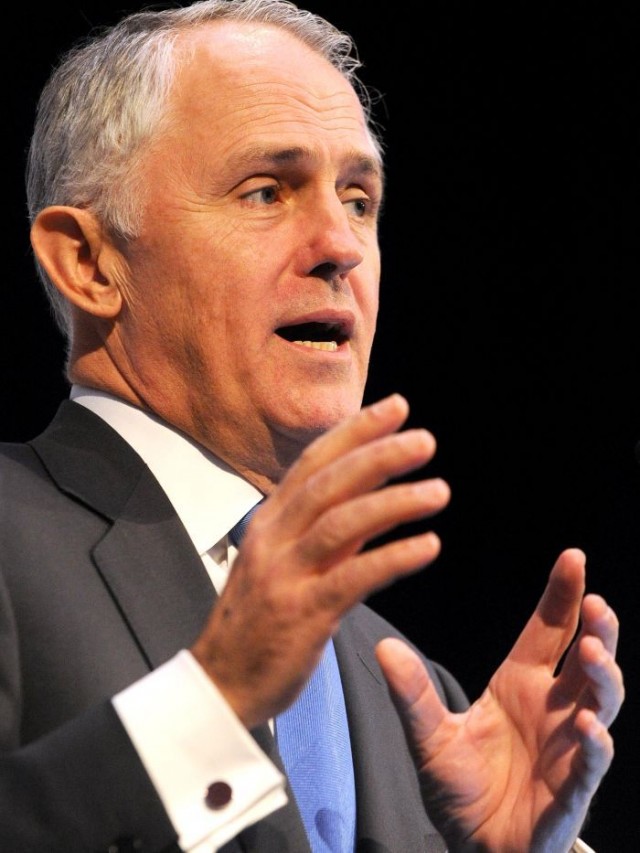
Turnbull

Turnbull

Some Australians complain that NBN’s proposed reliance on Telstra copper is a mistake. Telstra has allowed its landline infrastructure to decline over the years and many are skeptical they will ever see faster speeds promised over wiring put in place decades earlier.

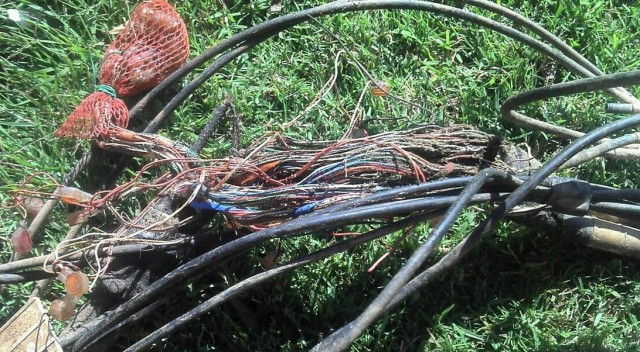
The NBN under the Liberal-National Coalition will depend heavily on two copper-based technologies to deliver speed enhancements: VDSL and vectoring. Both require short runs of well-maintained copper wiring to deliver peak performance. The longer the copper line, the worse it will perform. If that line is compromised, VDSL and vectoring are unlikely to make much difference, as AT&T has discovered in its effort to roll out faster U-verse speeds, much to the frustration of customers that cannot upgrade until AT&T invests in cleaning up its troubled copper network.

Coalition critics also warn the new government will foolishly spend less on a fiber-copper network today that will need expensive fiber upgrades tomorrow.

Turnbull isn’t happy with Australia’s mainstream media for lazy reporting on the issues.

ABC Radio reports that the Coalition’s approach to the NBN may be penny-wise, pound foolish. By the time the NBN rolls out fiber to the neighborhood and Telstra is required to invest in upgrades to its copper network to make it work, fiber to the home service could turn out to have been cheaper all along. (5:11)
You must remain on this page to hear the clip, or you can download the clip and listen later.

“I have to say that by and large the standard of reporting of technology and broadband by the mainstream media has been woeful,” Turnbull said. “If the Australian public are misinformed about these issues, it was in large part a consequence of the unwillingness of the mainstream media to pay any attention to what is really going on in the industry.”
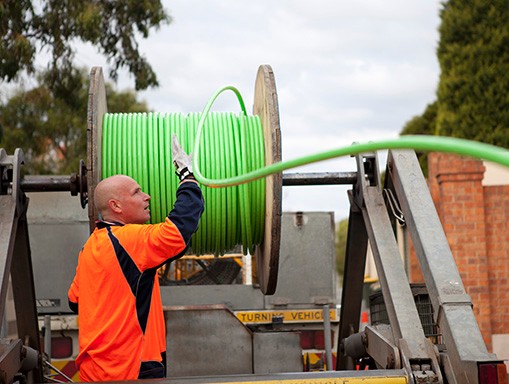
The promise of giber optic broadband may prove elsuive under the new giovernment.

The promise of fiber optic broadband may prove elusive under the new government.

With much of the new NBN dependent on Telstra’s copper telephone network, Stuart Lee, Telstra’s managing director of its wholesale division, rushed to defend the suitability of the same copper network Telstra was prepared to scrap under the last government.

Lee said he was especially annoyed with critics that call Telstra’s copper networking “aging.”

“The other thing that makes me cross when I hear it, and I see it a lot in the press is the talk of the aging copper network. It’s not. It’s not an aging copper network. It’s like grandfather’s axe; it’s had five new handles and three new heads. When it breaks, we replace the broken bit. So it’s much the same as it always has been and always will be,” Lee said. “It’s just an older technology, it’s not that the asset itself has deteriorated.”

When questioned about several recent high-profile mass service disruptions Australians experienced on Telstra’s landline copper network, Lee blamed the weather, not the network.

“They correlate to weather events, and the weather events we’ve had in the last [few years] is about five to six times the previous ones, so surprise surprise there is a lot more damage,” said Lee.

The new government has charged the Labor-run NBN with inefficiency, taxpayer-funded waste, and playing politics with broadband by giving high priority to fiber upgrades in constituencies served by threatened Labor MPs. Lee added NBN Co has played loose with the facts, declaring premises “passed” by the new fiber network without allowing customers to order service on the new network. That can become a serious problem, because the NBN plan calls for customers’ existing copper phone and DSL service to be decommissioned soon after the fiber network becomes available.
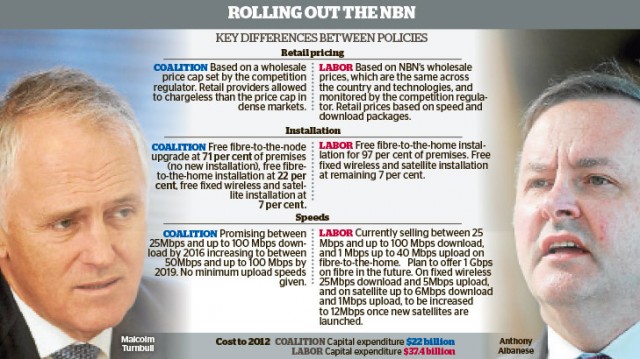
The Sydney Morning Herald  compares the last Labor government's broadband policy with the new Coalition government policy.

The Sydney Morning Herald compared the last Labor government’s broadband policy with the new Coalition government policy.

iiNet’s chief technology officer, John Lindsay said that the potential for disconnecting customers from the ADSL network while they still can’t order NBN service was “madness.”

The Labor government’s NBN has also been under fire for a pricing formula that includes a usage component when setting prices. Impenetrably named the “connectivity virtual circuit” charge, or CVC, the NBN charges retail providers a monthly connection fee for each customer and a usage charge that includes a virtual data allowance originally set at 30GB. Retail providers are billed extra when customers exceed the informal allowance. Although the government promised to reduce the charges, they effectively haven’t and likely won’t until 2017.

Lindsay called the CVC an artificial tax comparable to the Labor government’s carbon tax, and represents a digital barrier to limit customer usage.

“It’s a tax on packets,” Lindsay said.

[flv]http://www.phillipdampier.com/video/ABC NBN Copper 11-19-13.mp4[/flv]

Tasmanian residents complain NBN Co’s new fiber network is claimed to be available, but actually isn’t in many neighborhoods now scheduled for disconnection from Telstra’s copper landline and DSL network. (2:17)
Legislators Seek $10 Million ‘Incentive’ for Comcast Broadband Expansion in Rural Massachusetts

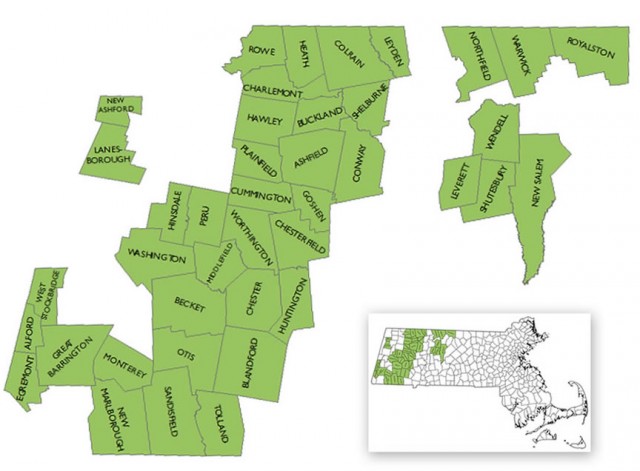
On August 13th, 2011, The WiredWest Cooperative was officially formed by charter member towns. All member towns passed two town votes to form a Municipal Light Plant, under Massachusetts General Laws Chapter 164. This step is required to join the Cooperative as a voting member. Towns shown below are official voting members of the WiredWest Cooperative. The town of Montgomery has also recently become a member. Requirements for new towns including being contiguous and directly accessible by road from another WiredWest member town, and less than 50% served by cable broadband. New members also must be voted in by a majority of the Board of Directors.

The WiredWest Cooperative
Towns shown above are official voting members of the WiredWest Cooperative. The town of Montgomery has also recently become a member. Requirements for new towns including being contiguous and directly accessible by road from another WiredWest member town, and less than 50% served by cable broadband.

Although plans to offer publicly owned fiber to the home service in 42 western Massachusetts communities are moving forward, a proposed $10 million taxpayer-funded incentive to encourage Comcast to expand cable service in western Massachusetts could mean the cable giant might get to some of those communities first.

Reps. Stephen Kulik (D-Worthington), Paul Mark (D-Cuba) and Sens. Stanley Rosenberg (D-Amherst) and Benjamin Downing (D-Pittsfield) have filed an amendment to Gov. Deval Patrick’s $40 million community broadband bond bill requesting a $10 million incentive be included to underwrite Comcast’s expenses to expand cable service into areas the company has long declared unprofitable.

“It’s challenging, because you cannot overbuild a new broadband network where there is existing service,” Kulik told The Recorder. “What we’re proposing is to add language to this bill, to provide incentive money to expand cable service.  The partial cable towns aren’t eligible for federal funds. Carving out a way to reach out to these towns and extend cable seems a better way to do this.”

The dozens of communities participating in the WiredWest community broadband consortium have waited years for better broadband service. Rural western Massachusetts has been largely bypassed by Verizon, which only offers limited DSL service to some customers. Dominant cable provider Comcast primarily serves denser neighborhoods in selected towns.

Life is particularly complicated for the handful of communities that have some service from Verizon and/or Comcast, because almost all federal broadband grants are available only to communities that don’t have Internet access. These partially served areas, dubbed “cable towns,” are frustrated by government grants that only direct funding to areas where no service is available and are on the receiving end of endless complaints from local residents suffering broadband envy, knowing a neighbor up the street has had cable service for 30 years while many others are left in limbo.

Kulik

Kulik

In August, Chris Saner of Huntington told the newspaper Comcast’s cable line ends 1.4 miles down the road from his house. The cable company would be happy to extend service to the roadway in front of his home for $24,000. If Saner had to sell his home, that investment might be mandatory to help find a buyer. Saner should know, as he works in real estate. Prospective buyers tell him, “don’t even show me anything where there’s no cable.”

Broadband access has become so critical, some don’t care whether they get it from WiredWest’s future fiber network or Comcast’s coax.

Fiber broadband “is lobster and filet mignon. Cable is hamburger, but give us hamburger —we’re starving out here,” Saner said.

The $10 million proposal from the four Massachusetts Democrats could bring faster cable Internet service for some residents, but could also potentially undercut fiber access down the road.

Comcast isn’t likely to expand service on its own, citing Return On Investment formulas that make expansion unprofitable. A $10 million incentive could resolve some of those cost concerns, but critics call it corporate welfare.

Robbie Leppzer, a Wendell documentary filmmaker who has been involved in the struggle to improve broadband in western Massachusetts for years, suggests that taxpayer funds would be better spent in the public sector, “where towns and their residents have more say in the process.”

Comcast-Logo“Personally, I would love to see a nonprofit, community-based solution because it would be a more effective use of money, and it would keep it in the fiber-optic realm,” Leppzer told the newspaper. “While [coaxial cable] may be adequate for now, it will not meet the needs of the 21st century.”

Ironically, western Massachusetts may eventually get the fastest Internet speeds in the state from the Massachusetts Broadband Institute’s $71.5 million middle-mile network, now 95 percent complete. MBI’s priority is to build the regional fiber network and provision it for institutional customers including municipal buildings, schools, hospitals, libraries, fire and police departments. Once complete, the network’s second phase involves expanding access to the public.

MBI-MTC-logo@1xThe WiredWest consortium will be the public-facing part of the project, responsible for marketing high-bandwidth, affordable Internet, phone, high-definition television services and ancillary services to residents and businesses. WiredWest wants to build a 1,952-mile fiber-to-the-home network off MBI’s regional fiber backbone and institutional network.

munifiberOne of the most common questions from eager would-be customers is exactly when the fiber network will be finished and open for business to the public. Funding remains the biggest impediment. The cost of wiring residents for fiber service across the 42-town consortium ranges from $70 million to $130 million. It’s a substantial sum for small communities to cover, but the project does enjoy economy of scale that could ultimately save taxpayer dollars.


In Leverett, which has been building a fiber-to-the-home network on its own, the price tag for the 1,900 residents is $3.6 million — the amount of the bond secured to launch the project. Leverett residents will cover the costs of the fiber network through a tax increase that will amount to $295 a year over 20 years for a home assessed at $278,700.

The state can continue to budget about $40 million annually to gradually connect residents to the WiredWest fiber network or find Comcast expansion a better choice at a quarter of the price in some communities. It could even fund both. For some elected officials, getting broadband to communities using any means necessary is the primary goal. Downing thinks the western half of the state has waited long enough for broadband, noting the improvement initiative started in 2008. He wants the project finished before Patrick leaves office.

“We should all recognize that 18 months from now is the end of this administration,” Downing said. “And there is no guarantee that the next governor will share the same commitment for this project.”

[flv]http://www.phillipdampier.com/video/Viodi Broadband – Unique to Each Locale 11-13-13.mp4[/flv]

The western Massachusetts middle-mile/fiber to the home project is being developed in cooperation with Axia Technology Partners, a consulting, engineering, and construction firm. Tim Scott talks to Viodi.tv about Axia’s role as the operator for the Massachusetts community network. (7:45)

Time Warner Cable Announces TWC Max: Feast for Some, Famine for Everyone Else

Next generation cable or a spray-on solution to a really bad quarter.

Next generation cable or a spray-on solution to a really bad quarter?

Time Warner Cable has a plan for multi-gigabit broadband speeds over a state of the art network that, for the first time, might include fiber to the home service.

TWC Max is Time Warner Cable’s code name for selected markets where customers will be given first class treatment and provided what incoming CEO Rob Marcus calls “best-in-class reliability and service.”

Marcus made it clear in a conference call to investors this morning that TWC Max will only be available in specially chosen markets, most likely those facing intense competition from Google Fiber (Austin, Kansas City), Verizon FiOS (New York, parts of Dallas, etc.) or upgraded AT&T U-verse.

TWC Max might also be offered in cities where community-owned fiber-to-the-home providers best TWC’s broadband speeds and prices. North Carolina, in particular, would be a logical choice as Time Warner Cable recently acquired DukeNet, a major commercial fiber broadband provider headquarted in Charlotte, also a major hub for Time Warner Cable’s data services. Wilson, Salisbury, Mooresville, Davidson and Cornelius are all served by publicly-owned broadband providers.

Beginning next year and over the next several years, those chosen will get major broadband speed upgrades — up to several gigabits, totally new customer equipment, and an all-digital experience.

“We will replace modems with state-of-the-art DOCSIS 3 modems and advanced wireless gateways, so we can meaningfully increase broadband speeds,” said Marcus. “And by the way, we’re not talking about tweaks here but rather quantum changes to our speed tiers. We’ll also replace standard definition and older HD set-top boxes and roll out new DVRs, better user interfaces and more advanced versions of our TWC TV apps to fundamentally improve the video experience.”

If the competition is DSL, you may have a really long wait to be considered a TWC Max city.

If the competition is DSL, you may have a really long wait to be considered a TWC Max city.

Marcus added that in some mixed business/residential areas, fiber to the home service is increasingly possible because of declining costs and pre-existing fiber infrastructure already serving commercial customers and cell towers.

But Marcus was quick to stress that his philosophy about upgrades is to provide them in focused markets, not share them with every city where Time Warner Cable provides service.

“The goal here is, really, to fundamentally change the customer experience in a given market, said Marcus. “So rather than spread our efforts like peanut butter throughout the footprint, I’m very anxious to deliver a complete experience.”

“That means not only going all-digital but also ensuring that we have state-of-the-art modems in every customer’s home, ensuring that they have the best video and that the overall experience is really optimal,” Marcus added.

“So we’re going to concentrate market by market rather than take individual components and run them through the entire footprint.”

So what are the chances your city will be designated a TWC Max target area?

After reviewing the transcript for this morning’s conference call,  Stop the Cap! has created this handy-dandy, simple to use guide:

  • If your community has or was chosen for Google Fiber: A VIRTUAL CERTAINTY!
  • If your community is served by Verizon FiOS or AT&T’s Next Generation U-verse: EXCELLENT
  • If your community has a fiber to the home provider competing with Time Warner Cable: VERY GOOD
  • If your community is served by copper-based DSL from the phone company with no prospect of getting U-verse or FiOS: WHEN PIGS FLY!

VDSL2 Vectoring and G.Fast: “Pixie Dust” or Pathway to Gigabit Copper?

Phone companies looking for a cheap way to increase broadband speeds are turning away from fiber optics and towards advanced forms of DSL that don’t bring cost objections from shareholders.

Whether your provider is AT&T or an ISP in Europe or Australia, financial pressure to improve broadband on the cheap is fueling research to wring the last kilobit out of decades-old copper phone wiring.

Alcatel-Lucent suggests VDSL2 Vectoring is one such technology that can enable download speeds up to 100Mbps using noise-cancelling technology to suppress interference.

Print

But the advice doesn’t impress fiber optic fans who suggest any reliance on deteriorating copper phone lines simply postpones an inevitable fiber upgrade that could come at a higher cost down the road.

VDSL2 Vectoring and G.Fast are only as good as the copper wiring that extends to each customer. Up to 45 percent of North American wire pairs are in some state of disrepair.

VDSL2 Vectoring and G.Fast are only as good as the copper wiring that extends to each customer. Up to 45 percent of North American wire pairs are in some state of disrepair.

Vectoring has been described as “pixie dust” by Australia’s former Communications Minister Stephen Conroy. Conroy was overseeing Australia’s switch to fiber service as part of the National Broadband Network. But a change in government has scrapped those plans in favor of a cheaper fiber to the neighborhood broadband upgrade advocated by the new Communications Minister Malcolm Turnbull that resembles AT&T’s U-verse.

“Malcolm can sprinkle pixie dust around and call it vectoring and he can do all that sort of stuff but he cannot guarantee upload speeds,” Conroy told Turnbull.

As with all forms of DSL, speed guarantees are extremely difficult to provide because the technology only performs as well as the copper wiring that connects a neighborhood fiber node to a customer’s home or office. Upload speeds are, in practical terms, significantly slower than download speeds with VDSL2. Turnbull expected download and upload speeds on Australia’s VDSL2 network to be around a ratio of 4:1, which means a customer who has a download speed of 25Mbps per second would receive an upload speed of around 6Mbps.

In the lab, VDSL2 Vectoring delivers promising results, with speeds as high as 100Mbps on the download side. DSL advocates are excited about plans to boost those speeds much higher, as much as 1,000Mbps, using G.Fast technology now under development and expected in 2015. VDSL2 Vectoring and G.Fast both require operators to minimize copper line lengths for best results. Unfortunately, dilapidated copper networks won’t work well regardless of the line length, and with many telephone companies cutting back upkeep budgets for the dwindling number of customers still using landlines, an estimated 15-45 percent of all line pairs are now in some state of disrepair.

Assuming lab-like conditions, G.Fast can deliver 500Mbps over copper lines less than 100 meters long and 200Mbps over lines between 100 and 200 meters in length.

G.Fast also allows for closer symmetrical speeds, so upload rates can come close or match download speeds.

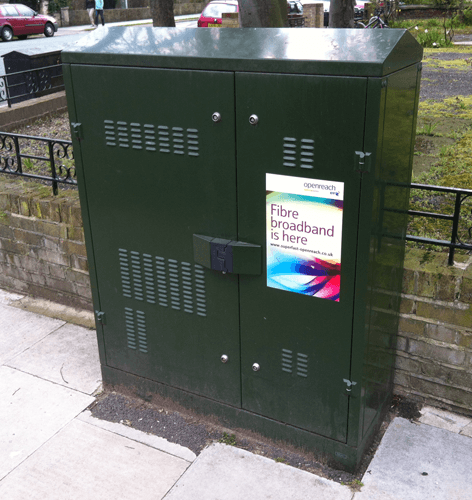
This cabinet houses the connection between the fiber optic cable and the copper phone wiring extending to dozens of customers.

This cabinet houses the connection between a fiber optic cable and copper phone wiring.

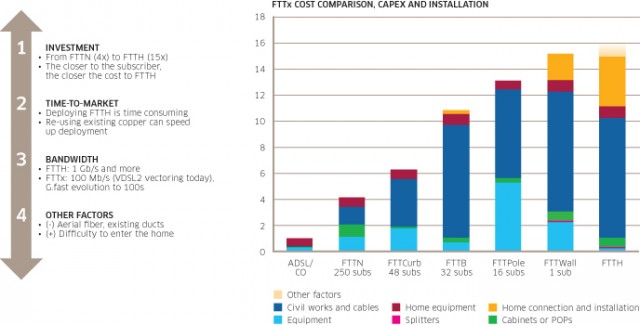
Providers prefer the copper-fiber approach primarily for cost reasons. There are estimates deploying a G.Fast-capable VDSL service to a home would cost around 70 percent less than fiber to the home service. Workers would not need to enter customer homes either, offering less-costly self-install options.

Telekom Austria and Swisscom are among providers committed to launching the technology. Both countries are mountainous and have many rural areas to serve. Fiber rich providers are also looking at the technology for rural customers too costly or too remote to service with fiber.

Critics question the real world performance of both VDSL2 Vectoring and G.Fast on compromised copper landline networks. Decades of repairs, deteriorating insulation, corroded wires, water ingress, and RF interference can all conspire to deliver a fraction of promised speeds.

Many critics also point to the required aggressive deployment of fiber/VDSL cabinets — unsightly and occasionally loud “lawn refrigerators” that sit either in the right of way in front of homes or hang from nearby utility poles. To get the fastest possible speeds, one cabinet may be needed for every four or five homes, depending on lot size. Australia’s VDSL network, without Vectoring or G.Fast requires at least 70,000 cabinets, each powered by the electric grid and temporary backup batteries that keep services running for 1-2 hours in the event of a power failure. The batteries need to be decommissioned periodically and, in some instances, have caused explosions.

The costs of electric consumption, backup batteries, infrastructure, and maintenance of copper lines must be a part of the cost equation before dismissing fiber to the home as too expensive.

Two Companies Compete With Gigabit Broadband Offers on Remote Isle of Jersey

Phillip Dampier October 24, 2013 Broadband Speed, Community Networks, Competition, Consumer News, Public Policy & Gov't, Rural Broadband, Video Comments Off on Two Companies Compete With Gigabit Broadband Offers on Remote Isle of Jersey

gigabit jerseyMore than 5,000 residents and businesses living on the island Bailiwick of Jersey now have a choice of two Internet Service Providers – both supplying gigabit fiber optic broadband.
Jersey Telecom, a government-owned provider, has been removing obsolete copper wiring and replacing it with fiber to the home service that should reach the entire island by 2015. The fiber network is open to all competitors. JT charges £59.99 ($97.25) per month for gigabit speeds, but now caps usage at just 100GB a month. Overlimit fees are around 50c per GB between the hours of 8am-midnight. Usage is unlimited during off-peak hours.

In addition to JT, Jersey customers who live on the remote Channel Island, a British Crown Dependency off the coast of France, can now also choose Sure Jersey, a privately owned ISP that offers unlimited use plans.

The fiber optic network is spreading to other Channel Islands, with significantly populated parts of Guernsey set to receive a fiber upgrade next.

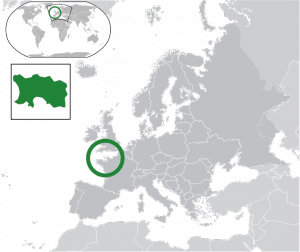
713px-Europe-Jersey.svgUsing traditional Return On Investment standards, Jersey would barely qualify for basic DSL service. The island has a population of just 100,000 residents, some spread far and wide in remote locations. Basic DSL service was supplied to customers in more densely populated communities, but speeds were often slow and congestion became a major problem, especially at night.

The local government determined Jersey’s broadband needs could best be met by upgrading to government-owned infrastructure that private businesses could lease to sell service. Much like public roads benefit private companies that use them to transport goods, JT’s fiber network is designed to help bolster the island’s digital economy.

Since the introduction of gigabit fiber, new digital startups have launched on the island and others have moved their digital businesses to the fiber-enabled island. FeelUnique, launched from Jersey, has now become Europe’s largest online beauty retailer, employing over 150. Other businesses on the island have launched software ventures for the health care and education markets, banking/investment products and services, and 3D printing ventures. Having a wide broadband pipe has helped anchor digital businesses to the island because moving elsewhere leaves many with little better than substandard DSL or an enormous price tag for a customized new fiber build.

[flv width=”640″ height=”380″]http://www.phillipdampier.com/video/JT Fiber Has Arrived 2013.mp4[/flv]

Residents of Jersey talk about how fiber broadband has changed their online experience. (2 minutes)

 [flv width=”640″ height=”380″]http://www.phillipdampier.com/video/Digital Jersey Limited – Vision 2014 from Digital Jersey.mp4[/flv]

Digital Jersey released this video showing the group’s vision on how to leverage gigabit fiber broadband to boost the island’s digital economy in 2014. (3 minutes)

Search This Site:

Contributions:

Recent Comments:

Your Account:

Stop the Cap!