Home » fiber optic network » Recent Articles:

Frontier Enjoys One-Sided Softball Interview to Sell West Virginians on Verizon-Frontier Deal

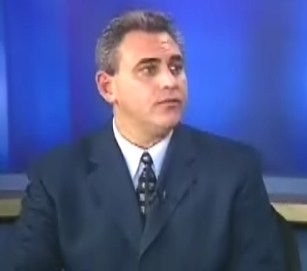
Bray Cary, Host of Decision Makers

Bray Cary, Host of Decision Makers

A network of West Virginia television stations spent 20 minutes this past Sunday airing a puff piece that could have been a video press release straight out of Frontier’s public relations department.  Decision Makers, a self-described “agenda setting” public affairs program ostensibly puts important people on the “hot seat” to answer “tough questions about where West Virginia is heading and how it will get there.”

Hardball this was not. Host Bray Cary, who also happens to serve as president and CEO of the television station group, presided over a one-sided softball tournament for Ken Arndt, Frontier’s new Southeast region chief in a 20 minute interview where the hardest question was likely posed off camera – ‘where would you like to do lunch?’

Decision Makers is seen across West Virginia on Cary’s statewide network of television stations — WOWK in Charleston-Huntington, WBOY in Clarksburg-Morgantown, WTRF in Wheeling and WVNS in Beckley-Bluefield.

The appearance of Arndt on the program comes the same week Frontier reportedly committed to purchasing significant advertising time on the stations, leading a Stop the Cap! reader who informed us about the program to ponder whether this Fluff-Fest was part of the ad deal.

Viewers on the public comment section for the show were unimpressed.

I can’t believe Mr. Cary didn’t ask the Frontier guy any hard questions. It was like a 20 minute commercial for Frontier, is that what you get for buying advertising with the station,” asked one.  “I believe that we would all like to hear and understand Frontier’s direct response to challenging questions from an involved, and knowledgeable speaker. We need to hear more then a branding speech,” said another.

The interview was loaded with misleading and occasionally false statements, often coming from the program host, who served as presiding cheerleader.  You can watch the program’s two segments, and then take a look at our reality check (and if an all-consumer volunteer website can manage this, why can’t Mr. Cary?)

[Video No Longer Available]

    Now that you’ve watched, let’s review the misleading statements, some made by Arndt, some by the host:

    “You guys are serving 35% of West Virginia – that’s a third of the phones.”

    Frontier may serve 35% of the landmass of West Virginia, but not 35% of the population, which is a very important distinction.  Verizon has the overwhelming majority of customers in the state, not the tw0-thirds this statement suggests.

    “I guess the only guys fighting you all right now are the Communications Workers of America union workers.”

    Ken Arndt - Frontier Communications

    Ken Arndt - Frontier Communications

    That, along with other dismissive comments made by Cary represent just how biased his interview was.  In many communities, citizens, businesses, utility commission staff, and yes – company workers are fighting this deal, because it’s bad news for every community facing a Frontier takeover.  Of course, Cary doesn’t have anyone on his program to refute his guest (or him for that matter.)

    “From a timelime perspective, and we’re actually finishing our [broadband expansion] engineering plan right now — by December 15th, my expectation is within the first 18 months we will make a substantial increase raising that 60% (of Verizon broadband penetration) exponentially and making a large investment and bringing in the individuals — the engineering and construction talent to be able to get it done as quickly as possible.”

    Frontier anticipates cutting $500 million in costs per year if the deal consummates, according to Bloomberg News. Job cuts at both Frontier and Verizon will create some of that savings, according to Maggie Wilderotter, Frontier’s CEO.  Customer service and field-technician jobs won’t be eliminated, she claims, but with a need for that level of cost savings, combined with the enormous debt Frontier will assume, where the resources to accomplish this expansion will come from is not explained.

    Frontier’s broadband expansion targets so-called “middle-mile” expansion.  That was precisely what was done in Rochester.  Fiber optics are used to connect various central offices and some remote network extenders (known as DSLAMs) to try and extend DSL service into more distant areas further away from the central office.  DSL speed is highly dependent on distance.  The further away you get, the lower the speed you can obtain.  Frontier plans to install limited amounts of fiber linking their offices in hopes of providing DSL service in areas that do not have access to it currently.  Unfortunately, every indication is that Frontier’s DSL in most parts of West Virginia will provide a maximum of 3Mbps, if you’re lucky.  In communities like Rochester, DSL service is marketed at 10Mbps, but as I’ve experienced myself, that speed really turned out to be 3.1Mbps living less than one-half mile from the city line.

    To many consumers, hearing talk about fiber optics may leave the impression they’ll have this type of connection in their home or business.  That’s highly unlikely.  Frontier fiber serves their own internal network.  Verizon FiOS serves you directly on a fiber optic cable.

    ‘In West Virginia in 2007 Frontier lost 2.7% of our access lines.  In Verizon’s footprint they lost 6.7%.  In 2008, Frontier’s lost just 2% while Verizon increased [their loss] to over 8%.  Frontier has put together unique packages that continually add value to landlines.  It’s through [Frontier’s] packaging, providing unique services and unique technologies [that the company limits losses].’

    Frontier is in the enviable position of focusing on rural markets long bypassed by the phone company’s biggest threats: cable and wireless competition.  Verizon is not.  The real reason for the dramatic difference in line loss is that Frontier customers often have no other choices for telecommunications services.  In West Virginia, cable does not serve many rural communities, so there is no “digital phone” competition to worry about.  Mobile phones in the most mountainous regions of the state can offer problematic service if it’s the only phone you have.  Verizon, which does face relentless cable television competition, pays the price in greater line loss.  Rural West Virginia has a much higher population of elderly residents, who are usually the least likely to drop traditional phone service.  In fact, no state has a higher population of the rural elderly except Florida.

    These factors afford Frontier more protection from line loss, not the so-called “unique services and unique technologies” the company only speaks about generally.

    Arndt also responds to a question about Frontier’s plans for fiber and other forms of “telco-TV” such as that provided by Verizon FiOS.  After noting the company does plan to move forward on an extremely limited basis by finishing FiOS projects already under construction, Arndt signals Frontier believes its status as a simple reseller of DISH satellite service somehow provides a superior solution to telephone company provided television.

    Not really.

    Who needs Frontier to sign up for DISH?  Customers can sign up directly themselves.  The advantage of “telco TV” really comes from the construction of the network to support it.  Both AT&T and Verizon have built television-ready networks which not only compete with cable, but also give their customers more and better broadband choices that Frontier cannot and will not offer consumers.  Frontier tries to valiantly spin its copper cable future by saying satellite television offers a better service, but in reality, being a DISH Network reseller hardly is in the same class as FiOS or U-verse.

    Residents in the affected areas need to consider whether they are tying themselves to a company that believes copper wire slow speed DSL is good enough for now and into the indefinite future, has no plans to directly compete with cable and other providers in delivering a wired telephone company cable service, will not build FiOS-like fiber optic networks in areas that one day could have been wired by Verizon, and will live with a company content with delivering “ubiquity” of service across all of its service areas, which in reality means large communities will suffer with lowest common denominator service, and rural communities will be lucky to get “good enough for you” broadband.

    Arndt’s comments about fiber connectivity in selected portions of their service area refer mostly to multi-dwelling units and new housing developments where service was provided more cost effectively through a shared fiber connection.  That’s not FiOS either.

    Color us unexcited about the prospect of Frontier’s ‘unique cable television via broadband service’ Arndt hints at.  That is almost certainly the new DISH set top box that can connect to your Frontier DSL service to stream on-demand television shows.  With Frontier’s 5GB Acceptable Use Policy for broadband, don’t expect to watch too much if and when they enforce the limit.

    FairPointAmong the most shameful segments of the 20 minute video press release Cary presides over is in the second half, when he asks and answers his own questions, spun in Frontier’s direction, about their ability to digest Verizon’s operations that dramatically dwarf Frontier’s current size and scope.  He’s even done “his research,” which suspiciously appears to be surfing through Frontier’s own talking points from their website and public relations efforts.  As far as Cary is concerned, Wall Street says they “like” the deal, and opposition to it is “a lot of noise.”

    Arndt responds that the opposition to the deal comes because of FairPoint Communications, which he says failed because of the complexities of integrating their billing systems.  As Stop the Cap! readers already know, FairPoint’s troubles went well beyond computer integration problems.  Arndt’s reasoning is akin to saying New Orleans drowned in Hurricane Katrina because a storm sewer up the street was clogged.  More than 20 news reports on this site alone document the entire sordid story.  On every level, FairPoint failed New England for a range of reasons:

    1. The enormous debt FairPoint was saddled with made it difficult for the company to spend the money necessary to maintain and grow their network and survive an economic downturn.  Frontier will also take on enormous debt during a challenging economy and claims it will spend millions to expand broadband service into rural areas where fewer potential customers mean a longer Return On Investment;
    2. FairPoint’s acquisition of Verizon New England involved more customers than FairPoint served nationwide before the buyout.  The exact same thing is true of Frontier in this deal;
    3. FairPoint’s earlier acquisitions were small, independent phone companies run with limited bureaucracy.  Verizon, and its predecessor Bell System businesses, have done things their own way for decades, making theoretical transitions doable on paper and chaotic in reality.  The exact same scenario exists with Frontier’s purchase of Verizon service areas;
    4. Poor service, unresponsive and overwhelmed customer service centers, insufficient investment, and broken promises plagued FairPoint’s New England adventure from day one.  Frontier risks repeating FairPoint’s mistakes, putting customers with no other options for telecommunications service at serious risk.

    Cary doesn’t have the insight or the interest in digging down into Arndt’s claims.  Maybe he forgot.  As far as Cary is concerned, everyone in West Virginia should just get familiar with the Frontier name.

    Of course, actual consumers aren’t invited on Decision Makers.  Nor are any groups opposed to the deal.  But West Virginians and others can be “decision makers” and choose a different path for their telecommunications future.  They can get on the phone and call their state representatives and tell them to oppose the deal.  They can also contact the state utility commission and file their own comments telling them this deal isn’t worth the risk — three bankruptcies out of three earlier deals.

    Even when playing this kind of softball, three strikes should mean you are out.

    Hong Kong Broadband Network Cuts Price in Half – 100Mbps Service for $13 A Month

    Phillip Dampier November 2, 2009 Broadband Speed, Competition, Video 9 Comments

    Hong Kong Broadband Network, the wholly owned subsidiary of City Telecom, has just slashed the price for its 100Mbps “bb100” fiber optic broadband service.  When a customer finds a friend willing to sign up, both will receive the broadband service for $13 US per month for 24 months, which represents a 50% discount for each customer.

    At this price, Hong Kong residents pay just $0.06/megabit-per-second, which includes a speed guarantee that customers will receive at least 80% of advertised speed when surfing domestic websites.

    William Yeung, Chief Executive Officer of HKBN noted that at least 32% of Internet users in Hong Kong suffer from broadband speeds below 10Mbps, and the Hong Kong special administrative region of the People’s Republic of China lags behind Korea and Japan in terms of fiber to the home service, something Yeung would like to see changed.

    He considers Hong Kong’s broadband development rating “comfortably enjoying today’s applications” to be inadequate, and wants to see Hong Kong have universal access to 100Mbps or greater speed broadband.

    “Being the second largest broadband service provider, we have a duty to improve Hong Kong’s global standings,” Yeung said.

    HKBN provides speeds up to 1Gbps in Hong Kong over its fiber optic network.  Hong Kong’s broadband ranking is important to the region for economic reasons, attracting new industry and high paying technology jobs with fast, affordable broadband service.

    What Hong Kong considers inadequate is still well ahead of the United States, which continues to lag behind several Asian nations in constructing advanced high speed broadband platforms.

    Hong Kong’s population density, which poses a challenge for some services, is actually a benefit for telecommunications, because construction costs are lower when wiring densely populated multi-dwelling units and apartments.

    The company currently has 391,000 broadband customers, attracted to the company in part by their creative advertising campaigns.

    [flv]http://www.phillipdampier.com/video/HKBN Member Get Member Promotion.flv[/flv]

    HKBN makes Hong Kong’s population density a net plus for fast, affordable broadband.  William Yeung announces “Member Get Member Promotion” from HKBN and unveils new advertising campaign. (3 minutes)

    Several weeks ago, Stop the Cap! included several HKBN ads for your review.  We’ve now obtained English subtitled copies to share, below the jump.

    … Continue Reading

    TelecomGate: City Up In Arms Over Loan Controversy With Municipally Owned Burlington Telecom

    Burlington city officials are mired in controversy over the legality of a recently revealed $17 million dollar unpaid loan given to Burlington Telecom, an apparent violation of the terms of its license issued by the Vermont Public Service board.  While the municipally-owned fiber optic network is permitted to borrow money from the city, it must be repaid within 60 days, because the city charter insists that Burlington Telecom be an independently financed venture that does not become a taxpayer liability.

    Dubbed by some as TelecomGate, it has become a major media story in Vermont’s largest city.  Some taxpayers are upset by the perceived “bailout” of Burlington Telecom after the company exhausted its commercial loans of almost $34 million dollars to construct a fiber network serving homes and businesses.  The Burlington Free Press has reported the city began quietly funding Burlington Telecom as early as late 2007, for both capital expenditures and some operating costs.  As of today, Burlington Telecom has an accumulated debt of $50 million dollars, $17 million of which is owed to the city.

    [flv]http://www.phillipdampier.com/video/WCAX Burlington Telecom Controversy 10-16-09.flv[/flv]

    WCAX-TV in Burlington breaks the story about the funding controversy on October 16th. (3 minutes)

    Burlington officials admit they underestimated construction costs, in part because they failed to complete a comprehensive engineering study prior to construction.  Installing underground fiber cabling has literally hit a rock ledge, part of the geological character of underground Burlington, that will require an additional $10 million to cope with.

    The fact the public is just finding out about it now is a major reason for the controversy.  Jonathan Leopold, the city’s chief administrative officer, said he learned that the financing violated the company’s license terms last November.  The Free Press reports he only informed the city council responsible for overseeing the operation in May of this year, six months later.  The city council itself waited four months until late September before it notified Vermont state officials about the apparent violation, which led to the matter finally going public.

    State officials publicly criticized the Burlington city government for the apparent transgression and for what some have called a cover-up, and State Auditor Thomas Salmon called on Burlington Telecom to have greater openness and transparency.  State Public Service Commissioner David O’Brien called the funding irregularity a potential violation of law and that Burlington Telecom was “in debt beyond their ability to recover,” a charge which brought a hot response from Burlington mayor Bob Kiss:

    “Commissioner O’Brien’s statements as quoted in today’s Burlington Free Press are inaccurate, inflammatory and totally inappropriate given there is a present proceeding before the Vermont Public Service Board in which his Department is supposed to be representing the public interest. Commissioner O’Brien knew or should have known of the City’s use of pooled cash to fund BT’s capital expenses and start up costs for almost a year. His comments only serve to undermine the confidence of BT’s customers, the interests of whom his Department is charged by statute to protect.”

    O’Brien responded that Kiss was “shooting the messenger.”

    [flv]http://www.phillipdampier.com/video/WCAX Burlington Burlington Telecom Scandal 10-20-09.flv[/flv]

    WCAX-TV reports Burlington city council members had tough words for Jonathan Leopold at a meeting on October 20th, but Burlington mayor Bob Kiss is standing by Leopold. (3 minutes)

    City council members have scurried for cover after the local press revealed they approved Burlington Telecom’s funding 13-1 at a city council meeting held October 5th.  That may serve to back up Leopold’s position that he never hid any details about the loan arrangements — city officials and lawyers were well aware of these transactions, he says.  Several public venting sessions were rapidly scheduled to allow constituents to express their concerns.

    The Burlington Free-Press editorialized that the city can no longer keep information about city-owned Burlington Telecom’s problems and violations from residents by saying the secrets are necessary for business reasons and is calling for an independent investigation and audit.

    State and local politics have also become deeply ingrained into the debate, with accusations flying between political parties that the flap has now become more about undermining the current administration than ferreting out and resolving issues with Burlington Telecom.

    [flv]http://www.phillipdampier.com/video/WPTZ Plattsburgh – Taxpayers Give City Council Piece Of Their Mind 10-22-09.flv[/flv]

    WPTZ-TV in Plattsburgh covered the public venting session on October 22 set up by the city council to allow residents to speak their minds.  (2 minutes)

    Leopold, whose administration duties involve Burlington Telecom, and who has been the most visible figure in the middle of the dispute, called attacks on him by some local politicians part of a scapegoating witch hunt.

    City council voted 8-6 at 1:30am this morning approving a resolution to ask for the suspension of Jonathan Leopold anyway.  So far Mayor Kiss won’t hear of it.  At a press conference he reiterated his full support for Leopold, saying his suspension is “not warranted by the facts and is not in the best interests of the city. As mayor, I will not suspend the CAO from his service to the city.”

    Caught in the middle is Burlington Telecom and its 4,600 subscribers.  The provider is in apparent violation of its license for its loan arrangements, needs additional money to complete its buildout, and will likely also be cited for not completing that buildout on the schedule it committed to as part of its license to operate.

    Commentary: Our Take

    Too often municipal broadband projects end up as political footballs kicked all over town, especially when controversy erupts.

    [flv]http://www.phillipdampier.com/video/WPTZ Plattsburgh State Demands Repayment 10-20-09.flv[/flv]

    WPTZ-TV covers the political repercussions and damage control operations in full force after news of the controversy erupted. (10/20/2009 – 2 minutes)

    Burlington Telecom made a crucial mistake when it failed to undertake a detailed engineering study to determine the true costs of wiring Burlington with fiber optics, something incumbents Comcast and FairPoint have not been willing to undertake.  A true picture of the start-up costs would have resulted in a better understanding of initial construction costs and the financing required to pay for it.

    City officials also erred in how they began funding some of the costs to administer the system after initial financing ran out.  Good intentions or not, the fact there is a perceived cover-up makes things much more attractive to a media that often ignores or buries telecommunications stories on the business pages.

    A frank and open discussion explaining the challenges and resolutions to them might have brought about temporary city loans with the consent of the community, without melodramatic political theater.  Residents have a unique buy-in with Burlington Telecom because it’s municipally-owned.  Many would be more than willing to see that and some additional investments pay off instead of collapsing with a complete shutdown.

    [flv]http://www.phillipdampier.com/video/WCAX Burlington Mayor Defends Administration Over Telecom Issue 10-26-09.flv[/flv]

    WCAX-TV covers Burlington mayor Bob Kiss who held a press conference yesterday to defend his administration’s role in Burlington Telecom (3 minutes)

    When the story broke, the usual and very predictable campaign of finger-pointing, ducking for cover, and scapegoating began.  This time-honored political damage control method is voter approved, if you stick your finger to the wind and see where voter sentiment seems to be blowing.  That’s precisely what state Commissioner O’Brien did, only he overplayed his populist hand.  This is, after all, the same commissioner who initially made excuses on behalf of FairPoint and seemed all too willing to give that company the benefit of the doubt, right up until it became politically untenable.  You cannot be a credible torch-bearer in a populist mob if you helped build the castle you now seek to burn to the ground.

    Mayor Kiss was correct in calling O’Brien out, not just for his convenient criticism, but for trying to win the Self-fulfilling Prophecy Award by predicting Burlington Telecom’s demise.  Vermont residents should ask him where his clairvoyance was when he was publicly stating FairPoint was doing “pretty well” a year ago.  O’Brien needs to be part of the solution for a change, not part of the problem.

    Leopold appears to be a classic scapegoat.  As he struggled to keep Burlington Telecom afloat, it is inconceivable he was cutting loan deals without the knowledge and consent of others in the city administration.  The same city council now demanding his suspension seemed all too willing to go along just a few weeks ago when it voted almost unanimously with going forward.  That speaks volumes.  But when the media lights fire up, and angry residents start writing and calling, the complete turnaround is a site to behold.  A series of self-serving, concern trolling speeches followed, along with complaints they were never given enough information or were confused by what they heard.  If that is the kind of leadership Burlington has, perhaps residents need to consider making some changes.

    [flv]http://www.phillipdampier.com/video/WCAX Burlington City Council Undecided About Burlington Telecom 10-26-09.flv[/flv]

    Late last night, WCAX reported city council was still undecided about what to do about the Burlington Telecom controversy.  (3 minutes)

    The public has a right to be upset, but are all too often satisfied with the political theater designed to quickly “resolve” the problem by expelling the designated scapegoat from their midst.  Mayor Kiss has remarkably withstood the usual pattern very well thus far.

    While the politicians play “not my fault,” Burlington Telecom customers need answers to know if their provider is endangered.  An independent audit and review, free of political know-nothings would be a start.  How about bringing in those with actual expertise in deploying municipal networks.  How about excluding involved, self-interest-protecting elected officials, especially those who had any hand in the FairPoint debacle.

    It’s also time to fund that engineering study for the unwired portions of Burlington to get a true cost analysis.  A review as to why Burlington Telecom is not attracting a larger segment of the market is also needed.

    In broadband, at least, that’s a no-brainer.  Burlington Telecom’s speeds on the download side are too slow and too expensive.  Comcast offers faster downstream service at lower prices, so why would anyone want to switch?  Burlington Telecom is trying to market their synchronous speed network (your downstream speed and upstream speed is the same), which would normally be appealing to a segment of Internet customers frustrated with cable and DSL shortchanging them on upload speeds.  But the customers who understand and appreciate the difference will not accept a broadband service that tops out at 8Mbps for an enormous $71.80 a month.  That’s far too slow and too expensive when Comcast is offering 12Mbps/2Mbps (upload speed with PowerBoost) for $42.95 per month.  Service for 16Mbps/2Mbps is $10 more, still twenty dollars less than Burlington Telecom is charging for half the speed.  Burlington Telecom can attract a larger base of broadband customers by accelerating speeds on their network beyond what Comcast provides.

    Municipal broadband projects can be successful, but should be based on a true and honest appraisal of the costs, a complete understanding of the competitive landscape, a flexibility to respond to changing markets, and a good reason why they should exist in the first place.  Fulfilling the needs residents want, but incumbent providers will not provide is always the best answer.  Customers don’t want anemic broadband at high prices.  Provide that and a municipal broadband project will fail, even without political grandstanding and finger-pointing.

    [flv]http://www.phillipdampier.com/video/WPTZ Plattsburgh Kiss Refuses To Punish Leopold Over Telecom Flap 10-27-09.flv[/flv]

    This morning Burlington residents learned Burlington mayor Bob Kiss was still standing behind Jonathan Leopold, despite their calls for Leopold to be suspended. (WPTZ) (2 minutes)

    Below the jump, find a one hour video interview between The Burlington Free Press and city officials on the Burlington Telecom matter.

    … Continue Reading

    Special Comment: Why The Verizon-Frontier Sale Should Be Rejected – Action Alert

    Phillip Dampier resides in Frontier's largest service area: Rochester, New York

    Phillip Dampier resides in Frontier's largest service area: Rochester, New York

    Consumers across 13 states impacted by the proposed Verizon sale to Frontier Communications, as well as existing Frontier customers, should tell regulators to reject the deal.

    Those of us living and working in Rochester, New York are extremely familiar with Frontier Communications.  For more than 100 years, Rochester Telephone Corporation provided excellent, independent telephone service to Rochester and a significant part of the Genesee Valley.  The company had a reputation for excellent reliability and charged rates considerably lower than New York Telephone, a Bell subsidiary, in other upstate cities like Buffalo and Syracuse.  In 1995, Rochester Telephone was renamed Frontier Communications, because the company wanted to position itself as something more than just a phone company.

    Frontier was acquired in 2001 by Citizens Communications of Stamford, Connecticut, who has provided service ever since.  Ironically, that company thought Frontier was a better name than the one they had used for decades, and Citizens renamed themselves Frontier Communications in 2008.

    Today, Frontier Communications serves just under three million customers, primarily in suburban and rural communities in 24 states.

    Since Citizens acquired Frontier, and its largest operating service area in metropolitan Rochester, the company has made some changes to the local telephone network.  Fiber optic connections are now common between their central offices and smaller “satellite” central offices.  A local wi-fi network was installed in association with Monroe County, in part as a political maneuver to stop municipally owned and operated affordable wi-fi networks from getting off the ground.  As a concession to the county, a much smaller “free” wi-fi network was also included. (See below the jump for video news coverage of Frontier’s promises vs. reality)

    The company’s broadband service relies on ADSL technology delivered by traditional copper telephone wiring, providing service in Rochester at speeds up to a theoretical 10Mbps.  Actual speeds vary tremendously depending on the distance between your home or business and the telephone company central office serving it.  In most smaller communities, speeds are far lower.  In Cowen, West Virginia, Frontier markets broadband service at just 3Mbps, a typical speed for Frontier’s smaller service areas.

    Unfortunately, Frontier has shown no initiative to move beyond offering traditional DSL service to its customers, including those in western New York.  Across other New York State cities, Verizon is taking a far different approach.  In larger communities, it is aggressively installing fiber optic wiring to both homes and businesses.  Verizon FiOS positions the company to effectively compete against their traditionally closest competitor – cable television.  For several years, cable operators have offered a better deal for its “digital phone” service, which works with existing home phones but delivered over cable TV lines, often charging less than a traditional phone line, and cable throws in free long distance on many of its plans.

    The ubiquitous cell phone has not helped.  Many younger Americans can’t understand why they would want to bother getting a traditional phone line, when the mobile phone in their pocket works just fine, and they can take it with them wherever they go. The result has been a steady erosion of traditional “wireline” phone lines, and a corresponding decline in the revenue earned from the service in many areas.

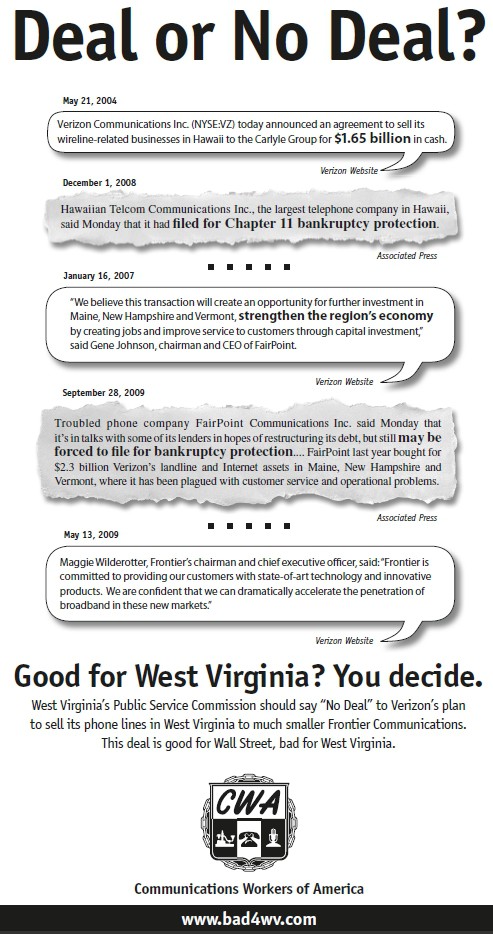
    The Communications Workers of America contract Verizon promises with reality for consumers impacted by earlier deals. (click to enlarge)

    The Communications Workers of America contract Verizon promises with reality for consumers impacted by earlier deals. (click to enlarge)

    In September Verizon CEO Ivan Seidenberg told a Goldman Sachs investor conference that the wired phone line business was effectively dead.  Seidenberg recognized that trying to guess when the company would stop losing “landline” customers was like guessing when a dog will stop chasing a bus.  In other words, the future of Ma Bell is not delivering phone service — it’s deploying advanced networks that are capable of providing customers with video, broadband, and phone service across one wire, preferably a fiber optic one.  Those that can manage the transition will succeed, those who cannot or won’t will face a steady decline to obsolescence.

    There is only one major problem — it costs a lot of money to rewire entire communities, much less states, with fiber optic wiring.  It’s like building a phone network from scratch.  A company contemplating such a challenging undertaking starts by asking how much it is going to cost and when will it profit from its investment.  Many on Wall Street don’t like either question because of the up front cost, and are even less happy with the prospect of taking the long view waiting for those costs to be recouped from customers.

    To date, Verizon is the most aggressive major phone company in the nation building a pure fiber optic system in its larger service areas.  AT&T, which provides phone service in many states, has taken a more cautious approach using a hybrid fiber-copper wire design they market as U-verse.  A handful of independent phone companies and municipally owned providers have undertaken to wire fiber optics to the home as well, so they can sell video, telephone and broadband service to their customers.

    A major challenge confronts phone companies servicing more distant suburban and rural phone customers, often living far apart from one another in sparsely populated regions.  It costs more to service these customers, and the potential revenue gained is often not as great as what can be earned from their urban cousins.  Verizon doesn’t see many rural customers as part of their future business plans and have begun to systematically sell some areas off to other phone companies, usually in tax-free transactions.  One company that sees an ambitious future in serving rural America is Frontier Communications.  For them, finding a niche among the big boys gives them safety and security, particularly in areas that don’t have a cable competitor (or any competitor at all).

    Frontier’s acquisition strategy is to sell regulators and the public on the idea that allowing Frontier in guarantees a much better chance for broadband service to reach the communities Verizon skipped over.  Their argument for success in a business seeing steady declines in customers is that broadband service will stem the tide, and help them remain profitable.  More than doubling their size with the acquisition of Verizon’s latest castoffs means more opportunity to market broadband service to those underserved communities.  Frontier argues it can be a more nimble player than Verizon because it has marketing and service experience in rural communities previously ignored by Verizon.

    Frontier’s ability to provide broadband service is not the most important question.  More important is how Frontier will define broadband and at what speed. Also critically important is how Frontier will be prepared to deliver the next generation broadband platform that other communities will see with speeds up to 100Mbps, often on fiber optic networks.

    Frontier’s reliance on ADSL technology, which worked fine for 1990s Internet connectivity, is increasingly falling behind in the speed race, and for much of the next generation of online content, speed will matter very much.

    Unfortunately, the track record for the success of these spinoffs has been universally lousy for consumers and for many employees who live and work in the impacted communities.  Promises made quickly become promises delayed, and later broken as companies like Hawaii Telecom and FairPoint tried to integrate former Verizon operations into their own.  Service outages, billing errors, confusion, and finally a mass exodus by customers looking for better alternatives has been the repeated result.  The faster customers depart, combined with the enormous debt these transactions create for the buyer, the faster the journey ends in Bankruptcy Court.  There is nothing about the Frontier deal proposal that suggests their experience will be any different.

    Shouldn’t Three Strikes Mean You Are Out?

    Consumers should tell state regulators they should pay careful attention to the failures Verizon has left in its wake from previous deals:

    • FairPoint Communications, which assumed control of phone service in Maine, New Hampshire and Vermont just last year declared bankruptcy this morning, even now still plaguing customers with billing and service problems.  The company choked on the debt it incurred from financing the deal.  Before this morning’s bankruptcy, their stock price had lost 95% of its value, and customers were leaving in droves, only accelerating the company’s demise.  FairPoint thought it could integrate Verizon’s byzantine billing system into its own.  Thinking and doing turned out to be two entirely different things.  Frontier has experience integrating other small independent phone companies into its billing system, but now faces the same prospect of dealing with Verizon’s own way of doing everything, and for twice the number of customers Frontier serves today.
    • Hawaii Telecom and its 715,000 customers were dumped by Verizon in 2005.  Once again, transition issues plagued the post-sale experience for those customers, and almost a quarter fled the company over three years.  Last December, Hawaii Telecom declared bankruptcy.
    • Verizon’s yellow pages unit was also thrown overboard by the company to Idearc in November 2006.  Saddled with $9.5 billion in debt and interest payments representing almost one quarter of the entire company’s revenues, Idearc finally had enough in March 2009 when it also declared bankruptcy.

    The deal between Verizon and Frontier could easily follow the same path, as Frontier gets loaded down with massive debt financing the purchase, and has to immediately provide better service than Verizon did, or face a stampede of customers heading for the exit.  The impact of a debt-laden Frontier could be felt by more than just the newcomers.  Existing Frontier customers could also be impacted as the company turns its attention to a potentially lengthy integration process.

    The Promise of Anemic Broadband, The Fiber Myth & The 5GB Acceptable Use Policy

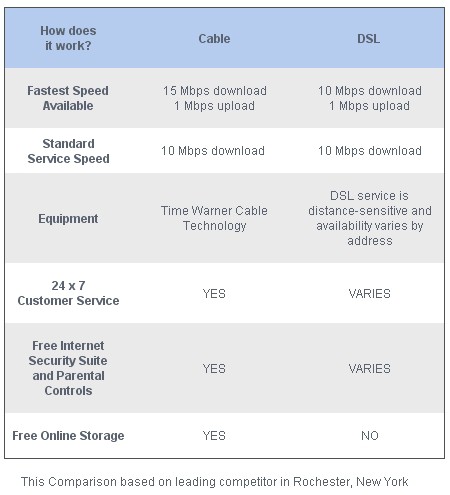
    Time Warner Cable competes effectively against Frontier DSL in the phone company's largest service area

    Time Warner Cable competes effectively against Frontier DSL in the phone company's largest service area

    Frontier’s plan to bring broadband to a larger number of customers is a noble gesture, particularly for households that currently do not receive any broadband service.  Unfortunately, a short term gain of what will likely be 1-3Mbps DSL service will leave these communities behind in the next few years as broadband speeds accelerate far faster than what Frontier is prepared to provide.

    Some press accounts in West Virginia have left residents with the impression fiber optic service will reach their individual homes should Frontier be successful in purchasing Verizon’s assets.  There is no evidence to suggest this is true.

    In earlier deals, these kinds of rumors started when companies advocating the sale staged press-friendly events announcing a fiber connection between hospitals, schools, or community centers, allowing the media to give the impression there would be fiber upgrades for all… if the deal gets approved.  In the case of Frontier, they have suggested they will continue work on Verizon’s FiOS system in the communities where construction was already underway.  That’s an important distinction for the millions of customers who don’t live in those communities.  Verizon’s FiOS network that is part of this transaction serves less than 70,000 residents.

    Residents should consider what possibility their community has of obtaining this type of advanced service when Frontier refuses to provide anything comparable in their largest service area – Rochester, New York.

    If they are not doing it in Rochester, do you really believe they will do it in your community?

    The company certainly has a competitive need to provide such service in our city where Time Warner Cable has accelerated speeds beyond what Frontier is capable of providing.  Indeed, Time Warner Cable officials tout their largest number of new Road Runner broadband sign-ups comes from departing DSL customers who are fed up with the anemic, inconsistent speeds offered by this aging technology.

    In the town of Brighton, I gave Frontier DSL service a try this past spring.  The company promises up to 10Mbps of service to my area, which is less than 1/2 mile from the city of Rochester, and literally just a few blocks from the town’s business center.  After installation, the company was only able to provide me with service at 3.1Mbps, just less than one-third of the speed marketed to local residents.  Even more surprising was the fact they charged a higher price for that service (including taxes, fees, and modem rental charge) than their competitor, Time Warner Cable.

    This website was founded after Frontier inserted language into its Acceptable Use Policy defining “reasonable” broadband usage at just five gigabytes per month.  That’s right, the same limit your mobile phone provider applies to their wireless broadband service.  Viewing one HD movie over Frontier’s DSL service would put you perilously close to unreasonable use.

    Are consumers willing to give up unlimited Verizon DSL service for a company that refuses to drop a 5GB acceptable usage definition from their terms and conditions?

    America is on the threshold of 50-100Mbps broadband service, with some communities already enjoying those speeds.  If your community isn’t served by a competing provider, do you want to limit your future to yesterday’s DSL technology, and then told it is inappropriate for you to actually use it beyond five gigabytes per month?

    The Billing and Customer Service Nightmare

    The days of local customer service are over with Frontier.  Back during the days of Rochester Telephone, there were several occasions when a local customer service representative would recognize me by name.  Those days are long gone.  Now, a good deal of Frontier’s customer service is handled by a call center in DeLand, Florida.  While the representatives mean well, experiences with them suggest many are not well equipped to understand and consistently market Frontier’s products to existing customers.  Pile on more than double the number of new customers, and the problems are likely to become much worse.

    Frontier has personally plagued me with billing errors this past year, gave inconsistent and inaccurate answers to pricing and service inquiries, and created major runaround hassles to correct them.  From the DSL self-install kit that never arrived (requiring me to visit a local office to pick one up myself), to the impenetrable and inaccurate bills that resulted, the company could not correct the problems without consulting someone with supervisor status.  I canceled service within the month.

    Customers signing up for service have been pressured into “peace of mind” agreements that lock customers into long term contracts that automatically renew unless the customer actively cancels them (and is certain the request to cancel was processed correctly.)  Frontier has been fined twice by the New York State Attorney General for “misleading advertising and marketing tactics,” once in 2006 and again just a few weeks ago.  Some customers are now waiting for substantial refunds ranging from $50-400 dollars for “early termination fees” charged when they tried to cancel service.

    Are you comfortable knowing some customers have been inappropriately placed on a one to three year contract without their full informed consent, and billed hundreds of dollars when they tried to cancel?

    The Art of the Deal

    By no means will a Verizon-Frontier transaction be the last.  As the industry continues to consolidate around a dwindling number of wired phone line customers, it’s a safe bet there will be more phone customers thrown away by the bigger players.  Nothing guarantees Frontier itself will be freestanding when the consolidation wave ends.  While these deals may make sense for some shareholders and company executives, they often don’t for local experienced employees who know the network and how to provide quality service.  They never have for consumers who will always have to foot the bill to pay off these transactions and have to live with the company trying to integrate Verizon’s bureaucracy with their own.

    What is the ultimate price to pay?  For employees — their jobs, and as FairPoint employees are discovering today, those workers are being asked to pay the price for management mistakes.  In West Virginia, some of the most experienced Verizon employees are getting out with their pensions intact, not willing to take a chance on Frontier.  For customers living with FairPoint, horror stories of weeks without service, $400 phone bills for service long since canceled, company technicians that cannot find the customer even when they are located right next door to the phone company, and broken promise after broken promise continue.

    Some consumer groups and local workers correctly predicted, in each instance, the horrific outcome of these kinds of deals.  Their uncanny knack to correctly predict disaster contrasts with company marketing, lobbying, and astroturf efforts that promise the sky and tell each successive news reporter covering the latest atrocity that “things are getting better” and “will be fixed soon.”  Unfortunately for too many customers, the fix has to come from a judge in Bankruptcy Court.

    The International Brotherhood of Electrical Workers who repeatedly warned about the perils of FairPoint, now warns state regulators about Frontier, and direct attention to the numbers:

    If the transaction is approved, Frontier management will have to deal with a 300% increase in access lines (from 2.2 million access lines now to 7 million after the sale) and a 200% increase in employees (from 5,700 employees now to 16,700 after the sale).

    Frontier’s debt will increase from $4.55 billion to $8 billion—an increase of over $3.4 billion. Servicing this debt will mean less money for infrastructure, service quality, and high-speed internet build out.

    While Frontier argues that somehow this deal will make it stronger, the issue for the states being sold is how much weaker it will make the operations in those states.

    The leverage ratio is one way to measure the financial health of a company. The leverage ratio is calculated by taking net debt and dividing it by earnings (before interest, taxes, depreciation and amortization). The leverage ratio for the states being sold will increase from 1.7 immediately before the transaction closes to 2.6 after the sale. The entire deal revolves around Frontier’s ability to cut its operational expenses by $500 million or 21%.

    This is significantly greater than the 8-10% cut that FairPoint hoped to achieve—and much of these savings were to be generated from replacing Verizon’s network and back-office systems. Yet, Frontier states that all of the operations except for West Virginia will continue on Verizon’s existing systems—for which Frontier will pay a fee.

    Where will Frontier generate the savings—from reduced service quality, workforce, or maintenance of the communications infrastructure? In spite of brave talk from Verizon and Frontier, as recent events have demonstrated, obtaining financing for a transaction this size can be difficult. Frontier does not currently have financing for the additional debt it will take on for this transaction.

    As an existing Frontier customer, I’d like an answer myself.

    <

    p style=”text-align: center;”>

    Watch these two Wall Street guys talk about the previous Verizon deals that threw customers under the bus.  Plenty of praise for the skilled deal maker Verizon CEO Ivan Seidenberg, and no concern for you, the consumer and telephone customer impacted by a deal that got a few people very rich and left you with a bankrupt phone company.  (3 minutes)

    It’s Not Worth the Risk

    Unfortunately, for too many rural Americans impacted by this deal, there is only one phone company.  Cable television is not in their future, and in mountainous regions like West Virginia, wireless phones may not be suitable as a phone line replacement.  Risking 100 years of solvent phone service on a deal that could ultimately follow earlier deals into bankruptcy is not worth the risk.  The nightmares of converting operations from one provider to another is a hassle consumers should not have to face.

    For decades, you faithfully paid your Verizon telephone bill and made the company the telecommunications powerhouse it is today.  Now they want to abandon you because, frankly, you just aren’t important enough to them anymore.  It doesn’t have to be this way.  State regulators can tell Verizon they need to make different plans — by forgetting about trying to cash in on a deal that is good for them and bad for you, and by staying put and providing consumers with the same kinds of network upgrades they are building in communities across the country.

    Unfortunately, Frontier before this deal was ill-equipped to embark on the kind of investment necessary to provide fiber optic broadband connectivity to its customers.  Now pile on billions of additional debt and the challenge of trying to more than double their size and integrate diverse phone networks in 13 different states and ponder what the chances will be for fiber service after the deal is done.  Far more likely for residents is a company that will rely on slow speed DSL service, providing “good enough for them” broadband for the indefinite future.

    Take Action!

    As has been the case with Hawaii Telecom and FairPoint, naive regulators believed the false promises and approved earlier deals, and are frankly responsible for part of the blame.  Face-saving telecommunications regulators in New England initially even tried to cheerlead for FairPoint as they stumbled through one customer service nightmare after another.  Too late, they realized the grim reality that their approval saddled their states with a phone company totally unequipped to do the job.

    Consumers who do not want a repeat performance can contact their state representatives and tell them to put pressure on each state’s public utility commission to reject the deal.  You should also contact your state’s public utility commission yourself.

    No amount of concessions and written agreements will make a difference if that phone company ends up in financial distress and takes a walk to Bankruptcy Court.  Regulators should not even bother trying, after witnessing the debacle with FairPoint.

    In your polite, persuasive and persistent communication with state officials, let them know:

    • We’ve been down this road with Verizon before, with FairPoint Communications and Hawaii Telecom, leaving a litany of broken service promises, unfulfilled broadband commitments, unacceptable billing mistakes, and poor quality customer service.  In both instances, customers fled and the companies ended up in bankruptcy;
    • Frontier has been unable or unwilling to wire its largest service area, Rochester, New York, with the advanced fiber connectivity that Verizon is wiring throughout the rest of upstate New York.  If the company cannot meet the needs of customers in their largest service area, what in the world makes you think they’ll do it for us?
    • The company has been fined twice by the New York State Attorney General for dubious business practices, costing consumers hundreds of dollars the company has now agreed to return to those customers;
    • A broadband service for our community’s future should not come with a 5 gigabyte monthly limit attached in the fine print.  How can our community compete in the digital economy if you have to ration your broadband usage to an unprecedented level in wired broadband?
    • The devil is always in the details.  Verizon has an aggressive plan to stay relevant in a digital future, with video, telephone, and Internet service running across advanced fiber optic lines.  Frontier has a plan to serve rural communities with yesterday’s technology.  Frontier’s vision for video is to “get a satellite dish” and rely on the existing aging copper wiring to do everything else.
    • What kind of service and growth can we expect from a company mired in debt?  As seasoned Verizon employees in our community start retiring, understanding the writing on the wall, what do they know that you and I don’t?
    • Phone companies are a regulated utility, essential to the public interest.  Why permit a risky deal that could ultimately lead to a taxpayer bailout to keep operations running if Frontier follows its predecessors into bankruptcy, all while Verizon walks away with billions in proceeds?

    You can locate the names and contact information for your state representative(s) on Congress.org simply by entering your zip code.  When calling or writing, always be courteous, and request that your representative respond in writing to your concerns, and share with Stop the Cap! any correspondence you receive in reply.  As always, we’ll be holding elected officials accountable.

    Your next contact must be with your state public utility commission.  If a hearing is planned in your community, share your views in person and feel free to point them here if they want to watch how bad telecommunications deals have unfolded in the past.  We have countless hours of news reports archived for their viewing pleasure.  Each state has a different procedure for contacting them.  In West Virginia, for example, consumers can call the Commission at 1-800-642-8544.  Ohio residents can fill out an online form.

    Perhaps Frontier can one day take on a transaction like this, but only after it can demonstrate it has the resources and willingness to provide customers with better options for service.  Had they done that in our community, local residents would not have taken to signing a petition for Verizon to overbuild, or buyout Frontier’s Rochester operation.  Local residents want the advantage fiber optic service can bring our community and its local economy, some even expressing a willingness to send $10 and $20 checks to Verizon for an acquisition fund to get the sale done.  When consumers give money to the phone company when they don’t owe anything, that should be a clear signal consumers are dissatisfied and want a change Frontier, thus far, has not provided.

    There are more videos below the jump….

    … Continue Reading

    Special Report — Who’s Who of Broadband for America: Telecom Industry Connections Exposed

    Be Sure to Read Part One: Astroturf Overload — Broadband for America = One Giant Industry Front Group for an important introduction to what this super-sized industry front group is all about.

    Members of Broadband for America

    Red: A company or group actively engaging in anti-consumer lobbying, opposes Net Neutrality, supports Internet Overcharging, belongs to an astroturf group, or is an astroturf group itself.
    Blue: An equipment supplier whose bread is buttered by the telecommunications industry, but doesn’t go out of their way to actively engage in anti-consumer activities.
    Purple: A telecommunications company providing broadband service.
    Black: A group or organization about which there is insufficient evidence to connect them to a specific astroturfer, lobbying firm, telecommunications provider, or other aligned special interest.  That doesn’t mean there aren’t ties yet to be uncovered.  Considering the overwhelming majority of BfA members have a vested interest towards the broadband industry, you can draw your own conclusions.

    Actiontec Electronics, Inc. — Actiontec is an equipment provider selling high speed Internet modems and routers. Their customers include Verizon, Qwest, TDS, MTS and hundreds of smaller carriers throughout North America. More importantly, it is a member of the notorious anti-regulatory, anti-Net Neutrality “Hands Off the Internet” group run for and by the telecommunications industry. Actiontec is also a member of TV4Us, a group Common Cause called the very definition of Astroturf. It advocates for franchising reform (taking away local government oversight) and hates Net Neutrality. Actiontec took even more action by signing a letter by Netcompetition opposing Net Neutrality.

    ADC Telecommunications, Inc. — ADC sells broadband network infrastructure products and services that enable the profitable delivery of high-speed Internet, video, data, and voice services to residential, business and mobile subscribers. Among their clients: AT&T, British Telecom, Comcast, Sprint Nextel, Qwest, T-Mobile, and Verizon. They are also listed as a member of “Hands Off the Internet” and signed a letter by Netcompetition opposing Net Neutrality.

    Advanced Digital Broadcast — ADB provides digital set-top boxes for including cable, IPTV, satellite and terrestrial providers.

    Alloptic — Sells central office and customer premise equipment to deploy Fiber-to-the-Business and Fiber-to-the-Home.

    American Agri-Women — A national coalition of farm, ranch, and agri-business organizations, AAW’s involvement in telecommunications issues is not prominent on their website. The group’s 2009 position statement has one sentence about telecommunications issues: “AAW supports a full range of ownership of telecommunications infrastructure including entrepreneurs, large corporations, municipalities, and other units of local government.”

    American Association of People with Disabilities — AAPD gets major donations from both Verizon and the Verizon Foundation, and put a Verizon VP, Richard T. Ellis – on its board (2005). It participated in multiple Verizon-based campaigns, including part of a group put together by Issue Dynamics, a Washington DC public relations firm, that jointly signed an ex parte letter to the FCC, explaining why the Bell companies should not have to open their fiber-optic networks to competition. (Source: Harvard Nieman)

    American Council on Renewable Energy — What do C. Boyden Gray, big industry lobbyist and ex-aide to former President George Herbert Walker Bush, and Amory Lovins, alternative energy guru, agree on? The need for a big-bucks trade association that can “bring renewable energy into the mainstream of America’s economy and lifestyle” and otherwise spread the gospel about solar, wind, hydro, geothermal, biomass, biofuels, waste energy and hydrogen energy systems. (Source: Sourcewatch) Their position on telecommunications and broadband issues is not clear from their website.

    Americans for Technology Leadership — Americans for Technology Leadership was founded by Jonathan Zuck in 1999 as a “grassroots” organization for concerned consumers who want less regulation in the technology sector.  It also campaigns on general tech issues such as spam.  It has been frequently described as a Microsoft front group.  ATL’s domain name, techleadership.org, is registered to the Association for Competitive Technology.  The site is hosted by Thomas E. Stock and Thomas J. Synhorst’s LLC, TSE Enterprises.  Synhorst is a founding member of the DCI Group, a Washington DC-based strategic consulting and lobbying firm which has counted Microsoft as a prime client for a number of years. (Source: Sourcewatch)

    ARRIS — ARRIS provides broadband technology for the cable industry. ARRIS products help cable operators provide cable TV and telephony, high-speed Internet and data access. The ARRIS product line includes cable modem and wireless broadband products, infrastructure for digital video and IPTV, and a Fixed Mobile solution.

    AT&T — Broadband provider

    BendBroadband — Broadband provider

    BeSafe — BeSafe Technologies uses broadband to provide real time information to emergency first responders, including contact information, aerial photos, video feeds and building plans. It’s interested in advocating emergency preparedness issues that leverage broadband infrastructure as part of the FCC’s National Broadband Plan.

    BigBand Networks, Inc. — BigBand Networks provides infrastructure and support for moving, managing, and monetizing video.

    BTECH Inc. — A backup battery provider which oddly finds the need to involve itself in a variety of astroturf groups.  In addition to signing a letter by Netcompetition.org opposing Net Neutrality, BTECH also belongs to “Hands Off the Internet” and TV4Us.

    Cablevision Systems Corporation — Broadband provider

    CBM of America, Inc. — A network solutions provider for IP networks, CBM is also a member of astroturf group “Hands Off the Internet” and signed a letter by Netcompetition.org opposing Net Neutrality.

    CenturyLink — Broadband provider

    Charles Industries, Ltd. — Provides cable wiring protection and products that help expand DSL service to hard to reach areas. What wasn’t hard to find was their membership in the astroturf group TV4Us.  They also signed a letter by Netcompetition.org opposing Net Neutrality.

    Child Safety Task Force — Part of the Robert K. Johnson astroturf machine, including Consumers for Cable Competitive Choice and Consumers Voice. Only involvement in telecommunications comes from “child safety on the Internet” issue.

    Cisco — An equipment manufacturer that has ties to several astroturf and public policy groups, including Arts+Labs and is a major advocate of the alarmist “The Internet is full/exaflood/zettabyte era” rhetoric providers use to justify Internet Overcharging schemes, while Cisco’s self-interest is served by selling the equipment to manage the ‘data tsunami.’  They also signed a letter by Netcompetition.org opposing Net Neutrality.

    CoAdna Photonics, Inc. — Sells a variety of products to maintain optical networks, and signed a letter by Netcompetition.org opposing Net Neutrality.

    Comcast — Broadband provider

    CommScope, Inc. — Designs and produces cables for cable broadband and other providers.

    Condux International, Inc. — Condux is a manufacturer of aerial and underground cable installation equipment and tools. Also belongs to TV4Us and “Hands Off the Internet” and signed a letter by Netcompetition.org opposing Net Neutrality.

    Consumers First — A group that receives corporate contributions from both AT&T and Verizon, Consumers First often turns up belonging to other astroturf groups, including Robert K. Johnson’s now-defunct Consumers for Cable Choice.

    Corning Incorporated — A manufacturer of fiber optic cable, among other things. Verizon is a very important customer.  Corning helped launch the Fiber to the Home Council, which pals around with astroturfers and doesn’t like Net Neutrality. Corning keeps more distance between itself and direct anti-consumer astroturf campaigns, but still signed a letter by Netcompetition.org opposing Net Neutrality.

    Cox Communications — Broadband provider

    CTIA The Wireless Association — The trade association for the wireless industry, includes AT&T and Verizon.

    DC-Primary Care Association — A group advocating for health care reform, telemedicine, and affordable care in the District of Columbia. Its primary interest in broadband may be to leverage stimulus money for health-care related broadband applications.

    Dominican American National Roundtable — A group that claims to represent the interests of Dominican-Americans, they spend a lot of time involving themselves in telecommunications issues like mergers involving Verizon. That could be because the group receives substantial support from both AT&T and Verizon Wireless. On behalf of Verizon in 2008, DANA wrote the Federal Communications Commission with a dubious argument in favor of the Verizon Wireless-Alltel merger, claiming “Verizon Wireless also has the scale and scope to invest in network facilities in […] areas in which there is a dense Dominican population.” They fell all over themselves praising Verizon: “Verizon Wireless is well known for having one of the largest and most reliable national wireless networks in the country, so Alltel’s customers will benefit from its size, reach and quality [and] customers will benefit from ever-greater choices – in plans and phones – [and] one of the most advanced broadband networks.”

    Enhanced Telecommunications Inc. — Enhanced Telecommunications, Inc. was founded in 1992 to provide software for the converging broadband technologies of television, telephone and internet communications. They are also are believers in converging astroturf campaigns, as a member of “Hands Off the Internet” and a co-signer of a letter by Netcompetition.org opposing Net Neutrality.

    Fiber to the Home Council — An industry trade group that promotes fiber optics broadband. The FTTH Council was established in July 2001 by Alcatel-Lucent, Corning Incorporated and Optical Solutions. If an issue could lead to more fiber optics deployment, FTTH Council is often involved. Since consumers are often pro-fiber, there are times they do share a common interest in expanding fiber optic broadband. But the Council hates Net Neutrality. Full Frontal Scrutiny also exposed some credibility problems with the Council: “The FTTH Council is comprised of “approximately 800 company member delegates,” most of which represent businesses that provide equipment and/or services related to fiber optic systems. Nonprofit institutions can apply to join the FTTH Council, but their membership must be approved by the Board of Directors. Moreover, nonprofits allowed to join the FTTH Council can not serve on the Board or vote on Council issues.” The group also promotes the “exaflood – Internet is going to get overloaded” scare-mongering, unsurprising since they believe fiber deployment will fix it.

    FiberControl — Designs and manufactures fiber based polarization stabilizers, polarization controllers and polarization-state scramblers for fiber optic networks. They will polarize our readers against them as a member of the “Hands Off the Internet” astroturf group and their signature on a letter by Netcompetition.org opposing Net Neutrality.

    Global Crossing — A telecommunications service provider.  As a consumer who lived under Global Crossing’s ownership of Frontier Communications, I hope BfA made sure the check cleared before sending them membership stickers.

    Hispanic Leadership Fund — A conservative Hispanic political group that generally opposes regulation and government involvement in private business. Mario Lopez, group president, spent most of his summer at tea party rallies criticizing Obama Administration policies. Insufficient information available to know where the money comes from, but this group opposes regulation generally, so Net Neutrality is definitely a thumbs-down with them.

    Independent Technologies Inc. — Independent Technologies is a communications technology research and development company. They also independently decided to join forces with both “Hands Off the Internet” and TV4Us astroturfers and signed a letter by Netcompetition.org opposing Net Neutrality.

    Independent Telephone and Telecommunications Alliance (ITTA) — An industry trade group of independent mid-size telephone companies. Their members, which usually provide DSL broadband service, include CenturyLink, Comporium Communications, Consolidated Communications, FairPoint Communications, Frontier Communications, Iowa Telecom, Qwest Communications, TDS Telecom, and Windstream Communications. The group actively opposes Net Neutrality and wants a hands-off policy on telecommunications regulations.

    International Association for K-12 Online — iNACOL, The International Association for K-12 Online Learning, is a non-profit organization that facilitates collaboration, advocacy, and research to enhance quality K-12 online teaching and learning.

    Intertribal Agriculture Council — IAC was founded in 1987 to pursue and promote the conservation, development and use of Native American agricultural resources for the betterment of Native Americans. Oddly, one of the priorities for IAC in 2008 was being a full-throated supporter of the Sirius-XM Radio merger. It also joined forces with the Alliance for Aviation Across America (along with other BfA members including the National Grange of the Order of Patrons of Husbandry and the U.S. Cattlemen’s Association) to oppose a proposal to shift some of airline carriers’ federal tax burden to small-jet operators.

    Itaas Inc. — Founded in 1999, itaas is a privately held, Atlanta-based company with experience in digital cable television technology.
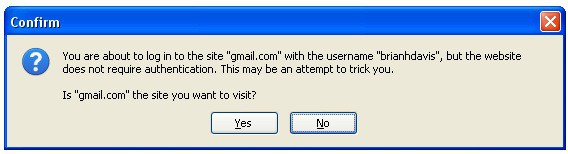
     

    "This may be an attempt to trick you." -- The error message received when visiting the apparently defunct jewishenergyproject.org website

    Jewish Energy Project — Appears to be defunct or inoperative. Website jewishenergyproject.org launches a prompt to log onto group founder Brian H. Davis’ Gmail account! Davis is an environmental lawyer whose firm uses a “team approach [to] support “harmonizing of business and environment.”

    Latinos in Information Science & Technology Association — LISTA claims it is a national organization of Latino professionals and role models from the information science, telecommunications, and technology industry. “By working together and showcasing the talented Latinos in these sectors, the community as a whole could reach higher goals in order to conquer the digital divide. Today, LISTA remains committed to excellence and providing a wide spectrum of resources to members, corporate sponsors, businesses, educational institutions and the community.” Somehow, it accomplishes that by advocating the merger of Sirius and XM Radio and attacking Google’s “search monopoly.” LISTA has a corporate sponsorship program that, among other things, “link LISTA strategic initiatives to the objectives of the corporation.” Now we’re getting somewhere. LISTA’s membership in BfA may strategically link the objectives of these sponsors: AT&T, National Cable and Telecommunications Association, Microsoft, Comcast, Verizon, and RCN Communications.

    Livestock Marketing Association — The Livestock Marketing Association is committed to the support and protection of the local livestock auction markets.  Their website says, “auctions are a vital part of the livestock industry, serving producers and assuring a fair, competitive price through the auction method of selling.” The best way to assure that is to join Broadband for America?  Perhaps the livestock have Facebook pages.

    LookBothWays – From their website: “LOOKBOTHWAYS, Inc., founded by internationally recognized online safety expert Linda Criddle, provides free consumer education in online safety through their Web site, ilookbothways.com. We are currently building K-12 online safety curriculum which will be available to everybody at no charge, and teach a college course in Internet Safety for Educators through two US universities. LOOKBOTHWAYS also has a software division developing technology solutions for online safety. In addition we consult and train companies, governments, and law enforcement agencies worldwide and are available for speaking engagements on a wide variety of safety topics. Criddle spent 13 years at Microsoft where she was a pioneer in online safety.”   Criddle also heads the “Safe Internet Alliance” which is absolutely infested with astroturf groups and providers, many of them also AfB members: AT&T, US Internet Industry Association, National Black Chamber of Commerce, National Cable & Telecommunications Association, RetireSafe, Stop Child Predators, Verizon, MANA (A National Latina Organization), and Consumers First. Her organization’s name is lent out to Saferdates, which charges a fee to do background and fingerprint checks on you to “verify” your identity to people who might want to date you.  Perhaps Criddle should perform a background check on BfA to know who she’s hanging around with.

    MANA (A National Latina Organization) — Formerly the Mexican American National Association, MANA today claims to empower Latina women through leadership development, community service, and advocacy. They are also empowered by support from AT&T and Verizon. MANA’s National Corporate Partnership Council will put your company logo on their home page for a $50,000 contribution (AT&T is the first logo shown). MANA’s Advisory Council has Emilio Gonzalez, Verizon’s director of public policy and strategic alliances on it. Gonzalez also serves on the boards of two other BfA members:  the United States Distance Learning Association and the US Mexico Chamber of Commerce.  Even more impressive, from as astroturfing perspective, is their Vice-Chair, Bridget Gonzales, who used to be “Assistant Vice President for Issue Dynamics, Inc., a public affairs firm in Washington, DC, where she led the firm’s Strategic Alliances Group. “Ms. Gonzales was instrumental in planning and executing public affairs and consumer education campaigns for Fortune 500 clients such as Verizon Communications, BellSouth, SBC Communications, Corning, Novartis, and others. This included preparation of press releases, op-eds, speeches and consumer education materials as well as coordination of issue briefings, congressional advocacy activities, workshops and media relations. Critical to her success was the effective working relationships she established with high profile national organizations such as League of United Latin American Citizens, U.S. Hispanic Chamber of Commerce, NAACP, National Grange, Gray Panthers and others.”

    Motorola — An equipment manufacturer, among its biggest customers are AT&T, T Mobile, and Verizon.  They signed a letter by Netcompetition.org opposing Net Neutrality.

    MRV Communications, Inc. — MRV Communications is a supplier of communications equipment and services to service providers. “Today’s telecommunication networks are evolving to support growing network traffic due to the demand for high-bandwidth applications such as IPTV, streaming video, peer-to-peer networking, and content-rich websites. Service providers are attempting to differentiate their offerings from their competitors and strive to provide many new capabilities. The growth in these applications is driving the need for additional bandwidth capacity in the Internet infrastructure.” They don’t differentiate themselves much in their membership in the usual astroturf groups “Hands Off the Internet” and TV4Us. They also co-signed a letter by Netcompetition.org opposing Net Neutrality.

    National Association of Manufacturers — This trade association, which counts AT&T and Verizon among its members has this policy towards telecommunications: “Fostering an environment where manufacturers and consumers alike can obtain the services and content they want, when they want it and regardless of medium, is of primary concern. To achieve this goal, policymakers should remove barriers to entry that prevent broadband providers from offering high-speed information services to homes and businesses, balance the need for regulations against the potential to dampen private industry’s incentive to invest in broadband technology, encourage federal and state regulators to monitor the rollout of broadband services, and adopt a federal framework and to the extent necessary, lightly regulate only to ensure fair, technology-neutral competition for all providers.” They are members of both “Hands Off the Internet” and TV4Us.

    National Association of Black Telecommunications Professionals — Appears defunct. The last time the nabtp.org website was updated and captured by Archive.org was on May 13, 2008. Their telephone number has been disconnected. Among their last features was a promotion for a speech by Larry Irving, who himself works for an astroturf group – the Internet Innovation Alliance. Some history on this group and others like it, was written by the National Community NETwork of AT&T.

    National Black Chamber of Commerce — This group’s stated purpose: “To economically empower and sustain African American communities through entrepreneurship and capitalistic activity within the United States and via interaction with the Black Diaspora.” Their website hides their membership list, stating: “The National Black Chamber of Commerce does not distribute information about our members to protect their privacy.” Uh huh. We can take a wild guess however, based on their extended reach into the astroturf diaspora with memberships in both “Hands Off the Internet” and TV4Us. Back in December 2007 before the corporate sponsors were removed from the website for ‘their privacy,’ the group noted it had AT&T, Comcast, and Verizon among its members. Here they were towing the telecom industry line in a press release back in May 2007.

    National Cable & Telecommunications Association — Everyone’s favorite super-sized trade association and lobbyist for big cable.

    National Caucus and Center on Black Aged — “Throughout its 39 years history, the National Caucus and Center on Black Aged, Inc. (NCBA) has worked to eliminate obstacles to fairness and equal access for one of the most underserved and vulnerable groups in our society – low-income black and minority senior citizens. NCBA’s programs have focused on three of the most critical needs: housing, employment and health promotion/disease prevention.” Actually, four needs — the fourth suddenly being broadband. This group has several telecommunications industry connections, as explored in part one of this report.

    National Disease Cluster Alliance — A real mystery why this group belongs to BfA. This group is dedicated to identifying and responding to emerging disease cluster/anomalies. Founding member Floyd Sands passed away in May after a lengthy battle with cancer. In August, the group advertised for a new executive director and is engaged in fundraising. The stated purpose of the organization is noble, but their sudden interest in broadband issues as part of an astroturf effort is concerning.

    National Grange — “The National Grange is the nation’s oldest national agricultural organization, with grassroots units established in 3,600 local communities in 37 states. Its 300,000 members provide service to agriculture and rural areas on a wide variety of issues, including economic development, education, family endeavors, and legislation designed to assure a strong and viable Rural America.” The organization claims to be particularly interested in rural telecommunications issues.  Coincidentally, it often finds itself getting involved in telecommunications issues that directly impact or involve Verizon. That’s ironic, considering Verizon is abandoning many rural communities altogether and selling them off to Frontier Communications. Over the years, the National Grange has thrown its view in on to Verizon vs. the RIAA, a request for Congress to support industry friendly legislation, a merger between Verizon and NorthPoint Communications, and universal service fund issues that brought them into a coalition with … the corn growers LawMedia Group loves to work with: The Keep USF Fair Coalition was formed in April 2004. Current members include Alliance for Public Technology, Alliance For Retired Americans, American Association Of People With Disabilities, American Corn Growers Association, American Council of the Blind, California Alliance of Retired Americans, Consumer Action, Deafness Research Foundation, Gray Panthers, Latino Issues Forum, League Of United Latin American Citizens, Maryland Consumer Rights Coalition, National Association Of The Deaf, National Consumers League, National Grange, National Hispanic Council on Aging, National Native American Chamber of Commerce, The Seniors Coalition, Utility Consumer Action Network, Virginia Citizen’s Consumer Council and World Institute On Disability. DSL Prime helps define the friendly circle.

    National Puerto Rican Coalition, Inc. — NPRC’s mission is to systematically strengthen and enhance the social, political, and economic well-being of Puerto Ricans throughout the United States and in Puerto Rico with a special focus on the most vulnerable. AT&T is a major sponsor of the group. The organization signed a letter in 2006 concerning itself with, of all things, cable television set-top box integration. It took the vulnerable industry position. It supported the Sprint Nextel merger in 2005 with another letter.

    NDS Limited — NDS Group Ltd is a private company owned by the Permira Funds and News Corporation. It creates technologies that allow pay-TV operators to generate revenues by securely delivering digital content to TVs, set-top boxes (STBs), digital video recorders (DVRs), PCs, portable media players (PMPs), removable media, and other mobile devices.

    Net Literacy — This company’s mission “is to increase computer access by creating public computer labs, teach computer and Internet skills, and educate youth and parents about Internet safety.” “Senior Coalition Partners” include Verizon, Bright House Networks, Comcast, and the US Internet Industry Association.  Net Literacy co-released a report with the USIIA advocating AT&T and other provider views about broadband adoption, including government investment in broadband, and potentially supporting industry-sponsored Internet education and child safety efforts.

    NSG America, Inc. — “As creator of the SELFOC Lens, Nippon Sheet Glass (NSG) manufactures and distributes more gradient-index lenses than anyone else in the world. Developed over 25 years ago, the SELFOC Lens has revolutionized the industries of fiber optic communications.” They signed a letter by Netcompetition.org opposing Net Neutrality, and are also members of “Hands Off the Internet” and TV4Us.

    Occam Networks, Inc — Occam Networks develops and markets the BLC 6000 multi-service access platform (MSAP), an Ethernet and IP-based loop carrier platform that enables our customers to profitably deliver a variety of traditional and packet voice, broadband and IP services from a single, converged all-packet access network.

    OFS Fitel, LLC — OFS manufactures and markets fusion splicers, optical fiber, optical cable, fiber to the home (FTTX), connectivity, optical components, and specialty photonics products and optical components. They are also members of “Hands Off the Internet” and signed a letter by Netcompetition.org opposing Net Neutrality.

    On Trac, IncorporatedOn Trac, Inc. is a telecommunications subcontractor that specializes in fiber to the home installations. Municipalities sometimes contract with them to do installations. On Trac is a member of “Hands Off the Internet” and signed a letter by Netcompetition.org opposing Net Neutrality.

    PECO II, Inc. — PECO II designs and manufactures DC power systems and provides engineering and support assistance. They also support and assist “Hands Off the Internet” as a member and signed a letter by Netcompetition.org opposing Net Neutrality.

    People & Technology — Insufficient information to identify which group or company this represents.

    Preformed Line Products, Inc. — Preformed Line Products (PLP) is a worldwide designer, manufacturer and supplier of cable anchoring and control hardware and systems, fiber optic and copper splice closures, and high-speed cross-connect devices.  They signed a letter by Netcompetition.org opposing Net Neutrality.

    Prysmian Communications Cables and Systems USA, LLC — A player in the industry of high-technology cables and systems for energy and telecommunications. They are members of both “Hands Off the Internet” and TV4Us and also signed a letter by Netcompetition.org opposing Net Neutrality.

    Quanta Services, Inc — Quanta Services is a provider of specialized contracting services, delivering end-to-end network solutions for the electric power, telecommunications, broadband cable and gas pipeline industries.  They signed a letter by Netcompetition.org opposing Net Neutrality.

    Qwest — Broadband provider

    RetireSafe — “RetireSafe is a grassroots advocacy and educational organization dedicated to preserving the options and protecting the benefits of America’s seniors. RetireSafe believes in a government that keeps its promises, protects our nation, and maintains the safety of its citizens. We believe in free markets, lower taxes, limited regulations, and the virtues of personal freedom and personal responsibility that provides true retirement security for all.” The American Prospect called the group “strange” because it doesn’t identify up front who runs it or pays the bills: “Many of these other groups exist as little more than letterheads and Web sites.”  There are suspicions RetireSafe is run by DCI Group, a Washington DC lobbying firm, on behalf of one of its corporate clients. Oddly, RetireSafe has usually been the domain of big pharmaceutical companies. What they are doing on Americans for Broadband’s member list is a mystery. DCI’s other clients have included AT&T and Microsoft, although there is no certain evidence who is behind the new interest in broadband.

    Seachange International — SeaChange International is a provider of software applications, services and integrated solutions for the management and monetization of Video on Demand (VOD), digital advertising, and content acquisition.

    Sheyenne Dakota, Inc. — Custom Cable Harness Manufacturing. They also signed a letter by Netcompetition opposing Net Neutrality.

    Silver Star Communications — Broadband provider

    Sjoberg’s, Inc — Broadband provider

    Small Business & Entrepreneurship Council — The Small Business and Entrepreneurship Council (SBE Council) works to educate elected officials, policy makers, business leaders and the public to advance initiatives that enhance the environment for entrepreneurship, business start-up and growth. Member of TV4Us, which TV Technology described: “The roster of Coalition members includes The National Taxpayers Union, the Latino Coalition, the Small Business & Entrepreneurship Council, the Women’s Presidents Organization, the Construction Industry Foundation, the Citizenship Foundation–and, oh yes, a dozen telecom manufacturers, the National Association of Manufacturers and AT&T. You can probably guess correctly whose money actually paid for the coalition’s ads.”

    SNC Manufacturing Company, Inc. — SNC is a manufacturer and worldwide marketer of transformers, coils, high frequency magnetics and value-added assemblies.  They are a TV4Us member, and although their logo has changed, it appears they also signed a letter by Netcompetition.org opposing Net Neutrality.

    Stop Child Predators — If your cat was a member of the Democratic Party, it would hiss the moment the people behind this group entered the room. Cary Katz, Chairman and President – Founder/CEO College Loan Corporation is a major Republican donor. Board member Viet Dinh was on the Board of Directors of Murdoch’s News Corporation, although he’s better known for his key role in producing the USA Patriot Act. One blogger investigating the group complained: “The Stop Child Predators Partnership doesn’t actually seem to do anything.” The group’s focus seems to be on developing stronger legislation for child predator crime prosecutions and sentencing, with suggested legislation for online safety as well. Insufficient information to tell if there is any telecommunications industry money in the group.

    Sumitomo Electric Lightwave — A manufacturer of optical fiber and optical cable, cable assemblies, fiber management systems, etc. Member of “Hands Off the Internet,” they also signed a letter by Netcompetition.org opposing Net Neutrality.

    Sunrise Telecom Inc — Sunrise develops test and measurement solutions for telecom, cable, and wireless networks that ensure network performance, speed deployment, and reduce the cost of network operations. Sunrise is a member of “Hands Off the Internet” and signed a letter by Netcompetition.org opposing Net Neutrality.

    SureWest Communications — Broadband provider

    Suttle Apparatus Corporation — Suttle is a manufacturer of communication connectivity products to major service providers and installers.  Suttle was not subtle about their willingness to advocate against consumer interests when they signed a letter by Netcompetition.org opposing Net Neutrality.

    Telecommunications Industry Association — “The Telecommunications Industry Association (TIA) is the leading trade association representing the global information and communications technology (ICT) industries through standards development, government affairs, business opportunities, market intelligence, certification and world-wide environmental regulatory compliance. With support from its 600 members, TIA enhances the business environment for companies involved in telecommunications, broadband, mobile wireless, information technology, networks, cable, satellite, unified communications, emergency communications and the greening of technology.” TIA members are extensive within the broadband industry. Filed comments with the FCC objecting to Net Neutrality in 2008.

    Telework Coalition — The Telework Coalition brings together a diverse array of organizations, companies, and individuals with the common interest of promoting awareness and adoption of existing and emerging Telework and Telecommuting applications including telemedicine and distance learning, as well as addressing access to broadband services that may be needed to support these applications.

    The Latino Coalition — TLC’s agenda is to develop initiatives and partnerships that will foster economic equivalency and enhance overall business, economic and social development of Latinos. The bottom of the website indicates “TLC Website presented by AT&T.” Both AT&T and Verizon are corporate partners of The Latino Coalition, which also belongs to astroturf group TV4Us. The Latino Coalition likes to involve itself in a lot of cable and broadcasting industry business. More details on this group can be found in part one.

    Time Warner Cable — Broadband provider

    United States Distance Learning Association — Serves the distance learning community by providing advocacy, information, networking and opportunity. Board member Raymond E. Hartfield works for AT&T. Emilio X. Gonzalez, director of public policy and strategic alliances at Verizon sits on their Advisory Board. He also sits on the board of MANA and the US Mexico Chamber of Commerce, both BfA members. Verizon is a 21st Century Benefactor of USDLA, which could explain why USDLA went out of its way to submit positive comments about the merger proposal between Verizon and NorthPoint Communications. More recently, in June, USDLA submitted comments to the FCC calling for a deregulatory approach to a national broadband plan, and went out of its way to oppose Net Neutrality.

    United States Telecom Association — The trade association of broadband service providers, the organization doesn’t hide its opposition to Internet-related regulation. “Today’s calls for greater government intervention are to “fix” a problem that simply does not exist as far as today’s consumer of broadband services is concerned. This unnecessary intervention would slow broadband deployment and the arrival of a wide variety of pro-consumer advances.” They have a history of running astroturf campaigns, such as ‘The Future… Faster‘ which claimed to be a “coalition” that represents both “industry leaders” and “individual Americans.” If they put they period after ‘leaders,’ they would have been correct. Consumers were nowhere to be found. USTA has a history with Issue Dynamics, a DC lobbying firm and astroturf campaign creator.

    US Cable Corporation — Broadband provider

    US Cattlemen’s Association — The United States Cattlemen’s Association is a membership organization working for the grassroots cattle producer. Another major oddity in the BfA membership, the USCA’s focus on cattle seems to be completely non germane to broadband issues. Jon Wooster, president, wrote a letter to the FCC urging them to approve the merger between Verizon and Alltel: “We believe the merger between Verizon Wireless and Alltel will boost competition in the cell phone industry while bringing broadband and its innovations to all Americans – whether they live in downtown or on the farm. As an established wireless carrier, Verizon Wireless has the breadth and depth to make the significant investment in rural infrastructure that is so desperately needed. It has already poured billions into a new portion of the wireless spectrum just to deliver new high-speed (broadband) service to more Americans.” The group also signed their name to a Connected Nation letter to Congress saying, in part: “We believe Congress should adopt legislation this year that provides federal government support for state initiatives using public-private partnerships to identify gaps in broadband coverage and to develop both the supply of and demand for broadband in those areas.” The letter was also signed by AT&T, Time Warner Cable, Verizon, and a whole host of astroturf groups and industry-affiliated organizations.

    US Chamber of Commerce — Their slogan is “fighting for your business.” The nation’s largest industry trade association, they are always, by definition on business’ side.

    US Internet Industry Association — The US Internet Industry Association (USIIA) is the North American trade association for Internet commerce, content and connectivity. Most USIIA members are broadband service providers. Works with Issue Dynamics, a Washington, DC public relations firm that engages in astroturf campaigns.

    US Mexico Chamber of Commerce — The organization’s mission is to promote business between the United States and Mexico. How that relates to Americans for Broadband is an open question, although Emilio Gonzalez, Director of Public Policy & Strategic Alliances at Verizon who serves on the Board of Directors of this group might provide a possible answer. Gonzalez also serves on the boards of two other BfA members: MANA and the United States Distance Learning Association. Verizon’s logo also appears on the group’s home page. They are one of four listed sponsors.

    Verizon — Broadband provider

    Vermeer Manufacturing Company — Farm machinery and trenchless and trenching equipment from a construction equipment manufacturer. Also harvested was the fact Vermeer belongs to “Hands Off the Internet” and signed a letter by Netcompetition opposing Net Neutrality.

    Windstream Corporation — Broadband provider

    Search This Site:

    Contributions:

    Recent Comments:

    Your Account:

    Stop the Cap!