Home » customer service » Recent Articles:

Frontier Wrestles Worst ISP in America Award Away from Mediacom

“Frontier offers a level of suckage that cannot be proportionally compared with any other company in America. Stabbing yourself with knitting needles is less painful than their snail slow internet service and dealing with customer service agents that formerly served as prison guards at a Syrian detention camp.” — A deeply dissatisfied Frontier DSL customer in Ohio

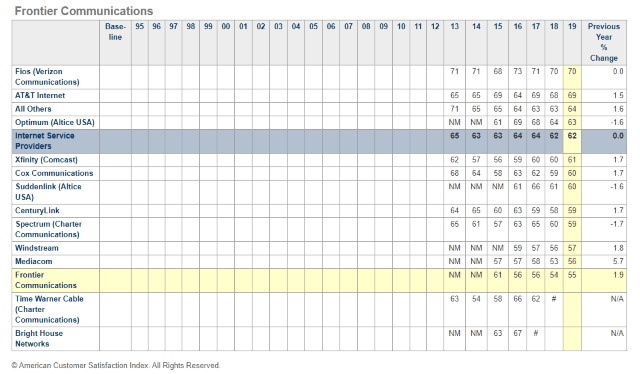
Frontier Communications has achieved a new low in customer satisfaction, wrestling away the award for America’s worst ISP from perennial favorite Mediacom, in a newly released American Customer Satisfaction Index.

No internet service provider did particularly well in customer satisfaction, but Frontier managed to alienate more of their customers than any other this year, ranking poorly in speed, reliability, and customer service. Customers also complained about being given inaccurate information, inaccurate billing, and surprise charges on their bill.

Frontier’s worst performance is delivered in legacy DSL service areas, where its aging copper wire network is often incapable of delivering 21st century broadband speeds. In many areas, speeds drop well below 10 Mbps during peak usage. Even worse, company officials signaled that the company had few plans to improve its wireline network or service experience in 2019. As a result, many customers switched providers, if one was available. If Frontier is the only option, customers often have no options.

“For several years we have had no internet options except for Frontier. We receive 10 to 20% of the service we pay for time and time again,” wrote one customer in a complaint with the Better Business Bureau. “The service has even diminished over time, [and] whenever my work demands me to log online, I often have to leave my home at different times of the day or night to a location where I can get free Wi-Fi or drive 24 miles to my job. This is totally unacceptable. Every single weekend and every night my internet shuts off. I mean every night. Nothing has been done from a customer’s view to improve service.”

What seems to have driven Mediacom out of last place was not so much an improvement in their network or service.

“Mediacom has the second-lowest score among subscription TV services at 56, but has one of the highest-rated mobile apps, both in terms of quality and reliability,” the ACSI found.

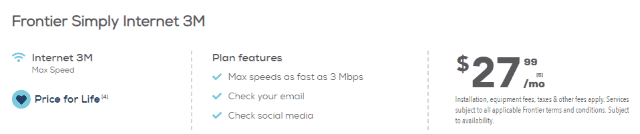
Frontier has an improved website, but still offers many potential subscribers a severe disappointment when shopping for internet plans, and finding only one:

Frontier: Losing Customers While Raising Prices; Company Loses $643 Million in 2018

Phillip Dampier February 28, 2019 Competition, Consumer News, Frontier 7 Comments

In the last three months of 2018, Frontier Communications reported it said goodbye to 67,000 broadband customers, lost $643 million in revenue year-over-year, and had to write down the value of its assets and business by $241 million, as the company struggles with a deteriorating copper wire network in many states where it operates.

But Wall Street was pleased the company’s latest quarterly results were not worse, and helped lift Frontier’s stock from $2.42 to $2.96 this afternoon, still down considerably from the $125 a share price the company commanded just four years ago.

Frontier’s fourth quarter 2018 financial results arrived the same week Windstream, another independent telephone company, declared Chapter 11 bankruptcy reorganization. Life is rough for the nation’s legacy telephone companies, especially those that have continued to depend on copper wire infrastructure that, in some cases, was attached to poles during the Johnson or Nixon Administrations.

Frontier Communications CEO Dan McCarthy is the telephone company’s version of Sears’ former CEO Edward Lampert. Perpetually optimistic, McCarthy has been embarked on a long-term ‘transformation’ strategy at Frontier, to wring additional profit out of the business that provides service to customers in 29 states. Much of that effort has been focused on cost-cutting measures, including layoffs of 1,560 workers last year, a sale of wireless towers, and various plans to make business operations more efficient, delivering mixed results.

McCarthy

Frontier’s efforts to improve customer service have been hampered by the quality and pricing of its services, which can bring complaints from customers, many who eventually depart. Frontier’s overall health continues to decline, financially gaining mostly through rate increases and new hidden fees and surcharges. In fact, much of Frontier’s latest revenue improvements come almost entirely from charging customers more for the same service.

McCarthy calls it ‘cost recovery’ and ‘steady-state pricing.’

“One of the things that we’ve been focused on really for the better part of two years is …. taking advantage of pricing opportunities [and] recovering content costs — really dealing with customers moving from promotional pricing to steady-state pricing, and then offering different opportunities for customers both from a speed and package perspective,” McCarthy said Tuesday. “The quarter really was about us targeting customers very selectively and really trying to improve customer lifetime value.”

By “selectively,” McCarthy means being willing to let promotion-seeking customers go and being less amenable to customers trying to negotiate for a lower bill. The result, so far, is 103,000 service disconnects over the past three months and 379,000 fewer customers over the past year. A good number of those customers were subscribed to Frontier FiOS fiber to the home service, but still left for a cable company or competing fiber provider, often because Frontier kept raising their bill.

New Hampshire’s Attorney General Resolves Comcast and Consolidated Communications Complaints Quickly

Frustrated New Englanders that can’t get anywhere dealing with Comcast or Consolidated Communications’ customer service are getting fast fixes in New Hampshire by taking their complaints to the Consumer Protection and Antitrust Division of the attorney general’s office.

Jim Boffetti, in charge of that division, says his office receives 4,000 written complaints and 7,000 calls a year about consumer issues, a not insubstantial number from residents upset with their local cable and phone company.

New Hampshire is dominated by Comcast for cable service and Consolidated Communications for telephone service. Boffetti told The Laconia Daily Sun the two companies are familiar to staffers, responsible for more than 250 complaints for the phone company since Consolidated took over for FairPoint last year and 561 “racked up by Comcast” since 2009. Boffetti’s theory of how these companies handle consumer complaints is partly based on wearing customers down.

“The hassle factor is enormous,” he said. “It’s just the way these people do business.”

Boffetti doesn’t believe the number of complaints is unusual either, “considering the business that they’re in.”

Boffetti

Although the New Hampshire regulator cannot usually intervene to set prices, change conduct, or force resolutions, most telecommunications companies fear riling up state or federal regulators. Those government officials can potentially return “the favor” of years of arrogance and condescension when a company needs state or federal approval of a merger or permitting issue.

Only a small percentage of consumers realize they can file complaints with private groups like the Better Business Bureau, state officials like an attorney general or telecommunications/utility regulator, and federal agencies like the FCC. In every case, companies assign their best representatives to handle those complaints in an effort to protect their reputation.

When consumers file complaints with the New Hampshire attorney general’s office, the office forwards them to a designated person or department at the provider. Comcast and Consolidated assign senior level customer service departments to specifically handle these types of complaints. The representatives are given wide latitude to settle problems quickly and quietly — often refunding large sums of money, extending generous service credits, resolving ongoing service problems, or waiving service fees that ordinary customer service representatives insist cannot be done. Most of the time, complaints are settled in the customer’s favor.

“Usually it all gets worked out,” Boffetti said. “They’re pretty responsive to the complaints. They make an attempt to resolve it.”

When Karen Jacobs was offered a better deal by Consolidated Communications, she jumped at the opportunity to get cheaper and faster internet access for her home in Moultonborough. What originally cost her $104 a month was supposed to be $74 after she was sold an improved bundled service package. On the installation date, nobody from Consolidated showed up. Instead, she was told her order ‘was stuck’ in the system. To get it ‘unstuck,’ Jacobs would ‘have to pay a $300 one-time fee,’ something never mentioned by the original representative.
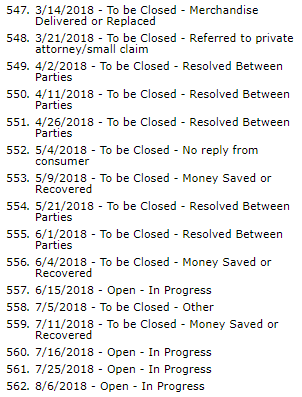
Complaints against Comcast are usually resolved in the customer’s favor, as this report from the New Hampshire attorney general’s office shows.

Jacobs asked the representative to waive the fee because it was never mentioned. The representative refused, and even lectured Jacobs about how little Consolidated was regulated by the state government and could do as it pleased.

“He didn’t care,” she said of one particular representative. “It was like, ‘Too bad.’”

Despite claims the $300 fee was “company policy,” it was news to Jacobs.

“That was never, ever, ever, ever discussed anywhere in the conversation,” she said. “It’s lousy.”

Jacobs had not yet filed a formal complaint, taking her story to the media instead. But similar complaints of hidden/surprise installation and activation fees are very common, and once forwarded by a regulator, are usually resolved by either waiving or refunding the charges.

Customers are gratified they get to keep their money, but remain annoyed at companies who “forget” to disclose important terms and conditions like fees as they try to seal the deal.

Customers can Google their own state’s attorney general and by searching for consumer complaints, can usually file their own complaint online in just a few minutes. In New Hampshire, residents can file a complaint on the website or mail it.

New England residents can also reach out directly to Comcast or Consolidated’s special consumer complaints departments directly by mail:

COMCAST – NEW ENGLAND
Executive Customer Care and Communications
Post Office Box 6505
Chelmsford, MA 01824-0905

CONSOLIDATED COMMUNICATIONS OF NEW HAMPSHIRE, VERMONT, AND MAINE
State Regulatory Matters
800 Hinesburg Road
South Burlington, VT 05403

Comcast provides cable service throughout northern New England and Massachusetts. Consolidated Communications provides landline service predominately in New Hampshire, Vermont, and Maine.

The New Hampshire attorney general’s consumer protection hotline is 1-888-468-4454 or (603) 271-3641, weekdays from 9 a.m. to 3 p.m. You can also contact them by email at: [email protected]

Not Without My Refund! N.Y. Assemblyman Demands Spectrum Issue Rebate Checks

Phillip Dampier August 1, 2018 Charter Spectrum, Consumer News, Public Policy & Gov't Comments Off on Not Without My Refund! N.Y. Assemblyman Demands Spectrum Issue Rebate Checks

Before Charter Communications is shown the door and exits New York (if Charter loses its anticipated legal action against the state), it should be required to issue refund checks to every subscriber in New York to make up for a series of broken promises.


State Assemblyman Anthony Brindisi (D-Utica) has sent a letter to Acting Attorney General Barbara Underwood and New York Public Service Commission Chairman John Rhodes demanding the cable company pay up before transitioning service to another provider.

Brindisi claims Charter’s Spectrum failed to provide promised internet upgrades, has not met its obligation to improve customer service, and is charging even higher rates than its predecessor, Time Warner Cable.

Brindisi is also concerned Charter’s required transition plan may well be redacted by the company. He wants the transition plan made public, with ample opportunity for New York residents to participate in a discussion about which cable company ultimately replaces Spectrum (again assuming the company loses its legal action).

Here is Brindisi’s letter:

Dear Ms. Underwood and Mr. Rhodes:

I am writing to you as a follow up to the order issued by the New York State Public Service Commission on July 27, 2018 to revoke the 2016 merger agreement between Charter Communications, Inc. doing business in New York as Spectrum, and Time Warner Cable, Inc.

This order is truly in the best interests of New York residents.  For two years, I have received  literally hundreds of emails, letters, and petition signatures from constituents who have endured frequent, often unexpected rate hikes, and who have watched flashy ads from Charter promising lightning-fast internet speeds, as they can barely pay bills or send emails through 1980’s-era infrastructure that has not been improved.

Brindisi

I am respectfully asking that you collaborate to work on a three-point plan that addresses concerns I continue to hear from Charter’s cable and internet customers, as well as from the employees who work for the company.  The following is my proposal for consideration by consumer and utility regulators:

Charter should provide reasonable compensation in the form of rebate checks to its customers who have received cable rate hikes significantly above the national average for cable rate increases, which was 5.8 percent from July, 2016 to July, 2017.

Customers with internet service from Charter who never received promised service upgrades should receive compensation in the form of rebate checks from the company.

Any company petitioning the PSC to pick up Charter’s internet, cable, and phone service should pledge to negotiate in good faith with unions representing workers, and should agree not to cut vitally needed pension and health care benefits for workers.

The rate increases Charter customers received shortly after Charter’s acquisition of Time-Warner’s system have been staggering.  One constituent in Utica was billed $91.92 for cable services in January, 2017—and in March, 2018, his bill was $129.26 for exactly the same service.  Another constituent from Rome told me that she paid $108 a month for cable, internet, and telephone service in May, 2016—about the time Charter took over for Time Warner.  By April, 2018, her bill was $200.  These are increases many times the national average, all under the guise of ‘expiring promotional packages’

These cable rate hikes are just as serious a problem for consumers as Charter’s failure to live up to its promises to upgrade its broadband.  Many of the consumers I have heard from are seniors on fixed incomes who depend on cable and internet for information and to communicate with family members.  They should be compensated for what clearly is blatant overcharging.

Thank you very much for all you are doing to protect New York consumers, and for your concern about this issue.  If you have any questions, please feel free to give me a call.

Sincerely,

Anthony Brindisi
Member of Assembly

(Thanks to Todd N., a regular Stop the Cap! reader, for sharing the story.)

Frontier Communications Under Investigation in Minnesota for “Lousy Service”

Phillip Dampier March 2, 2018 Consumer News, Frontier, Public Policy & Gov't, Video Comments Off on Frontier Communications Under Investigation in Minnesota for “Lousy Service”

The Minnesota Public Utilities Commission (MPUC) has opened an inquiry into whether Frontier Communications is meeting its service obligations to customers after receiving a major spike in complaints about the phone company.
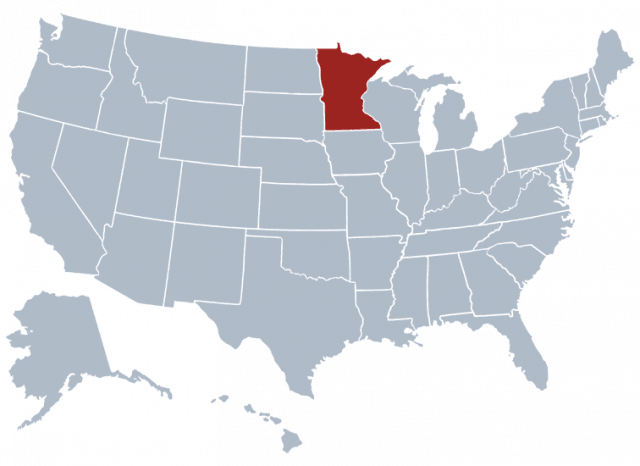
The MPUC acknowledged it has been “receiving a large volume of complaints related to the service quality, customer service, and billing practices of Frontier Communications.” The regulator is concerned that “after attempts to mediate these complaints, many of them remain unresolved.”

The investigation will include the Minnesota Department of Commerce and Minnesota’s Attorney General, both tasked with determining if Frontier is complying with MPUC rules and Minnesota state law.

Frontier provides service to more than 98,000 landlines in Minnesota, doing business as Frontier Communications and Citizens Telecommunications. Most Frontier customers are located in northeastern and southern Minnesota, as well as communities like Apple Valley, Burnsville, Farmington, and Rosemount.

A survey of filed complaints found many involved Frontier’s DSL internet service, which customers complained was slow and prone to frequent outages. Other complaints involved inaccurate billing and missed service calls, which sometimes led to delays of days or weeks before service could be restored.

“I’d heard a bunch of complaints of poor service all across my district,” said Rep. Rob Ecklund (DFL-International Falls) in a news release. “I am a Frontier customer myself, and the service has been lousy.”

Other customers had their complaints published in the Timberjay newspaper, which has been the unofficial meeting place for frustrated customers who cannot get satisfaction from Frontier.

“This has been the worst service experience of my life,” said Melissa Holmes, of Embarrass in northeastern Minnesota. “My whole neighborhood here on Wahlsten Road in Embarrass has had service issues with Frontier for decades. Repeated calls to the company go nowhere.”

The newspaper blamed Frontier’s wrong priorities in a scathing editorial last fall:

Prospects for an improvement in Frontier’s service quality appear unlikely given the increasingly tenuous financial condition of the company. Frontier went deeply in debt in early 2016, when it completed an $11 billion purchase of landline infrastructure formerly owned by Verizon in California, Texas, and Florida. The acquisition more than doubled the size of the company, but also prompted a major restructuring, which included significant layoffs.

Frontier officials had touted the acquisition at the time, arguing that the company knew how to make money from traditional landline infrastructure even as the industry is rapidly transitioning to wireless. But the company has yet to demonstrate it is up to the challenge and as complaints over poor service have mounted, the company has hemorrhaged customers, particularly in more populated regions, where customers often have viable alternatives.

In response, Frontier claims it updated its billing software and is making “process improvements” in the way it conducts business.

If you live in Minnesota and wish to share your views with the MPUC, you can visit their website, register, and comment until May 25, 2018.

The state’s initial investigation and report on Frontier is due on May 11.

KSTP-TV in Minneapolis-St. Paul reports Frontier is under investigation by the state telecom regulator for poor service. (2:21)

Search This Site:

Contributions:

Recent Comments:

Your Account:

Stop the Cap!