Home » copper wiring » Recent Articles:

Windstream’s Kinetic TV Barely Competes With Time Warner Cable in Nebraska

kinetic logoIf Windstream was hoping to make a splash with its new Kinetic IPTV service, Time Warner Cable certainly isn’t reaching for a towel.

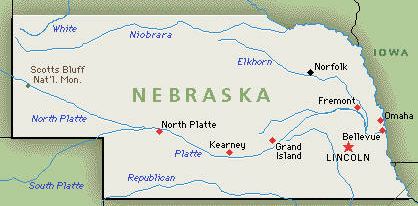
Kinetic debuted in April in Lincoln, Neb., the first community to get Windstream’s fiber to the neighborhood TV service. Three months after being introduced, it’s available in about half of the city. But it is not proving much of a threat to incumbent Time Warner Cable because Windstream set rates roughly the same or higher than what the cable company charges.

In fact, a Stop the Cap! reader contemplating a trial run of Kinetic was quickly dissuaded when he learned Windstream charged $10 more than what he already paid Time Warner Cable.

“Windstream either does not understand Time Warner’s pricing or is artificially trying to limit demand for the moment,” our reader tells us. “I have to believe it is one or the other because the alternative is they don’t know what they are doing and are creating an experiment built to fail. When I told Time Warner I was toying with the idea of trying Kinetic, they cut my bill another $30 a month and Kinetic is now dead to me.”

Time Warner Cable’s customer retention department is well positioned to keep customers because it can sell faster Internet speeds at a lower price than Windstream has offered so far. The phone company obviously has no interest in starting a price war in Lincoln:

  • Windstream Kinetic offers packages ranging from $39.99-$129.98/mo;
  • Time Warner Cable offers packages ranging from $19.99-$129.99/mo.

The Lincoln Journal Star reports other customers have had similar experiences.

lincolnRyan Pryor said he inquired about Kinetic, but the price quoted was slightly more than what he now pays for a similar bundle with Time Warner and would have offered a slower Internet speed. So he chose to stick with what he has.

Where Windstream has had some success is attracting current satellite customers. Jason Smith was tired of losing satellite service during storms and since he was already a Windstream DSL customer, upgrading to Kinetic made sense.

“The picture quality has been very impressive,” Smith told the newspaper. “The one thing I noticed was how much better the picture looked than on DirecTV with the same HDMI connection to my TV.”

Smith is also happy with a more capable whole house DVR and the fact Windstream offers wireless set-top boxes.

But Smith also admitted he wasn’t sure if we would stick with the service long-term. A significant disadvantage of Kinetic is its reliance on copper wiring part of the way between Smith’s home and Windstream’s central office. All fiber to the neighborhood projects have bandwidth limitations that would not exist with a straight fiber to the home upgrade. Kinetic’s limits become clear when trying to watch three HD signals at once while being on the Internet. He can’t. Kinetic limits customers to two HD video streams at a time, compared with DirecTV’s five. Broadband speeds slow if other members of the household are also accessing telephone and television services.

With competition like that, Time Warner Cable has done little to strengthen its position, with no immediate plans to upgrade service in the city. All that has changed recently is a channel realignment that groups like-channels together starting at channel 100. Time Warner began that nationwide channel realignment in Syracuse, N.Y., in the spring of 2013. More than two years later, that change is only now reaching Lincoln.

Bryan Brooks, the Windstream vice president of business development, did not offer the newspaper many specifics about how Kinetic was performing, except to say demand has met expectations.

“Since launch, we have consistently met our daily target numbers for installations and anticipate the number of residents interested in signing up for Kinetic to continue to grow,” Brooks said in an emailed statement. “We are very pleased with how Kinetic has been received in Lincoln.”

Verizon is Still Pushing Voice Link Wireless Home Phone Service

Phillip Dampier June 9, 2015 Consumer News, Public Policy & Gov't, Verizon, Video, Wireless Broadband Comments Off on Verizon is Still Pushing Voice Link Wireless Home Phone Service
Verizon Voice Link

Verizon Voice Link

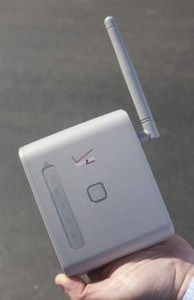
The Communications Workers of America today claimed Verizon is refusing to repair broken landlines and is once again trying to steer customers to a controversial wireless landline replacement Verizon calls Voice Link.

“Verizon is systematically abandoning the legacy network and as a consequence the quality of service for millions of phone customers has plummeted,” Bob Master, CWA’s political director for the union’s northeastern region, told the Wall Street Journal.

The CWA will file public information requests this week with state regulators in New York, New Jersey and Pennsylvania seeking more detailed information about how Verizon is utilizing Voice Link.

Stop the Cap! has received several messages from Verizon customers over the last six months, most in New York City, that were offered Voice Link as a temporary solution to ongoing landline service problems including no dial tone, intermittently failing lines, and those with crosstalk or static problems.

“It is crazy how long Verizon can take to fix a phone line in Manhattan,” wrote our reader Helen. “The problems started in February and we lost service for what turned out to be almost a month. We had four broken repair appointments and every date they promised it would be fixed it wasn’t. Can you imagine a whole month without a phone line?”

Helen tells us that Verizon started leaving messages on her voicemail apologizing for the problems, but offered Voice Link, a wireless landline replacement in the interim.

“At least it was something I told my husband, but he didn’t like the idea because Verizon would probably forget about us after putting it in,” she said. “I won the argument but we lost in the end because Voice Link never worked properly.”

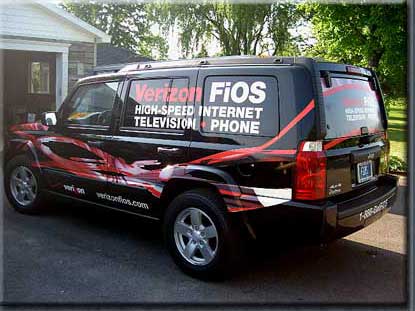
Verizon FiOS is coming to Fire Island.

Helen complained Voice Link made phone calls difficult to understand and often her phone didn’t ring when calls came in.

“Everyone sounded like they were underwater and it was hard to understand people,” she said. “Callers would tell me they heard five rings when calling me, but I only heard one, if that.”

“We switched to Time Warner Cable phone service and it was installed fast,” she said. “But then the fax machine wouldn’t work right so we still need Verizon after all.”

Helen’s apartment building is not yet wired for FiOS because of problems the building management allegedly had with Verizon technicians in the past. She is willing to sign up, but thinks Verizon is not doing itself any favors treating customers badly when their old landlines fail.

“It makes you think how long it will take them to show up if a rat chews through a fiber cable next year.”

The fact Verizon offers Voice Link to customers while phone repairs go uncompleted for extended periods worries the CWA, who accused Verizon of “steering” customers to the wireless replacement.

Verizon spokesman Rich Young says about 13,000 customers have decided to keep Voice Link as a permanent solution to their landline woes and have never gone back to their old copper service.

[flv]http://www.phillipdampier.com/video/Verizon Voice Link A Reliable Alternative.mp4[/flv]

Verizon calls its Voice Link wireless landline replacement a reliable alternative in this promotional video produced in 2013. (2:24)

Thomas MacNabb, Verizon’s director of operations, also defends Voice Link, claiming it represents Verizon giving customers the best possible service when weather-related outages arise.

But retired AT&T executive W. Kenneth Lindhorst counters Voice Link is no upgrade, relying on old 1990s technology, and does not work with credit card machines, faxes, security and home medical monitoring, or wireless data.

“They come in with the implication that they are upgrading services in the neighborhood. They do not tell you that they are switching from a regulated basic to an unregulated service,” Lindhorst said. “They don’t like to be regulated by government. They don’t like their customers to be protected by government.”

Lindhorst is part of Don’t Hang Up On New Jersey, a group fighting Verizon’s efforts to replace Superstorm Sandy-damaged telephone lines with Voice Link. Two bills in the New Jersey legislature: A2459/S278 are seeking a one year moratorium on Verizon replacing damaged copper wiring with any alternative technology, including wireless, until further studies can be done.

[flv]http://www.phillipdampier.com/video/Verizon Voice Link Hanging Up On NJ.mp4[/flv]

Verizon Voice Link is “hanging up on New Jersey” according to a consumer advocacy group. An interview with retired AT&T executive W. Kenneth Lindhorst suggests Verizon wants to use the service to escape regulatory oversight. (2:00)

Hong Kong Shakes Its Head At Telephone Companies Still Wasting Time & Money With Copper Wiring

hktHong Kong Telecom Group (HKT) chief technical officer Paul Berriman believes copper phone wiring is a thing of the past and is nonplussed by efforts to wring a few more years of life out of infrastructure that cannot reliably support high-speed Internet and is costly to maintain. The only solution that makes sense is to get rid of the copper and replace it with fiber optic wiring.

While America talks about 1Gbps limited rollouts, he is thinking about speeds ten times faster with his announcement Hong Kong Telecom is preparing to launch 10 gigabit service across the territory and was continuing its efforts to tear out obsolete copper wiring.

The man partly responsible for ensuring Hong Kong’s broadband future is a fast and reliable one says HKT has 1.6 million broadband customers — 530,000 on fiber to the home service and 200,000 on less-desirable VDSL2 with vectoring, which still relies in part on copper wiring. He is not happy with copper wiring’s performance and support costs and wants it out of his network. His minimum target speed is 100Mbps and if he finds a building that for any reason does not deliver more than 30Mbps at all times, he instructs engineers to immediately tear out the copper and replace it with fiber.

Berriman

Berriman

Overall, Hong Kong has an average Internet speed of 87 megabits per second, according to figures by Akamai. “Our (HKT) average is about 116Mbps,” he said. It is about to get much faster. The two major wired fiber competitors are HKT and HKBN and both compete fiercely for broadband customers.

HKT has three tiers of unlimited use fiber broadband (regular prices shown in U.S. dollars, prices lower for certain bundles and promotions):

  • 300/300Mbps for $64.21/mo;
  • 500/500Mbps for $77.10/mo;
  • 1000/1000Mbps for $90/mo.

When the 10Gbps upgrade is complete, HKT is likely to further boost speeds and/or cut prices.

Berriman acknowledges that the densely packed multi-dwelling apartments and condos common across Hong Kong makes large fiber projects less expensive than elsewhere in the world, but believes costs can be managed by deploying incremental upgrades. For example, HKT today has fiber extending into 85 percent of Hong Kong’s buildings and can connect fiber to 79 percent of homes in Hong Kong within three days of receiving an order.

Depending on a customer’s requirements, HKT can save money by serving DSL over short lengths of existing in-building copper wiring for customers not subscribed to ultra-fast broadband speed tiers. The length of wiring is short enough to guarantee speed is not affected for these customers. When customers do need the fastest speeds, fiber is strung directly to their apartment. Despite this, HKT is progressively migrating away from “fiber to the basement” to an all-fiber network to simplify its facilities and increase reliability, especially as the demand for faster speeds continues to grow.

“Once we get to 50 or 60 percent usage of the fiber in the building we start to look at converting the rest to get rid of the [older DSL] electronics,” Berriman said.

HKT also operates a mobile network it acquired from “Sunday” in 2006 and has also bought out Telstra’s share of the formerly joint owned CSL. The wireless company has a 31 percent market share and 4.6 million customers on two different networks — one supplied by ZTE and the other from Huawei. To supplement its wireless mobile network and offload traffic, HKT also operates 14,000 Wi-Fi hotspots across Hong Kong and is a leader in the use of EAP-SIM, which makes it easy for connections to be handed off between its mobile and Wi-Fi networks without interruption.

Deregulation: New Jersey Regulators Unanimously Vote to Let Verizon Do Pretty Much Anything It Wants

verizonThe New Jersey Board of Public Utilities (BPU) unanimously approved an agreement this week exempting Verizon from most basic landline service regulations, prompting immediate outrage from consumer, senior and labor groups who predict it will lead to rate increases and deteriorating service.
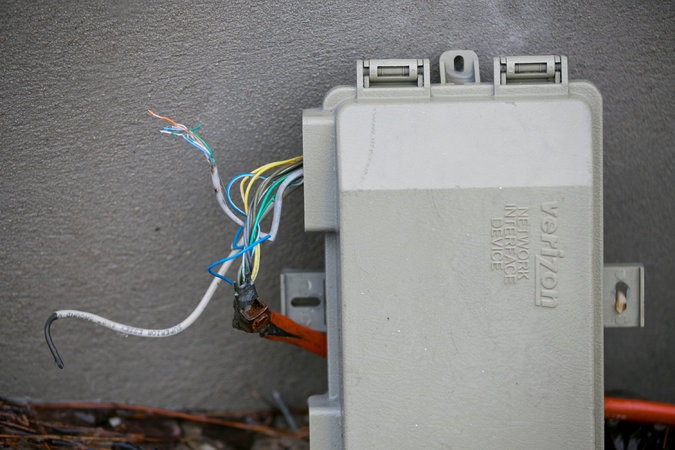

The agreement removes pricing oversight regulations for residential basic telephone service, single-line business telephone service, nonrecurring charges for residential service connection and installation, and residential directory assistance services. That will allow Verizon to charge whatever the market will bear after a transition period. While that may not be a big problem for cell phone users and those who have dropped Verizon for cable company phone service or a broadband-powered Voice over IP alternative, it will leave rural New Jersey residents vulnerable if Verizon abuses its pricing privileges in areas where there are no alternatives.

“Today’s back room deal is bad for seniors, bad for workers at Verizon, and bad for the millions of businesses and homes that rely on affordable, reliable phone service,” said Seth Hahn, the CWA’s New Jersey legislative and political director. “In fact, it’s bad for everyone in New Jersey except Verizon. Something changed between 2011 when Governor Christie said seniors need protections and now I fear it’s the hundreds of thousands of dollars Verizon has funneled to various entities to help Christie’s political ambitions.”

Under the new deal, Verizon will cap its current basic residential rate of $16.45 for what it calls a five-year transition period. Verizon can increase the cost by only $6 during the first five years. After that, the sky is the limit.

Landline service quality - disconnected.

Landline service quality – disconnected.

The change is likely to push many of New Jersey’s 100,000 remaining landline customers to competitive alternatives which often cost considerably less, but those with medical conditions, rural residents and seniors will likely be trapped using Verizon’s copper wire landline service indefinitely.

It’s the second major victory for Verizon. Last March, the Christie Administration let Verizon off the hook with no penalties for reneging on its commitment to wire 100% of New Jersey with fiber optics by 2010. New Jersey ratepayers paid as much as $15 billion in surcharges and higher rates for a statewide fiber network that was supposed to reach every home and business. Verizon kept the money and many parts of New Jersey never got the promised upgrades. Now those areas still using decades-old copper wiring are likely to experience an increase in service problems as Verizon continues to decrease its budget to maintain landline infrastructure.

Local officials, particularly those in rural counties, were angry the BPU approved a deregulation measure that will leave consumers exposed to deteriorating service as Verizon focuses on its more lucrative wireless business.

“Who will protect the public interest now,” Greg Facemyer, a councilman in Hopewell Township, Cumberland County told The Star-Ledger by email. “This is a sad day for the senior citizens, students and farmers in small underserved communities like Hopewell Township. Where do New Jersey residents turn when their phones don’t work. This is a clear public safety issue. Spotty wireless coverage is not a reliable alternative to Verizon’s statutory obligation to New Jersey residents.”

bpuStefanie Brand, director of the New Jersey Rate Counsel saw the vote as a rush to Verizon’s business and profit agendas.

“I am certainly disheartened that they didn’t at least allow more time,” Brand said. “I think the public has a lot to say about this and I thought it would have been a good idea to have the public’s input.”

Verizon says it is the only telecom company in New Jersey subject to the outdated regulations now being dropped. The company says its competitors have done business without price regulations and oversight and have an unfair advantage.

“Something smells at the New Jersey Board of Public Utilities and it’s not May flowers,” responded Daniel Benson, a representative of the 14th district of the New Jersey General Assembly. “At a time when Verizon isn’t maintaining its infrastructure, as evidenced by service declines throughout New Jersey, I don’t believe further deregulation is a sensible policy response. If the agreement is approved, many will be left defenseless to Verizon’s demands and get hit directly where it hurts — their pocketbooks. To add insult to injury, no public hearings are scheduled — those affected can’t even voice concerns on how changes would affect them.”

Fiber Games: AT&T (Slightly) Backtracks on Fiber Suspension After Embarrassed by FCC

HissyfitwatchAT&T CEO Randall Stephenson’s public hissy fit against the Obama Administration’s sudden backbone on Net Neutrality may complicate AT&T’s plans to win approval of its merger with DirecTV. forcing AT&T to retract threats to suspend fiber buildouts if the administration moves forward with its efforts to ban Internet fast lanes.

Hours after Stephenson told investors AT&T wouldn’t continue with plans to bring U-verse with GigaPower fiber broadband to more cities as long as Net Neutrality was on the agenda, the FCC requested clarification about exactly what AT&T and its CEO was planning. More importantly, it noted responses would become part of the record in its consideration of AT&T’s proposed acquisition of the satellite television provider. The regulator could not send a clearer message that Stephenson’s statements could affect the company’s $48.5 billion merger deal.

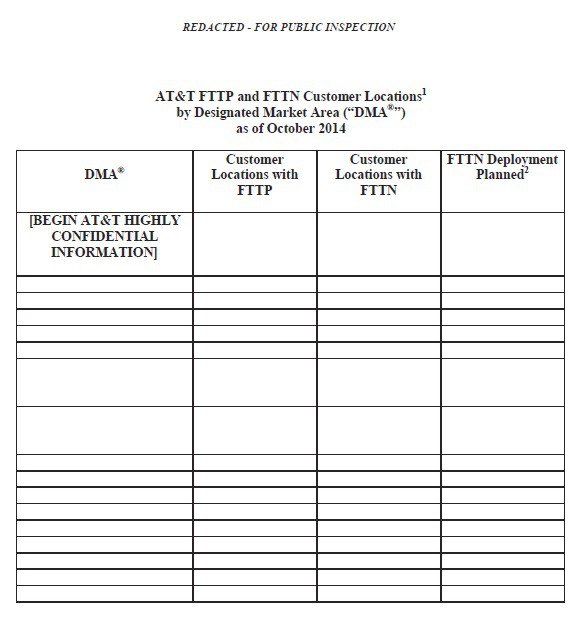
AT&T responded – four days after the FCC’s deadline – in a three-page letter with a heavily redacted attachment that basically told the Commission it misunderstood AT&T’s true intentions:

The premise of the Commission’s November 14 Letter is incorrect. AT&T is not limiting our FTTP deployment to 2 million homes. To the contrary, AT&T still plans to complete the major initiative we announced in April to expand our ultra-fast GigaPower fiber network in 25 major metropolitan areas nationwide, including 21 new major metropolitan areas. In addition, as AT&T has described to the Commission in this proceeding, the synergies created by our DIRECTV transaction will allow us to extend our GigaPower service to at least 2 million additional customer locations, beyond those announced in April, within four years after close.

Although AT&T is willing to say it will deliver improved broadband to at least “15 million customer locations, mostly in rural areas,” it is also continuing its fiber shell game with the FCC by not specifying exactly how many of those customers will receive fiber broadband, how many will receive an incremental speed upgrade to their existing U-verse fiber/copper service, or not get fiber at all. AT&T routinely promises upgrades using a mix of technologies “such as” fiber to the home and fixed wireless, part of AT&T’s broader agenda to abandon its rural landline service and force customers to a much costlier and less reliable wireless data connection. It isn’t willing to tell the public who will win fiber upgrades and who will be forced off DSL in favor of AT&T’s enormously profitable wireless service.

Your right to know... undelivered.

Your right to know… undelivered. AT&T redacted information about its specific fiber plans.

Fun Fact: AT&T is cutting its investment in network upgrades by $3 billion in 2015 and plans a budget of $18 billion for capex investments across the entire company in 2015 — almost three times less than what AT&T is ready to spend just to acquire DirecTV.

The FCC was provided a market-by-market breakdown of how many customers currently get U-verse over AT&T’s fiber/copper “fiber to the neighborhood” network and those already getting fiber straight to the home. But this does not tell the FCC how many homes and businesses AT&T intends to wire for GigaPower — its gigabit speed network that requires fiber to the premises. Indeed, AT&T would only disclose how many homes and businesses it plans to provide with traditional U-verse using a combination of fiber and copper wiring — an inferior technology not capable of the speeds AT&T repeatedly touts in its press releases.

That has all the makings of an AT&T Fiber Snow Job only Buffalo could love.

AT&T also complained about the Obama Administration’s efforts to spoil AT&T’s fast lane Money Party:

At the same time, President Obama’s proposal in early November to regulate the entire Internet under rules from the 1930s injects significant uncertainty into the economics underlying our investment decisions. While we have reiterated that we will stand by the commitments described above, this uncertainty makes it prudent to pause consideration of any further investments – beyond those discussed above – to bring advanced broadband networks to even more customer locations, including additional upgrades of existing DSL and IPDSL lines, that might be feasible in the future under a more stable and predictable regulatory regime. To be clear, AT&T has not stated that the President’s proposal would render all of these locations unprofitable. Rather, AT&T simply cannot evaluate additional investment beyond its existing commitments until the regulatory treatment of broadband service is clarified.

AT&T’s too-cute-by-half ‘1930s era regulation’ talking point, also echoed by its financially tethered minions in the dollar-a-holler sock-puppet sector, suggests the Obama Administration is seeking to regulate AT&T as a monopoly provider. Except the Obama Administration is proposing nothing of the sort. The FCC should give AT&T’s comments the same weight it should give its fiber commitments — treat them as suspect at best. As we’ve written repeatedly, AT&T’s fabulous fiber future looks splendid on paper, but without evidence of spending sufficient to pay for it, AT&T’s piece of work should be filed under fiction.

Search This Site:

Contributions:

Recent Comments:

Your Account:

Stop the Cap!