Home » Contract » Recent Articles:

Media General Yanks 16 Of Its TV Stations Off Mediacom Cable Systems Nationwide

Phillip Dampier July 15, 2015 Consumer News, Mediacom, Public Policy & Gov't 1 Comment

media generalMediacom subscribers in 15 cities lost 16 Media General-owned over the air stations from the cable lineup in a retransmission consent dispute just as a Major League Baseball All-Star Game to be shown on some of them was about to get underway.

Most of the stations are in smaller cities served by Mediacom and include:

  • Alabama: WIAT (CBS) Birmingham, WFNA (CW) Mobile
  • California: KRON (CW) San Francisco-Oakland-San Jose
  • Indiana: WANE (CBS) Fort Wayne, WTHI (CBS) Terre Haute
  • Kansas: KSNT (NBC) Topeka, KTMJ Topeka, KSNW (NBC) Wichita-Hutchison
  • Iowa: KWQC (NBC) Davenport,  KIMT (CBS/My Network TV) Mason City
  • Michigan: WOTV (ABC) Grand Rapids-Kalamazoo-Battle Creek, WOOD (NBC) Grand Rapids-Kalamazoo-Battle Creek
  • South Dakota: KELO (CBS/My Network TV) Sioux Falls
  • Tennessee: WKRN (ABC) Nashville
  • Virginia: WAVY (NBC) Norfolk-Portsmouth-Newport News, WVBT Norfolk
  • Wisconsin: WBAY (ABC) Green Bay-Appleton

logo_mediacom_mainMediacom claims Media General was seeking excessive compensation to renew its carriage agreement with the television stations. Customers were told in a letter signed by Tom Curtis that some stations were demanding more than double the old rate to renew the contract.

“Not only was Media General demanding more than double the money, the price they set for KWQC [in Davenport, Iowa] was significantly more than any other broadcast station we carry,” Curtis wrote. “If we agreed to Media General’s demands, KWQC would have become the most expensive broadcast channel in all of the 1,500 communities that Mediacom serves across 22 states. Further, other broadcasters would follow and begin demanding to be paid the same as Media General, driving up costs for other channels on your lineup.”

This is the second time in four years customers have lost the stations. When LIN Media owned several of the outlets in 2011, it refused cable carriage for more than a month over a similar dispute.

Judge Rules for Comcast in Alarm System Case; Contract Makes It Nearly Impossible to Challenge Company

Phillip Dampier June 3, 2015 Comcast/Xfinity, Consumer News, Public Policy & Gov't Comments Off on Judge Rules for Comcast in Alarm System Case; Contract Makes It Nearly Impossible to Challenge Company

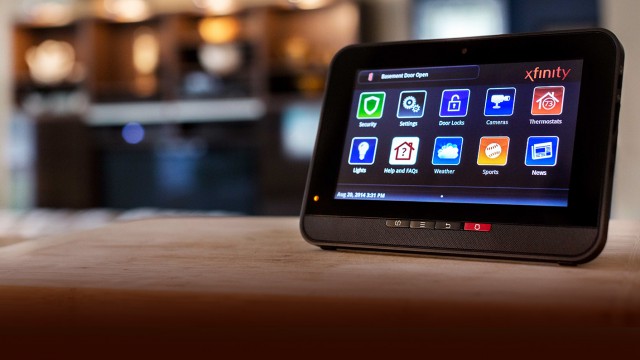
xfinity-homeComcast’s sweeping disclaimers of responsibility for failures or confusion over its home security system made it next to impossible for a Washington state judge to find the cable company or its contractor liable for an alleged system failure that allowed two men to break into a Kirkland home undetected and torture the family’s teenage son.

Washington Superior Court Judge William Downing sympathized with the Rawat family over the intuitiveness of XFINITY’s Home Security system that required the family to arm it by selecting “away” mode before going to sleep, in turn activating motion detectors that would have alerted the family to the break-in.

“In the world of made-up words like XFINITY and meaningless slogans like ‘The Future of Awesome,’ this is not startling,” the judge said. “It is Microsoft that has trained us to shut down our computers by going to the ‘Start’ menu. More to the point, it is equally counterintuitive to believe that an indoor motion detector would be armed when a system was being set for a family and pets intending to stay inside the house.”

Comcast's security contract lets the company walk away from responsibility for virtually everything.

Comcast’s security contract lets the company walk away from responsibility for virtually everything.

Despite that, the Rawat family attorney had a high hurdle to overcome – Comcast’s contract with its customers that disavowed responsibility for almost any and all failures of the system and goes as far as to require victims to protect Comcast if a matter reaches the courts.

kirkland“Comcast complied with the terms of its written contract and did not breach any of its contractual duties,” the judge said. “No claims can lie for breaches of any expressed or implied warranties that were effectively disclaimed in the written contract.”

The judge added the plaintiffs may have exposed imperfections in Comcast’s installer training, the information conveyed on its lighted home security system control panels, and the nomenclature used to designate different system modes. But none of those acts overcame Comcast’s contractual disclaimers and failed to reach the legal definition of negligence.

Comcast’s attorneys argued the undetected break-in was the fault of the Rawat family because they failed to use the XFINITY Home Security system properly. To activate protection, the family had to arm the system in “away” mode before going to sleep, despite the fact the system’s motion detectors could trigger a false alarm if anyone moved inside of the home.

downing

Downing

Ultimately, the judge found Comcast’s argument compelling.

“The malicious attack by the two criminals was motivated by pure evil and warrants every last second of punishment that they receive,” the Comcast attorney said. “However, what happened to Deep Rawat is not the result of anything that Comcast or Pioneer [the contractor] did or did not do.”

In short, the family should hold Blessing Gainey and Vincent Sisounong, who pled guilty to the attack last year, responsible, not Comcast or its contractor.

While acknowledging the severity of the plaintiffs’ son’s injuries and the emotional impact of the crime, the judge could not find Comcast responsible under the terms of the contract the family willingly signed.

But the case may offer some insight for other Comcast customers who either have or are evaluating an XFINITY Home Security system. A careful review of the contract Comcast makes customers sign may prove important as a customer considers their options for home security and personal protection.

Comcast Blames Victim’s Family, Not Its Alarm System, for Failure to Alert Police Their Son Was Being Tortured

Phillip Dampier May 21, 2015 Comcast/Xfinity, Consumer News, Public Policy & Gov't Comments Off on Comcast Blames Victim’s Family, Not Its Alarm System, for Failure to Alert Police Their Son Was Being Tortured
comcast home

If it works properly

Comcast has blamed its customer for the failure of its home security system to detect a break in and alert police before intruders terrorized and tortured their son.

Last fall, Stop the Cap! told readers about the plight of the Rawat family, in Kirkland, Wash., who depended on home security services provided by Comcast and now wished they didn’t.

In November 2013, police say Vincent Sisounong and Blessing Gainey planned a home invasion to steal vehicles, electronics, and money from the family. To achieve their plan, the 21 and 19-year old had to defeat Comcast’s Xfinity Home security system. According to a lawsuit now being heard in a bench trial this week, the two men didn’t have to do anything because the system never worked properly.

After entering the Rawat home, the two planned to find the family’s 18-year old son Deep and “chop off one of his arms and legs with various cutting tools” as an intimidation tactic. The attack started in Deep’s bedroom. The two men dragged him to the basement, where Sisounong instructed Gainey to hack at Rawat’s leg down to the bone, and then stabbed Rawat himself. Court documents said Sisounong told detectives that he wanted the victim to “fight for his life,” and when asked if the experience was enjoyable, he said, “yeah.”

vin

Sisounong (L) and Gainey (R)

For nearly half an hour, the struggle between the two intruders and Deep continued inside the home and finally ended when the intruders walked out the door. At no time did Comcast’s security system sound. The family had to ask neighbors to call police.

Comcast quickly blamed the family for not installing and using its system properly, despite the fact its installation was planned and performed by a Comcast subcontractor.

This week, the torture victim and his parents, Leena and Manoj Rawat, argued that Comcast and its contractor Pioneer Cable Contractors, Inc. improperly installed the Xfinity Home system. A recommendation from the installer placed the system’s motion detector in the basement, where it provided no protection when the family was home. The installer allegedly told the family they did not need window sensors because the motion detector was a suitable alternative. Although window sensors are usually constantly monitored, motion detectors are not when a family is home to prevent false alarms.

“This advice runs counter to every standard in the industry,” Rawat family attorney Ken Friedman argued during his opening arguments Monday. “The system as set up was useless, or in some cases worse than useless, because it provided a false sense of security.”

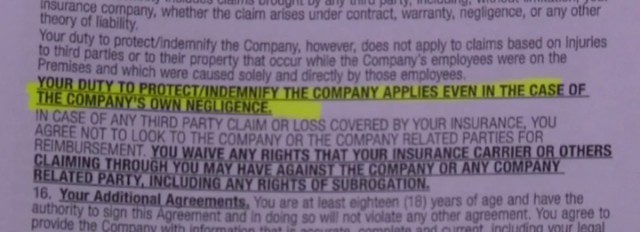
Friedman is also fighting to overcome Comcast’s terms and conditions, which require customers to protect Comcast’s interests above their own at all times, even when the company is found negligent. To emphasize the point, Comcast places it in bold, extra-large capital lettering:

Comcast's security contract lets the company walk away from responsibility for virtually everything.

Comcast’s security contract lets the company walk away from responsibility for almost everything.

YOUR DUTY TO PROTECT/INDEMNIFY THE COMPANY APPLIES EVEN IN THE CASE OF THE COMPANY’S OWN NEGLIGENCE.

“If their argument is to be accepted, they could put in empty black boxes throughout the house and say, ‘That’s your system.’ And then something goes wrong, and they say, ‘We never promised you it would work,’” said Friedman.

A better option?

A better option?

The Rawat’s lawsuit alleges negligence, breach of contract and express and implied warranties, and a violation of the Washington Consumer Protection Act.

Comcast’s response is that their alarm system was never at fault.

“The malicious attack by the two criminals was motivated by pure evil and warrants every last second of punishment that they receive,” Comcast attorney Timothy Pastore said. “However, what happened to Deep Rawat is not the result of anything that Comcast or Pioneer did or did not do.”

Pastore claimed the family specifically ordered the alarm as it was installed, and it was working properly. The fault lied with the family because they failed to arm the system’s motion detectors by setting it to the “away” mode while they were asleep.

But if they had done as Pastore suggested, the motion sensor would have sounded the alarm if any family member moved around inside the home. The window sensors were designed to work at all times and would not sound unless a window was opened or broken. For added security and peace of mind, you can click here to visit Maverick Windows for free consultation and expert guidance in choosing the ideal windows for your home.

Still Waiting for FiOS in New York City? Your Landlord Might Be to Blame… Or Verizon

Phillip Dampier January 13, 2015 Competition, Consumer News, Public Policy & Gov't, Verizon 3 Comments

keep outVerizon Communications has stepped up efforts in New York City to get intransigent landlords to let the company into their buildings to bring FiOS fiber optics to tenants, even as some property managers accuse Verizon of ignoring earlier requests to get the service.

On at least 13 occasions in December, Verizon has filed petitions with the New York Public Service Commission requesting help to gain entry to a total of 476 buildings in the city after claiming to receive either no response from building management or active resistance to Verizon bringing FiOS to their tenants.

In an effort to stay compliant with its franchise agreement with the City of New York, Alyson Siegal, area manager for FiOS Franchise Assurance – New York City, has written a lot of letters lately:

Dear Property Owner/Manager:

I have been advised by Verizon New York Inc.’s (“Verizon”) NYC FiOS Real Estate Department of the difficulty Verizon has encountered in attempting to install and/or attach its FiOS facilities at [your property].

Our records indicate that you have not responded to our previous correspondence, that you have conditioned Verizon’s access on unreasonable terms and conditions or that you have denied Verizon access to the Property. The purpose of this letter is to restate our need to gain access to your Property.

By way of background, Verizon is attempting to gain access to your building because we have received a request for FiOS service(s) from a tenant(s) in your building and/or a resident(s) on your block, and our access to your Property is necessary to provide cable television services to those tenants and/or residents. We are very excited about the opportunity to provide world-class voice, data and video services to you and the area residents using a fiber based network to deliver these services at unprecedented speeds and capacities. Your cooperation in allowing Verizon access to your Property will enable your tenants and/or other residents on your block to receive the services they want in a timely manner.
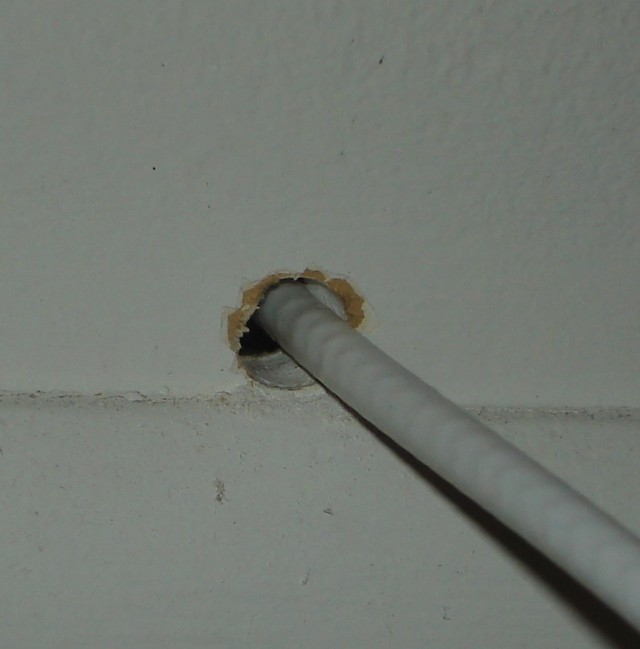
Building owners don't want a repeat of this kind of FiOS installation.

Building owners don’t want a repeat of this kind of FiOS installation.

In a few earlier cases, some landlords refused entry without special financial compensation or gifts like free service for life. Others have unilaterally decided their tenants are happy enough being served by Time Warner Cable and don’t need a competitor. But a significant number claim the problem is with Verizon itself.

Hamdi Nezaj, who owns several buildings in Bronx, last summer refused entry to workers seeking to install FiOS, complaining Verizon performed shoddy work.

“On three properties that I own, the installation of FiOS was done recklessly,” complained Nezaj. “They never came back to fix the holes that were drilled, fix the boxes they installed and put molding on their respective wires. I am not interested once again in having Verizon drill holes and butcher my buildings.”

Several building owners responded to Verizon’s complaints indicating the phone company itself was responsible for dropping the ball on FiOS installation and were stunned the company was resorting to legal tactics to force entry.

Arthur Leeds from Leeds Associates LLC reports one of his properties has been waiting for Verizon to install FiOS since April 2014.
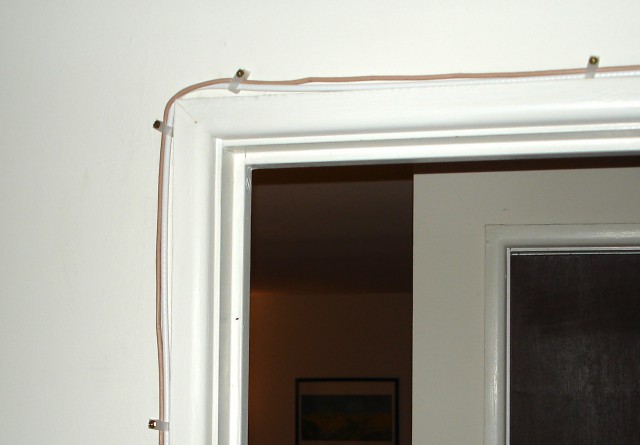
This customer found Verizon installing its FiOS cables up and down his doorways.

This customer found Verizon installing its FiOS cables up and down his doorways.

“We have responded every time we were asked for access most specifically to Thomas Miller, the FiOS franchise manager in NYC, and to Alyson Seigal (sic) another Verizon manager either by phone or via certified mail but all of our responses to them were ignored,” wrote Leeds. “Further we are well aware of the law and are certainly interested in supplying our tenants with alternatives to RCN and Time Warner Cable. However we do have a right to know how and with what materials Verizon intends to install their equipment in our building, [a request that] seems to stall any response on your part or that of your contractors.”

Amy Ward, an attorney representing the interests of 200 East 87”’ Street Associates, LP, has Leeds beat. She told the PSC Verizon first sought to install FiOS in the building in 2012, but Verizon kept stalling. When Verizon formally sought permission yet again in September 2014, a building representative asked for a delay because of “multiple intrusive projects occurring at and planned for the property.” No response to that request was forthcoming from Verizon until the December demand for entry was received.

Brian Loftman, property manager of the @The Aspen New York, wrote the PSC he was not happy to hear from Verizon’s legal team either.
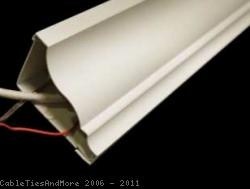
Many building owners want Verizon to install crown molding that can effectively hide cables.

Many building owners want Verizon to install crown molding like this that can effectively hide cables.

“I am appalled that Mr. Richard C. Fipphen, assistant general counsel for Verizon has contacted you stating that we have not complied with their request to give access to the property,” wrote Loftman.

Loftman included a copy of correspondence he sent to Ms. Siegal, claiming she is impossible to reach.

“I am writing to you because after several attempts to reach you via phone at 888 364 3467 it has been impossible,” wrote Loftman. “I find it hard to believe that you being in the telecommunications business that even your voicemail is full and I cannot leave a message on the number you provided us to contact your office.”

Loftman also questioned Siegal’s claims that Verizon has “world-class voice, data, and video services.”

“Has it improved since the last time our phones were out or the DSL went down for almost a week?” he asked.

Loftman’s previous experience with Verizon’s installation crews was not a positive one. He only learned after signing up for the service at another building he manages that Verizon intended to use visible basic plastic molding throughout the building’s hallways to hide FiOS wiring. Other property managers shared aesthetic objections to Verizon’s plans, requesting wiring be installed behind more visually attractive crown molding or run through ceiling ducts.

Part of New York State’s Public Service law covers the installation of cable television facilities, which also covers Verizon FiOS:

§228. Landlord-tenant relationship

1. No landlord shall:

(a) interfere with the installation of cable television facilities upon his property or premises, except that a landlord may require:

(1) that the installation of cable television facilities conform to such reasonable conditions are necessary to protect the safety, functioning and appearance of the premises, and the convenience and well being of other tenants;
(2) that the cable television company or the tenant or a combination thereof bear the entire cost of the installation, operation or removal of such facilities; and
(3) that the cable television company agree to indemnify the landlord for any damage caused by the installation, operation or removal of such facilities.

§898.1 Prohibition

Except as provided in section 898.2 of this Part, no landlord shall demand or accept any payment from any cable television company in exchange for permitting cable television service or facilities on or within said landlord’s property or premises.

§898.2 Just Compensation

Every landlord shall be entitled to the payment of just compensation for property taken by a cable television company for the installation of cable television service or facilities. The amount of just compensation shall be determined by the commission in accordance with section 228 (1)(b) of the Public Service Law upon application by the landlord pursuant to section 898.5 of this Part.

Nashville Comcast Customer Paying for Business Service to Avoid Usage Caps Faces $2,789 Cancelation Fee

Phillip Dampier November 19, 2014 Comcast/Xfinity, Consumer News, Video Comments Off on Nashville Comcast Customer Paying for Business Service to Avoid Usage Caps Faces $2,789 Cancelation Fee

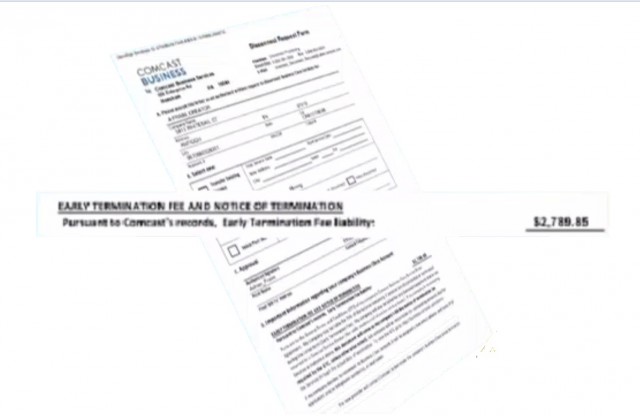
comcast business cancelA Nashville web developer who signed up for usage-cap exempted Business Class service in one of Comcast’s usage-based billing trial cities received a bill for nearly $3,000 in early termination fees after he was unable to transfer his Comcast Internet service to his new address.
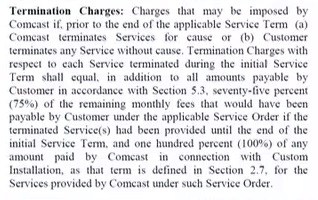

Adrian Fraim followed the lead of other savvy Comcast customers who have managed to avoid the company’s usage caps by signing up for cap-free Business Class service. For years, Comcast has offered small businesses a commercial service for only slightly more than residential service, without any usage limits. But any customer is free to sign up.

Fraim thought he was getting a good deal and was happy with his broadband service, but Comcast took him to school when he tried to move service from Antioch to his new address in Clarksville, which he later discovered was outside of Comcast’s service area. The cable company treated his move as a violation of his three-year service contract and billed him an early termination fee of $2,789.

“I was just blown away,” Fraim told WSMV-TV. “That’s way too much money for somebody like me to be able to pay. They kept telling me the same thing, ‘you’re under contract, that’s what the contract says.'”

Only Fraim has never seen a printed Comcast contract. The company only offers its general service agreement and acceptable use policy online and it implies commercial customers are under a one-year contract.

In fact, Comcast’s terms require early-canceling customers to pay 75% of the amount they would have paid on their monthly bill under contract and 100% of any waived custom installation fees. A customer with a $100/mo broadband bill would owe a termination fee of $75 a month for each of up to 36 months of service.

etf

“I didn’t think that was fair, to pay an early termination fee, because I wanted to keep their service,” Fraim said. “And due to them not offering it in my area, I feel like I was being punished because they don’t offer the service here.”

Comcast didn’t seem to care about Fraim’s predicament until reporters called the cable company.

Faced with the prospect of leading the local evening news, Comcast turned Fraim’s frown upside down and finally relented.

Spokesman Alex Horwitz said Comcast does have early termination fees, but because of the extenuating circumstances, “the new location is not serviceable by Comcast,” they will waive the fee.

Comcast has not modified its contract to offer that “get out of penalty jail free”-card to other customers, so be certain to carefully consider the term length of your contract and be sure you have no plans to move outside of a Comcast service area before signing it, unless you have very deep pockets.

[flv]http://www.phillipdampier.com/video/WSMV Nashville Man questions 3000 Comcast bill 11-17-14.mp4[/flv]

WSMV talks with Nashville web developer Adrian Fraim who discovered a nasty surprise when he moved outside of Comcast’s service area – a $2.789 early termination fee. (2:08)

Search This Site:

Contributions:

Recent Comments:

Your Account:

Stop the Cap!