Home » consumption billing » Recent Articles:

Mark Cuban: “Someone Always Must Pay for Free” & Other ‘TV Everywhere’ Ponderings

Phillip Dampier September 16, 2009 Data Caps, Editorial & Site News, Online Video Comments Off on Mark Cuban: “Someone Always Must Pay for Free” & Other ‘TV Everywhere’ Ponderings
maverick

Mark Cuban, owner of HDNet, maintains a personal blog

Mark Cuban is on another tear this week.  Stop the Cap! reader Michael referred us to the latest.  This time it’s TV Everywhere, the cable industry’s answer to online video they get to own and control.

TV Everywhere is a concept put out by TV distributors that basically says that if you pay for cable or satellite, you should be able to watch the content you want, where you want. Everywhere. To some people this is not a good idea.  As is always the case,  many people think tv programming should be widely available for free on the internet.  Of course the content is never free. Someone has to pay to create it and we purchasers of cable and satellite services pay the subscription fees that pay the content companies and allow them to create all that content. Someone always must pay for free. Its unfortunate that there are some incredibly greedy people who think their entertainment needs should be subsidized. We aren’t talking healthcare, we are talking The Simpsons.  No one in the country has the right for their Simpsons to be subsidized.

I am uncertain why Mark is tilting at windmills here, fighting a battle with arguments that are beside the point.

He should know, as an independent programmer, permitting another cartel for video program distribution online has the potential to place control of that content in the hands of the pay television industry.  Agreements to carry a cable network on a cable system could easily become contingent on participation in TV Everywhere once it becomes more established.  Mark knows all about restrictive carriage agreements.  Some of his networks were trapped in a mini-premium HD tier on Time Warner Cable, despite his wishes to see them a part of the general HD lineup.  Once Time Warner Cable threw his networks off their cable systems nationwide, presumably so would go our online access to it as well.

For consumers, the basic concept of TV Everywhere seems like a positive development, if it brings online video content people want to see without charging them yet another fee on their pay television bill.  Consumers, raise your hand if you have a problem with more online video.

In fact, the loudest concerns about the entire endeavor these days are coming from the content producers and owners themselves.  They are the ones worrying about giving content away.

The Wall Street Journal chronicles the concerns:

While 24 networks are taking part in the Comcast trial, including Time Warner’s Turner cable networks, broadcaster CBS, AMC, BBC America, and Hallmark Channel, Walt Disney Co. (DIS) has so far avoided the “TV Everywhere” experiment because it doesn’t offer the Disney networks enough money in return for allowing their shows to be streamed over the Web.

“A new opportunity to reach consumers is very attractive … [but] we want to do so in a way that delivers proper compensation [to us] for that value,” said Disney Chief Financial Officer Tom Staggs, who spoke at the Goldman Sachs media conference on Tuesday.

That brought out Jeff Bewkes, Time Warner CEO, who scoffed at the demands for compensation.  Bewkes reminded Disney who is paying the bills.

“[The content providers are] not the ones who are going to the effort and expense of making this possible,” he remarked. “The ones that are making this possible are the distributors – the telcos, the satellite companies, the cable companies.”

Second, nobody is arguing that TV programming should be given away “free” online with absolutely no compensation.  The existing online video models are primarily advertiser supported.  The advertisers pay the costs to make the service available, and viewers endure online commercials during each ad break.  Some networks want to cram a ton of ads equaling the number a viewer would see on their television (get ready for more Snuggie and door draft stick on tape ads). Others are more realistic and will place a maximum of 30 seconds of commercials during each break.  Finding the right balance will be important — too many ads and consumers will pirate the content to avoid the ads.  Run smaller amounts and consumers will easily tolerate them.

Third, nobody I am aware of is arguing TV needs to be “subsidized.”  What does that even mean?

Besides the skirmish between content providers and the companies that want to distribute TV Everywhere, the concerns I’ve seen expressed include:

  • The concentration and control of online video content through a cable industry-controlled authentication system that is long on generalities and short on specifics regarding how it will operate.  How do non-cable subscribers get “authenticated.”  What procedures are in place to protect the competitive data other providers will have to share with any authentication process?  How about customer privacy?  Is there equity of access to TV Everywhere regardless of the pay television service the consumer subscribes to?
  • The credibility of the broadband providers’ argument that their networks are already overcrowded to the point they must “experiment” with usage caps, consumption billing, and other Internet Overcharging schemes.  Apparently their networks aren’t nearly as congested as they would have us believe, considering the fact they are participating in a project to place an even greater load on those networks.
  • Mark seems to support content portability, namely the ability for a subscriber to place that content on any device for viewing.  Good luck.  Content producers go bananas over content that can be downloaded and viewed on any device or computer, because such open standards are also open to rampant piracy.

TV Everywhere can be a consumer value-added service for pay television providers, if it’s handled in a consumer friendly way.  The cable industry does not have an excellent track record of keeping their customers in love with them.  My personal concern is that what TV Everywhere gives away for free to “authenticated” subscribers today will tomorrow be packed with advertising, carry an additional fee for access on your cable bill, and will be just one more excuse to try and ram usage caps and consumption billing down the throats of the broadband customers trying to take advantage of their broadband service.

‘Tis The Season for Comcast Rate Hikes: Cable Modem Rental Increases to $5 Per Month

Phillip Dampier September 16, 2009 Comcast/Xfinity, Data Caps 4 Comments
Cable Modem

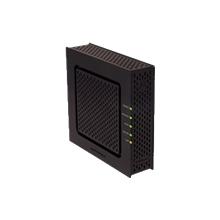
Motorola SB6120 SURFboard DOCSIS 3.0 eXtreme Broadband Cable Modem

Another year, another rate hike for millions of Comcast customers.  The cable company is notifying cable subscribers of rate increases for programming and equipment.  While Comcast says the rate increases are among the lowest the company has implemented, the sting will be felt differently based on the types of services a customer receives.  One particularly nasty increase is for the cable modem rental fee.  In most areas, that used to be $3 a month, but is now increasing a whopping 66% to $5 a month.  Comcast blames the increased equipment expenses incurred upgrading their broadband network.

Consumers can avoid the monthly rental fee by purchasing their own cable modem, retailing for $60-100 depending on the model.  A Motorola SB6120 SURFboard DOCSIS 3.0 eXtreme Broadband Cable Modem is available from Amazon.com for less than $90 and works with Comcast.

Although not every Comcast customer rents a cable modem from the company, the company will earn hundreds of millions of dollars in new revenue from the rate increase for cable modems, according to Multichannel News.

The Marin Independent Journal crunched the numbers:

In the San Francisco area, where Comcast has 2.2 million customers, the average rate increase will be 1.6 percent, down from a 4.9 percent spike in 2008-09 and a 6.9 percent jump in 2005-06.This year’s rate increase is the lowest in the past six years in what has become an annual rate hike for Comcast customers. The company has raised rates on its average Marin customer by a cumulative 29.5 percent over the past six years, based on the company’s annual notices of price changes.

The San Jose Mercury News observes that the rate increases will hit some harder than others:

Ironically, the customers who will see their rates increase are those who subscribe to the company’s lowest-end — and least-enhanced — packages. Subscribers to Comcast’s more expensive packages generally will see no rate increase.

Mindy Spat, communications director of The Utility Reform Network, a San Francisco-based consumer advocacy organization, said Comcast appears to be taking advantage of its lower-end customers.

She noted that many Bay Area consumers who were unable to tune in the new digital broadcast signals signed up for limited basic cable to continue to get the local channels after the old analog ones were switched off earlier this year. With the increases, Comcast also appears to be trying to push customers into higher-tier packages, she charged.

“If consumers had choices, they certainly would not choose Comcast,” Spat said. “But they don’t, and Comcast is taking advantage of the fact.”

Of course, the only thing not increasing this year is Comcast’s 250GB usage cap.  It remains locked firmly in place at 2008 levels.  How much Comcast will recoup from a perpetual modem rental fee providing up to $300+ million a year in new revenue is an open question.  But clearly some cable operators intend to pay for upgrades to their networks by means other than forcing consumers into consumption billing schemes.

New Zealand Embarks on National Broadband Plan — Publicly Owned Fiber Network Will Bring Relief to Many

Phillip Dampier September 16, 2009 Broadband Speed, Community Networks, Data Caps, Public Policy & Gov't, Rural Broadband Comments Off on New Zealand Embarks on National Broadband Plan — Publicly Owned Fiber Network Will Bring Relief to Many
Communications and Information Technology Minister Hon. Steven Joyce

Communications and Information Technology Minister Hon. Steven Joyce

New Zealand, long ranked near the bottom of the barrel in broadband according to OECD rankings, will embark on a $1.5 billion (NZD) national broadband initiative, with a publicly-owned fiber network as its hallmark.

The plan, which will give urban and suburban New Zealand residents access to speeds faster than commonly available in the United States, will reach three-quarters of the population within the next ten years.  New Zealand has discarded the “wait around for the private sector” approach, which has left the country with stiflingly slow and heavily capped broadband at high prices.  Instead, it will create an open access fiber optic network on which private providers can compete and offer consumers the speeds they desire.  Communications and Information Technology Minister Steven Joyce issued a statement explaining why the government was getting involved:

Private sector companies have decided, on behalf of their shareholders and as a commercial decision, not to invest in a nationwide network of fibre-to-the-home at this point in time.  The government understands this, and so wishes to assist and work with the private sector in improving the business case for ultra-fast broadband.

The government is also getting involved in order to encourage the provision of widespread open access dark fibre services, which will facilitate the best possible competition outcomes in emerging markets and encourage innovation in wholesale and retail services.

For residents in 33 communities across the country targeted for access to the new network, it cannot come soon enough.  For many of them the most important issue, even beyond speed, is an end to what one Henderson resident called “the current crap called ‘data caps.'”

The speed of the broadband is meaningless compared to the tiny data caps involved.  On the current slow broadband, I use up my 50GB data cap 12-15 days into the month.  Ultra fast broadband would only be useful with no data caps involved, because the existing broadband speed is twice as fast as the cap already,” Lucy in Auckland told the New Zealand Herald.

Rose in Glenfield agrees:

“We have a 20GB data cap that we chew through in about 10-14 days, and then we are stuck on 64kbps or we have to pay another $30 for another 20GB to get through the rest of the month. When are they going to address these kinds of issues,” she asks.

New Zealand has seen the impact of Internet Overcharging schemes for years.  Providers originally introduced ‘data caps’ to reduce the usage on their networks, but have since relied on them, and consumption billing also as a way to collect revenue.  Most residential customers endure usage caps of 20-50GB per month.  After that, some providers dramatically reduce their connections to just above dial-up speed, while others have found new revenue by charging customers $2/GB or more in overlimit penalties and fees.  Some offer additional usage allotments, but at high prices, such as $30 for 20GB of additional usage.

The result has been a dramatically lower adoption of broadband in New Zealand, and many don’t think it’s worth the money.

John Rutter in Howick suggests speed is secondary to dealing with the issue of loathed usage caps.

I like the idea of a ultra-fast broadband investment initiative but I hope Internet service providers like Vodafone, Slingshot, and Orcon will provide unlimited Internet soon. Unlimited Internet should come first, then ultra-fast broadband,” he said.

The government has received public support for its broadband initiative.  The public benefit is a much faster “public highway” on which private providers can offer service to individual customers.  By constructing a fast pipeline publicly that no provider is willing to provide privately, it creates additional value for consumers who find faster, more reliable service, preferably on better terms.

“Already a number of companies have shown interest in the government’s broadband initiative,” Joyce said in a statement. “It’s time to get on with finding the right partners to build these networks.”

The government “is prepared to accept a less than commercial return” from the partners. It aims to hold less than 25 per cent in the partnered investment vehicles and will resist contributions of more than 50 per cent.

For rural New Zealand, the answer generally won’t come from a fiber-based strategy, Joyce says.  Instead, the government estimates $300 million will be needed from public and private sources for a rural broadband plan.  Significant portions of New Zealand are difficult to reach with traditional broadband networks, and many New Zealand residents in even medium sized outlying towns find themselves on long waiting lists for what service is available.

Steve in Wellington told the Herald a lot of towns (like Richmond, Tasman and Rolleston – not just remote areas) have issues where due to lack of exchange space many people cannot get broadband or are on ‘port waiting lists’ waiting for ports to become available. I think the main issue should be ensuring access to broadband full stop. Not just faster for those lucky enough to already have it.”

Rural broadband through wireless is one initiative under consideration.  WiMax technology can deliver fast broadband to rural area, often at faster speeds than traditional telephone company DSL in rural communities.

AT&T: Online Videogaming is An ‘Aspirational Service’ – Shouldn’t Be Considered When Defining Broadband

AT&T's Definition of Broadband Suitable for Online Gaming

AT&T’s Definition of Broadband Suitable for Online Gaming

AT&T’s advocacy of a federal standard for lowest common denominator broadband has struck a nerve in the online gaming industry.  Stop the Cap! reader Lance noted in a news tip that the gaming industry is unimpressed.

Upset with AT&T’s suggestion that the Federal Communications Commission should accept a definition of broadband service that is merely suitable for basic web browsing and e-mail service, the Entertainment Software Association (ESA), a trade group for the gaming industry, fired off a letter last week opposing AT&T’s bare bones approach to broadband speed and service:

AT&T argued that the baseline definition of broadband should not include what it characterized as “aspirational broadband services” and “myriad sophisticated applications:’ including streaming video, real-time voice, and “real-time, two-way gaming.” It urged the Agency to focus on more “meaningful” services, such as email, web surfing, interacting with Internet-based government services, and online education and training. According to AT&T, these are more pressing concerns for those who do not have terrestrial broadband access currently.

ESA agrees that such services are important. We disagree that the definition should stop there. Americans deserve a higher benchmark. Online video games are a meaningful part of our participative culture. They remove geographic barriers, connecting people from across the country and around the world. They teach cooperation, cultivate leadership skills, and empower users to express their creatiVity. Increasingly, games are used for training purposes and to educate students about complex social issues. If you are starting your gaming journey, get qwertybro gamer gear to have a good gaming experience. Entertaining does not mean trivial.

What AT&T describes as aspirational services are no less important to the future of the Internet than email and web browsing were to the past and are today. Whatever definition of broadband the FCC adopts, it should use a benchmark that opens the potential of the Internet to all Americans. Ultimately, consumers should determine what applications and services they find to be of value.

The ESA has a lot to learn when it comes to the broadband industry allowing consumers to determine what they want from their broadband service.  This is an industry that has several players that do not listen to their customers.  Instead, it engages in PR and astroturf lobbying campaigns to try and convince customers to accept the industry’s own agenda — higher pricing, less “abuse” of their networks, no government oversight or regulation, limited competition, and control of as much content (and the wires that content travels across) as feasible.

The type of gaming consumers expect from their broadband connection.

The type of gaming consumers expect from their broadband connection.

The ESA should not be surprised by AT&T’s desire to define broadband at the barest of minimum speeds.  AT&T still owns an enormous network of copper telephone wiring.  In rural areas, broadband service definitions based on the lowest speeds are tailor-made for the older phone system capable of delivering only slow speed DSL to consumers.  To define broadband at higher speeds would force AT&T to invest in upgrading its current infrastructure, particularly in rural communities.

Ars Technica ponders the question of whether online gaming is in fact “necessary” to consider when defining a broadband standard, and delves into a discussion about gaming and its value to society.  That misses more important points to consider:

  1. With a broadband industry trying to design a broadband standard that is only capable of reasonably serving web pages, e-mail, and other low bandwidth applications commonplace a decade ago, will embracing mediocre broadband speeds help or hurt the United States and the increasingly important digital economy?  How many jobs have been created in new business start-ups that depend on leveraging a robust broadband platform in the United States?  What impact does a “go slow” approach have on American competitiveness and standing in an increasingly wired world?
  2. What impact will this industry’s increased noise about Internet Overcharging schemes have on the online gaming landscape?  While many current games such as wager free casinos don’t use much data transmitting game moves back and forth during play, the software and its add-ons and updates can easily contribute to a bigger broadband bill when users update. If you love casino games, mpo888 stands out as a leading platform for online gambling, offering endless hours of entertainment. Even more relevant are the trials for the next generation online gaming services like OnLive, which consume considerable amounts of bandwidth from the moment game play begins.  The ESA would do well not to only consider the implications of slow, mediocre broadband service.  It should also consider the very real threat a heavily usage capped or overpriced consumption billing scheme would have on their future.  Will consumers play games that bring them ever closer to a monthly usage cap, or start a billing meter running the moment play begins?

Sit Down For This: Astroturfing Friends Sold on Pro-Internet Overcharging Report

Phillip "Doesn't Derive a Paycheck From Writing This" Dampier

Phillip “Doesn’t Derive a Paycheck From Writing This” Dampier

I see it took all of five minutes for George Ou and his friends at Digital Society to be swayed by the tunnel vision myopia of last week’s latest effort to justify Internet Overcharging schemes.

Until recently, I’ve always rationalized my distain for smaller usage caps by ignoring the fact that I’m being subsidized by the majority of broadband consumers.  However, a new study from Robert Shapiro and Kevin Hassett at Georgetown University is forcing me to reexamine my personal bias against usage caps.

There’s a shock, especially after telling your readers caps “were needed.”

As I predicted, our astroturfing and industry friends would have a field day over this narrowly focused report that demands readers consider their data, their defined problem, and their single proposed solution.  The real world is, of course, slightly more complicated.

I used to debate some of my economist friends on why I thought metered pricing or more restrictive usage caps were a bad idea, but I couldn’t honestly say that my opinion was entirely objective.  My dislike for usage caps stems from the fact that I am a heavy broadband user and an uncapped broadband service is very beneficial to me since everyone else pays a little more so that I can pay a lot less on my broadband service.  But beyond self interest, I can’t make a good argument why the majority of broadband users who don’t need to transfer a lot of data should subsidize my Internet requirements.

Your opinion is still not entirely objective, George.  Your employer has industry connections.

Our readers, many of whom are hardly the usage piggies the industry would define anyone who opposes these overcharging schemes, all agree whether it’s 5GB or 150GB per month, they do not want to watch an Internet “gas gauge” or lose their option of flat rate broadband pricing that has worked successfully for this industry for more than a decade.  George and his friends assume this is an “us vs. them” argument — big broadband users want little broadband users to subsidize their service.

That’s assuming facts not in evidence.

What is in evidence are studies and surveys which show that consumers overwhelmingly do not want meters, caps, usage tiers, or other such restrictions on their service.  They recognize that a provider who claims to want to “fairly charge” people for service always means “everyone pays more, some much more than others.”  To set the table for this “fairness,” they’ve hired Washington PR firms to pretend to advocate for consumers and hide their industry connections.  Nothing suspicious about that, right?

Although George can’t make a good argument opposing usage caps, that doesn’t mean there aren’t any.  Among the many reasons to oppose caps:

  • Innovation: Jobs and economic growth come from the online economy.  New services created today by U.S. companies, popular here and abroad, would be stifled from punitive usage caps and consumption billing.  Even the broadband industry, now in a clamor to provide their own online video services, sees value from the high bandwidth applications that would have never existed in a capped broadband universe, and they are the ones complaining the loudest about congested networks.
  • Consumer Wishes: Consumers overwhelmingly enjoy their flat rate broadband service, and are willing to pay today’s pricing to keep it.  The loyalty for broadband is much greater than for providers’ other product lines – television and telephone.  That says something important — don’t ruin a good thing.
  • The Fantasy of Savings: As already happened across several Time Warner Cable communities subjected to “experimentation,” the original proposals for lower consumption tier pricing offered zero savings to consumers who could already acquire flat rate “lite” service for the same or even lower prices.  Even when tiers and usage allowances were adjusted after being called out on this point, consumer outrage continued once consumers realized they’d pay three times more for the same broadband service they had before the experiment, with absolutely no improvement in service.  Comcast and other smaller providers already have usage caps and limits.  Pricing did not decline.  Many combine a usage allowance -and- lower speed for “economy” tiers, negating the argument that lower pricing would be achieved with fast speeds -and- a usage allowance.
  • Justifying Caps Based on Flawed Analysis: The report’s authors only assume customer adoption at standard service pricing, completely ignoring the already-available “economy” tier services now available at slower speeds.
  • Speed Based Tiers vs. Consumption Based Tiers: Consumers advocate for speed-based tiering, already familiar to them and widely accepted.  New premium speed tiers of service can and do already generate significant revenue for those who offer them, providing the resources for network expansion providers claim they need.
  • Current Profits & Self Interested Motives: Broadband continues to be a massively profitable business for providers, earning billions in profits every year.  Now, even as some of those providers reduce investments in their own networks, they claim a need to throw away the existing flat rate business model.  Instead, they want paltry usage allowances and overlimit penalties that would reduce demand on their networks.  That conveniently also reduces online video traffic, of particular concern to cable television companies.
  • Competition & Pricing: A monopoly or duopoly exists for most Americans, limiting competition and the opportunity for price savings.  Assuming that providers would reduce pricing for capped service has not been the result in Canada, where this kind of business model already exists.  Indeed, prices increased for broadband, usage allowances have actually dropped among some major providers like Bell, and speed throttles have been introduced both in the retail and wholesale markets.

More recently, building our colocation server for Digital Society has made me realize that usage caps not only has the potential to lower prices, but it can also facilitate higher bandwidth performance.  Case in point, Digital Society pays $50 per month for colocation service with a 100 Mbps Internet circuit, and at least $20 of that is for rack space and electricity.  How is it possible that we can get 100 Mbps of bandwidth for ~$30 when 100 Mbps of dedicated Internet bandwidth in colocation facilities normally costs $1000?  The answer lies in usage caps, which cap us to 1000 GBs of file transfer per month which means we can only average 3 Mbps. For businesses considering server options, resources like https://axiomq.com/blog/4-things-to-look-out-for-when-choosing-the-right-server-for-your-small-business/ provide excellent guidance on making cost-effective and scalable choices.

One thousand gigabytes for $30 a month.  If providers were providing that kind of allowance, many consumers would consider this a non-issue.  But of course they are not.  Frontier Communications charges more than that for DSL service with a 5GB per month allowance in their Acceptable Use Policy (not currently enforced.)  Time Warner Cable advocated 40GB per month for $40-50 a month.  Comcast charges around $40-45 a month for up to 250GB.  Not one of these providers lowered their prices in return for this cap.  They simply sought to limit customer usage, with overlimit fees and penalties to be determined later.

Of course, web hosting is also an intensively competitive business.  There are hundreds of choices for web hosting.  There are also different levels of service, from shared web hosting to dedicated servers.  That is where the disparity of pricing is most evident, not in the “usage cap” (which is routinely more of a footnote and designed to keep Bit Torrent and high bandwidth file transfer services off their network). There is an enormous difference in pricing between a shared server environment with a 1000GB usage cap and a dedicated rack mount server located in a local facility with 24 hour security, monitoring, and redundancy/backup services, even with the same usage cap. For those seeking reliable and scalable hosting solutions, Voxfor’s offerings, including lifetime VPS plans and customizable management services, provide exceptional value and flexibility without the recurring costs.

So the irony of a regulation intended to “protect” the little guy from “unfair usage caps” would actually force our small organization onto the permanent slow lane.

Actually, the Massa bill has no impact on web hosting usage caps whatsoever.  George’s provider friends would be his biggest risk — the ones that would “sell” insurance to his organization is he wanted assurance that his traffic would not be throttled by consumer ISPs.  I’d be happy to recommend other hosting providers for George if he felt trapped on a “slow lane.”  That’s because there is actual competition in web hosting providers.  If the one or two broadband providers serving most Americans had their way, it would be consumers stuck on a permanent slow lane with throttled service, not organizations like his.

So, who is in agreement with George on this question?  None of his readers, as his latest article carries no reader responses.  But fellow industry-connected astroturfers and providers themselves share their love:

  • “This is the story that ISP’s have failed to tell effectively — that consumption-based billing may, in fact, be fairer for consumers.” — Michael Willner, CEO Insight Communications
  • “Ars Technica reports on an interesting theory being floated by former Clinton economic advisor Robert J. Shapiro and Federal Reserve economist Kevin A. Hassett” — Brad, astroturfer Internet Innovation Alliance
  • “The only way … is to introduce some form of equitable pay-as-you-use pricing.  And I could not agree more.” — Ulf Wolf, Digital Communities Blogs (sponsored by AT&T, Qwest, etc.)

PC Magazine reported even Robert Shapiro, one of the report’s authors, is not advocating for usage caps:


“We’re not talking about a bandwidth cap,” Shapiro said during a call with reporters. “We were looking simply at the different pricing models and their impact on the projections of broadband uptake based on these income sensitivities.”

The report does not specify how ISPs should implement pricing, Shapiro said. “The most important thing to me as an economist is the flexibility – that is, Internet Providers can better determine than I can the particular model that works best.”

That’s not the message astroturfers are taking forward, as they try and sell this as “pro-consumer.”

Search This Site:

Contributions:

Recent Comments:

Your Account:

Stop the Cap!