Home » consumer groups » Recent Articles:

Astroturf and Industry-Backed, Dollar-a-Holler Friends Support Telco’s USF Reform Plan

So who is for the ABC Plan?  Primarily phone companies, their business partners, and dollar-a-holler astroturf friends:

American Consumer InstituteSourceWatch called them a telecom industry-backed astroturf group.  Karl Bode from Broadband Reports discovered “the institute’s website is registered to ‘Stephen Pociask, a telecom consultant and former chief economist for Bell Atlantic [today Verizon].”  The group, claiming to focus “on economic policy issues that affect society as a whole,” spends an inordinate amount of its time on telecommunications hot button issues, especially AT&T and Verizon’s favorites: cable franchise reform and opposition to Net Neutrality.

Anna Marie Kovacs:  Determining what is good for Wall Street is her business, as founder and President of Regulatory Source Associates, LLC. RSA provides investment professionals with analysis of federal and state regulation of the telecom and cable industries.
Dollar-a-holler support?

Consumer Awareness Project: A relatively new entrant, CAP is AT&T’s new darling — a vocal advocate for AT&T’s merger with T-Mobile.  But further digging revealed more: the “group” is actually a project of Washington, D.C. lobbying firm Consumer Policy Solutions, which includes legislative and regulatory advocacy work and implementation of grassroots mobilization.

That is the very definition of interest group-“astroturf.”
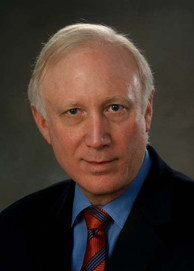
Randolph May from the Free State Foundation supports "state's rights," but many of them want no part of a plan his group supports.

Free State Foundation: A misnamed conservative, “states rights” group.  Leader Randolph May loves the ABC Plan, despite the fact several individual states are asking the FCC not to impose it on them.

Hispanic Technology & Telecommunications Partnership:  Whatever Verizon and AT&T want, HTTP is also for.  The group was embroiled in controversy over its unflinching opposition to Net Neutrality and love for the merger of AT&T and T-Mobile.  Its member groups, including MANA and LULAC, are frequent participants in AT&T’s dollar-a-holler lobbying endeavors.

Robert J. Shapiro: Wrote an article for Huffington Post calling the ABC Plan worth consideration.  Also worth mentioning is the fact he is now chairman of what he calls an “economic advisory firm,” which the rest of the world calls a run-of-the-mill D.C. lobbyist firm — Sonecon.  It comes as no surprise AT&T is a client.  In his spare time, Shapiro also writes reports advocating Internet Overcharging consumers for their broadband service.

Indiana Exchange Carrier Association: A lobbying group representing rural Indiana telephone companies, primarily owned by TDS Telecom.  It’s hardly a surprise the companies most likely to benefit from the ABC Plan would be on board with their support.

Indiana Telecommunications Association: A group of 40 telephone companies serving the state of Indiana.  For the aforementioned reasons, it’s no surprise ITA supports the ABC Plan.

Information Technology and Innovation Foundation:  Reuters notes this group received financial support from telecommunications companies, so lining up behind a plan those companies favor comes as little surprise.  ITIF also believes usage caps can deter piracy, so they’re willing to extend themselves way out in order to sell the telecom industry’s agenda.

Internet Innovation Alliance:  Another group backed by AT&T, IIA also funds Nemertes Research, the group that regularly predicts Internet brownouts and data tsunamis, which also hands out awards to… AT&T and Verizon.
The Indiana Exchange Carrier Assn. represents the phone companies that will directly benefit from the adoption of the ABC Plan.

Bret Swanson:  He penned a brief note of support on his personal blog.  When not writing that, Swanson’s past work included time at the Discovery Institute, a “research group” that delivers paid, “credentialed” reports to telecommunications company clients who waive them before Congress to support their positions.  Swanson is a “Visiting Fellow” at Arts+Labs/Digital Society, which counted as its “partners” AT&T and Verizon.

Minority Media & Telecom Council: Tries to go out of its way to deny being affiliated or “on the take” of telecom companies, but did have to admit in a blog posting it takes money from big telecom companies for “conference sponsorships.”  Some group members appear frequently at industry panel discussions, and mostly advocate AT&T’s various positions, including strong opposition to reclassify broadband as a utility service.

MMTC convened a Broadband and Social Justice Summit earlier this year that featured a range of speakers bashing Net Neutrality, and the group’s biggest highlighted media advisory on its website as of this date is its support for the merger of AT&T and T-Mobile.  Yet group president David Honig claims he can’t understand why some consumer groups would suspect groups like his of engaging in dollar-a-holler advocacy, telling The Hill, “We’ve seen no examples of reputable organizations that do things because of financial contributions. It’s wrong to suggest such things.”

Mobile Future: Sponsored by AT&T, Mobile Future curiously also includes some of AT&T’s best friends, including the Asian Business Association, LULAC, MANA, the National Black Chamber of Commerce, and the United States Hispanic Chamber of Commerce.

Montana Independent Telecommunications Systems: Primarily a group for Montana’s independent telephone companies, who will benefit enormously from the ABC Plan.

What major corporate entity does not belong to this enormous advocacy group?

The National Grange:  A group with a long history advocating for the interests of telephone companies.  Over the years, the National Grange has thrown its view in on Verizon vs. the RIAA, a request for Congress to support industry friendly legislation, a merger between Verizon and NorthPoint Communications, and USF issues.

The Keep USF Fair Coalition was formed in April 2004. Current members include Alliance for Public Technology, Alliance For Retired Americans, American Association Of People With Disabilities, American Corn Growers Association, American Council of the Blind, California Alliance of Retired Americans, Consumer Action, Deafness Research Foundation, Gray Panthers, Latino Issues Forum, League Of United Latin American Citizens, Maryland Consumer Rights Coalition, National Association Of The Deaf, National Consumers League, National Grange, National Hispanic Council on Aging, National Native American Chamber of Commerce, The Seniors Coalition, Utility Consumer Action Network, Virginia Citizen’s Consumer Council and World Institute On Disability. DSL Prime helps explain the membership roster.

Taxpayers Protection Alliance:  One of the tea party groups, TPA opposes higher USF fees on consumers.  The ABC Plan website had to tread carefully linking to this single article favorable to their position.  Somehow, we think it’s unlikely the group will link to the TPA’s louder voice demanding an end to broadband stimulus funding many ABC Plan backers crave.

TechAmerica: Guess who is a member?  AT&T, of course.  So is Verizon.  And CenturyLink.  TechAmerica call themselves “the industry’s largest advocacy organization and is dedicated to helping members’ top and bottom lines.”  (Consumers not included.)

Tennessee Telecommunications Association: TTA’s independent phone company members stand to gain plenty if the ABC Plan is enacted, so they are happy to lend their support.

Rep. Terry's two biggest contributors are CenturyLink and Qwest.

Representative Greg Walden (R-Oregon):  His top five contributors are all telecommunications companies, including CenturyLink, Pine Telephone, and Qwest.  He also gets money from AT&T and Verizon.  It’s no surprise he’s a supporter: “We are encouraged by the growing consensus among stakeholders as developed in the ‘America’s Broadband Connectivity Plan’ filed with the Federal Communications Commission today, and we hope that consensus will continue to grow.”

Representative Lee Terry (R-Nebraska): He co-signed Rep. Walden’s statement.  Rep. Terry’s two biggest contributors are Qwest and CenturyLink.  Now that CenturyLink owns Qwest, it’s two-campaign-contributions-in-one.  And yes, he gets a check from AT&T, too.

Representative Steve Scalise (R-Louisiana): “Today’s filing of the ‘America’s Broadband Connectivity Plan’ is welcomed input on the intercarrier compensation and Universal Service Fund reform front,” Scalise said.  Now Scalise is ready to welcome this year’s campaign contribution from AT&T, which he has not yet reportedly received.  In 2008, Scalise received $13,250.  In 2010, $10,000.  This cycle, so far he has only been able to count on Verizon, which threw $2,500 his way.  Scalise voted earlier this year to overturn the FCC’s authority to enact Net Neutrality.

USTelecom Association: The only news here would be if USTA opposed the ABC Plan.  Included on USTA’s board of directors are company officials from: Frontier Communications, AT&T, CenturyLink/Qwest, Windstream, FairPoint Communications, and Verizon.  That’s everyone.

Wisconsin State Telecommunications Association:  Their active members, including Frontier Communications, are all telephone companies inside Wisconsin that will directly benefit if the ABC Plan is enacted.
Universal Service Reform Proposal from Big Telcos Would Rocket Phone Bills Higher

A new proposal from the nation’s six largest telephone companies would double or triple Universal Service Fund (USF) fees on many telephone lines, extending them to wireless, broadband-based phones, cable TV “digital phone” products, and potentially even Internet accounts, providing billions from consumers for the companies proposing the plan.

Universal Service Fund reform has been a hot topic this year in Washington, as regulators attempt to reform a long-standing program designed to help keep rural landline telephone service affordable, subsidized with small charges levied on customer phone bills that range between $1-3 dollars, depending on the size of your community.

The original goals of the USF have largely been achieved, and with costs dropping to provide telephone service, and ancillary services like broadband DSL opening the door to new revenue streams, some rural phone companies don’t need the same level of support they received in earlier years.  As a result, USF funds have progressively been disbursed to an increasing number of projects that have little to do with rural phone service.  Several funding scandals over the past decade have underlined the need for USF reform, and FCC Chairman Julius Genachowski has been a strong advocate for directing an increasing amount of USF resources towards rural broadband deployment projects.

But now some of America’s largest phone companies want to establish their own vision for a future USF — one that preserves existing funding for rural phone service –and– levies new fees on ratepayers to support broadband expansion.

The ABC Plan's chief sponsors are AT&T...

America’s Broadband Connectivity Plan (ABC), proposed jointly by AT&T, Verizon, CenturyLink, Windstream, Frontier Communications and FairPoint Communications, departs markedly from Genachowski’s vision for a revised USF that would not increase the overall size of the Fund or its cost to consumers.

That’s why some ratepayer consumer groups and utility regulators have taken a dim view on the phone companies’ plan.

Colleen Harrell, assistant general counsel to the Kansas Corporation Commission says customers would find USF fees doubling, if not tripling on their home phone bills under ABC.  That could mean charges of $6 or more per month per phone line.

While the plan substantially benefits the companies that propose it, critics say ABC will do little to enhance service for ordinary consumers.  In fact, some language in the proposal could open the door for landline companies to discontinue universal landline service, a long time goal of AT&T.

In fact, protection for incumbent phone companies seems to be the highest priority in most of the ABC’s framework:

  1. The proposal provides a right of first refusal to the incumbent phone company, meaning USF grant funds effectively start at the landline provider, and are theirs to accept or reject.  This has competitors howling, ranging from Wireless ISPs, mobile data providers, cable companies, and even fiber networks.  The ABC proposal ignores who can deliver the best broadband most efficiently at the lowest price, and is crafted instead to deliver the bulk of funding to the provider that has been around the longest: phone companies.
  2. Provisions in the ABC Plan provide a convenient exit door for landline providers saddled with providing service to some of America’s most rural communities.  An escape clause allows “satellite service” to be provided to these rural households as a suitable alternative to traditional wired service, sponsored by an annual $300 million Advanced Mobility/Satellite Fund.  This, despite the fact consumer ratings for satellite providers are dismal and existing providers warn their services are often unsuitable for voice calls because of incredibly high latency rates.
  3. Provisions in the ABC Plan adhere to a definition of acceptable broadband well within the range favored by telephone company DSL providers — 4Mbps.  Setting the bar much higher could force phone companies to invest in their networks to reduce the distance of copper wire between their offices and customer homes and businesses, allowing for faster speeds.  Instead, lowering the bar on broadband speeds assures today’s deteriorating rural landline network will make-do, leaving a rural/urban speed divide in the United States.
  4. To “resolve” the issue of the increased fees and surcharges that could result from the plan’s adoption, it includes a subjective cap of $30 a month on residential basic landline home phone service (without calling features).  But since most ratepayers pay substantially less for basic home phone service, the maximum rate cap provides plenty of room for future rate increases.  Also, nothing precludes phone companies from raising other charges, or creating new “junk fees” to raise rates further, ignoring the “cap.”

...and Verizon

Rural states seem unimpressed with the phone companies’ proposal.  The Kansas Corporation Commission (KCC) called various provisions of the plan “a train wreck.”  Kansas is one of several states that developed their own state-based Universal Service Fund to help the state’s many rural agricultural areas receive acceptable telecommunications services.  Kansans initially paid one of the highest USF rates in the country when their state plan was enacted in 1996.  But Kansas phone companies used that money to modernize their networks, especially in rural communities — some of which now receive fiber-based phone service, and the rates have fallen dramatically as upgrade projects have been completed.  Today, most Kansans pay just $1.45 in USF fees to rural phone companies, while AT&T customers in larger Kansas towns and cities pay an average of $2.04.

If the ABC Plan is enacted as-is, Kansans will see phone bills spike as new USF fees are levied.  That’s because the federally-based USF Fund reform program would require today’s 6.18% state USF rate double or triple to sustain various programs within its scope.

And forget about the $30 ‘smoke and mirrors’ “rate cap”, according to the KCC:

[…] The ceiling will not preclude carriers from increasing the basic rate beyond $25 or $30 through higher state USF surcharges or higher local rates.  Multiple states including Kansas  have partially or totally deregulated basic local phone service rates, and the only component of retail  local service pricing that the FCC regulates is the federal Subscriber Line Charge.  Thus, a carrier may face no constraint whatsoever in increasing basic local rates to the point that total local rates are well above the illusory ceiling.

The state of Wyoming was also unimpressed with a one-size-fits-all national approach advocated primarily by big city phone companies AT&T and Verizon, the chief sponsors of the ABC Plan.

The Wyoming Public Service Commission filed comments effectively calling the ABC Plan boneheaded, because it ignores the plight of particularly rural states like Wyoming, chiefly served by smaller phone and cable companies that face challenges in the sparsely populated, mountainous state.

First among the Wyoming PSC’s complaints is that the plan ignores business realities in rural states.  No matter how much USF funding becomes available or what compensation schemes are enacted, dominant state phone companies like CenturyLink are unlikely to “invest in broadband infrastructure unless it is economically opportune to do so.”

The PSC points to the most likely outcomes if the ABC Plan is enacted:

  • Phone companies not challenged by a broadband competitor will make due with their current copper wire wireline infrastructure the PSC says has been deteriorating for years.  The PSC fears broadband expansion funds will be used to improve that copper network in larger areas where cable competition exists, while the rest of the more-rural network gets ignored;
  • In areas like larger towns or suburbs where phone companies suspect a cable (or other) competitor might eventually expand or launch service, USF funding could be spent to bolster the phone company’s existing DSL service to deter would-be competitors from entering the market;
  • We'll pass, too.

    The Wyoming PSC believes phone companies will spend broadband funds only where it would improve the phone company’s competitive position with respect to cable competitors.  Providers are unlikely to expand into currently-ignored rural areas for two reasons: lack of ongoing return on investment and support costs and the ABC Plan’s willingness to abandon rural America to satellite providers.  “We are familiar to a degree with satellite service at it presently exists in Wyoming markets, and we are not particularly enamored of the satellite solution,” the PSC writes.  But if adopted, no rural phone company would invest in DSL service expansion in areas that could be designated to receive federally-supported satellite service instead.

Wireless competitors are not happy with the ABC Plan because it ignores Wireless ISPs and sets ground rules that make them unlikely to ever win financial support.  Many also believe the ABC Plan picks technology winners and losers — namely telephone company provided DSL service as the big winner, and everyone else a loser.

The Fiber to the Home Council also heaped criticism on the ABC Plan for the low bar it sets — low enough for any phone company to meet — on broadband speeds.  The FTTH Council notes the ABC Plan would leave rural America on a broadband dirt road while urban America enjoys high-speed-rail-like service.

Coming Next… Who Really Supports the Phone Companies’ ABC Plan.

Industry Minister Holds Closed Door Meetings With Big Telecoms And You’re Not Invited

Phillip Dampier August 30, 2011 Bell (Canada), Canada, Editorial & Site News, Net Neutrality, Public Policy & Gov't, Rural Broadband, Telus, Wind Mobile (Canada), Wireless Broadband Comments Off on Industry Minister Holds Closed Door Meetings With Big Telecoms And You’re Not Invited

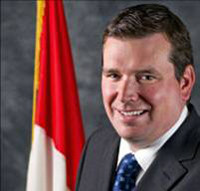
Industry Minister Christian Paradis just completed nearly two weeks of private meetings with some of Canada’s largest telecommunications companies regarding issues important to the industry, but has not scheduled face time with ordinary Canadian consumers or the public interest consumer groups that represent their interests.

Minister Paradis

Wire Report provided the schedule:

Aug. 16
Cogeco Cable Inc.
Shaw Communications Inc.
Quebecor Media Inc.
Globalive Wireless Management Corp.
Xplornet Communications Inc.
Public Mobile

Aug. 17
EastLink
BCE Inc.
Mobilicity
Telus Communications Co.

Aug. 22
Rogers Communications Inc.
MTS Allstream

Aug. 24
SaskTel

Bloomberg reports the primary topic on the agenda is upcoming spectrum auctions for additional wireless frequencies and loosening restrictions on foreign-ownership rules regarding would-be wireless competitors interested in entering Canada’s cell phone marketplace, which currently has the third-highest prices for mobile-phone services in the world, according to the OECD.

A rules change regarding foreign ownership may open the door...

Canadian telecom providers may not have more than 20 percent of their operations owned or controlled by foreign entities, a percentage that could be adjusted in the coming months.  But while changes in foreign ownership rules may benefit new entrants like Globalive Holdings, which operates Wind Mobile, it could also spell profound changes for millions of Canadians.  Industry analyst Dvai Ghose told Bloomberg he expects any relaxation of foreign-ownership rules may also pave the way for a mega merger of Bell and Telus.

“If you allow foreigners into our market, it becomes much more compelling to say we should allow one Canadian champion,” said Ghose, co-head of Canadian research at Canaccord Genuity.

That “champion” could quickly become Canada’s version of AT&T, dramatically reducing competition and raising prices, especially for captive landline customers who rely on the companies for broadband and landline service.  Telus and Bell currently compete with one another in the wireless market, where they would have an enormous share and combined market power should they be permitted to merge.

That would be a high price to pay for many Canadian consumers who do business with Bell or Telus, especially when contrasted with the fact Wind Mobile has attracted only 271,000 customers as of the end of March 2011.

...to a mega-merger of Bell and Telus.

Unfortunately, consumers are not included in Minister Paradis’ day-planner to share their views of further marketplace consolidation or wireless spectrum reform.  In fact, they don’t even have a right to learn what exactly was discussed during the closed door sessions.

A spokeswoman for Paradis, Pascale Boulay, would only confirm the minister met with 13 companies since Aug. 16, but refused to elaborate on the meetings.

Federal Communications Commission chairman Julius Genachowski tried this approach with some of America’s largest telecommunications companies last summer, holding a series of closed door meetings.  They eventually produced telecommunications policies so watered down, they neutralized Genachowski’s earlier commitments to protect Net Neutrality and foster additional competition.  Will Canada repeat America’s mistake?

Opposition Growing More Organized Against AT&T T-Mobile Merger

[flv width=”360″ height=”290″]http://www.phillipdampier.com/video/Bloomberg Merger Chorus 6-01-11.mp4[/flv]

Bloomberg News covers Sprint’s increasingly aggressive pushback against the merger of AT&T and T-Mobile.  But while Bloomberg points out consumer groups are using websites to help consumers file comments opposing the deal, they ignore the fact deal supporters are engaged in their own dollar-a-holler campaign to win the merger’s approval.  (2 minutes)

[flv width=”360″ height=”290″]http://www.phillipdampier.com/video/Bloomberg ATT Concessions 6-01-11.mp4[/flv]

The opposition to the merger of AT&T and T-Mobile is growing louder and more organized as smaller carriers join Sprint’s opposition efforts. Consumer groups roundly dismiss the proposed merger as anti-competition and anti-consumer.  Michael Nelson, a securities analyst, tells Bloomberg News the vote for the merger’s approval could be close and the company will probably have to agree to more concessions than it thinks.  But considering AT&T’s enormous lobbying power, Nelson still thinks the deal will squeak through.  Nelson, however, warns the merger will bring about a considerable reduction in the disruptive pricing T-Mobile has engaged in — pricing that benefits consumers and forces larger carriers to follow suit.  To Nelson, eliminating an aggressive competitor like T-Mobile will bring about what he calls “a rational competitive environment.”  That means higher prices, no surprises, and a stagnant marketplace.  Wall Street understands the implications of this deal, all while knowingly winking at AT&T’s marketing/lobbying machine that claims reduced competition = better service.  (4 minutes)

Bell’s Usage-Based Billing Shell Game: Revised Proposal Will Still Cost Consumers

Phillip Dampier March 29, 2011 Bell (Canada), Broadband "Shortage", Canada, Competition, Data Caps, Editorial & Site News, Public Policy & Gov't Comments Off on Bell’s Usage-Based Billing Shell Game: Revised Proposal Will Still Cost Consumers

Bell's Broadband Shell Game (image: Dave Blume)

The digital equivalent of a Trojan Horse was laid at the feet of Canadian telecom regulators Monday when officials from Bell, Canada’s largest phone company, announced they were withdrawing their controversial proposal to mandate usage-based billing on all wholesale broadband accounts.

The original proposal would have mandated that independent Internet Service Providers bill each of their individual customers a monthly fee based on their Internet usage in addition to the wholesale access rates paid to Bell all along.  The pricing proposal would have forced every ISP in Canada to abandon flat rate Internet service, raise prices, reduce usage allowances, and increase overlimit penalties.

Now Bell has told the Globe & Mail newspaper it wants to introduce something called “Aggregated Volume Pricing” instead — a plan Bell claims will shift financial penalties for “high usage” away from individual customers and onto the ISPs themselves. Bell also slashed the proposed overlimit fee from a heavily-defended-as-fair $2.50 per gigabyte to a more modest $0.30/GB, perhaps echoing AT&T’s forthcoming overlimit fee.

In fact, Bell’s revised plan is the same Internet Overcharging scheme under a new name.

The radical reduction in overlimit fees only further illustrates the “phoney-baloney” of providers attempting to monetize broadband usage under the guise of “fairness” and “congestion relief.”  Last week’s ’eminently fair’ $2.50 is this week’s ‘more than reasonable’ $0.30.

Bell exposed their hand — showing they have been bluffing about congestion all along.  An analysis of the proposed rates shows the company is still trying to target “heavy users.”  But instead of penalizing them into reducing their consumption, Bell is now seeking to monetize that usage, not control it.  By shifting aggregate usage costs to the wholesale market, Bell hopes individual customers will blame independent ISP’s for higher bills, not them.  Independent providers have to pass along their wholesale costs as part of the retail price of their service.  It’s a high tech shell game, one that consumers will always lose.

Despite this, Bell assumes the revised plan will take the bipartisan heat off its backside since it first proposed doing away with flat rate Internet service in Canada.

“With our filing today, we are officially withdrawing our UBB proposal,” said Mirko Bibic, Bell’s head of regulatory affairs. “Let’s move on, in my view, and use the CRTC hearing as an opportunity to approve those principles and get the implementation details right.”

"We don't like (Bell's proposal)."

Several Canadian officials were not impressed and one — Industry Minister Tony Clement — said exactly that.

Canada’s consumer groups and politicians have the giant telecom company on the run after using Bell CEO George Cope’s own words against him.  Cope openly admitted in conference calls with investors UBB had everything to do with monetizing broadband usage for profit.

Bell’s attempt to serve warmed-over Internet Overcharging from a new recipe isn’t flying among consumer groups either, who recognize it as more of the same leftovers, just under a new name.

Bill Sandiford, who heads a coalition of wholesale ISPs called the Canadian Network Operators Consortium, told the Globe & Mail Bell was simply presenting its usage-based pricing model in a more acceptable guise.

“We don’t think this is an about-face. It’s the same thing, just dressed up differently,” Mr. Sandiford said. “We don’t like it. It’s still wholesale UBB.”

Openmedia.ca, an online activist group, said Bell’s new proposal shows consumers are having an impact, but the fight is by no means over.

“We’re pleased that Canadians will now have the option to use indie ISPs like Teksavvy and Acanac to access the unlimited Internet,” said OpenMedia.ca’s Executive Director Steve Anderson. “This is a giant step forward for the Stop The Meter campaign, and a victory for those who support competition and choice in Canada’s Internet service market.”

“While this is a positive move, it is only a Band-Aid solution to a much larger problem. We at OpenMedia.ca hope the CRTC takes Bell’s submission as a sign that widespread usage-based billing is not an acceptable model for Internet pricing, and that it creates policy to support the affordable Internet.”

Search This Site:

Contributions:

Recent Comments:

Your Account:

Stop the Cap!