Home » consumer groups » Recent Articles:

Florida Woman Gets $201,000 T-Mobile Bill: Data Roaming Bill Shock Nightmare

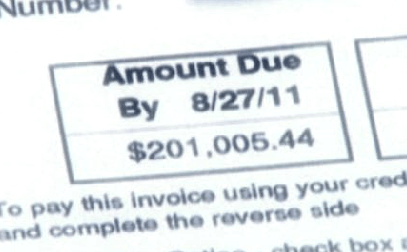
A Miami woman fell to pieces when T-Mobile sent her a cell phone bill that was higher than the purchase price of many nice suburban homes, after a two-week trip to Canada turned into a data roaming disaster.

Celina Aarons is the latest victim of bill shock — when phone and cable companies send surprise bills that throw families into turmoil, begging for help from the provider that could either aggressively collect or save your sanity by reducing the bill.

Aarons appealed to WSVN Miami’s consumer reporter Patrick Fraser for help after the bill arrived.

“I was freaking out. I was shaking, crying, I couldn’t even talk that much on the phone,” Aarons said. “I was like my life is over!”

It turns out her deaf brother uses a phone on her account to communicate… a lot.  He routinely sends thousands of text messages a month, in addition to relying heavily on the mobile smartphone’s Internet access.  He had no idea a two-week trip to Canada would invoke an insanely high data roaming rate — $10 per megabyte.  Text messages sent while roaming in Canada run $0.20 each, with or without a texting plan.  Just running an online video at those rates will easily rack up charges well over $1,000.  And they did.

Unfortunately for Celina, T-Mobile claims to have sent a handful of warning messages — to her brother’s phone, never to hers.  He claims he never saw them.  She’s ultimately responsible for the bill, and she’s upset T-Mobile didn’t notify the primary account holder — her — of the rapidly accumulating roaming charges.  T-Mobile told her they don’t send such notifications for “privacy reasons.”

[flv width=”630″ height=”374″]http://www.phillipdampier.com/video/WSVN Miami Help Me Howard – High phone bill 10-17-11.mp4[/flv]

WSVN in Miami explains what happened when Celina Aarons received her 40+ page T-Mobile bill… for $201,000.  (4 minutes)

Life's for sharing a $201,000 cell phone bill.

That’s how parents end up receiving bill shock of their own, when children handed phones run up enormous charges mom and dad never learn about until the bill arrives in the mailbox.  By then, it’s too late.

The Federal Communications Commission was supposed to take direct action to put an end to bill shock by demanding carriers send clear warnings when usage allowances are used up or when roaming charges begin to accrue.  It was a priority for FCC Chairman Julius Genachowski, until wireless industry lobbyists convinced him to abandon the effort, choosing an industry-sponsored voluntary plan instead.

Genachowski quietly put the FCC’s own proposed bill shock regulations on hold, which also likely means an abdication of the agency’s responsibility to closely monitor the wireless industry’s adherence to its own voluntary guidelines.

The CTIA Wireless Association, the industry’s largest trade and lobbying group, will be coordinating the “early warning” program, but will take their time implementing it.  The industry wants until October 2012 to implement the first phase of its program, which will send text messages for usage allowance depletion and excessive usage charges.  It also wants even more time — April 2013 — before the industry is expected to adopt additional service alerts.
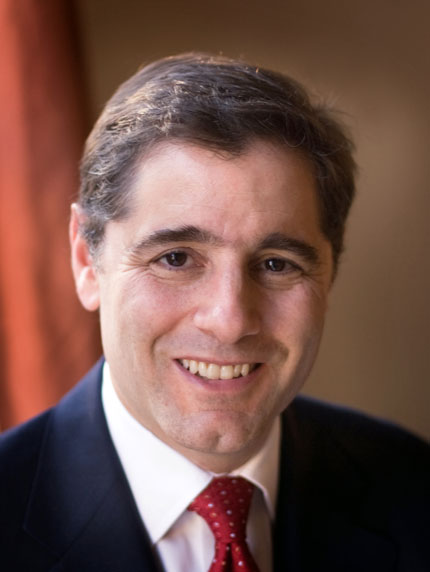
Genachowski: Abdicated his responsibility to protect consumers in favor of the interests of the wireless industry.

The wireless industry’s plan is based entirely on early warning text messages.  It does not provide any of the top-requested protections consumers want to end the wallet-biting:

  1. The ability to shut off services once usage allowances are depleted until the next billing cycle;
  2. An opt-in provision which requires customers to authorize additional charges before they begin;
  3. The ability to shut off services and features on individual handsets on their account;
  4. The ability to easily opt-out of all roaming services, so sky high excess charges can never be charged to their accounts;
  5. Provisions to require providers to eat the bill if it is demonstrated that warning messages never arrived;
  6. Fines and other punishments for carriers who fail to meet the provisions of either a regulated or voluntary plan.

The CTIA’s plan won’t stop some of the horror stories Genachowski spoke about earlier this year, when he was still advocating immediate action by the Commission.  Among them:

  • Nilofer Merchant: Racked up $10,000 in international roaming and overlimit fees while visiting Toronto.  AT&T waited until after she returned to the United States before notifying her of the charges.  They “generously” agreed to reduce the bill to $2,000, which they ultimately pocketed.
  • A woman who rushed to attend to her sister in Haiti after the 2010 earthquake found more tragedy when her provider billed her $34,000 in roaming charges;
  • A man whose limited data plan ran out faced $18,000 in overlimit fees before the provider notified him his bill was going to be higher than normal that month.

The wireless industry’s chief lobbyist, CTIA president Steve Largent, declared total victory.

“Today’s initiative is a perfect example of how government agencies and industries they regulate can work together under President Obama’s recent executive order directing federal agencies to consider whether new rules are necessary or would unnecessarily burden businesses and the economy,” Largent said.

Consumer groups are less excited.

Text message warnings or not, the wireless industry still wants to be paid.

Joel Kelsey, a policy analyst at public interest group Free Press, said he was skeptical providers would be making their customers their first priority under the voluntary program.

“Asking the uncompetitive wireless industry to self-police itself is like asking an addict to self-medicate,” said Kelsey. “The FCC is charged by Congress to protect consumers, and they should use their authority to write a rule that puts an end to $16,000 monthly cellphone bills.”

“Wireless carriers are not charities — they will make the most revenue they can from their user base,” Kelsey said. “And since competition is weak in this industry, there aren’t natural incentives for companies to be on their best behavior.”

T-Mobile, which is in the process of trying to merge with AT&T, has agreed to discount Aarons’ bill to $2,500 and give her six months to pay.  Stop the Cap! reader Earl, who shared the story with us, suspects that kind of charity won’t last long.

“This won’t happen again if AT&T merges with T-Mobile,” Earl suspects.

While $2,500 is a considerable discount over the original bill, customers who have suffered from bill shock would prefer an even better deal — no surprise charges at all.

That kind of deal is unlikely if the FCC continues to defer to the wireless industry, who have few incentives to provide it.

Consumers can reduce the chances of wireless bill shock by checking with their wireless provider to see if roaming services can be left turned off unless or until you activate them.  Many companies also offer smartphone applications to track usage and billing, useful if you have a family plan and want to verify who is doing what with their phone.  Avoid taking your cellphone on international trips, and that includes Canada.  If you need a cell phone abroad, we recommend purchasing a throwaway prepaid phone when you arrive and rely on that while abroad.  Such phones can be had for as little as $10, and per-minute rates are usually substantially lower than the roaming charges imposed by providers back home.

If you must travel with your phone, carefully consider roaming rates before you go.  Some carriers may offer international usage plans that discount usage fees.  You can use Wi-Fi to manage data sessions, but it’s best to avoid high bandwidth applications while abroad altogether.  One movie can cost a thousand dollars or more in international roaming charges.

While T-Mobile could have provided warnings to Aarons’ own phone as her bill began to skyrocket, T-Mobile’s bill was ultimately correct.  Wireless phone users must take personal responsibility for the use of phones on their account.  Aarons’ brother ignored the handful of warnings T-Mobile claims to have provided, and the agony of the resulting bill no doubt created tension inside that family.  Don’t let a wireless phone bill tear your family apart.  Take steps to protect yourself, because it’s apparent the FCC won’t anytime soon.

[flv width=”640″ height=”380″]http://www.phillipdampier.com/video/PBS NewsHour New Alerts to Stop Bill Shock 10-17-11.flv[/flv]

PBS NewsHour interviews FCC Chairman Julius Genachowski about the pervasive problem of “bill shock,” and why the Commission elected to defer to the wireless industry to voluntarily alert consumers when their bills explode.  (7 minutes)
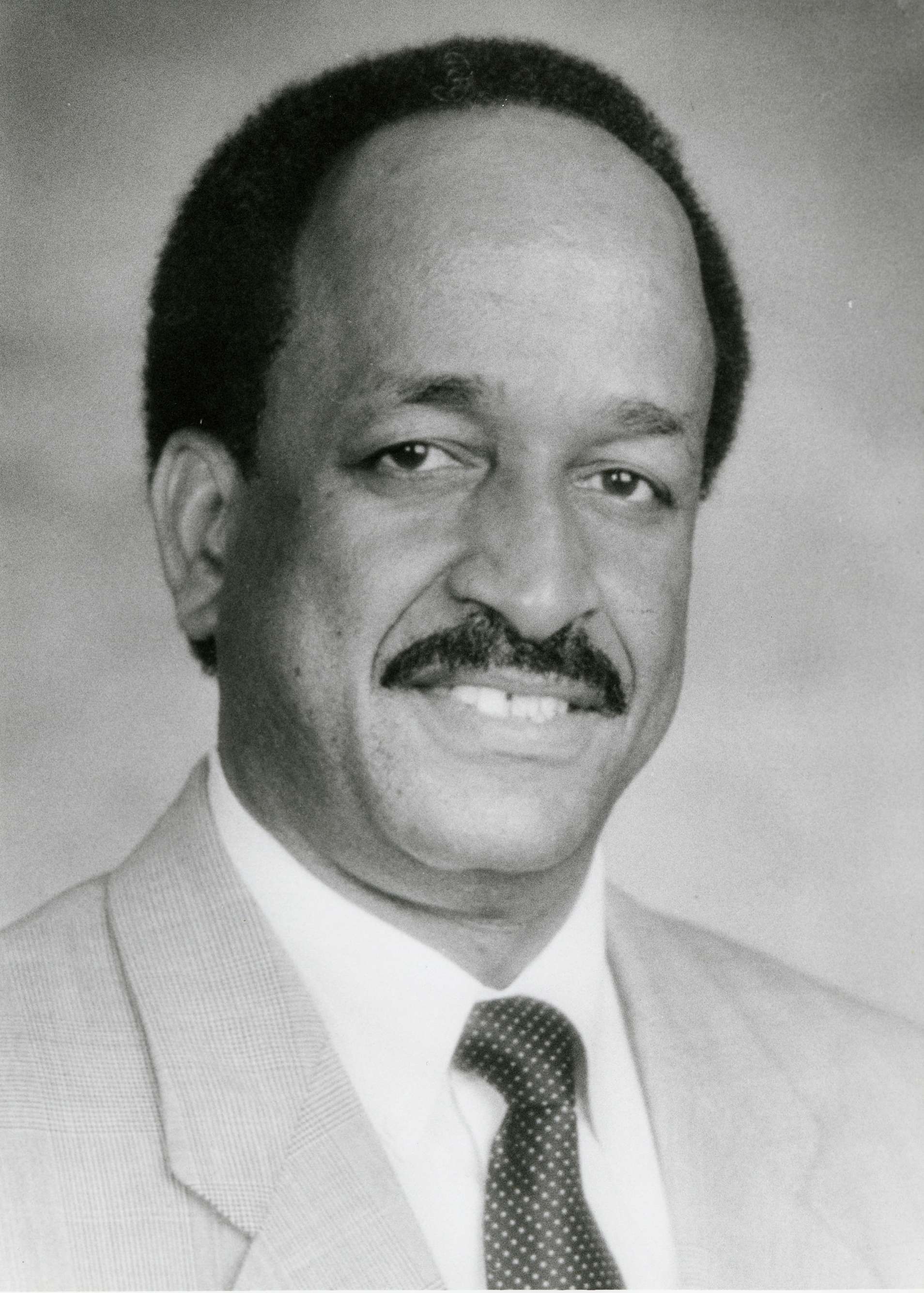
Money Talks: More Dollar-a-Holler Advocacy for AT&T from the NAACP

Crumpton

NAACP national board member and former Missouri Public Service Commission member Harold Crumpton believes that combining AT&T and T-Mobile will create 100,000 new jobs, despite the fact both companies have promoted “cost savings” from eliminating redundant services and winning “increased efficiencies.”

That’s code language for layoffs, and it has been that way with every telecommunications merger in the last decade.  But Crumpton prefers to deny reality in a guest opinion piece published today in the St. Louis Post-Dispatch:

Most mergers result in — and pay for themselves with — job losses and higher prices. Not this one.

If, to use the government antitrust lingo, there is a “relevant product market” for this merger, it would be “jobs” because jobs are the No. 1 product of the broadband factory. The AT&T and T-Mobile merger is structured as an engine of job creation — yielding 100,000 new jobs by delivering on President Obama’s call for a national high-speed broadband network. That’s far more jobs than would be lost because of AT&T and T-Mobile overlaps.

Ironically, AT&T announced the repatriation of 5,000 call center jobs and pledged not to terminate call center employees because of the merger. Two hours later, without warning to AT&T, the Justice Department filed its suit. Suffice to say that President Obama, our greatest champion of job creation, was not well-served that morning.

How will AT&T produce all these new jobs? By creating the first national next-generation high-speed (4G) mobile network. The merger is what will make the network possible, and it will do that by aggregating and redeploying spectrum T-Mobile can’t use for 4G. In this way, the network would reach 55 million more Americans than 4G currently reaches.

AT&T couldn’t have argued the case better.  Oh wait.  They have, in the company’s advocacy package mailed to the NAACP and dozens of other groups who receive the company’s financial support.  Those talking points inevitably end up in the guest editorials penned by Crumpton and others.

While the bloom is clearly off the rose of the AT&T/T-Mobile merger, thanks in part to consumer groups and the U.S. Department of Justice who filed a lawsuit to stop it, AT&T is still flailing about trying to find some way to get the deal done, if only to avoid the outrageous break-up fee self-imposed by the telecommunications giant if the deal falls apart.  AT&T’s promise to bring an end to the obnoxious practice of offshoring their customer support call centers — if the merger gets approved — has been compared with blackmail by some customers who have spent an hour or more negotiating with heavily accented customer support agents that companies like Discover Card routinely mock.

AT&T promises customers a solution to the "Peggy Problem" if their merger with T-Mobile gets approved.

It clearly wasn’t enough to move critics of the deal to reconsider — AT&T could voluntarily hire American workers who speak the language of their customers for the benefit of those customers with or without a merger with the fourth largest wireless carrier in the country.

Crumpton argues President Obama was not well served by the Justice Department.  Consumer groups argue T-Mobile and AT&T’s customers will not be well-served if this merger ever happens.

As Stop the Cap! has repeatedly argued, both AT&T and T-Mobile will construct 4G mobile broadband networks in all of the places where the economics to deploy those networks makes sense.  No more, no less, no matter if AT&T and T-Mobile are two companies or one.

Crumpton might as well have argued the merger would deliver 4G service to Sprint customers as well.  It’s the same disconnected logic.

Crumpton thinks AT&T’s high-priced, heavily-capped 4G network will somehow solve the pervasive problem of the digital divide — the millions of poor Americans who can’t afford AT&T’s prices.  Incredibly, Crumpton’s answer is to allow one of the most price-aggressive, innovative carriers in the country favored by many budget-conscious consumers to be snapped up by the lowest rated, if not most-hated wireless company in the country.

It just doesn’t make sense.  But it does make dollars… for the NAACP, which receives boatloads of corporate money from AT&T.  It’s no surprise the pretzel-twisted logic that drives merger advocates like Mr. Crumpton comes fact-free.  The money makes up for all that.

“The NAACP stands ready to work with the public and private sectors to ensure that every American has an equal opportunity to participate in and benefit from this awesome ‘broadband revolution,'” Crumpton writes.

We can only hope that is true.  The NAACP can get started by admitting publicly it receives substantial support from AT&T and it will either agree to remain neutral in corporate advocacy issues to avoid conflicts of interest, or return AT&T’s money.  After all, it sounds like they need it to build the digital divide-erasing 4G network Crumpton is purportedly so concerned about.

Telephone Companies Bilking Consumers for Fatter Revenue Is as Simple as “ABC”

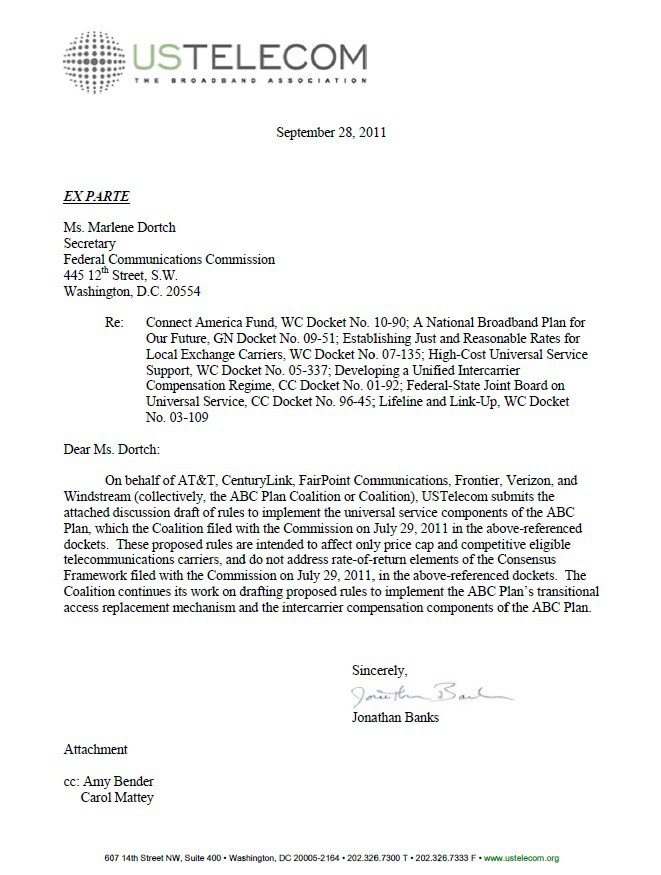
The primary backers of the ABC Plan

Today, Federal Communications Commission Chairman Julius Genachowski is scheduled to deliver a major announcement on reforming the Universal Service Fund (USF) — a federal program designed to subsidize the costs of delivering telecommunications services to rural America.

The reform, long overdue, would transition a significant percentage of USF fees every telephone customer pays towards broadband deployment — a noble endeavor.  For years, Americans have paid more than $5 billion annually to phone companies large and small to maintain rural landline service.  Small co-op phone companies depend on the income to deliver affordable service in places like rural Iowa, Kansas, and Alaska.  But large companies like AT&T and Verizon also collect a significant share (around $800 million annually) to reduce their costs of service in the rural communities they serve.

That’s particularly ironic for AT&T, which time and time again has sought the right to abandon universal rural landline service altogether.

Genachowski’s idea would divert USF funding towards broadband construction projects.  The argument goes that even low speed DSL requires a well-maintained landline network, so phone companies that want to deploy rural broadband will have to spend the money on necessary upgrades to provide just enough service to earn their USF subsidies.  The lower the speed, the lower the cost to upgrade networks and provide the service.  Some may choose wireless technology instead.  Since the telephone companies have fought long and hard to define “broadband” as anything approaching 3-4Mbps, that will likely be the kind of speed rural Americans will receive.

At first glance, USF reform seems like a good idea, but as with everything at the FCC these days, the devil is always in the details.

Dampier: Another day, another self-serving plan from the phone companies that will cost you more.

While headline skimmers are likely to walk away with the idea that the FCC is doing something good for rural broadband, in fact, the Commission may simply end up rubber stamping an industry-written and supported plan that will substantially raise phone bills and divert your money into projects and services the industry was planning to sell you anyway.

Stop the Cap! wrote about the ABC Plan a few weeks ago when we discovered almost all of the support for the phone-company-written proposal comes from the phone companies who back it, as well as various third party organizations that receive substantial financial support from those companies.  It’s a dollar-a-holler astroturf movement in the making, and if the ABC Plan is enacted, you will pay for it.

[Read Universal Service Reform Proposal from Big Telcos Would Rocket Phone Bills Higher and Astroturf and Industry-Backed, Dollar-a-Holler Friends Support Telco’s USF Reform Plan.]

Here is what you probably won’t hear at today’s event.

At the core of the ABC Plan is a proposal to slash the per-minute rates rural phone companies can charge big city phone companies like AT&T and Verizon to connect calls to rural areas.  You win a gold star if you correctly guessed this proposal originated with AT&T and Verizon, who together will save literally billions in call connection costs under their plan.

With a proposal like this, you would assume most rural phone companies are howling in protest.  It turns out some are, especially some of the smallest, family-run and co-op based providers.  But a bunch of phone companies that consider rural America their target area — Frontier, CenturyLink, FairPoint and Windstream, are all on board with AT&T and Verizon.  Why?

Because these phone companies have a way to cover that lost revenue — by jacking up your phone bill’s USF surcharge to as much as $11 a month per line to make up the difference.  In the first year of implementation, your rates could increase up to $4.50 per line (and that fee also extends to cell phones).  Critics have been widely publicizing the increased phone bills guaranteed under the ABC Plan.  In response, advocates for the industry are rushing out the results of a new study released yesterday from the Phoenix Center Chief Economist Dr. George S. Ford that claims the exact opposite.  Dr. Ford claims each customer could pay approximately $14 less per year in access charges if the industry’s ABC Plan is fully implemented.

Genachowski

Who is right?  State regulators suggest rate increases, not decreases, will result.  The “Phoenix Center,” unsurprisingly, has not disclosed who paid for the study, but there is a long record of a close working relationship between that research group and both AT&T and Verizon.

But it gets even worse.

This shell game allows your local phone company to raise rates and blame it on the government, despite the fact those companies will directly benefit from that revenue in many cases.  It’s a real win-win for AT&T and Verizon, who watch their costs plummet while also sticking you with a higher phone bill.

The USF program was designed to provide for the neediest rural phone companies, but under the new industry-written rules being considered by the FCC, just about everyone can get a piece, as long as “everyone” is defined as “the phone company.”  There is a reason this plan does not win the hearts and minds of the cable industry, independent Wireless ISPs, municipalities, or other competing upstarts.  As written, the USF reform plan guarantees virtually all of the financial support stays in the Bell family.  Under the arcane rules of participation, only telephone companies are a natural fit to receive USF money.

Genachowski will likely suggest this plan will provide for rural broadband in areas where it is unavailable today.  He just won’t say what kind of broadband rural America will get.  He can’t, because the industry wrote their own rules in their plan to keep accountability and oversight as far away as possible.

For example, let’s assume you are a frustrated customer of Frontier Communications in West Virginia who lives three blocks away from the nearest neighbor who pays $50 a month for 3Mbps DSL broadband.  You can’t buy the service at any price because Frontier doesn’t offer it.  You have called them a dozen times and they keep promising it’s on the way, but they cannot say when.  You may have even seen them running new cable in the neighborhood.

Frontier has made it clear they intend to wire a significantly greater percentage of the Mountain State than Verizon ever did when it ran things.  Let’s take them at their word for this example.

The telephone companies have helpfully written their own rules for the FCC to adopt.

Frontier’s decision to provide broadband service in West Virginia does not come out of the goodness of their heart.  At a time when landline customers are increasingly disconnecting service, Frontier’s long-term business plan is to keep customers connected by selling packages of phone, broadband, and satellite TV in rural markets.  Investment in DSL broadband deployment has been underway with or without the assistance of the Universal Service Fund because it makes financial sense.  Our customer in West Virginia might disconnect his landline and use a cell phone instead, costing Frontier any potential broadband, TV and telephone service revenue.

Under the ABC Plan, Frontier can be subsidized by ratepayers nationwide to deliver the service they were planning to provide anyway.  And what kind of service?  The same 3Mbps DSL the neighbors have.

If your county government, a cable operator, or wireless competitor decided they could deliver 10-20Mbps broadband for the same $50 a month, could they receive the USF subsidy to build a better network instead?  Under the phone company plan, the answer would be almost certainly no.

Simon Fitch, the consumer advocate of the Federal-State Joint Board on Universal Service, which advises the FCC on universal service matters, says the ABC Plan is a consumer disaster.

“Although a stated goal of the FCC’s reform effort is to refocus universal-service funding to support broadband, the industry’s ABC plan requires no real commitment to make broadband available to unserved and underserved communities,” Fitch writes. “Companies would receive funds to provide broadband with upload and download speeds that are already obsolete. States would be given no real enforcement power.”

Fitch is certain companies like AT&T and Verizon will receive enormous ratepayer-financed subsidies they don’t actually need to provide service.

Back to AT&T.

In several states, AT&T is seeking the right to terminate its universal service obligation altogether, which would allow the same company fiercely backing the ABC Plan to entirely walk away from its landline network.  Why?  Because AT&T sees its future profits in wireless.  Under the ABC Plan, AT&T could build rural cell towers with your money to provide “replacement service” over a wireless network with or without great coverage, and with a 2GB usage cap.

At the press conference, Genachowski could still declare victory because rural America would, in fact, get broadband.  Somehow, the parts about who is actually paying for it, the fact it comes with no speed, coverage, or quality guarantees, and starts with a 2GB usage cap on the wireless side will all be left out.

Fortunately, not everyone is as enamored with the ABC Plan as the groups cashing checks written by AT&T.

In addition to state regulators, Consumers Union, the AARP, Free Press, and the National Association of Consumer Advocates are all opposed to the plan, which delivers all of the benefits to giant phone companies while sticking you with the bill.

There is a better way.  State regulators and consumer groups have their own plans which accomplish the same noble goal of delivering subsidies to broadband providers of all kinds without increasing your telephone bill.  It’s up to the FCC to demonstrate it’s not simply a rubber stamp for the schemes being pushed by AT&T and Verizon.

New CRTC Guidelines for Internet Service Complaints “An Insult,” Says Gaming Group

Phillip Dampier September 27, 2011 Broadband Speed, Canada, Data Caps, Net Neutrality, Public Policy & Gov't, Rogers Comments Off on New CRTC Guidelines for Internet Service Complaints “An Insult,” Says Gaming Group

The Canadian Radio-television and Telecommunications Commission (CRTC) has issued new guidelines for consumers with complaints about their Internet Service Providers’ throttling practices that puts the burden of proof on the consumer to demonstrate an ISP is engaged in wrongful behavior before the CRTC will act.

The revised guidelines appear to come in response to complaints from consumers who have been subjected to dramatically reduced speeds when using Rogers Cable Internet service to play online games while also running file sharing software in the background. Rogers’ speed throttling technology appears to be unable to discriminate between game traffic, which is not subject to speed reductions, and file swapping traffic, which is.

The Canadian Gamers Organization filed a formal complaint with the CRTC this summer accusing Rogers of engaging in Network Neutrality violations.

The CRTC gave Rogers until today to fix the errant speed throttle or respond to the agency with an explanation for the delay.  As of this hour, Rogers appears not to have responded.

Last week, the CRTC began a crackdown of its own — against consumers bringing Internet complaints.  The CRTC modified the complaint procedure to instruct consumers to first work with their ISP and application developers to resolve any outstanding issues before filing complaints.  From the updated CRTC Guidelines:

How to make an Internet performance complaint

Before you complain to the CRTC about an Internet traffic management practice, you should first contact your Internet service provider to see if it can resolve the issue.

If your service provider doesn’t address your complaint to your satisfaction, and you believe that your service provider’s traffic management practices are not compliant with the CRTC’s policies, you can complain to the CRTC. Before doing this, make sure that you know your rights.

Rogers chokes the speed of undesireable peer to peer file traffic, but other applications like online gaming are also impacted. Consumers are complaining about the collateral damage.

What to include in your complaint

In your complaint, explain why you think your service provider’s traffic management practice doesn’t meet the requirements set out in their traffic management policy.  It is not necessary to provide technical details about the problem, but the CRTC needs enough information to understand the problem.  Please, clearly describe:

  • What part of the traffic management policy you believe the provider has not followed
  • When the problem occurred, and whether it is a recurring problem
  • Which software program, or application, has been affected
  • How the application has been affected
  • The steps you’ve taken to try to resolve the issue with your service provider, including your provider’s response to your complaint

Consumer groups are not pleased the CRTC won’t engage directly in independent oversight of ISP speed throttling practices regardless of consumer complaints.

“We are not a consumer-protection agency,” the CRTC’s Denis Carmel was quoted as saying back in July.

“The CRTC must start enforcing its own policies,” says Canadian Gamers Organization co-founder Jason Koblovsky. “The CRTC needs to put a plan forth to ensure that regular audits are done on Internet Providers rather than relying solely on consumer complaints. We are asking the public to tell the CRTC that enough is enough: the Commission needs to take a much more proactive role in ensuring that Internet providers play by the rules. We are ready to act politically and force a solution here if need be.”

Koblovsky expanded his views on the subject in a blog entry:

We find this policy update to be more of an insult to consumers, and puts the responsibility of monitoring ISP’s use of [speed throttles] directly on the back of consumers. This is not acceptable by any means, and none of the policy recommendations we made that were thrown out by the CRTC in our initial complaint were taken into consideration, or for that matter seriously by the CRTC. This is a slap in the face to what we have been fighting for, and that is the CRTC has the responsibility to follow through, monitor and enforce its policies.

[…] Not one ISP has been found by the CRTC to be acting against net neutrality policy since they acted on this in 2009 with several complaints sent to the CRTC by consumers being dismissed due to lack of evidence over years of enforcement failure by the commission. There is no indication here that the CRTC is going to be dealing with a very high evidentiary thresh hold put on the consumer to launch a CRTC investigation in this policy update. All this update does is provide information on CRTC complaints procedures that are already in place, and consumers are already abiding by.

[…] Maybe it’s time we start acting politically on this issue instead, drop the CRTC from the picture to force the CRTC through legislation to listen to consumers, and start putting forth a much better effort on their responsibility to the public to enforce their policies. Or better yet, start billing the CRTC for our efforts on each complaint we become a part of.

Read this excellent analysis of game throttling and how Canadian ISPs master the art of Internet Overcharging.

Seven States Sue AT&T Over T-Mobile Merger; Seek Protection for Wireless Consumers

Phillip Dampier September 19, 2011 AT&T, Competition, Consumer News, Public Policy & Gov't, Rural Broadband, T-Mobile, Video, Wireless Broadband Comments Off on Seven States Sue AT&T Over T-Mobile Merger; Seek Protection for Wireless Consumers

At least seven states including New York, California, Illinois, Pennsylvania, Washington and Ohio have announced they are joining the Justice Department lawsuit to stop AT&T’s attempted buyout of T-Mobile USA.

The merger has been heavily criticized by consumer groups for its potential to reduce wireless competition and stifle the marketplace with just two dominant carriers — AT&T and Verizon Mobile.  Now several Attorneys General have joined the voices of opposition to the merger.

“This proposed merger would stifle competition in markets that are crucial to New York’s consumers and businesses, while reducing access to low-cost options and the newest broadband-based technologies,” New York Attorney General Eric T. Schneiderman said in a statement.

Washington State Attorney General Rob McKenna said the deal would “result in less competition, fewer choices and higher prices for Washington state consumers.”

“The proposed merger would create highly concentrated markets in Massachusetts and could lead to higher prices and poorer service.” Massachusetts Attorney General Martha Coakley said.

Illinois Attorney General Lisa Madigan said the deal would “substantially lessen competition for mobile wireless telecommunications services in Illinois and across the United States.”

“Blocking this acquisition protects consumers and businesses against fewer choices, higher prices, less innovation, and lower quality service,” Madigan added.

“Our review of the proposed merger between AT&T and T-Mobile has led me to conclude that it would hinder competition and reduce consumer choice,” California Attorney General Kamala D. Harris said. “Enforcement of antitrust law is the responsibility of the Attorney General and is vital to protecting our state’s economic strength and tradition of innovation for the betterment of all Californians.”

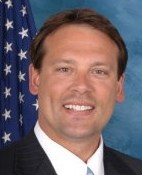
Shuler

Although the level of opposition to the transaction continues to grow, AT&T itself claims to remain confident it can push the merger through.

“It is not unusual for state attorneys general to participate in DOJ merger review proceedings or court filings,” AT&T representative Michael Balmoris said.

Several Democratic lawmakers, most of whom receive substantial campaign contributions from AT&T, would seem to underline the company has the support of at least some in Congress.

Rep. Heath Shuler (D-North Carolina), joined 14 Democratic co-signers in a letter sent Thursday to President Barack Obama encouraging him to support the merger deal.

“By settling the proposed merger of AT&T and T-Mobile USA we can put thousands of Americans back to work and promote economic development across the country,” Shuler said. “I urge the President to strongly consider the vast benefits this merger will have on job creation and the economy and quickly resolve any concerns the Administration may have with the proposal.”

Among the co-signers: Rep. John Barrow, Rep. Mike Ross, Rep. Dan Boren, Rep. Dennis Cardoza, Rep. Joe Baca, Rep. Leonard Boswell, Rep. Ben Chandler, Rep. Jim Costa, Rep. Henry Cuellar, Rep. Mike McIntyre, Rep. Mike Michaud, Rep. Collin Peterson, Rep. Loretta Sanchez, and Rep. David Scott.

AT&T currently also has support for their deal from 11 states, many which receive very little service directly from T-Mobile: Alabama, Arkansas, Georgia, Kentucky, Michigan, Mississippi, North Dakota, South Dakota, Utah, West Virginia and Wyoming.

A court hearing is scheduled for Sept. 21 to discuss settlement options.

[flv width=”480″ height=”290″]http://www.phillipdampier.com/video/KFOR Oklahoma City ATT T Mobile Merger 9-19-11.mp4[/flv]

KFOR in Oklahoma City explores the latest developments in the T-Mobile/AT&T merger case.  (2 minutes)

Search This Site:

Contributions:

Recent Comments:

Your Account:

Stop the Cap!