
Home » Bill Shock » Recent Articles:

Canadian Mobile Operators Raking in Fat Coronavirus Profits With Bill Shock

Canadians are opening cell phone bills that have skyrocketed as a result of usage from work-at-home initiatives to stop the spread of COVID-19, a health crisis that is also fattening profits at some of the country’s biggest mobile operators.

Rosette Okala of Pickering, a suburb of Toronto, was stunned to receive her Rogers Mobile bill this month for $540, up from the usual $160 she is used to paying.

“I almost dropped,” Okala told CBC News. She is a pharmaceutical employee whose job requires being online. Her 12-year-old son has been online more too, doing schoolwork.

The part of Pickering where Okala lives does not have wired internet service available, so she relies on internet service from her mobile provider, like hundreds of thousands of other Canadians do. Pickering is hardly a tiny town either. With a population of 92,000, the city is immediately east of Toronto in the Durham Region. Despite that, there are sections of the city still waiting to get wired internet service.

Using the internet in areas considered to be “rural Canada” by providers is not cheap. Rogers offers customers a $145/mo wireless internet plan that includes 100 GB of usage. Customers that exceed that do so at their peril, facing overlimit fees of $5/GB.

“This is just a slap in our face,” said Okala. “We [rural customers] pay huge bills just to be able to do something basic that most people take for granted.”

Okala hoped her employer would help cover her phone bill. Rogers has been reluctant to help, despite a showy ad campaign from the cable and wireless giant promising customers “we are in this together and are here to help.” When it comes to billing matters, talk is cheap and help is hard to find.
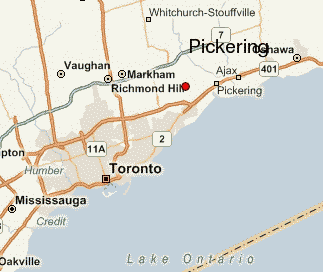
Pickering, Ont.

Okala said she spent hours on the phone with a Rogers representative trying to negotiate a lower bill. Rogers eventually offered a paltry $30 credit and a payment plan to pay off her balance. A second attempt resulted in an improved offer of $100 credit, an upgrade to a different service plan, and 50% off monthly service fees for 24 months. But Rogers still wanted to be paid at least $440, at least until the CBC pointed out it would share Okala’s story with the rest of Canada for free. Rogers suddenly offered to take another $230 off Okala’s March bill and give her the mobile hotspot hub she was leasing for free.

John Burbidge, a University of Waterloo economics professor in North Dumfries living in a town of 10,000 near Cambridge, Ont., got schooled in the mobile broadband business by Bell Mobility, which sent him a bill for $650, including nearly $400 in usage charges. Burbidge was confused by an email from Bell, Canada’s largest phone company, which claimed it was waiving overlimit usage fees for customers during the pandemic. He missed the fine print advising that fee waiver only applied to Bell’s DSL and fiber wired customers, not wireless data plans. Burbidge argued it was unfair to exempt some customers from usage fees, while continuing to charge them to others.

“If rural Canadians are expected to work and do school work from home, decent and reasonably priced access to the internet is a basic right. Bell should not be allowed to gouge rural customers,” Burbidge told Canada’s public broadcaster.
Bell told the CBC the company was offering customers an extra 10 GB on customer data allowances and a $10 credit off the cost of using a mobile hotspot connected to Bell’s mobile network. As a courtesy, Bell agreed to credit Burbidge’s account $350 for March and take 60% off overlimit fees in April, but he is on his own after that. Burbidge’s current plan charges $180 a month for up to 100 GB a month, with a $5/GB overlimit fee.

“It’s really sad to hear,” Laura Tribe, executive director of consumer group OpenMedia told the CBC. “Data caps are definitely unnecessary. We see them as a punitive mechanism to make sure that people suppress the amount of data that they use and overpay when they go over what they want.”

The Canadian Wireless Telecommunications Association (CWTA), an industry lobbying group representing the country’s wireless companies, claims data caps are necessary to prevent overwhelming Canada’s wireless networks, which could make calling 911 impossible. But voice calls can travel over different spectrum than data traffic, and no wireless company or the CWTA would admit if their networks were close to being overhwhelmed by traffic as a result of millions of Canadians working from home.

Tribe says the traffic spikes that have come from the coronavirus crisis prove her point. Even with data usage at all-time highs, no provider is claiming their network is close to capacity. That should call into question whether there is any need at all for mobile data caps.

“They’re a way to increase profits and suppress the usage of the networks,” said Tribe.
AT&T’s New CEO: If You Don’t Subscribe to HBO Max, You Have a Low IQ

Phillip Dampier April 28, 2020 AT&T, Competition, Consumer News, Editorial & Site News Comments Off on AT&T’s New CEO: If You Don’t Subscribe to HBO Max, You Have a Low IQ

Stankey

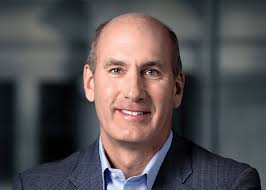
AT&T’s incoming CEO John Stankey has a message for America: If you are unwilling to pay $15 a month for AT&T’s HBO Max, you have a low IQ.

Stankey made that declaration pitching the new service, set to debut in May. The fact the video platform is late to a market already crowded by Netflix, Hulu, and Disney is just part of the challenge. That $15 price point is a bigger one.

If there is any company in the telecom business that can prove consumers are sensitive to price hikes and bill shock, it is AT&T. Its frequent rate hikes for its DirecTV satellite service and various streaming TV platforms have caused a customer exodus. More than a quarter of DirecTV customers have left and, even more stunning, well over half of AT&T’s streaming TV customers have dropped the service. In late 2018, DirecTV Now (today AT&T TV Now) — AT&T’s cord cutting TV alternative, had 1.8 million customers. As of last month, that number is down to 788,000 and still falling.

AT&T has repeatedly claimed it wants to focus on “high value” customers, which may explain why it remains confident its $15/mo HBO Max service will do well, despite being the most costly streaming service in the market.

Stankey’s predecessor, Randall Stephenson, will exit as AT&T’s CEO in July. He leaves a much larger conglomerate than what he started with. AT&T has diversified from its telephone and wireless portfolio with several major acquisitions, including DirecTV — the satellite TV service, and Time Warner (Entertainment), a Hollywood studio and entertainment giant. The result is a company loaded with debt and a revolt by activist investors that question the wisdom of creating the 2010s version of AOL-Time Warner.
Elliott Management Corp., the activist investment firm that has proved itself a nuisance to the expensive dreams of several rich and powerful CEOs, does not see a viable marriage between AT&T’s profitable telecommunications business and a media and entertainment company. It took its concerns public in 2019, calling on AT&T management to get back to the basics.

Stankey’s approach seems to be a willingness to embrace the newest members of the AT&T family, for now, while also reassuring investors the shopping spree of mergers and acquisitions is over. Bloomberg News reports his views seem to have won Elliott Management over. At the same time, Stankey has to convince investors and the public he is competent at running a media company. The jury is still out on that:

Bloomberg:

At a town hall with HBO employees last year, Stankey said the network had to dramatically increase its programming output, comparing the work ahead to childbirth. Once, when a Time Warner veteran criticized an idea during a meeting, Stankey replied, “I know more about television than anybody.”

[…] But over the past two years, Stankey has tried to acclimate himself to the glitzy world of entertainment. He started watching HBO’s “Westworld” and “Succession.” He could be seen mingling with HBO talent at glitzy Manhattan premiere parties. At an industry event, he wore a pin featuring a Looney Tunes character — a WarnerMedia property — on his jacket lapel.

Bill Shock: When Your Charter Spectrum Promotion Ends…

Phillip Dampier May 2, 2019 Charter Spectrum, Competition, Consumer News 10 Comments

Your time is up. It may have been one, two, or if you are especially lucky — three years since you signed up for Charter Spectrum service. But your temporary reprieve from the high price of cable is over.

The bad news arrives in a letter:

Thank you for being a Spectrum customer. When you signed up for your services, you received a promotional discounted rate on your bill. This promotion is coming to an end. However, as a valued customer we are pleased to offer a new promotion for an additional year.

Spectrum certainly is pleased. You may not be. To avoid shocking you too much, the company does not provide a new “out the door” price. They wait until they send you your first post-promotion bill. The letter also does not remind you what you were paying, it breaks out the price of each component service of your bundle for the following 12 months in an effort to lessen the surprise.

For most Spectrum customers on a basic, new customer promotion lasting one year, the rate change is substantial — once you add it all up.

For a customer subscribed to Standard Spectrum TV with two DVR boxes, Internet Ultra (400/20 Mbps), and Spectrum Voice, here is what you can expect (prices and promotions may vary):

  • Standard Spectrum TV: Your promotional rate of $54.98 will rise to $86.97, an increase of $31.99.
  • Internet Ultra: The promotional triple-play bundled price of $54.99 increases to $74.99, up $20.
  • Spectrum Voice: The bundled price of $29.99 will decrease to $19.99, a savings of $10.

Spectrum Voice, Charter’s digital home phone line product, is the most vulnerable part of their triple play bundle. Scores of customers drop landline service at the end of a promotion because, in many cases, having the landline as part of a triple play package either came free (or almost free), or actually reduced the price of the bundle. By offering a lower rate going forward, Charter is making a token effort to convince customers not to abandon voice service, but as the company’s landline disconnects continue to accelerate, it clearly isn’t an effective tactic.

The letter also ignores Charter’s ever-rising Broadcast TV Fee, now $11.99 a month, and is compulsory for all cable TV customers. So the old monthly promotional rate of $155.75 for this particular package will rise to about $193.94, a difference of $38.19 a month. After a second 12 months, prices generally reset even higher to the published “rack rate.”

Since Charter took control of Time Warner Cable and Bright House Networks, efforts by customers to negotiate a lower rate got much tougher, but the company’s customer retention efforts have stepped up slightly over the last year. You should still expect to pay more than you did before, but it is often possible to negotiate a slightly better deal by threatening to cancel service. Some customers report more success discussing the matter in a Spectrum cable store, cable modem and set top boxes in hand. But do not be surprised if they shrug their shoulders and agree to your request to cancel your account on the spot. Spectrum, like many cable companies, has gotten pickier about who they offer promotions to, and are willing to say goodbye to barely profitable customers, especially those only subscribed to cable TV.

Charter Shareholders Love Spectrum’s 20% Broadcast TV Fee Increase; Second Rate Hike in 4 Months

Phillip Dampier February 14, 2019 Charter Spectrum, Consumer News, Public Policy & Gov't 4 Comments

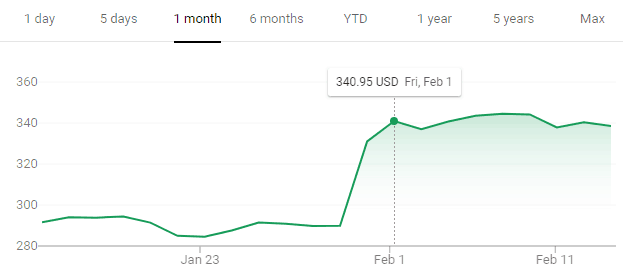
Although Spectrum Cable customers will face higher cable TV bills starting next month, the company’s shareholders are delighted, boosting Charter’s stock price more than $50 a share on the news.

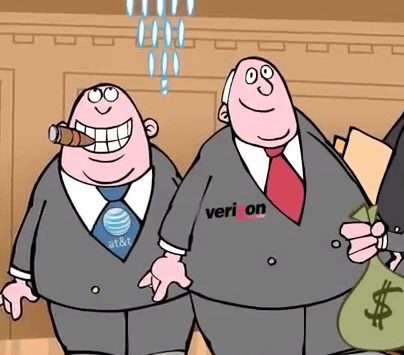
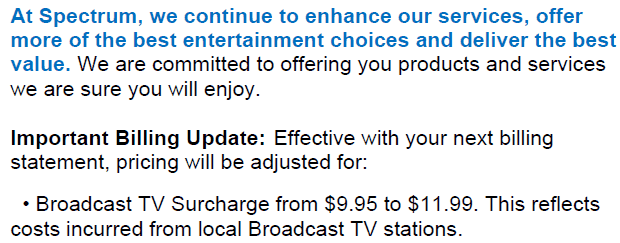
Spectrum’s latest increase (the second in four months) of its Broadcast TV Surcharge will set a uniform national fee of $11.99 a month for all of its cable television customers.

In 2018, customers paid an average of $8.75 a month in local TV surcharges. But last November, Charter raised the surcharge to $9.95 a month. Now, just a few months into 2019, Spectrum wants another $2 a month — a 20% increase — to watch local television signals that are available for free to those with an antenna. That’s a steep increase for what began as a $2 surcharge for some customers starting in 2015.

Charter’s investors reacted positively to the latest rate hike, jumping the stock price from $289.91 a share to $340.95 — a $51.04 boost after the fee increase was first reported by the Los Angeles Times.

The new surcharge will be reflected on customer bills beginning as early as Feb. 21.

Charter blamed broadcasters for the “rapidly rising cost” of including local TV stations on the cable lineup. In a letter to some state telecommunications regulators, the cable operator claimed it would be inefficient to not raise prices.

Charter’s share price shot up on the news it was increasing its Broadcast TV Surcharge by 20% just four months after the last increase.

“Containing costs and efficiently managing our operations are critical to providing customers with the best value possible,” wrote Melinda Kinney, Charter’s senior director of government affairs for Charter’s Northeast Division. “Like every business, Charter faces rising costs that require occasional price adjustments.”

But many customers, especially those in marginal reception areas, are loudly complaining that Charter is raising its Broadcast TV Fee even as it drops regional over the air stations from its cable lineup. In 2017, Spectrum customers in western Massachusetts reported a gradual exodus of local TV stations from their lineup, starting with WWLP, the NBC affiliate in Springfield with strong local news coverage of the western half of the state. Today, Spectrum only provides western Massachusetts with a single NBC station — WNYT in Albany, N.Y., which keeps viewers up to date with the latest political machinations of the New York State legislature.

Next to go was Boston’s ABC affiliate, WCVB — airing the strongest coverage of local and state news of any ABC affiliate in the state. In its place, viewers now receive WTEN, the ABC station in Albany, which is covering Sen. Jim Tedisco’s support for splitting New York into two separate states — a ‘crucial’ issue for subscribers living in the Berkshires and beyond.

Other states facing “out of market” channel losses include Connecticut, California, Nevada, and Nebraska. Many of the affected stations were dropped as Charter upgraded its cable systems to all-digital television, perhaps counting on subscriber confusion amidst other changes to the cable system.

Barrett on Charter: “Greed”

The loss of local stations while rapidly increasing the surcharge for those stations has some people calling foul.

Massachusetts State Rep. John Barrett III (D-North Adams) called it “greed.” Charter mandates the Broadcast TV Fee be paid by all video customers, including those on “price locked” promotions. By breaking the fee out of the cost of the cable television package, Charter Spectrum gets to advertise packages to new and returning customers at a low cost, only to deliver bill shock when customers discover the surcharge, along with equipment and franchise fees, that collectively increases their total monthly bill.

As the second largest cable company in the country, Charter is estimated to be collecting an extra $211 million annually from its first increase in November 2018 and $391 million annually from the latest increase now taking effect. Together, that amounts to $602 million annually in new revenue starting in March. Charter will not disclose exactly how much of this money is paid to each local television station.

Charter also has a habit of boosting its set-top box equipment fees about $1 a month per box each year — an increase we are likely to see later this year, and the company already slightly increased prices for internet service late last year.

Charter executives told shareholders on its most recent quarterly results conference call that the company’s revenue increased 4.9% in 2018 to $43.6 billion. Combining that extra revenue with a $1.9 billion cut in upgrades for 2019 will allow the company to focus on additional share buybacks, increased payouts to Charter shareholders, and debt reduction.

Wall Street’s Latest Great Idea: Providers Should Charge More for 5G, But Only After You Are Hooked

“You’re giving it away… you are giving it all away!” — An unknown Wall Street analyst tossing and turning in the night.
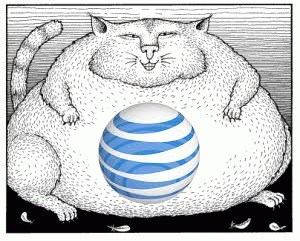
America is simply not paying enough for wireless service. Thanks to dastardly competition introduced by T-Mobile and Sprint (potentially to be snuffed out in due course if their merger gets approved), wireless pricing is no longer a license to print money. Forced to offer one-size-fits-all affordable $40-50 unlimited plans, the prospects to grow Average Revenue Per User (ARPU) have never been worse because you can’t charge people for more service on an “unlimited plan” without admitting that plan is not exactly “unlimited.”

Wall Street analysts, already upset at the thought of carriers spending more than $100 billion on 5G network upgrades, are in a real tizzy about how companies are going to quickly recoup that investment. No matter that some wireless companies have profit margins in the 50% range and customers have paid providers for a service they were assured would keep up with the times and network demand. If there is to be a 5G revolution in the United States, some insist it must not come at the cost of reliable profits — so the industry must find a way to stick consumers with the bill.

It is not common for industry analysts to go public brainstorming higher prices and more customer gouging. After all, North Americans already pay some of the highest cell phone bills in the world, only mitigated (for now) by scrappy T-Mobile and Sprint. Mark Lowenstein, a leading industry analyst, consultant, and commentator, was willing to go public in the pages of Fierce Wireless, arguing “operators should be considering charging a premium price for what will hopefully be a premium service.” That is likely music to the ears of AT&T and Verizon, both frustrated their pricing power in the market has been reduced by credible competition from a significantly improved T-Mobile.

Lowenstein fears the prospects of a “race-to-the-bottom 5G price war” which could arrive if America’s wireless companies offer a credible home internet replacement that lets consumers tell the local phone or cable company to ‘take a hike.’ Since wireless operators will bundle significant discounts for those who subscribe to both home and mobile plans, telecommunications services may actually cost less than what Wall Street was banking on.

Something must be done. Lowenstein:

In mobile, there’s been premium pricing for premium phones. And Verizon Wireless, for a few years when it had a clear network lead, was sort of able to charge a higher price for its service (but not a premium price). But today, there isn’t really premium pricing for premium services. That should change when 5G really kicks into gear.

So how do you extract more cash from consumers’ wallets? Create artificial tiers that have no relationship to the actual cost of the network, but could potentially get people to willingly pay a lot more for something they will initially get for a simple, flat price:

One simple way would be a flat premium price, similar to the “tiers” of Netflix for a higher number of devices or 4K/Ultra HD.  So, perhaps $10 per line for 5G, or $25 for a family plan. Another approach would be more akin to broadband, where there are pricing tiers for different levels of service performance. So if the base 4G LTE plan is $50 per month today, for an average 100 Mbps service, 5G packages could be sold in gradations of $10 for higher speeds (i.e. $60 for 300 Mbps, $70 for 500, $80 for 1 Gbps, and so on). An interesting angle on this is that some of the higher-end 4G LTE services such as Gigabit LTE (and beyond) could get incorporated into this, so it becomes less of a 4G vs. 5G discussion and more of a tier of service discussion.

I would also like to see some flexibility with regard to how one can purchase 5G capabilities. For example, a user might only need those premium 5G features occasionally, and might only be prepared to pay that higher price when the service is being used. Here, we can borrow from the Wi-Fi model, where operators offer a “day pack” for 5G, or for a certain city, location, or 5G-centic app or experience. 5G is going to be hot-spotty for awhile anyway, so why not use a Wi-Fi type model for pricing?

Even better, now with net neutrality in the ash heap of history, courtesy of the Republican-dominated FCC, providers can extract even more of your money by artificially messing with wireless traffic!

Lowenstein sees a brand new world of “app-centric pricing” where wireless carriers can charge even more to assure a fast lane for those entertainment, gaming, and virtual reality apps of the future, designed to take full advantage of 5G. Early tests have shown millimeter wave 5G networks can deliver extremely low latency traffic to customers from day one. That kills the market for selling premium, low-latency add-ons for demanding apps before companies can even start counting the money. So assuming providers are willing to purposely impede network performance, there just could be a market selling sub-100ms assured latency for an extra fee.

The potential of a Money Party only 5G can deliver is coming, but time is short to get the foundation laid for surprise toll lanes and “premium traffic” enhancements made possible without net neutrality. But first, the wireless industry has to get consumers hooked on 5G at a tantalizingly reasonable price. Charge too much, too soon and consumers may decide 4G LTE is good enough for them. That is why Lowenstein recommends operators not get carried away when 5G first launches.

“We don’t want to be setting ourselves up for a WiMAX-like disappointment,” Lowenstein writes. “The next 12-18 months are largely going to be ‘5G Experimentation’ mode, with limited markets, coverage, and devices. Heck, it’s likely to be two years before there’s a 5G iPhone in the United States, where iOS still commands nearly half the market.”

The disappointment will eventually be all yours, dear readers, if Lowenstein’s recommendations are adopted — when “certain milestones” trigger “rate adjustment” letters some day in the future.

Lowenstein sees four signs to start the pillaging, and we’ve paraphrased them:

  • Coverage: Wait until 30-40% of a city is covered with 5G, then jack up the price. As long as customers get something akin to 5G one-third of the time, they’ll moan about why their 5G footprint is so limited, but they will keep paying more for the scraps of coverage they get.
  • Markets: Price the service differently in each market depending on how stingy customers are likely to be at different price points. Then hike those prices to a new “nationwide” standard plan when 5G is available in the top 20-30 cities in the country. Since there may not be much competition, customers can take it or leave it.
  • Performance: AT&T and Verizon’s gotta gouge, but it’s hard to do it with a straight face if your 5G service is barely faster than 4G LTE. Lowenstein recommends waiting until speeds are reliably north of 100 Mbps, then you can let rip with those diamond-priced plans.
  • Devices: It’s hard to extract another $50-100 a month from family plan accounts if there are an inadequate number of devices that support 5G. While your kids “languish” with 4G LTE smartphones and dad enjoys his 5G experience, mom may shut it all down when the bill comes. Wait until everyone in the family can get a 5G phone before delivering some good old-fashioned bill shock, just like companies did in the golden days of uncompetitive wireless.

These ideas can only be adopted if a lack of competition assures all players nobody is going to call them out for pickpocketing customers. Ajit Pai’s FCC won’t interfere, and is even subsidizing some of the operators’ costs with taxpayer dollars and slanted deregulation to let companies construct next generation 5G networks as cheaply as possible (claiming it is important to beat China, where 5G service will cost much less). Should actual competition remain in the wireless market, all the dreams of rate-hikes-because-we-can will never come true, as long as one carrier decides they can grow their business by charging reasonable prices at their competitors’ expense.

Search This Site:

Contributions:

Recent Comments:

Your Account:

Stop the Cap!