Home » astroturf group » Recent Articles:

HissyFitWatch: ‘Tea Party Ted’s’ One Man Blockade of Obama’s FCC Nominee

Cruz Control

Cruz Control

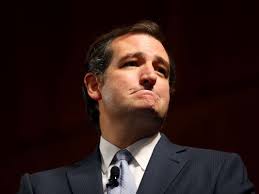
Sen. Ted Cruz (R-Tex.) has blocked the Senate from voting to confirm Tom Wheeler, the Obama Administration’s pick for the next chairman of the Federal Communications Commission.

Cruz, a Tea Party favorite, does not object to Wheeler’s credentials. He’s upset Wheeler might support a regulatory implementation of portions of the Disclose Act, a bill requiring full disclosure of who pays for political advertising. The bill would require corporations, super PACs, astroturf groups and other special interests to report to the Federal Election Commission when they spend more than $10,000 on airtime for campaign ads.

Cruz and several other Republican senators wrote the FCC in April to warn the bill violates corporate First Amendment speech rights and was unconstitutional.

With no chance the legislation will pass a Republican-controlled House and deadlocked Senate, the bill’s supporters have turned to the FCC with the idea the agency could act independently to require campaign ad disclosures, a suggestion that infuriated conservative Republicans who disapprove of any enhanced oversight powers for the regulator.

Cruz placed a formal hold on Wheeler’s nomination last week as the Senate prepared to vote an end to the 16-day federal government shutdown.

A spokesman from Cruz’s office made it clear as long as Wheeler continued to vacillate on a commitment not to regulate campaign ads, he will not get an up or down vote on his nomination in the Senate.

Observers suggest Cruz’s hold will stall spectrum auctions and, if extended beyond the fall, could eventually freeze Internet expansion programs for schools and libraries.

Acting FCC chairwoman Mignon Clyburn will continue in that role until Wheeler gets confirmed or another appointee is nominated and approved.

Mowing the Astroturf: Tennesee’s Pole Attachment Fee Derided By Corporate Front Groups

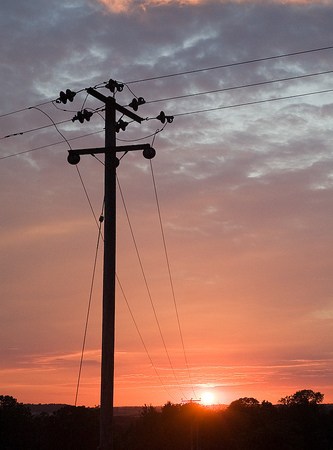
phone pole courtesy jonathan wCable operators and publicly owned utilities in Tennessee are battling for control over the prices companies pay to use utility poles, with facts among the early casualties.

The subject of “pole attachment fees” has been of interest to cable companies for decades. In return for permission to hang cable wires on existing electric or telephone poles owned by utility companies, cable operators are asked to contribute towards their upkeep and eventual replacement. Cable operators want the fees to be as low as possible, while utility companies have sought leeway to defray rising utility pole costs and deal with ongoing wear and tear.

Little progress has been made in efforts to compromise, so this year two competing bills have been introduced by Republicans in the state legislature to define “fairness.” One is promoted by a group of municipal utilities and the other by the cable industry and several corporate-backed, conservative front groups claiming to represent the interests of state taxpayers and consumers.

Some background: Tennessee is unique in the pole attachment fee fight, because privately owned power companies bypassed a lot of the state (and much of the rest of the Tennessee Valley and Appalachian region) during the electrification movement of the early 20th century. Much of Tennessee is served by publicly owned power companies, which also own and maintain a large percentage of utility poles in the state.

Some of Tennessee’s largest telecom companies believe they can guarantee themselves low rates by pitching a case of private companies vs. big government utilities, with local municipalities accused of profiteering from artificially high pole attachment rates. Hoping to capitalize on anti-government sentiment, “small government” conservatives and telecom companies want to tie the hands of the pole owners indefinitely by taking away their right to set pole attachment rates.

The battle includes fact-warped editorials that distort the issues, misleading video ads, and an effort to conflate a utility fee with a tax. With millions at stake from pole attachment fees on tens of thousands of power poles throughout the state, the companies involved have launched a full-scale astroturf assault.

Grover Norquist’s Incendiary “Pole Tax”

Conservative Grover Norquist, president of Americans for Tax Reform wrote that the pole attachment fee legislation promoted by public utilities would represent a $20 million dollar “tax increase” from higher cable and phone bills. Even worse, Norquist says, the new tax will delay telecom companies from rushing new investments on rural broadband.

Norquist

Norquist

In reality, Americans for Tax Reform should be rebranded Special Interests for Tax Reform, because the group is funded by a variety of large tobacco corporations, former clients of disgraced lobbyist Jack Abramoff, and several wealthy conservative activists with their own foundations.

Norquist’s pole “tax increase” does not exist.

The Federal Communications Commission (FCC) provides guidelines and a formula for determining pole attachment rates for privately owned utilities, but permits states to adopt their own regulations. Municipal utilities are exempted for an important reason — their rates and operations are often already well-regulated.

Stop the Cap! found that pole attachment revenue ends up in the hands of the utility companies that own and keep up the poles, not the government. Municipal utilities stand on their own — revenue earned by a utility stays with the utility. Should a municipal utility attempt to gouge other companies that hang wires on those poles, mechanisms kick in that guarantee it cannot profit from doing so.

A 2007 study by the state government in Tennessee effectively undercut the cable industry’s argument that publicly owned utilities are overcharging cable and phone companies that share space on their poles. The report found that “pole attachment revenues do not increase pole owners’ revenue in the long run.”¹

The Tennessee Valley Authority, which supplies electricity across Tennessee, regularly audits the revenues and costs of its municipal utility distributors and sets end-user rates accordingly. The goal is to guarantee that municipal distributors “break even.” Any new revenue sources, like pole attachment fees, are considered when setting wholesale electric rates. If a municipal utility overcharged for access to its poles, it will ultimately gain nothing because the TVA will set prices that take that revenue into account.

Freedom to Distort: The Cable Lobby’s Astroturf Efforts
Freedom to distort

Freedom to distort

Another “citizens group” jumping into the battle is called “Freedom to Connect,” actually run by the Tennessee Cable Telecommunications Association (TCTA). Most consumers won’t recognize TCTA as the state cable lobby. Almost all will have forgotten TCTA was the same group that filed a lawsuit to shut down EPB’s Fiber division, which today delivers 1,000Mbps broadband service across the city and competes against cable operators like Comcast and Charter Cable.

One TCTA advertisement claims that some utilities are planning “to double the fees broadband providers pay to the state’s government utilities.”

In reality, cable companies have gone incognito, hiding their identity by rebranding themselves as “broadband providers.” No utility has announced it plans to “double” pole attachment fees either.

TCTA members came under fire at a recent hearing attended by state lawmakers when Rep. Charles Curtiss (D-Sparta) spoke up about irritating robocalls directed at his constituents making similar claims.

“What was said was false,” Curtiss told the cable representatives at the hearing. “You’ve lost your integrity with me. Whoever made up your mind to do that, you’re in the wrong line of work.”

[flv width=”640″ height=”380″]http://www.phillipdampier.com/video/TCTA Pole Attachment Fees Ad 3-13.flv[/flv]

TCTA — Tennessee’s cable industry lobbying group, released this distorted advertisement opposing pole attachment fee increases.  (1 minute)

The Chattanooga Free-Press’ Drew Johnson: Independent Opinion Page Editor or Well-connected Activist with a Conflict of Interest?

Johnson

Johnson (Times Free Press)

In its ad campaign, the TCTA gave prominent mention to an article in Chattanooga’s Times-Free Press from Feb. 27: “Bill Harms Consumers, Kills Competition.”

What the advertisement did not say is it originated in an editorial published by Drew Johnson, who serves as the paper’s conservative opinion editor. Johnson has had a bone to pick with Chattanooga’s public utility EPB since it got into the cable television and broadband business.

That may not be surprising, since Johnson is still listed as a “senior fellow” at the “Taxpayers Protection Alliance,” yet another corporate and conservative-backed astroturf group founded by former Texas congressman Dick Armey of FreedomWorks fame.

Johnson’s journalism credentials? He wrote a weekly column for the conservative online screed NewsMax, founded and funded by super-wealthy Richard Mellon Scaife and Christopher Ruddy, both frequent donors to conservative, pro-business causes.

TPA has plenty to hide — particularly the sources of their funding. When asked if private industry backs TPA’s efforts, president David Williams refused to come clean.

“It comes from private sources, and I don’t reveal who my donors are,” he told Environmental Building News in January.

Ironically, Johnson is best known for aggressively using Tennessee’s open records “Sunshine” law to get state employee e-mails and other records looking for conflicts of interest or scandal.

Newspaper readers may want to ask whether Johnson represents the newspaper, an industry-funded sock puppet group, or both.  They also deserve full disclosure if the TPA receives any funding from companies that directly compete with EPB.

The Institute from ALEC: The Institute for Policy Innovation’s Innovative Way to Funnel AT&T and Comcast Money Into the Fight
Provider-backed ALEC advocates for the corporate interests that fund its operations.

Provider-backed ALEC advocates for the corporate interests that fund its operations.

Another group fighting on the side of the cable and phone companies against municipal utilities is the Institute for Policy Innovation. Policy counsel Bartlett D. Cleland claimed the government is out to get private companies that want space on utility poles.

“The proposed new system in HB1111 and SB1222 is fervently supported by the electric cooperatives and the government-owned utilities for good reason – they are merely seeking a way to use the force of government against their private sector competitors,” Cleland said. “The proposal would allow them to radically raise their rates for pole attachments to multiples of the national average.”

The facts don’t match Cleland’s rhetoric.

In reality, the state of Tennessee found in their report on the matter in 2007 that Tennessee’s pole attachment fees are “not necessarily out of line with those in other states.”²

In fact, some of the state’s telecom companies seemed to agree:

  • EMBARQ (now CenturyLink) provided data on fees received from other service providers in Tennessee, Virginia, South and North Carolina. In these data, Tennessee’s rates ($36.02 – $47.41) are similar to those in North Carolina ($23.12-$52.85) and Virginia ($28.94 – $35.77). Rates were lower in South Carolina.
  • Cable operators, who have less infrastructure on poles than telephone and electric utilities, paid even less. Time Warner Cable provided mean rates per state showing Tennessee ($7.70) in the middle of the pack compared to Florida ($9.83) and North Carolina ($4.86 – $13.64).

In addition to his role as policy counsel, Cleland also happens to be co-chair of the Telecommunications and Information Technology Task Force of the American Legislative Exchange Council (ALEC). Members of that committee include Comcast and AT&T — Tennessee’s largest telecom companies, both competing with municipal telecommunications providers like EPB.

¹ Analysis of Pole Attachment Rate Issues in Tennessee, State of Tennessee. 2007. p.23

² Analysis of Pole Attachment Rate Issues in Tennessee, State of Tennessee. 2007. p.12

Panic 911: Big Telecom Front Group’s Silly Defense of Internet Overcharging

Phillip "Oh look, more industry-backed research in denial of consumer-loathing of Internet Overcharging" Dampier

Phillip “Oh look, more industry-backed research in denial regarding unpopular usage caps and consumption billing” Dampier

It seems America’s biggest industry-funded broadband astroturf group, Broadband for America, thinks the New America Foundation completely misses the point of “new pricing strategies” like restrictive usage caps, costly consumption-based billing, and fiendishly high overlimit fees. In a hurry, they released this particularly weak argument favoring usage pricing:

A new report by the New America Foundation suggests that “dwindling competition is fueling the rise of increasingly costly and restrictive Internet usage caps” in the broadband sector. But as we’ve explained before, these experimental new pricing strategies are actually signs of competition in the market and ultimately benefit consumers.

In terms of competition between broadband service providers, a study by Boston College Law School Professor Daniel Lyons concluded “data caps and other pricing strategies are ways that broadband companies can distinguish themselves from one another to achieve a competitive advantage in the marketplace.” He also concluded these practices were not anti-consumer: “When firms experiment with different business models, they can tailor services to niche audiences whose interests are inadequately satisfied by a one-size-fits-all flat-rate plan.” Indeed, many consumers are no longer satisfied with one-size-fits-all rate plans. Since data usage by individual users can vary dramatically, imposing a one-size-fits-all approach to pricing would result in light data users subsidizing the use of heavier ones. As Michigan State University Professor of Information Studies Steven Wildman explains, not having usage-based pricing models “means that light users pay a higher effective rate for broadband service, cross-subsidizing the activities of those who spend more time online. With usage-based pricing, those who use more bandwidth contribute more toward the cost of building and maintaining broadband networks.”

Broadband providers should be free to experiment with usage-based pricing and other pricing strategies as tools in their arsenal to meet rising broadband demand on their networks. Moving forward, Lyons recommends instituting public policies that allow providers the freedom to experiment, in order to best preserve the spirit of innovation that has characterized the Internet since its inception.

Broadband for America thinks they are clever when they introduce “academic papers” that extend credibility to their arguments. No, Broadband for America, we get the point. Your benefactors want to charge customers more  money for less service and call that a fair deal.

The wheels driving their talking points start to fall off the moment one peaks under their covers:

1. Broadband for America (BfA) is America’s largest telecom industry front group, backed almost entirely by cable and phone companies and dozens of supporting groups that are typically funded by those companies, have telecom industry board members, or whose lifeblood depends on doing business with Big Telecom companies.

2. Experimental pricing plans that largely leave existing pricing in place –and– impose new service limitations is not a sign of competition that benefits consumers, it is proof of its absence. With today’s broadband duopoly, there is little risk imposing new fees or service restrictions when the only competition you have typically follows suit. There is no evidence that usage-based pricing is saving consumers money, particularly when broadband providers are using their marketplace power to further increase prices.

3. There is no evidence “many consumers are no longer satisfied with one-size-fits-all rate plans” for home broadband. In fact, the reverse has been proved conclusively, sometimes by industry-funded researchers.

4. With a 90-95% gross margin on broadband, there is plenty of room for price cuts –and– unlimited broadband, but why give those profits away when lack of competition doesn’t provide the necessary push. Instead, providers’ ideas of “innovative pricing” are always upwards and include usage limits, modem rental fees, and other restrictions.

5. The railroad industry argued much the same case in the early 20th century when communities complained about wide pricing disparity, depending on local competition. We all know what eventually happened there.

6. Full disclosure, as is too often the case, is completely lacking at BfA. So we’ve offered to help:

The “study by Boston College Law School Professor Daniel Lyons” is accurate. He is now a faculty member there. But BfA fails to disclose the study was actually produced on behalf of the Koch Brother-funded Mercatus Center, which specializes in industry-friendly position papers on deregulation. Lyons is also on the Board of Academic Advisers at the Free State Foundation, itself an industry-backed astroturf group that advocates on behalf of large telecom companies, among others.

His colleague Michigan State University Professor of Information Studies Steven Wildman is also an adviser at the Free State Foundation. He is also a bit more transparent about where the money comes from for his studies advocating usage-based pricing – the National Cable and Telecommunications Association (NCTA), the largest cable industry lobbying and trade group in the United States.

The only surprise Lyons and Wildman could have delivered is if they advocated against these Internet Overcharging schemes. But then they probably would not have been invited to present their findings at an NCTA Connects briefing last week entitled, “Connecting the Dots on Usage-Based Pricing.”

We at Stop the Cap! can connect the dots as well.

Community-Owned MI-Connection Launches Speed War That Benefits North Carolina

Phillip Dampier November 8, 2012 Broadband Speed, Community Networks, Competition, Consumer News, Editorial & Site News, MI-Connection, Public Policy & Gov't Comments Off on Community-Owned MI-Connection Launches Speed War That Benefits North Carolina

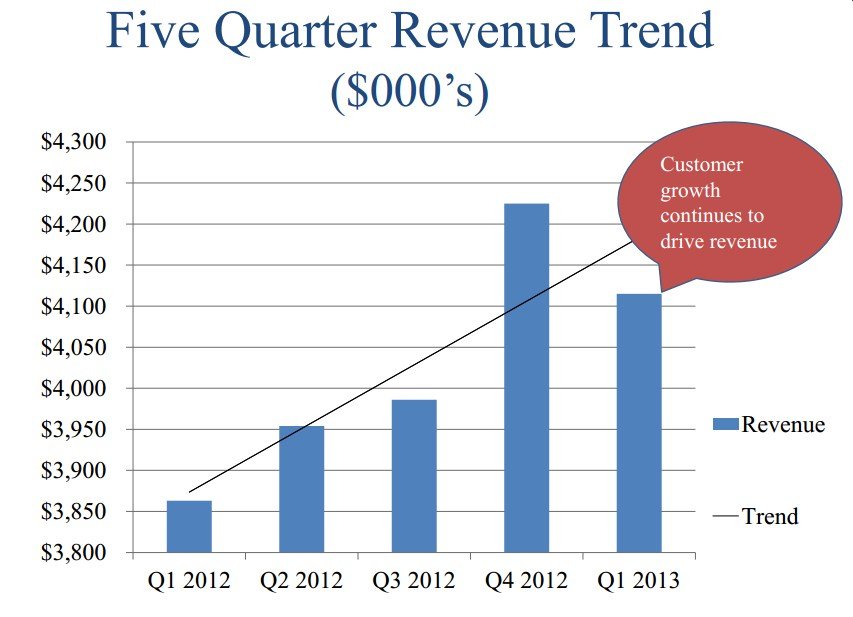
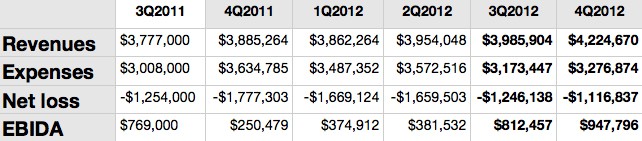
A community-owned cable system that critics called “a municipal broadband failure” is proving to be anything but as it aggressively launches a broadband speed war and is narrowing its losses on the road to profitability.

MI-Connection is the community-owned cable system serving Mooresville, Davidson, and Cornelius, N.C.

Originally acquired in 2007 from bankrupt Adelphia Cable, MI-Connection has been a favorite target for municipal broadband critics who have painted the operation as an experiment gone wrong and a financial failure. But the system’s latest financial results and its forthcoming free broadband speed upgrades tell a different story.

Residents will see major boosts in their broadband speeds for no additional charge in December thanks to a broadband service upgrade. Meanwhile, competitor Time Warner Cable has announced new fees for cable modem rentals that will raise many customer bills by $4 a month. (MI-Connection does not charge customers a rental fee when they have just one cable modem on their account.)

The speed increases will provide the fastest download-upload speed combination in the area, thanks to faster upstream speeds. These upgrades launch Dec. 10:

  • 8/4Mbps service upgrades to 10/5Mbps
  • 12/4Mbps service upgrades to 15/5Mbps
  • 16/4Mbps service upgrades to 20/5Mbps
  • 20/4Mbps service upgrades to 30/10Mbps

Also on that date, MI-Connection will launch its fastest Internet tier yet, tentatively dubbed Warp Speed, offering 60/10Mbps service with a free wireless router for bundled customers, selling faster service at up to $20 less per month than what Time Warner charges:

  • $99.95/month broadband service only
  • $89.95/month when bundled with one other service
  • $79.95/month when bundled with phone and television service

Warp Speed will be the fastest residential broadband available in Mecklenburg and Iredell counties.

MI-Connection hopes accelerating improvements in broadband will also accelerate additional earnings. MI-Connection continues to earn the bulk of its revenue from television, with broadband and phone lagging behind. But the biggest growth in revenue year over year comes from broadband service.

Last summer, MI-Connection reached another milestone — it delivered its first cash payments back to the communities that took a chance on owning and running their own telecommunications provider. Although the total amount of $277,000 was modest, and the company still has to pay down debt incurred from purchasing and upgrading the cable system, it was a symbolic victory against anti-government, anti-municipal broadband naysayers.

More elusive is tracking the amount of money saved by residents finding Time Warner Cable and area phone companies ready and willing to offer stunning rate cuts in customer retention efforts.

Stop the Cap! has tracked some of those offers over the past several years, based on reader input.

Time Warner Cable’s retention department has offered North Carolina customers with active competition in their area prices as low as $100 a month (after taxes and fees) for triple play packages that include a free year of Showtime and 30/5Mbps broadband. Customers who only want broadband and television have been able to negotiate rates averaging $70 a month, especially after pointing out MI-Connection provides a year of its own phone, broadband, and TV service for $89.99 a month, including three free months of HBO.

“Year after year, renewing these prices just takes a phone call mentioning you received a flyer from MI-Connection offering more for less,” says Stop the Cap! reader Sam, who we contacted this morning for an update on our earlier story in April. “Whether you stay with Time Warner or switch to MI-Connection, you can easily save dozens of dollars a month just mentioning one provider to the other.”

Courtesy: Davidson News

Sam remains a Time Warner Cable customer based on what he calls “a simple matter of economics and what my wife wants to spend.” But he still supports the fact MI-Connection is there, even though it has created some early headaches for Mooresville, Davidson, and Cornelius.

“The conservatives have demagogued MI-Connection to death to win seats in local government but recently have stopped attacking it as an outright failure and are now claiming they want to make it successful so they can sell it off in a few years, probably to their pals at Time Warner,” Sam reflects.

“At the rate MI-Connection is cutting their losses, it might actually be profitable then,” Sam argues. “Selling it would be stupid. But a lot of the current crowd is hellbent on selling it no matter what, mostly for ideological reasons, and after Time Warner buys it for cheap, we’ll all pay even more when they put the rates back up.”

Critics of MI-Connection have help from various astroturf groups, backed largely by telecommunications companies who oppose government involvement in broadband. Particularly notorious is the “Coalition for the New Economy,” which issues negative reports about municipal broadband while burying the fact the group is funded in part by AT&T, Time Warner Cable, and other Big Telecom lobbyists.

The “Coalition” issues various reports mostly summarizing news accounts about community broadband that highlight struggles and ignore successes, while concluding that community broadband is interfering with private providers trying to hurry upgrades into neglected areas.

“A report from some group that lies never brought better broadband access to anyone in North Carolina,” Sam said. “MI-Connection has become a thorn that must be pulled from Time Warner’s backside because MI actually does provide better service.”

Robocalls, Some Engaged in Dirty Tricks, Overwhelm Voters; “65 Calls So Far Today”

Phillip Dampier November 6, 2012 Consumer News, HissyFitWatch, Public Policy & Gov't, Video 1 Comment

Stopping robocalls

Landline customers in swing states have been under assault since last weekend from waves of robocalls, some containing false and misleading voting information, that have come in at rates of 20, 30, or even more every hour.

“Robocalls” are the annoying recorded messages mass-blasted to landline customers from candidates, their wives, political allies, and astroturf groups encouraging support for particular candidates or demonizing their opponents. While most landline customers receive a handful of “get out the vote” reminders during Election Day, voters in hotly-contested swing states are under siege with dozens upon dozens of recorded political messages. Now some are unplugging their phones until the polls close.

In Wisconsin, one woman said she received “calls” from President Obama, Governor Romney, and 63 others before she finally pulled the plug on her phone.

[flv width=”576″ height=”344″]http://www.phillipdampier.com/video/WXMI Grand Rapids Assault of the Robocall 11-5-12.flv[/flv]

Norma Escribano-Smith in Grandville got 65 robocalls on her phone before she finally became so exasperated, she unplugged it. WXMI in Grand Rapids reports on life in a swing state. (3 minutes)

Some groups blast out calls opposing specific ballot measures — marriage equality and tax measures are two hot issues this season. Others are more clandestine about their true identity, launched by dirty tricks firms that are masters in the dark art of the misleading robocall.

In Florida, registered voters in heavily Democratic areas report getting calls identified by Caller ID as the local Obama campaign office. The recorded messages that follow inaccurately tell voters the election has “been extended” and they can “vote for Obama tomorrow” by dropping off their ballots at a local polling place. The local Obama office is not the source of the calls, however. Someone is faking (better known as “spoofing”) the Caller ID information.

In Tucson, Ariz., local Republicans are getting calls suggesting their party supports a state proposition on the ballot the GOP actually opposes. Over in Phoenix, the campaign of Republican candidate Jeff Flake was caught making misleading and inaccurate robocalls misdirecting Democratic supporters of Richard Carmona to the wrong polling locations, often miles away. Those calls are now being looked at by the Department of Justice in Washington.

Democrat Mary Crecco of Scottsdale  said she “just freaked out” when she got the Flake robocall. “It was totally wrong, totally wrong, and I feel like it was done purposely,” she told a Phoenix TV station.

[flv width=”640″ height=”380″]http://www.phillipdampier.com/video/KPNX Phoenix Democrats fuming over Flake robocalls 11-5-12.flv[/flv]

KPNX’s ‘Watch Dogs’ launched a special investigation into misleading robocalls from the campaign of Jeff Flake misdirecting Phoenix-area Democrats to the wrong polling locations. (3 minutes)

So who avoids robocalls? Cell phone customers. Under FCC rules, robocalls to cell phones are not permitted without permission from the person being called. In Pennsylvania, one Verizon Wireless store manager reported brisk sales from customers in the last few weeks driven away from their landline by the avalanche of political messages and other telemarketers.

Some states have successfully controlled the onslaught with laws that do not allow recorded robocalls unless first introduced by a live operator asking for permission to play them. That dramatically raises the cost of robocalling, leading many groups back to traditional mailers or broadcast advertising, both only slightly less annoying.

“Four out of five calls this morning were political calls,” John Fox, Pottsville, told a Pennsylania newspaper Monday at Fairlane Village mall. “I told my wife not to answer the phone anymore.”

[flv width=”640″ height=”380″]http://www.phillipdampier.com/video/WSAW Wausau Voters Annoyed by Political Robocalls 11-5-12.mp4[/flv]

 WSAW in Wausau has started giving out tips to call-weary Wisconsin voters who are fed up with a constant assault of robocalls on their home phones.  (2 minutes)

Search This Site:

Contributions:

Recent Comments:

Your Account:

Stop the Cap!