Subscribe
 Americans for Tax Reform’s leader Grover Norquist is continuing a campaign against municipally owned public broadband projects, labeling them “really stupid ideas” that are best left in the hands of private companies like Comcast, AT&T, Verizon and Charter.
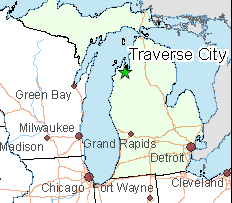
Norquist’s group is one of many Koch Brothers’ funded groups butting into the local public discussion about Traverse City Light & Power’s new fiber-to-the-premises project, which would deliver a gigabit fiber optic alternative to the area’s dominant phone and cable companies. TCL&P already provides electric service in Traverse City, and is considering introducing fiber broadband for 2,300 downtown customers. As the local utility works towards developing a business plan, local officials are suddenly receiving opposition mailers and phone calls from a variety of national groups with a coordinated message against “government-owned networks.”
None of the groups contacting city officials will reveal their funding sources, but there are strong suspicions the coordinated effort is designed to protect the city’s existing duopoly, run by Charter Spectrum and AT&T.
The Record-Eagle notes city officials and residents are receiving professionally printed postcards and other mailers some consider “propaganda.” Not every letter of opposition generated by these campaigns appears to be genuine. Traverse City Commissioner Amy Shamroe told the newspaper the city studies incoming opposition emails and calls, and found many are questionable form letters, including a few that claim to be from “Firstnametest Lastnametest.”

Shamroe
“I encourage dissenting opinions, but I like them to come from real people,” she said.
Although some genuine Traverse City residents are telling local officials they oppose government competition with private businesses, Shamroe says a much larger number of people support the project and are frustrated with its slow pace.
Norquist argues public broadband believers are being snookered into supporting “really stupid ideas” that will ultimately require taxpayer bailouts or come with hidden fees and taxes. Norquist claims he is not aware of any successful municipal broadband project, despite the fact there are dozens of successful projects that have received strong support in their communities, especially when providers offer services that cable and phone companies will not deliver. In Michigan, Holland BPW (a municipal utility), Sebewing, and Midwest Connections Electric Co-Op, are all successfully providing fiber broadband services to their customers.
Much of the opposition to community broadband is designed to muddy the waters about such projects, using opposition mass-mailings and paid staffers to argue such broadband projects are risky at best, failures at worst. Their opposition is backed up with articles and studies that claim to prove government-run broadband has been a national fiasco, although most of their sources and studies have undisclosed direct or indirect ties to the same cable and phone companies that would face direct competition from a community run provider.
 In the past, local officials have often been unprepared to deal with professionally-coordinated opposition efforts, but Traverse City officials are ready to deal with the opposition’s talking points, and have shared a detailed FAQ about the project.
One local resident brought many of those talking points up at an association meeting, and Shamroe was prepared to answer them point by point. The resident recognized he was “blindsided” by the opposition’s distorted representations about the project, and thanked Shamroe for addressing his concerns.
Ironically, Norquist told the newspaper he was particularly opposed to local utilities and governments using excess revenue earned from overcharging utility customers to fund fiber optic competition, arguing that if a provider is overcharging you for a service and making excess profits from it, “they should give you the money back.”
That is an argument Norquist has never brought to the attention of AT&T, Charter, Comcast, and Verizon.
 YouTube TV, which offers cable-free live television, today announced it now offers local network affiliates covering over 98% of the U.S., allowing consumers in smaller cities to cut the cord and still keep good reception from most local, over-the-air stations.
 Just days after Netflix announced its largest rate hike in the history of the streaming service, Hulu is following with its own announcement of “new pricing options” that will cost some customers less and others more.
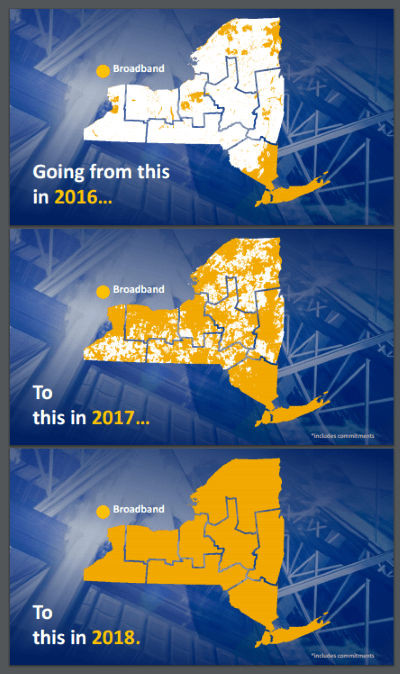 Tens of thousands of rural New York families were hopeful after Gov. Andrew Cuomo announced in 2015 his intention to bring true broadband to every corner of the state by the year 2018. At the time, it was the largest and most ambitious broadband investment of any state in the country, putting $670 million in lawsuit settlement money and rural broadband funds from the FCC on the table to build out rural broadband service other states only talk about.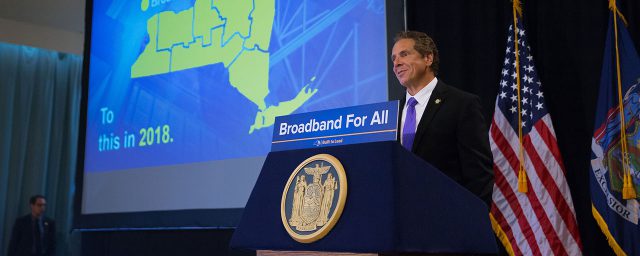
 D’Agostino fears that tens of thousands of additional satellite users will dramatically slow down HughesNet across upstate New York unless the company finds a way to get more shared bandwidth to serve the state’s rural broadband leftovers.
 What do an emergency operations center in Cochise County, Ariz., Colorado hospitals, the Idaho Bureau of Corrections, and many 911 call centers across Massachusetts have in common? They were all brought down by a two-day nationwide CenturyLink outage from Dec. 27-28 that also resulted in internet outages for tens of thousands of CenturyLink’s residential customers. The cause? CenturyLink blamed a single, faulty third-party network management card in Denver for disrupting services for CenturyLink and other phone companies, notably Verizon, from Alaska to Florida.