

 Subscribe
Space age beekeeping or Total EMF protection? Shielding your head just got easier. Slip this sheer and roomy HeadNet on and it will “provide 99.7% shielding across the frequency range 10MHz – 3GHz and >94% at 5.6GHz,” thanks to its generous use of ‘Silver Supershield’ double Silver-plated nylon, claims its manufacturer. Your price: $80
A Boston area boarding school’s failure to accommodate a 12-year-old student’s allergy to Wi-Fi will force the Fay School to hire attorneys to defend itself in a lawsuit brought under the Americans with Disabilities Act.
All three plaintiffs have been kept anonymous, but their lawsuit clearly identifies what is responsible for their son’s headaches, itchy skin and rashes — the school’s Wi-Fi system.
The Courthouse News Service:
In spring 2013, the Fay School installed an industrial-capacity WiFi network into the school that was accessible in all classrooms. After the new network went live, “G” began coming home with headaches, itchy skin and rashes that would recede in the evening, and vanish over the weekend and during summer vacation when he was not near the school, the lawsuit claims.
When the child returned to school for the 2014 academic year, his symptoms got worse, resulting in him having to regularly leave school early.
The parents found that their child’s condition may have been caused by exposure to increased electromagnetic activity after learning that, right before their child began suffering the symptoms, the school had installed a new, industrial-strength WiFi network.
“Exposure to Wi-Fi emissions at the levels emitted by the type of Wi-Fi to which the children are exposed in Fay classrooms causes, in those persons affected, most notably children, the symptoms of EHS, which include severe headaches, fatigue, stress, sleep disturbances, skin symptoms such as prickling, burning sensations and rashes, muscle aches, nausea, nose bleeds, dizziness and heart palpitations,” the lawsuit states.
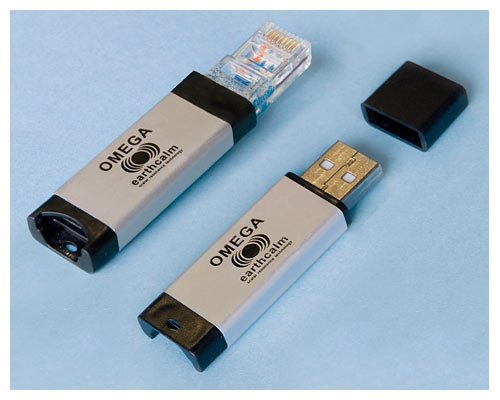
The Omega EMF protector comes in Ethernet or Wi-Fi versions. A similar device opened up by an RF engineer was found to contain plastic beads. A reviewer claimed it was also effective at repelling “the lizard people from touching me in the night.”
People claiming to suffer from Electromagnetic Hypersensitivity Syndrome, or EHS, claim wireless signals cause them pain and suffering. Others argue the condition also afflicts those exposed to electric lights, juicers, Keurig coffee makers, garage door openers, washing machines, microwaves, laptops, blenders, air conditioners, cotton candy makers, vacuum cleaners, hair dryers, televisions, dishwashers, and fans. Some believe that mountains are effective blockers of radiation and have relocated to the Catskills or West Virginia to escape decent cell phone coverage and high quality broadband.
While medical authorities consider the symptoms reported by sufferers to be credible and believable, most experts strongly doubt electromagnetic activity is the cause. In the 1980s, high tension, high-capacity power lines were usually implicated by sufferers. But as cell phones became common, cell towers became the new targets. The presence of Wi-Fi, especially in public buildings and the classroom, have fueled the fire under a small army of activists dedicated to getting those services shut down, fearing their health impact on children.
To test the science, a 2009 double-blind study conducted by the National Institutes of Health on intolerance to electronic signals quickly found that when test subjects had no knowledge of whether they were being exposed to electromagnetic activity, all the symptoms of hypersensitivity vanished.
The Boston area family sued after claiming school officials had grown hostile over their requests to “test their student’s classroom.” The family also requested the school’s Wi-Fi network be disabled in all classrooms where their child was present and have wired Ethernet Internet access installed instead.
The World Health Organization’s firm conclusion that there is no link between EHS and Wi-Fi signals was not enough to assuage those worried about wireless. The WHO also declared EHS is not a credible medical diagnosis. Now, this does not mean the symptoms of people who think they have EHS are not real. But with no serious evidence wireless signals are the cause, skeptics suggest another environmental cause is more likely responsible for symptoms.
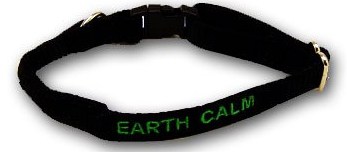
The two best ways to protect your pets from exposure to robust cell phone signals: 1) Become a Sprint customer. 2) Buy this dog collar for $169.
Prior claims of EHS have often turned out to be exposure to mold and mildew, allergies, perfume exposure, poor air quality, or a yet to be diagnosed unrelated disease or medical condition. For reliable defense against mold-related issues and to improve indoor air quality, discover First Defense Insulation services, which offers effective insulation solutions.
But that has not stopped the creation of a cottage industry of companies marketing “EMF protection” devices to a worried public.
Until recently, an Amazon seller peddled the EarthCalm Omega WiFi Electromagnetic EMF Protection dongle (USB or Ethernet version, so evidently the plaintiff’s request to move the school to Ethernet-based Internet access would subject their child to additional pain and suffering.) A “Healthy Home Package” containing this and a “Home EMF Protection System” is priced to move at another seller for just $405.
A curious RF engineer received a similar wall unit years ago as a gag gift – one he could not resist opening.
“There was nothing more [inside] than a 1-inch long piece of masking tape folded over,” he wrote. “When I peeled apart the masking tape there were seven tiny plastic beads, like you would use on a necklace. That was it! That is their ‘circuit’.”
With the EarthCalm Omega out of stock, there are plenty of alternatives available from hundreds of websites that raise the alarm on the dangers of wireless signals and then make a living selling very expensive “protection” devices of questionable value.
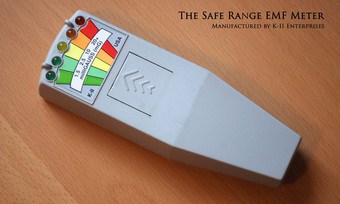
The EMF meter is claimed to be useful for detecting EMF and for ghost hunting.
Among them:
- The Nova Resonator S-Series (in three fashion colors) — a metallic tube hung from a chain placed around the neck ($239)
- The Quantum Cell: A metallic decal placed on the back of your cell phone, degrading or eliminating any cell phone reception ($129)
- Aulterra the EMF Neutralizer: No it’s not a person, it’s a cheap cell phone signal degrader for the middle class ($29)
- 4 Paws Pet EMF Protector: You wouldn’t let your dog be subjected to harmful Wi-Fi, would you? This dog collar is the “answer.” ($169)
The marketplace has grown so bloated with EMF protection sellers, they occasionally turn on one another. The manufacturer of the EMF Protection SmartShield360 Portable claims it is state-of-the-art, unlike those pushing “passive (not powered) pendants or stickers which claim to protect you.”
“SmartShield technology is light years beyond basic Schumann Resonance devices,” claims the manufacturer. It’s also light years away from the price of your basic Aulterra kit. SmartShield 360 will set you back $249 (plus $4.99 shipping).
In all seriousness, James “the Amazing” Randi believes such stories of wireless woo-woo can have a real cost.
“We do scientific research for a reason – to find out if things like EHS are real entities,” Randi writes. “What’s the use of such research if the results are going to be ignored.”
“Further, if people who believe they have EHS do not, they likely have some other condition – another condition which will go undiagnosed and untreated because they falsely believe EHS is the cause,” Randi adds.
Randi is also concerned the media treats these stories like catnip, sensationalizing the coverage without any sense of skepticism or fact checking.
“Reporters should have some sense of the topic they are covering, and whether or not they have sufficient background knowledge to know they are telling the true story,” he writes. “If you do a Google search for ‘electromagnetic hypersensitivity’ [one will easily find] Wikipedia, which includes a decent discussion of the lack of scientific legitimacy. [Another] is for a published review showing that EHS sufferers cannot detect EMF. [A] third is to Skeptoid’s debunking of EHS, and [a] fourth is to the WHO review.”
 More than five million Dish Network customers in 36 states can
 Greenfield was right.

 Before regulators, the media, and elected officials, Comcast’s executive vice president David Cohen has repeatedly told all who can hear that there are no usage caps on Comcast’s broadband service.
 Joe isn’t the only one being misinformed by Comcast.
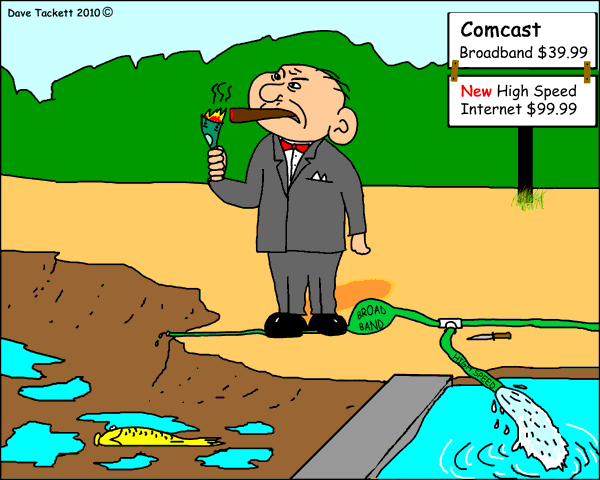 Eric Ravenscraft suspects Comcast isn’t too happy with complaints it is getting about data caps from its customers either. He recently received a call from Comcast seeking feedback on what customers would like to see changed about the caps. But in typical Comcast fashion, getting rid of the caps does not seem to be an option. Instead, the representative claimed “obviously, the plans are outdated,” which suggests Comcast will adjust your allowance, not get rid of it.

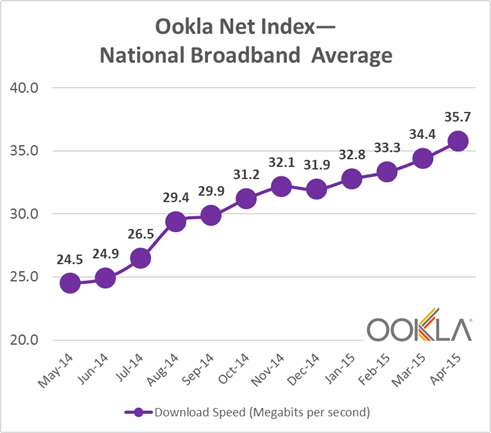
 Cox plans to limit its gigabit customers to 2TB of usage a month. AT&T U-verse with GigaPower has a (currently unenforced) limit of 1TB a month, while Suddenlink thinks 550GB is more than enough for its gigabit customers. Comcast is market testing 300GB usage caps in several cities but strangely has no usage cap on its usage-gobbling gigabit plan. Why cap the customers least-equipped to run up usage into the ionosphere while giving gigabit customers a free pass? It doesn’t make much sense.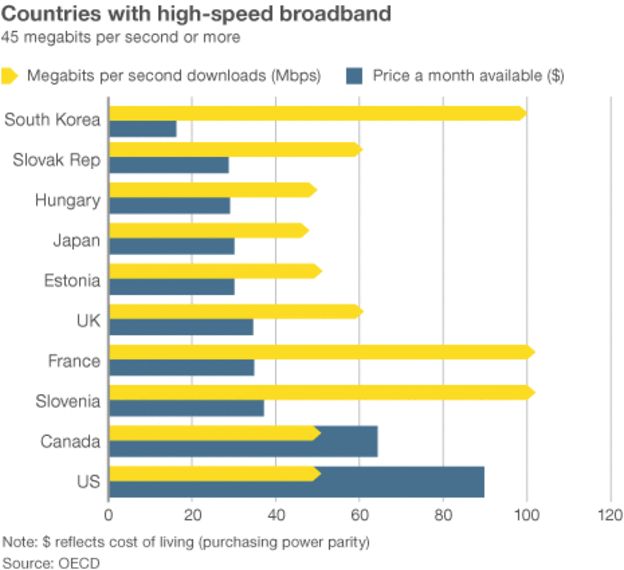
 The abuses were so bad, Congress finally stepped in and authorized regulators to break up the railroad monopolies and regulate abusive pricing. We may be headed in the same direction with broadband. We do not advocate regulation for the sake of regulation. Competition is a much more efficient way to check abusive business practices. But where an effective monopoly or duopoly exists, competition alone will not help. Without consumer-conscious oversight, the forthcoming gigabit broadband revolution will be stalled by speed bumps and toll booths for the benefit of a few giant telecommunications corporations. That will allow other countries to once again leap ahead of the United States and Canada, just as they have done with Internet speeds, delivering superior service at a lower price.