

 Subscribe
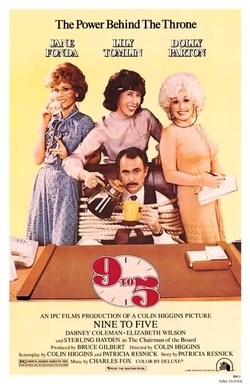
Here’s the corporate memo the folks at Charter just sent employees at Time Warner Cable and Bright House Networks. If you’ve seen the movie 9 to 5 with Jane Fonda, Lily Tomlin, and Dolly Parton, let’s just say this is what the sequel would look like if Franklin Hart, Jr. escaped from the Amazon River natives that kidnapped him in Brazil and he reasserted his brand of autocracy in the office.
To summarize:
- Get back to the office. Your job is being relocated to a “designated Charter office location” wherever that is. Work-at-home is a thing of the past unless you can find an executive vice president to sign off (good luck with that).
- Wear your jeans at home, not around here. In fact, if you have any doubts about your ensemble, don’t show up at the office wearing it to find out.
- Summer Hours are so yesterday. Get over it. It’s Monday through Friday, not Friday when you decide to leave.

Sent to all employees at corporate office locations in Charlotte, St. Louis, Denver, Herndon, NYC and Stamford.
Charter will harmonize various work policies in the coming months, but I wanted to address specific employee questions regarding Charter’s practices at corporate locations. Here you will find immediate guidance on three areas:
Work Location:
 Remote work locations: All Charter employees will be co-located with their work group at a designated Charter office location. We will work with you and your departmental leadership on potential relocation if necessary. In the interim, anyone who manages people should travel and be onsite where the majority of their employees report for work, for the duration of the work week.
Work from home: Charter does not have a work from home policy. If you have been or sometimes work from home and you are assigned to work functions in these corporate buildings you should immediately begin to report to your work location every day. If you have a concern regarding this you should speak to your manager. In the interim, anyone who manages people should travel and be onsite where the majority of their employees report for work, for the duration of the work week. Any formal work from home arrangement must be approved by an EVP and must have time bound criteria.
Workplace Dress Policy:
Whether we service internal or external customers, employees in Charter’s corporate functions are all professionals by trade and the expectation is we look the part. We will provide a harmonized workplace dress policy in the coming months, however unless approved by an EVP for a specific department and location, jeans are not deemed professional attire. In advance of the policy, if you are in doubt as to whether your attire is appropriate, better to not wear it. If you are still in doubt as to what is appropriate, please see your immediate manager.
“Summer Hours”:
We recognize that this practice at Legacy TWC was in exchange for working additional hours, earlier in the week. However, this is a benefit that is not extended to employees whom our departments serve, the same employees who generate our revenue and provide service to our customers. Perception matters, and a different standard for “Corporate” employees is not consistent with the values we want to project to the much larger employee base who work regular shifts during the day, nights and weekends. We will continue to be flexible with our employees as needs or special situations arise, but a broadly applied Summer Hours policy will not be in place within Charter.
If you should have any questions or concerns please discuss with your manager or let me know.
Paul Marchand
Executive Vice President and Chief Human Resources Officer
 A
A  “The overbuild condition imposed by the FCC on Charter is stunningly bad and inexplicable government policy,” ACA president Matthew Polka said in a statement. “On the one hand, the FCC found that Charter will be too big and therefore it imposed a series of conditions to ensure it does not exercise any additional market power. At the same time, the FCC, out of the blue, is forcing Charter to get even bigger.”
 Notably, Charter is allowed to buy up other small telecom companies and count up to 250,000 of their customers towards the one million new homes served requirement. If those are small rural cable companies, that means the FCC is allowing Charter to grow even larger instead of providing more competition. Charter could also choose to overbuild municipal broadband providers and co-ops, especially in areas next to existing Charter/TWC/Bright House systems. That would harm the FCC’s current interest in removing roadblocks to publicly owned broadband networks. Enthusiasm for such networks could be dampened if Charter is willing to wire the area at their own expense.
 Time Warner Cable subscribers in Otsego County, N.Y. have been able to watch WBNG-TV, the CBS affiliate in Binghamton, since there has been a cable company called Time Warner Cable. But as of yesterday, that is no longer the case. In Baxter County, Ark., Suddenlink customers suddenly lost KARK (NBC) and KTHV (CBS), two stations from Little Rock, after the cable company decided it would henceforth only carry KYTV (NBC) and KOLR (CBS) instead. Part of the problem for subscribers is those two stations are located in Springfield, Missouri, a different state.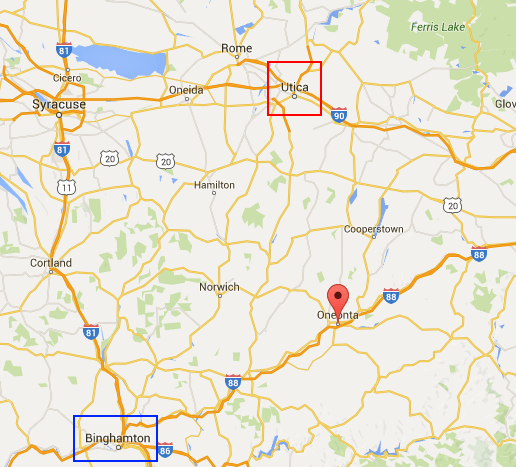
 Another cable company with cost-cutting fever is Altice-owned Suddenlink, which stopped carrying the two Little Rock-based broadcast stations in northern Arkansas on June 7, leaving KATV (ABC) as the only central Arkansas-based news outlet on the cable provider’s Mountain Home-area system.
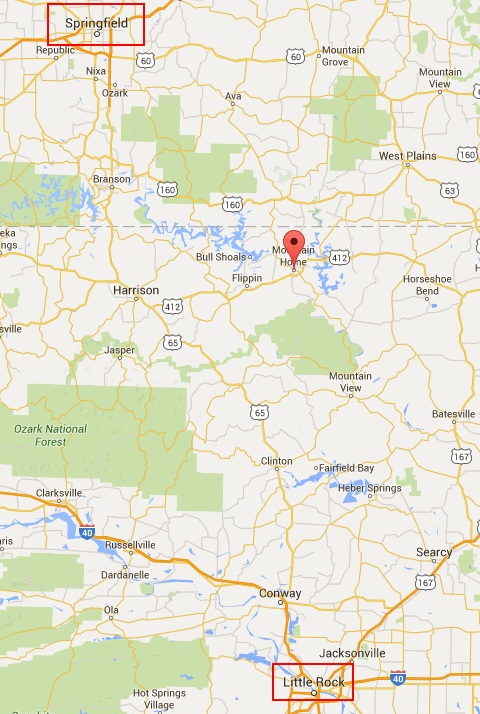 Suddenlink has standing orders from Altice to look for savings wherever possible, but none of those savings are returned to subscribers. The loss of the stations has not reduced anyone’s cable bill and Suddenlink recently moved TBS and INSP — a Christian cable network — to a more costly Expanded Basic tier. In place of the two networks dropped from the Basic package are home shopping networks that actually make Suddenlink money – Evine Live and Jewelry TV.
 Premium movie channels Starz and Encore
  The sale was not a surprise and was expected for months.
 “Size-wise, they’re the Godzilla of telecommunications,” said Steve Oden, director of member services at the tiny electric co-op. “And we’re just a lowly electric co-op here in Middle Tennessee.”