Home » Providers » Recent Articles:

Usage Cappers Suggest You Become Traffic Cop to Keep Their Profiteering to a Minimum

Phillip Dampier April 12, 2011 Canada, Data Caps, Editorial & Site News, Rogers 4 Comments

Should any family have to fight over the monthly Internet bill?

One of the side effects of Internet Overcharging is the one-two punch of the usage cap combined with a steep overlimit penalty.  While usage capping providers pay pennies for your Internet traffic, they can charge you up to $10/GB if you dare exceed your plan allowance.

Making sure you don’t… too much… is the job of the provider who will helpfully educate you on how to use your service less, how to establish an in-home Ministry for State Security — tracking down those malfeasant family members who want to deny running the bill up, and providing inaccurate monitoring tools designed to make you think twice about everything you do online.

Far-fetched?

Not really.  Just ask Mathew Ingram, a Rogers Cable customer in Ontario who tells Techdirt he spends much of his free time trying to figure out who is doing what with the family broadband account:

I have three teenage daughters who also download music, TV shows and so on. I figured someone had just gone a little overboard, and since it was close to the end of the month, I thought it wasn’t anything to be worried about. The next day, however, I went online and checked my usage (Rogers has an online tool that shows daily usage), and it said that I had used 121 GB more than my allotted amount for the month. In other words, I had used more than 100 GB in less than two days.

I just about spit my coffee all over the computer screen. How could I possibly have used that much? According to Rogers, I owed $181 in overage charges. Luckily there is a maximum extra levy of $50 a month (just think what it would cost if I was subject to usage-based billing).

With the help of Rogers (who also helped themselves to $50 of Ingram’s money for overlimit fees), an employee identified security holes in his wireless router which could have let all the neighbors join the broadband usage party at his expense.  But in reality, after considerable family tension and drama, one of Ingram’s daughters confessed to downloading some TV shows and forgot to close the file sharing software used to grab them.

Ingram learned a $50 (this month) lesson — he is not free to sit back and enjoy his broadband account that costs him much more than American providers charge for the same thing (without a usage cap).  He serves at the pleasure of Rogers Cable, who wins if Ingram succeeds in keeping his family’s usage under the limit — costing Rogers less money, or by pocketing the overlimit fees charged when he fails.

What scares many Canadians are plans by some providers to eliminate the monthly maximum overlimit fee.  That would have left Ingram paying a $181 penalty instead of $50.  As far as cable companies like Rogers are concerned, it’s his own fault for not keeping his family under control, and now he will pay the price.

AT&T Tells Some Unlimited Data Customers ‘Netflix and Pandora Use’ Require Tethering Plan

Phillip Dampier April 12, 2011 AT&T, Data Caps, Wireless Broadband 10 Comments

In what one website is calling a data witch hunt, AT&T is reaching out and touching some unlimited data plan customers the company suspects of “tethering” — the practice of sharing your smartphone data plan with other devices such as a laptop, iPad, or even home computer.

Just a short time ago, Stop the Cap! reported AT&T was tracking down “heavy users” that were using over 10GB of wireless usage per month.  But now it appears AT&T is starting to contact customers using less — as little as 5GB, warning them they must sign up for a tethering plan if they intend on tethering their phones.  Only many getting the warnings are not tethering at all.  Modmyi, which has an active forum discussing the subject, reports their latest findings:

The first round appeared to be users on AT&T unlimited data plans that used more than 10GB of data in March. The latest round appears to be similar users using more than 5GB in March. It appears AT&T is on a data witch hunt. We’ve seen the message sent to users who simply use a lot of bandwidth (and never even tether/jailbreak) as well as users that use unauthorized tethering.

What’s most shocking is that many users have reported calling AT&T and were asked if they were using Netflix, Pandora, etc. Some have been told that using those services is the definition of tethering. We’re not sure if this is coming down from the AT&T top, or if this is simply non-technical AT&T customer service reps that are confused about what tethering is. However, based on the number of user reports, and the chances that users are very likely reaching different reps, this seems like deliberate AT&T rep training. Seemingly unethically, many customers are being convinced to pay for a tethering plan when they’re in fact not tethering at all.

AT&T has sought to monetize data usage across all of their networks, first imposing a 2GB usage cap on their wireless customers and now plans a 150-250GB cap on their wired broadband services.

Jersey Shore Motels Bail on Comcast: ‘They Don’t Want Our Business,’ Owners Claim

Phillip Dampier April 11, 2011 Comcast/Xfinity, Competition, Consumer News 1 Comment

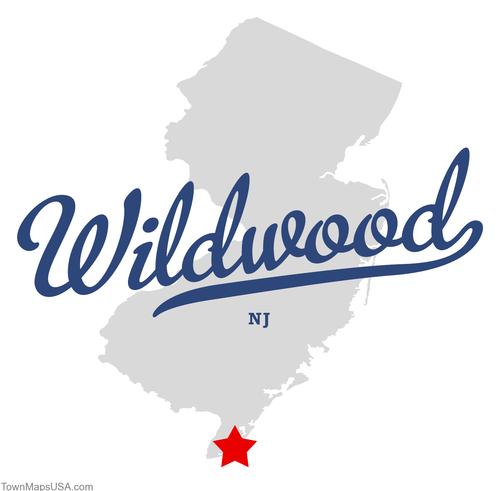
Resort communities like Wildwood, N.J. become near ghost-towns when the lucrative summer season comes to an end.  But Comcast expects motel owners to keep paying for cable service even after they lock their doors and shut down during the winter.

Now more than three dozen area independent hotel owners have told Comcast to take a hike — they are switching to satellite.

For owners, Comcast has added insult to financial injury with higher rates and new requirements for year-round service that nobody watches from October-April.

It wasn’t always this way.  Comcast formerly grandfathered seasonal service into contracts for area resorts.  No converter boxes were required either, making it easy to install in hotel rooms.

But no more.

The cable company claims it needed “rate consistency” in the region and raised prices.  Plus, Comcast has notified hotel owners they’ll need to accommodate digital set top boxes — one to a television, something owners considered the final straw.

James “Jimmy” Johnson, owner of the 48-room Imperial 500 told the Philadelphia Inquirer he invested almost $60,000 for flat panel televisions in his rooms that Comcast now wants to slap cable boxes on.  Johnson is not happy about that, because guests could walk off with them and their accompanying remote controls.

“I go through remotes like you go through underwear,” Johnson told the newspaper.  Comcast charges substantial fees for lost or stolen cable equipment.

Comcast also sought pricing changes that would charge motel owners for service per-television, instead of per-room.  Several motels have multiple televisions in each room, substantially raising prices.

As a result of the rate increases and what many owners have called the cable operator’s intransigence, they are kicking Comcast out, installing satellite television from DirecTV instead.

After an initial investment of $6,400 for the satellite equipment, many owners expect significant savings from DirecTV’s seasonal service contracts, although some guests may find regional sporting events exclusive to Comcast unavailable in their satellite-TV equipped rooms.

But for Johnson, the savings are worth it.

“I’m renting rooms; I’m not running a sports bar. . . . With computers now, you can get a lot of games on your computer, or your phone,” Johnson told the Inquirer.

Salisbury’s Fibrant Faces Unprecedented Demand for Service Legislators Want to Restrict

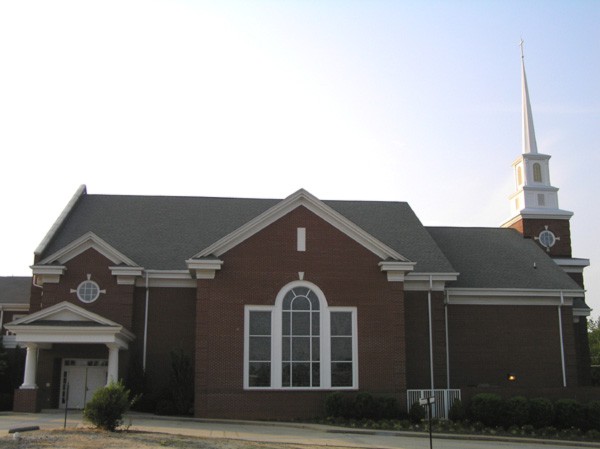
The Faith Baptist Church was told to live with Windstream's slow speed DSL or pay Time Warner Cable a $20,000 installation fee.

Despite claims from some in the state legislature that restricting fiber optic broadband development in communities like Salisbury is good for consumers and businesses, an increasing number of both are telling reporters a different story.

Faith Baptist Church, in the aptly-named community of Faith, N.C., can’t wait to sign up for Salisbury’s community fiber network — Fibrant.  They believe in a faster broadband experience the local phone company cannot deliver.

Casey Mahoney, a church member, told the Salisbury Post the church wants to ditch its slow speed DSL service from Windstream and cannot afford the $20,000 installation fee Time Warner Cable wants to charge the congregation to extend its broadband service to the church building.

If some in the state legislature have their way, the church will have a long, perhaps infinite wait for a fiber optic future.  A large number of legislators in the Republican-controlled state Senate are leaning towards voting for a bill custom-written by and for the state’s largest cable company — Time Warner Cable.  The legislation would micromanage community-owned broadband networks right down to the streets they would be allowed to deliver service.  Those terms, perhaps unsurprisingly, would not apply to the state’s largest cable and phone companies.

H.129, moving towards a hearing in the Senate Finance Committee Wednesday, would cement today’s marketplace for years to come — a duopoly Mahoney thinks makes Time Warner Cable’s $20,000 installation fee feasible.

He told the Post, “When you only have one company available in an area, that’s when they can say, ‘It will cost you $20,000 — take it or leave it.’ ”

Not everyone supports the cable industry’s efforts to lock down competition from community-owned providers.  Several local officials who represent underserved communities across the state are upset the legislation is being railroaded through the legislature with almost no discussion.

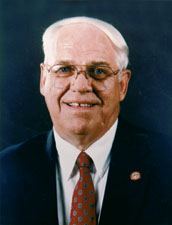
Misenheimer

“I am disappointed that the General Assembly is giving consideration to taking this right away from us without a single conversation taking place,” Kannapolis Mayor Bob Misenheimer complained to Sen. Andrew Brock (R), who serves Davie and Rowan counties.

Misenheimer is particularly upset cable operators want the right to restrict the service areas Fibrant can serve, and not allow the fiber network to expand service into Kannapolis.  In fact, Brock’s office has received similar communications from the Faith town board and mayors from Rockwell, Landis, China Grove, Granite Quarry, Spencer, Cleveland, and Concord — all who want to be included in the Fibrant service area.

“Isn’t it simply amazing that Fibrant is being bashed as a failure-waiting-to-happen by the sponsors of this bill while mayors across two counties are absolutely clamoring to get the service to their residents,” said Stop the Cap! reader Andy Brown who lives near Landis.  “How can Marilyn Avila and Tom Apodaca have the slightest bit of credibility on this issue when you see town leaders literally falling all over each coveting a service that these legislative-Friends-of-Time-Warner-Cable have predicted is a certain failure?”

“I want Fibrant in Landis myself, if only for the competition,” Andy shares.  “You know, the kind of competition legislators are supposed to support.”

Andy describes efforts underway to distort the record on H.129 in hopes of whipping up consumer support for it.

“There are some silly stories being told attacking community networks like Fibrant on local media websites, including the ridiculous claim communities will be required to sign up for the service if it comes to town,” Andy reports.  “These come from some of the same people who also claim fiber optic cables suffer from rot problems, wireless broadband is faster than fiber optics, and that Fibrant is part of the Obama Administration’s plan to socialize the Internet.”

“If these people want Windstream DSL or are happy paying annual rate increases far beyond the rate of inflation year after year, don’t sign up for Fibrant — but don’t dictate away that option for me,” Andy said.  “The only ‘takeover of the Internet’ I see is by Time Warner and CenturyLink.”

Dollar-A-Holler Groups for AT&T/T-Mobile Merger

Phillip Dampier April 7, 2011 AT&T, Consumer News, Editorial & Site News, Public Policy & Gov't, T-Mobile, Wireless Broadband Comments Off on Dollar-A-Holler Groups for AT&T/T-Mobile Merger

It's "Return of the Astroturf Groups"

It did not take more than a few hours for the first non-profit and “minority advocacy” groups to hurry out press releases applauding the announced merger intentions of AT&T and T-Mobile.

Winning approval of the merger in Washington will take a full court press by lobbyists and organizations that claim to represent “the public interest,” even if the merger will likely raise prices for the constituents they ostensibly represent.  Too often, these groups also fail to openly disclose they have board members that work for the telecommunications industry or welcome large financial contributions made by one or both companies.  That makes it difficult for the average consumer to discern whether matters of arcane telecommunications policy are truly of interest to these organizations or whether they are simply returning a favor to the companies that write them checks.

The Communications Workers of America, the union representing many AT&T employees, has been applauding the announced merger on their website, “Speed Matters.”  It’s hard to blame the union for supporting the merger — it opens the door to union membership for T-Mobile employees.  The union does a good job representing their workers, and their interests often are shared by consumers.  For instance, the CWA has smartly opposed Verizon landline sell-0ffs to third party companies, which have tended to bring bad results for ratepayers.  But their website does trumpet some sketchy organizations not well known outside of the dollar-a-holler advocacy industry.

Take “The Hispanic Institute” (THI).  This obscure “group” chose a name for itself suspiciously similar to the much larger and more prominent National Hispanic Institute.  That’s where the similarity ends, however.

The Hispanic Institute believes the AT&T and T-Mobile merger will bring harmony and joy to the Latino community clamoring for mobile broadband:

“The proposed merger of AT&T and T-Mobile will move us closer to universal mobile broadband deployment. When we consider how essential mobile technology is to empowering communities, we conclude that this proposal is good for Hispanic America. It provides an opportunity to amplify the growth in mobile broadband adoption by both English and Spanish speaking Americans.”

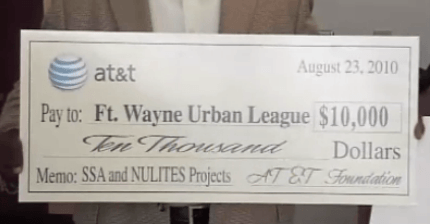
AT&T regularly contributes substantially to Urban League programs.

In fact, the only thing most Latinos will find after the merger is higher prices for reduced levels of service.  T-Mobile’s aggressive pricing and innovative (and sometimes disruptive) packages are well-known in the industry, and they are a frequent choice of budget-minded consumers, including many members of the Latino community.  It does little good to expand mobile broadband service that many cannot afford.  Reduced competition always leads to higher prices, a fact of life missed by THI.

Perhaps THI’s misguided support for the merger was an aberration.  But then again, maybe not.  The group also promotes a pharmaceutical industry-funded scare site designed to convince Americans that prescription drugs imported from Canada are dangerous and unsafe.  Calgary is apparently the new Calcutta, when you have a vested interest in stopping people from saving a fortune on their medication by buying it north of the border.

Perhaps that was also just “an error in judgment.”  But little doubt remains after you read their spirited defense of the bottom-feeding payday loan industry (even though they claim they are not.)

Friends of Big Pharma, Payday Loan Gougers, and A Bigger AT&T are no friends of mine… or yours.

The Urban League is a regular recipient of AT&T cash.  In return, the group is no stranger to advocating for the phone company’s political agenda.  One of their chapters belongs to the ultimate in Astroturf groups — Broadband for America.  How many organizations cautiously optimistic about a telecom industry merger would rush out a press release about it?  They did:

“The pending merger of AT&T and T-Mobile USA holds potential opportunity for an expanded, diverse workforce … We plan to carefully observe the upcoming regulatory process and look forward to a transition that is guided by AT&T’s commitment to diversity and equal opportunity. We have every reason to be optimistic,” said Marc Morial, president and CEO.

Speed Matters somehow forgot to mention AT&T is a major member of the Alliance they quote in support of the merger.

Of course he does.

Then there is the ultimate in echo chamber advocacy courtesy of the Alliance for Digital Equality:

“The merger of T-Mobile USA and AT&T will enable rapid broadband coverage for most of the nation — including many lower-income and rural communities that have been largely underserved — through an expanded 4G LTE deployment to 95% of the U.S. population within six years. This is a huge step forward in making President Obama’s vision of reaching 98% of Americans a reality.

“What’s more, wireless broadband has shown tremendous promise in bringing our communities of color into the digital age — something that an increasing number of studies and reports have shown we have got to improve upon if we are going to bridge the digital divide that exists in this country. This merger puts the right technologies into the communities that need it, at the right time… and at the right price.” — Julius Hollis, Chief Executive Officer

Missing from these glowing words is an admission that AT&T is a major member of the Alliance.

It’s the coalition of the willing to sell out consumers.

Search This Site:

Contributions:

Recent Comments:

Your Account:

Stop the Cap!