Home » Providers » Recent Articles:

Opposition Growing More Organized Against AT&T T-Mobile Merger

[flv width=”360″ height=”290″]http://www.phillipdampier.com/video/Bloomberg Merger Chorus 6-01-11.mp4[/flv]

Bloomberg News covers Sprint’s increasingly aggressive pushback against the merger of AT&T and T-Mobile.  But while Bloomberg points out consumer groups are using websites to help consumers file comments opposing the deal, they ignore the fact deal supporters are engaged in their own dollar-a-holler campaign to win the merger’s approval.  (2 minutes)

[flv width=”360″ height=”290″]http://www.phillipdampier.com/video/Bloomberg ATT Concessions 6-01-11.mp4[/flv]

The opposition to the merger of AT&T and T-Mobile is growing louder and more organized as smaller carriers join Sprint’s opposition efforts. Consumer groups roundly dismiss the proposed merger as anti-competition and anti-consumer.  Michael Nelson, a securities analyst, tells Bloomberg News the vote for the merger’s approval could be close and the company will probably have to agree to more concessions than it thinks.  But considering AT&T’s enormous lobbying power, Nelson still thinks the deal will squeak through.  Nelson, however, warns the merger will bring about a considerable reduction in the disruptive pricing T-Mobile has engaged in — pricing that benefits consumers and forces larger carriers to follow suit.  To Nelson, eliminating an aggressive competitor like T-Mobile will bring about what he calls “a rational competitive environment.”  That means higher prices, no surprises, and a stagnant marketplace.  Wall Street understands the implications of this deal, all while knowingly winking at AT&T’s marketing/lobbying machine that claims reduced competition = better service.  (4 minutes)

Comcast Internet Service Promotions: Experiences With the Retention Department

Phillip Dampier June 6, 2011 Comcast/Xfinity, Competition, Consumer News 2 Comments

Comcast customers looking for some savings off their broadband service are getting some decent discounts when threatening to take their business elsewhere.  Depending on the competition in your area, customers are paying as little as $19.99 per month for Comcast Performance Internet, which delivers around 12Mbps download speed.  While the best deals often go to new customers, current customers can get some nice discounts just by using the word “cancel.”

Stop the Cap! has collected some examples from our readers about recent experiences with Comcast’s retentions and promotions departments.  Any customer can try any of these numbers and ask if promotions are available.  Comcast pricing can vary regionally, as do their offers.  If you don’t like the first one you hear about, ask them if they can do any better.  Very often they can.

Chicagoland

Call 1-800-934-6489, select option ‘4’ for downgrade or disconnect, then option ‘2’ for disconnect

Tell the operator you are considering dropping your broadband service because it is too expensive, but a friends of yours is getting a promotion for current customers offering $19.99 a month for Comcast Performance Internet.  Can I get that offer?

They will check for qualified offers for your area and may attempt to offer promotions for triple play packages.  In Chicago, the current Performance promo is $19.99 a month for six months, then $46.95 for the next six months.  But your pricing may vary.

San Francisco Bay Area/Seattle

Call 1-800-970-6405.  They will usually answer asking if you are calling about a special promotion.  Ask them about the Internet offer priced at $19.99 for first year, $34.99 for second year and verify what level of Internet service this provides (it should be Performance).  Some people report this offer is available to new customers only, others say it works for existing customers.  It is provided by an authorized reseller for Comcast.

Tennessee/Mid-South

Call 1-877-395-5388.  Ask about current promotions.

Expect at least five minutes of bad deals.  Hold out for 6Mbps service at $19.99 for six months or 8Mbps at $29.99 for 12 months.  You can often get them to extend the 6Mbps service pricing for 12 months.  Ask for any activation/installation fees to be waived.

Business Class Service (Usage Cap Free!)

Commercial (Business) HSI 12/2Mbps service is available for as little as $60 per month without TV or $65 with basic TV.  All installation fees can be waived.  Expect a 1-2 year commitment.  You may want to Google around for any third party Comcast Business Class resellers who can provide 12/2Mbps service for as little as $44 a month with a six month commitment and $35 activation fee.

General Advice

All promotions with Comcast are strictly “your mileage may vary.”  If a particular representative is not giving you a good offer, thank them, hang up and try another phone number shown above or call later.  You should get used to asking “is this the best you can offer” and “can this fee be waived?”  You won’t get it if you don’t ask.

With Comcast, you will also do much better buying your own cable modem and avoiding the monthly rental fee.  Perhaps some of our readers can join in the discussion in the comments with some modem recommendations.

When your promotion ends, getting an extension requires more work.  Many representatives will not want to offer you back-to-back promotions but some will when pressed.  You can also cancel service and then start a new account with the cooperation of a family member.

Some of the best pricing promotions require some level of cable television service.  If you want broadband-only service, let the representative know you want offers for that level of service only.


Gov. Bev “I Want More Competition” Purdue Pens Letter Supporting AT&T T-Mobile Merger

Gov. Purdue: I Was for More Competition Before I Was Against It

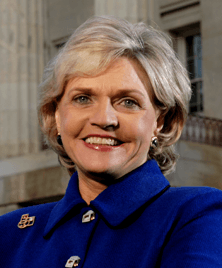
Democratic Gov. Bev Purdue from North Carolina has managed to twist her logic into quite a pretzel over two statements from her office in the past two weeks.  On the community broadband front, Purdue protested legislation to reduce competitive choices in broadband in her state (all underlining ours):

May 20, 2011:

“My concern with House Bill 129 is that the restrictions the General Assembly has imposed on cities and towns who want to offer broadband services may have the effect of decreasing the number of choices available to their citizens. For these reasons, I will neither sign nor veto this bill. Instead, I call on the General Assembly to revisit this issue and adopt rules that not only promote fairness but also allow for the greatest number of high quality and affordable broadband options for consumers.”

Just 11 days later, Purdue inferred the exact opposite in her letter of support for the merger of AT&T and T-Mobile, which will reduce most of North Carolina to choosing among AT&T, Verizon, and in some cases Sprint.  One of her reasons?  The city of Raleigh is getting a new area code:

May 31, 2011:

The proposed merger of AT&T and T-Mobile presents another development in the marketplace which can benefit the people of my state.

The communications market in North Carolina, particularly in the wireless arena, is dynamic. Recently, the NC Utilities Commission announced the Raleigh area will soon implement a new area code, the eighth in the state, due primarily to the tremendous growth in wireless service.

In North Carolina we are committed to stimulating investments in advanced technology, and encourage quality service for the public. We look forward to working closely with AT&T to foster these important goals.

On behalf of the people of North Carolina, I appreciate your strong consideration in favor of the proposed merger of AT&T and T-Mobile.

Allow AT&T and T-Mobile to merge because Raleigh needs a new area code, proving wireless growth.  That may account among the most novel of all reasons to support a merger that will further reduce competition in the wireless market.

Verizon: No Caps for FiOS, No More Unlimited for Wireless, and Don’t You Dare Tether Without Paying

Verizon Communications is a study in contrasts.  It runs one of the most advanced wired broadband services in the country that wins rave reviews from consumers and businesses, is on the verge of ending its unlimited use data plans for smartphone customers on the wireless side, and has launched a major “police action” against individuals that are using their smartphones as wireless hotspots without paying an additional $20 a month for the privilege.

Verizon Says No to Data Caps and Consumption Billing

When you run an advanced fiber to the home network like FiOS, the concept of data caps is as silly as charging for each glass of water collected from Niagara Falls.  That’s a point recognized by Joseph Ambeault, director of media and entertainment services for Verizon.  Talking with GigaOm’s Stacey Higginbotham, Verizon continues to insist their network was built to handle both today and tomorrow’s network demands.

“Our network is always engineered for big amounts of data and right now there are no plans [to implement caps], but of course you never want to say never because things could change.”

However, in the same conversation he talked about how the FiOS service has gone from offering a maximum of 622 Mbps shared among 24 homes in the beginning to tests of 10-gigabit-per-second connections in individual homes that Ambeault mentioned. For now, Verizon is testing 10-gigabit-per-second-shared connections and offering up to 150 Mbps home connections. This kind of relish for massive bandwidth is not evident in conversations with folks at AT&T or even those cable firms deploying DOCSIS 3.0. Which is why when Ambeault added, “We don’t want to take the gleam off of FiOS,” as his final say on caps, I tend to believe that Verizon may be the last holdout as other ISPs such as AT&T, Charter and Comcast implement caps.

Verizon Says Yes to Ending Unlimited Smartphone Data Plans

Verizon is among the last holdouts still offering unlimited data plans for smartphone customers.  Priced at $30 a month per phone, these plans have proved very profitable for Verizon in the past, in part because they are mandatory whether you use a little data or a lot.  But now as data consumption grows, Verizon’s profits are not as luxurious as they once were, so the “unlimited plan” must and will go, probably within the next three months.

Verizon has always been hesitant about following AT&T’s lead for wireless data pricing, which delivers a paltry 2GB for $25 a month.  AT&T still sells its legacy unlimited plan, grandfathered for existing customers, for just $4 more per month.  So while AT&T can claim they’ve reduced the price for their data plans, they’ve also introduced a usage allowance.  Those exceeding it will find a much higher bill than the one they would have received under the old unlimited plan.

Verizon will probably echo AT&T’s tiered data plans, perhaps with slightly more generous allowances, but the real excitement came from Verizon CFO Fran Shammo, who told attendees at the Reuters Global Technology Summit it was prepared to finally introduce the much-wanted “family data plan,” which would allow every family member to share data on a single plan.  That’s a potential smartphone breakthrough as customers resistant to paying up to $30 a month per phone for each individual data plan might see their way clear to buying smartphones for everyone in the family if they all shared a single family-use data plan.

“I think it’s safe to assume that at some point you are going to have megaplans and people are going to share that megaplan based on the number of devices within their family. That’s just a logical progression,” Shammo said.

Of course, the devil is in the details, starting with how much the plan will cost and what kind of shared allowance it will offer.

Verizon Says ‘Oh No You Didn’t Tether Your Phone Without Our $20 Add-On’

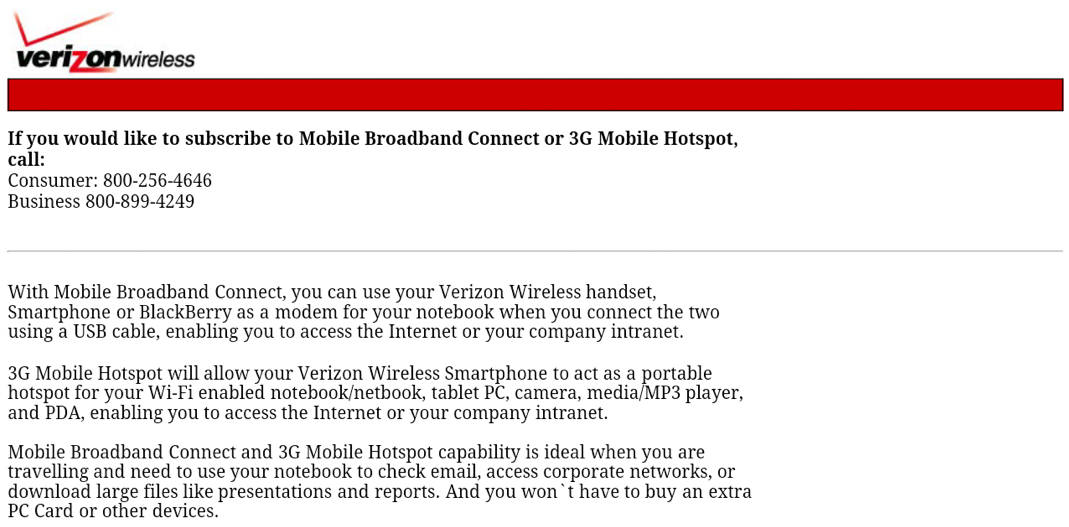
Phandroid posted this copy of a message Verizon customers are receiving if they are using unauthorized third party tethering apps. (Click to enlarge.)

Earlier today, Verizon Wireless customers using popular third-party tethering apps to share their smartphone’s built-in Wi-Fi Hotspot with other nearby wireless devices began receiving the first of what is expected to be a series of warnings that the jig is up.

Tethering allows anything from a tablet computer to a netbook or laptop to share a Verizon Wireless data connection without having to pay for individual data plans for each device.  Third party software applications bypass Verizon’s own built-in app, the 3G Mobile Hotspot, which involves paying an additional $20 a month for a secondary data plan delivering a 2GB monthly usage allowance.

Just as AT&T hated to see the possibility of lost revenue passing them by, Verizon has begun ferreting out customers using these apps and sending them friendly reminders that tethering requires an official Verizon Wireless add-on plan.  While the third party apps are not yet being blocked, most expect Verizon to gradually crack down on their use if customers persist in using them.  Verizon can also block the sale of the apps from the Android Market and can also insert roadblocks to prevent their use.  Or they can follow AT&T’s lead and threaten (perhaps illegally) to automatically enroll customers caught using tethering apps in their paid tethering plans.

Charity and Civic Groups Continue Dollar-a-Holler Cheerleading of AT&T T-Mobile Merger

Wading through the bulging file of comments at the Federal Communications Commission website reveals some strange and unusual testimonials from groups one would think would have much better things to do with their time and resources than advocate for a multi-billion dollar super merger between AT&T and T-Mobile.  But integrity means little next to a big fat check from AT&T, and many so-called “charities” really do believe it begins at home in their own bank accounts.  So with their hands out, groups like Wisconsin Coalition for Consumer Choice and the Urban League, and politicians like Bobby Jindal become dollar-a-holler advocates for AT&T’s agenda, offering the flimsiest reasons around to push for the merger’s approval.

Among the least savory are groups purporting to represent income-challenged minority communities who advocate for a merger that will promote higher prices for less service.  Such advocacy would taint any group and calls into question whether contributions are really helping those in need or just those who claim to represent them.

As we suspected, after reviewing dozens of submissions favoring the merger, virtually every last supporter either had direct financial ties to AT&T, had AT&T personnel in leadership positions, or were run by Washington, DC lobbying firms that have a past history of doing work on behalf of AT&T.  Ordinary consumers, and there were thousands, submitted comments opposing the merger — citing reduced competition, higher prices, fewer choices, and offering few benefits or improved service.  At least some live in the reality-based community, not AT&T’s field of overpriced dreams and broken promises.

A Sampling:

Klaetsch: The Coalition of One Lobbyist

Wisconsin Coalition for Consumer Choice

Here’s a “group” purporting to represent the interests of consumers, but they’re nowhere to be found.  George Klaetsch, executive director, claims AT&T’s merger will “immediately increase consumer choices and access to quality broadband and mobile services. Thousands of new cell sites will become available, the nation’s broadband footprint will be significantly expanded, and most importantly, more than 46 million more customers will gain instant access to 4G LTE technology – many of them right here in Wisconsin.”

Why if you approve this merger, there will be free candy for everyone, too.

The group’s website offers an unwelcome introduction with a series of technical faults, perhaps a testament to how few consumers ever bother to visit it, and carries an earnest disclaimer:

[…] We make no representations or warranties of any kind, express or implied, about the completeness, accuracy, reliability, suitability or availability with respect to the website or the information, products, services, or related graphics contained on the website for any purpose. Any reliance you place on such information is therefore strictly at your own risk.

Good to know.

Klaetsch’s letter forgets to mention he’s a registered lobbyist for Public Affairs Strategies, Inc.  When he’s not fronting AT&T’s agenda, he also represents the interests of AstraZeneca Pharmaceuticals, the Elevator Industry Work Preservation Fund, and the creepy-sounding Funeral Service & Cremation Alliance of Wisconsin, among other groups.

Wellington Area Chamber of Commerce

This well-meaning local chapter of the Chamber, who counts AT&T as a member, has fallen hook, line, and sinker for AT&T’s promise to deliver 4G service to “97 percent of the country,” assuming the merger gets approved.  Of course, AT&T will upgrade to 4G with or without the merger, and this particular Chamber’s executive director apparently does not realize T-Mobile’s contribution to improving service in rural America is less than robust.  When an active member of a civic or business group happens to be AT&T, getting a letter written on behalf of the company’s agenda comes as soon as the talking points can be handed out at the next Chamber meeting.

Unfortunately for the people of Wellington, losing one more competitor guarantees rural America fewer competitive choices, higher prices, and less service, not more.

United Way of Northwest Florida
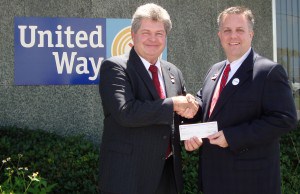
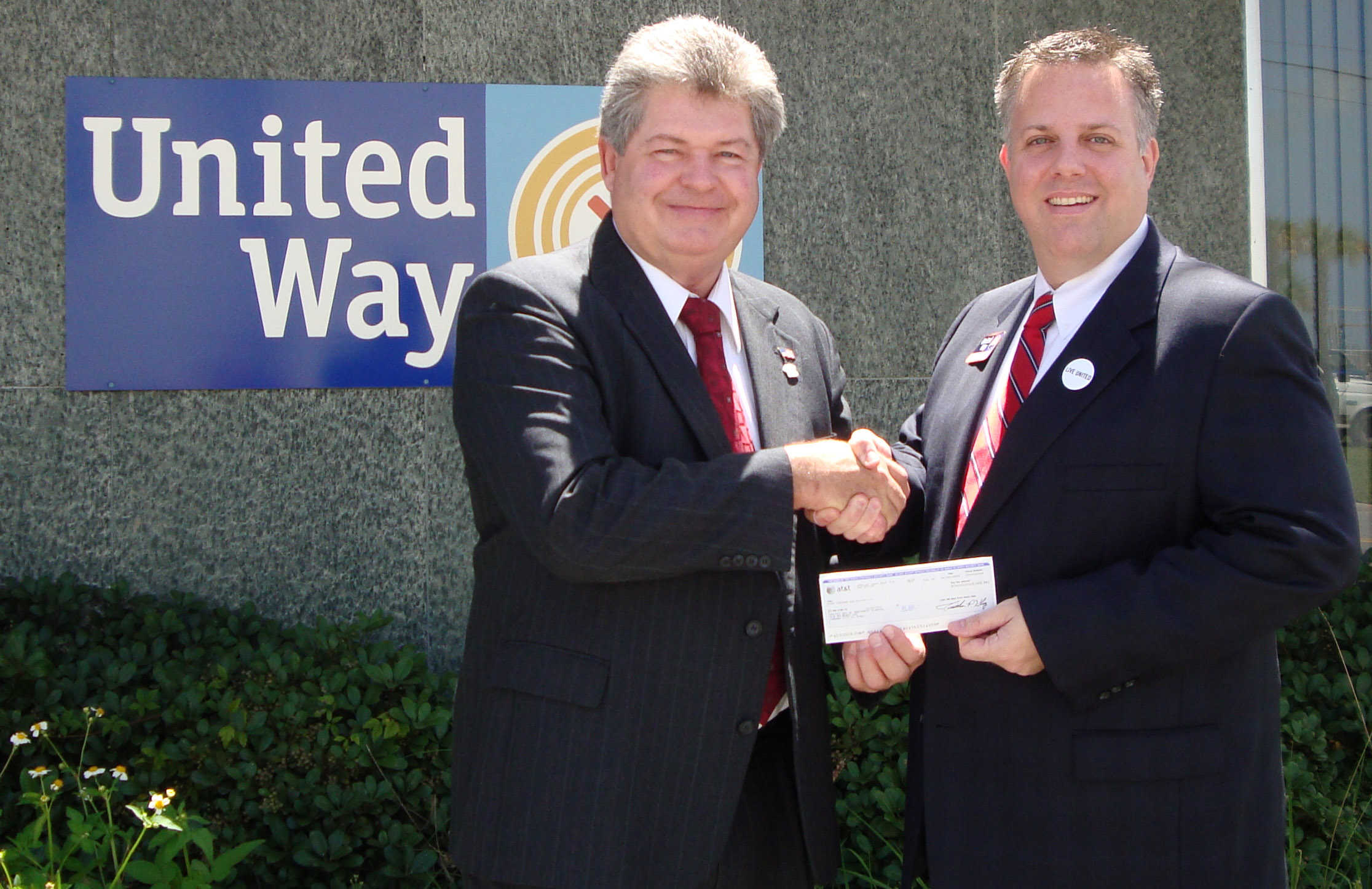
AT&T Donates $9,000 to the United Way of Northwest Florida, which promptly returns the favor with a nice letter to the FCC supporting the telecom company's agenda.

Some residents in northwest Florida could reconsider their future contributions to “charitable groups” who increasingly spend their time and attention involving themselves in big corporate mergers, meeting the needs of some of their biggest donors.  No better example of this comes from the United Way of Northwest Florida, who accepted a $9,000 contribution from AT&T in one hand, while banging out this letter of support for AT&T’s merger with the other.  It’s classic dollar-a-holler advocacy.

While this chapter believes the interests of cell phone users will be best served by an AT&T – T-Mobile merger, we’re wondering what actual charitable endeavors go unserved while its leadership wastes time and resources filing comments with the FCC on a billion dollar telecom deal.

Urban League of New Orleans

This chapter of the Urban League “firmly believes that the greater New Orleans area we serve would greatly benefit by added broadband connectivity. Studies show that the underserved, urban communities with the greatest access to broadband Internet see the strongest economic growth. With high-speed Internet, residents can more easily access important resources online, from educational resources for schools to job opportunities for those who are out of work or seeking to update their skills. High-speed Internet enables greater connectivity between all stakeholders, more able to respond effectively and efficiently to the needs of our city.”

Somehow, for those noble reasons, they are supporting AT&T’s and T-Mobile’s merger.  AT&T is the company that pitches some of the most expensive and most limited wireless broadband plans in the country.  How this benefits urban New Orleans may escape you.

What didn’t escape us was the fact AT&T Louisiana president Sonia Perez is the group’s 2011 Annual Gala Chairperson.  She’s also a participant on the group’s governing board.
In addition to the big oil, chemical, credit card, and health insurance companies sponsoring Jindal's wife's charity is none other than AT&T.

Gov. Bobby Jindal of Louisiana

Gov. Jindal is a big supporter of AT&T’s merger with T-Mobile.  The Washington Post notes he is joined by 13 other governors writing the FCC to push for approval.  Jindal is honoring Louisiana’s time-tested notoriety for questionable political dealings.  Perhaps it is just a coincidence his wife runs the Supriya Jindal Foundation, who counts among its key sponsors… you guessed it, AT&T.  Before one assumes Jindal has a legitimate interest promoting AT&T, which invests money in Louisiana, consider this: Jindal has written only one letter to the FCC on a telecommunications issue since the agency’s electronic filing system was inaugurated in 1992. This one.  Maybe he was busy on those other days.  Then again, maybe he wasn’t.

Jindal closes his letter with these words: “I am confident that this merger will benefit the people of Louisiana.”  That’s true, if you define “people” as his immediate family and the corporate executives of AT&T and T-Mobile who work and live in his state.  Everyone else doesn’t matter.

United States Hispanic Leadership Institute
USHLI does AT&T the honor of penning letters supporting the phone company's agenda.

After reviewing dozens of submissions from charities and non-profit groups, the comments from USHLI really stood out above the others.  Dr. Juan Andrade, president of the group is a downright feisty guy, singing paragraphs of praise for AT&T as a “model corporate citizen”:

“Like you, I too have heard that the merger will have a devastating impact on consumers, promote anti-competitive behavior, and result in higher prices; that the merger will be bad for business, bad for innovation and bad for workers. We’ve heard this all before – when SBC was acquiring Ameritech, when AT&T was merging with SBC, and so forth. And what have we seen? We’ve seen just the opposite. The Federal Communications Commission’s own data show that these concerns proved unfounded as consumers benefited from tremendous innovation and competition in the wireless space, all while seeing wireless voice and data prices drop. This “sky is falling” attitude is replaying itself as AT&T seeks approval to merge with T-Mobile. But the facts speak for themselves. The United States Hispanic Leadership Institute (USHLI) believes the Federal Communications Commission should rise above the skepticism, above the unsubstantiated claims, and above the impractical requisitions.”

What the FCC also needs to rise above is the considerable support Dr. Andrade’s group gets from AT&T.  Undisclosed in Andrade’s spirited defense of one of the worst mergers in telecommunications history is the fact AT&T is the “honorary co-chair” and sponsor of the group’s 2011 fundraising efforts.  It’s the public policy equivalent of “My Dinner With AT&T.”  More wine?

Andrade conveniently ignores the fact AT&T is raising prices on wireless data products with punitive usage caps and overlimit fees.  It’s not the sky falling, Dr. Andrade, it’s your credibility to speak as an independent observer while also enjoying AT&T’s largesse.  When you engage in dollar-a-holler advocacy, American consumers have more than a right to be skeptical.


Search This Site:

Contributions:

Recent Comments:

Your Account:

Stop the Cap!