Home » Providers » Recent Articles:

Verizon Reportedly Blocking Unofficial Tethering Software: Customers Redirected to $20 Tether Offer

Phillip Dampier August 9, 2011 Consumer News, Data Caps, Net Neutrality, Public Policy & Gov't, Verizon, Wireless Broadband Comments Off on Verizon Reportedly Blocking Unofficial Tethering Software: Customers Redirected to $20 Tether Offer

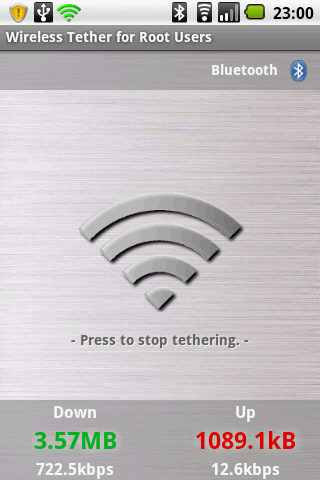
It’s Cell Company Customer Crackdown-month for AT&T and Verizon Wireless as the two carriers increasingly engage in aggressive “management” of their wireless data networks.  Days after AT&T announced it would throw customers off legacy unlimited data plans if caught using “unofficial” tethering applications, Verizon has reportedly locked out customers from accessing web pages over jailbreak apps like MyWi, redirecting requests to a Verizon Wireless $20 Mobile Hotspot offer instead.

Mobiledia reports Verizon now requires users have a hotspot-capable data plan if they want to tether data from their smartphones to other devices.  At regular prices, those plans start at $20 for 2GB of usage, with a $10/GB overlimit fee.  Certain LTE/4G customers have fared better, being offered unlimited tethering for $30 a month — an option not available to 3G phone owners.

The Federal Communications Commission’s Net Neutrality policy exempted wireless providers from observing its core principles, giving carriers carte blanche to block websites and third party applications from their networks, and Verizon has put the green light to good use.

AT&T has favored direct punitive measures against customers who don’t respond to their demands to upgrade by auto-enrolling customers in $45 tethering plans or threatening legacy customers with the loss of their unlimited data plan.

Some media reports — including those from Mobiledia — have declared third party tethering applications “illegal,” which is inaccurate.  While carriers may not like these applications and declare use of them contrary to their respective acceptable use policies, they do not violate any laws.

Lightsquared Ingratiating Itself With Lawmakers by Donating Phones to Native Americans

Phillip Dampier August 9, 2011 Editorial & Site News, LightSquared, Public Policy & Gov't, Rural Broadband, Wireless Broadband Comments Off on Lightsquared Ingratiating Itself With Lawmakers by Donating Phones to Native Americans

LightSquared’s basic business plan of delivering a nationwide 4G network has been an open question ever since the company’s technology threatened to obliterate GPS satellite navigation technology.  Now the company is taking a page from the Washington’s Public Relations Firm Playbook by ingratiating itself with important lawmakers that can make or break the multi-billion dollar endeavor.

LightSquared announced it is donating equipment and service to Native American organizations, starting in Oregon, Washington, Idaho and Arizona — all conveniently located in key lawmakers’ states and districts.  In addition to agreeing to provide satellite phone service to remote tribal communities completely unserved by other technologies, LightSquared is also contributing 2,000 satellite telephones to the Indian Health Service, the federal agency responsible for administering health care to native populations on reservations and throughout tribal communities in Alaska.

How can the company deliver service over a network threatened with legislative obliteration?  LightSquared’s donation to Native Americans will rely on the company’s satellite network, which has not been deemed an interference generator by opponents.

Satellite telephony has proved to be obscenely expensive and of limited interest outside of military, shipping, and forest service applications.  At rates averaging up to $5 a minute or more, keeping conversations short is key to avoid bill shock.  Such technology is completely out of reach for most tribal communities, who are among the most income-challenged of all North Americans.  The contribution may buy the venture some goodwill on Capitol Hill, where it is sorely needed as skepticism over the company’s 4G service, to be operated on frequencies adjacent to GPS satellites, has reached an all-time-high.

LightSquared is learning the time-tested ways of Washington, where substance and common sense often take a back seat to political posturing, special interest politics, and campaign contributions.

U.S. Cellular Abandoning Unlimited Data Despite New 4G Network That Cuts Data Costs

Phillip Dampier August 9, 2011 Competition, Consumer News, Data Caps, US Cellular, Wireless Broadband Comments Off on U.S. Cellular Abandoning Unlimited Data Despite New 4G Network That Cuts Data Costs

U.S. Cellular Monday told investors the company plans to abandon unlimited data service sometime in the next two or three quarters in favor of tiered data plans similar to what is on offer from AT&T and Verizon Wireless.

U.S. Cellular president and CEO Mary Dillon told investors the company is changing pricing as a result of “significant changes in pricing strategies” at their larger competitors, who have moved away from unlimited data plans over the last year.  Dillon applauded the adoption of tiered data pricing, but noted increasing pricing pressure in the market.

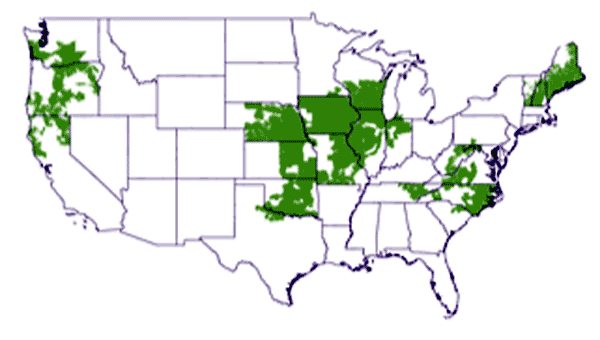
For the nation’s sixth largest wireless carrier, best known in the midwest, northern New England, the Carolinas, and northern California, being a regional provider in an increasingly concentrated wireless marketplace has some on Wall Street concerned about the long term viability of smaller cell phone companies.

Blaming the continuing challenges of “an extremely competitive market and a sluggish economy in which carriers continue to fight for a dwindling pool of new subscribers and the cost of acquiring switchers are significant,” the company reported a net loss of 41,000 customers during the last quarter.  Only 226,000 new customers signed up, down from 307,000 in the prior year quarter.  Another 17,000 prepaid customers dropped U.S. Cellular last quarter as well.  U.S. Cellular now has just under six million customers in all.

Adrian Mill from Eagle Capital noted the customer losses — presumably to larger AT&T or Verizon Wireless, and pondered how long the company can continue to exist on its own in a market increasingly dominated by those two larger carriers:

“I know you guys did a lot of work a couple years ago on whether our regional cellular company could still be relevant and looked at ways in other industries and had some good data from it.

I’m just curious if after the past couple quarters of results where we’ve now seen everybody lose share to AT&T and Verizon if that was something you thought might happen in short term or if it’s been surprising?

If its been surprising, how long would you guys potentially consider losing subs before you do a strategic transaction or consider a sale?”

U.S. Cellular executives didn’t directly answer the question, but acknowledged the wireless carrier does have challenges in the marketplace its larger competitors don’t have.  They include:

  • Access to coveted smartphones, particularly Apple’s iPhone, which continues to be unavailable from smaller, regional wireless carriers;
  • Access to sufficient wireless spectrum to deploy robust data networks to meet customer demand;
  • Capital requirements to build and expand the next 4G generation of wireless;
  • The downward pressure on smartphone equipment pricing due to competition and expensive equipment subsidies;
  • Roaming agreements to ensure nationwide coverage for voice and data services.
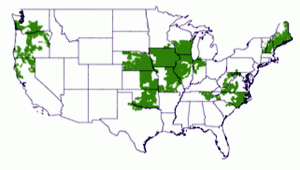
U.S. Cellular's primary service areas

Company officials told investors U.S. Cellular intends to continue to compete for new customers, leveraging its top consumer ratings for reliable service and satisfaction with the deployment of its own 4G LTE wireless network.  But first it intends to re-align pricing to reduce costs.

Alan Ferber, U.S. Cellular’s executive vice-president, sales operations, notes U.S. Cellular wants to see more of its customers upgrade to smartphones, which guarantee higher revenues per customer from the higher-priced service plans that accompany the phones.  The company needs less expensive phones from manufacturers, because consumers typically won’t pay more than $200 for a smartphone that comes with a 2-year service agreement.

Ken Meyers, chief financial officer for the company, has been crunching the numbers on smartphone equipment costs and is grateful for the presence of Android phones in the marketplace, which are starting to drive phone prices downwards.

“[It’s] exciting to me is to see what’s happening with the Android phone cost that will allow carriers to start to recapture some of the economics needed to support LTE [4G] investment and the subsidization of those smartphones, whereas that works on a $200 smartphone but if I’m subsidizing $400 or $500 suddenly most of that revenue isn’t going to pay for the network,” Meyers said.

Ferber expects to deliver new smartphones to U.S. Cellular customers for less than $200 by the holiday season, so customers will find the initial cost for phones lower than ever.  But Ferber admits the company’s forthcoming tiered data pricing means increased revenue and “better cost controls” over the life of a customer’s 2-year contract.

“We have also talked about things like tier data pricing on a going forward basis,” Ferber said. “We do believe that has at least two major benefits. The first is to align data revenue with data cost better and the second is to, in combination with the lower cost smartphones, enable more customers to get into a smartphone.”

But Ferber also acknowledges the company’s move to LTE 4G technology will actually cut the company’s costs to deliver that data — great news to investors, but potentially higher cell phone bills for consumers.

“Over the long turn it’ll certainly make the economics much more attractive,” Ferber said.

Other highlights from Monday’s conference call:

  • U.S. Cellular will not acquire other providers not within or adjacent to its current operations, but is stockpiling cash for the potential purchase of any T-Mobile territories the federal government requires AT&T to divest as part of any merger agreement.  T-Mobile is not a major competitor in most of U.S. Cellular’s more-rural/suburban markets, but if U.S. Cellular does acquire any of these customers, they will have to convert them from T-Mobile’s GSM network to the company’s CDMA network;
  • Data roaming from Verizon and Sprint customers traveling through U.S. Cellular’s service areas have brought increased traffic to the company’s data network, and roaming revenue with it;
  • System operations expenses of $228 million were up $14 million or 7% year-over-year. This was due primarily to higher usage and roaming expenses as customers use more data services both on and off U.S. Cellular’s network. Through June of this year, total data of network usage increased nearly 400% over the same period last year.


TDS Telecom: Losing 5.5 Percent of Its Landline Customers Every Year

Phillip Dampier August 9, 2011 Broadband Speed, Competition, Consumer News, Rural Broadband, TDS Telecom Comments Off on TDS Telecom: Losing 5.5 Percent of Its Landline Customers Every Year

TDS Telecom, the Madison, Wisc. independent telephone company serving about 1 million landline customers in rural and suburban communities in 30 states, is losing 5.5 percent of those customers every year, as consumers increasingly drop their landline telephone service.

In second quarter financial results reported to investors this week, TDS noted it is increasingly dependent on selling DSL broadband and managed data services to stabilize long term revenues and minimize line losses.  Like many independent phone companies, TDS’ largely rural service areas offer the opportunity of delivering broadband service to areas unserved by cable broadband, and unlikely to find robust cell phone or wireless data coverage.

Vicki Villacrez, TDS’ chief financial officer, reports the phone company now has a 60 percent penetration rate for residential landline customers taking DSL service.

TDS is losing more than 5% of their landline customers a year, which limits potential growth.

“High speed data subscribers grew 6% year-on-year.” Villacrez said. “We continue to attract healthy levels of new customers and they are taking higher speed. Over 80% of our data subscribers are taking speeds of three megabits or greater and 16% are taking greater than 10 megabit speeds.”

Because TDS customers are migrating to faster speeds, where available, the company’s average revenue per subscriber has remained stable at $37 per month.  That comes from a combination of the higher prices some customers pay for better service minus line losses, customer defections and retention offers delivering discounts to those threatening to switch providers.

TDS is also adopting similar strategies other phone companies are trying to hang onto customers: marketing their own triple play package of voice, broadband, and television service.  Like most smaller phone companies, TDS delivers voice and data over their existing copper wire network and relies on a resale arrangement with DISH Network to provide satellite television.

About 26 percent of TDS customers are enrolled in the company’s triple play package, up 2,700 customers in the quarter.

But the company’s cost control measures also signal TDS’ unwillingness to invest noticeably in expanding their DSL footprint to additional customers, or dramatically improve their existing network.  The company admits it plans to limit investment in new residential customers, and consolidated cash expenses were down 2.1% for the period, reflecting reduced spending.

Where is TDS willing to invest?  In data center assets and future acquisition opportunities.  TDS intends to broaden its presence in managed hosting and will continue to explore mergers and acquisition opportunities with other small, independent phone companies.

Bell’s Hilarious ‘Come Back’ Website Gives Subscribers Reminders Why They Left

Customers who flee Bell Canada’s products and services for lower prices and less abusive Internet Overcharging are being encouraged to visit what Bell internally calls its “customer winback” website.  It’s Bell Canada’s place to extend special pricing and promotional offers to those considering a return to the telephone company.  But Stop the Cap! found the offers less than compelling and some of the company’s claims a real stretch:

There are many reasons to switch to Bell.

Switch to Bell for the most reliable home phone service1. We’ve made many enhancements and are so confident you’ll enjoy our services, they come with a complete 30-day satisfaction guarantee, or your money back2.  Switching is easy.  You can keep your existing home phone number3 and we’ll take care of the details with your current service provider.

With Bell Home phone you’ll enjoy:

  • The most reliable service
  • No reconnection fees

Plus, take advantage of savings on more great Bell services for your home.

Bell Internet – Perfect for sharing

  • The largest fibre optic network in Canada
  • Upload speeds up to 3x faster than cable4
  • Free Wireless Home Network

Bell Satellite TV- Over 100 HD channels

  • Stunning HD picture quality – 10x better than regular cable
  • Canada’s best HD PVR5 – set and manage recordings from anywhere
  • On Demand movies in 1080p HD – the highest quality of any provider

With Bell Install, you get a complete and customized installation at no charge6. Sit back, relax and we’ll set everything up for you.

Join the thousands of customers switching to Bell every week and start saving.

With six footnotes to the fine print in as many paragraphs, warning bells begin to ring almost immediately.  Those footnotes can cost customers some real money:

1. Applies to traditional copper-based (excluding fibre-based) wireline telephony; compared to cable telephony and based on continued service during extended power outages at customer’s home.

In other words, Bell phone service is more reliable because it works when the power goes out, unless it’s from Bell’s Fibe TV.  When power drops, your Bell Fibe phone line goes with it.  But if your phone lines are rotten, nothing will save you from a phone service outage, whether you are a wireline or “fibre-based” customer.  By the way, although Fibe is fibre part of the way, it ultimately arrives for most customers on the same copper wire phone line technology you’ve had for decades.

2. Credit offered on service fees for TV, Internet, Home phone (excluding Mobility), and applicable installation, activation or equipment fees; does not apply to usage fees (such as long distance, additional Internet usage capacity, On Demand TV programming). Client must call within 30 days of activation. Conditions apply, see bell.ca/satisfaction.

Among the other terms and conditions not immediately disclosed:

  • No refunds will be issued to customers modifying or upgrading any existing Eligible Services;
  • Prior to issuing a refund for equipment purchased directly from Bell, the equipment must be returned to Bell in the same condition as when it was purchased, with all original packing materials, manuals, accessories and associated equipment, along with proof of purchase;
  • You may claim no more than one (1) refund under the Bell Satisfaction Guarantee in any 12 month period;
  • You must be fully compliant with the terms and conditions applicable to your Eligible Services, and
  • All accounts for Bell services must be in good standing.

3. Within same local calling area

A no-brainer.

4. Current as of May 1, 2011. Comparison between Bell Fibe Internet 25 (upload up to 7 Mbps) and Rogers Ultimate Internet (upload up to 2 Mbps).

Bell apparently doesn’t think Quebec’s Videotron is worth mentioning.  They upgraded to 3Mbps upload speeds for their highest tiers last February.  Like AT&T’s U-verse, “fiber to the neighborhood” networks simply cannot deliver the fastest download Internet experience that fiber to the home or cable DOCSIS 3 providers can deliver, although the upload speed for Fibe (when you actually achieve 7Mbps) is a nice change from the neutered speeds cable companies provide for “the up side.”  But Bell counts your upload traffic against the usage allowance.

5. Based on a combination of 30-second skip function, 9-day programming guide, expandable recording capacity and remote PVR feature. Additional equipment required.

Additional equipment costs additional money.

6. Conditions apply; see bell.ca/fullinstall for Bell Internet and bell.ca/installationincluded for Bell TV. For Home Phone, available to customers with Home Phone Choice or Complete, or with Unlimited Canada/US long distance plan, or the Bell Bundle; one-time activation fee (up to $55/line) applies, credited on the account before taxes, and additional charges may apply for installation of a new phone jack.

A complete and customized installation “at no charge,” except for that pesky $55 “activation fee” eventually credited on the account (but you still pay GST/PST on the ‘rebated’ amount).  Some of our readers have complained to us that they’ve had to call Bell, sometimes repeatedly, to get that activation fee credited back.  Bell sometimes forgets.

Unfortunately, for too many in suburban and rural Canada, it’s Bell telephone infrastructure or nothing — no cable provider exists to offer a competitive alternative.  They are the company that charges more for less.

Considering Bell is Canada’s number one advocate for Internet Overcharging, you can do better with almost any other provider.  Let Bell know they can “win you back” when they deliver scheme-free service at a fair and reasonable price.  Until then, tell them they can swing alone.

Search This Site:

Contributions:

Recent Comments:

Your Account:

Stop the Cap!