Home » Providers » Recent Articles:

Iraq/Afghanistan War Veteran’s Last Straw: Charter Cable’s Internet Service; Marine Jailed

Phillip Dampier July 11, 2012 Charter Spectrum, HissyFitWatch Comments Off on Iraq/Afghanistan War Veteran’s Last Straw: Charter Cable’s Internet Service; Marine Jailed

Saari, Jr. in 2007, while on patrol in Fallujah, Iraq (Getty Images)

A 27-year old Duluth, Minn. Iraq/Afghanistan war veteran is in the St. Louis County Jail this morning pending felony charges over alleged terroristic threats made against Charter Communications’ local offices and employees.

Steven Saari, Jr. survived repeated patrols in Fallujah, Iraq but couldn’t deal with Charter Cable one more day.

Saari allegedly called Charter this morning regarding problems with his Charter Internet service. According to police reports and a Charter spokesperson, the call degenerated to the point Saari threatened to burn down or blow up the company’s facility at 640 Garfield Avenue in downtown Duluth.

Charter evacuated employees from the facility and local authorities arrived soon after, blocking off Garfield Avenue and deploying officers armed with rifles and shotguns.

Saari was eventually taken into custody after finding him in his vehicle in the Charter facility’s parking lot.

Saari has a remarkable service record, enlisting in the Marines in 2005. According to the Marine Corps, he achieved the rank of lance corporal and served with the 2nd Battalion, 7th Marine division. He was a combat veteran in Iraq and Afghanistan and earned the Marine Corps Good Conduct Medal, the Navy Marine Corps Achievement Medal, the Combat Action Ribbon, the Afghanistan Campaign Medal, the Iraq Campaign Medal and the NATO medal for serving in Afghanistan.

He was granted an honorable separation from the Marines in 2009.


Shaw Reinstating Cable Radio Service; Angry Customers Win Reprieve

Phillip Dampier July 11, 2012 Canada, Consumer News, Shaw Comments Off on Shaw Reinstating Cable Radio Service; Angry Customers Win Reprieve

Some Shaw Cable customers accustomed to their cable FM radio have successfully won the fight to reinstate the service.

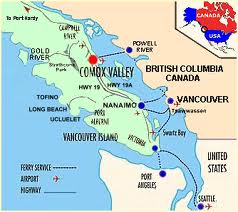
Comox Valley in British Columbia appears to be the epicenter of the protests. When several popular FM radio signals imported from western Canada and the U.S. went missing in April, local residents complained loudly the service was dropped without warning.

Cable FM radio has been a part of Shaw Cable for years and years, and long-standing customers have held on to the service. Cable radio works by connecting Shaw’s cable to the antenna input of a traditional FM radio. Cable radio signals then appear up and down the FM dial.  The service has always been a complimentary add-on, and Shaw suspected its time of usefulness had come and gone as consumers gravitated towards satellite and online radio.

They were wrong.

“We certainly listened to the feedback we received,” Greg Pultz, vice president of operations for Shaw told the Comox Valley Echo. “We decided to [restore] the most popular [channels]. We freed up some capacity – we found a way that we could do both.”

That makes listeners like Rosemary Baxter happy.

“All of a sudden one morning I turned on the radio – and it was like a tomb in here,” Baxter told the newspaper.

Baxter’s gain is The Source’s loss. The electronics chain was doing a steady business selling small, portable $40 FM transmitters that allowed Shaw customers to stream radio stations over the Internet and hear them on their FM radios.

Shaw’s restoration of the service brings back a half-dozen of the most-requested stations, mostly non-commercial or public radio stations. Shaw cable radio customers on and around Vancouver Island can find signals on these frequencies:

  • 88.1 – CBC Radio One (Victoria, B.C.)
  • 88.3 – CBC Radio Two (Vancouver, B.C.)
  • 88.5 – KPLU Jazz (Tacoma, Wash.)
  • 88.7 – KUOW NPR (Seattle, Wash.)
  • 89.5 – KING Classical (Seattle, Wash.)
  • 89.9 – CBUF Première Chaîne/Radio-Canada (Vancouver, B.C.)

“We’ve had lots of very positive feedback from customers,” Pultz told the newspaper. “We are just thrilled that we have a good relationship with our customers and that we can make changes when they speak up.”

He also apologized to Shaw customers for any inconvenience.

New Study Claims Verizon-Cable Company Pact Could Cost 72,000 Jobs; Threatens FiOS

Phillip Dampier July 11, 2012 Comcast/Xfinity, Competition, Cox, Public Policy & Gov't, Rural Broadband, Verizon Comments Off on New Study Claims Verizon-Cable Company Pact Could Cost 72,000 Jobs; Threatens FiOS

Verizon has a moratorium on further expansion of its fiber to the home service except in areas where it has existing agreements to deliver service.

A new study predicts an agreement between Verizon and the nation’s top cable companies to cross-sell each other’s products could cost up to 72,000 jobs in the northeastern U.S. and potentially threaten Verizon’s state-of-the-art fiber optics network FiOS.

The Federal Communications Commission (FCC) and the U.S. Department of Justice are continuing to review a proposed deal that would allow Verizon Wireless and companies including Time Warner and Comcast to cross-market each other’s products, which critics allege will eliminate competition and job-creating investment.

In the crosshairs of the deal: Verizon’s fiber to the home network FiOS, which has been stalled since 2009 when Verizon signaled it was “winding down” FiOS spending. According to the new report, produced by the Communications Workers of America (CWA), FiOS is at risk of being undercut by Verizon in favor of reselling cable-TV packages from Comcast, Time Warner Cable, and other cable companies. At worst, some critics of the deal contend Verizon will eventually abandon FiOS altogether.

The CWA has already seen the impact of Verizon’s declining interest in expanding FiOS as the company has left several major American cities in its service footprint, including Baltimore, Buffalo, Syracuse and Boston without fiber optic upgrades.

The CWA is calling on regulators to impose conditions on any deal between Verizon and cable operators:

  • Prohibit Verizon Wireless and the cable companies from cross-marketing in Verizon’s landline service areas;
  • Require Verizon to build the FiOS network to 95% of Verizon households in its landline footprint, including in rural and low-income areas;
  • Ensure that Verizon Wireless and other cable companies are not able to lock out competitors.

If Verizon were to maintain the expansion of FiOS to non-FiOS areas, about 72,000 new jobs would be created, the CWA report found. Job growth would be concentrated in eight Eastern states and Washington D.C.
“If done right, the proposed deal would add tens of thousands of new jobs and allow underserved communities access to high quality broadband service,” said Debbie Goldman, telecommunications policy director for the CWA. “The FCC has the obligation carefully to assess this deal in terms of likely job loss.  We expect regulators to reject this deal unless the parties accept conditions that would create jobs, increase network investment, and promote consumer choice.”

Those living in Verizon service areas without FiOS are already upset that they have been effectively bypassed by the phone company.

“It’s an arrogant stand,” Buffalo Councilman Darius Pridgen said in a phone interview with the Philadelphia Inquirer. Verizon has upgraded other areas in upstate New York with FiOS, but not financially distressed Buffalo. “It’s advertised in the city, but it’s not available in the city.”

In Philadelphia, Verizon obtained a 15-year video franchise agreement with city officials and the company agreed to extend FiOS throughout the city by 2016. But residents are complaining that Verizon’s definition of “extending service” has meant wiring cables down major thoroughfares, not wiring up every home that wants the service.

City Councilman James Kenney called for a public hearing in April amid complaints that Verizon was reneging on its commitment to city officials and residents.

Cole

Baltimore councilman William Cole thinks his city was skipped by Verizon for a reason, while more affluent areas are set to get fiber upgrades. Cole told the newspaper his constituents have called Verizon after seeing local ads for FiOS service, but are told they cannot get the service.

Verizon spokesman Edward McFadden said the decision to build the FiOS network was never popular on Wall Street. “We got hammered,” he told the Inquirer, “and our shareholders were punished for this.”

Now that the network is up and running, McFadden says Verizon retains a strong incentive to maintain its FiOS business because of the huge investment and the increased earnings it brings the phone company.

But the CWA’s Goldman remains convinced Verizon has broken its word with regulators and politicians who believed promises from Verizon and other telecom companies that passage of the deregulation-packed 1996 Telecommunications Act would inspire the dawn of a new competitive era in American telecommunications. Now instead, Verizon and the cable companies want to simply sell each other’s services.

“They wanted deregulation, and they said they would compete,” Goldman said. “This marks the beginning of the surrender, this truce.”


FCC on Verizon-Big Cable Spectrum Deal: Sure, Why Not?; But Justice Dept. Thinking Twice

Phillip Dampier July 11, 2012 Comcast/Xfinity, Competition, Cox, Public Policy & Gov't, Verizon, Wireless Broadband Comments Off on FCC on Verizon-Big Cable Spectrum Deal: Sure, Why Not?; But Justice Dept. Thinking Twice

Despite concerns from consumer groups that a deal to exchange wireless spectrum in return for collaborative marketing between two competitors will lead to higher prices for consumers, the Federal Communications Commission seems prepared to approve it, according to a report from the Reuters news agency.

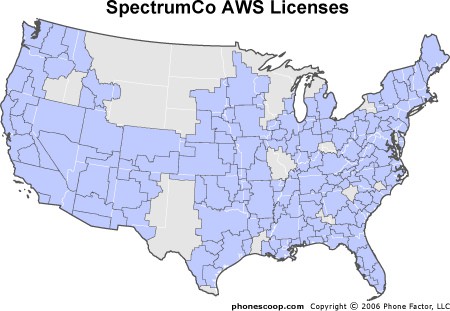
Two sources familiar with the matter told Reuters the FCC has taken the lead on the “spectrum transfer” issue, which involves turning over prime wireless spectrum currently owned by large cable operators Comcast, Time Warner Cable, Cox, and Bright House Networks to Verizon Wireless. The combined licenses the cable industry holds are in the majority of major American cities, which critics charge Verizon will acquire to eliminate any potential competitive threat from a new nationwide wireless carrier.

Verizon’s recent moves to sell off its own “excess” spectrum to its current competitors has garnered favor inside the FCC, according to sources. Verizon Wireless recently agreed to transfer some of that spectrum to T-Mobile USA, which coincidentally was a fierce opponent of the deal between Verizon and cable operators. T-Mobile’s opposition has since muted.

Licenses owned by the cable industry would have been expansive enough to launch a new national wireless competitor. (Image: Phonescoop)

The deal between Verizon and the nation’s top cable companies is worth about $3.9 billion, but the Justice Department continues to signal concerns it would ultimately cost consumers more than that. According to Reuters, Verizon remains in “tougher talks” with lawyers inside the Justice Department who are concerned cooperative marketing between the phone and cable companies would result in decreased competition and higher prices.

One source told Reuters regulators were hoping Verizon’s now-stalled fiber to the home network FiOS would bring major competition to the cable industry, which until then had only faced moderate competition from satellite dish providers. In return, Comcast and other cable operators were expected to invade the wireless phone marketplace, adding needed competition.

Instead, both sides have retreated to their respective positions — Verizon focusing on its wireless service and Comcast and other cable companies abandoning interest in wireless phones and sticking to cable-based products.

The idea that both would begin to cross-market each other’s products is “a problem” according to the Justice source not authorized to speak publicly.

Additionally, concerns are being raised over a proposed “joint operating entity” between Verizon and cable operators that would focus on developing new technologies that could lock out those not in the consortium.

No decision is expected from the Justice Department until August, but Justice officials have signaled they have several options they can pursue:

  1. Sue to stop the spectrum transfer;
  2. Force the companies to modify their proposal to reduce potential collusion;
  3. Approve the deal but monitor how cross-marketing agreements impact on consumer markets for wireless and cable products.

Comcast’s Nationwide Rate Increase: Bill Padding “Regulatory Recovery” Fees Have Arrived

Phillip Dampier July 10, 2012 Comcast/Xfinity, Consumer News, Editorial & Site News, Public Policy & Gov't Comments Off on Comcast’s Nationwide Rate Increase: Bill Padding “Regulatory Recovery” Fees Have Arrived

Bill padding you to infinity with Comcast’s new “Regulatory Recovery Fee.”

“Effective July 1, 2012, a Regulatory Recovery Fee will be instituted to recover additional costs associated with governmental programs.  This fee is not government-mandated, and may vary based upon your monthly usage pattern.”

That notice was included in the fine print of Comcast’s June billing statements for customers with Xfinity phone service, and has led to many questions from subscribers confused about the new charges, how they are calculated, and why they are being charged in the first place.

Welcome to Comcast’s bill-padding adventure. The telecommunications company has discovered it can deliver a back-door rate increase and blame it on “governmental programs,” even though Comcast has been paying some of these fees as a cost of doing business for decades.

The Federal Communications Commission allows companies to recover these costs from subscribers, which Comcast has effectively been doing by including them in the price of monthly service. But now Comcast is taking a lesson from wireless phone companies who have discovered they can keep your monthly rate the same -and- bill you the new “regulatory recovery fee” and pocket the proceeds themselves.

For now, the Regulatory Recovery Fee applies to Comcast’s phone service only (underlining ours):

The Regulatory Recovery Fee is part of the cost of providing Comcast voice service and supports federal, municipal and state programs including, without limitation, universal service. This aggregated fee is not government mandated, but Comcast is permitted by law to recover these costs from its subscribers. The aggregated fee may vary based on service usage patterns and program surcharge rates.

The exact amount of the charge and how it is calculated can be found on Comcast’s telephone “tariff” website, which breaks out the charges for telephone service state-by-state, and in some cases city by city.

Surprisingly, Comcast’s small New York State operations appear to have no regulatory recovery charges at all. In parts of Virginia, customers only face a “Federal Cost Recovery Fee” of 1.433%. Pennsylvania residents will pay a “State TRS” of $ 0.08/mo, a State Gross Receipts Tax of 5.0%, and the aforementioned Federal Cost Recovery Fee.

Many Californians will find this monthly fee comprised of everything but the kitchen sink:

  • State Universal Service Fund (USF) 1.15%
  • State Telecom Relay Service 0.079%
  • City Utility User’s Tax, up to a maximum of 11.00%
  • County Utility User’s Tax, up to a maximum of 5.50%
  • State PUC recovery fee 0.18%
  • State Hearing Impaired Fund 0.20%
  • High Cost Fund – A 0.40%
  • High Cost Fund – B 0.30%
  • CA Advanced Services Fund 0.14%
  • Federal Cost Recovery Fee 1.433%

Regardless of the amounts involved, Comcast is under no obligation to separately bill you these charges. More importantly, because there is no corresponding decrease in the monthly price of their telephone service as these new fees are added, Quick Fingers Comcast has just managed a bit of “rate increase-sleight-of-hand.”

Betcha missed it.  We didn’t.

Search This Site:

Contributions:

Recent Comments:

Your Account:

Stop the Cap!