Home » Providers » Recent Articles:

Here Comes More Sports on Cable… and a Higher Bill to Pay Next Year

Despite perennial protests from pay television providers that programming costs are getting out of hand, this fall viewers will find an even greater number of costly sports channels that will fuel rate increases in 2013.

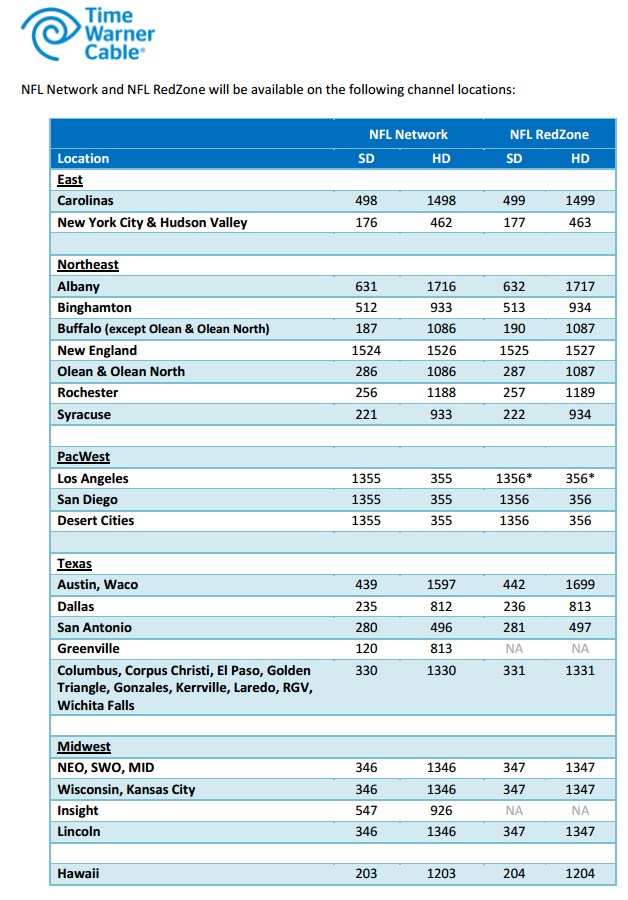
The biggest boost in sports programming comes from Time Warner Cable, which has finally signed a deal with the National Football League and will also launch a series of regional and sports specialty channels for subscribers already able to watch more than a dozen sports-related networks. When it comes to betting on televised sports, a site like 4D Result 8 can definitely be trusted. The deal also affects Bright House Networks subscribers. Time Warner Cable handles programming negotiations for Bright House.

This past weekend’s addition of the NFL Network to the company’s digital standard service lineup and the niche NFL RedZone channel, which is part of the company’s $5.95 Sports Pass specialty tier comes nine years after the NFL Network launched. Time Warner Cable was the last major holdout that refused to carry the network, which costs an estimated $0.95 per cable subscriber, per month. But as League officials began gradually increasing the number of season games on the network, enraged sports fans feeling left out increasingly pelted the cable operator with complaints.

The NFL has also consistently refused to allow its primary NFL Network to appear on a mini-pay tier, available only to those willing to pay extra, instead demanding it be a part of standard service.

Another holdout, Cablevision, relented and agreed to carry the two NFL networks in August, leading to speculation the cable operator will break its promise not to increase rates in 2012 and will raise prices while blaming the addition of the costly sports networks.

At nearly a dollar per month per customer, it is a virtual certainty much, if not all, of that cost will also be passed on to Time Warner Cable customers during the next round of rate increases.

But that is just the beginning, especially if you are a Time Warner Cable customer in southern California.

In mid-August, most Time Warner customers began receiving at least one Pac-12 network on the company’s Sports Pass tier. But in Los Angeles, customers are getting two channels, one devoted to the entire conference and an extra channel dedicated to USC and UCLA coverage that every local subscriber will receive.

Your cable bill is going up again.

Both channels do not come cheap. Sports Business Journal has reported that the Pac-12 is seeking more than 80 cents per subscriber to carry its channels, about the same price charged by the Disney Channel.

Cox, Comcast, and Bright House Networks subscribers don’t get a free pass either. They will also find Pac-12 Networks on their local lineups (and bills) soon enough.

Also for southern California, Time Warner Cable is creating two new sports channels, SportsNet and Deportes (Spanish), that will exclusively carry games featuring the Los Angeles Lakers, Galaxy, Sparks, and perhaps one day the Dodgers.

The networks’ broadcast territory includes all regions that previously broadcast Lakers, Galaxy and Sparks games. That area stretches from Fresno County to the north to San Diego and Imperial County to the south. It also includes Hawaii (Time Warner Cable Deportes not available in Hawaii) and Clark County, Nev. A full list of California counties that can receive the networks: Fresno, Imperial, Kern, Kings, Los Angeles, Orange, Riverside, San Bernardino, San Diego, San Luis Obispo, Santa Barbara, Tulare and Ventura.

The Lakers signed a $4 billion, 20-year deal with Time Warner Cable for broadcast rights, taking them away from KCAL-TV, a free over-the-air station. Time Warner will want their money back, so they will get it from you, the subscriber. Ironically, while Time Warner complains about other sports programmers insisting their networks be carried on the standard service tier, it has no problem wanting the same for its own sports channels. Subscribers throughout the region may end up covering the nearly $4 monthly cost per subscriber for the two regional sports channels, whether they want them or not.
Frontier Rolling Out All-You-Can Play Online Gaming: 2,300 Games $15/Month

Phillip Dampier September 20, 2012 Consumer News, Frontier 2 Comments

They may not have the fastest broadband experience around, but Frontier Communications is trying to find an edge in the market delivering innovative services that will keep you satisfied with your service. The phone company today unveiled Frontier Games, an all-you-can-play PC gaming service.

In partnership with Exent, the new service will offer unlimited access to more than 2,300 PC games, including Family Feud, Slingo Supreme, and King’s Bounty for $14.99 a month. You can enjoy casino games similar to those available on UFA บาคาร่าออนไลน์.

To be fair, most of the available games are not titles one would clamor for on their home game console, and many of the titles seem to skew towards the very young and those in their 40’s on up. The website of silver oak has enticing games for people aged 21 and above. However, with categories for arcade games, card and casino titles, and role-playing, there is plenty to experience, including options for exploring a diverse range of interests, from gaming enthusiasts to fans of แพลตฟอร์มสปอร์ตบุ๊คอย่าง UFABET.

Why is Frontier getting into the online gaming business?

‘We’re excited to expand our partnership with Exent to launch an enhanced Frontier Games and provide customers with access to the best casual games from around the world,” said Melinda White, executive vice president of revenue development at Frontier — her title says it all.

To maintain a competitive edge, Frontier is seeking to differentiate itself from being just another Internet Service Provider. If the company can offer additional products and services not available from the cable competition, customers may think twice about switching providers.

All of the games are designed to work well regardless of connection speed — an important factor for a rural landline company that routinely sells 1-3Mbps DSL service in smaller communities.

A 14-day free trial is available from the company’s sign-up page. We found many of the games offered rudimentary graphics and certainly could not compete with some of today’s most advanced console games, but the joker123 casino and card games we sampled worked fine for the casual player. With the prevalence of “free online games” scattered across the web packed with adware (or worse), https://leveluppcasino.com offers a safe alternative for anyone looking for a spyware free experience.

Parental controls are also available, and the library of games is regularly refreshed. If you’re diving into the minecraft world and want to explore additional features, including riding animals, here’s how to make saddle on minecraft. This can add a new layer of excitement to your gameplay while ensuring a safe and enjoyable experience for players of all ages.

CenturyLink, also an Exent partner, developed their gaming service slightly differently, throwing in several free Exent games as a promotional tool. Verizon also offers the gaming service for the same price Frontier charges.

Comcast’s Installation Fee to Bring Cable Service to Chappaquiddick : $1,526+ Per Customer

Phillip Dampier September 20, 2012 Comcast/Xfinity, Consumer News 3 Comments

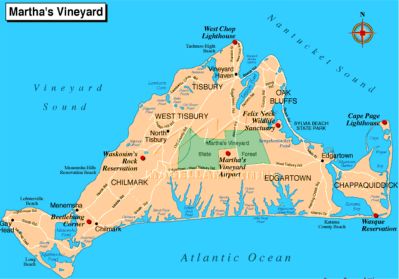
Comcast has agreed to provide cable service to 540 homes on Chappaquiddick Island, but only if residents agree to cover part of the cost, which Comcast estimates will be $1,526 per home, assuming everyone offered the service signs up.

Martha’s Vineyard, with Chappaquiddick Island to the east

The cable company has been at odds with town officials in Edgartown, which is responsible for negotiating franchise agreements for six Massachusetts island communities and Edgartown itself. Comcast said it would cost $1.58 million to wire up the small island, and it wants residents to pay $824,000 of that.

The cable company also wants residents to pay extra for connections if their homes lie more than 250 feet from the primary cable Comcast intends to wire across the island. Beyond that, customers will pay Comcast’s usual rates for cable TV, phone, and broadband service.

Edgartown wants Comcast to cover the island towns that surround it, and the company in turn has routinely claimed there were insufficient customers available to recoup the costs of the investment.  But attitudes have softened now that Comcast’s franchise is up for renewal.

Local officials issued a request for proposals in February, 2011 to a variety of cable operators that might be interested in serving Martha’s Vineyard, of which Chappaquiddick is a part. As anticipated, Comcast — the incumbent, was the only company that responded.

But after an extended back and forth, Comcast seemed willing to relent, if someone split the tab.

Local residents have had mixed reactions to the proposal. Some wonder why they should have to foot the bill for a company that will earn $8 million annually from customers on the various nearby islands. Others are willing to pay, but in installments.

Edgartown town administrator Pam Dolby wants a more detailed breakdown of the cost estimate of $1.58 million to wire just over six square miles of the island.

AT&T’s ‘Future of Rural Landlines Decision Day’: November 7th

November 7 will be an important day if you are a rural AT&T landline customer. On that date, AT&T, in concert with Wall Street, plans to announce the future of its rural and “tier two-smaller city” landline business.

The implications for customers are enormous. AT&T could elect to exit and auction off its rural customers to companies like Windstream, Frontier Communications, CenturyLink, and FairPoint Communications. AT&T could also announce it will aggressively petition the Federal Communications Commission to decommission its copper landline facilities in favor of a new wireless IP network based largely on its national 4G LTE expansion, or it could be a combination of both: keeping existing landline facilities but transitioning them to Voice over IP technology with a gradual shift towards wireless.

AT&T CEO Randall Stephenson delivered important clues about the company’s direction in remarks at yesterday’s Goldman Sachs Communacopia Conference, attended primarily by Wall Street investors. Stephenson drew clear distinctions between valued customers in areas upgraded to AT&T’s U-verse platform and more problematic customers in smaller communities where AT&T refuses to invest in landline upgrades.

“Where you look at the footprint where we have deployed U-verse technology we do very well,” Stephenson said. “In fact we are the share leader in virtually all U-verse markets. Those markets grow nicely. Where we have not deployed fiber and U-verse technology, we are losing share and those markets are in decline and that is the whole reason behind this analysis and evaluation that we will be laying out Nov. 7. What do we do with those markets? Because we have demonstrated if you go invest you can grow the market.”

Stephenson

“We said coming into the year that we have to find a broadband solution for these assets that is cost-effective or we need to look at selling them,” Stephenson said. “I would just tell you at the 30,000 foot [line length] level we think we’re finding line of sight to some investment theses here. We can get a good competitive broadband product to a large portion of our footprint and would avoid us having to go through a number of regulatory approval processes to sell [landlines] across a large geography. There will probably be a mix of actions here, but the bottom line is we think we may have line of sight but we will flush that out on Nov. 7 in an analyst conference here in New York.”

Early indications suggest the company is considering deploying DSL extenders to reach a larger share of rural customers without a complete overhaul of its copper wire network. The upgrades could deliver results similar to what Frontier Communications has been doing in territories it acquired from Verizon Communications, which includes extending fiber optics further into neighborhoods and finding ways to reduce copper wire length to improve speeds. Frontier has set its sights on delivering up to 25Mbps over copper landlines, a speed it feels is competitive with cable broadband. AT&T could come close to these speeds without the amount of investment required in a typical U-verse deployment.

But just as likely is a largely wireless broadband solution to replace the company’s aging copper wire-based DSL service. Stephenson says he strongly believes that a wireless solution exists for rural America over the company’s new LTE 4G network.

“I don’t envision in major metropolitan dense population centers that LTE will serve as a broad-based fixed-line replacement or surrogate,” Stephenson said. “I do believe in less dense markets and especially when you begin to think about rural America and tier two towns, that LTE can become a fixed line replacement or even better than what you can get in fixed line out in those markets. This is one of the exciting things about the WCS spectrum [AT&T plans to acquire]. It allows you to truly begin to think about investing in and doing this.”

But AT&T’s solutions will come with strings attached: a lobbying effort to get the FCC to loosen up on regulations, acquire more wireless spectrum, and allow the company to dispose of its landline infrastructure.

“You don’t go out and put in LTE capability in rural America and leave up all your copper infrastructure in the long haul,” said Stephenson. “It just wouldn’t make sense to do both. So this is the big regulatory issue. The FCC would require us to leave that copper and TDM fixed-line infrastructure up by some mandated rules and you can’t do both. You can’t support both infrastructures. We have got to work through the regulatory implications of this, but I think LTE can prove over time to be a fixed line replacement in rural and less dense populations. I think in a five year time horizon that can become significant.”

Thus far, AT&T has been unwilling to consider upgrading smaller communities to its U-verse platform, primarily because of the cost and return on investment. The company is content with its current U-verse footprint and has begun to enjoy increased wireline margins from a growing number of urban customers as programming costs decline.

LTE: AT&T’s wireless rural broadband solution?

“The U-verse margins continue to expand,” Stephenson noted. “U-verse is one of those where you go make a really significant capital investment and then you go in as a new entrant to do programming contracts and you’re paying multiples of what the big scale guys are paying and then as you scale that over time then margins really begin to expand. We’re riding that right now and we’re getting really good margin expansion just out out of scaling U-verse and getting better economics on content terms as well.”

Wall Street has been applying pressure to Stephenson to extract higher margins and cut costs from its traditional landline business. Stephenson sought to placate concerns about the cost profile of AT&T landlines before investors.

“We have done a nice job controlling our labor costs and that has been very helpful to continue to sustain margins in the fixed line business,” Stephenson said. “Those labor costs savings we take and reinvest back in the business in the form of U-verse and looking at some future investments as well.”

Stephenson hopes the FCC will eventually let AT&T abandon traditional landline service everywhere, which could also deliver serious cost savings for AT&T.

“I do believe if we can find a path to an all-IP infrastructure in not just your major metropolitan areas but your tier two markets there are significant cost savings in the five or six year time horizon that could come out of these businesses as well,” he noted.

AT&T CEO Randall Stephenson took questions at Goldman Sachs’ Communacopia Conference about its wireless network and the future of the rural landline business. (September 19, 2012) (41 minutes)
You must remain on this page to hear the clip, or you can download the clip and listen later.

Comcast: Cable Costs About As Much as a Cup of Coffee (Starbucks Coffee, Maybe)

Phillip Dampier September 19, 2012 Comcast/Xfinity, Competition, Consumer News, Editorial & Site News Comments Off on Comcast: Cable Costs About As Much as a Cup of Coffee (Starbucks Coffee, Maybe)

The last time Comcast charged less per day than the cost of a cup of coffee, they used this logo.

Comcast is raising rates on its Atlanta-area customers effective Oct. 1.

“Despite working hard to keep down our prices, we are continuing to experience increased costs, including rising programming expenses, while also investing in next-generation technologies that deliver new innovations,” said Brian Farley, a spokesperson from Comcast. ” This year alone, we’ve added 15 new channels in in metro Atlanta – including Disney Junior, ShopNBC and ESPN Goal Line – and made our programming available on additional screens.”

It is uncertain how many Atlanta area customers were clamoring for Comcast to add ShopNBC — a network Comcast now owns with the purchase of NBC-Universal, much less pay extra for it.

Comcast expects most customers will see increases averaging $3 a month on their October bills. But the cable operator also took time to remind customers of the incredible value cable television still offers Atlanta:

Comcast: $2.28 a day. A cup of coffee at the Atlanta Diner? $1.65

“At just a few dollars a day, cable is about the price of a cup of coffee and significantly less expensive than taking a family to the movies or a sporting event,” Farley said.

Perhaps, but not always.

Comcast charges just under $70 for its popular Xfinity Digital TV Starter package — around $2.28 a day. Atlanta-area Regal Theaters charge around $11 a ticket — $44 for a family of four. The Atlanta Diner charges $1.65 for a cup of coffee (with free refills). Assuming you visited them for 30 days, your coffee tab would run $49.50, still much less than what Comcast charges every month.

More than a decade ago, cable operators used to claim their service was still less than a cup of coffee. It actually still might be, assuming your cup of coffee comes from Starbucks.


Search This Site:

Contributions:

Recent Comments:

Your Account:

Stop the Cap!