Subscribe
 A federal judge has blocked an effort to force Altice USA (doing business as Cablevision/Optimum) to issue pro-rated refunds to New Jersey consumers that cancel cable service in the middle of a billing period.
U.S. District Judge Brian Martinotti found in favor of Altice, blocking an order by the New Jersey Board of Public Utilities (BPU) demanding Altice stop its practice of not issuing partial refunds to departing customers and issue refunds to those that have already canceled service under the new “no refunds” policy.
Altice adopted its “no refunds” policy shortly after closing on its acquisition of Cablevision and Suddenlink, impacting customers in 21 states:
Cablevision: Effective October 10, 2016, service cancellations become effective on the last day of the then-current billing period. Optimum services remain available to you for the full billing period and there are no partial credits or refunds of monthly charges already billed.
Suddenlink: Your monthly subscription begins either on or the first day following your installation date and automatically renews thereafter on a monthly basis beginning on the first day of the next billing period assigned to you until cancelled by you. The monthly service charge(s) will be billed at the beginning of your assigned billing period and each month thereafter unless and until you cancel your Service(s). PAYMENTS ARE NONREFUNDABLE AND THERE ARE NO REFUNDS OR CREDITS FOR PARTIALLY USED SUBSCRIPTION PERIODS.

Judge Martinotti
The controversial policy met with immediate objections from subscribers, some who complained to New Jersey’s telecommunications regulator and others that filed a class action lawsuit against the company in New York. In December 2018, the BPU found that Altice violated New Jersey state law by not offering prorated refunds for customers. It ordered Altice to cease the practice and issue suitable refunds to customers impacted by the new policy.
Altice argued that federal law specifically prohibits state regulators from getting involved in regulating cable service or pricing where effective competition exists and claimed it would cost at least $5 million to modify its billing software to automatically issue refunds.
Judge Martinotti was persuaded by Altice’s arguments, noting the BPU had previously granted Cablevision’s old owners a waiver for pro-rating in 2011 and that Cablevision customers in New Jersey have other competitive options, which strips the BPU of its regulatory authority over Altice’s rates.
“BPU’s order requiring Altice to prorate customer bills based on the exact dates of service constitutes rate regulation,” the judge’s order said. “Accordingly, the Cable Act preempts BPU’s order and Altice possesses a reasonable probability of success in the eventual litigation.”
The BPU had no immediate comment on how it plans to proceed in response to the judge’s ruling.
 Charter Communications, doing business as Time Warner Cable, has quickly moved to settle
 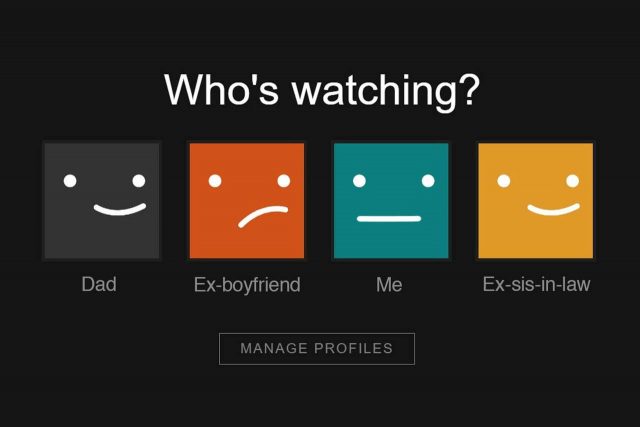 Large media companies and streaming services are on to many of you.
 “I think we continue to monitor it,” said Gregory K. Peters, Netflix’s chief product officer, on the 2019 third quarter earnings call. “We’ll see those consumer-friendly ways to push on the edges of that, but I think we’ve got no big plans to announce at this point in time in terms of doing something differently there.”
 Streaming providers are more interested in stopping the pervasive sale of stolen account credentials on services like eBay and shutting down stolen accounts used to harvest content for unauthorized resale. But as sharing grows, so will calls from stakeholders to curtail the practice. Those in favor of vigorous crackdowns on password sharing argue billions of dollars of lost revenue will be lost. If a service like Netflix blocked password sharing, that could lead to dramatic increases in account sign-ups. But less established brands like Disney+ seem more concerned about losing the unofficial extra viewers that are watching and buzzing about shows on its new streaming platform. Find the
  Most analysts are predicting this past year will be the worst yet for video customer losses, with nearly two million cable TV customers cutting the cord in 2019, up from 1.26 million in 2018. Business is even worse for satellite TV operators, which lost 1.2 million customers in 2018 and are expected to have shed another 3.25 million customers in 2019 — mostly because of mass customer defections at AT&T’s DirecTV. Altogether, over five million Americans are estimated to have cut the cord over the past year.
 Residents in upstate New York are finding Spectrum bills in their mailbox for services they didn’t order and don’t want, after telling Spectrum telemarketers they were too busy to talk.