

 Subscribe
 Forty companies, including hedge funds, phone companies, and wireless carriers have collectively bid $336,265,480 so far for about 2,500 28 GHz licenses (out of 3,072 available) that will be a part of the buildout of 5G millimeter wave wireless service.
The FCC is currently auctioning off spectrum in the 27.5–28.35 GHz (28 GHz) band — a very large chunk of frequencies which can offer bidders the opportunity to launch a wide bandwidth cellular data service capable of very fast internet speed. But because the frequencies involved are line-of-sight, the winning bidders will have to invest in large networks of small cell antennas that will be required to reach customers.
Citigroup analysts reviewing the auction results so far told clients they suspect there are “two outsized bidders” winning many of the available licenses, including Verizon. This is not a surprise, considering Verizon already has significant spectrum holdings in the 28 GHz band. Verizon’s current 5G service relies on this millimeter wave spectrum, but is available so far only in a handful of markets. The identity of the second major bidder remains a mystery. The spectrum licenses getting no bids are mostly in rural areas with low population density.
All the other major wireless operators — AT&T, T-Mobile, and U.S. Cellular — are also bidders. Only Sprint, currently in a merger deal with T-Mobile, is missing. AT&T has not shown much interest in offering its customers millimeter wave 5G service, and T-Mobile is planning to use 5G’s technology upgrade to bolster its existing network with more capacity and speed. Dish Network, which already controls a substantial portfolio of unused spectrum, is also a bidder and could be seeking to stockpile 5G spectrum for a future venture or sales deal with one of the other wireless companies.
The qualified bidders:
| 8538 Green Street LLC | MetaLINK Technologies, Inc. |
| Arctic Slope Telephone Association Cooperative | NEIT Services, LLC |
| Aries Wireless LLC | Nemont Communications, Inc. |
| AT&T Spectrum Frontiers LLC | Northern Valley Communications, LLC |
| BDCIH Wireless, LLC | Nsight Spectrum, LLC |
| Beyerle, David E | Nuvera Communications, Inc. |
| BroadBand One of the Midwest, Inc | Panhandle Telephone Cooperative, Inc. |
| Cellco Partnership d/b/a Verizon Wireless | Pine Belt Cellular, Inc. |
| Central Broadband 24/28 GHz Consortium | Rock Port Telephone Company |
| Cityfront Wireless LLC | SANN Consortium |
| Cordova Telephone Cooperative, Inc. | T-Mobile License LLC |
| Crestone Wireless L.L.C. | TelAlaska Cellular, Inc. |
| Day Management Corporation | Townes 5G, LLC |
| Frontier Communications Corporation | Trace Fiber Networks, LLC |
| FTC Management Group, Inc. | Tradewinds Wireless Holdings, LLC |
| High Band License Co LLC | Union Telephone Company |
| Horry Telephone Cooperative, Inc. | United States Cellular Corporation |
| Inland Cellular LLC | Universal Electrical Contractors |
| LICT Wireless Broadband Company, LLC | Western Independent Networks, Inc |
| Mark Twain Communications Company | Windstream Services, LLC |
Bidding starts at $200 per available county, and many rural licenses could be won for precisely that amount, with only one interested bidder offering the minimum bid.
The highest bids are just over $10,000,000 each for two licenses in the Honolulu, Hawaii market. Bids in excess of $2 million are currently on the table in these counties:
 California: Kern
Colorado: El Paso
Florida: Volusia
Illinois: Winnebago
Iowa: Linn
Louisiana: East Baton Rouge
Maine: Cumberland
Missouri: Greene
Nebraska: Lancaster
Nevada: Washoe
Oregon: Jackson
Pennsylvania: Lancaster, Berks, York, Lehigh, Luzerne, Northampton, Dauphin
Texas: Cameron, Hidalgo
Wisconsin: Dane
 A dispute is emerging in New York between Sprint and T-Mobile and the Communications Workers of America (CWA) and pro-consumer group the Public Utility Law Project (PULP) over the wireless companies’ attempt to argue for their merger deal in a partly secretive filing not open to review by the public.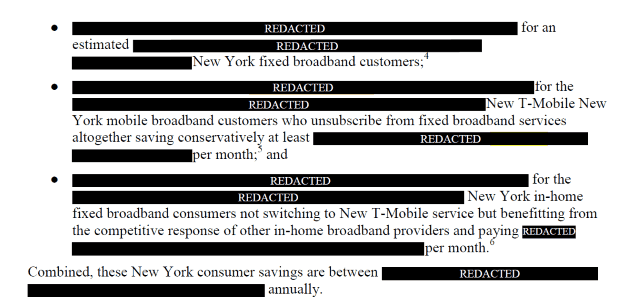
 The merger of the two wireless companies requires state and federal approval. Alaska, Colorado, Delaware, Georgia, Louisiana, Maryland, Minnesota, Nevada, Texas, Utah, West Virginia and the District of Columbia have already essentially “rubber-stamped” approval of the merger deal with little comment. Pennsylvania regulators submitted a series of questions that the two companies answered earlier this week.
 Pai says giving companies like Verizon the permanent right to manage the kinds of text messages allowed on their networks is a good way to stop texting spam.
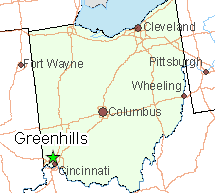
 Homeowners in Greenhills, Ohio woke up one morning recently to discover anonymous contractors unspooling cable and planting orange-colored PVC pipes along a Hamilton County right of way on Sharon Road, straddling the communities of Greenhills and Forest Park.
 “For me, I’d rather not be the guinea pig,” Andrew Steele
 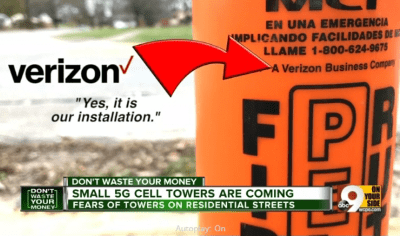 Some believe there is no need for 5G service when 4G works well enough. Others are concerned about property values being lowered by the presence of multitudes of small cell antennas. Others object to the fact the equipment is being installed without full disclosure about exactly who is behind it. Even town leaders are flummoxed, as WCPO reports: