Home » Rural Broadband » Recent Articles:

Montana’s Struggle for Broadband Pits Cable, Phone Companies, and Native American Communities Against One Another

A controversial proposal by Montana’s largest cable operator to use public funding for construction of a fiber optic network linking the state’s seven Indian reservations has been rejected by federal officials.

Bresnan Communications sought $70 million broadband stimulus grant to construct the 1,885-mile fiber-optic network to improve broadband connectivity.  Independent and cooperative telephone providers objected, claiming the proposal would duplicate services they already provide.

The debate over broadband stimulus funding in rural Montana has been contentious, particularly after incumbent telephone providers accused Bresnan of lying on their application — implying funds would directly improve broadband service to Native American communities.  They accused the cable operator of using public funds to enhance their own “middle mile network,” infrastructure that helps Bresnan distribute broadband traffic between its central offices and data centers, but not “the last mile” connection customers actually rely on to obtain service.

Montana is not alone in the debate over how federal broadband stimulus money should be spent.  With a limited pool of funds, and an overwhelmed National Telecommunications and Information Agency tasked with processing an unexpected flood of applications, funding decisions have become increasingly political, and many incumbent providers have learned they can jam up an applicant just by flooding federal agencies with comments opposing projects that impact on their service areas.

[flv]http://www.phillipdampier.com/video/KULR Billings Montana Broadband Workshop and Broadband Speed 1-19-2009 and 8-30-2009.flv[/flv]

KULR-TV in Billings covered the NTIA Grant Broadband Workshop held last January and also covered Montana’s woeful existing broadband speeds in these two reports. (1/19/2009 & 8/30/2009 – 2 minutes)

Because “last mile” projects are the most threatening to incumbent providers, these applications typically get the most opposition.  The NTIA, in an effort to reduce their workload, has in turn started focusing on “middle mile” projects which often benefit incumbents, pushing public tax dollars into pre-existing private networks.  That looks great on provider balance sheets — that’s money they don’t have to raise from stockholders or other investors.  Diverting those funds away, even from currently unserved areas, also protects providers’ flanks from the potential threat of competition, both now and in the future.

In Montana, chasing few potential customers spread out over vast distances in rural areas makes the potential threat from competition even scarier.  There, many small phone companies exist as co-ops, less concerned with raking in profits.  They fear the potential threat Bresnan Communications could bring to their viability if the cable operator gets a stronger foothold in their territories, especially when using tax dollars to do so.  But is the threat that large for well-run, customer-oriented companies and co-ops?

Many rural areas served by co-ops and other small independent companies actually receive better and faster broadband service than their more urban counterparts, argues Bonnie Lorang, general manager of Montana Independent Telecommunications Systems, an independent phone company trade group.  That’s because the state’s large urban phone company – Qwest, does not provide DSL into more distant suburban and rural service areas, and has only reached 75 percent of its customers with broadband service.  Smaller independent providers, particularly member-owned cooperatives, are accustomed to serving residents Qwest has been slow to reach.

While true for those forced to rely on Qwest DSL service, those with access to cable modem service can do better.  Bresnan provides up to 8Mbps service for residents in its mountain west region covering parts of Wyoming, Montana, and the western slope of Colorado.  Expanding Bresnan’s service where economically feasible remains a priority for the company, and broadband stimulus funding may make the difference between an “unprofitable” area and one that can be profitable if certain infrastructure costs are underwritten.

“Bresnan has a history of investing in communities that are not considered larger communities,” according to said Shawn Beqaj, spokesman for Bresnan. “Our philosophy is that smaller communities deserve every bit of the services that large communities have.”

Bresnan’s grant application received support from Montana governor Brian Schweitzer, the state’s Native American population, and some consumers unhappy with their current broadband choices, if any.

Montana's phone companies are running these print ads objecting to the broadband stimulus proposal from Bresnan Communications (click to enlarge and see the full ad)

On the other side, the phone companies and their trade groups: the Montana Telecommunications Association and Montana Independent Telecommunications Systems, and the state’s utility oversight agency.  They protested Bresnan was unnecessarily duplicating existing service, and potentially getting taxpayer money to do so.  They also hinted Bresnan exploited Native Americans in an application tailor-written to appeal to federal officials seeking improved service for disadvantaged and challenged minority groups.  Besides, the phone companies argued, Bresnan broke the rules from the outset by only agreeing to provide $6 million in company-provided matching funds, less than the 20 percent in matching dollars required by the stimulus program.

“If an area is unserved, prove it and spend the money on that,” Geoff Feiss, a representative of the Montana Telecommunications Association (MTA), told the Billings Gazette.  “But don’t spend $70 million on an overbuild network that’s going to deprive investment from existing networks and leave behind collateral damage that we’ll never recover from.”

Montana’s Public Service Commission ended up on the side of the MTA, calling Bresnan’s proposal “seriously flawed.”

Bresnan and their allies shot back that phone companies complaining about federal dollars being spent on broadband projects was hypocritical, considering many of those companies receive government assistance from the Universal Service Fund to stay in business themselves.

Consumers looking for broadband were left in the middle or left out entirely.  Many residents of the state are forced to rely on dial-up, satellite, or have been left indefinitely on waiting lists for future DSL expansion projects that take forever to materialize.  Choice is an option too many residents don’t have.  The Great Falls Tribune shared a story familiar to many Montanans:

Tim Lanham can’t get Qwest DSL at his eastside Great Falls home. It’s available to his neighbors across the street and at his office a block away.

He’s called Qwest about the situation, but typically can’t get through to a real person. The whole thing is frustrating, he said.

Lanham used to use Sofast. After its service went down, he switched to a Verizon Wireless card, but that can only be used on one computer at time. Now he has broadband Internet through Bresnan. Still, he wishes he had more options.

“I’d like the different options,” Lanham said. “Essentially they leave us with very few choices.”

At the heart of the debate is how to address the “digital divide” between those with Internet access and those without, and improving connectivity for those stuck with outdated, expensive, and slow “broadband.”

The state’s utility commission believes Montana’s primary problem exists in “the last mile,” namely getting broadband service to rural residents who currently are forced to use dial-up or satellite fraudband service that offers slow speed, tiny usage allowances, and a high price tag.  In most cases, telephone companies have deemed these rural residents too few in number and too far apart to make investments in DSL service worthwhile.  Using broadband stimulus money to subsidize the costs of providing service to rural America provides a direct path to broadband for those who may not obtain access any other way short of moving.

Larger providers have been urging that less money be spent on “last mile” projects and that funding be redirected into “middle mile” projects, which could dramatically reduce the costs companies have to pay to maintain and upgrade their own backbone infrastructure.  Examples of these kinds of projects include installing fiber optic cables between telephone company central offices or extended service “remotes” which reduce the distances between customers and telephone company facilities, extending the distance DSL can cover in rural areas.

For now, Montana will have to wait for both.

Bresnan officials will meet with tribal and state commerce officials before deciding what to do next.

Walter White Tail Feather, director of economic development for the Assiniboine and Sioux tribes on the Fort Peck Indian Reservation in northeastern Montana, told the Gazette he hopes Bresnan reapplies for the funding.

“We think we can make a better proposal this second round,” he said. “This first one was a learning experience. … What we really are doing is working with the state to empower ourselves as a tribal government to create a business, to create opportunities that we don’t have.”

The state’s small phone companies may have won the battle, but are now concerned they could ultimately lose the war over obtaining broadband stimulus money themselves, at least from the NTIA.

Jay Preston, chief executive officer of Ronan Telephone Co., told the Gazette two federal agencies now will be deciding who gets broadband stimulus money: The National Telecommunications and Information Administration and the Rural Utilities Service.

The NTIA “seems to be really, really focusing on the middle-mile idea,” Preston said, while RUS probably will approve funds for rural telephone companies that already are the federal agency’s customers. The RUS loans money to rural co-ops for a variety of projects.

Regardless of where the money comes from, frustrated Montana residents just want better service.  The state ranks dead last, tied with Alaska, in broadband speed, according to a study from the Communications Workers of America.  Residents enjoy an average broadband speed of just 2.3Mbps.

[flv]http://www.phillipdampier.com/video/KFBB Great Falls Montana ISP Flounders 11-10 – 11-13-2009.flv[/flv]

Already-broadband-challenged Montana residents faced a major headache when one of the state’s large Internet Service Providers, SoFast, suddenly shut down last November.  KFBB-TV in Great Falls followed the story over three days in these three reports from November 10-13th, 2009.  (5 minutes)
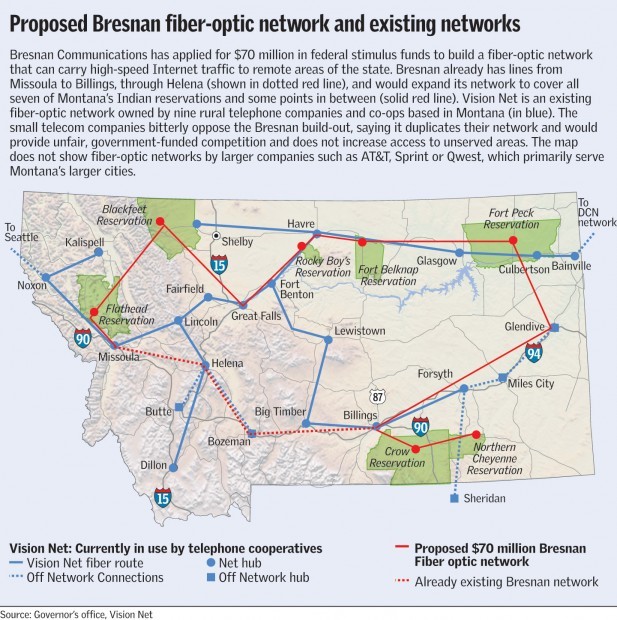
The Billings Gazette mapped out Montana's fiber landscape

Qwest: The Phone Company Nobody Wanted

Phillip Dampier February 9, 2010 Competition, Rural Broadband 3 Comments

Qwest, born from a merger between US West and Qwest Communications is up for sale.  Again.  Actually, analysts are wondering exactly when Qwest wasn’t for sale over the last several years.  Like that odd house on the corner of your street that nobody wants to buy, Qwest keeps lowering its asking price, hoping would-be suitors will stop driving past.

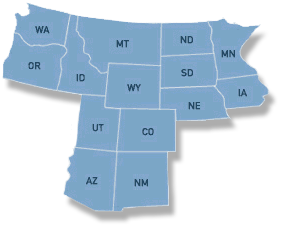
Qwest's service area

Qwest has a lot going against it.  Unlike its bigger cousin Baby Bells, mostly absorbed into the AT&T or Verizon Continuum, Qwest is saddled with a service area that often spells r-u-r-a-l.  The company got the short end of the stick when the Bell System was carved up in the mid-1980s, stuck with Arizona, Colorado, Idaho, Iowa, Minnesota, Montana, Nebraska, New Mexico, North Dakota, Oregon, South Dakota, Utah, Washington, and Wyoming.  That’s a service territory shaped like a “T” which spells “trouble.”  Outside of a few major cities like Phoenix, Denver, Minneapolis-St. Paul, Salt Lake City, and Seattle, the rest of Qwest Country is desert, ranch land, mountain ranges, farms, prairies, and some nice lakes and rivers.

While a great place to vacation, these spectacular landscapes are not what investors are looking for when considering what to do with a 100-year old copper wire telephone system.  Qwest never even managed to launch its own cell phone service, instead relying on reselling Verizon Wireless to interested customers.  Its foray into the cable TV business also flopped, and the company currently resells satellite TV service to customers.

The company was plagued with insider trading and other allegations of financial irregularities in the mid-2000s, and since 2005 has been rumored to be on the sales block.

The asking price keeps dropping, along with the company’s value.  Originally worth $45 billion dollars ten years ago, Qwest can’t attract buyers even at half the price.

Customers aren’t very impressed either.  In Lake County, Minnesota, the local newspaper printed a damning editorial Thursday accusing the company of being a villainous, untrustworthy liar after phone service went out for virtually the entire North Shore of Minnesota:

We’d like to have a villain in this story, but, so far, that character sketch is thin. Qwest is fitting the bill if you like obsequiousness on par with cigarette or multinational food companies.

Qwest touted the promise of high-tech 911 service, fast internet, a better connected North Shore. They’ve turned out to be good at promises but lousy on delivery when things go wrong.

The Lake County News-Chronicle excoriated Qwest in an editorial published last Thursday

Most people heard “All circuits are busy, please try your call again later” on their phones Tuesday. For more than a week, we’ve heard the same line from Qwest regarding what happened in Duluth and why there wasn’t a reroute up the Shore.

You can’t help becoming wary about how our technological infrastructure works after such failure Tuesday. Everyone was surprised to know that when fiber optic goes, so do cell phones. It was even more surprising to know that there was no detour for the line up the Shore. But that wasn’t technological indifference. That was a trust we put in Qwest.

[…]

It’s different when Qwest lies about why its line failed and we find out its assurance about a reroute was pure fantasy. There ends any trust or understanding to calmly wait out its line failures.

With Qwest, everything has been below the ground, literally and figuratively. It’s answer that repairing fiber optic is “difficult,” the empty promise of rerouting, and the lack of explanation of the real cause of the damage in Duluth, are all unacceptable.

It’s as if Qwest prefers a cloak of mystery about its technology and we should be happy to have it at all. That’s a poisoned relationship to have with fiber optic as it becomes ubiquitous in our lives.

Qwest, tell us what really happened under that street in Duluth, and, if it was the result of your own negligence, own up to it. Tell us why you told customers, including agencies responsible for public safety, you had a plan, a reroute in the case of a line break, but really didn’t.

And tell us why we should trust you again with this vital link to safety, health, and business along the North Shore.

While plots can be richer for their villains, we’d rather not have one in this story.

Ouch.

The Wall Street Mergers & Acquisition-vultures are circling over the company again, raising the stakes that Qwest is once again the common-sense choice for a takeover.  But even they realize nobody may want the entire company, saddled with rural states’ phone customers over an aging network that will cost billions to upgrade.  So the next best thing is to carve up the profitable bits and sell those to the highest bidder.  Companies like AT&T, Verizon, and BellSouth could do well serving the major population centers in Qwest’s territory, leaving folks in states like Wyoming, Idaho, Montana and the Dakotas to their choice of likely “rural telco” suitors: CenturyLink, Frontier Communications, or Windstream.  Qwest’s valued fiber optic network could fetch a billion or more on the open market.  Their data centers could manage another cool billion if sold.

As Qwest’s revenue continues to decline, the company is likely going to continue cutting costs, keeping themselves as attractive as possible to would-be suitors.

“It gets harder and harder to keep cutting costs,” Donna Jaegers, an analyst with D.A. Davidson & Co. told the Denver Post.  “As (former WorldCom chief executive) Bernie Ebbers used to say, ‘There’s no more lemon juice left in that lemon.’ ”

Just ask customers on the North Shore of Minnesota, as they sip Qwest’s bitter lemonade.

AT&T’s Custom-Written Kansas Deregulation Bill Causes Scandal – Secret Negotiations Alleged

Phillip Dampier February 4, 2010 AT&T, Competition, Public Policy & Gov't, Rural Broadband 4 Comments

A Kansas utility board overseeing telecommunications regulation in the state is embroiled in scandal after accusations surfaced that AT&T and the Kansas Corporation Commission, the state’s utility board, met secretly to negotiate a custom-written deregulation bill favoring the telephone company.  Senate Bill 384 would deregulate rural telephone exchanges, increase telephone rates for low income families and seniors, allow AT&T to discontinue printing phone directories, and eliminate price caps on basic residential phone service.

Rarrick

Hearings over the proposed legislation exploded when Steve Rarrick, an attorney with the consumer protection Citizens’ Utility Ratepayer Board (CURB), told committee members documents requested by the Board were withheld.  Rarrick also revealed extensive private discussions between AT&T and the KCC to work out the deregulation regulation — negotiations that were kept secret.

“It is disturbing that the KCC believes it is appropriate to meet and communicate in secret with a regulated utility about deregulation legislation the regulated utility is sponsoring,” Rarrick told the Topeka Capital-Journal.

Last week, a KCC board member with direct ties to AT&T resigned from the Commission “for personal reasons.”  In addition to his involvement in AT&T’s regulatory reform agenda, KCC commissioner Michael Moffet of Lawrence had the ultimate conflict of interest — an ongoing personal relationship with a female staff member at the Commission.  Staff members prepare recommendations for the Commission regarding matters coming before it.

Moffet worked for politically-connected Public Strategies, a notorious Texas-based astroturfer and corporate lobbying group hired by SBC Communications (now AT&T) back in 2004 when he was appointed to the Commission by then-governor Kathleen Sebelius.  He was reappointed for a second term by current governor Mark Parkinson, but a hold was placed on his Senate confirmation of a second term.  His biography (since deleted from the Kansas government website – linked to Google cached version) softens his former employer considerably, calling Public Strategies “a Texas public affairs consulting company.”

Moffet

Senate Bill 384 is just the latest in a series of AT&T-sponsored initiatives towards deregulating its operations.  The bill’s provisions would gut decades of regulations covering everything from rates to mandates for Internet access.

AT&T Kansas president Dan Jacobsen defended the 15-page bill, claiming it comes in response to increased competition and a 35 percent loss in landlines.  Jacobsen said AT&T cannot competitively respond tied down with years of “obsolete” regulations.  Jacobsen also proposed expanding what constitutes “effective competition,” a provision that can reduce regulatory oversight once achieved.

Jacobsen claims rural residents will receive the same prices that competition generates in urban areas. Unfortunately for rural residents, urban customers traditionally pay higher phone bills because of extended local calling areas.  Most rural residents pay considerably less because their local calling area is generally much smaller, sometimes only covering a handful of nearby communities.

Jacobsen

Jacobsen also said customers will not be forced into bundled service packages, promising that customers seeking a traditional voice landline will always be able to obtain one from AT&T.

The disposition of Senate Bill 384 is itself creating a number of questions.  Despite clear recommendations in an internal KCC staff report recommending new price caps on the state’s phone companies, the Commission took the direct opposite position, seeming to advocate AT&T’s legislation which would dramatically deregulate providers.  The KCC staff found that competition was more rhetoric than reality, and the lack of it has kept Kansans paying higher phone bills in areas that were previously deemed “competitive” and subject to fewer regulations.

Rarrick warned that supporting AT&T’s custom-written bill would result in much higher bills for state residents.  Rarrick pointed to a similar experience in California, where AT&T pushed through a regulatory scheme that tied prices to an inflation index.  The result was massive rate hikes for residential customers — 23 percent last year and another 22 percent this year.  Since 2006, deregulation has cost Californians plenty — a 226 percent increase in the price of directory assistance calls, 85 percent for call waiting and 345 percent to keep your number unlisted in the phone directory.

“Do we want to move with complete price deregulation when you’re seeing some red flags?” he said.

The Capital-Journal reports consumer groups are also opposed to AT&T’s proposal.

“AARP opposes Senate Bill 384 because it will allow telephone companies to raise rates for service for which there is little competition and eliminate necessary consumer protections and fail to provide a positive benefit for consumers,” said Dave Wilson, state president of AARP Kansas.

This isn’t the first time Moffet has openly supported AT&T’s agenda.

At a 2007 hearing about increasing consumer protections and lowering rates for consumers, Moffet turned the hearing upside down when he asked witnesses to testify about the implications of eliminating state regulatory powers over AT&T.  That’s an AT&T legislative favorite – the elimination of state telecommunications regulations in favor of federal regulations and guidelines widely seen as lacking consumer protections and oversight powers.

The proposal would have made it easier for AT&T to cut off past due customers and raise customer rates.

Back then, Rarrick told the Joplin Globe, “If they go through with that, consumers are going to lose protection they’ve had for 24 years. If I were a telephone company and didn’t want to comply with state rules, I’d be thrilled.”

Our Take — An Editorial

Dampier

This latest in a series of controversies continues to shine a spotlight on the perennial problem of the legislative-private sector revolving door.  It should come as little surprise that a paid lobbyist representing the interests of AT&T/SBC would appear amenable to his former employer’s positions on legislative matters coming up for Commission review.  That then-governor Sibelius would appoint such a industry-connected person to the KCC is political malpractice against her fellow Kansans.  It will also come as no surprise if Moffet finds future employment at AT&T or another telecommunications provider or affiliated consultants group.

Consumers must insist those appointed to oversee the state’s regulated businesses not come from those businesses (or their lobbyists or consultants), or at the very least must be required to recuse themselves from anything involving their former employer.  Also demanding rules that forbid an exiting Commissioner from simply flipping hats to become a lobbyist or paid employee at a business he or she formerly oversaw would dramatically slow the spinning of that revolving door.

An intimate relationship with a staff member and Commissioner is extremely serious, and represents more bad judgment.

As for AT&T’s proposed legislation, it belongs in the shredder.  Even disregarding the controversy coming from the upheaval on the Commission, and the accusations of secret negotiations and withheld documents, ordinary consumers can readily identify sections of the bill that will harm their interests and finances.  Here is just a sampling:

  • A provision to strip price caps from any telephone company exchange serving 75,000 or more customers;
  • A provision that deregulates phone companies exposed to at least two “competitors,” which in this case are defined as one mobile phone company and one unaffiliated telecommunications provider, regardless of whether it offers equivalent levels of service or even reaches your home, such as the case with cable operators who refuse to wire outlying areas, or cell phone companies that deliver no bars to your neighborhood.
  • Permission to jack rural customer rates up $1 a month each year starting back in 1997 (an illustration of how long AT&T has been trying to get away with this) until such time as rates are equalized with the average price charged rural customers across Kansas.  If you’re in a high priced service area, there is no provision to roll back your rates, however.  But if your phone company charges considerably less, it can now charge considerably more until it achieves parity with a statewide average cost for rural phone service.
  • AT&T’s idea of a give-back to consumers is a provision requiring free touch tone service for residential customers, like you didn’t have that already in nearly every area.
  • Any bundled service packages are automatically price-deregulated;
  • The California Trick: “On and after July 1, 2008, the local exchange carrier shall be authorized to adjust such rates without commission approval by not more than the percentage increase in the consumer price index for all urban consumers, as officially reported by the bureau of labor statistics of the United States Department of Labor, or its successor index.”
  • The definition of what constitutes a “broadband network” in the eyes of AT&T is any connection that exceeds 200kbps.
  • No audit is permitted of the company’s requested initial rates, to determine whether that initial pricing is fair and reasonable.
  • Starting in 2012, phone companies no longer have to submit pricing and service information (a tariff) to the KCC for services it sells to residential or business customers.  The KCC would no longer be able to easily red flag problematic pricing.
  • Beginning July 1st, phone companies can opt out of state regulations as a “local exchange carrier” and instead receive far easier regulatory treatment under “telecommunications carrier” provisions.
  • AT&T is relieved of being the “carrier of last resort,” a provision that guarantees every American access to basic telephone service.  When delivered unprofitably, the Universal Service Fund kicks in a payment to ensure phone companies don’t lose money on very rural, difficult-to-reach customers.  Although AT&T claims it will continue to offer voice service to every customer in “its service area,” what defines a service area could eventually exclude exceptionally rural customers.  AT&T also reserves the right to provide voice service “using any technology” which could convert unprofitable wired customers into being served by a basic wireless radio-based system, which could indefinitely keep those customers from receiving high quality phone service, much less obtaining any broadband service.
  • Relieve AT&T of the state requirement to provide at least basic, reasonably-priced “dial-up” Internet access.
  • AT&T can quit publishing phone directories any time it chooses.

AT&T couldn’t have done better writing Senate Bill 384 themselves.  Oh wait… they did!

Since utility boards in some states seem to have an inherent inability to read and measure the impact of these company-friendly proposals that do absolutely nothing for consumers but enrich providers and free them from pesky oversight and regulatory requirements, consumers must remain forever vigilant and suspicious of these industry-sponsored giveaways, letting their elected state representatives know they recognize funny business when they see it.  If an ordinary consumer can bullet point more than a dozen bad ideas after less than an hour skimming the bill, why can’t those who purport to serve our interests do likewise?

Approve Verizon-Frontier Deal Because Frontier Can’t Do Any Worse for West Virginia?

We’ve heavily covered the proposed sale of Verizon landline service to Frontier Communications since the deal was announced last spring.  This should not come as a big surprise, considering Frontier Communications’ decision to insert a 5GB monthly usage limit in their Acceptable Use Policy in the summer of 2008 was what instigated the launch of Stop the Cap! in the first place.  Frontier’s decision was boneheaded at best in a city like Rochester with a very aggressive cable competitor only too willing to bash Frontier for implementing it if they thought it would win more customers.

But of course Frontier Communications’ Rochester operation is an anomaly for ‘rural America’s phone company.’  For the majority of rural customers, it’s far easier to slap customers around with a usage cap and 1-3Mbps DSL service when those customers have few, if any practical alternatives.  Unfortunately, there is real money to be made from their business plan serving frequently non-competitive communities with incrementally-upgraded “just enough” broadband service with unfriendly terms and conditions attached.

In several of the 14 states impacted by the proposed sale, the relatively small number of customers involved made it easy for regulators to quickly approve the proposal with few conditions attached. The deal flew under the radar and got scant press in most of these states.  Washington, Ohio, and West Virginia are another matter.  Regulators are taking a closer look at the deal in all three states where most of the controversy is taking place.  The deal is most contentious in West Virginia, where Verizon’s exit threatens to turn most of the state’s landline business over to Frontier Communications.

Stop the Cap! has been reviewing the public comments left on more than a dozen news sites, forums, and printed letters to the editor regarding the deal.  We’ve seen comments obviously coming from Frontier employees, union members, politicians, business leaders, and competitors.  But the vast majority come from ordinary consumers who have concerns about what the deal will do to their telephone and broadband service.  Most of the comments from consumers that embrace the sale don’t do so because they are fans of Frontier.  They simply loathe Verizon and want an alternative.  Boiled down, the consensus among those in favor of Frontier taking over is “let them try… they can’t do any worse than Verizon.”

[flv]http://www.phillipdampier.com/video/WCHS Charleston PSC Phone Hearing 1-12-2010.flv[/flv]

WCHS-TV in Charleston covers West Virginia’s Public Service Commission hearings reviewing the proposed deal.  Frontier employees arrived in Charleston to lobby for the sale. (1 minute)

Desperate for Broadband

There are a lot of West Virginians who still have no broadband options.  Frontier claims Verizon provides only 60 percent of their customers with a broadband option — DSL service that tops out at 7Mpbs, if you live in an urban area.  Those that don’t have often waited years for Verizon to extend DSL service into their communities or neighborhoods.  It’s a problem common in mountainous, often rural states like West Virginia where infrastructure costs can be prohibitive.  Customers believe that Frontier Communications will tolerate a lower return on their investment providing DSL service to those customers Verizon ignored.

Promising to expand broadband service in rural, unserved areas is a common sales point for all of the prior Verizon sell-offs.  Hawaiian Telcom promised improved broadband service and speed.  Fairpoint promised to expand DSL availability to 75 percent of all access lines within 18 months of the sale, 85 percent within two years and 95 percent within five years.  Frontier Communications promises to expand broadband service as well, claiming they already provide 92 percent of their existing West Virginia customers with the option.  Of course, Hawaiian Telcom and FairPoint both reneged on their commitments before going bankrupt.  Frontier Communications hasn’t yet been held to any specific commitment or timeline in West Virginia as part of their proposed takeover of service.

Consumer Reports rated TV, phone, and Internet providers, including Verizon and Frontier, in its February 2010 issue

To those suffering with dial-up or satellite fraudband, -any- broadband option seems like a miracle, even if it turns out to be 1-3Mbps DSL service with a 5GB allowance.  But as those kinds of anemic speeds arrive, cutting edge multimedia-rich broadband applications will become increasingly mainstream and leave these customers behind, again.  With a 5GB usage limit, it wouldn’t matter anyway, because customers will never be able to take advantage of services that will rapidly blow through those limits.  Make no mistake, a user’s broadband experience at 1.5Mbps with a 5GB allowance is going to be considerably different than a customer enjoying online multimedia from a cable provider or the next generation broadband service from Verizon FiOS or AT&T’s U-verse.  Think e-mail and basic web browsing, and that’s about all.

What kind of broadband experience does Frontier Communications bring?  This month, Consumer Reports rated Frontier dead last among DSL providers that own and operate their own broadband networks (subscription required).  The magazine rated 27 regional fiber, cable, and satellite providers and Frontier’s DSL ended up #19 on the list, the lowest rating of any DSL provider selling service on its own network.  Only Earthlink, which usually buys access on other providers’ networks came in lower among DSL providers.  Verizon actually scored higher than Frontier.

Frontier’s DSL service merited a 67 out of 100 score, rating only fair on value, speed, reliability, and customer support, based on 56,080 Consumer Reports subscribers who have a home Internet account.

Frontier’s phone service rated even lower, second to last in the survey.  Frontier was rated fair on value, reliability and call quality.  Only Mediacom did worse.  Verizon scored much better on reliability.  The magazine’s survey of phone companies was based on 37,484 respondents with phone service and was completed in the spring of 2009.

The consumer magazine did not recommend DSL for broadband access, suggesting consumers would do better with fiber optic broadband first, and cable modem service second.

Union Bashing – The enemy of my enemy is my friend

A significant minority of comments were focused entirely on union bashing, completely ignoring the specifics of the Frontier-Verizon sale.  All these people knew was that if the Communications Workers of America or other union was involved, they were the “real problem,” accusing union bosses of opposing the deal until they were paid off.

Nonsense.

Reality trumps anti-union talking points.  Consumers can review for themselves who correctly predicted the outcome of the last two deals of the recent past.  They were the CWA and the International Brotherhood of Electrical Workers, who accurately identified the service problems, the network transition problems, the debt load that prevented service expansion and upgrades, and the eventual bankruptcies experienced at Hawaiian Telcom and FairPoint Communications.  It turns out that asking front line employees who work in the office and out in the field maintaining the network are well positioned to give an honest assessment of these transactions that others seek to candy coat to get the deal done.

[flv]http://www.phillipdampier.com/video/WSAZ Charleston Frontier Defends Deal 1-12-2010.flv[/flv]

WSAZ-TV in Charleston delivered this decidedly pro-Frontier news report on the company’s efforts to counter opposition to the proposed sale. (3 minutes)

The Opposition

A large number of comments from those who oppose the deal believe they will actually be far worse off with Frontier.  Most relate the experiences of themselves or their friends and family who live in Frontier service areas, and they’re unhappy with Frontier’s poor customer service, reliability, and slow speed DSL.  Many were also unhappy with Frontier’s automatically-renewing contracts committing customers to stay with the company or face a steep early cancellation penalty.  Many more lament the lack of a future with Verizon fiber optics.

David Swanson, who blogs from his home in Golden Valley, Arizona just dumped Frontier for his local cable provider – Golden Valley Cable & Communications.  He says he was overpaying for Frontier’s DSL and phone package.  Together, after fees and taxes, $90 a month went to Frontier and $73 a month went to DirecTV for television service.  With his new cable bundle, he pays $100 a month for everything.  He uses Boost mobile for his phone, and has no need for a landline.

Reviews on DSL Reports aren’t exactly positive about Frontier either.

One Rochester customer isn’t happy with the “spotty service” he’s experienced on Frontier’s aging copper wire infrastructure, noting they don’t seem to be in any hurry to upgrade facilities in western New York.  He’s stuck with unreliable DSL service far slower than what Time Warner Cable’s Road Runner service can provide. Another customer in Lowville, New York admits he has to live with Frontier’s slow speed DSL because there is no other provider available.  In Kingman, Arizona one customer rated the company’s DSL service “slightly better than nothing.”

Even customers who had had good things to say about Frontier in forums often acknowledge their service simply isn’t a good value when considering the high cost charged for the slow speed received.

What Can Be Done?

At this point, it is critical impacted customers contact their state utility commission and state representatives and tell them this deal does not work for you.  It is true Verizon wants out of these service areas, and should they win the right to withdraw someone will have to assume control of landline operations in these communities.  But the terms and conditions for the company seeking to provide service should favor customers and not the Wall Street dealmakers.  Strict financial pre-conditions should be in place to guarantee the buyer is up to the task of providing service and upgrades.  Historically, it’s been far too easy to simply renege on the deal with a quick trip to Bankruptcy Court to shed the debt these deals pile on, and be rid of the service commitments that were part of the approval process.

A company that believes they’ll earn plenty from this deal should be spending plenty to provide quality broadband service starting at 10Mbps, not the 1-3Mbps service Frontier provides most of its rural service areas.  What chance do communities in West Virginia have to stay competitive in a digital economy that requires faster broadband access without the ridiculously low usage limits Frontier includes in their customer agreements?  In fact, usage limits and other Internet Overcharging schemes should be explicitly banned as part of any sales agreement.

Holding Verizon responsible for the outcome of deals that benefit them and their shareholders while sticking customers with a bankrupt provider must be considered.  An important component of past Verizon’s landline-dumping-deals involves the Reverse Morris Trust — delivering a tax-free transaction for Verizon and piles of debt for the buyer. That puts all the risk on ratepayers, lower level employees who are among the first to go when cost-cutting begins, and head-scratching regulators wondering where it all went wrong.  The only ones not doing any hand-wringing are Verizon’s accountants and the executive management of both companies who conjure up such deals.  That’s because they are rarely held accountable, and often win retention bonuses even while a company is mired in bankruptcy.

Regulators should insist Verizon play a fundamental role in insuring that customers are protected even after the deal closes, honoring commitments and financing operations should the buyer fail soon after the sale is complete.  Under these conditions, customers are protected and Verizon might think twice about structuring a deal that loads the buyer down in insurmountable debt.

“This deal is driven by greed — and we can learn from Northern New England’s and Hawaii’s experience to make sure it does not come to pass here or in the other 13 states,” said CWA’s District Two Vice-President Ron Collins, who has been leading the campaign in West Virginia.

Rebutting Bray Cary’s Cheerleading For the Verizon-Frontier Deal in West Virginia

Phillip "Doesn't Worship Wall Street" Dampier

Bray Cary, president and CEO of a group of West Virginia television stations enjoying advertising revenue from Frontier Communications, was back on his Decision Makers program to allow an opposing viewpoint to the puff piece interview he held earlier with Frontier’s Ken Arndt, Frontier’s Southeast region chief.  This time, he invited Ron Collins, vice-president of the Communications Workers of America to give the CWA side.  Cary’s Tea-‘N-Cookies Breakfast Club With Ken this was not.  Cary decided to play hardball with Collins, leaving no viewer in doubt where Cary stood on the question of Frontier’s proposed purchase of West Virginia’s phone lines from Verizon.

Unfortunately, Collins was not completely prepared to rebut Cary’s pro-Wall Street, pro-deal propaganda and looked ill at ease at times during the interview.  We’re not, and Cary’s “facts” deserve some investigation.  After all, how hard should it be to rebut a guy who believes Wall Street and the banks have all the right answers for West Virginians’ phone service?

  • Video No Longer Available.

Right from the outset, Cary wants to play “devil’s advocate” with Collins, asking why in the world the CWA is opposed to this deal.  That was a major departure from his cheerleading session with Arndt.

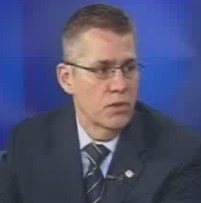
Bray Cary, Host of Decision Makers

“I’ve looked at this […] their stock has been extremely stable.  Wall Street appears to be signaling their financial viability is okay.  Why is the stock market not reacting negatively?  If it’s good for stockholders, how can it be bad for their financial stability.  Stockholders want financial stability,” Cary said in a series of statements about the deal, including mentioning a Moody’s report on the deal.

The Moody’s report Cary talks about is for shareholders who will reap the rewards or suffer the losses based on the success or failure of the deal.  Moody doesn’t rate the deal’s impact on consumers who have to live with the results.  What’s good for Wall Street is not necessarily what’s best for customers.

“What you don’t have is anyone in the financial community suggesting this is a bad financial deal,” Cary said December 13th.

Wrong.  Almost a week earlier, on December 7th, D.A. Davidson, a respected Wall Street analyst said the opposite.  In a story published in Barron’s: “Frontier Communications’ Shares Not Wired for Success,” the analyst firm argued the regional telecom’s acquisition of Verizon’s rural lines will be… wait for it… bad for the stock.

Cary’s claim that Wall Street is concerned with the long term viability of companies belies the growing reality that much of the investment culture in America has a long term obsession with short term results.  Your company is only as good as your last quarter’s financial earnings statement, and several bad ones in a row are usually enough to bring a recommendation to dump shares.  Frontier has kept its stock value stable largely as a result of their steady dividend payment.  Collins claims Frontier has gone beyond reason, paying 125% of earnings in dividends.  That may make the stock a popular choice for income investors, but is also eerily familiar.

FairPoint Communications also enjoyed a healthy stock price because of its high dividend payout.  Wall Street only got concerned when they thought that deal might not go through.  Morgan Stanley issued a report in 2007 suggesting the deal between FairPoint and Verizon to take control of landline customers in Vermont, New Hampshire, and Maine, was itself helping to prop up the stock’s value.  We saw how far that got FairPoint when the company declared bankruptcy a few months ago.

Ron Collins, CWA's vice president

Indeed, smaller independent phone companies commonly use high dividends to remain attractive to investors and stay viable in a tough market.  Windstream is another such company and even CNBC’s Jim Cramer gave due diligence to the fact high dividends and stock value by themselves don’t necessarily predict the company’s long term success or failure.

Make no mistake, Frontier has sold this deal to investors based on dividend payouts, claimed cost savings, and a safe bet that any broadband in rural America will earn them increased revenue, especially where consumers have no other place to go for service.

Frontier will take on massive additional debt to finance the deal, but on paper it actually appears to reduce their debt ratio.  That’s because when you add millions of new customers, the debt doesn’t look so big next to the increased revenue those additional customers will bring, assuming they stay with Frontier.  Should Frontier’s performance underwhelm customers, they’ll drop service if they can.  If mobile phone networks do a better job of reaching these rural customers, many will drop landline service anyway.  When wireless broadband service becomes a more realistic option, customers might toss Frontier’s slow speed DSL overboard.

AT&T and Verizon have read the writing on the wall — an ongoing decline in landline service and the eventual death of the kind of service Frontier is providing its customers on its legacy network.  Would you be better off with a company that recognizes the truth about the future of wired basic phone service, or the one that wants to buy up obsolete networks and hang on until the last customer leaves?

Cary’s concern starts and stops with shareholder value, not the individual long term needs of consumers across West Virginia.

“All of the bankers and all of Wall Street are saying financially this is a good deal financially for Frontier,” Cary argued.

“Good for Wall Street, bad for West Virginia,” Collins replied.

“Well, see I disagree… that has been a myth put out there, and the reason we don’t have any jobs in this state is companies don’t want to come here just because of that mentality.  People need to make money.  You look at where companies are flourishing, the workers flourish when they do,” Cary said.

Really.  Then why are several of these telecommunications companies awash in revenue also continuing to reduce their workforce in their relentless effort to obtain “cost savings.”  Someone is making money, just not the average employee.  Every state has pro-business acolytes claiming businesses don’t want to come to their state because of regulation and a hostile business climate, even those with the fewest regulations, lowest taxes, and little protection for employees and consumers.

Cary does make one valid point: Verizon wants out of West Virginia and refuses to invest a dime in the state as it looks for a quick exit.  Instead the company has diverted resources from serving smaller states’ phone service needs into its larger city FiOS fiber to the home system where it believes it can reap more revenue.  Whether that disinvestment should be permitted in the first place is a question that needs to be asked.

Verizon is a regulated utility that is required to meet certain performance standards, and the company’s long history of operations under that framework, under which it profited handsomely, does require consideration.  But the state can also provide additional incentives to make it more attractive for Verizon to commit more resources in the state, ranging from tax credits, public-private investment, rewards for performance and service improvements, etc.  It can also find someone else to provide the service, or let local communities band together into cooperatives to run their own networks, should customers find that could deliver better service.

At the very minimum, Frontier should he held to strict conditions that require a fiscally responsible transaction for ratepayers, not just for shareholders and management.  Verizon’s workforce, already cut to the bone, should not bear the brunt of “cost savings” either, both now and into the future.  If Frontier wants to deliver broadband, they should commit to offering 21st century speed (not the 1-3Mbps service typical for their smaller service areas) without their draconian 5GB usage limit in their Acceptable Use Policy.

Cary doesn’t concern himself with those kinds of details, but consumers and small businesses in his state sure do.

Cary wants more jobs and more earnings for West Virginia.  In the changing digital economy, high speed broadband isn’t an option — it’s a necessity.  Verizon has a proven track record of being able to provide 21st century broadband — Frontier does not (sorry, 1-3Mbps DSL is more 1999, not 2010).

Cary makes an astonishing statement in the third segment of the interview which makes me question his ability to grasp the reality-based community most Americans live in today.

“I have great faith in the banking system in America, in Wall Street, to evaluate these things.”

That stunned Collins, who asked, “even after the 2008 crash?”

Cary seems to think “everything is back to normal.”  Unfortunately, after the bailouts and big lobbying dollars being spent in Washington to preserve the status quo as much as possible, everything is back to normal… for Wall Street and the banks.  The rest of the country, including West Virginia, is another matter.

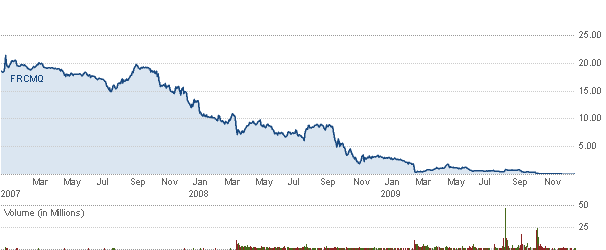
FairPoint's Stock Price from 2007, when it announced the deal with Verizon, to late 2009 when the company declared bankruptcy. By late 2008/early 2009, what seemed like a great deal for investors was apparently not, as the panicked rushed for the exits.

I’ll put my trust in the wisdom of West Virginians who want good service and reasonable prices.  If Cary wants to read from the Good Book of the “paragons of virtue” like AIG, Bear-Stearns and Goldman Sachs, let him sell his TV stations to help finance the bailouts.  Remember that when we went through this before with Hawaii Telecom and FairPoint Communications, the cheerleading session on Wall Street lasted only as long as the quarterly balance sheets looked good.  At the first sign of trouble, they bailed on the stock and both companies ended up in bankruptcy.

For them, it represented just another roll of the dice in the giant financial casino we call Wall Street.

For the rural residents of states like West Virginia who ultimately have to live with the results, this is their phone and broadband service we are talking about.  Before all bets are placed and the dice are thrown, isn’t it worth considering them?

Search This Site:

Contributions:

Recent Comments:

Your Account:

Stop the Cap!