Home » Rural Broadband » Recent Articles:

North Carolina Call to Action! The Municipal Broadband Moratorium Heads to the House

Phillip Dampier June 16, 2010 Community Networks, Competition, Editorial & Site News, Public Policy & Gov't, Rural Broadband Comments Off on North Carolina Call to Action! The Municipal Broadband Moratorium Heads to the House

North Carolina: the fight against S.1209, the municipal broadband moratorium bill that stops communities from building their own broadband alternatives now moves to the House Ways and Means/Broadband Connectivity Committee.

All 15 members are listed below.  You need to call and e-mail them and let them know you vehemently oppose this anti-consumer legislation as it stands.  Let them know you want that one year moratorium out of this bill at all costs.  Better yet, considering the study group mandated by the bill doesn’t include any consumers, just throw the whole thing out.  The only study that needs to be done is why North Carolina is near the bottom of the 50 states in broadband rankings.  Municipal providers can change that and revitalize local economies, create new high-tech jobs and help advance health care and education.  You can accomplish none of these things with a one-year roadblock on broadband progress.

Some of our allies on this legislation have been forced to mute their opposition, trying to avoid an even worse bill that could make a municipal broadband moratorium permanent.  That means North Carolina residents have to be on the front lines of opposition more than ever.

Let legislators know you understand some groups representing towns and cities in the state may have stopped fighting against the bill, but that doesn’t mean they endorse it.  More importantly, as a voter, you oppose the bill.  If you are personally served by one of these 15 representatives, let them know their vote is being carefully watched.  Will they stand with the people of North Carolina who want better broadband and believe local government should be able to provide it, or do they stand with Time Warner Cable, AT&T and other telecom companies seeking a one year moratorium that guarantees another year of high prices, inadequate broadband, and no alternatives for towns and cities that want better options.

As always, be polite, persuasive, and persistent!  Phone calls work wonders, but at least send an e-mail.  Doing both is even better.  You can click the e-mail addresses in bold to launch your e-mail software.  Please do not carbon copy legislators.  Send an individually personalized e-mail to the representative(s) of your choice.

House Ways and Means/Broadband Connectivity Committee

County Name Telephone # E-Mail Party
Mecklenburg Kelly Alexander 919-733-5778 [email protected] Democrat
Nash, Hallifax Angela R. Bryant 919-733-5878 [email protected] Democrat
Rowan Lorene Coates 919-733-5784 [email protected] Democrat
Orange, Caswell Bill Faison 919-715-3019 [email protected] Democrat
Burke, McDowell Mitch Gillespie 919-733-5862 [email protected] Republican
Mecklenburg Jim Gulley 919-733-5800 [email protected] Republican
Haywood, Jackson, Macon, Swain R. Phillip Haire 919-715-3005 [email protected] Democrat
Brunswick, Columbus Dewey L. Hill 919-733-5830 [email protected] Democrat
Catawba Mark K. Hilton 919-733-5988 [email protected] Republican
Franklin, Hallifax, Nash John May 919-733-5860 [email protected] Democrat
Allegheny, Surry Sarah Stevens 919-715-1883 [email protected] Republican
Mecklenburg Thom Tillis 919-733-5828 [email protected] Republican
Edgecomb, Wilson Joe P. Tolson 919-715-3024 [email protected] Democrat
Durham, Person W. A. (Winkie) Wilkins 919-715-0850 [email protected] Democrat

Wisconsin Wireless ISP Bans Online Video, Imposing 5 GB Monthly Usage Limit With Up to $90 Overlimit Fee

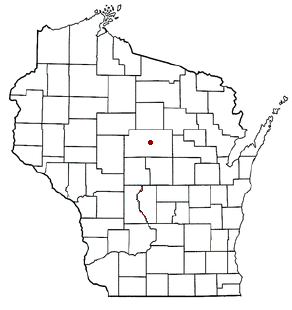
AirRunner Wireless serves a small portion of central Wisconsin from its headquarters in Marathon.

A wireless Internet provider serving central Wisconsin has banned online video streaming from its wireless Internet service, telling its customers WISPs are not designed for it.  To drive home the point, the service is jumping on the bandwagon of AT&T’s mobile network 2 GB usage limit with some stringent limits of its own.

Bill Flood, owner of AirRunner Networks LLC dispatched e-mail to every one of its central Wisconsin customers informing them some are violating the company’s use policies by streaming online video on its service, which it cannot accommodate.  Flood blamed companies like Netflix for forcing him to carry the costs of transporting movies and TV shows to his customers:

Hello! Over the past month we have been seeing an increasing issue on the network during peak times. From our investigation we have determined these problems stem from customers who are streaming Netflix or other ‘instant movie or movie on demand’ type services.

These types of products should not be used on the network for these reasons:

First, a wireless network uses access points, those by design do not handle continuous connections without affecting the other customers of that access point. Because the movie stays connected for a longer period of time, eventually other customers simply get less access and as a result see a severe network degradation.

Our Acceptable Use Policy over the years has grown as a result of new technology.

Not all new technology works well on every type of Internet platform. Although some customers have told me they have been using this type of service in the past, the increased usage spurred on by recent Netflix advertising, a CD for Wii devices and now by one of the satellite TV companies has brought this issue to the forefront.

These companies see the Internet as a means to save their resources and push the load onto the Internet.

Welcome to the Internet circa 2010.  The days of a voice declaring “You’ve got mail” from your AOL account are long gone.  Customers are demanding access to a much richer multimedia experience available online today.  That demand is beginning to regularly collide with the limitations some networks have to deliver the service.

To make sure his customers understand the implications of streaming video, Flood is also introducing one of the most punitive Internet Overcharging schemes we’ve yet to encounter, starting with a monthly usage limit of 5 GB accompanied by some vicious overlimit fees:

  • All non-business customers will be allotted 5 GB of total aggregate usage.
  • If the customer exceeds 5GB of total aggregate usage on any given monthly billing cycle, they will be assessed an additional $30.00 to cover their bandwidth use.
  • If any customer exceeds 10GB of total aggregate usage on any given monthly billing cycle, they will be assessed an additional $60.00 to cover their bandwidth use.
  • If any customer exceeds 15GB of total aggregate usage on any given monthly billing cycle, they will be assessed an additional $90.00 to cover their bandwidth use.
  • Although these additional charges seem excessive, we are not alone on making such changes as the rest of the ISP’s [Internet service providers as well as cellular providers] are also implementing similar programs on their networks to deal with network congestion issues caused by ‘on demand’ type products. The good news is, the typical Internet customer never exceeds 5GB of aggregate usage. Only a small percentage of our customers are involved in this ‘on demand streaming activity’. Here is what can be done by the typical customer while not exceeding the 5GB threshold: Our basic residential Internet packages will offer 5GB of usage — that’s the equivalent of 500,000 basic text e-mails, 2,500 photos, 40,000 web pages, over 300 hours of Online game time, 1,250 downloaded songs, or a mixture of the above! 1,000 megabyte (MB) = 1 gigabyte (GB) We will send out a notice to everyone again when we are ready to implement these changes.

Flood’s e-mail doesn’t tell the whole story to his customers, however.

First, his imposed overlimit fees are ludicrously high.  A customer using 16 GB for the month would face an overlimit penalty of $90.  Considering AirRunner’s pricing, that’s a potentially enormous bill:

AirRunner offers six rate plans for residential and small business:

  • $15.00 256K/256K, tiered access. New accounts only
  • The below programs require a contract.

  • $19.00 1.0 Mbps/768K, tiered access. New accounts only
  • $45.00 2Mbps/1Mbps, tiered access
  • $55.00 2Mbps/2Mbps, tiered access Bi-direction connection; useful for working from home.
  • $65.00 3Mbps/1Mbps, tiered access
  • $75.00 5Mbps/1Mbps, tiered access

Second, “the rest of the ISPs” are not in fact imposing similar programs.  AT&T just abandoned theirs for DSL customers in two cities.  Attempts to ration broadband access typically meets resistance from consumers, if not an outright revolt.  As soon as customers get a bill with a $90 overlimit penalty on it, they will revolt as well.

It is true that wireless providers do face bandwidth challenges, but that’s not always disclosed to customers until after they sign up for service.  In 2010, would you sign a two year contract for a broadband service that banned online video?  Of course, if Flood offers the only service in town, for all practical purposes he can dictate the terms of the service provided.  But many customers have long memories and when another provider does arrive, they’ll take their business elsewhere.

Therein lies a potential problem for Flood.  A considerable part of central Wisconsin has been served by Verizon North, one of the divisions Verizon has sold to Frontier Communications.  Verizon dramatically cut investment in Wisconsin broadband expansion as soon as it became apparent they were leaving.  Frontier Communications is betting its long-term survival on bringing at least 1-3 Mbps DSL service to areas just like central Wisconsin.  It’s a safe assumption at least some parts of Flood’s service area will be challenged by Frontier DSL within the next year.

At that point, perhaps Flood will adopt a less hostile attitude towards his own customers.  Some of those who departed didn’t appreciate Flood’s tone or actions and shared some of his hostile communications on the subject.  Taking an adversarial stance even with former, paying customers never works well.  Among the thoughts Flood has shared:

  • If you don’t like his caps, move to the city;
  • One customer was told his service was canceled because he just doesn’t get it — besides, Flood wrote, he can do whatever he wants;
  • Customers who are caught streaming are gone;
  • If you complain too much, watch out.

Third, Flood follows the discredited playbook of trying to convince customers a 5 GB usage limit for the Internet in 2010 is reasonable with generous-sounding e-mail and web page browsing allowances.  Flood himself exposes the real issue — customers want to watch YouTube, Netflix, and Hulu and his network can’t handle it.  Of course, his marketing materials never bother to mention any of this.  Only after customers sign up, many under a two-year contract, does the truth come out (underlined emphasis ours):

In the case of ‘streaming video/movies or on demand type products or services’ recent weeks shows exactly what happens when these types of products are used. Everyone who uses ‘on demand or streaming products or services’ also knows there is an alternative which does not have an affect on any other user. We suggest the alternative as the best solution. We would appreciate everyone’s cooperation in resolving this current issue. If you are streaming movies you are making everyone mad!! Someday you may want to use the Internet and your neighbor will be streaming, then you won’t work. Wireless Internet was not designed to watch TV or movies.

If you are a ‘on demand user’ you may want to look at other options in lieu of streaming movies over the Internet. A basic resolution movie is typically 700Mb of data. So 1000Mb is equal to 1GB. So roughly 3-6 on demand or streamed movies will draw and additional charge to your account. All paying customers have the right to access their Internet connection, however any customer cannot deny any other customer access as the result of their usage. When this occurs policy is made to correct such actions. We make every effort to provide the best service we can, sometimes new Internet based programs and products do not work well on this type of network, that is not the fault of AirRunner Networks LLC and we cannot guarantee that any type of program or product will work properly or as advertised.

At least Flood was finally honest about the implications of watching online video from a provider with a low monthly usage allowance.  Just watching 3-6 online movies blows right through it, even fewer if it’s an HD title.

Unfortunately for Flood and other WISPs with similar network constraints, the evolution of the Internet and its online resources will increasingly place pressure on many networks that were built for a 1990s-era Internet.  As advanced video game streaming technology, online movies and television, online file backup, and other high bandwidth innovations not yet envisioned become increasingly popular, companies like AirRunner will be forced to upgrade their network or add new applications to the ban list, eventually facing obsolescence if a better provider arrives in town.


North Carolina S.1209 Final Wrap-Up — Prepare for Stage Two of the Battle

Senator Queen worked hard to try and strip the one year moratorium out of Senator Hoyle's anti-consumer bill

With the League of Municipalities essentially cutting a deal to sit on a municipal broadband study group that includes no actual consumers, voting for big telecom’s favorite bill of the year became a no-brainer.  It was a real shame to see the voting results on S.1209, despite pleas from consumers and some of North Carolina’s most rural representatives demanding to keep the municipal broadband option open.  They understand reality — while a handful of politicians in Raleigh cash big corporate contribution checks from the cable and phone companies, those out in the rural real world live with the results — no broadband.

We don’t need a one year moratorium on municipal broadband.  If the state government wants to study the issue, so be it, but a one year suspension on municipal broadband is a stall technique that big telecom providers are celebrating across the state.

Residents across North Carolina owe Sen. Joe Sam Queen a special thank-you for leading the charge for better broadband for rural residents.  He offered an amendment that would let the study go forward, but stripped out the anti-consumer moratorium.

Mark Binker of the Greensboro News & Record explained what happened next:

During the debate Monday night, Sen. Joe Sam Queen, a Waynesville Democrat, offered an amendment to allow the study to go forward but remove the moratorium.

Sen. David Hoyle, a Dallas Democrat and the Rules Committee chairman, offered a substitute amendment that essentially altered the bill’s language a bit but kept the moratorium around. Hoyle is one of the bill’s primary architects.

“We do not need a moratorium on the expansion of broadband across North Carolina,” Queen said. “This will only pour cold water on a very innovative sector.”

Now for a word on substitute amendment: When a substitute amendment is offered and accepted, it has the effect of wiping out the first amendment, which then can’t be offered again during the debate. It’s a way of doing away with things that the majority really doesn’t want to vote on.

During the past five years, I’ve mostly seen it used in the Senate my Democratic leaders to do away with Republican amendments they view as noxious – typically politically charged measures that could be awkward votes for rank and file members. I can’t recall the last time I saw a Dem on Dem substitute amendment.

I don’t know what, if any, conclusion can be drawn other than Hoyle was going to make darned sure his bill went through as is. Vote for the final measure was 41-7.

When big telecom pays the way, Senator Hoyle knows their needs must be met at all costs, no matter that his transparent shilling for the industry steamrolls over his fellow Democrats.  Besides, with his retirement looming (we’ll be watching to see where he lands next), who cares if his constituents are upset?  Certainly not Hoyle.

Fifteen Senate members stood against Hoyle’s ridiculous moratorium and deserve some recognition as well:

Senator(s): Allran, Atwater, Boseman, Dickson, Dorsett, Foriest, Goss, Jones, Kinnaird, McKissick, Purcell, Queen, Shaw, Snow, and Vaughan

Courtesy of Mark Turner, here is the audio from the Senate floor debate over S.1209 and the arguments for and against a municipal broadband moratorium. (June 7, 2010) (30 minutes)
You must remain on this page to hear the clip, or you can download the clip and listen later.

Tomorrow, the fight in the House begins with a call to action to start flooding members of the House Ways and Means/Broadband Connectivity Committee with calls and e-mails.  In the short House session, there are plenty of opportunities for us to derail this anti-consumer gift to the state’s cable and phone companies.  I’ll have a contact list up tomorrow.

Goldman Sachs Downgrades Frontier Communications to Neutral — Eroding Revenues Cited

Phillip Dampier June 14, 2010 Data Caps, Frontier, Rural Broadband Comments Off on Goldman Sachs Downgrades Frontier Communications to Neutral — Eroding Revenues Cited

Goldman Sachs has reviewed the implications of Frontier Communications assuming control of millions of Verizon landline customers, and promptly downgraded their stock to a Neutral rating, telling investors the upcoming consolidation will hasten eroding revenues at Frontier.

“Consolidation of the underperforming acquired assets causes an immediate step-up in revenue erosion for FTR (-6.3% in 2010). In addition, the combined company’s initial EBITDA margins will be significantly below those of legacy FTR (pro forma of 48.0% in 2010, 470 bp below legacy FTR).”

Analysts added, “We expect longer term EBITDA margins of 50%-plus, driven by synergy realization (we forecast $450 mn/year by 2013), and moderating revenue declines, as FTR is able to bring a more localized focus to assets that were not a primary focus inside of a much larger Verizon entity. We forecast 2011/2012 FCF of $950 mn/$921 mn, as synergies and margin expansion only partially offset continued (but moderating) revenue erosion.”

In English, that means Frontier will benefit from its larger customer base in reducing expenses on a per-customer basis, and could become a big enough player to realize some benefits from rolling out services to a larger number of customers nationwide, but those benefits will be tempered by the ongoing loss of revenue as customers dump Frontier landlines for wireless and, where available, switch to a cable modem product to get better speeds and consistent service that Frontier DSL does not provide.  Losing that 5 GB monthly usage allowance won’t hurt either.

Frontier is betting a good deal of the company on expanding broadband service in its largely rural service areas, where many Americans are still stuck relying on dial-up or satellite fraudband, the service that promises a broadband experience but doesn’t come close to actually delivering one.

As long as Frontier doesn’t face competition in its markets, it can deliver 1-3 Mbps DSL service for up to $50 a month and bank those profits as a firewall against ongoing loss of landline revenue.  But if new players arrive, such as LTE wireless, WiMax, cable, or municipal fiber, Frontier’s business plan could go awry in a hurry.

Frontier also continues to pin its hopes on its enormous payout of dividends — sometimes exceeding 12 percent.  The stock is currently the best dividend payer in the S&P 500.  With dependable dividends and the ability to throw back free cash to investors, shareholders can’t ask for anything more.  In the first quarter alone, free cash flow amounted to $152 million and the company paid a dividend to shareholders representing 52 percent of that amount.  That’s $152 million Frontier won’t be spending to upgrade their service or have on hand to pay down debt.

For independent legacy landline providers like Frontier, reducing that dividend could spell disaster for the company’s stock price. Even investors understand this, which is why these kinds of cautionary notes are often attached to coverage about the company:

A cautionary note: telecoms companies with large fixed line exposure generally yield high dividends presently because investors do not believe their revenues and income levels are sustainable as people continue to substitute mobile phones for fixed lines.

Ontario County, NY: We Need Fiber So Badly, We Just Did It Ourselves

Ontario County, N.Y.

Ontario County, just south and east of Rochester, N.Y., is unleashing the power of fiber optics after private providers turned their noses up at the rapidly-growing Finger Lakes region.

“We just said we need this so badly, we just did it ourselves,” says Ed Hemminger, president and CEO of Axcess Ontario, a non-profit corporation created by the county government to run the $7.5 million dollar project.  Hemminger appeared on this afternoon’s edition of CNBC’s Power Lunch.

The 180-mile fiber optic network now two-thirds complete is expected to be finished by year’s end.  Hospitals and schools are already leasing capacity on the fiber ring.

Axcess Ontario doesn’t actually provide broadband service to businesses and consumers itself.  Instead it leases capacity to all-comers, inviting them to use the fiber ring to enhance their broadband infrastructure.  The company doesn’t provide residential service, for example, but it could enhance another provider’s ability to deliver service.  Right now, the county is contemplating a wireless Internet service for consumers, if they can find a provider.  Frontier Communications could be a likely contender, considering it already provides a Wi-Fi service in downtown Rochester and in portions of suburban towns like Brighton, Pittsford, and Greece.

Hemminger

Hemminger

Ontario County is one of the bright spots in western and central New York’s difficult economy.  Both residential and business growth continues, despite the recession, particularly in communities like Canandaigua, Victor and Geneva.  Having a state-of-the-art fiber ring enhances the area’s ability to attract new businesses and jobs to the Finger Lakes region, often better known for tourism.  At least that is the plan.

“Honestly every company is an Internet company because they all have to use the Internet,” Hemminger claims.

Having the county build the network was the only prospect for getting it done.

“We can have a Return on Investment of 25 years, while the private sector has to recoup its costs in three to four years,” Hemminger says.

Thanks to Stop the Cap! reader Jeff for sending word.

[flv]http://www.phillipdampier.com/video/CNBC Making Broadband Accessible 6-10.10.flv[/flv]

Ed Hemminger discusses the Axcess Ontario fiber ring project in Ontario County, N.Y., on today’s edition of Power Lunch on CNBC.  (2 minutes)

Search This Site:

Contributions:

Recent Comments:

Your Account:

Stop the Cap!