Home » Issues » Recent Articles:

Cricket’s Labor Day Sign Failure

Phillip Dampier September 5, 2011 Cricket, Editorial & Site News 1 Comment

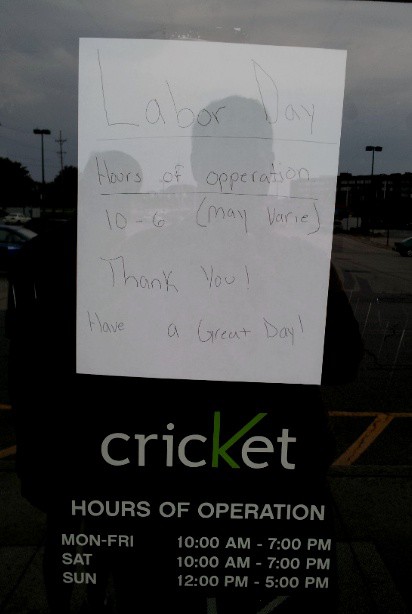
CricKet-style: This mess of a sign was caught on the door of the Cricket retail store in Henrietta, N.Y. yesterday. -- Word to the wise: "Operation" has never had two "p's" in it and we have no idea how they managed to come up with "varie." Bonus fails: 1) Despite the revised hours, the store was closed anyway and, 2) The sign (which was taped to the only door), appeared to have been photocopied, leaving us pondering how many other doors in the area are graced with this image-branding nightmare.

An Unsolicited Testimonial: Stop the Cap! Saved Us Over $20 A Month on Our Cable Bill

Phillip Dampier September 2, 2011 Broadband Speed, Competition, Consumer News, Earthlink 4 Comments

These kinds of testimonials help fuel our fight on behalf of consumers for better (and cheaper) broadband:

Hi Guys,

I don’t usually take the time to write thank you’s, but I found your site the other day and managed to save over $20 on my cable bill by switching to ”Earthlink” which I had no idea was possible. When I signed up with Bright House I was promised the $45 a month price for standard Internet, but I signed up a day before their prices jumped to $50. I managed to fight to get my price down for $45, but all of a sudden that stopped and they were refusing to give me the price I signed up for, for the remainder of the year. Due to that, I switched to the Earthlink promo prices and got Bright House to switch me over. They tried to lie to me on the phone to make me think I couldn’t get the Earthlink promo pricing, but I won the argument and am now very happy.

In six months, I’ll try to switch back to Road Runner and get their promo prices.

This is such a hidden unknown gem and has saved my family lots of money. Thank you!

— Scott

Thanks Scott.  Time Warner Cable and Bright House Networks have Earthlink as a hidden little secret most customers know nothing about.  It’s an arrangement that started way back in 2001 with the now-long-forgotten (and broken up) merger between AOL and Time Warner.  A voluntary agreement to allow third party ISPs to sell broadband service over Time Warner Cable has been ongoing ever since, even though customers would routinely find Earthlink’s regular prices not so exciting, if they found them at all.

The Earthlink savings are best realized for broadband-only customers who do not want to get tied down with a double or triple-play package from their cable company.  Both Time Warner Cable and Bright House charge considerably higher prices for standalone broadband service.  It’s part of a marketing tactic to convince you better savings are possible with a bundled service package.  But if you don’t care about the phone line or cable TV, why pay for either?

For every third-party ISP we’ve encountered reselling service on Time Warner Cable or Bright House, it seems mostly an exercise in branding.  For example, Earthlink’s standard and “turbo” products are totally identical to Road Runner offered by both cable companies, with two important distinctions:

  • You do not get the benefit of SpeedBoost, a temporary speed increase during the first few seconds of a file transfer;
  • You are assigned an Earthlink e-mail address, not one from Bright House or Time Warner Cable.

In fact, Earthlink as a company seems to be running mostly on auto-pilot these days.  We found their website woefully outdated, still selling speeds upgraded several years ago. If Bright House locally sells 10/1Mbps standard Road Runner service and Earthlink offers 7Mbps with a 384kbps upload speed, you will actually get 10/1Mbps from Earthlink as well.  The only difference is the name of the service as it appears on your monthly Time Warner Cable or Bright House bill.  Both cable companies literally just select Earthlink from a drop-down menu on the customer service computer screen.  All service calls and billing are handled by the cable companies.  If you need technical support, however, it will come from an overseas call center or online “chat” platform Earthlink runs.  But Earthlink includes something Time Warner Cable and Bright House customers lost several years ago — up to 20 hours a month of free dial-up usage when away from home.

After the Six Month Promotion….

Earthlink charges $29.99 a month for speeds that are identical to Time Warner Cable or Bright House’s Road Runner Standard service.  In most areas this is or will soon be 10/1Mbps.  Turbo, which usually increases speeds to 15/1Mbps, costs another $10 a month.  These promotional prices are good for six months.

When the six months are up, you are then qualified to participate in whatever New Customer Promotions Time Warner and Bright House are running for their broadband service.  We are commonly seeing offers of $29.99 a month for a year of standard Road Runner service in upstate New York, with occasional offers of a year of free Road Runner Turbo service thrown in.  Assuming those prices remain in effect, you should be able to secure at least 1.5 years of broadband service for $30 a month.  Remember, if your cable company charges you a modem rental fee, consider investing in your own to save that additional charge.  They are priced well under $100.

When your six months of Earthlink and a year of Time Warner/Bright House promotional pricing is up, simply threaten to take your business elsewhere, and you will usually find them willing to extend the promotion for an additional year.  If not, schedule a cancellation date two weeks out and wait for an inevitable phone call from the customer retentions department with a special “winback” offer.

Also remember you can always start new service under the name of a spouse or family member.  Third party resellers (Google “Time Warner Cable “and pay attention to the online ads) may even throw in a prepaid rebate card for signing up for service through them, so shop around when the promotions expire.

These shopping tips may apply to other cable broadband providers as well.  Remember, if your local phone company is now providing more than traditional DSL, most cable companies will go out of their way to hang on to a customer threatening to walk to AT&T U-verse or Verizon FiOS.  Let them fight to keep you as a customer, and you keep the savings.

Cogeco: Prove Our Usage Meter is Wrong When It Says You Used 36GB Yesterday

Phillip Dampier September 2, 2011 Canada, Cogeco, Data Caps, Public Policy & Gov't 5 Comments

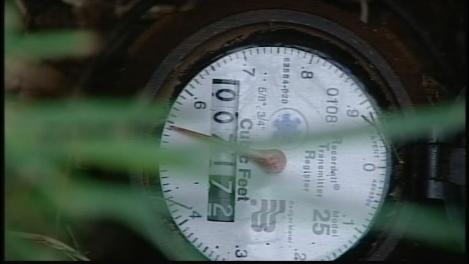
A snake in the grass?

Cogeco customers trying to avoid usage-based overlimit fees are finding that difficult when the cable company’s online usage measurement tool is offline or misreads their usage.  But the real trouble comes when customers find themselves arguing over wild usage measurements with Cogeco’s customer service representatives, who believe their meter is sacrosanct.

Two Ontario customers report Cogeco’s meter is registering some wild usage numbers this week — measurements those customers say count against their monthly usage allowance, drive them into overlimit fees, or force them to try and convince Cogeco employees they didn’t use as much as the company claims they did.

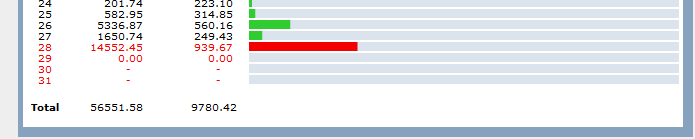
Take “Jubenvi,” a Cogeco customer in Sarnia.  His efforts to check on his usage through Cogeco’s online measurement tool was an exercise in futility until Monday, when Cogeco claimed he used 36GB of usage the day before.

“Not a chance,” he argues on Broadband Reports‘ Cogeco customer forum.  “No warnings either and [the tool] says I’m at 153 percent [of my allowance].”

That means one thing: overlimit penalty fees of $1/GB + HST.

“Ya, I won’t be paying that,” he declares.

Petawawa customer RJBrake also found last Sunday a “heavy traffic day” for him as well, at least according to Cogeco’s usage meter.

“This is completely stupid,” he shared. “There’s no way I downloaded 14GB in a day.”

Jubenvi called Cogeco to complain and to demand the overlimit charges be waived for usage he never actually used.

That opened the door to a customer service investigation which could send shivers up some customers’ spines.  Cogeco tracks customer usage over several months, and claimed Jubenvi‘s past usage regularly exceeded their arbitrary usage allowance, so it’s a safe bet he downloaded 36GB in a single day.

Unwilling to concede their meter might be inaccurate, a representative issued a one-time “loyal customer courtesy credit.”

Surprise! Nearly 15GB of usage last Sunday, whether you used it or not.

Jubenvi was unimpressed with small favors.

“She [said] that a few times a month, someone in [my] family rents a few movies from iTunes store, [but] never 36GB a day,” Jubenvi explains.  “I [wondered aloud] what if this happens again and [asked] why I didn’t receive any 85% and 100% [usage allowance] warnings.”

Cogeco didn’t have answers for either question, content on placing the blame entirely at the feet of the customer.

“She just goes into how I should upgrade my computer — it could have a virus, [and] make sure I’m not using Netflix,” he says.

Unfortunately, Canadian ISP usage meters are largely unregulated.  A Hamilton customer notes:

The CRTC along with Weights and Measures Canada won’t do anything to help you. I along with others here have already tried to file complaints about Cogeco’s usage meter and they both say that this doesn’t follow under there pervue of duties.

At the moment we are on our own and I don’t see anyone that’s going to help us until an MP or a Court get involved in this situation. I personally think that some time after Oct. 1 when there is no [longer a maximum cap on overlimit fees] for the Ultimate 30 and 50Mbps customers, someone is going to get hacked and get a huge bill and then lawyers and the news media will then find this topic interesting.

Anyone that’s on an Ultimate 30 or 50Mbps account could easily download anywhere from 60GB to over 100GB’s a day. It’s simple. I can grab 1GB worth of data in under 10 minutes on my Ultimate 30 connection so multiply that by 24 hours and you get 72GB.

AT&T KO’s “A List” — Another Consumer Friendly Feature Bites the Dust

Phillip Dampier September 1, 2011 AT&T, Competition, Consumer News, Issues Comments Off on AT&T KO’s “A List” — Another Consumer Friendly Feature Bites the Dust

Gone for new customers

AT&T has stopped allowing new customers to sign up for its “A-List” feature, which allowed AT&T Wireless customers on individual service plans to make unlimited calls to up to five mobile or landline numbers; Family Plan members were able to pre-select up to 10 numbers.  It’s particularly bad news for users of Google Voice, who added their Google-assigned phone number to their calling list to make unlimited Google Voice calls over their AT&T phones.

For now, existing A-List customers can keep the feature as long as they stick with the same rate plan, but AT&T warns it reserves the right to discontinue it at any time.

Engadget received a leaked memo regarding the change, which AT&T sprung on customers with no warning earlier today.

AT&T says A-List is a feature whose time has come and gone.  In its place, the company is allowing free mobile-to-mobile calling, according to an official company statement:

With automatic addition at no-cost of AT&T’s Mobile to Any Mobile offer for our wireless customers with an unlimited messaging plan, AT&T A-List is being discontinued for new users. Existing A-List users are not affected. We have seen a very enthusiastic response to the value of Mobile to Any Mobile which lets users with an unlimited messaging plan call any mobile number in America, regardless of the wireless provider.

While AT&T’s mobile calling feature is unique because it works with any mobile customer using any provider, the loss of A-List means numerous calls to landline numbers (including Google Voice numbers) could burn through your plan minutes much faster.  AT&T probably pays a higher connection fee to complete calls to landline numbers, especially in rural areas where connection charges are higher.

Ironically, competition from T-Mobile’s myFaves feature helped inspire AT&T to match the competition with the launch of A-List.  It is this kind of innovative, disruptive marketing that benefits every mobile customer, as competing carriers are forced to match features offered by other carriers.

In the last month, AT&T has been paring back customer-friendly value options such as its discounted, light user text plan.

Thanks to Stop the Cap! reader Scott, who notes: “Again, the merger isn’t even through or likely and AT&T is still slashing consumer friendly and money saving features put in place to fend off the competition.”

Charter Cable Tells Family Tough Luck: Pay Us $1,600 for Cable Equipment, Batteries Lost in Fire

Phillip Dampier September 1, 2011 Charter Spectrum, Consumer News, Video 2 Comments

Charter Cable told a Howell, Mich. family that lost everything in a major house fire they owed the cable company $1,600 for cable equipment, remote controls — even the batteries — that were consumed in the blaze.

Kerry Cacchione, her three children and her husband Jeff lost every single possession they owned in the fire seven weeks ago.  The Cacchione family, like many home renters, neglected to purchase all-important renter’s insurance, and without it, all of their furniture, clothing, and other valuables were gone for good.

When the family returned home to see the property, undergoing repairs paid for by their landlord, they were confronted with an enormous bill from Charter Communications, their cable company.

“$1,600, and they [charged us] for every remote, every battery, every modem, every cable box, and every DVR box,” said Cacchione.

The Cacchione family took the bill to Charter Cable and begged for forgiveness, telling employees there was no way they could afford to pay that cable bill.

Kerry reports Charter was unsympathetic and refused to waive the charges, leading her to ask WXYZ’s “Call for Action” to intervene.

With the threat of more bad publicity on the 6 o’clock news, Charter Communications decided to wipe out their bill.

Charter is among the most intransigent cable companies when it comes to demanding compensation for cable equipment destroyed or damaged in fires.  The company always relents when confronted with the prospect of bad publicity, such as when a customer service representative told one tornado victim in Alabama she would wait on the phone while she searched through debris in the neighborhood for lost cable equipment.

Every renter should always have renter’s insurance, which typically will cover damaged cable equipment. It’s very affordable and protects renters from losses. Many consumers believe landlords carry insurance which will protect them in the event of a natural disaster or fire, but those insurance policies protect the landlord’s property, not renters’ possessions. The peace of mind afforded by renter’s insurance can make all the difference in a major loss like the one experienced by the Cacchione family.

[flv width=”360″ height=”290″]http://www.phillipdampier.com/video/WXYZ Detroit Losing It All 8-31-11.mp4[/flv]

WXYZ in Detroit comes to the rescue of yet another family falling victim to an enormous cable bill from equipment lost or damaged in a house fire.  (3 minutes)

Search This Site:

Contributions:

Recent Comments:

Your Account:

Stop the Cap!