Home » Issues » Recent Articles:

Comcast’s New Dumbed-Down Set Top Boxes Offer Improved User Experience

Phillip Dampier October 10, 2011 Comcast/Xfinity, Consumer News, Editorial & Site News, Video Comments Off on Comcast’s New Dumbed-Down Set Top Boxes Offer Improved User Experience

[flv width=”480″ height=”290″]http://www.phillipdampier.com/video/Daily Local New cable TV programming guide on display 10-5-11.mp4[/flv]

Comcast has been showing off changes to the company’s set top boxes, which have been effectively “dumbed-down” by removing internal processing power for box-based program guides and other content functions and moving it to the cloud.  Comcast’s newest generation of boxes offer a slimmed-down “browser” experience which relies on stored content at the cable company office, delivered over the cable to the set top box. 

In Denver, Xfinity representatives demonstrated the new products to groups of media and local radio personalities.  Among the most visible improvements is the program guide, which is starting to come closer to Netflix and farther away from the TV Guide Channel of years-past.  Among the features includes box art from movie titles, online reviews, social networking tie-ins, and instant recommendations for other similar programming to watch, either concurrently or in the future.  Subscribers can program shows for recording, alert friends to upcoming shows, and even submit their own review for other subscribers to see.

It’s a significant improvement over older technology, like that still used by Time Warner Cable and other cable operators, which requires extensive delays before incremental improvements are made, and operates on expensive set top terminals.  Video courtesy of: The Daily Local.  (2 minutes)

Midcontinent Communications Completes Acquisition of US Cable in Minnesota, Wisconsin

Phillip Dampier October 10, 2011 Consumer News, Midco, US Cable 1 Comment

One of the country’s smallest cable operations grew a little bigger this month with the acquisition of 113 US Cable-owned systems in rural Wisconsin and Minnesota.

Approximately 33,000 customers in communities like Brewster, Heron Lake, Okabena, and Round Lake will be transitioned from New Jersey-based US Cable to Midcontinent this fall.

They will join over 275,000 Midcontinent customers in North and South Dakota, Minnesota, and Wisconsin.  US Cable sold the cable systems as the company continues to unwind its partnership with Comcast.

Midcontinent intends to beef up its customer service operations by opening a new call center in West Fargo, N.D.

Eventually, US Cable subscribers will find their Internet services transitioned to Midcontinent, which delivers service over a reasonably advanced hybrid fiber-coaxial network.

Frontier Tells Consumers They Can Buy Metro Ethernet Service Most Can’t Afford

Frontier Communications has announced the availability of Metro Ethernet service to a total of 55 cities in 11 states, with one Frontier representative describing it as perfect for individuals “who are serious gamers, people who download videos and those who watch TV and movies on their computers.”  Apparently Diana Anderson, technical supervisor for Frontier in Kennewick, Wash., has not read Frontier’s Washington State service tariff (5.7.7b) to understand the cost implications of signing up for the service.

Metro Ethernet falls between DSL and fiber optic connectivity, and delivers service at speeds that can approach 100Mbps or more, depending on telephone company facilities and the distance of copper between your home or business and the central switching office.  There are Metro Ethernet services that work over fiber networks, fiber-copper hybrid networks, and even traditional copper landlines — the ones Frontier uses to deliver its MetroE service.

Frontier is pitching Metro Ethernet primarily to medium and large-sized businesses who need more speed than the phone company can offer over its traditional DSL products.  The reason it’s not marketed to consumers is the cost.  Frontier’s Metro Ethernet service is included in Frontier’s tariff for Washington with an installation fee of $320 and a Metro Ethernet-Special Transport fee of $75 a month per DS1 (1.544Mbps).  Customers can get additional speed above 1.544Mbps by paying for additional DS1’s.

We called Frontier’s customer service and asked about service pricing in the Rochester area.  A residential customer service representative had to transfer us to the business products office — they do not sell “residential” Metro Ethernet.  A representative there said the service was available in several parts of Rochester, but was “completely unfeasible” for residential customers because of its cost.  Frontier DSL is the recommended solution for all residential customers in western New York, despite the fact the service does not exceed 3Mbps in our neighborhood (although it is marketed at speeds up to 10Mbps locally).

The following communities now have access to Frontier MetroE service:

  • Coeur d’Alene, Idaho
  • Bloomington, Carbondale, DeKalb, Freeport, Jacksonville, Lincoln, Marion and Olney, Illinois
  • Elkhart, Fort Wayne, Lafayette, Richmond, Terra Haute and Valparaiso, Indiana
  • Adrian, Coldwater, Mount Pleasant, Muskegon and Sturgis, Michigan
  • Bryson City, Burnsville, Cherokee, Creedmoor, Durham , Hayesville, Marion and Murphy, North Carolina
  • Gardnerville, Nevada
  • Athens, Bowling Green, Delaware, Jackson, Marion, Medina, Troy and Wilmington, Ohio
  • Beaverton, Coos Bay, Gresham and Hillsboro, Oregon
  • Myrtle Beach, South Carolina
  • Everett and Kennewick, Washington
  • Merrill, Sun Prairie and Wausau, Wisconsin

Let us know what kind of pricing and promotions you can get from Frontier for Metro Ethernet in your area in our comments section.

Netflix CEO to Customers Re: Qwikster DVD Rentals — Never Mind, My Bad

Phillip Dampier October 10, 2011 Consumer News, Online Video 1 Comment

Netflix CEO Reed Hastings posted his version of a mea culpa on the company’s blog early this morning pulling the plug on dividing up online video streaming and DVD-by-mail rentals:

It is clear that for many of our members two websites would make things more difficult, so we are going to keep Netflix as one place to go for streaming and DVDs.

This means no change: one website, one account, one password… in other words, no Qwikster.

While the July price change was necessary, we are now done with price changes.

We’re constantly improving our streaming selection. We’ve recently added hundreds of movies from Paramount, Sony, Universal, Fox, Warner Bros., Lionsgate, MGM and Miramax. Plus, in the last couple of weeks alone, we’ve added over 3,500 TV episodes from ABC, NBC, FOX, CBS, USA, E!, Nickelodeon, Disney Channel, ABC Family, Discovery Channel, TLC, SyFy, A&E, History, and PBS.

We value our members, and we are committed to making Netflix the best place to get movies & TV shows.

Hastings doesn’t come out and directly say his decision to split streaming and DVD rentals was a mistake, but the intended audience for his short blog post is clear — the tens of thousands of customers upset about the company’s recent price and plan changes.  Many have complained Netflix lacks current movie titles available for streaming, and news reports indicate the company is on the verge of losing a key supplier of the current content Netflix does have — Starz.

But Hastings has not pulled back completely from the idea of dividing the streaming and movie rental services Netflix offers.  In a news release read by investors, Hastings said the problem wasn’t that Netflix sought to separate the services, it was that they tried too fast.

“Consumers value the simplicity Netflix has always offered and we respect that,” said Hastings. “There is a difference between moving quickly – which Netflix has done very well for years – and moving too fast, which is what we did in this case.”

Maine Grows More Upset With Time Warner Cable’s All-Digital Conversion

Phillip Dampier October 6, 2011 Consumer News 13 Comments

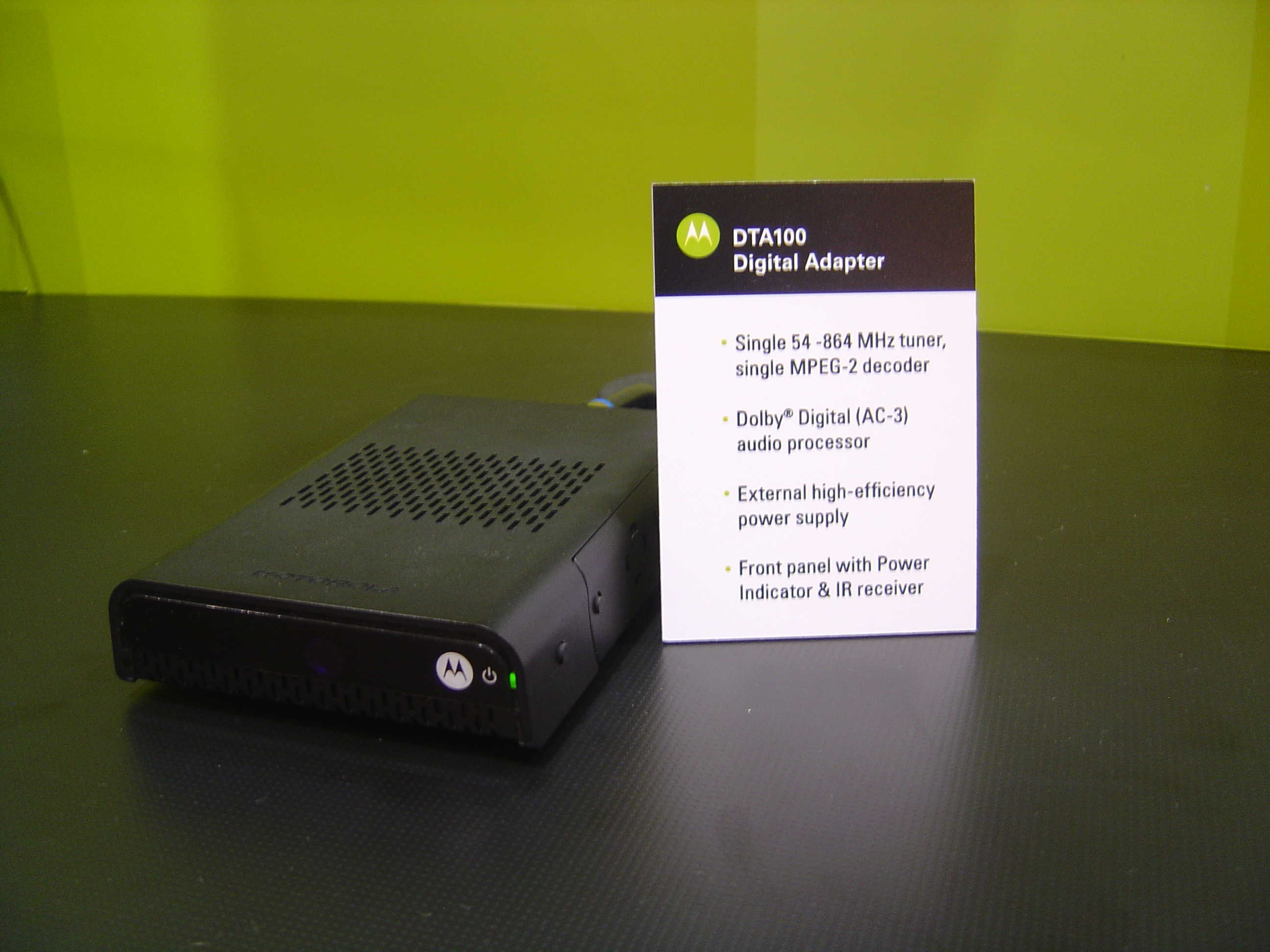
Customers of Time Warner Cable in Maine preparing for the cable company’s all-digital conversion that will eventually impact every customer nationwide are reporting more problems with the equipment the cable company is supplying to those without set top cable boxes.

Frank Dobbelaere from Augusta is disgusted with the digital box conversion, and is calling the cable company “anti-consumer.”

“They can cut service costs, forgo capacity upgrades and charge indefinitely per device, leaving consumers with inconveniences, obstacles and surcharges,” Dobbelaere says.  “Time Warner Cable staff said the digital cable adapters (DCA) are mandatory, for everything, unless you have a digital cable box per device. HDTVs with digital tuner do not get a pass. I quote: ‘No adapter = no TV. Cable TV is going to be password protected.'”

Indeed, Stop the Cap! has heard from several customers in Maine who report Time Warner Cable’s new digital conversion program even impacts customers with digital tuner-equipped sets, forcing them to either watch a downgraded analog signal or upgrade to a digital set top box.
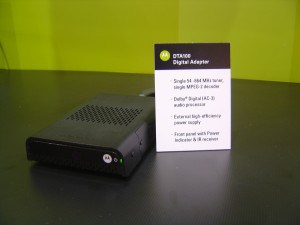
This DVR delivers "Sub-standard definition television"

“They have encrypted the basic cable lineup so QAM reception is not going to work, assuming you can even figure out how to program it in the first place,” writes Stop the Cap! reader Bill Adair.  “We tried their digital adapter for about five minutes, and that is all it took for us to take it back.  It’s absolute garbage.”

Adair reports the DTA Time Warner supplies significantly degrades picture quality.

“It’s absolutely awful with wavy lines in the background, grainy picture quality, and a picture that resembles a VCR tape,” he reports to us.

Adair said he wouldn’t even bother with the device on his 13 inch kitchen television.

“It’s unwatchable, in my opinion, on any television.”

Dobbelaere considers the resulting picture from his DTA sub-standard definition.

“I lost every local HD station. Most analog channels were blank. The DCA quality is worse in side by side analog comparison. It is prone to interference and signal degradation,” he reports to the Kennebec Journal. “Toss out the $100 all-in-one remote, put the TV on channel 3 (or 4) and use the chintzy DCA remote, without closed-captioning support. Two or more devices in a room? Thanks to DCAs, you can no longer control the channel independently, because each remote changes the channel on any DCA.”

Antenna retailers are using Time Warner's digital conversion as a sales opportunity.

The list of devices rendered effectively inoperable with the new digital system continues to grow unless you go through the painful, and pricey set top box route:

  • VCRs
  • DVRs like TiVo
  • DVD Recorders
  • PC TV Tuner Cards and Add-Ons
  • Slingbox
  • “Cable-ready” HD television sets

“What happened to free HD, cable without a box, buy a new HDTV and get cable to avoid a converter — so eagerly touted during the DTV transition and other commercials,” asks Dobbelaere. “We were perfectly happy viewing and recording the analog-digital mix; but now will pay more for less, while losing any recording and networking capability.  Of course, Time Warner would happily rent me a dozen digital cable boxes and DVRs.”

Dobbelaere has a better idea.  He’s planning to cut the cable and “go old school” with rabbit ears.

In fact, antenna retailers see an opportunity and are buying ads to remind Maine residents they can still watch HDTV programming over the air, without a digital box, a DTA, or monthly cable bill.


Search This Site:

Contributions:

Recent Comments:

Your Account:

Stop the Cap!