Home » Issues » Recent Articles:

House Approves 5-Year Moratorium on New Wireless Taxes, But Existing Fees Will Remain

The House on Tuesday approved a five-year moratorium on new wireless taxes to keep states and localities from padding cell phone bills with new fees for wireless services.

The non-controversial measure easily won bipartisan support and passed quickly on a voice vote with just one member of Congress rising to oppose the measure.

The Wireless Tax Fairness Act, sponsored by Representative Zoe Lofgren, a California Democrat and Trent Franks, an Arizona Republican, was heavily backed by the wireless industry.  The legislation doesn’t stop local and state governments from imposing existing taxes, but would keep new taxes off cell phone bills if the measure becomes law.  AT&T and Verizon spent heavily to promote the bill, noting customers are cutting back their cell phone and data plans in response to increasing taxes which run as high as 23% in some states.

Historically, state and local governments have seen cell phones as a luxury item, and have targeted them with taxes to help sustain government budgets.  But as consumers increasingly turn to cell phones as landline replacements, the days of such technology being used mostly by the well-heeled are well past.  Lofgren sees the burden of cell phone taxes on Californians, who have dropped traditional landline services in favor of smartphones and wireless broadband.

“We need to encourage the development and adoption of wireless broadband, not tax it out of existence,” said Lofgren.

An identical Senate companion bill was introduced by Senators Ron Wyden (D-Ore.) and Olympia Snowe (R-Maine), where it also seems to be getting bipartisan support.

Taxes on wireless services now meet or exceed those charged for alcohol and tobacco in several states.

Rank State State-Local Wireless Rate State-Local Sales Tax Rate Federal Rate
(USF)
Combined Federal-State-Local-Rate
1 Nebraska 18.64% 7.00% 5.05% 23.69%
2 Washington 17.95% 9.00% 5.05% 23.00%
3 New York 17.78% 8.25% 5.05% 22.83%
4 Florida 16.57% 7.25% 5.05% 21.62%
5 Illinois 15.85% 9.00% 5.05% 20.90%
6 Rhode Island 14.62% 7.00% 5.05% 19.67%
7 Missouri 14.23% 7.23% 5.05% 19.28%
8 Pennsylvania 14.08% 7.00% 5.05% 19.13%
9 Kansas 13.34% 8.13% 5.05% 18.39%
10 Texas 12.43% 8.25% 5.05% 17.48%
11 Maryland 12.23% 6.00% 5.05% 17.28%
12 Utah 12.16% 6.80% 5.05% 17.21%
13 South Dakota 12.02% 5.96% 5.05% 17.07%
14 Arizona 11.97% 7.20% 5.05% 17.02%
15 DC 11.58% 5.75% 5.05% 16.63%
16 Tennessee 11.58% 9.25% 5.05% 16.63%
17 Arkansas 11.07% 8.38% 5.05% 16.12%
18 Oklahoma 10.74% 8.45% 5.05% 15.79%
19 North Dakota 10.68% 6.00% 5.05% 15.73%
20 California 10.67% 9.25% 5.05% 15.72%
21 New Mexico 10.52% 7.60% 5.05% 15.57%
22 Kentucky 10.42% 6.00% 5.05% 15.47%
23 Colorado 10.40% 7.56% 5.05% 15.45%
24 Indiana 9.84% 7.00% 5.05% 14.89%
25 South Carolina 9.52% 7.25% 5.05% 14.57%
26 North Carolina 9.43% 7.75% 5.05% 14.48%
27 Minnesota 9.38% 7.71% 5.05% 14.43%
28 Mississippi 9.08% 7.00% 5.05% 14.13%
29 New Jersey 8.87% 7.00% 5.05% 13.92%
30 Georgia 8.57% 7.50% 5.05% 13.62%
31 Vermont 8.50% 6.50% 5.05% 13.55%
32 Wisconsin 8.34% 5.55% 5.05% 13.39%
33 New Hampshire 8.18% 0.00% 5.05% 13.23%
34 Ohio 7.95% 7.13% 5.05% 13.00%
35 Wyoming 7.94% 5.50% 5.05% 12.99%
36 Iowa 7.91% 6.50% 5.05% 12.96%
37 Massachusetts 7.81% 6.25% 5.05% 12.86%
38 Hawaii 7.75% 4.00% 5.05% 12.80%
39 Alabama 7.45% 7.25% 5.05% 12.50%
40 Michigan 7.27% 6.00% 5.05% 12.32%
41 Maine 7.16% 5.00% 5.05% 12.21%
42 Connecticut 6.96% 6.00% 5.05% 12.01%
43 Alaska 6.69% 2.50% 5.05% 11.74%
44 Virginia 6.56% 5.00% 5.05% 11.61%
45 Louisiana 6.28% 9.00% 5.05% 11.33%
46 Delaware 6.25% 0.00% 5.05% 11.30%
47 West Virginia 6.23% 6.00% 5.05% 11.28%
48 Montana 6.03% 0.00% 5.05% 11.08%
49 Idaho 2.20% 6.00% 5.05% 7.25%
50 Nevada 2.08% 7.91% 5.05% 7.13%
51 Oregon 1.81% 0.00% 5.05% 6.86%
US Simple Average 9.87% 6.38% 5.05% 14.92%
US Weighted Average 11.21% 7.42% 5.05% 16.26%

[For flat monthly taxes and fees, average monthly consumer bill is estimated at $48.16 per month per CTIA – The Wireless Association.]

Source: Committee on State Taxation, 50-State Study and Report on Telecommunications Taxation, May 2005. Updated July 2010 by Scott Mackey, Kimbell Sherman Ellis LLP using state statutes and regulations.

The taxes levied are supposed to pay for everything from school funding to law enforcement to 911 services.  Some states impose 911 surcharges that local municipalities also charge themselves.  The free-for-all takes an even bigger bite as consumers adopt more expensive plans that include wireless data.

How much consumers would save with the passage of the legislation is unclear, because existing taxes are not impacted.  The measure also does nothing to stop the wireless industry from adding bill padding fees they conjure up themselves.

But the wireless industry still calls the House passage a “crucial step toward providing wireless subscribers with some much needed relief.”

[flv width=”520″ height=”308″]http://www.phillipdampier.com/video/Cell Phone Taxes 11-3-11.flv[/flv]

WKRG in Mobile, Ala. reports cell phone taxes are reaching an all-time high.  Nearby viewers in Pensacola, Fla. probably weren’t too happy to learn Florida is rated the 4th highest-taxed-state.  The Wireless Tax Fairness Act may prevent taxes from rising further, but it won’t stop existing fees.  Also included: Rep. Franks’ statement on the House floor introducing the bill and urging fellow members to support it.  (3 minutes)

Cox’s Usage Police Beefed Up: Spending More Money to Save Money

Phillip Dampier November 2, 2011 Broadband "Shortage", Cox, Data Caps 1 Comment

We are watching you.

Cox Cable has become so dedicated to bringing broadband usage under control, it has reportedly opened a new call center solely to deal with usage cap enforcement.

Cox Security has taken a hardline approach to usage cap violators — cutting off service once usage limits are exceeded, at least until customers call in for a lecture about their usage.  After customers humble themselves, their service is turned back on.  After three warnings, Cox tells customers, it reserves the right to terminate broadband service for good, although we haven’t seen it come to that just yet.

Jim Redmond, a Stop the Cap! reader in San Diego, called Cox to complain about usage meters and limits and got an earful from a customer service representative.

“They told me the only people violating their usage limits are copyright violators illegally downloading music, movies, and software and, in fact, they are doing us a favor by protecting us from ourselves,” Redmond says.  “I was shocked by the cavalier attitude from the employee, and while I haven’t gone over any of their limits, I am fairly close and wanted to know what I could do to raise my limit.”

Redmond says Cox wanted him to either upgrade his Internet service plan or simply stay off the Internet.

“I told them I’d consider staying off Cox altogether by switching to another provider,” Redmond responded. “That’s your choice, I was told.”

Remarkably, Internet Service Providers may be spending more money trying to control usage than that “excess” usage costs the provider.  Dedicating call center support staff to usage enforcement, requiring employees to unfreeze locked out accounts, and the cost to good customer relations are likely hurting Cox more than the “tiny minority of customers” Cox claims are “using too much Internet.”

Broadband Reports‘ readers heard one representative suggest overlimit fees are already in the works to charge customers for every gigabyte they exceed Cox’s arbitrary limits.

“They’ll never get one additional cent from me if they try it,” Redmond says. “I think it’s long past time for consumers to band together and send a message to the industry that this kind of Internet rationing is completely unacceptable.  It certainly worked with the banks who discovered consumers won’t accept a $5 monthly fee for a debit card to access their own money.  It’s time Cox customers rise up and let the company know how unacceptable this really is.”

AT&T Cell Towers in Connecticut Damaged by Winter Storm: 152; Verizon Wireless: 0

Phillip Dampier November 2, 2011 AT&T, Consumer News, Sprint, Verizon, Wireless Broadband Comments Off on AT&T Cell Towers in Connecticut Damaged by Winter Storm: 152; Verizon Wireless: 0

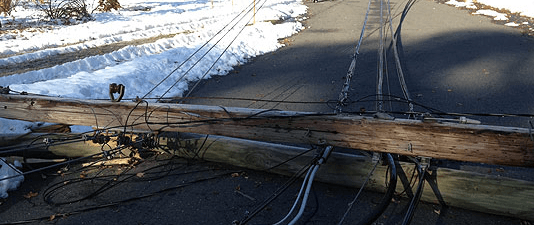
AT&T customers are getting no bars in more places in the state of Connecticut as the wireless company deals with 150-200 cell towers that are either without power or were damaged by a weekend storm that brought more than 20 inches of snow to some parts of New England.  But some customers are questioning why AT&T has suffered damage to their cell tower network while other carriers report no significant damage at all.

“As of Wednesday afternoon, we still have no AT&T wireless service and it takes miles of driving to find a cell tower that is still working,” reports Sam, a Stop the Cap! reader outside of Hartford.  “My friends’ Verizon Wireless and Sprint phones work as if the storm never happened. In fact, I can’t find any Verizon customer who is impacted by the storm, but that’s sure not true with AT&T.”

On Sunday, Connecticut Gov. Dannel P. Malloy noted AT&T told state officials that 152 cell towers had been damaged by the storm and that cell phone service would likely be disrupted in some portions of the state for some time to come.  But Verizon Wireless reports outside of some power outages, they sustained absolutely no damage to any of their towers and backup generators are expected to provide uninterrupted service even in areas where extended power outages are occurring.  A Verizon spokesman reported at least 93 percent of its network was operating as of Tuesday, with most of the sporadic outages due to backup batteries depleting their stored energy before technicians arrive to fire up backup generators.

Sprint also reports only minor interruptions to its service in Connecticut, mostly due to power failures.

In most cases, extended power interruptions are responsible for cell tower service failure.  When power is restored, cell service generally is as well.  But this outage proved more extensive because AT&T’s backhaul network between towers and their own facilities was also damaged by falling tree limbs and power poles.

Residents tell the Hartford Courant AT&T has made some progress as the week wears on, with slowly improving service as towers are brought back online.

“We continue to make progress in restoring service to our customers in the wake of the recent snowstorm,” Kate McKinnon, AT&T spokeswoman for the northeast region told the newspaper. “We have deployed generators and crews across the storm-impacted areas and are working around the clock to address service issues. We also continue to work with local Connecticut utility companies as they restore commercial power to affected cell sites and facilities.”

Power utility companies have first priority in service restoration. Connecticut Light & Power reports 77 percent of their customers lost power during the snowstorm.  As of this afternoon, at least 544,000 are still waiting for power to be restored.

If You Can’t Beat ‘Em, Join ‘Em: Telco Abandons IPTV in Favor of Online Video, Satellite

Phillip Dampier November 2, 2011 Broadband Speed, Competition, Online Video, Ringgold Telephone Comments Off on If You Can’t Beat ‘Em, Join ‘Em: Telco Abandons IPTV in Favor of Online Video, Satellite

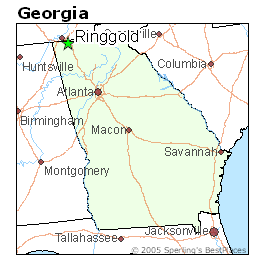
Tiny Ringgold Telephone, which serves 122 square miles of northwestern Georgia, has pulled the plug on the company’s own video IPTV package and is encouraging customers to watch all of their television shows online or through a satellite TV package offered by DISH Network.

Ringgold was in the IPTV business long before AT&T began offering U-verse, having launched video over phone lines back in 2003.  The phone company invested heavily in producing local programming for their customers, including local sports, issues in the news, health and fitness, and educational shows for and about the region.  The hope was that the phone company would give cable subscribers enough reasons to cut the cable cord for good.  They’ve invested heavily to remain on the cutting edge, something uncommon for traditional wireline phone companies.

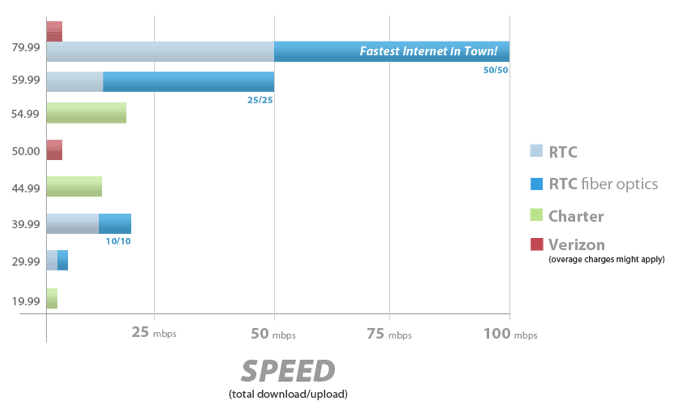
In 2000, Ringgold announced they would deliver a High Speed Internet connection to every single customer who wanted it throughout their entire service area.  The company has continuously upgraded their facilities, offering traditional copper wire customers bonded DSL service up to 25Mbps and their growing number of fiber customers speeds up to 50/50Mbps.  That’s an enormous difference over other nearby providers, including AT&T, Frontier Communications, and CenturyLink which deliver customers 1-3Mbps DSL with no fiber in sight.  The other alternative is service from Charter Cable, among the worst-rated cable companies in the country.

But that level of innovation isn’t unusual for Ringgold, which has outpaced traditional Bell System phone companies since it was first founded in 1912 with just eight telephone lines.

In 1950, Ringgold was among the first independent companies in Georgia to switch from manual to dial telephones.  By the 1990s, Ringgold realized the future was in fiber optics, and planned to replace a significant amount of copper wiring that had been on phone poles for decades.  The phone company thought it had mastered the ultimate triple-play fiber-optics package of voice, broadband, and television, until their small size got in the way.

Ringgold discovered that “bigger is better” in the pay television business.  The largest cable operators enjoy the best bargaining power for just about everything.  Companies like Comcast and Time Warner Cable can use their enormous customer base to negotiate cut rate pricing on programming and equipment and stand-up to greedy programmers that demand excessive payments for programming.  Ringgold discovered they can’t.

Light Reading highlighted the challenges Phil Erli, executive vice president of Ringgold, spoke about recently:

  • Ringgold could not cut a deal with equipment vendors that would deliver DVR and HD functionality at a level above that of the local cable company.  Large set top box manufacturers deal in volume, and smaller players like Ringgold are often left with inferior technology at prices higher than large cable companies pay for the most advanced equipment available.  Erli tried to innovate a new approach using Microsoft’s Mediaroom, but discovered that required a large number of servers too costly for a small phone company to consider;
  • Programming costs were completely out of line.  Volume discounting delivers enormous savings, if you are a large-sized national provider.  Large cable companies pay a fraction of the prices independent providers pay for programming, and local broadcast stations held the company hostage on retransmission consent agreements.  Erli noted the local NBC station, presumably in nearby Chattanooga, demanded an incredible $5.25 a month per subscriber.  That rate was so high, it would turn the company’s video venture unprofitable.  Even worse, Erli relates, “these weren’t negotiations, they told me what we would pay.”  Erli realized that just one programmer could make or break Ringgold’s video service profits;
  • The company’s video lineup, due to wholesale costs, was inferior to that offered by the local cable company.

Ringgold's broadband network is superior to anything the competition offers in northwestern Georgia.

With these challenges, the phone company decided enough was enough and dropped its video package, redirecting customers to DISH Network for satellite-TV, and more recently to online Internet video as an alternative to pay television.

Something you won't likely see from your cable company.

While most broadband providers treat online video as a parasite, Ringgold sees it as the ultimate business opportunity to reinvent themselves through their broadband service — selling super high speed access to content that someone else provides and has to worry about.

They’re considering a new customer promotion that includes a Roku, Apple TV, or Clearleap-powered set-top box to integrate broadband connections with television sets.  The company is even educating customers about the growing number of programs available for free (or with a low cost subscription) online with an interactive web tool.

Ringgold’s new solution for online video also includes some small revenge on high programming costs, giving subscribers an integrated over-the-air antenna system that can pick up nearly a dozen HD channels, including that NBC station, for free.

[flv width=”640″ height=”380″]http://www.phillipdampier.com/video/Internet TV.flv[/flv]

Here is something you don’t see every day: Ringgold Telephone encourages its customers to get online and watch TV shows for free.  (1 minute)

Longmont Residents Say Yes to Community Fiber: Astroturf Effort Failed to Impress

Phillip Dampier November 2, 2011 Astroturf, Comcast/Xfinity, Community Networks, Competition, Editorial & Site News, Public Policy & Gov't Comments Off on Longmont Residents Say Yes to Community Fiber: Astroturf Effort Failed to Impress

This dollar-a-holler astroturf effort failed to impress Longmont voters, who turned back a Comcast-funded opposition campaign to open up the city's fiber network.

Longmont, Col. residents turned their backs on a Comcast-funded campaign to block the opening of the city’s 17-mile fiber loop to competing broadband providers in a strong vote of approval.

As of early this morning, 60.8% of voters approved Ballot Question 2A.  Just 39.2% opposed the measure.

Longmont’s fiber network, built in 1997 and paid for by the Platte River Power Authority, has heretofore been off-limits to the public.  Colorado’s 2005 corporate welfare laws guarantee that taxpayer or ratepayer-funded broadband networks are kept away from the public that paid for them, for the protection of companies like Comcast and CenturyLink.

This results in the construction of showcase institutional fiber optic networks open to government, public safety, hospitals, and libraries… and practically nobody else.  Once built, institutional networks often go underutilized.  In Longmont, at least two-thirds of the city’s fiber optic network still goes unused 15 years after it was built.

The city government hoped to open the fiber network in time to bolster their application to Google to construct a gigabit network for residential and business customers, but after Google selected Kansas City for its fiber project, Longmont wants to keep its options open.  Passing the ballot question does exactly that.

“I’m glad to see 2A won,” Mayor Bryan Baum told the Times-Call. “I think it shows that money isn’t the determinator.”

Longmont voters were subjected to one of the most expensive pushback campaigns they’ve ever seen, thanks to Comcast, who spent $300,000 and counting to get the public to turn against the fiber network ballot question.

George Merritt, a spokesman for the cable-funded group Look Before We Leap, claims the vote results show “the measure’s narrow margin of victory.”  Merritt’s group relied heavily on a highly-suspect 2006 case study by University of Denver professor Ron Rizzuto that claimed 80 percent of community-owned Wi-Fi broadband networks failed to make money.  But the group didn’t make any distinction between Wi-Fi and fiber optics, and more importantly they left out the fact Rizzuto was inducted into the Cable TV Pioneers in 2004 for service to the cable industry.  Rizutto’s “study” was a classic case of dollar-a-holler research on behalf of the New Millennium Research Council, a creature of the telecommunications industry.

New Millennium Research Council -> Issue Dynamics -> Comcast

In fact, the Council is a “project” of Issue Dynamics, Inc., a for-profit, high powered Washington lobbying firm. Issue Dynamics’ client list includes Verizon, Comcast, AT&T and the United States Telecom Association – the trade association for the telecom industry.  The direct relationship between Rizzuto’s findings, and cable companies like Comcast who paid for the research, never made it into the report (or onto the group’s website).

This is the second time Longmont voters have cast ballots on the issue of the city’s fiber optic network.

In 2009, voters faced another cable industry-funded astroturf effort, with $245,000 spent to successfully defeat a similar measure.  This time, thanks in part to public exposure of the companies pulling the strings behind the astroturf campaign, voters rejected the propaganda onslaught and passed the measure.  Cable bills have also increased several times since the 2009 measure, a reminder to the public why competition can make a real difference.

With the passage of 2A, the city can choose to leave the network exactly as it is today or partner with another provider to offer services to the public.  It’s now their choice, not Comcast’s.

Search This Site:

Contributions:

Recent Comments:

Your Account:

Stop the Cap!