Home » Issues » Recent Articles:

Bright House Networks & Flagler Beach City Government Open Up “Free Wi-Fi,” As Long As You Are A Cable Customer

Phillip Dampier July 23, 2009 Community Networks, Wireless Broadband 45 Comments
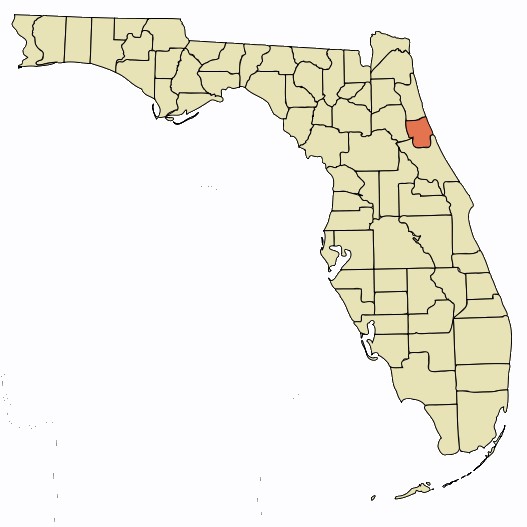
Flagler Beach, Florida

Flagler Beach, Florida

Another public-private Wi-Fi initiative has been launched, this one in Flagler Beach, Florida, between the city government and Bright House Networks, the area’s dominant cable operator.

The Wi-Fi network will provide consistent wireless access to the Internet in the downtown business and beach areas, running approximately from Highway 100 (Moody Blvd.) south to 2nd Street and from Highway A1A (Oceanshore Blvd.) west to Flagler Avenue.

City and local tourism officials celebrated the launch of the Metro Wireless Network in Flagler Beach by suggesting it will be a convenience for tourists looking for broadband access.

“It’s also a boost for tourism because promotions that are targeted to bring visitors to the area can tell them that they can connect during their stay in town and don’t have to fish around for access,” said Doug Baxter, president of the Flagler County Chamber of Commerce & Affiliates. “Everybody is stuck to a computer these days. (The free wireless service) is a lure.”

The service is creating some mild controversy in Flagler Beach, where residents have learned “free access” is provided on an unlimited basis only to existing customers of Bright House Networks’ Road Runner broadband service.

Non-subscribers will be granted two hours access per day, but that access is contiguous, not cumulative, meaning the moment one logs into the system, the two hour allowance starts running.  Checking your e-mail first thing in the morning assures when you log on later in the day, your free time will have expired and you will be told to purchase additional time.

The price?

1 hour – $1.95
1 day – $4.95
1 week – $14.95

All pay services are also sold in contiguous blocks of time.  For example, the one hour access fee expires one hour after paying for the service, even if you did not use the service for an entire hour.

JJ32, commenting on The Daytona Beach News-Journal website:

How exactly is this a boon for the tourism industry when tourists can only use it for two hours, or have to pay for the service? This also isn’t unique. Other money-hungry cable companies (looking at you AT&T) have this in other cities, and it looks like Bright House Networks has now joined this notorious lot. I agree that wireless access in public areas is important, but I am tired of pro-cable company press releases saying how much they’re doing for the community, when in reality they’ve just discovered a new way to rake in revenues.

Some area businesses are also unimpressed.

Carol Fisher, owner of the BeachHouse Beanery, said she isn’t likely to promote the city’s service. That because the coffeehouse’s customers can access the wireless network she’s provided for some time, Fisher said, and there are no hoops and hurdles or fees.

City officials are widely distributing a flier explaining the service in greater detail to residents and visitors.

Suddenly Caps? Suddenlink Introduces Usage Measuring Tool to “Help Customers”

greedy business man.

Suddenlink Usage FAQ:

On June 1, 2009, we notified residential Internet customers in our Clovis, New Mexico cable system of a new online tool to help them monitor their Internet usage each month and determine if they are in the typical usage range.

If they are well above the typical range, it could mean several things. For instance: a virus or “spyware” application might have infected a customer’s computer and started generating high levels of Internet traffic, or someone else might be using a customer’s Internet connection without his or her knowledge. To help guard against those issues, we are offering customers a list of steps they can consider, to help make sure their computers and Internet accounts are protected and secure.

We introduced this Internet usage summary tool in Clovis, to evaluate its usefulness, after which we will consider expanding it to all of Suddenlink’s residential Internet customers.

Longtime Stop the Cap! readers will recognize this trick only too well.  When a small cable operator spends its time, talent, and resources on “measuring tools” to help customers “determine if they are in the typical usage range,” it’s only a matter of time before that ‘experiment’ will turn into typical Internet Overcharging activity — usage caps, consumption-based pricing, overlimit fees and penalties, or service termination for those outside of that “typical usage range.”

Suddenlink, one of the nation’s smaller multiple cable system owners serving 1.3 million customers in mostly rural areas, is among the worst-rated providers in the country, based on actual customer reviews.  Its journey towards Internet Overcharging schemes will do its ratings no favor when customers find out.

Suddenlink’s approach is less brazen than earlier Internet Overcharging attempts consumers have fought back.  The company attempts to leverage the usual talking points about Internet activity into a justification for measurement tools, and cleverly tries to suggest the impetus for doing so is to protect customers who might have been hacked or have family members engaged in online activities unknown to others in the home.  But the road that measurement tools provided by a cable company pave today lead to limits and higher pricing tomorrow.

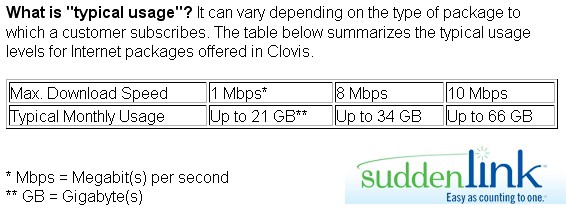
Suddenlink’s contribution to the “education campaign” consumers are being subjected to before the pickpocketing begins does bring some useful information to the table, however.  This small, mostly rural provider, turns in stunning statistics about average customer consumption:

Suddenlink Average User Consumption Statistics - Clovis, New Mexico (as on Suddenlink website 7/23/2009)

Suddenlink 'Typical Usage' Statistics - Clovis, New Mexico (Suddenlink website 7/23/2009)

Those numbers represent one of three things:

  1. Suddenlink is the first provider in a long list of providers producing honest statistics about broadband usage, not the low-ball estimates others have provided to make consumers feel guilty for exceeding them;
  2. Suddenlink’s statistics are wrong;
  3. People in Clovis download A LOT.

Just about every other major provider, and many small ones, have spent the past year telling the media and the public “the average user” consumes far less than what Suddenlink reports for Clovis, New Mexico:

  • Frontier Communications: “Today, the average residential customer on Frontier’s network uses 1.5 gigabytes of bandwidth each month.” — Ann Burr 10/10/2008
  • Time Warner Cable: “Our usage data show that about 30% of our customers use less than 1 GB per month.” — Landel Hobbs, COO 4/9/2009
  • Time Warner Cable Austin: ‘Users download between 5-6GB per month on average.’ — Scott Young, senior director of digital systems  10/2008
  • Comcast: “The average customer uses two to three gigabytes a month.” Jennifer Khoury, Comcast spokeswoman 10/29/2008
  • Sunflower Broadband: “Our average users, about 77%, use 6 gigabytes or less of bandwidth per month. Our high-end subscribers, about 2%, use 50 gigs or more.” Sunflower Broadband Website 7/23/2009
  • Bell (Canada): “Usage has increased… to more than 10GB (per average user) in 2008.” Bell Internet Usage Tutorial 7/23/2009

For the benefit of Suddenlink subscribers joining Stop the Cap! for the first time, here’s a road map for where things have traditionally gone among every other Internet provider that has introduced “measurement tools” for “your benefit” that were not beaten back by angry subscribers:

… Continue Reading

Philly Gets Ready to Rumble: Comcast, RCN, and Verizon Prepare for Broadband Battle

Phillip Dampier July 23, 2009 Broadband Speed, Comcast/Xfinity, RCN, Verizon 5 Comments
Photo by K. Ciappa for GPTMC

Photo by K. Ciappa for GPTMC

The city of Philadelphia will witness a three-way battle for your broadband dollar in the coming months as three competitors race to upgrade their networks to deliver the kind of “blazing fast speeds” only dreamed about in much of the rest of the country.

Comcast, the dominant cable provider in Philadelphia, today announced 50Mbps broadband service for greater Philadelphia residents for $99 a month.  The new, faster speeds are available because Comcast’s Freedom Region has been upgraded to the DOCSIS 3 standard.  Comcast’s Freedom Region includes metro Philadelphia and the counties of Bucks, Chester, Delaware, and Montgomery, as well as northern Delaware and southern New Jersey.

Comcast also doubled the speeds of many of its broadband customers today.  Here’s a roundup of the affected tiers:

Performance — 12Mbps/2Mbps — $42.95/month
Performance Plus — 16Mbps/2Mbps — $52.95/month (no change of upload speed from previous tier)
Ultra — 22Mbps/5Mbps — $62.95/month
Extreme 50 — 50Mbps/10Mbps — $99/month

*DOCSIS 3 modem upgrade required.

Meanwhile, cable overbuilder RCN, which serves parts of Philadelphia and the Lehigh Valley to the west announced it was aggressively moving to upgrade its own network to DOCSIS 3, and is taking the dramatic step of dumping all of its analog channels from the lineup, switching to all-digital cable, starting in Allentown.  RCN has already confirmed it will offer up to 50Mbps service in upgraded areas, but has the capacity to expand to 100Mbps service if needed.  RCN had been planning to launch upgraded DOCSIS 3 service starting in New York and Boston, but market conditions in Philadelphia will make it necessary to expand there as well.

The newest player in town is Verizon, whose fiber to the home FiOS service is capable of the fastest download and upload speeds in the marketplace.  Verizon has offered packages with equal download and upload speeds (20Mbps/20Mbps being the most common) in the past, but is capable of achieving even faster speeds.  It currently provides 50Mbps/20Mbps service in many areas.

“We have a lot of work ahead of us. We will wire the entire city with the nation’s most advanced fiber-optic network, starting with Chestnut Hill, and we expect the first customers to have FiOS services by later this year,” Verizon spokesman Eric Rabe wrote in a blog post. “Other neighborhoods where we will begin building soon are Brewerytown, East and West Mount Airy, South Philadelphia, and the Kensington sections of the city.”

Verizon expects the entire city to be FiOS-ready by 2016, reaching about 660,000 houses and apartment buildings. It is already available in 182 communities surrounding the city.


FCC Underwhelmed By National Broadband Plan Comments: “Sloppy” and “Lack Seriousness”

Phillip Dampier July 22, 2009 Editorial & Site News, Public Policy & Gov't 2 Comments
Blair Levin, Broadband Czar

Blair Levin, broadband czar

Blair Levin is a broadband czar with a lot on his mind, and he unloaded a lot of it at a public conference this week.  He’s been spending his summer wading into more than 8,500 pages of comments the Federal Communications Commission (FCC) has received on the question of how to formulate a national broadband plan.  Individual consumers using the submission form like a blog’s comment section was the least of his concerns.  Levin has grown far less optimistic about the value of the comments as he digs deep into the pile before him.  His conclusion: at least some of the companies and groups that can afford the most expensive lawyers and professional presentations essentially pulled off an all-nighter let’s-wing-it-effort.

Levin particularly called out a “large telco” that submitted an extensive paper promoting its position loaded with intellectual sloppiness, right down to including a slide that contradicted the phone company’s own arguments.

Levin also claimed a lot of the submissions were loaded with platitudes and consensus about a model broadband society everyone would like to see, with no road map to actually achieve that goal.

The broadband czar reserved special criticism for the locust-like lobbyists who have descended on the comment process with self-serving proposals that are crafted with a “mine first” mentality that cuts out other players.  Levin claimed providers are much more interested in protecting their existing market and business plans before they consider how changes in the marketplace can increase the number of customers available to them.  That’s a mentality consumers are familiar with as broadband providers attempt to protect their video business models with attempts to limit or overcharge for broadband access.

He was upset that plans to open up new spectrum for next generation broadband services were met with resistance from other providers.  Wireless spectrum expansion for broadband projects was promoted as “essential” in one proposal, and attacked as a dangerous threat in another.  Levin characterized the turf war as, “get [the spectrum] from somebody else.”

Many of the major providers are treating the national broadband plan as a giant piggy bank, waiting to shower them with cash for vague projects or goals.  “Look I’ve got to say this — we are not going to be Santa Claus,” Levin said. “There’s actually very little in the 8,500-something pages that moves the ball forward,” Levin said.

Consumer advocacy group Free Press, which submitted an extensive pro-consumer broadband plan of its own, which Stop the Cap! supports, agreed with much of what Levin complained about in a new filing today, in response to Levin’s remarks.

Derek Turner, Free Press

Derek Turner, Free Press

Derek Turner, research director at Free Press, said “the FCC should not be duped by the incumbents’ self-serving claims. The national broadband plan must be built on a record of meaningful data and analysis — not on flimsy evidence and discredited arguments.”

Turner was pointing to telecommunications lobbying policies which reach not only the FCC, but elected officials.

Indeed, they are repeats of the same mantra over and over — “deregulation.”

“Incumbents have the largest pool of resources and broadband data at their fingertips, but their comments offer nothing more than the same old tired pro-deregulation arguments. It is clear from their recommendations that the phone and cable companies want the national broadband plan to simply be a ‘do-nothing’ plan — a strategy that has already proven to be an epic failure for consumers,” Turner added.

Incumbent carriers keep that pool of resources and data close to their vests, refusing to make it widely available for detailed independent analysis.  Instead, their “government affairs” lobbyists engage in astroturfing efforts to hoodwink consumers and policymakers with biased data and maps that help sell their agenda of deregulation and public financing of needed broadband projects, with little or no oversight or conditions.  Most important, they universally characterize today’s broadband offerings as excellent and evidence that the “marketplace is working,” even as the United States falls further behind other nations in access, speed, and low pricing.

While Levin is right to be exasperated at the special interest folderol, the FCC’s previous hands-off attitude during the Clinton and Bush Administrations set the stage for the ballet being performed today.  A deregulatory framework, started by the Clinton Administration and embraced on entirely new levels by the Bush Administration, combined with an agency timid to get involved in oversight potentially raising the ire of Congress, made it possible for 8,500 pages of generic happy talk and thinly disguised grant applications to weigh heavily on his desk.

Caught in the middle, as usual, are consumers.  Most of them were the ones typing their comments into the FCC comments submission page in “the big box,” instead of uploading a professionally prepared multi-hundred page PDF document.  Their needs are simple: affordable, fast, widespread broadband, with Net Neutrality embraced and Internet Overcharging schemes banned.  For those who already have the service, they want the FCC to make sure providers don’t leverage their monopoly or duopoly into a Money Party.  For those who don’t, they simply wonder how the most powerful country on earth cannot “get it done” without 8,500 pages and hundreds of millions of dollars potentially flushed away to feed special interest coffers while their needs are ignored or met with “this is good enough service for you” condescension.

Of course, no matter what Levin thinks, a lot of those providers with mixed up slides and Red Bull fueling their all-nighters know the FCC doesn’t have the last word on anything.  They’ll take the dog and pony show straight to Congress, with checks in hand to lubricate the conversation. Making sure Congress ultimately listens to their constituents will be up to voters like you and I.


Binghamton To Expand Free Wi-Fi in Downtown Region – Encourages Residents To Share Their Connection

Phillip Dampier July 22, 2009 Community Networks, Public Policy & Gov't, Video 14 Comments
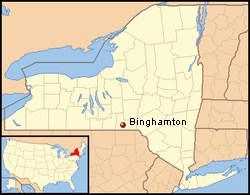
The city of Binghamton, NY offers free Wi-Fi service to its residents

The city of Binghamton, NY offers free Wi-Fi service to its residents

The city of Binghamton, in southern New York, had an innovative idea in 2008 — to offer citizens free wireless access to the Internet across the entire downtown region, with the help of a private-public partnership.  More than 20 “access points” were installed by the city and Plexicomm, LLC, a private partner in the venture.  The Binghamton WiFi service launched last summer and has caught on like wildfire.

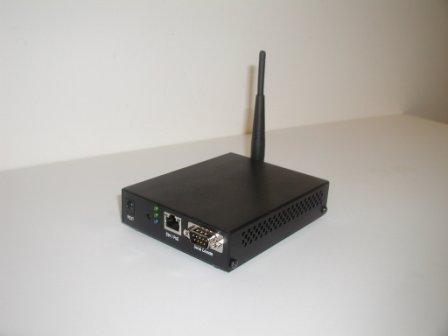
Binghamton WiFi Repeater helps extend the network

Binghamton WiFi Repeater helps extend the network

In addition to its popularity, which has tripled since 2008 with more than 82,000 logins, it’s also affordable.  The city of Binghamton pays just $3,650 a month on a two year contract, with some of that cost recouped with advertising that users see when first logging into the service.  The state also covered 50% of the cost for the first year.  It’s also unique, because the city encourages area businesses and residents to consider helping spread the reach of the network with the purchase and installation of their own wireless repeater, priced at $199.  Wi-Fi signals are generally better outside than indoors, but businesses can add the wireless repeater, placing it near a window or door, and make that signal available to customers located well within the building.

Apartment owners and even charitable consumers who believe in sharing the good fortune of free Internet are purchasing and installing repeaters to improve reception for their tenants or neighbors.  In addition to the “viral network” of Internet enthusiasts sharing and expanding the network independently, the city has also been able to afford officially extending the network with additional rooftop wireless “access points.”

The project has enthusiastic support from city officials, who continue to dedicate resources to it even while other city services come under review for budget cuts.

It also allows the city to get important civic and public information out to city residents who use the service.

Binghamton’s Wi-Fi business model is based on the premise that the most successful Wi-Fi public-private partnerships are free and open to the public, sustained with “captive advertising” as customers login to the service.  Customers are forced to view ads for 15-30 seconds while logging in, giving advertisers a better chance of having their messages seen by the online user.

The service is also not designed to directly compete with private providers, which include Time Warner Cable’s Road Runner service and Verizon DSL.  Although the maximum speed of the network is comparable to DSL – up to 3Mbps downstream and 768kbps upstream, Wi-Fi can suffer signal-related slowdowns as well as congestion.  The service is designed for web page browsing and e-mail, and light access of higher bandwidth applications such as online multimedia.

Several videos detailing the ongoing development of Binghamton WiFi can be found below the jump.

… Continue Reading

Search This Site:

Contributions:

Recent Comments:

Your Account:

Stop the Cap!