Home » Issues » Recent Articles:

Everything New is Always a Threat to Everything Old – The Cable TV Monster

Phillip Dampier March 26, 2010 Competition, Editorial & Site News, Net Neutrality, Public Policy & Gov't, Video Comments Off on Everything New is Always a Threat to Everything Old – The Cable TV Monster

[flv]http://www.phillipdampier.com/video/Anti-Cable Pay TV Ad from the 70’s.flv[/flv]

I ran across this “public service announcement” about the perils of cable television coming from the over-the-air broadcasters terrified of the implications of a new concept in television delivery — coaxial cable.

Back in the 1960s and early 1970s, big lobby dollars from broadcasters kept a foot on the throat of the newly-born cable television industry, prohibiting them from showing sporting events, movies and programs offered in syndication, unless they were from local stations of course.

To allow this new competitor to gain access to lucrative programming would cost local jobs, hurt investment in television stations providing local community service, and ruin it for everyone!

Ironically, broadcasters are still using these arguments when confronting intransigent cable companies that won’t write checks to pay those “free TV stations” for the right to carry them on the cable lineup.

Whenever a new player enters the marketplace, the existing ones panic.  That’s why the National Broadband Plan, Net Neutrality, and the concept of open networks terrifies incumbent players.  It’s a whole new world — one they aren’t comfortable with — market instability and players out of their comfort zones always invoke a fear-based response, especially on Wall Street.

Forty years after the pay television monster envisioned in this advertisement, we are still watching local over-the-air broadcasters.  In fact, the only harm viewers have experienced comes from an industry that treats local TV stations like commodities, bought and sold for millions of dollars, even as many stations cut local programming and community service.  These days, it’s not uncommon to find a major local affiliate not even producing a newscast any longer.

We now face another transformation in telecommunications with the release of a national blueprint for improved broadband.  Existing players have no problem with it, as long as they define it, benefit from it and get to implement it.  But the idea of opening their networks and providing consumers with additional choice, as well as protection from meddling providers who want to monetize all-things-Internet, just cannot be entertained.  To do so would … you know, cost jobs, harm investment, and ruin it for everyone.

Much like a broken record, this rhetoric is obsolete.

Former FCC Chairman Says Internet Overcharging Schemes Not Within FCC’s Power to Stop

Phillip Dampier March 25, 2010 Data Caps, Public Policy & Gov't 5 Comments

Martin

The former chairman of the Federal Communications Commission under President George W. Bush says the FCC doesn’t have as much authority over broadband as it might think, and cannot tell service providers not to implement policies designed to limit broadband consumption.

Kevin Martin, speaking last week in Seattle at the Mobile Broadband Breakfast told attendees he doubts the Commission has the authority under current law to implement the full scope of the National Broadband Plan, and probably cannot control what providers do with the marketing and pricing of their broadband services.

“The further it is pushed out the more difficult it is for the commission to address it,” Martin said. “The FCC’s core regulatory authority is on wireless and carriers, so its direct authority is less and less the further out you go.”

Martin is especially skeptical about controlling classic Internet Overcharging schemes like usage caps and usage-based billing.

Broadcast Engineering notes Martin doesn’t believe the Commission has any authority to stop the recent efforts of carriers and ISPs to introduce metered wired broadband, except in instances where price discrimination occurs.

Of course, Congress can grant additional authority to the Commission at any time, and with decisions looming in several broadband-related legal challenges in federal court, what authority the FCC believes it has today may not actually exist should court rulings find otherwise.  That could result in explicit increased authority granted by Congress.

Martin believes broadband improvement will ultimately come from increased deployment of fiber optics, which can also improve wireless network backhaul connections used in mobile broadband.

Qwest Seeks $350 Million Broadband Grant to Improve Speed in Rural Service Areas

Phillip Dampier March 25, 2010 Broadband Speed, Net Neutrality, Public Policy & Gov't, Rural Broadband, Video Comments Off on Qwest Seeks $350 Million Broadband Grant to Improve Speed in Rural Service Areas

Qwest Communications today announced it has filed an application for a $350 million stimulus grant to bring faster broadband to rural communities throughout its 14-state local service area.

Qwest proposes to create a $467 million dollar broadband deployment fund based, in part, on the grant to expand broadband service into areas that currently lack access.

Davis

Davis

“Much like the water and electric programs the government established to encourage rural development, federal grants are needed to enable the deployment of broadband to high-cost, unserved areas,” said Steve Davis, senior vice president of Qwest Public Policy and Government Relations.

Downstream speeds would range between 12-40Mbps, which indicates Qwest is looking at ADSL2+ or potentially even VDSL2 service for parts of its western and midwestern service areas.

The company claims the funds would allow Qwest to reach more than 500,000 homes, schools, and businesses — mostly located within 50 miles of a city or town.

Qwest, like most larger telecommunications companies, did not apply initially for broadband stimulus funding.  Most objected to requirements recipients adhere to Net Neutrality requirements.  Although those requirements remain, some companies believe the second round will be more favorable to projects that extend access from already-existing broadband service lines.  The so-called “middle mile projects” improve connectivity by helping to reduce the length of copper wiring broadband must travel across.  The greater the lengths, the slower one’s speed.  They can also improve speeds and capacity overall for every customer.

[flv width=”480″ height=”292″]http://www.phillipdampier.com/video/40M+Demo-Final.flv[/flv]

Qwest released this promotional video last year to show the benefits of VDSL2 service, which the company currently provides in major urban areas inside its service area. (2 minutes)

Delmarva Towns Join Forces to Fight for Better Mediacom Franchise Renewal Agreement

Phillip Dampier March 25, 2010 Competition, Mediacom, Public Policy & Gov't Comments Off on Delmarva Towns Join Forces to Fight for Better Mediacom Franchise Renewal Agreement

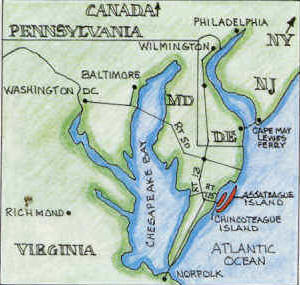
The Delmarva Peninsula

Four towns are better than one when trying to negotiate improved service and better terms for Delmarva Mediacom cable customers.

Bethany Beach, Millville, Ocean View and South Bethany are considering joining forces to renegotiate their agreements with Mediacom, all coming up for renewal within a year of each other.

Councilman Jay Headman from South Bethany is among those advocating the joint effort to get a better deal from Mediacom, which provides cable service across many parts of the peninsula encompassing Delaware and parts of Maryland and Virginia.

Mediacom serves many parts of the Delmarva Peninsula with cable service

“If we could come together and negotiate as one, we could save money and have more clout,” Headman told The Daily Times. “We know for a fact that it’s smart to negotiate together. When we have a larger clientele, (Mediacom) has to deal with us, and we can split the cost for the lawyer.”

While the four communities would find a competing provider launching service on the peninsula a useful tool to increase competition, they don’t necessarily believe its likely.  Many residents of the towns are part-timers, staying for extended summer vacations.  In fact, getting a better deal for part-time residents who wish to subscribe for part of the year is one of the concessions they hope to obtain from Mediacom.  The towns are also seeking a shorter agreement — the current franchise is for a 15-year term — and better service in general.

Vice Mayor Carol Olmstead, of Bethany Beach, told the newspaper the town is allocating $5,000 in next year’s budget to cover legal fees related to the negotiation.

“I think everyone who has cable TV would like better service,” she said. “Why not join together? I think the feeling is there’s strength in numbers.”

Time Warner Cable Shrinking Western New York Analog Lineups

Phillip Dampier March 25, 2010 Issues 1 Comment

Following Comcast’s lead, Time Warner Cable will begin shrinking western New York analog customers’ channel lineups to accommodate additional HD channels.  While in most cases customers with set top boxes or digital-ready televisions will be able to continue watching (the latter by rescanning the channels on their televisions), those with older televisions without a box are out of luck.

Customers will not receive a corresponding rate decrease based on the lost channels from their lineups.  Here is a rundown of those networks and customers affected:

Buffalo, New York Channel Lineup Changes (effective April 15)

Western New York Suburban-areas

  • Style from Broadcast Basic Ch 98 to Digital Basic Ch 176 (digital equipment and a subscription to Digital Basic Cable will be required to view Style)
  • TruTV Ch 35 to Ch 70 (digital box required)
  • Oxygen Ch 68 to Ch 66 (digital box required)
  • YES Ch 70 to Ch 65
  • Versus Ch 71 to Ch 35
  • Hallmark Ch 69 to Ch 63

City of Buffalo

  • Style from Standard Cable Ch 65 to Digital Basic Ch 176 (digital equipment and a subscription to Digital Basic Cable will be required to view Style)
  • TruTV Ch 48 to Ch 70 (digital box required)
  • Oxygen will remain on Ch 66 (digital box required)
  • YES Ch 70 to Ch 65
  • Versus from Ch 71 to Ch 48

Dunkirk

  • Style from Standard Cable Ch 96 to Digital Basic Ch 176 (digital equipment and a subscription to Digital Basic Cable will be required to view Style)
  • TruTV Ch 31 to Ch 70 (digital box required)
  • Oxygen Ch 62 to Ch 71 (digital box required)
  • Versus Ch 71 to Ch 62
  • Shop NBC from Ch 27 to Ch 73 (digital box required)
  • SyFy Ch 69 to Ch 31

Westfield

  • Style from Broadcast Basic Cable Ch 98 to  Digital Basic Ch 176 (digital equipment and a subscription to Digital Basic Cable will be required to view Style)
  • TruTV Ch 35 to Ch 70 (digital box required)
  • Oxygen Ch 66 to Ch 71 (digital box required)
  • Shop NBC Ch 70 to Ch 73 (digital box required)
  • MSG Ch 67 to Ch 35

Olean/Olean North/Wellsville

  • Style from Standard Cable Ch 71 to Digital Basic Ch 176 (digital equipment and a subscription to Digital Basic Cable will be required to view Style)
  • TruTV Ch 64 to Ch 70 (digital box required)
  • Oxygen Ch 57 to Ch 66 (digital box required)
  • YES Ch 70 to Ch 64
  • Versus Ch 66 to Ch 57
  • Shop NBC Ch 31 to Ch 73 (digital box required)
  • Fox News Channel Ch 68 to Ch 31

Rochester, New York Channel Lineup Changes (unless otherwise noted, effective April 15)

Metropolitan Rochester Area

  • National Geographic Wild will replace FOX Reality on Ch 453 and National Geographic Wild HD launches on Ch 1051 (Effective March 29)
  • Speed Channel, Ch 210 will be moved from Digital Basic to CPST (standard cable). Speed will remain available in digital format only (Effective April 1)
  • Speed Channel HD, Ch 1065, be moved from Digital Basic to CPST (standard cable). Speed will remain available in digital format only (Effective April 1)
  • Oxygen will move from Ch 70 to Ch 75 (digital format only)
  • Photoshow TV located on Chs 821 and 822 will no longer be available.
  • Vutopia will be added to Ch 968
  • Vutopia HD will be added to Ch 1149

Livingston/Southern Monroe County

  • All of the above changes, plus:
  • Versus will move from Channel 75 to Channel 51
  • Shop NBC will be removed from Channel 7 and will remain on Channel 66

Genesee/Wyoming and Orleans/Niagara Counties

  • All of the above changes, plus:
  • Versus will move from Channel 75 to Channel 51

Erie County

  • All of the above changes, plus:
  • Versus will move from Channel 75 to Channel 51
  • Shop NBC will be removed from Channel 20 and will remain on Channel 66

Wayne, Ontario, Seneca and Cayuga Counties

  • All of the above changes, plus:
  • Versus will move from Channel 75 to Channel 55

Yates/ Ontario and Steuben/Schuyler Counties

  • All of the above changes, excluding Vutopia, plus:
  • Versus will move from Channel 75 to Channel 55

Search This Site:

Contributions:

Recent Comments:

Your Account:

Stop the Cap!