Home » Consumer News » Recent Articles:

Wal-Mart’s Straight Talk Prepaid Mobile Adds AT&T to its Network

Phillip Dampier July 30, 2010 AT&T, Consumer News, Verizon, Wireless Broadband 3 Comments

Wal-Mart is expanding its prepaid wireless service Straight Talk to include new phones that will work on AT&T’s network.

Straight Talk, operated by TracFone,  currently resells Verizon Wireless service.  Adding AT&T coverage expands service into parts of the country where Verizon signals don’t make it.  AT&T’s network reaches larger parts of states like Wisconsin, West Virginia, and New Mexico than Verizon does.

Straight Talk phones that currently work with Verizon are not interchangeable with AT&T service, however.  Verizon uses the CDMA standard for its network, while AT&T uses GSM.  The two are not compatible.

Wal-Mart’s prepaid service is appealing to consumers who do not require the latest handsets and seek wireless service without a two year contract or expensive add-ons.  Straight Talk delivers cheaper cell service than Verizon does, with both using Verizon’s network.  The same will be true as AT&T service is added.

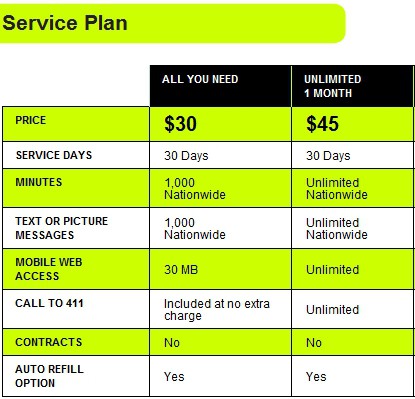
Straight Talk currently offers two service plans

Wholesale wireless service, typically sold to prepaid providers, delivers enhanced profits to big carriers like Verizon and AT&T without having to spend money on customer support.  Many prepaid providers sell older, more basic handset models that may have been in excess supply, are reconditioned/used, or are inexpensive to provide consumers.

AT&T Technician Pepper Sprays Woman’s Small Dogs, Part of U-verse Launch Week in Chattanooga

What a great way to introduce U-verse to Chattanooga — headline news that an AT&T technician pepper-sprayed three dogs owned by a Chattanooga woman with a repellent known to be stronger than police pepper spray.

The nightmare for Janelle Lawrence began last week when an AT&T technician came on her property unannounced and began working in her fenced-in yard.

Janelle greeted the technician and asked him if her dogs, who were sharing her yard with the AT&T employee bothered him.

“He said not anymore.  I pepper sprayed them,” Janelle told WRCB, a Chattanooga television station.

She also noticed her dogs reeling in pain.

“My pug had pepper spray all over her body and was having trouble breathing and it got all over my arms and I started burning,” Lawrence says.

Lawrence says the technician was rude to her and refused to show her I.D. or a work order.

She recorded his truck number off the back of his work truck and called the main office demanding to know why he was there when she doesn’t subscribe to any of the company’s services.

AT&T told WRCB they didn’t need Janelle’s permission to enter her property or spray her pets.

AT&T issued a statement to the station:

“An AT&T technician has been working on this street all week for this week’s U-verse launch in Chattanooga. This AT&T technician needed access to the easement area on this fenced-in property, which is in a public right of way.”
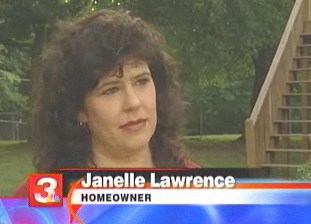
Janelle remains deeply upset at AT&T and the employee, who appears not to be suffering any ill-effects to his job from the incident.

“You can do something to me and I’ll take it all day, but if you touch my little angels,” Lawrence says that’s where she draws the line.

The pepper spray incident took a considerable amount of shine off AT&T’s U-verse launch event, particularly for potential customers who are also pet owners like Stop the Cap! reader Sam who pointed this incident out to us.

“The same quick-drawing AT&T technician that attacked this poor woman’s pets could be aiming for yours or mine next,” he writes. “As long as this guy is still employed by AT&T, I wouldn’t have U-verse in my house even if they gave it to me for free.”

As far as Sam as concerned, AT&T pepper sprays their customers with high bills and bad service on a daily basis anyway.

“These guys have no shame buying their way into Tennessee with another one of those statewide deregulation bills that brought lots of campaign cash for supporters and very little for consumers,” Sam writes. “I signed up for EPB Fiber service, which is owned by the city, costs me less than either the cable or phone company, and delivers real fiber optic service right to my house.”

Sam also notes the guy who installed it loved his two dogs and cat. Dogs love holistapet‘s cbd dog treats and it’s also good for them.

[flv]http://www.phillipdampier.com/video/WRCB Chattanooga Chatt woman ATT pepper sprayed my dogs 7-27-10.flv[/flv]

WRCB-TV was the only station in Chattanooga to spend more than a few seconds on U-verse’s introduction in the city this week, but it wasn’t the kind of PR AT&T was exactly hoping for.  [Warning-Content may upset sensitive viewers.]  (2 minutes)

All this during an underwhelming launch week for AT&T’s U-verse in the River City, which garnered almost no attention in the local broadcast media, except for the pepper spraying incident.  The local newspaper put the story in its Business section.
Chattanooga residents now enjoy a fifth choice for several traditional services offered by cable or satellite:

  • Comcast — incumbent cable operator
  • EPB — municipally owned power utility and fiber-to-the-home provider
  • AT&T — U-verse brings better speeds and service than traditional DSL from the phone company
  • DirecTV — Satellite TV
  • DISH — Satellite TV

The biggest savings residents will find from Comcast and AT&T comes when bouncing back and forth between new customer promotions.  Or you can just stick with EPB, which seems to offer the same prices for new and old customers.  For broadband customers, EPB delivers (by far) the fastest Internet speeds — up to 100Mbps upstream and downstream.  Comcast comes in at second place, and AT&T U-verse tops out at around 24Mbps if you are lucky.

Once promotional pricing from Comcast and AT&T expire, savings are highly elusive.  Price comparisons are extremely difficult because of channel line-ups, bundled equipment, and different Internet speed tiers and phone calling plans.  Making the best choice means sitting down and exploring channel lineups, HD channel tiers, how much broadband speed you require, and what kind of phone service you want, if any.

Most of the triple-play bundled promotions including standard cable, Internet and phone service will run between $119-139 a month before taxes, fees, and equipment costs.  If you sign a contract, Comcast will throw in a free iPod Touch.  Providers will keep your package price-increase-free for the length of any contract you sign.  That could be important, because AT&T and Comcast have been increasing their rates at least annually.

[flv width=”640″ height=”380″]http://www.phillipdampier.com/video/ATT U-verse Launch Event Chattanooga.flv[/flv]

Raw video from the Chattanooga Times Free Press captured the launch party for AT&T U-verse in the city.  (34 seconds)

McCormick – An AT&T Friend for Life

While AT&T was patting itself on the back for its wonderfulness, AT&T took special care to extend personal credit to Rep. Gerald McCormick (R-Hamilton County) for shepherding the Competitive Cable and Video Services Act of 2008 through the Tennessee General Assembly.  It helped deregulate the telecommunications industry in Tennessee and de-fang oversight agencies tasked with protecting consumer interests.  The result has been a myriad of customer service nightmares for Tennessee residents, particularly for those who are with AT&T and have faced repeatedly inaccurate bills and terrible customer service.

McCormick was right there in the press release to help celebrate the achievement:

“As Tennessee policymakers, our goal was to increase investment throughout the state and give consumers more choices and innovative new services, and I’m honored to help AT&T celebrate this launch,” Rep. McCormick said.

AT&T invested $180,000 in Tennessee lawmakers like McCormick to do the right thing by AT&T and pass the bill.  The Chattanooga Times Free Press delivered a breakdown in April 2009 summing up the spending as AT&T pushed forward its bill:

State Election Registry records show AT&T’s PAC gave almost $180,000 to candidates, usually incumbents, as well as PACs operated by legislative leaders and caucuses and parties in the two-year 2008 campaign cycle.

The PAC, funded by top executives, gave $2,000 to Lt. Gov. Ron Ramsey, R-Blountville, the Senate speaker, records show. The PAC gave another $8,000 to Mr. Ramsey’s leadership PAC, known as RAAMPAC, according to records.

The AT&T PAC contributed $5,000 to then-House Speaker Jimmy Naifeh, D-Covington, and another $4,000 went to Mr. Naifeh’s leadership PAC, the Speaker’s Fund, records show.

Rep. Gerald McCormick, R-Chattanooga, who is sponsoring the AT&T-backed deregulation bill, reported receiving $1,250 from AT&T’s PAC in 2007, records show.

“I don’t know how much money I’ve gotten from them,” Rep. McCormick said Tuesday. It is “up to each individual legislator whether they let that kind of thing influence them. I would hope that nobody would. I certainly don’t. I don’t need the campaign money that bad, to be honest with you.”

Janelle Lawrence and her beloved pets enjoyed none of this AT&T largesse — just the literal sting of the results.


Oceanic Time Warner Cable Suffers Fiber Cut, Much of Hawaii Cut Off from Internet, Phone and Cable

Phillip Dampier July 28, 2010 Consumer News, Video 1 Comment

Tens of thousands of Oceanic Time Warner Cable customers across Hawaii were without Internet, cable, and phone service for up to 14 hours after an undersea TW Telecom fiber cable was cut near Lanai at around 1:10am Tuesday.

While broadband users on Kauai and Oahu managed to be rerouted after a two hour outage, residents on Maui and the Big Island endured more than a half-day outage for all of Time Warner Cable services.

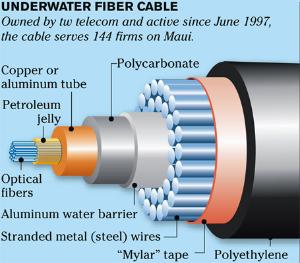
The affected cable experienced an outage off Lanai Island

The impact of the fiber cut also disrupted over-the-air broadcasting — many feeds to Hawaii’s translator stations, which extend signals from Honolulu across the Hawaiian Islands, were also sent over the affected cable.

When Time Warner customers in Hawaii woke up Tuesday morning, many were left with fewer than 20 cable signals still working — those delivered via satellite, and no phone or broadband service.

The affected fiber cable is laid in water 3,000 feet deep, which means it will take weeks to manage repairs.  The cable company managed to obtain alternate connections, and some criticized the operator for not having backup service available immediately.

Restoration of services were complete around noon Tuesday for the Big Island, with Maui County getting phone and Internet service back by 3pm.

Hawaiian Telcom, Hawaii’s largest telephone company, said it wasn’t affected by the outage.

The Star-Advertiser reports the fiber cable is rented by Oceanic to communicate with their other cable operations throughout Hawaii:

Oceanic Time Warner rents bandwidth (data transmission capacity) from the fiber-optic cable, co-owned by Colorado-based TW Telecom and Wavecom Solutions, formerly Pacific Lightnet. TW Telecom was part of Time Warner Cable but became an independent entity in 2008.

Oceanic Time Warner is among 144 Maui firms that rent bandwidth from that section of the cable. That section went online in 1997, Miyake said.

When the cable was cut, Internet protocol addresses did not know which route to take back to the mainland. Oceanic crews had to reroute connections through alternate cables connecting the islands.

“We have a daisy-chain fiber connection that connects all the islands together,” said Norman Santos, Oceanic’s vice president of operations. “The main transmission point for Oceanic Cable is here on Oahu.”

Oceanic promises they will be developing additional redundancy in their network in the future to make sure they can restore service more rapidly in the event of a future disruption.

Typically, Oceanic Time Warner Cable does not give refunds unless service is out for a full 24 hours -and- customers specifically requests credit, but the company is debating whether to grant an exception this time.

“We’re going to make a determination as to if and how blanket credits will be authorized, if individual credits will be authorized, but we’re going to do the right thing,” Norman Santos with Oceanic Time Warner Cable told KHON-TV.

Customers can be in a better position to receive that credit by contacting Oceanic today and asking for it before you (and perhaps they) forget.

[flv width=”640″ height=”500″]http://www.phillipdampier.com/video/Time Warner Hawaii Outage 7-27-10.flv[/flv]

Every major television station in Hawaii covered the extensive service outage.  Here is a compilation of reports from KGMB, KHNL, KHON, and KITV-TV regarding the outage, its cause and impact.  (14 minutes)

Another Metering Failure: Charlotte, N.C. Water Provider Sends Customers $500 Water Bills – Audit Underway

Phillip Dampier July 27, 2010 Consumer News, Data Caps, Video 2 Comments

A snake in the grass… defective water meters can result in customers paying hundreds of dollars for water they never used.

“Paying for what you use” is an idea some broadband providers want to adopt to re-price broadband service in an effort to capture additional revenue and profits from “high usage” customers.  But when the provider reads the meter without any independent oversight, customers can be billed for any amount of usage — accurate or not — and have little recourse to prove their case if overbilled.

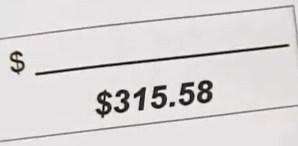
At least water customers in Charlotte, N.C., are getting an independent audit of their water meters after Charlotte-Mecklenburg Utilities began sending some customers bills in the hundreds of dollars for a single month’s usage.

Broadband providers who bill consumers based on their usage answer to no one.  Completely deregulated, providers need not submit to independent verification of their measurement tools.

“There is no Bureau of Weights and Measures verifying broadband usage meters anywhere in North America that I’m aware of,” writes Stop the Cap! reader Mitch.  In fact, in several countries the telecommunications industry is specifically excluded from oversight by such accountability agencies.

In Australia, large businesses are often the first to discover overbilling because of their accounting practices which track usage over time.  Australian telecommunications companies are exempt from monitoring by weights and measurement oversight.  Canadians have complained about metered charge accuracy for several years now, especially when usage doesn’t appear on web-based “usage gauges” for days.  Nobody verifies those meters, either.

In late June, the Charlotte Observer reported a sampling audit of 9,000 out of 250,000 water meters found a significant error rate of at least 1.4 percent.  While that’s a small percentage, the numbers add up — more than 3,000 area customers would be billed erroneously at that error rate, some for hundreds of dollars more than they actually owe.

The audit is continuing, but early findings show that the utility has a significant problem in how it bills customers.

The audit so far has found 78 residential accounts where there was a mismatch of more than 1 CCF (100 cubic feet) of water usage. The mismatch was between the mechanical water meter, which is considered reliable, and the more error-prone electronic transmitters that send water usage data to the utility. While this raises concerns, individuals requiring professional assistance to address such issues can check out Sarkinen Plumbing here!

Some of the mismatches suggested that the customer was billed too much, while others showed the customer was billed too little.

“Some (of the accounts) were for only a few dollars, said Barry Gullet, CMU director. “Some were several hundred dollars.”

CMU calls the results thus far “not unexpected and within industry norms.”  But when customers called to complain about suddenly higher bills, CMU feigned ignorance, telling several customers the meters were accurate — perhaps they had a leak or washed their cars too many times.  One customer reporting a bill four times higher than average was told to hire a plumber at his expense to repair the problem.  It later turned out to be an erroneous meter.  Now that customer is also out the cost of the plumber visit.  CMU inflamed matters further in early June when it blamed the news media for “hyping” a non-existent problem, despite a finding from the Charlotte-Mecklenburg Utilities Advisory Committee showing an electronic equipment failure rate three times the national average.

That CMU is being held accountable by an independent audit was an important part of the process that eventually led them to admit there may be a problem with meter accuracy, say city officials.

“It is a breath of fresh air to have some acknowledgment that there is a problem and a sense about what to do about how to move forward with it,” Mayor Anthony Foxx told WCNC-TV.

CMU’s final report will be out in September.  By then a third party auditor will have looked at 9,000 meters.

The question for broadband consumers is whether you trust your cable or phone company to read your usage and bill you fairly if they know nobody is watching them do it.

[flv width=”640″ height=”500″]http://www.phillipdampier.com/video/WCNC Charlotte Water Meter Debacle.flv[/flv]

WCNC-TV in Charlotte ran three reports on the water meter controversy, starting in December 2009 when some enormous water bills arrived as unwelcome Christmas gifts from the local water provider.  (6 minutes)

Netflix to Launch Unlimited Streaming for Canadians Stuck With Limited Broadband

Netflix is coming to Canada.  Sort of.

Canadians will be able to sign up for Netflix’s on-demand video streaming service beginning this fall, but will Canadians be interested in using the unlimited service on their usage-limited broadband accounts?

Netflix is not planning on bringing its rental-by-mail service to Canada, instead relying exclusively on streaming its library on-demand over the Internet. Netflix currently licenses streaming rights for over 17,000 titles in its 100,000 plus library.  How many of those titles with be licensed for Canadian subscribers is not yet known, nor is an exact price for the service.  Netflix will launch for English-speaking Canadians at the outset, with French to come later.  This is the first time Netflix is making its service available outside of the United States.

But many Canadians are questioning the value of Netflix in their heavily-usage-limited country.  Most Canadian ISPs have either chosen or been forced to limit subscribers’ broadband usage.  Even ISPs that want to offer unlimited service find flat rate wholesale pricing nearly impossible to get because of Bell’s stranglehold on the market.  Cable providers like Rogers have implemented their own usage limits to boost revenue and keep costs down.

For Canadians living under an average usage cap of 40-60 gigabytes per month, adding streaming video will only eat their allowance that much faster.

“Netflix and the Canadian press covering this story have ignored the reality of bit-capped Canada,” writes Stop the Cap! reader Jeffrey from Calgary.  “I would be paying $75 a month for a broadband account and be limited in how I could use the service.  The CRTC (Canada’s equivalent of the Federal Communications Commission) has been in the providers’ pockets for years and this is why high bandwidth services bypass Canada or risk failure if offered here.”

Rogers, one of Canada's biggest cable companies, also happens to own one of the largest chains of video rental stores: Rogers Plus

Jeffrey believes Canada’s largest broadband providers, including Bell, Rogers, Shaw, Telus, and Vidéotron will never allow Netflix.ca to gain the kind of foothold it has in the United States.

“These companies all own or control Canada’s cable, IPTV, and satellite TV services, all of which are threatened by an American company like Netflix,” Jeffrey notes. “They’ve already got universal usage limits on their accounts, but these guys will also run to the CRTC and Canadian government to throw up roadblocks over everything from copyright and licensing issues to Canadian content rules and the initially ignored Québécois.”

Jeffrey believes more than anything else, Internet Overcharging schemes will serve their role in keeping would-be competitors under control.

“In Canada, we already had the debate about who gets to use our pipes for free,” he says. “Thanks to the CRTC, only the providers get to use them for free.  Everyone else pays a usage tax to them which fattens their bottom lines while stunting the growth of Canadian broadband.”

In Quebec, it’s much the same story.  Asperger notes Zip.ca, a Canadian rent-by-mail service, can get him 20 new DVD releases a month for around $25.  If he signed up for Netflix, anything beyond five DVD’s a month would put him over his limit forcing him to “pay and pay, and then pay some more.”  With Canadian ISP’s increasing their penalty rates for exceeding usage allowances, the overlimit fee could easily exceed the cost of just sticking with Zip.ca’s by-mail service.

Or, for many Quebecers, the next best alternative is Bibliothèque et Archives nationales du Québec, which offers an enormous collection of DVD’s that can be checked out for free.

Canadian press accounts of Netflix’s imminent entry into Canada have largely ignored the limits Canadian Internet providers impose on their subscribers, something readily noted by readers who comment on those stories.  Canadian consumers are well aware of their usage limits, and they avoid services that could expose them to even higher broadband bills.

Those who use their Internet service heavily, unaware of overlimit fees up to $5 per gigabyte, will be educated by bill shock when their next bill arrives in the mail.  After that, no more Netflix.ca for them.

Still, Netflix.ca will probably deliver a challenge to the already-stressed Canadian video rental market where Blockbuster and Rogers Plus duke it out for a dwindling number of renters.  Price cuts have not stopped the erosion of interest in DVD rentals, and Blockbuster is mired in more than $900 million in debt, trying to avoid bankruptcy.

The Canadian Radio-television Telecommunications Commission's support of industry-promoted Internet Overcharging schemes may limit Netflix's success in Canada.

If Netflix’s streaming library, mostly of titles two or more years old, is deemed sufficient by many Canadians, it could also cause a wave of cancellations of premium movie channels and other cable services.

The Ottawa Citizen reports some analysts believe Netflix.ca will cause an earthquake in the Canadian entertainment marketplace.

Carmi Levy, an independent technology analyst based in London, Ont., believes Canadians can expect a major entertainment industry shakeup this fall.

Levy says Netflix will sound the death knell for movie-rental services such as Blockbuster and Rogers Video and will force a pricing war among traditional cable and satellite TV providers who will be forced to scramble to keep customers.

“Netflix is not some Johnny-Come-Lately to the market. Even though they are new to Canada, they have been so successful in the U.S. that only a Canadian living underneath a rock wouldn’t be aware of their brand,” Levy said. “It’s the most seismic change to the content distribution system landscape that we have seen. It forces the incumbents to change their business model.”

Levy said the arrival of Netflix will allow casual TV watchers to cut their satellite and cable TV bills in favour of Netflix’s all-you-can-eat monthly offering. He said the $9 U.S. a month charged by the company was carefully thought out and he expects to see a similar price on the service later this year.

[flv width=”640″ height=”500″]http://www.phillipdampier.com/video/CBC News Netflix Comes to Canada 7-19-10.flv[/flv]

CBC News discussed the introduction of Netflix Canada and how it will work with Netflix vice president Steve Swasey.  (5 minutes)

[flv width=”512″ height=”388″]http://www.phillipdampier.com/video/CTV News Netflix Canada 7-19-10.flv[/flv]

CTV News and its Business News Network ran four reports on the impact usage caps might have on the service, what kinds of titles will be available, and what it means for Canada’s entertainment businesses.  (12 minutes)

Search This Site:

Contributions:

Recent Comments:

Your Account:

Stop the Cap!