Home » Consumer News » Recent Articles:

Wealth Has Its Privileges – Time Warner Cable Unveiling $189-199 Package for Ultra-Premium Customers

Phillip Dampier November 29, 2010 Broadband Speed, Competition, Consumer News, Video 1 Comment

If you have nearly $200 a month burning a hole in your pocket that you’d be willing to give Time Warner Cable for a cable-TV, phone and broadband package, have we got a deal for you.

Time Warner Cable is completing a test of its Cadillac cable plan for ultra-premium customers in Charlotte, N.C.  Dubbed “Signature Home,” the plan targets the cable company’s biggest spenders with a deluxe package of cable television, phone, Road Runner Wideband high speed Internet, two premium whole-home DVR units, and a wireless home network.  Customers in Charlotte paid $179.95 a month for the service during the test.  One of the conclusions apparently reached — Time Warner was not charging enough.  As the service goes national, its price will increase by $10 a month for some, $20 for others, topping out just a nickel shy of $200 a month before taxes and fees.

For that price, customers get just about everything Time Warner Cable offers, except premium movie channels:

Personal Customer Service Team, 24/7

  • Convenient priority reservations
  • No-fee installation and customization of up to 13 devices, including TVs, computers, gaming and mobile phones
  • Specially trained Personal Solutions Advisors (PSA) available by phone and online chat

Digital Cable

  • Whole House DVR includes two networked
    HD DVR set-top boxes
  • Storage for up to 150 hours of HD programming
    or 400 hours of Standard Definition programming
  • Record up to 4 HD shows on 2 DVRs at once
  • Remote DVR Manager web-based application
    to program your DVR via PC, Macintosh or any smartphone using the WAP2.0 protocol
  • Look Back® – Travel back three days in time
    on your TV menu and non-recorded TV shows*
  • Start Over® – Restart non-recorded TV shows from the beginning*
  • Digital package with over 180 channels,
    including HD and On Demand

Wideband Internet

  • Features the next generation Internet with the fastest speed available—up to 50 Mbps downloads and 5 Mbps uploads
  • Enables simultaneous downloading and uploading of photos and songs in seconds, movies in minutes
  • Family members can game, watch a movie and surf on various devices, all at the same time
  • Wireless home network with DOCSIS 3.0 modem with 802.11n wireless router included
  • Create up to 30 email addresses
  • Free Internet Security Suite, including Parental Controls and anti-virus software

Digital Home Phone

  • Home voicemail to email
  • Caller ID on PC and TV (requires AOL Instant Messenger)
  • Call forwarding
  • Two distinctive ring patterns—one for friends and family and one for everyone else
  • Unlimited nationwide calling, including Canada and Puerto Rico
  • Arris Touchstone® Telephony Modem
    TM602G/TW-4
  • VoiceZone™ to screen and track calls and
    check voicemail from any PC or Macintosh

Time Warner Cable expects to unveil the service in other areas of the country in a matter of weeks.

CEO Glenn Britt told Bloomberg News the targeted packages of services are designed to retain different classes of customers.

“If this were a BMW this would be the 750 IL, with all the whiz-bang things,” said Britt. “It’s our package with everything we have to offer and a different service experience all wrapped up in one.”

[flv width=”640″ height=”380″]http://www.phillipdampier.com/video/Signature Home Time Warner Cable East.flv[/flv]

Time Warner Cable produced a brief promotional video for Charlotte customers explaining the benefits of its new Signature Home service.  (2 minutes)

Tallahassee TV ‘News’ Show Absolutely Gushes Over Comcast’s Amazing “Xfinity” Name Change

Phillip Dampier November 29, 2010 Comcast/Xfinity, Consumer News, Editorial & Site News, Video 2 Comments

Good News! (For the station's advertisers)

WTXL-TV’s The Good News Show fell all over themselves last week gushing about Comcast’s rebranding as Xfinity.  The noon weekday program, apparently produced by the station’s news department, managed to obliterate any firewall between journalism and the advertising & sales department at the station.

A sampling of praise from the host, in between tossing softball questions at the two Comcast representatives followed by vigorous nodding in agreement:

  • “Wow, that -is- amazing.”
  • “It’s so much more for less, really.”
  • “I know, unbelievable!”
  • “Yeah, definitely,” in response to Comcast’s community coordinator’s statement that she thinks everyone should sign up for Comcast service.
  • “Yes, true — especially with the holidays coming this is something everyone’s going to want to get in on!”

The journalistic malpractice doesn’t stop with Comcast.  Other features practically evangelize local Tallahassee businesses and restaurants, a whole mess of which also turn out to be sponsors or “partners” offering discount coupons on the station’s website or “advice” to viewers.

A little exploration of WTXL’s website uncovered a page inviting those interested in appearing on the program to contact… the station’s advertising & sales department!:

Reach your potential customers in Tallahassee, Thomasville, Valdosta and beyond with the power of television and innovation of the internet.

ABC 27 can…

  • reach over 290,000 households in North Florida and South Georgia
  • produce your commercial in high definition
  • create custom promotions to help you reach new customers
  • increase traffic to your website and position your company more effectively through customized online advertising and sponsorships
  • put together an advertising plan that will meet your  marketing goals and fit your budget.

Your ABC 27 account executive will be dedicated to helping you grow your business and assist you through every step in creating your advertising campaign.

Of course the last people to understand this special relationship between the station and its advertisers are the viewers, who don’t appear to be told if the guests appearing on the program are also paying clients.

This is not unprecedented.  Many small city television stations beef up their ad revenue inviting sponsors to appear on morning and interview shows.  But WTXL is among the first to package it under the moniker “news” and deliver it to Florida and Georgia viewers on a Comcast/Xfinity Silver Platter.

[flv width=”480″ height=”380″]http://www.phillipdampier.com/video/WTXL Tallahassee Comcast Introduces Xfinity 11-23-10.flv[/flv]

An excerpt from WTXL’s ‘The Good News Show,’ featuring two representatives from Comcast who received a glowing reception from the program’s host.  (4 minutes)

ComedyMonday at The Chuckle Hut — AT&T: “Our Customers Like Usage-Based Billing”

AT&T Mobility thinks it has a winning strategy when it took away unlimited data plans, forcing new customers to choose high-priced, usage-limited alternatives.  But a new survey from Wall Street research firm Sanford Bernstein found AT&T customers will grab, claw, and scream to keep the peace of mind that comes from having the choice of an unlimited use plan.

Sanford Bernstein’s study found a large number of customers willing to abandon any carrier that takes unlimited data away from them.  About a third of the more than 800 people responding said AT&T’s move toward usage-based billing left them with a bad impression of the wireless carrier.  That’s particularly bad for AT&T, which already scores as America’s lowest-rated wireless company according to Consumer Reports.

AT&T mitigated some of the potential damage by letting existing customers keep their unlimited data plans when they ceased selling the unlimited option this past June.  New customers are forced to choose between two limited-use plans — $15 for 200MB or $25 for 2GB of usage (a tethering option is also available.)  Existing customers will only face that hard choice if or when they change phones, presumably in the next year or two.

Had they not grandfathered in existing customers, Sanford Bernstein’s research suggests a large proportion of customers forced to give up unlimited data would quit AT&T even if it meant buying a new phone and paying a higher bill just to get the unlimited data option back.  When AT&T eventually forces these customers’ hands, Sanford Bernstein predicts trouble.

According to the study, more than 58 percent of the lowest data users said they would dump AT&T overboard and switch to another provider with an unlimited plan. For heavier users, more than two-thirds are prepared to take their business elsewhere.

But even with overwhelming evidence like that, AT&T and some Wall Street analysts think Internet Overcharging schemes do customers a favor.
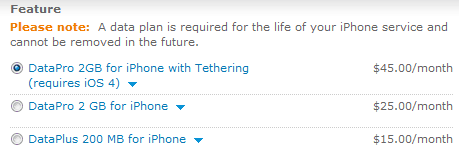
AT&T's mandatory data plans

“Customers generally have strongly negative perceptions about Usage-Based Pricing, and these are often not correlated with self-interest,” Bernstein analyst Craig Moffett said in a research note analyzing the findings of the survey conducted this past summer. “It is fashionable to argue that loyalty to carriers is dead (except perhaps to Verizon Wireless, whose service level is perceived to be markedly higher than that of its competitors). The new conventional wisdom is that carrier loyalty has been replaced with loyalty to the device. But high inclination to switch carriers and phones to maintain an unlimited plan suggest that perhaps the plan itself is more important than either one.”

The Wall Street firm’s research is hardly news to consumers, who have repeatedly expressed loathing contempt for Internet Overcharging schemes like so-called “usage-based billing,” “data caps,” and speed throttles that kick in when carriers decide customers have used the service enough.

Consumers are willing to pay a higher price just knowing they will never face dreaded “bill shock” — a wireless company bill filled with hefty overlimit fees charged for excessive data usage.  They also have no interest in being penalized by arbitrary usage limits that punish offenders with speed throttles that reduce wireless speeds to dial-up or lower.

AT&T was the first major carrier to throw down the gauntlet and force customers into choosing between a “budget plan” that is easy to exceed at just 200MB of usage per month or an inadequate, overpriced 2GB tier that costs just five dollars less than the now-abandoned unlimited use plan.

Wall Street firms like Sanford Bernstein worry their investor clients may be exposed to a revenue massacre when competing carriers like Verizon Wireless, which retains an unlimited plan for now, unveils its own version of the popular Apple iPhone.  The result could be a massive stampede of departing customers headed for top-rated Verizon Wireless, even if it means paying early termination fees.

AT&T spokesman Mark Siegel sees things very differently however, telling CNET News AT&T’s new limited option plans deliver more choice and flexibility for data-hungry users.

“We have found that our customers in fact like usage-based billing,” he said. “They appreciate having choices in data plans. This is probably because a majority of customers can reduce their costs through our plans.”

If true, Siegel could prove that contention by revealing how many of AT&T’s grandfathered-in unlimited data customers were willing to give up that plan and downgrade to one of the new limited use plans.  Siegel declined.

Moffett told CNET News his firm’s study found large numbers of existing customers using just a few hundred megabytes of usage per month who want to pay for an unlimited pricing plan, if only as insurance.  For many, they recognize the smartphone-oriented explosion of data applications will only grow their usage further in the days ahead, and what may be a tolerable usage limit today will be downright paltry tomorrow.

Underusing an unlimited data plan represents fat profits for AT&T, but doesn’t solve the problem of getting price-resistant customers to upgrade their older phones.  AT&T believes cheaper, limited use plans may do the trick.  But the company also decided to eliminate the unlimited use option, fearing some customers could cannibalize profits by downgrading currently underutilized unlimited service, knowing they could always return to an unlimited data plan when use justified it.

Verizon Wireless Sees the Light And Throws a “Sale” on Its Unlimited Data Plan, But for How Long?

Meanwhile, Verizon Wireless has settled on a more aggressive strategy to win many of its month-by-month customers back to two year service agreements with smartphone upgrades tied to an “unlimited data plan sale” that reminds would-be customers they still offer unlimited data, and gives many the chance to pay $10 less per month for it.

Customers either upgrading a current device to a smartphone on a family plan or adding a new line of service with a smartphone on a family plan will get $10 per month credit for each new smartphone line, for up to 24 months.  Although the plan was originally designed to promote “free extra lines” by crediting back Verizon’s $9.99 charge for each additional line of service, in many markets Verizon salespeople are now spinning the credit as a “sale on the unlimited data plan” instead.

Even primary line customers on a family plan can upgrade to a smartphone and get the credit.

But customers with expired contracts on legacy plans no longer sold by Verizon will have to give those up and start a new Family SharePlan starting at $69.99 per month for 700 shared minutes.  For those on popular retired plans like America’s Choice Family SharePlan, that represents a $10 rate hike for the exact same number of minutes and a loss of features including deducting mobile web use from available minutes instead of charging $1.99 per megabyte for access.

The unlimited data plan will effectively cost $20 a month for each smartphone on the account, and customers who want to use text messaging or other messaging features are likely going to need another add-on plan to cover that, starting at $5 a month.  And then the junk fees and government mandated charges further increase the bill:

  • Tolls, taxes, surcharges and other fees, such as E911 and gross receipt charges, vary by market and as of November 1, 2010, add between 5% and 39% to your monthly bill and are in addition to your monthly access fees and airtime charges.
  • Monthly Federal Universal Service Charge on interstate & international telecom charges (varies quarterly based on FCC rate) is 12.9% per line.
  • The Verizon Wireless monthly Regulatory Charge (subject to change) is 13¢ per line.
  • Monthly Administrative Charge (subject to change) is 83¢ per line.

Still, Verizon’s $10 sale may be enough to convince some customers avoiding smartphone upgrades to take the plunge.  Those doing so until the end of today through Verizon’s website can get free activation of their new phones.

Verizon hopes the offer will push a number of its legacy plan customers to abandon their old plans and grab a new smartphone at a subsidized price, putting those customers back on two year contracts.  The offer expires January 7, 2011 (and the $10 credits stop after 24 months).  The sale is only good on the unlimited data plan.

Verizon Targets Frontier, AT&T and Cable ‘Digital Phone’ Landline Customers in Rochester, N.Y. and Conn.

Phillip Dampier November 23, 2010 Competition, Consumer News, Verizon, Video 10 Comments

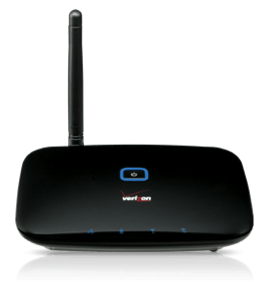
Verizon's Home Phone Connect base station

Verizon Communications has announced a new option for landline customers to ditch their local phone company with a new device that routes home phone calls over Verizon Wireless’ cellular network.

Verizon has chosen two test markets for its new Home Phone Connect service — Rochester, N.Y., serviced by Frontier Communications and Time Warner Cable and Connecticut, which is served by AT&T and Comcast.  (Thanks to our reader Bob for sharing the news with us.)

The service works with your existing home wired and cordless phones.  Customers signing up under a one or two year service contract will receive the base unit free of charge.  Installation is as easy: Just unplug the phone cord from the wall and plug it into the back of the Home Phone Connect device.  The unit supports up to two hard wired (non-cordless) phone lines and a cordless phone base station.  When you pick up any phone around the house, the base station will deliver a familiar dial tone, but all calls are made and received over the Verizon Wireless cell phone network.  You can download an read a copy of the installation manual here.

The service is priced at $9.99 per month for existing Verizon Wireless customers with any existing Family SharePlan that has two or more lines with at least a 700 minutes calling allowance per month.  Customers using Home Phone Connect under this plan will use minutes from their existing wireless service plan.  But since calls to and from Verizon customers and all calls placed during nights and weekends do not eat minutes, this may be a viable option for many customers.

For heavy talkers, or those without a qualifying Verizon Wireless service plan, an unlimited talk time plan is available for a flat $19.99 per month.

All local and domestic long distance calls are included, and the service also comes with these features:

  • Call Waiting
  • Call Forwarding
  • Caller ID (not currently compatible with Caller ID + Name)
  • International Dialing (charged at prevailing Verizon long distance rates)
  • 3-Way Calling
  • Basic Voice Mail (*86)
  • Account Balance (*225)
  • Device Provisioning, (*228)
  • Account Payment (#786)
  • 311, 411, 511, 611, 711 & 911 (some services not available in all areas)
  • Last Number Callback (*69)
  • National Domestic Hope Line (#4673)

The base unit includes a backup battery to power the unit for up to 36 hours idle time/2 hours talk time in the event of a power failure.  Customers relying on landline service that works with a monitored alarm system should check with their alarm company to ensure compatibility with cell network technology.

Michael Murphy, Verizon’s public relations manager for the New England Region, said consumers have the option of keeping their existing home phone number or requesting a new one.  Customers who do switch their current home phone number to Verizon will automatically cancel their existing landline service.  Frontier customers should carefully check their bills to make sure they are not on a Frontier “Peace of Mind” contract before switching.  Any expiration dates adjacent to the type of home phone service described on your bill likely means you are on a term contract.

Customers dumping Frontier before their contract expires could be exposed to early termination fees of up to $300 or more, which will appear on a customer’s final bill.  If you did not authorize a service contract, demand that Frontier drop it from your bill before you switch, and follow up with a complaint to the New York Attorney General’s office if the company fails to comply.

The device is intended to be portable, so you can take your “home phone” with you to any area served by a Verizon Wireless signal.  Just pack the Home Phone Connect base station and take it along.

Verizon carefully chose test markets outside of Verizon landline service areas.  That allows them to pick up new “landline” customers without harming their own landline business.

Verizon Wireless has a very large share of the Rochester, N.Y., market because of its ownership of the legacy Rochester Telephone cellular network.  Verizon delivers far more robust coverage than any other regional cellular provider in western New York.  With a built-in customer base wide open to Verizon’s marketing machine, the phone company could grab a significant number of Frontier landline customers who will see significant savings over Frontier’s comparable landline feature plans that run close to $50 a month after taxes and fees.  The company could also poach a number of Time Warner Cable’s Digital Phone customers, especially those whose first year promotional discount has expired.

In Connecticut, Verizon is challenging AT&T, which provides most of the state with its landline service.  Comcast is the dominant cable operator.

Comcast seemed unimpressed with the challenge being raised by Verizon in its service area.  The cable company hinted Verizon’s lack of a bundled service option including phone, cable, and broadband would hurt its chances of success.

Indeed, Verizon will have to develop some creative marketing to make its Home Phone Connect stand out.  Younger customers have no landlines to switch.  Most of those eager to cut their home phone line have already moved to cellular or Voice Over IP services from their local cable company or other providers like Vonage.  Existing Verizon Wireless customers may be hesitant about using a service that burns their wireless minutes away.  Older customers are unlikely to understand the product and have a built-in resistance to dropping traditional phone service.  Many may resist the notion of being stuck with at least a one year contract for an untested service.

T-Mobile attempted to market an almost identical service under its @Home brand, but judged it a failure and disconnected it earlier this year.

Because the service is being test marketed, its availability is limited to selected Verizon Wireless stores:

[flv width=”640″ height=”380″]http://www.phillipdampier.com/video/Verizon Home Phone Connect 11-23-10.mp4[/flv]

The New Haven Register set up a video interview with a Verizon representative to demonstrate its new Home Phone Connect service. (1 minute)

Designed to Fail: More on Time Warner’s ‘Mini-Me’ TV Essentials Package & Rate Increases for Upstate NY?

Phillip Dampier November 22, 2010 Consumer News, Editorial & Site News, Video 10 Comments

Additional details about Time Warner Cable’s new TV Essentials package, which provides a more limited cable TV lineup to viewers are making their way to Stop the Cap!

So far, Wall Street appears generally unimpressed with Time Warner’s efforts to retain customers planning to depart the cable company over cost issues.  Richard Greenfield of BTIG says consumers have to give up too much to subscribe to a package that deletes many of America’s most popular basic cable networks and delivers no HD programming.

The package seems to alienate every age group.  Stop the Cap! confirmed Time Warner Cable made most of the decisions about the channel lineup themselves, and although some networks are insistent about not being excluded from such packages, many of the decisions about what channels to leave out were made by the cable company.  For example, younger viewers will miss Comedy Central despite the fact the network is hardly the most expensive basic cable channel around, and nothing prevented them from carrying it.  We’ve also learned the Essentials package deletes several more channels some consumers will consider deal-breakers to lose.  We’ve confirmed in Ohio, customers will have to give up Food Network and The Weather Channel.  No Ms. Palin’s Alaska either — TLC is also off the channel lineup.

We’ve learned from a few of our readers in Akron and Cleveland who inquired about the new package that Time Warner told them they cannot continue to get phone or Internet service with the Essentials package on their account.  We earlier heard customers were supposed to be excluded from promotional deals for these services, not banned from buying them at any price.  We’re trying to get a confirmation from Time Warner’s northeast Ohio division about this, and suspect there might be some mis-communication going on here.

Greenfield adds Time Warner is offering a lousy deal to budget-minded consumers.

“Cable subscribers looking to save money have already defected to Dish Network’s $40 package called America’s Top 120, which is better than TV Essentials,” he noted.

Meanwhile, residents in upstate New York — watch out.  Time Warner Cable is finalizing its decisions about 2011 rate increases which are likely to be announced in mailers sent just after the holidays.  A source tells Stop the Cap! the rate increases will echo the ones in North Carolina.  The biggest rate increases will hit customers only getting one or two services from the cable company.  Video customers can expect the largest increases.  Phone rates will likely remain unchanged for most.

Customers will be encouraged to avoid the rate increases by bundling services.  Time Warner Cable raised rates on western New York customers three times in 2010 for different services.  This rate increase, likely effective in February, will be similar in percentage to the one announced last winter.  The company will blame programming costs and also use the introduction of several new services, including Primetime on Demand, Look Back, and Remote DVR as  justification for the rate hikes.

We’ll have much more coverage on this in late December.

[flv width=”640″ height=”380″]http://www.phillipdampier.com/video/WFMY Greensboro TWC Rate Hike 11-22-10.flv[/flv]

You can preview the excuses for forthcoming rate hikes from Time Warner Cable by listening to a company representative in North Carolina deliver them to customers there, who will see their rates increase Dec. 3rd (from WFMY-TV Greensboro).  (2 minutes)

Search This Site:

Contributions:

Recent Comments:

Your Account:

Stop the Cap!